
AL
Republic of Albania
Albania
Summary
- Official Name
- Republic of Albania
- Population
- 2,873,000
- Principal Languages
- Tosk Albanian
- Literacy Rate
- 98% (2018 World Bank)
- International Conventions
- CDE (1960), CPPDCE (2006), CSICH (2012), FCPNM (1998), ICCPR (1966), UNCRPD (2006), UNDRIP (2007)
- General References
- Campbell and King 2011, Comrie 1987, Vidoeski 1983, Messing 1980, Newmark et al 1982
- Deaf Population
- 204,570 (1998)
- Language Counts
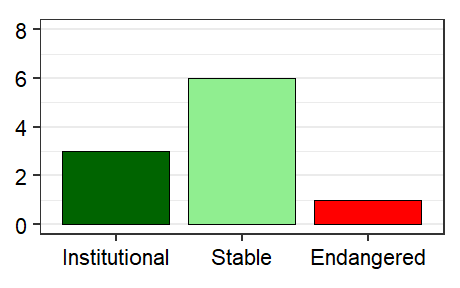
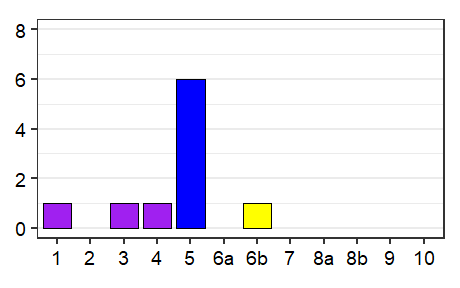
- The number of established languages listed for Albania is 10. All are living languages. Of these, 5 are indigenous and 5 are non-indigenous. Furthermore, 3 are institutional, 6 are developing, and 1 is in trouble. Also listed is 1 unestablished language and 1 macrolanguage.
Languages
- Albanian sqi
- Users: Population total all languages (L1 only): 6,172,000. Status:
- Albanian Sign Language sqk
- Scattered. Users: 3,000 (Hoyer 2007). 15,000 deaf in Albania, 24,100 worldwide (2014 IMB). Status: 5 (Developing). Alternate Names: AlbSL, Gjuha Shenjave e Shqip, Gjuha Shqiq e Shenjave, Gjuha e Shenjave Shqipe Classification: Sign language, Deaf community sign language
- Albanian, Gheg aln
- Widespread north of the Shkumbin river. Users: 1,200,000 in Albania (2012 UNSD). Ethnic population: 2,310,000 ethnic Albanians (2011 census). Total users in all countries: 4,141,940. Status: 5* (Developing). Alternate Names: Geg, Gegnisht-Shqyp, Gheg, Guegue, Shopni, Shqip, Shqyp Autonym: Gegnisht Classification: Indo-European, Albanian, Gheg
- Albanian, Tosk als
- Berat, Elbasan, Fier, Gjirokastër, Korçë, and Vlorë counties. Users: 1,570,000 in Albania (2012 UNSD). Ethnic population: 2,310,000 ethnic Albanians (2011 census). Total users in all countries: 1,880,060. Status: 1 (National). Statutory national language (1998, Constitution, Article 14(1)). Alternate Names: Arnaut, Shkip, Skchip, Tosk, Zhgabe Autonym: Shqip Classification: Indo-European, Albanian, Tosk
- Aromanian rup
- Fier County: Mbrostar commune; Gjirokastër and Korçë counties: far southeast; Tiranë area. Users: 50,000 in Albania (2018 N. Balamaci). Status: 6b* (Threatened). Alternate Names: Armani, Armina, Armini, Aromunian, Arumanian, Arumanisht, Arumenian, Arumun, Macedo Romanian, Macedo-Rumanian, Vlach Classification: Indo-European, Italic, Romance, Eastern
- English eng
- Users: 2,900 in Albania (2017 J. Leclerc). Status: Unestablished. Classification: Indo-European, Germanic, West, English
- French fra
- Major cities. Users: 29,700 in Albania (Marcoux et al 2022), L2 users. Status: 4 (Educational). Classification: Indo-European, Italic, Romance, Italo-Western, Western, Gallo-Iberian, Gallo-Romance, Gallo-Rhaetian, Oïl, French
- Greek ell
- Gjirokastër, Korçë, and Vlorë counties. Users: 15,200 in Albania (2012 census). Ethnic population: 24,200 (2012 census). Status: 3 (Wider communication). De facto provincial working language in Gjirokaster, Sarande, and Delvina provinces in south. Classification: Indo-European, Greek, Attic
- Italian ita
- Users: 7,870 in Albania (2017 J. Leclerc). Status: 5* (Dispersed). Classification: Indo-European, Italic, Romance, Italo-Western, Italo-Dalmatian
- Macedonian mkd
- Korçë county: scattered. Users: 4,440 in Albania (2012 census). Ethnic population: 5,510 (2012 census). Status: 5* (Dispersed). Alternate Names: Macedonian Slavic Classification: Indo-European, Balto-Slavic, Slavic, South, Eastern
- Romani, Vlax rmy
- Berat, Durrës, Elbasan, Korçë, Lezhë, Shkodër, Tiranë, and Vlorë counties. Users: 4,000 in Albania (2012 census). Ethnic population: 8,300 (2012 census). Status: 5* (Dispersed). Alternate Names: Rom Classification: Indo-European, Indo-Iranian, Indo-Aryan, Intermediate Divisions, Western, Romani, Vlax
- Serbian srp
- Durrës, Elbasan, Fier, Korçë, Shkodër, and Tiranë counties. Users: 66 in Albania (2012 census). Ethnic population: 370 (2012 census). Status: 5* (Dispersed). Alternate Names: Serbo-Croatian Classification: Indo-European, Balto-Slavic, Slavic, South, Western
Languages by Status
Albanian, Tosk
[als] 1 (National). Statutory national language (1998, Constitution, Article 14(1)). 1,570,000 in Albania (2012 UNSD). Ethnic population: 2,310,000 ethnic Albanians (2011 census). Total users in all countries: 1,880,060.
Greek
[ell] 3 (Wider communication). De facto provincial working language in Gjirokaster, Sarande, and Delvina provinces in south. 15,200 in Albania (2012 census). Ethnic population: 24,200 (2012 census).
French
[fra] 4 (Educational). 29,700 in Albania (Marcoux et al 2022), L2 users.
Italian
[ita] 5* (Dispersed). 7,870 in Albania (2017 J. Leclerc).
Macedonian
[mkd] 5* (Dispersed). 4,440 in Albania (2012 census). Ethnic population: 5,510 (2012 census).
Romani, Vlax
[rmy] 5* (Dispersed). 4,000 in Albania (2012 census). Ethnic population: 8,300 (2012 census).
Serbian
[srp] 5* (Dispersed). 66 in Albania (2012 census). Ethnic population: 370 (2012 census).
Albanian Sign Language
[sqk] 5 (Developing). 3,000 (Hoyer 2007). 15,000 deaf in Albania, 24,100 worldwide (2014 IMB).
Albanian, Gheg
[aln] 5* (Developing). 1,200,000 in Albania (2012 UNSD). Ethnic population: 2,310,000 ethnic Albanians (2011 census). Total users in all countries: 4,141,940.
Aromanian
[rup] 6b* (Threatened). 50,000 in Albania (2018 N. Balamaci).
English
[eng] Unestablished. 2,900 in Albania (2017 J. Leclerc).
Maps
Albania and Montenegro

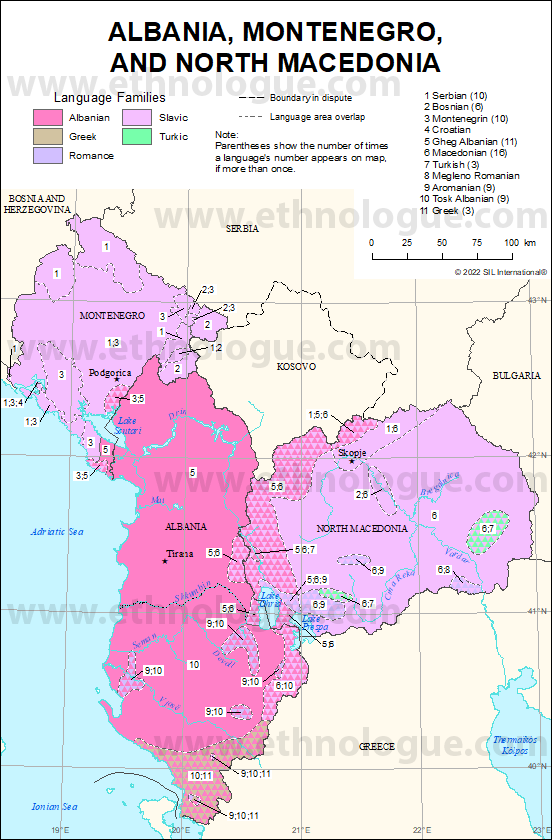
Albania, Macedonia and Montenegro
Graphs
Language Vitality Profile
Full explanation
Language Status Profile
Full explanation
Resources
View Terms
Each Ethnologue country digest is a licensed product with restricted terms of use. Before downloading the product, you must agree to the following terms:
- This is a license for individual use. Just as with a conventionally published book, it is a violation of copyright to make a copy and give it to others.
- You may not redistribute this work in any form, including ingesting the contents into a database that is shared with others or posting it on a web site (whether public or private).
To inquire about permission for reuse or redistribution, please use the Contact Us form in the footer.
Digest of the languages of Albania ($149.95, 21 page PDF)