
AR
Argentine Republic
Argentina
Summary
- Official Name
- Argentine Republic
- Population
- 45,809,000
- Principal Languages
- Spanish
- Literacy Rate
- 99% (2018 UNESCO)
- International Conventions
- CDE (1960), CPPDCE (2006), CSICH (2012), ICCPR (1966), (), UNCRPD (2006), UNDRIP (2007)
- General References
- Acebes 1966, Campbell 1997, Crevels 2007, Tovar 1961
- Deaf Population
- 2,056,000
- Language Counts
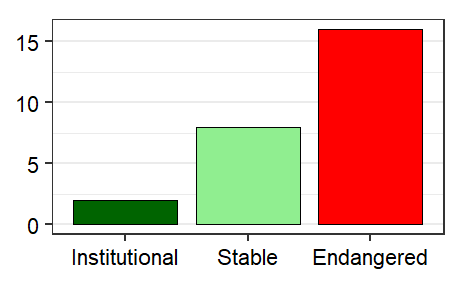
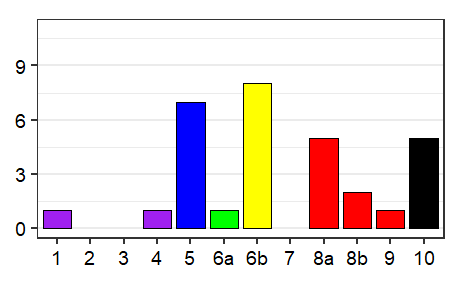
- The number of established languages listed for Argentina is 32. Of these, 25 are living and 7 are extinct. Of the living languages, 14 are indigenous and 11 are non-indigenous. Furthermore, 2 are institutional, 8 are developing, 1 is vigorous, 6 are in trouble, and 8 are dying. Also listed are 24 unestablished languages.
Languages
- Abipon axb
- Santa Fe province. Users: No known L1 speakers. The last speaker is thought to have died in the 19th century. Status: 10 (Extinct). Alternate Names: Abipón Classification: Guaykuruan, Guaykurú
- Argentine Sign Language aed
- Scattered. More than 50% in large cities (Massone 1995). Users: 60,000 (Caceres 2017). Status: 5 (Developing). Alternate Names: LSA, Lengua de Señas Argentina Classification: Sign language, Deaf community sign language
- Armenian, Western hyw
- Users: 149,000 in Argentina (2018), based on nationality. Status: Unestablished. Classification: Indo-European, Armenian
- Aymara, Central ayr
- Jujuy and Salta provinces: in the mountains and urban areas. Users: 4,100 in Argentina (Crevels 2012). Status: Unestablished. Alternate Names: Aimara Classification: Aymaran, Aymara
- Belarusian bel
- Users: 3,900 in Argentina (2018), based on nationality. Status: Unestablished. Classification: Indo-European, Balto-Slavic, Slavic, East
- Bermejo Wichí wlv
- Chaco province: General Güemes department; Formosa province: Bermejo, Matacos, Patiño, Ramón Lista departments; Salta province: Anta, Metán, Orán, Rivadavia, and San Martín departments. Users: 31,500 (2021 C. Wallis). Status: 5 (Developing). Alternate Names: Vejos, Vejoz, Wichí Lhamtés Vejoz, “Mataco Vejoz” (pej.) Autonym: wichi Classification: Matacoan, Mataco
- Catalan cat
- Users: 198,000 in Argentina (2018), based on nationality. Status: Unestablished. Classification: Indo-European, Italic, Romance, Italo-Western, Western, Gallo-Iberian, Ibero-Romance, East Iberian
- Chané caj
- Salta province. Users: No known L1 speakers in Argentina. Last speaker likely died in the 18th century. Status: 10 (Extinct). Classification: Maipurean, Southern, Southern Outlier, Terena
- Chinese zho
- Users: 76,000 in Argentina (2018), based on nationality. Status: Unestablished.
- Chorote, Iyo’wujwa crq
- Salta province. Users: 1,500 in Argentina (Crevels 2007). 1,690, all Chorote, both [crt] and [crq] (Crevels 2012). 750 monolinguals. Ethnic population: 2,610 (Crevels 2012). Includes all ethnic Chorote, both [crt] and [crq]. Total users in all countries: 1,870. Status: 5 (Developing). Autonym: Yojwaja Classification: Matacoan, Chorote
- Chorote, Iyojwa’ja crt
- Salta province: near the Pilcomayo river. Users: 800 (Crevels 2007). 1,690, all Chorote, both [crt] and [crq] (Crevels 2012). Status: 6b* (Threatened). Alternate Names: Chorote, Choroti, Eklenjuy, Yofuaha, Yowúwa Classification: Matacoan, Chorote
- Croatian hrv
- Users: 4,200 in Argentina (2018), based on nationality. Status: Unestablished. Classification: Indo-European, Balto-Slavic, Slavic, South, Western
- Czech ces
- Users: 8,000 in Argentina (2018), based on nationality. Status: Unestablished. Classification: Indo-European, Balto-Slavic, Slavic, West, Czech-Slovak
- English eng
- Widespread, mostly in Buenos Aires. Users: 7,100,000 in Argentina, all users. L1 users: 100,000 in Argentina (1985 New York Times). L2 users: 7,000,000 (2020). Status: 5* (Dispersed). Alternate Names: Inglés Classification: Indo-European, Germanic, West, English
- French fra
- Users: 16,000 in Argentina (2018), based on nationality. Status: Unestablished. Classification: Indo-European, Italic, Romance, Italo-Western, Western, Gallo-Iberian, Gallo-Romance, Gallo-Rhaetian, Oïl, French
- Galician glg
- Users: 752,000 in Argentina (2018), based on nationality. Status: 5* (Dispersed). Alternate Names: Galego, Gallego Classification: Indo-European, Italic, Romance, Italo-Western, Western, Gallo-Iberian, Ibero-Romance, West Iberian, Portuguese-Galician
- German, Standard deu
- Widespread. Users: 42,000 in Argentina (2018), based on nationality. Ethnic population: 3,500,000. Status: 5* (Dispersed). Alternate Names: Alemán, Deutsch Classification: Indo-European, Germanic, West, High German, German, Middle German, East Middle German
- Greek ell
- Users: 41,000 in Argentina (2018), based on nationality. Status: Unestablished. Classification: Indo-European, Greek, Attic
- Guaraní, Ava nhd
- Misiones province; possibly also in Buenos Aires, Corrientes, Entre Rios, Jujuy, Salta, and Santa Fe provinces. Users: 5,140 in Argentina (Crevels 2012). Ethnic population: 21,800. Status: 8a (Moribund). Alternate Names: Apytare, Ava Guaraní, Chiripá, Nhandeva, Tsiripá, Txiripá, Ñandeva Classification: Tupian, Tupí-Guaraní, Guaraní, Guaraní
- Guaraní, Mbyá gun
- Corrientes and Misiones provinces: south bank, Alto Parana river, Posadas area; shared border. Users: 3,910 in Argentina (Crevels 2012). Ethnic population: 8,220 (Crevels 2012). Status: 6b (Threatened). Alternate Names: Eastern Argentina Guaraní, Mbua, Mbya, Mbyá, Nhandeayvu Classification: Tupian, Tupí-Guaraní, Guaraní, Guaraní
- Guaraní, Paraguayan gug
- Regions bordering Paraguay. Users: 200,000 in Argentina. Ethnic population: 593,000 (2018). Status: Unestablished. Alternate Names: Correntino Guaraní Classification: Tupian, Tupí-Guaraní, Guaraní, Guaraní
- Guaraní, Western Argentine gui
- Jujuy and Salta provinces. Users: 15,000 in Argentina (Crevels 2007). Ethnic population: 21,000 (Crevels 2007). Status: 6b* (Threatened). Alternate Names: Eastern Bolivian Guaraní, Guaraní, “Chabanco” (pej.), “Chaguanco” (pej.), “Chawuncu” (pej.), “Chiriguano” (pej.) Classification: Tupian, Tupí-Guaraní, Guaraní, Guaraní, Bolivian Guaraní
- Italian ita
- Users: 1,120,000 in Argentina (2018), based on nationality. Status: 4 (Educational). Classification: Indo-European, Italic, Romance, Italo-Western, Italo-Dalmatian
- Japanese jpn
- Users: 38,000 in Argentina (2018), based on nationality. Status: Unestablished. Classification: Japonic
- Kabuverdianu kea
- Users: 14,000 in Argentina (2015 Instituto de Apoio ao Emigrante). Status: Unestablished. Classification: Creole, Portuguese based
- Korean kor
- Users: 32,000 in Argentina (2018), based on nationality. Status: Unestablished. Classification: Koreanic
- Lao lao
- Users: 2,000 in Argentina (2018), based on nationality. Status: Unestablished. Classification: Kra-Dai, Kam-Tai, Tai, Southwestern
- Lule ule
- Gran Chaco, between the Pilcomayo river and the Andean foothills. Users: No known L1 speakers. Reported to have been in use by 5 families in 1981 (Campbell 1997). Status: 10 (Extinct). Alternate Names: Lule-Tonocoté, Tonocoté Classification: Unclassified
- Mapudungun arn
- Neuquén, Río Negro, and Chubut provinces; Mendoza province, possibly Buenos Aires. Users: 8,410 in Argentina (2004 census). Ethnic population: 114,000 (2004). Status: 8a (Moribund). Alternate Names: Huilliche, Manzanero, Mapuche, Mapudungu, Maputongo, Pehuenche, Ranquel, “Araucanian” (pej.), “Araucano” (pej.) Classification: Mapudungu
- Mocoví moc
- Chaco and Santa Fe provinces. Users: 2,780 (Crevels 2012). A few elderly monolinguals. Ethnic population: 15,800 (Crevels 2012). Status: 6b (Threatened). Alternate Names: Mbocobí, Mocobí, Mokovi Classification: Guaykuruan, Southern
- Nivaclé cag
- Salta province: Rivadavia and San Martín departments; Tartagal outskirts and Misión La Paz. Users: 220 in Argentina (2004 INDEC). Ethnic population: 550 (2001 INDEC). Status: 8a (Moribund). Alternate Names: Ashlushlay, Guisnai, “Chulupe” (pej.), “Chulupi” (pej.), “Chulupie” (pej.), “Churupi” (pej.) Classification: Matacoan
- Ona ona
- Tierra del Fuego, Antártida e Islas del Atlántico Sur province: Patagonia. Users: No known L1 speakers. The ethnic group disintegrated by early 20th century (Crevels 2007). The last speakers died in the 1980s (Moseley 2010). Status: 10 (Extinct). Alternate Names: Aona, Choon, Selknam, Shelknam Classification: Chon, Island Chon
- Piedmontese pms
- Users: No known L1 speakers in Argentina. The language ceased to be used daily in the 1950s in favor of Spanish (Giolitto 2016); it may still be in use in major cities as a heritage language. Status: 9 (Dormant). Alternate Names: Piamontés, Piemontèis Classification: Indo-European, Italic, Romance, Italo-Western, Western, Gallo-Iberian, Gallo-Romance, Gallo-Italian
- Pilagá plg
- Chaco province; Formosa province: Bermejo and Pilcomayo river valleys; Salta province. Users: 3,490 (Crevels 2012). Ethnic population: 4,470 (Crevels 2012). Status: 6b (Threatened). Alternate Names: Pilaca Classification: Guaykuruan, Southern
- Pilcomayo Wichí mzh
- Formosa province: Ramón Lista department, El Potrillo; Salta province: General San Martín department: Misión La Paz, Mosconi, and Tartagal. Users: 26,500 (2021 C. Wallis). Status: 5 (Developing). Alternate Names: Güisnay, Wichí, Wichí Lhamtés Güisnay, “Mataco” (pej.), “Mataco Güisnay” (pej.), “Mataco Pilcomayo” (pej.), “Matako” (pej.) Autonym: Wichí Lhamtés Classification: Matacoan, Mataco
- Plautdietsch pdt
- Users: 4,000 in Argentina (Salminen 2007). Status: Unestablished. Classification: Indo-European, Germanic, West, Low Saxon-Low Franconian, Low Saxon
- Polish pol
- Users: 198,000 in Argentina (2018), based on nationality. Status: Unestablished. Classification: Indo-European, Balto-Slavic, Slavic, West, Lechitic
- Portuguese por
- Users: 58,000 in Argentina (2018), based on nationality. Status: Unestablished. Classification: Indo-European, Italic, Romance, Italo-Western, Western, Gallo-Iberian, Ibero-Romance, West Iberian, Portuguese-Galician
- Puelche pue
- Chubut Province. Users: No known L1 speakers. Last fluent speaker died in 1960 (2012 ELP). Status: 10 (Extinct). Alternate Names: Gennaken, Günün Yajich, Gününa Küne, Gününa Yajich, Northern Tehuelche, Pampa Classification: Language isolate
- Quechua, South Bolivian quh
- Buenos Aires, Jujuy, and Salta provinces. Users: 5,120 in Argentina (2004 census). Ethnic population: 70,500 (2004 INDEC). Status: 8a (Moribund). Alternate Names: Central Bolivian Quechua, Qhichwa, Qhishwa Classification: Quechuan, Peripheral Quechua, Chinchay, Southern Chinchay
- Quichua, Santiago del Estero qus
- Chaco province; Santiago del Estero province: Figueroa, Moreno, Robles, Sarmiento, Brigadier J. F. Ibarra, San Martín, Silipica, Loreto, Atamisqui, Avellaneda, Salavina, Quebrachos, Mitre, and Aguirre departments; perhaps Buenos Aires and Salta provinces. Users: 60,000 (2000 SIL), decreasing. No monolinguals. Status: 6a* (Vigorous). Alternate Names: Santiagueño Quichua Autonym: Quichua Classification: Quechuan, Peripheral Quechua, Chinchay, Southern Chinchay
- Romani, Vlax rmy
- Users: 59,000 in Argentina (2018), based on nationality. Status: Unestablished. Classification: Indo-European, Indo-Iranian, Indo-Aryan, Intermediate Divisions, Western, Romani, Vlax
- Romanian ron
- Users: 16,000 in Argentina (2018), based on nationality. Status: Unestablished. Classification: Indo-European, Italic, Romance, Eastern
- Russian rus
- Users: 31,000 in Argentina (2018), based on nationality. Status: Unestablished. Classification: Indo-European, Balto-Slavic, Slavic, East
- Serbian srp
- Users: 6,400 in Argentina (2018), based on nationality. Status: Unestablished. Classification: Indo-European, Balto-Slavic, Slavic, South, Western
- Slovak slk
- Users: 9,100 in Argentina (2018), based on nationality. Status: Unestablished. Classification: Indo-European, Balto-Slavic, Slavic, West, Czech-Slovak
- Slovene slv
- Ciudad Autónoma de Buenos Aires; Rio Negro province: Bariloche. Users: 12,000 in Argentina (2018), based on nationality. Status: Unestablished. Classification: Indo-European, Balto-Slavic, Slavic, South, Western
- Spanish spa
- Users: 45,160,000 in Argentina, all users. L1 users: 44,000,000 in Argentina (2020). L2 users: 1,160,000 (2020). Status: 1 (National). De facto national language. Alternate Names: Español Classification: Indo-European, Italic, Romance, Italo-Western, Western, Gallo-Iberian, Ibero-Romance, West Iberian, Castilian
- Tapieté tpj
- Salta province: Misión Tapieté, San Martín district, Curbita, near Pilcomayo river. Users: 180 in Argentina (2004 census). Ethnic population: 520 (2001 INDEC). Status: 8a (Moribund). Alternate Names: Guasurangue, Tirumbae, Yanaigua, Ñanagua, “Guarayo” (pej.) Classification: Tupian, Tupí-Guaraní, Guaraní, Guaraní
- Tehuelche teh
- Chubut province. Users: 1 (2012 ELP). Ethnic population: 10,600 (2004 INDEC). Status: 8b (Nearly extinct). Alternate Names: Aonek’enk, Aoniken, Gunua-Kena, Gununa-Kena, Inaquen, Patagón, Tewelche Classification: Chon
- Toba tob
- Chaco province: Bermejito, Castelli, Fontana, La Leonesa, Las Palmas, Miraflores, Pampa del Indio, Pcia, Resistencia, Roca, Saenz Peña, San Martín, Tres Isletas; Corrientes province; Formosa province: El Colorado, Misión Laishí, San Carlos; Santa Fe province: Rosario. Users: 30,400 in Argentina (Crevels 2012). No monolinguals. Ethnic population: 69,500 (2004 INDEC). Total users in all countries: 31,580. Status: 6b (Threatened). Alternate Names: Chaco Sur, Namqom, Qom, Qoml’ek, Toba Qom, Toba Sur Autonym: Qom l’aqtac Classification: Guaykuruan, Southern
- Ukrainian ukr
- Users: 31,000 in Argentina (2018), based on nationality. Status: Unestablished. Classification: Indo-European, Balto-Slavic, Slavic, East
- Vilela vil
- Chaco province: Resistencia; near Paraguay border. Users: No known L1 speakers. 20 speakers were reported in 1981. 2 semi-speakers remain (Crevels 2007). These semi-speakers are a brother and sister. They were 74 and 70 in 2008 (Harrison et al 2008). Status: 10 (Extinct). Classification: Language isolate
- Welsh cym
- Chubut province. Users: 5,000 in Argentina (2017 N. Rees). Status: 5* (Dispersed). Alternate Names: Cymraeg, Galés Classification: Indo-European, Celtic, Insular, Brythonic
- Yámana yag
- Tierra del Fuego, Antártida e Islas del Atlántico Sur province: Extreme south Isla Grande. Users: No known L1 speakers in Argentina. The last Yámana speaker in Argentina either died or relocated to Chile between 1965 and 1970 (Vidal 1999). Status: 10 (Extinct). Alternate Names: Háusi Kúta, Yahgan Classification: Language isolate
- Yiddish, Eastern ydd
- Major cities. Users: The number of people speaking Yiddish is decreasing substantially (2014 L. Moreno). Status: 8b (Nearly extinct). Classification: Indo-European, Germanic, West, High German, Yiddish
Languages by Status
Spanish
[spa] 1 (National). De facto national language. 45,160,000 in Argentina, all users. L1 users: 44,000,000 in Argentina (2020). L2 users: 1,160,000 (2020).
Italian
[ita] 4 (Educational). 1,120,000 in Argentina (2018), based on nationality.
English
[eng] 5* (Dispersed). 7,100,000 in Argentina, all users. L1 users: 100,000 in Argentina (1985 New York Times). L2 users: 7,000,000 (2020).
Galician
[glg] 5* (Dispersed). 752,000 in Argentina (2018), based on nationality.
German, Standard
[deu] 5* (Dispersed). 42,000 in Argentina (2018), based on nationality. Ethnic population: 3,500,000.
Welsh
[cym] 5* (Dispersed). 5,000 in Argentina (2017 N. Rees).
Argentine Sign Language
[aed] 5 (Developing). 60,000 (Caceres 2017).
Bermejo Wichí
[wlv] 5 (Developing). 31,500 (2021 C. Wallis).
Chorote, Iyo’wujwa
[crq] 5 (Developing). 1,500 in Argentina (Crevels 2007). 1,690, all Chorote, both [crt] and [crq] (Crevels 2012). 750 monolinguals. Ethnic population: 2,610 (Crevels 2012). Includes all ethnic Chorote, both [crt] and [crq]. Total users in all countries: 1,870.
Pilcomayo Wichí
[mzh] 5 (Developing). 26,500 (2021 C. Wallis).
Quichua, Santiago del Estero
[qus] 6a* (Vigorous). 60,000 (2000 SIL), decreasing. No monolinguals.
Chorote, Iyojwa’ja
[crt] 6b* (Threatened). 800 (Crevels 2007). 1,690, all Chorote, both [crt] and [crq] (Crevels 2012).
Guaraní, Mbyá
[gun] 6b (Threatened). 3,910 in Argentina (Crevels 2012). Ethnic population: 8,220 (Crevels 2012).
Guaraní, Western Argentine
[gui] 6b* (Threatened). 15,000 in Argentina (Crevels 2007). Ethnic population: 21,000 (Crevels 2007).
Mocoví
[moc] 6b (Threatened). 2,780 (Crevels 2012). A few elderly monolinguals. Ethnic population: 15,800 (Crevels 2012).
Pilagá
[plg] 6b (Threatened). 3,490 (Crevels 2012). Ethnic population: 4,470 (Crevels 2012).
Toba
[tob] 6b (Threatened). 30,400 in Argentina (Crevels 2012). No monolinguals. Ethnic population: 69,500 (2004 INDEC). Total users in all countries: 31,580.
Guaraní, Ava
[nhd] 8a (Moribund). 5,140 in Argentina (Crevels 2012). Ethnic population: 21,800.
Mapudungun
[arn] 8a (Moribund). 8,410 in Argentina (2004 census). Ethnic population: 114,000 (2004).
Nivaclé
[cag] 8a (Moribund). 220 in Argentina (2004 INDEC). Ethnic population: 550 (2001 INDEC).
Quechua, South Bolivian
[quh] 8a (Moribund). 5,120 in Argentina (2004 census). Ethnic population: 70,500 (2004 INDEC).
Tapieté
[tpj] 8a (Moribund). 180 in Argentina (2004 census). Ethnic population: 520 (2001 INDEC).
Tehuelche
[teh] 8b (Nearly extinct). 1 (2012 ELP). Ethnic population: 10,600 (2004 INDEC).
Yiddish, Eastern
[ydd] 8b (Nearly extinct). The number of people speaking Yiddish is decreasing substantially (2014 L. Moreno).
Piedmontese
[pms] 9 (Dormant). No known L1 speakers in Argentina. The language ceased to be used daily in the 1950s in favor of Spanish (Giolitto 2016); it may still be in use in major cities as a heritage language.
Abipon
[axb] 10 (Extinct). No known L1 speakers. The last speaker is thought to have died in the 19th century.
Chané
[caj] 10 (Extinct). No known L1 speakers in Argentina. Last speaker likely died in the 18th century.
Lule
[ule] 10 (Extinct). No known L1 speakers. Reported to have been in use by 5 families in 1981 (Campbell 1997).
Ona
[ona] 10 (Extinct). No known L1 speakers. The ethnic group disintegrated by early 20th century (Crevels 2007). The last speakers died in the 1980s (Moseley 2010).
Puelche
[pue] 10 (Extinct). No known L1 speakers. Last fluent speaker died in 1960 (2012 ELP).
Vilela
[vil] 10 (Extinct). No known L1 speakers. 20 speakers were reported in 1981. 2 semi-speakers remain (Crevels 2007). These semi-speakers are a brother and sister. They were 74 and 70 in 2008 (Harrison et al 2008).
Yámana
[yag] 10 (Extinct). No known L1 speakers in Argentina. The last Yámana speaker in Argentina either died or relocated to Chile between 1965 and 1970 (Vidal 1999).
Armenian, Western
[hyw] Unestablished. 149,000 in Argentina (2018), based on nationality.
Aymara, Central
[ayr] Unestablished. 4,100 in Argentina (Crevels 2012).
Belarusian
[bel] Unestablished. 3,900 in Argentina (2018), based on nationality.
Catalan
[cat] Unestablished. 198,000 in Argentina (2018), based on nationality.
Chinese
[zho] Unestablished. 76,000 in Argentina (2018), based on nationality.
Croatian
[hrv] Unestablished. 4,200 in Argentina (2018), based on nationality.
Czech
[ces] Unestablished. 8,000 in Argentina (2018), based on nationality.
French
[fra] Unestablished. 16,000 in Argentina (2018), based on nationality.
Greek
[ell] Unestablished. 41,000 in Argentina (2018), based on nationality.
Guaraní, Paraguayan
[gug] Unestablished. 200,000 in Argentina. Ethnic population: 593,000 (2018).
Japanese
[jpn] Unestablished. 38,000 in Argentina (2018), based on nationality.
Kabuverdianu
[kea] Unestablished. 14,000 in Argentina (2015 Instituto de Apoio ao Emigrante).
Korean
[kor] Unestablished. 32,000 in Argentina (2018), based on nationality.
Lao
[lao] Unestablished. 2,000 in Argentina (2018), based on nationality.
Plautdietsch
[pdt] Unestablished. 4,000 in Argentina (Salminen 2007).
Polish
[pol] Unestablished. 198,000 in Argentina (2018), based on nationality.
Portuguese
[por] Unestablished. 58,000 in Argentina (2018), based on nationality.
Romani, Vlax
[rmy] Unestablished. 59,000 in Argentina (2018), based on nationality.
Romanian
[ron] Unestablished. 16,000 in Argentina (2018), based on nationality.
Russian
[rus] Unestablished. 31,000 in Argentina (2018), based on nationality.
Serbian
[srp] Unestablished. 6,400 in Argentina (2018), based on nationality.
Slovak
[slk] Unestablished. 9,100 in Argentina (2018), based on nationality.
Slovene
[slv] Unestablished. 12,000 in Argentina (2018), based on nationality.
Ukrainian
[ukr] Unestablished. 31,000 in Argentina (2018), based on nationality.
Maps
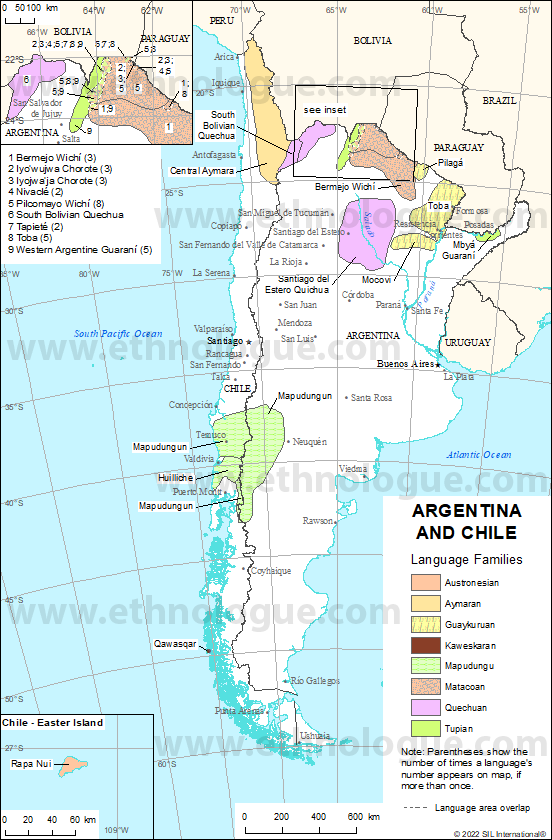
Argentina and Chile
Graphs
Language Vitality Profile
Full explanation
Language Status Profile
Full explanation
Resources
View Terms
Each Ethnologue country digest is a licensed product with restricted terms of use. Before downloading the product, you must agree to the following terms:
- This is a license for individual use. Just as with a conventionally published book, it is a violation of copyright to make a copy and give it to others.
- You may not redistribute this work in any form, including ingesting the contents into a database that is shared with others or posting it on a web site (whether public or private).
To inquire about permission for reuse or redistribution, please use the Contact Us form in the footer.
Digest of the languages of Argentina ($149.95, 31 page PDF)