
AT
Austria
Summary
- Official Name
- Population
- 8,933,000
- Principal Languages
- Standard German
- Literacy Rate
- 98% (Roser and Ortiz-Ospina 2018)
- International Conventions
- CPPDCE (2006), CSICH (2012), ECRML (1992), FCPNM (1998), ICCPR (1966), UNCRPD (2006), UNDRIP (2007)
- General References
- Comrie 1987, Stephens 1976
- Deaf Population
- 482,300
- Language Counts
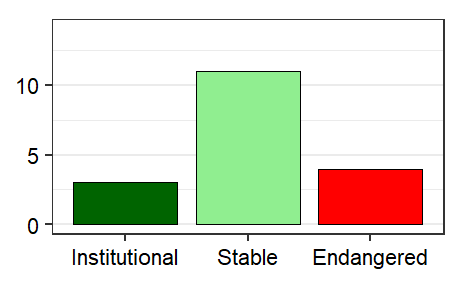
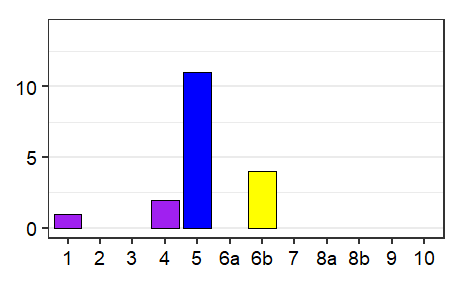
- The number of established languages listed for Austria is 18. All are living languages. Of these, 9 are indigenous and 9 are non-indigenous. Furthermore, 3 are institutional, 11 are developing, and 4 are in trouble. Also listed are 27 unestablished languages.
Languages
- Albanian, Tosk als
- Users: 28,200 in Austria (2003 UNSD). Status: Unestablished. Classification: Indo-European, Albanian, Tosk
- Alemannic gsw
- Vorarlberg state. Users: 300,000 in Austria (1991 A. Schmidt). Status: 5* (Developing). Alternate Names: Alemannisch Classification: Indo-European, Germanic, West, High German, German, Upper German, Alemannic
- Arabic, North Levantine Spoken apc
- Users: 17,600 in Austria (2003 UNSD). Status: Unestablished. Classification: Afro-Asiatic, Semitic, Central, South, Arabic
- Austrian Sign Language asq
- Scattered. Users: 8,000 (2014 EUD). EUD estimates 8,000–10,000 deaf sign language users. Another estimate: 39,500 deaf (2014 IMB). Status: 5 (Developing). Recognized language (2005, Constitution, Section 8(3) as amended). Alternate Names: Carinthian Sign Language, KGS, OEGS, ÖGS, Österreichische Gebärdensprache Classification: Sign language, Deaf community sign language
- Bavarian bar
- Lower Austria and Salzburg states; Burgenland, Carinthia, and Styria (Northern Bavarian dialect). Users: 8,280,000 in Austria (European Commission 2012). Total users in all countries: 14,539,000. Status: 5* (Developing). Alternate Names: Bairisch, Bavarian Austrian, Bayerisch, Ost-Oberdeutsch Autonym: Boarisch Classification: Indo-European, Germanic, West, High German, German, Upper German, Bavarian-Austrian
- Bosnian bos
- Users: 34,900 in Austria (2003 UNSD). Status: Unestablished. Classification: Indo-European, Balto-Slavic, Slavic, South, Western
- Bulgarian bul
- Users: 5,390 in Austria (2003 UNSD). Status: Unestablished. Classification: Indo-European, Balto-Slavic, Slavic, South, Eastern
- Burgenland Croatian ckm
- Burgenland state. Users: 30,000 in Austria (2002 UNESCO). Status: 6b (Threatened). Recognized language (1955, Treaty of Vienna), under the name of ‘Croatian’. Alternate Names: Burgenlandkroatische Sprache, Chakavian, Gradišćanskohrvatski jezik Classification: Indo-European, Balto-Slavic, Slavic, South, Western
- Chinese zho
- Users: 9,960 in Austria (2003 UNSD). Status: Unestablished.
- Croatian hrv
- Burgenland, Lower Austria and Vienna states. Users: 109,000 in Austria (2017 World Factbook). Status: 6b (Threatened). Recognized language (1955, Treaty of Vienna). Alternate Names: Hrvatski, Serbo-Croatian Classification: Indo-European, Balto-Slavic, Slavic, South, Western
- Czech ces
- Lower Austria. Users: 17,700 in Austria (2003 UNSD). Status: 5* (Dispersed). Recognized language (1955, Treaty of Vienna). Alternate Names: Čeština, Český jazyk Classification: Indo-European, Balto-Slavic, Slavic, West, Czech-Slovak
- Dutch nld
- Users: 3,800 in Austria (2003 UNSD). Status: Unestablished. Classification: Indo-European, Germanic, West, Low Saxon-Low Franconian, Low Franconian
- English eng
- Widespread. Users: 6,558,600 in Austria, all users. L1 users: 58,600 in Austria (2003 UNSD). L2 users: 6,500,000 (2019). Status: 4 (Educational). Classification: Indo-European, Germanic, West, English
- French fra
- Scattered. Users: 1,186,900 in Austria, all users. L1 users: 16,900 in Austria (2018 J. Leclerc). L2 users: 1,170,000 (Marcoux et al 2022). Status: 5* (Dispersed). Classification: Indo-European, Italic, Romance, Italo-Western, Western, Gallo-Iberian, Gallo-Romance, Gallo-Rhaetian, Oïl, French
- German, Standard deu
- Widespread. Users: 182,000 in Austria (2017 Eurostat), based on nationality. Status: 1 (National). Statutory national language (1929, Constitution, Article 8), constitution reinstated 1945. Alternate Names: Deutsch Classification: Indo-European, Germanic, West, High German, German, Middle German, East Middle German
- Greek ell
- Users: 3,100 in Austria (2003 UNSD). Status: Unestablished. Classification: Indo-European, Greek, Attic
- Hungarian hun
- Burgenland, Lower Austria, Styria, and Vienna states. Users: 40,600 in Austria (2003 UNSD). Ethnic population: 60,000 (Laakso et al 2013). Status: 4 (Educational). Recognized language (1976, Ethnic Groups Act, Articles 13–15). Alternate Names: Magyar, Ungarisch Classification: Uralic
- Italian ita
- Users: 794,700 in Austria, all users. L1 users: 10,700 in Austria (2003 UNSD). L2 users: 784,000 (European Commission 2012). Status: 5* (Dispersed). Classification: Indo-European, Italic, Romance, Italo-Western, Italo-Dalmatian
- Macedonian mkd
- Users: 5,150 in Austria (2003 UNSD). Status: Unestablished. Classification: Indo-European, Balto-Slavic, Slavic, South, Eastern
- Persian, Iranian pes
- Users: 10,700 in Austria (2003 UNSD). Status: Unestablished. Classification: Indo-European, Indo-Iranian, Iranian, Western, Southwestern, Persian
- Polish pol
- Users: 30,600 in Austria (2003 UNSD). Status: Unestablished. Classification: Indo-European, Balto-Slavic, Slavic, West, Lechitic
- Portuguese por
- Users: 3,200 in Austria (2003 UNSD). Status: Unestablished. Classification: Indo-European, Italic, Romance, Italo-Western, Western, Gallo-Iberian, Ibero-Romance, West Iberian, Portuguese-Galician
- Romani, Carpathian rmc
- Burgenland province. Users: 6,270 in Austria (2003 UNSD). All Romani in Austria. Status: 5* (Developing). Alternate Names: Burgenland Romani, Central Romani, Romanes Classification: Indo-European, Indo-Iranian, Indo-Aryan, Intermediate Divisions, Western, Romani, Northern
- Romani, Sinte rmo
- Upper Austria. Users: 6,270: All Romani in Austria (2003 UNSD). Status: 5* (Dispersed). Recognized language (1993, Federal Act of 16 December). Alternate Names: Manuš, Romanes, Sinte, Sinti, Sintitikes Classification: Indo-European, Indo-Iranian, Indo-Aryan, Intermediate Divisions, Western, Romani, Northern
- Romani, Vlax rmy
- Burgenland state: Oberwart district and Oberwart city. Status: 6b* (Threatened). Classification: Indo-European, Indo-Iranian, Indo-Aryan, Intermediate Divisions, Western, Romani, Vlax
- Romanian ron
- Users: 16,900 in Austria (2003 UNSD). Status: Unestablished. Classification: Indo-European, Italic, Romance, Eastern
- Russian rus
- Users: 150,000 in Austria (Arefyev 2012), all users. L1 users: 40,000 (European Commission 2012). Status: Unestablished. Classification: Indo-European, Balto-Slavic, Slavic, East
- Serbian srp
- Users: 177,000 in Austria (2017 World Factbook). Status: Unestablished. Classification: Indo-European, Balto-Slavic, Slavic, South, Western
- Slovak slk
- Scattered, Lower Austria, Upper Austria, Styria, Vienna. Users: 10,200 in Austria (2003 UNSD). Status: 5* (Dispersed). Recognized language (1955, Treaty of Vienna). Alternate Names: Slovenčina, Slovenský Jazyk Classification: Indo-European, Balto-Slavic, Slavic, West, Czech-Slovak
- Slovene slv
- Carinthia and Styria states. Users: 24,900 in Austria (2003 UNSD). Status: 5* (Dispersed). Recognized language (1955, Treaty of Vienna). Alternate Names: Slovenščina, Slovenian, “Windisch” (pej.) Classification: Indo-European, Balto-Slavic, Slavic, South, Western
- Spanish spa
- Users: 299,980 in Austria, all users. L1 users: 9,980 in Austria (2003 UNSD). L2 users: 290,000 (2019). Status: Unestablished. Classification: Indo-European, Italic, Romance, Italo-Western, Western, Gallo-Iberian, Ibero-Romance, West Iberian, Castilian
- Swabian swg
- Tyrol state: Reutte district, Reutte town area. Status: 5* (Developing). Alternate Names: Schwäbisch Classification: Indo-European, Germanic, West, High German, German, Upper German, Alemannic
- Swedish swe
- Users: 2,680 in Austria (2003 UNSD). Status: Unestablished. Classification: Indo-European, Germanic, North, East Scandinavian, Danish-Swedish, Swedish
- Tagalog tgl
- Users: 5,580 in Austria (2003 UNSD). Status: Unestablished. Classification: Austronesian, Malayo-Polynesian, Greater Central Philippine, Central Philippine, Tagalog
- Turkish tur
- Users: 197,000 in Austria (2015). Status: Unestablished. Classification: Turkic, Southern, Turkish
- Walser wae
- Tyrol state: Paznauntal area, Brandnertal, Galtur, Lech, Reintal, Schricken, Silbertal, and Warth; Vorarlberg state: Grosses Walsertal, Kleinwalsertal, Tannberg areas. Users: 8,080 in Austria (2000). Status: 6b* (Threatened). Alternate Names: Walscher Classification: Indo-European, Germanic, West, High German, German, Upper German, Alemannic
Languages by Status
German, Standard
[deu] 1 (National). Statutory national language (1929, Constitution, Article 8), constitution reinstated 1945. 182,000 in Austria (2017 Eurostat), based on nationality.
English
[eng] 4 (Educational). 6,558,600 in Austria, all users. L1 users: 58,600 in Austria (2003 UNSD). L2 users: 6,500,000 (2019).
Hungarian
[hun] 4 (Educational). Recognized language (1976, Ethnic Groups Act, Articles 13–15). 40,600 in Austria (2003 UNSD). Ethnic population: 60,000 (Laakso et al 2013).
Czech
[ces] 5* (Dispersed). Recognized language (1955, Treaty of Vienna). 17,700 in Austria (2003 UNSD).
French
[fra] 5* (Dispersed). 1,186,900 in Austria, all users. L1 users: 16,900 in Austria (2018 J. Leclerc). L2 users: 1,170,000 (Marcoux et al 2022).
Italian
[ita] 5* (Dispersed). 794,700 in Austria, all users. L1 users: 10,700 in Austria (2003 UNSD). L2 users: 784,000 (European Commission 2012).
Romani, Sinte
[rmo] 5* (Dispersed). Recognized language (1993, Federal Act of 16 December). 6,270: All Romani in Austria (2003 UNSD).
Slovak
[slk] 5* (Dispersed). Recognized language (1955, Treaty of Vienna). 10,200 in Austria (2003 UNSD).
Slovene
[slv] 5* (Dispersed). Recognized language (1955, Treaty of Vienna). 24,900 in Austria (2003 UNSD).
Alemannic
[gsw] 5* (Developing). 300,000 in Austria (1991 A. Schmidt).
Austrian Sign Language
[asq] 5 (Developing). Recognized language (2005, Constitution, Section 8(3) as amended). 8,000 (2014 EUD). EUD estimates 8,000–10,000 deaf sign language users. Another estimate: 39,500 deaf (2014 IMB).
Bavarian
[bar] 5* (Developing). 8,280,000 in Austria (European Commission 2012). Total users in all countries: 14,539,000.
Romani, Carpathian
[rmc] 5* (Developing). 6,270 in Austria (2003 UNSD). All Romani in Austria.
Swabian
[swg] 5* (Developing).
Burgenland Croatian
[ckm] 6b (Threatened). Recognized language (1955, Treaty of Vienna), under the name of ‘Croatian’. 30,000 in Austria (2002 UNESCO).
Croatian
[hrv] 6b (Threatened). Recognized language (1955, Treaty of Vienna). 109,000 in Austria (2017 World Factbook).
Romani, Vlax
[rmy] 6b* (Threatened).
Walser
[wae] 6b* (Threatened). 8,080 in Austria (2000).
Albanian, Tosk
[als] Unestablished. 28,200 in Austria (2003 UNSD).
Arabic, North Levantine Spoken
[apc] Unestablished. 17,600 in Austria (2003 UNSD).
Bosnian
[bos] Unestablished. 34,900 in Austria (2003 UNSD).
Bulgarian
[bul] Unestablished. 5,390 in Austria (2003 UNSD).
Chinese
[zho] Unestablished. 9,960 in Austria (2003 UNSD).
Dutch
[nld] Unestablished. 3,800 in Austria (2003 UNSD).
Greek
[ell] Unestablished. 3,100 in Austria (2003 UNSD).
Macedonian
[mkd] Unestablished. 5,150 in Austria (2003 UNSD).
Persian, Iranian
[pes] Unestablished. 10,700 in Austria (2003 UNSD).
Polish
[pol] Unestablished. 30,600 in Austria (2003 UNSD).
Portuguese
[por] Unestablished. 3,200 in Austria (2003 UNSD).
Romanian
[ron] Unestablished. 16,900 in Austria (2003 UNSD).
Russian
[rus] Unestablished. 150,000 in Austria (Arefyev 2012), all users. L1 users: 40,000 (European Commission 2012).
Serbian
[srp] Unestablished. 177,000 in Austria (2017 World Factbook).
Spanish
[spa] Unestablished. 299,980 in Austria, all users. L1 users: 9,980 in Austria (2003 UNSD). L2 users: 290,000 (2019).
Swedish
[swe] Unestablished. 2,680 in Austria (2003 UNSD).
Tagalog
[tgl] Unestablished. 5,580 in Austria (2003 UNSD).
Turkish
[tur] Unestablished. 197,000 in Austria (2015).
Maps
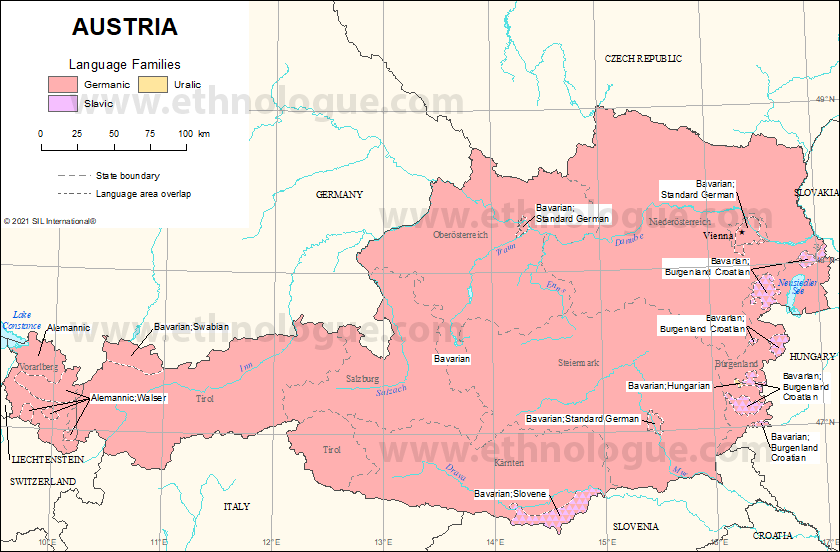
Austria
Graphs
Language Vitality Profile
Full explanation
Language Status Profile
Full explanation
Resources
View Terms
Each Ethnologue country digest is a licensed product with restricted terms of use. Before downloading the product, you must agree to the following terms:
- This is a license for individual use. Just as with a conventionally published book, it is a violation of copyright to make a copy and give it to others.
- You may not redistribute this work in any form, including ingesting the contents into a database that is shared with others or posting it on a web site (whether public or private).
To inquire about permission for reuse or redistribution, please use the Contact Us form in the footer.
Digest of the languages of Austria ($149.95, 25 page PDF)