
BI
Republic of Burundi
Burundi
Summary
- Official Name
- Republic of Burundi
- Population
- 12,255,000
- Principal Languages
- French, Rundi
- Literacy Rate
- 68% (2017 UNESCO)
- International Conventions
- ACHPR (1987), CPPDCE (2006), CSICH (2012), ICCPR (1966), UNCRPD (2006)
- General References
- Bendor-Samuel and Hartell 1989, Welmers 1971a
- Language Counts
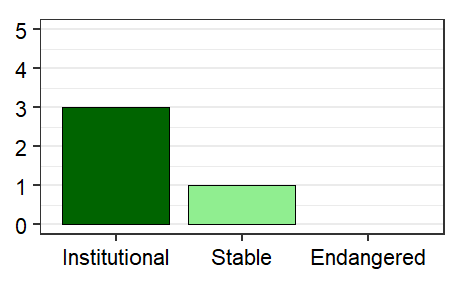
- The number of established languages listed for Burundi is 4. All are living languages. Of these, 2 are indigenous and 2 are non-indigenous. Furthermore, 3 are institutional and 1 is developing. Also listed are 4 unestablished languages.
Languages
- Burundian Sign Language lsb
- Scattered. Users: 58,000 (2021 DBS/DOOR/SIL). Estimated 35,000–70,000 deaf signers, assuming 0.3%–0.6% of the total population. Another estimate: 5,000 (2020 ANSB). Status: 5* (Developing). Alternate Names: LSB, Langue des Signes Burundaise Classification: Sign language, Deaf community sign language
- French fra
- Major cities. Users: 1,072,100 in Burundi, all users. L1 users: 2,100 in Burundi (2021 J. Leclerc). L2 users: 1,070,000 (Marcoux et al 2022). Status: 3 (Wider communication). De facto national working language. Alternate Names: Français Classification: Indo-European, Italic, Romance, Italo-Western, Western, Gallo-Iberian, Gallo-Romance, Gallo-Rhaetian, Oïl, French
- Gujarati guj
- Users: 2,700 in Burundi (2017). Status: Unestablished. Classification: Indo-European, Indo-Iranian, Indo-Aryan, Intermediate Divisions, Western, Gujarati
- Kinyarwanda kin
- Users: 30,000 in Burundi (2017). Status: Unestablished. Classification: Niger-Congo, Atlantic-Congo, Volta-Congo, Benue-Congo, Bantoid, Southern, Narrow Bantu, Central, J, Ruanda-Rundi (D.61)
- Rundi run
- Widespread. Users: 10,420,000 in Burundi (2017), increasing. 4,000,000 monolinguals. Ethnic population: 10,000,000. Total users in all countries: 11,253,950. Status: 1 (National). Statutory national language (2005, Constitution, Article 5). Alternate Names: Hima, Kirundi, Urundi Autonym: Ikirundi Classification: Niger-Congo, Atlantic-Congo, Volta-Congo, Benue-Congo, Bantoid, Southern, Narrow Bantu, Central, J, Ruanda-Rundi (D.62)
- Swahili swh
- Bujumbura Mairie: Buyenzi, Quartier asiatique, Muslim and Congolese neighborhoods (probably Congo Swahili [swc]); Gitega province: Gitega. Users: 11,800 in Burundi (2017), increasing. Status: 3 (Wider communication). Alternate Names: Kiswahili Classification: Niger-Congo, Atlantic-Congo, Volta-Congo, Benue-Congo, Bantoid, Southern, Narrow Bantu, Central, G, Swahili (G.42)
Languages by Status
Rundi
[run] 1 (National). Statutory national language (2005, Constitution, Article 5). 10,420,000 in Burundi (2017), increasing. 4,000,000 monolinguals. Ethnic population: 10,000,000. Total users in all countries: 11,253,950.
French
[fra] 3 (Wider communication). De facto national working language. 1,072,100 in Burundi, all users. L1 users: 2,100 in Burundi (2021 J. Leclerc). L2 users: 1,070,000 (Marcoux et al 2022).
Swahili
[swh] 3 (Wider communication). 11,800 in Burundi (2017), increasing.
Burundian Sign Language
[lsb] 5* (Developing). 58,000 (2021 DBS/DOOR/SIL). Estimated 35,000–70,000 deaf signers, assuming 0.3%–0.6% of the total population. Another estimate: 5,000 (2020 ANSB).
Maps
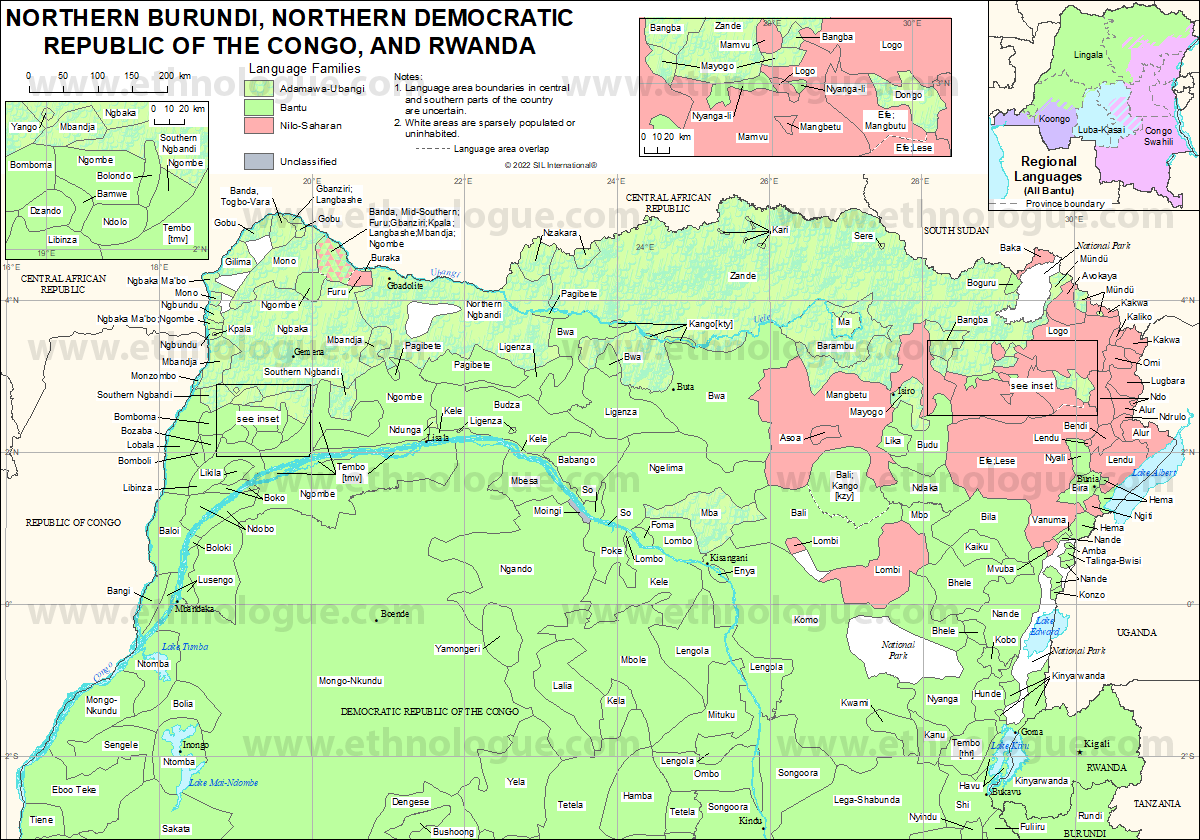
Northern Democratic Republic of Congo
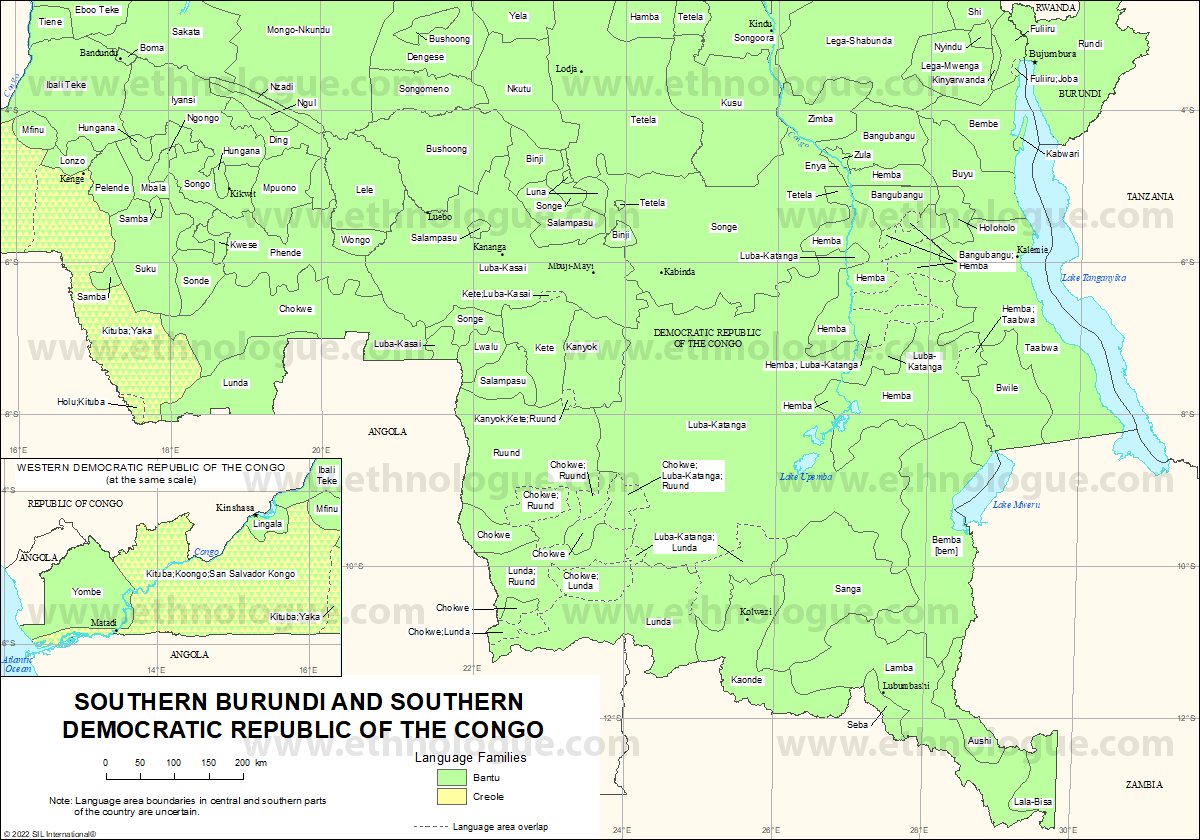
Southern Democratic Republic of Congo
Graphs
Language Vitality Profile
Full explanation
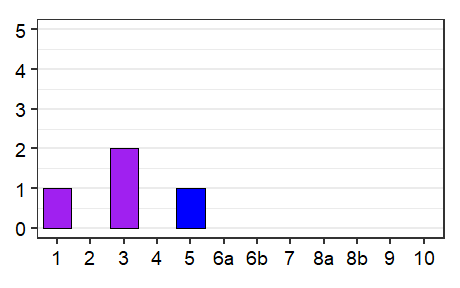
Language Status Profile
Full explanation
Resources
View Terms
Each Ethnologue country digest is a licensed product with restricted terms of use. Before downloading the product, you must agree to the following terms:
- This is a license for individual use. Just as with a conventionally published book, it is a violation of copyright to make a copy and give it to others.
- You may not redistribute this work in any form, including ingesting the contents into a database that is shared with others or posting it on a web site (whether public or private).
To inquire about permission for reuse or redistribution, please use the Contact Us form in the footer.
Digest of the languages of Burundi ($149.95, PDF)