
BW
Republic of Botswana
Botswana
Summary
- Official Name
- Republic of Botswana
- Population
- 2,352,000
- Principal Languages
- English, Setswana
- Literacy Rate
- 87% (2013 UNESCO)
- International Conventions
- ACHPR (1987), CPPDCE (2006), CSICH (2012), ICCPR (1966), UNCRPD (2006), UNDRIP (2007)
- General References
- Andersson and Janson 1997, Bendor-Samuel and Hartell 1989
- Deaf Population
- 990 deaf, 6,480 hearing impaired (1991 census)
- Language Counts
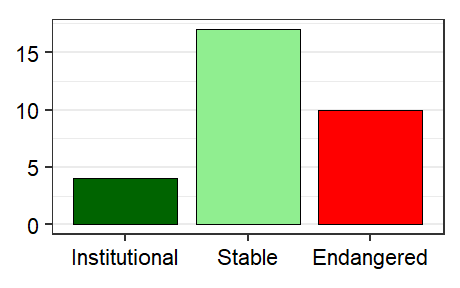
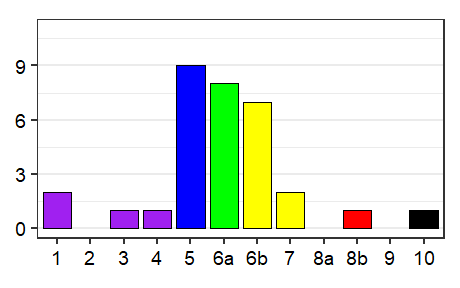
- The number of established languages listed for Botswana is 31. Of these, 30 are living and 1 is extinct. Of the living languages, 26 are indigenous and 4 are non-indigenous. Furthermore, 3 are institutional, 9 are developing, 8 are vigorous, 9 are in trouble, and 1 is dying. Also listed are 6 unestablished languages.
Languages
- !Xóõ nmn
- Ghanzi district: south; Kgalagadi district: north; Kweneng and Southern districts: west. Users: 2,000 in Botswana (2011 C. Naumann). Total users in all countries: 2,500. Status: 6b* (Threatened). Alternate Names: !Khong, !Xo, !Xo’o~, East Taa, N/amani, Ngǀamani, Taa, Tsasi Classification: Tuu, Taa
- Afrikaans afr
- Central and Kgatleng districts: north of Limpopo river; Ghanzi and Kgalagadi districts: widespread; North West district along Namibian border; Southern district: small area southwest of Khakea; possibly Takatokwane area. Users: 8,080 in Botswana (2015 UNSD). Status: 5* (Dispersed). Classification: Indo-European, Germanic, West, Low Saxon-Low Franconian, Low Franconian
- Birwa brl
- Central district: Bobonong subdistrict, Bobonong, Kobojango, Mathathane, Motalatau, and Semolale. Users: 15,000 in Botswana (2004 R. Cook). Total users in all countries: 71,000. Status: 6a* (Vigorous). Classification: Niger-Congo, Atlantic-Congo, Volta-Congo, Benue-Congo, Bantoid, Southern, Narrow Bantu, Central, S, Sotho-Tswana (S.32)
- Chichewa nya
- Status: 4 (Educational). Alternate Names: Chicheŵa, Chinjanja, Chinyanja, Nyanja Classification: Niger-Congo, Atlantic-Congo, Volta-Congo, Benue-Congo, Bantoid, Southern, Narrow Bantu, Central, N, Chewa-Nyanja (N.31)
- Chinese zho
- Users: 1,000 in Botswana. Status: Unestablished.
- English eng
- Users: 939,900 in Botswana, all users. L1 users: 64,900 in Botswana (2020). L2 users: 875,000 (2016). Status: 1 (National). De facto national working language. Classification: Indo-European, Germanic, West, English
- Gciriku diu
- North West district; extreme west and north borders with Namibia. Users: 2,000 in Botswana (2004 R. Cook). Status: 5 (Dispersed). Alternate Names: Diriko, Diriku, Mbogedo, Mbogedu, Rugciriku, Rumanyo, Shimbogedu Classification: Niger-Congo, Atlantic-Congo, Volta-Congo, Benue-Congo, Bantoid, Southern, Narrow Bantu, Central, K, Luyana (K.332)
- Gujarati guj
- Users: 1,850 in Botswana (2003 UNSD). Status: Unestablished. Classification: Indo-European, Indo-Iranian, Indo-Aryan, Intermediate Divisions, Western, Gujarati
- Haiǁom hgm
- Scattered. Users: 30,000 in Botswana (2003 J. Leclerc). Status: 6a* (Vigorous). Classification: Khoe-Kwadi, Khoe, Khoekhoe, Hainum
- Herero her
- Central district: Letlhakane, Mahalapye, Mokoboxane, Rakops, and Toromoja; Ghanzi district: Charles Hill, Dekar, Dryhoek, Ghanzi, Makunda, and New Kanagas; Kgalagadi district: Omaweneno, Tsabong, and Werd; Kgatleng district: Morwa; North West district: Gomare, Makakung, Maun, Nokaneng, Nxaunxau, Sehitwa, Shakawe, and western cattleposts; scattered among other ethnic groups. Users: 18,700 in Botswana (2015 UNSD). Status: 5 (Dispersed). Alternate Names: Ochiherero, Otjiherero Classification: Niger-Congo, Atlantic-Congo, Volta-Congo, Benue-Congo, Bantoid, Southern, Narrow Bantu, Central, R, Herero (R.30)
- Juǀ’hoansi ktz
- Ghanzi district: Ghanzi, Grootelaagte, Kanagas, and commercial farms; North West district: west of Nokaneng. Users: 5,000 in Botswana (2003 J. Leclerc). Status: 6a* (Vigorous). Alternate Names: !Xo, !Xun, Dobe Kung, Dzu’oasi, Ju’oasi, Juǀ’hoan, Kung, Kung-Tsumkwe, Tsumkwe, Xaixai, Xû, Zhu’oasi Classification: Kx’a, !Kung
- Kalanga kck
- Central district: east third; North East district: widespread; North West district: southeast. Users: 171,000 in Botswana (2020). Status: 5* (Developing). Alternate Names: Chikalanga, Ikalanga, Kalagan, Kalaka, Sekalaka, Sekalanga, Sekalaña, Tjikalanga Classification: Niger-Congo, Atlantic-Congo, Volta-Congo, Benue-Congo, Bantoid, Southern, Narrow Bantu, Central, S, Shona (S.16)
- Kgalagadi xkv
- Ghanzi district: Charles Hill, Dekar, Ghanzi, Grootlaagte, Kanagas, Karakobis, Kuke, Kule, Ncojane, New Xade, and Tsotsha; Kgalagadi district: north; Kweneng district: west; Southern district; North West district: Maun and Sehitwa. Users: 78,800 (2020). Status: 6a* (Vigorous). Alternate Names: Bakgalagari, Kgalagarhi, Kgalagari, Khalagari, Khalakadi, Kxhalaxadi, Qhalaxari, Sekgalagadi, Shekgalagadi, “Makgalagadi” (pej.) Autonym: Shekgalagari Classification: Niger-Congo, Atlantic-Congo, Volta-Congo, Benue-Congo, Bantoid, Southern, Narrow Bantu, Central, S, Sotho-Tswana (S.311)
- Khoekhoe naq
- Ghanzi district: villages along Ghanzi-Mamuno road; Kgalagadi district: Makopong, Omaweneno, Tsabong, and Tshane. Users: 200 in Botswana (2003 J. Leclerc). Status: 5* (Dispersed). Alternate Names: Bergdamara, Dama, Damaqua, Damara, Khoekhoegowab, Nama, Namakwa, Naman, Namaqua, Tama, Tamakwa, Tamma, “Hottentot” (pej.), “Kupkaferrn” (pej.), “Kupkaffer” (pej.) Classification: Khoe-Kwadi, Khoe, Khoekhoe, Nama
- Khwedam xuu
- North West district: ǀAo-Kyao, Beyetca, Cadikarauwe, Cauwe, Djaxo, Dungu, Gan, Geixa, Gudigoa, Kangwara, Kaputura, Mohembo, Moxatce, Ngarange, ǁQom-ca, Sekanduko, Seronga, Shakawe, Sicokora, Sikondomboro, Tobere, ‡Umbexa, and Xongoa. Users: 1,700 in Botswana (Brenzinger 2013b). Children and elderly are monolingual. Status: 6a (Vigorous). Alternate Names: Khoe, Khwe, Kxoe, Xun, “Basarwa” (pej.), “Mbarakwena” (pej.), “Water Bushmen” (pej.) Classification: Khoe-Kwadi, Khoe, Kalahari Khoe, Northwest
- Kua tyu
- Central district: especially Mahalapye, Serowe subdistricts; North East district: primarily cattleposts and settlements. Users: 820 (2004 R. Cook). Status: 6b* (Threatened). Alternate Names: Cua, Tyhua, Tyua, “Basarwa” (pej.), “Masarwa” (pej.) Classification: Khoe-Kwadi, Khoe, Kalahari Khoe, Northeast
- Kuhane sbs
- North West district: Chobe subdistrict, mixed in with Lozi [loz] language area. Users: 6,520 in Botswana (2015 UNSD). Status: 6a* (Vigorous). Alternate Names: Chikuhane, Echisubia, Ikuhane, Kuahane, Kwahane, Sesubea, Sesubiya, Subia, Subiya, Supia Classification: Niger-Congo, Atlantic-Congo, Volta-Congo, Benue-Congo, Bantoid, Southern, Narrow Bantu, Central, K, Subiya-Totela (K.42)
- Kung-Ekoka knw
- Ghanzi district: Charles Hill sub-district, northwest of Ghanzi town. Users: 2,000 in Botswana (Brenzinger 2013b). Status: 6b* (Threatened). Alternate Names: !Hu, !Ku, !Kung, !Xu, !Xun, !Xung, Ekoka-!Xû Classification: Kx’a, !Kung
- Lower Nossob nsb
- Kgalagadi district, South African and Namibian border area. Users: No known L1 speakers in Botswana. Status: 10 (Extinct). Alternate Names: Lower-Nosop Classification: Tuu, Taa
- Lozi loz
- North West district: Chobe subdistrict, mixed in with Kuhane [sbs] language area. Users: 14,000 in Botswana (2003 J. Leclerc). Status: 5* (Dispersed). Alternate Names: siLozi Classification: Niger-Congo, Atlantic-Congo, Volta-Congo, Benue-Congo, Bantoid, Southern, Narrow Bantu, Central, K, Lozi (K.21)
- Mbukushu mhw
- North West district: north of Gomare within 30 km of Okavango river. Users: 37,100 in Botswana (2020). Total users in all countries: 95,010. Status: 6a (Vigorous). Alternate Names: Gova, Hambukushu, Kusso, Mambukush, Mampukush, Mbukuhu, Mbukushi, Sembukushu, Sempukushu Autonym: Thimbukushu Classification: Niger-Congo, Atlantic-Congo, Volta-Congo, Benue-Congo, Bantoid, Southern, Narrow Bantu, Central, K, Luyana (K.333)
- Nambya nmq
- Central district: west and southeast of Nata town, also along Nata river watershed; North West district: southeast corner. Users: 15,000 in Botswana (2004 R. Cook). Status: 5* (Developing). Alternate Names: Chinambya, Nambzya, Nanzva, chiNambya Classification: Niger-Congo, Atlantic-Congo, Volta-Congo, Benue-Congo, Bantoid, Southern, Narrow Bantu, Central, S, Shona (S.16)
- Naro nhr
- Ghanzi district: Bere, Dekar, Charles Hill, East Hanahai, Ghanzi, Grootelaagte, Kanagas, Karakobis, Kuke, Makunda, New Kanagas, Tshobokwane, and West Hanahai commercial farms; North West district: south. Users: 18,000 in Botswana, all users. L1 users: 8,000 in Botswana (2014 H. Visser). L2 users: 10,000 (Brenzinger 2013b). Total users in all countries: 20,000 (as L1: 10,000; as L2: 10,000). Status: 3 (Wider communication). A dominant language in the Ghanzi district in the 19th century. Used in church, agriculture, primary school education, and literacy promotion. Tied to a strong Naro ethnic identity. Alternate Names: Nharo, Nharon, Nhauru, Nhaurun, ǀAikwe, ǁAikwe, ǁAisan, ǁAiǁe, ǁAiǁen Autonym: Naro Classification: Khoe-Kwadi, Khoe, Kalahari Khoe, Southwest
- Ndebele nde
- Central district: Zimbabwe border; North East district: a few villages; North West district: Chobe area. Users: 23,200 in Botswana (2020). Status: 5* (Dispersed). Alternate Names: Isinde’bele, Northern Ndebele, Sindebele, Tabele, Tebele, isiNdebele Classification: Niger-Congo, Atlantic-Congo, Volta-Congo, Benue-Congo, Bantoid, Southern, Narrow Bantu, Central, S, Nguni (S.44)
- Setswana tsn
- Widespread as lingua franca; Central district: Mahalapye and Serowe-Palapye subdistricts; Kgatleng and South East districts; Kweneng and Southern districts: east; North West district: Maun village area. Users: 1,940,000 in Botswana, all users. L1 users: 1,790,000 in Botswana (2020). L2 users: 150,000. Total users in all countries: 13,745,730 (as L1: 5,895,730; as L2: 7,850,000). Status: 1 (National). De facto national language. Alternate Names: Bechuana, Beetjuans, Chuana, Chwana, Coana, Cuana, Sechuana, Secoana, Secwana, Tshwana, Tswana Autonym: Setswana Classification: Niger-Congo, Atlantic-Congo, Volta-Congo, Benue-Congo, Bantoid, Southern, Narrow Bantu, Central, S, Sotho-Tswana (S.31)
- Shua shg
- Central district: Boteti subdistrict, Letlhakane, Mmatshumu, Mokoboxane, Motopi, and Popipi; Tutume subdistrict, Gweta and Nata; North West district: small area southeast. Users: 2,000 (Brenzinger 2013b). Status: 7 (Shifting). Alternate Names: Mashuakwe, Sesarwa, Shua-Khwe, Shuakhwena, Tshumakwe Autonym: Shua Classification: Khoe-Kwadi, Khoe, Kalahari Khoe, North-Central
- Sotho, Northern nso
- Users: 11,000 in Botswana (2003 J. Leclerc). Status: Unestablished. Classification: Niger-Congo, Atlantic-Congo, Volta-Congo, Benue-Congo, Bantoid, Southern, Narrow Bantu, Central, S, Sotho-Tswana (S.32)
- Sotho, Southern sot
- Users: 9,300 in Botswana (2003 J. Leclerc). Status: Unestablished. Classification: Niger-Congo, Atlantic-Congo, Volta-Congo, Benue-Congo, Bantoid, Southern, Narrow Bantu, Central, S, Sotho-Tswana (S.33)
- Tshuwau hio
- Central district: especially Mahalapye and Serowe subdistricts; Kweneng district: Ghanzi and Kgatleng districts’ border areas; primarily cattleposts and settlements. Users: 2,000 in Botswana (Brenzinger 2013b). Total users in all countries: 5,540. Status: 7 (Shifting). Alternate Names: Chirechire, Chuwau, Chware, Gabake-Ntshori, Gǁabake, Haitshuari, Hietshware, Hiochuwau, Hiotshuwau, Kalahari Khoe, Kwe, Kwe-Etshori Kwee, Kwe-Tshori, Masarwa, Sesarwa, Tati, Tati Bushman, Tshwa, Tshwao, Tsoa, Tsua, “Sarwa” (pej.) Classification: Khoe-Kwadi, Khoe, Kalahari Khoe, Northeast
- Tswapong two
- Central district: Mahalapye subdistrict, all villages east of Mahalapye; Kgatleng district: northeast corner. Users: 5,380 (2003 UNSD). Status: 6a* (Vigorous). Alternate Names: Setswapong Classification: Niger-Congo, Atlantic-Congo, Volta-Congo, Benue-Congo, Bantoid, Southern, Narrow Bantu, Central, S, Sotho-Tswana (S.32)
- Xhosa xho
- Users: 9,300 in Botswana (2003 J. Leclerc). Status: Unestablished. Classification: Niger-Congo, Atlantic-Congo, Volta-Congo, Benue-Congo, Bantoid, Southern, Narrow Bantu, Central, S, Nguni (S.41)
- Yeyi yey
- Central district: Letihakane, Motopi, Rakops, and Xumu; North West district: Maun, Shorobe up to Daunara, Gumare, Ikoga, Mababe, Nokaneng, Sankoyo, Sepopo, Seronga, and Shakawe. Users: 4,180 in Botswana (2015 UNSD). Ethnic population: 47,000. Total users in all countries: 11,180. Status: 6b (Threatened). Alternate Names: Ciyei, Seyei, Seyeyi, Siyei, Wayeyi, Yeei, Yei, “Koba” (pej.), “Kuba” (pej.), “Sekoba” (pej.) Autonym: Shiyeyi Classification: Niger-Congo, Atlantic-Congo, Volta-Congo, Benue-Congo, Bantoid, Southern, Narrow Bantu, Central, R, Yeyi (R.41)
- Zezuru sna
- Central district: north; North West district: northeast. Users: 46,300 in Botswana (2020). Status: 5* (Dispersed). Alternate Names: Shona, chiShona Classification: Niger-Congo, Atlantic-Congo, Volta-Congo, Benue-Congo, Bantoid, Southern, Narrow Bantu, Central, S, Shona (S.10)
- Zulu zul
- Users: 4,600 in Botswana (2003 J. Leclerc). Status: Unestablished. Classification: Niger-Congo, Atlantic-Congo, Volta-Congo, Benue-Congo, Bantoid, Southern, Narrow Bantu, Central, S, Nguni (S.42)
- ǀGwi gwj
- Ghanzi district: East Hanahai, Kacgae, and New Xade; Kweneng district: Dutlwe, Kautwane, Khekhenye, Letihakeng, Morwamosu, Serinane, Takotokwane, and Tsetseng. Users: 1,470 (Brenzinger 2013b). Status: 6b* (Threatened). Alternate Names: Dcui, G!wikwe, Gcwi, Gǀwi, Gǀwikhwe, ǀGui Classification: Khoe-Kwadi, Khoe, Kalahari Khoe, Southwest
- ǁAni hnh
- North West district: Khwai river, Mababe; near Khwedam [xuu] language area. Users: 1,000 (Brenzinger 2013b). Status: 6b* (Threatened). Alternate Names: Handa-Khwe, Handakwe-Dam, Handá, Handádam, Ts’exa, Ts’éxa, ǀAnda, ǁAnikhwe Classification: Khoe-Kwadi, Khoe, Kalahari Khoe, Northwest
- ǁGana gnk
- Central district: Boteti subdistrict, cattleposts south and west of Rakops; Ghanzi district: New Xadi and Ghanzi, Ghanzi commercial farms, Central Kalahari Game Reserve. Users: 1,030 (Brenzinger 2013b). Status: 6b* (Threatened). Alternate Names: /Gui, Dxana, Gxana, Gxanna, Gǁana, Gǁana-Khwe, Kanakhoe Classification: Khoe-Kwadi, Khoe, Kalahari Khoe, Southwest
- ǂ’Amkhoe huc
- Kweneng district: southern Kalahari desert. Users: 30 (Brenzinger 2013b), decreasing. Status: 8b (Nearly extinct). Alternate Names: Eastern ‡Hoan, ǀHua, ǀHû, ‡Hoa, ‡Hoan, ‡Hoã, ‡Hua, ‡Hua-Owani Classification: Kx’a
Languages by Status
English
[eng] 1 (National). De facto national working language. 939,900 in Botswana, all users. L1 users: 64,900 in Botswana (2020). L2 users: 875,000 (2016).
Setswana
[tsn] 1 (National). De facto national language. 1,940,000 in Botswana, all users. L1 users: 1,790,000 in Botswana (2020). L2 users: 150,000. Total users in all countries: 13,745,730 (as L1: 5,895,730; as L2: 7,850,000).
Naro
[nhr] 3 (Wider communication). A dominant language in the Ghanzi district in the 19th century. Used in church, agriculture, primary school education, and literacy promotion. Tied to a strong Naro ethnic identity. 18,000 in Botswana, all users. L1 users: 8,000 in Botswana (2014 H. Visser). L2 users: 10,000 (Brenzinger 2013b). Total users in all countries: 20,000 (as L1: 10,000; as L2: 10,000).
Chichewa
[nya] 4 (Educational).
Afrikaans
[afr] 5* (Dispersed). 8,080 in Botswana (2015 UNSD).
Gciriku
[diu] 5 (Dispersed). 2,000 in Botswana (2004 R. Cook).
Herero
[her] 5 (Dispersed). 18,700 in Botswana (2015 UNSD).
Khoekhoe
[naq] 5* (Dispersed). 200 in Botswana (2003 J. Leclerc).
Lozi
[loz] 5* (Dispersed). 14,000 in Botswana (2003 J. Leclerc).
Ndebele
[nde] 5* (Dispersed). 23,200 in Botswana (2020).
Zezuru
[sna] 5* (Dispersed). 46,300 in Botswana (2020).
Kalanga
[kck] 5* (Developing). 171,000 in Botswana (2020).
Nambya
[nmq] 5* (Developing). 15,000 in Botswana (2004 R. Cook).
Birwa
[brl] 6a* (Vigorous). 15,000 in Botswana (2004 R. Cook). Total users in all countries: 71,000.
Haiǁom
[hgm] 6a* (Vigorous). 30,000 in Botswana (2003 J. Leclerc).
Juǀ’hoansi
[ktz] 6a* (Vigorous). 5,000 in Botswana (2003 J. Leclerc).
Kgalagadi
[xkv] 6a* (Vigorous). 78,800 (2020).
Khwedam
[xuu] 6a (Vigorous). 1,700 in Botswana (Brenzinger 2013b). Children and elderly are monolingual.
Kuhane
[sbs] 6a* (Vigorous). 6,520 in Botswana (2015 UNSD).
Mbukushu
[mhw] 6a (Vigorous). 37,100 in Botswana (2020). Total users in all countries: 95,010.
Tswapong
[two] 6a* (Vigorous). 5,380 (2003 UNSD).
!Xóõ
[nmn] 6b* (Threatened). 2,000 in Botswana (2011 C. Naumann). Total users in all countries: 2,500.
Kua
[tyu] 6b* (Threatened). 820 (2004 R. Cook).
Kung-Ekoka
[knw] 6b* (Threatened). 2,000 in Botswana (Brenzinger 2013b).
Yeyi
[yey] 6b (Threatened). 4,180 in Botswana (2015 UNSD). Ethnic population: 47,000. Total users in all countries: 11,180.
ǀGwi
[gwj] 6b* (Threatened). 1,470 (Brenzinger 2013b).
ǁAni
[hnh] 6b* (Threatened). 1,000 (Brenzinger 2013b).
ǁGana
[gnk] 6b* (Threatened). 1,030 (Brenzinger 2013b).
Shua
[shg] 7 (Shifting). 2,000 (Brenzinger 2013b).
Tshuwau
[hio] 7 (Shifting). 2,000 in Botswana (Brenzinger 2013b). Total users in all countries: 5,540.
ǂ’Amkhoe
[huc] 8b (Nearly extinct). 30 (Brenzinger 2013b), decreasing.
Lower Nossob
[nsb] 10 (Extinct). No known L1 speakers in Botswana.
Chinese
[zho] Unestablished. 1,000 in Botswana.
Gujarati
[guj] Unestablished. 1,850 in Botswana (2003 UNSD).
Sotho, Northern
[nso] Unestablished. 11,000 in Botswana (2003 J. Leclerc).
Sotho, Southern
[sot] Unestablished. 9,300 in Botswana (2003 J. Leclerc).
Xhosa
[xho] Unestablished. 9,300 in Botswana (2003 J. Leclerc).
Zulu
[zul] Unestablished. 4,600 in Botswana (2003 J. Leclerc).
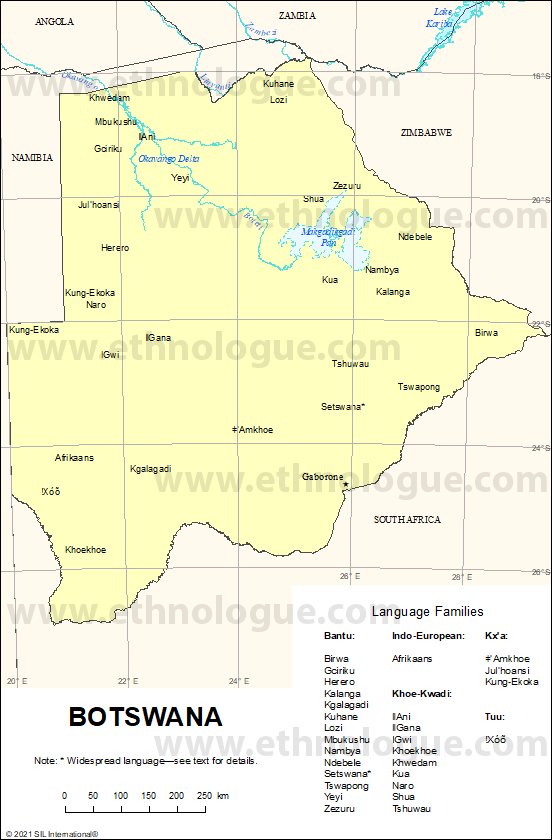
Maps
Botswana
Graphs
Language Vitality Profile
Full explanation
Language Status Profile
Full explanation
Resources
View Terms
Each Ethnologue country digest is a licensed product with restricted terms of use. Before downloading the product, you must agree to the following terms:
- This is a license for individual use. Just as with a conventionally published book, it is a violation of copyright to make a copy and give it to others.
- You may not redistribute this work in any form, including ingesting the contents into a database that is shared with others or posting it on a web site (whether public or private).
To inquire about permission for reuse or redistribution, please use the Contact Us form in the footer.
Digest of the languages of Botswana ($149.95, 33 page PDF)