
CG
Republic of the Congo
Congo
Summary
- Official Name
- Republic of the Congo
- Population
- 5,546,000
- Principal Languages
- French
- Literacy Rate
- 80% (2018 UNESCO)
- International Conventions
- ACHPR (1987), CDE (1960), CPPDCE (2006), CSICH (2012), ICCPR (1966), UNCRPD (2006), UNDRIP (2007)
- General References
- Bendor-Samuel and Hartell 1989, Jacquot 1971
- Language Counts
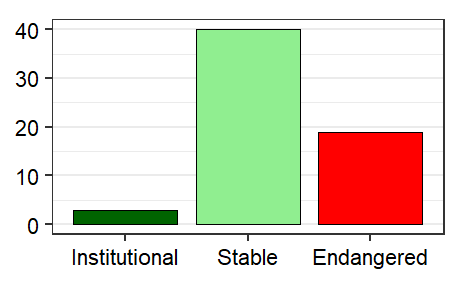
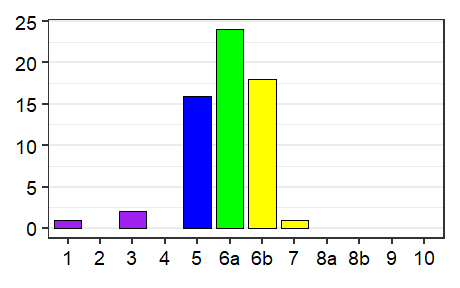
- The number of established languages listed for Congo is 62. All are living languages. Of these, 55 are indigenous and 7 are non-indigenous. Furthermore, 3 are institutional, 16 are developing, 26 are vigorous, and 17 are in trouble. Also listed are 2 unestablished languages.
Languages
- Aka axk
- Cuvette, Likouala, and Sangha departments. Users: 15,000 in Congo (Cavalli-Sforza 1986). Status: 5* (Developing). Alternate Names: Beka, Mòáka, Yaka, Yaâkâ, “Babinga” (pej.), “Binga” (pej.) Classification: Niger-Congo, Atlantic-Congo, Volta-Congo, Benue-Congo, Bantoid, Southern, Narrow Bantu, Northwest, C, Ngondi (C.104)
- Akwa akw
- Cuvette department: Makoua district; Cuvette-Ouest department: east. Users: 42,000 (2018). Status: 6b* (Threatened). Classification: Niger-Congo, Atlantic-Congo, Volta-Congo, Benue-Congo, Bantoid, Southern, Narrow Bantu, Northwest, C, Mboshi (C.22)
- American Sign Language ase
- Scattered. Users: 27,000 in Congo (2021 DBS/DOOR/SIL). Estimated 16,000–32,000, based on 0.3%–0.6% of total population. Status: 5 (Developing). Alternate Names: ASL, Langue des signes américaine, Langue des signes congolaise, Langue des signes du Congo Classification: Sign language, Deaf community sign language
- Beembe beq
- Bouenza department: Mabgombo and Mouyondzi districts, Kingoué and Sibiti; Pool department: northwest of Brazzaville. Users: 100,000 (2007 census). Status: 5 (Developing). Alternate Names: Bembe Autonym: Kibeembe Classification: Niger-Congo, Atlantic-Congo, Volta-Congo, Benue-Congo, Bantoid, Southern, Narrow Bantu, Central, H, Kikongo (H.11)
- Bekwel bkw
- Sangha department: on Cameroon border, near Gabon border, almost to Ouesso. Users: 14,000 in Congo (2018). Total users in all countries: 19,700. Status: 6a (Vigorous). Alternate Names: Bakwele, Bakwil, Bekwil Autonym: Bɛkwyel Classification: Niger-Congo, Atlantic-Congo, Volta-Congo, Benue-Congo, Bantoid, Southern, Narrow Bantu, Northwest, A, Makaa-Njem (A.85)
- Bobangi bni
- Cuvette department: Mossaka district, on Congo river; Likouala department: Epena district. Users: 106,000 in Congo (2018). Status: 5* (Developing). Alternate Names: Bangi, Bubangi, Bungi, Dzamba, Lobobangi, Rebu, Zamba Classification: Niger-Congo, Atlantic-Congo, Volta-Congo, Benue-Congo, Bantoid, Southern, Narrow Bantu, Northwest, C, Bangi-Ntomba (C.32)
- Bomitaba zmx
- Likouala department: Epena district, along Likouala-aux-Herbes river. Users: 16,500 in Congo (2018). Total users in all countries: 16,720. Status: 6b* (Threatened). Alternate Names: Bamitaba, Leke, Mbomitaba, Mbomotaba Classification: Niger-Congo, Atlantic-Congo, Volta-Congo, Benue-Congo, Bantoid, Southern, Narrow Bantu, Northwest, C, Ngondi (C.14)
- Bomwali bmw
- Sangha department: Ouesso district. Users: 49,000 in Congo (2018). Total users in all countries: 55,100. Status: 6a* (Vigorous). Alternate Names: Bomali, Boumoali, Bumali, Lino, Sangasanga, Sanghasangha Classification: Niger-Congo, Atlantic-Congo, Volta-Congo, Benue-Congo, Bantoid, Southern, Narrow Bantu, Northwest, A, Makaa-Njem (A.87)
- Bongili bui
- Cuvette and Likouala departments; Sangha department: Sangha river area, southeast of Ouesso, to Pikounda area; Liouesso district. Users: 11,600 (2018). Status: 5* (Developing). Alternate Names: Bokiba, Bongiri, Bonguili, Bungili, Bungiri Classification: Niger-Congo, Atlantic-Congo, Volta-Congo, Benue-Congo, Bantoid, Southern, Narrow Bantu, Northwest, C, Ngondi (C.15)
- Bonjo bok
- Likouala department: Dongou and Impfondo districts, Ibenga, Oubangui, and Motaba river areas. Users: 3,000. Status: 7 (Shifting). Alternate Names: Impfondo, Mbonzo Classification: Niger-Congo, Atlantic-Congo, Volta-Congo, Benue-Congo, Bantoid, Southern, Narrow Bantu, Northwest, C, Ngondi (C.143)
- Bwisi bwz
- Niari department: Kibangou district, Banda area on Gabon border. Users: 3,020 in Congo (2000). Total users in all countries: 4,250. Status: 6b* (Threatened). Alternate Names: Ibwisi, Mbwisi Classification: Niger-Congo, Atlantic-Congo, Volta-Congo, Benue-Congo, Bantoid, Southern, Narrow Bantu, Northwest, B, Shira-Punu (B.401)
- Dibole bvx
- Cuvette department; Likouala department: south Epena district; 16 villages. Users: 4,000 (Leitch 2004). 800 monolinguals (Leitch 2004). Ethnic population: 4,000. Status: 6a (Vigorous). Alternate Names: Babole, Southern Bomitaba Classification: Niger-Congo, Atlantic-Congo, Volta-Congo, Benue-Congo, Bantoid, Southern, Narrow Bantu, Northwest, C, Ngondi (C.101)
- Doondo dde
- Bouenza department: Boko-Songho, Madingou, and Mfouati districts; Pool department, southwest Mindouli district. Users: 30,000 (2007 census). Status: 6a (Vigorous). Alternate Names: Dondo, Kidoondo Autonym: Doondo Classification: Niger-Congo, Atlantic-Congo, Volta-Congo, Benue-Congo, Bantoid, Southern, Narrow Bantu, Central, H, Kikongo (H.112)
- Fang fan
- Sangha department. Users: 11,800 in Congo (2018). Status: 5* (Dispersed). Alternate Names: Pahouin, Pamue Classification: Niger-Congo, Atlantic-Congo, Volta-Congo, Benue-Congo, Bantoid, Southern, Narrow Bantu, Northwest, A, Ewondo-Fang (A.75)
- French fra
- Users: 3,521,100 in Congo, all users. L1 users: 11,100 in Congo (2022). L2 users: 3,510,000 (Marcoux et al 2022). Status: 1 (National). Statutory national language (2002, Constitution, Article 6). Alternate Names: Français Classification: Indo-European, Italic, Romance, Italo-Western, Western, Gallo-Iberian, Gallo-Romance, Gallo-Rhaetian, Oïl, French
- Gbaya gya
- Likouala department: Epena district; Sangha department: scattered on Cameroon border. Users: 2,000 in Congo (Johnstone 1993). Status: 5* (Developing). Alternate Names: Baya, Northwest Gbaya Classification: Niger-Congo, Atlantic-Congo, Volta-Congo, North, Adamawa-Ubangi, Ubangi, Gbaya-Manza-Ngbaka, Northwest
- Hausa hau
- Users: 10,700 in Congo (2018). Status: Unestablished. Classification: Afro-Asiatic, Chadic, West, A, A.1
- Kaamba xku
- Bouenza department: Madingou and Nkayi districts; Lékoumou department: Sibiti district. Users: 51,400 (2007 census). Status: 6b* (Threatened). Alternate Names: Kamba, Kikaamba Classification: Niger-Congo, Atlantic-Congo, Volta-Congo, Benue-Congo, Bantoid, Southern, Narrow Bantu, Central, H, Kikongo (H.112)
- Kako kkj
- Likouala department: Ibenga and Motaba rivers, scattered. Users: 13,000 in Congo (2018). Status: 5* (Developing). Alternate Names: Kakɔ, Kaka, Nkoxo, Yaka Classification: Niger-Congo, Atlantic-Congo, Volta-Congo, Benue-Congo, Bantoid, Southern, Narrow Bantu, Northwest, A, Kaka (A.93)
- Kituba mkw
- Mainly between Brazzaville and Pointe-Noire. Users: 1,750,000 (2018). Status: 3 (Wider communication). Statutory language of national identity (2002, Constitution, Article 6), recognized as lingua franca. Established in large towns during colonial period between 1885 and 1960. Used throughout the south in churches, the market, and media. Alternate Names: Kikongo-Kituba, Kikoongo, Monokutuba, Munukutuba Autonym: Kituba Classification: Creole, Kongo based
- Koongo kng
- Pool department: Boko district, west and northwest of Brazzaville. Users: 16,500 in Congo (2007 census). Status: 5* (Dispersed). Alternate Names: Congo, Kikongo, Kikoongo, Kongo, Kongo-Nseke Classification: Niger-Congo, Atlantic-Congo, Volta-Congo, Benue-Congo, Bantoid, Southern, Narrow Bantu, Central, H, Kikongo (H.16)
- Kota koq
- Cuvette-Ouest department: west of Mbomo; Sangha department: Liouesso district. Users: 16,500 in Congo (2018). Status: 6a* (Vigorous). Alternate Names: Ikota, Ikuta Classification: Niger-Congo, Atlantic-Congo, Volta-Congo, Benue-Congo, Bantoid, Southern, Narrow Bantu, Northwest, B, Kele (B.25)
- Koyo koh
- Cuvette department: Owando district; Cuvette-Ouest department: Ewo district. Users: 1,000. Status: 6b (Threatened). Alternate Names: Ekoyo, Kouyou Classification: Niger-Congo, Atlantic-Congo, Volta-Congo, Benue-Congo, Bantoid, Southern, Narrow Bantu, Northwest, C, Mboshi (C.24)
- Kunyi njx
- Bouenza, Kouilou, and Niari regions, south and southeast from Makabana to Democratic Republic of the Congo border. Users: 137,000 (2018). Status: 6a* (Vigorous). Alternate Names: Kikuni, Kikunyi, Kugni, Kuni Classification: Niger-Congo, Atlantic-Congo, Volta-Congo, Benue-Congo, Bantoid, Southern, Narrow Bantu, Central, H, Kikongo (H.13)
- Laari ldi
- Bouenza department: Mouyondzi district; Pool department: west and northwest of Brazzaville. Users: 159,000 in Congo (2018). Status: 5 (Developing). Alternate Names: Kilari, Laadi, Ladi, Lali, Lari Classification: Niger-Congo, Atlantic-Congo, Volta-Congo, Benue-Congo, Bantoid, Southern, Narrow Bantu, Central, H, Kikongo (H.16)
- Likuba kxx
- Cuvette department: on Congo river above Sangha river mouth; Plateaux department: Alima river south bank. Users: 53,000 (2018). Status: 6a* (Vigorous). Alternate Names: Kuba, Kyba Classification: Niger-Congo, Atlantic-Congo, Volta-Congo, Benue-Congo, Bantoid, Southern, Narrow Bantu, Northwest, C, Mboshi (C.27)
- Likwala kwc
- Cuvette department: lower reaches of Likouala-aux-Herbes, Likouala-Mossaka, and Sangha rivers. Users: 79,000 (2018). Status: 6a* (Vigorous). Alternate Names: Ekwala, Kwala, Likouala Classification: Niger-Congo, Atlantic-Congo, Volta-Congo, Benue-Congo, Bantoid, Southern, Narrow Bantu, Northwest, C, Mboshi (C.26)
- Lingala lin
- Mainly Brazzaville and surrounding areas in Pool department. Users: 213,000 in Congo (2018). Status: 3 (Wider communication). Statutory language of national identity (2002, Constitution, Article 6), generally northern. Lingala is used throughout the area north of Brazzaville in the churches, the market and the media (2014 SIL). Alternate Names: Ngala Classification: Niger-Congo, Atlantic-Congo, Volta-Congo, Benue-Congo, Bantoid, Southern, Narrow Bantu, Northwest, C, Bangi-Ntomba (C.30)
- Lumbu lup
- Bouenza and Kouilou departments; Niari department: Kibangou district, between Kibangou and Gabon border. Users: 3,020 in Congo (2000). Status: 6b* (Threatened). Alternate Names: Ilumbu Classification: Niger-Congo, Atlantic-Congo, Volta-Congo, Benue-Congo, Bantoid, Southern, Narrow Bantu, Northwest, B, Shira-Punu (B.44)
- Mbandja zmz
- Likouala department: Oubangui river area. Users: 14,000 in Congo (2018). Status: 5* (Developing). Alternate Names: Banja, Mbanja, Mbanza Classification: Niger-Congo, Atlantic-Congo, Volta-Congo, North, Adamawa-Ubangi, Ubangi, Banda, Southern
- Mbangwe zmn
- Lékoumou department: Bambama district. Users: 1,510 in Congo (2000). Status: 6b (Threatened). Alternate Names: M’bahouin Classification: Niger-Congo, Atlantic-Congo, Volta-Congo, Benue-Congo, Bantoid, Southern, Narrow Bantu, Northwest, B, Kele (B.23)
- Mbere mdt
- Cuvette-Ouest department: north Ewo and Kelle districts. Users: 106,000 in Congo (2018). Total users in all countries: 151,500. Status: 6a* (Vigorous). Alternate Names: Limbede, Mbédé, Mbété Classification: Niger-Congo, Atlantic-Congo, Volta-Congo, Benue-Congo, Bantoid, Southern, Narrow Bantu, Northwest, B, Mbete (B.61)
- Mboko mdu
- Cuvette department: west Makoua district; Sangha department. Users: 47,000 (2018). Status: 6a* (Vigorous). Alternate Names: Mboxo, Mbuku Classification: Niger-Congo, Atlantic-Congo, Volta-Congo, Benue-Congo, Bantoid, Southern, Narrow Bantu, Northwest, C, Mboshi (C.21)
- Mbosi mdw
- Cuvette department: Boundiji, Mossaka, and Owando districts; Cuvette-Ouest department: Ewo district; Plateaux department: Abala district. Users: 190,000 (2018). Ethnic population: 707,000 (2019). Status: 6b (Threatened). Alternate Names: Embosi, Mbochi, Mboshe, Mboshi Autonym: Embɔ́sí Classification: Niger-Congo, Atlantic-Congo, Volta-Congo, Benue-Congo, Bantoid, Southern, Narrow Bantu, Northwest, C, Mboshi (C.25)
- Moi mow
- Cuvette and Plateaux regions: Oubangui river west bank, Alima river mouth, south of Mossaka. Users: 3,020 (2000). Status: 6b (Threatened). Alternate Names: Lemoi, Mahican, Rebu Classification: Niger-Congo, Atlantic-Congo, Volta-Congo, Benue-Congo, Bantoid, Southern, Narrow Bantu, Northwest, C, Bangi-Ntomba (C.32)
- Monzombo moj
- Likouala department: on Oubangui river. Users: 14,000 in Congo (2018). Total users in all countries: 20,600. Status: 6b* (Threatened). Alternate Names: Mondjembo, Monjombo, Munzombo Classification: Niger-Congo, Atlantic-Congo, Volta-Congo, North, Adamawa-Ubangi, Ubangi, Sere-Ngbaka-Mba, Ngbaka-Mba, Ngbaka, Western, Monzombo
- Mpyemo mcx
- Sangha department: on Cameroon border. Status: 6a* (Vigorous). Alternate Names: Bimu, Mbimou, Mbimu, Mbyemo, Mpo, Mpyemɔ Classification: Niger-Congo, Atlantic-Congo, Volta-Congo, Benue-Congo, Bantoid, Southern, Narrow Bantu, Northwest, A, Makaa-Njem (A.86)
- Ndasa nda
- Lékoumou department: west of Zanaga. Users: 4,530 in Congo (2000). Total users in all countries: 5,530. Status: 6a* (Vigorous). Alternate Names: Andasa Classification: Niger-Congo, Atlantic-Congo, Volta-Congo, Benue-Congo, Bantoid, Southern, Narrow Bantu, Northwest, B, Kele (B.201)
- Ngbaka nga
- Likouala department: Oubangui river west bank, between Impfondo and Congo river confluence. Users: 3,650 in Congo (2000). Status: 5 (Developing). Classification: Niger-Congo, Atlantic-Congo, Volta-Congo, North, Adamawa-Ubangi, Ubangi, Gbaya-Manza-Ngbaka, East
- Ngbaka Ma’bo nbm
- Likouala department: possibly from nearby large language areas in Central African Republic and Democratic Republic of Congo. Users: 159,000 in Congo (2018). Status: 5* (Developing). Alternate Names: Bouaka, Bwaka, Gbala, Ma’bo, Mbacca, Mbaka, Nbwaka, Ngbaka Limba Classification: Niger-Congo, Atlantic-Congo, Volta-Congo, North, Adamawa-Ubangi, Ubangi, Sere-Ngbaka-Mba, Ngbaka-Mba, Ngbaka, Western, Bwaka
- Ngom nra
- Cuvette-Ouest department: northwest of Mbomo. Users: 4,530 in Congo (2000). Status: 6a* (Vigorous). Alternate Names: Angom, Bangom, Bangomo, Ongom, Ungom, Ungomo Classification: Niger-Congo, Atlantic-Congo, Volta-Congo, Benue-Congo, Bantoid, Southern, Narrow Bantu, Northwest, B, Kele (B.22)
- Ngundi ndn
- Sangha department: east of Ouesso. Users: 3,000 in Congo (2004). Status: 6b (Threatened). Alternate Names: Ingundi, Ngondi Classification: Niger-Congo, Atlantic-Congo, Volta-Congo, Benue-Congo, Bantoid, Southern, Narrow Bantu, Northwest, C, Ngondi (C.11)
- Ngungwel ngz
- Plateaux department: Gamboma district. Users: 45,000 (1988 SIL). Status: 6a (Vigorous). Alternate Names: Gangoulou, Gangulu, Ngangoulou, Ngangulu, Ngungulu, Northeastern Teke Autonym: Engungwel Classification: Niger-Congo, Atlantic-Congo, Volta-Congo, Benue-Congo, Bantoid, Southern, Narrow Bantu, Northwest, B, Teke (B.72)
- Njebi nzb
- Niari department: Mayoko district. Users: 23,000 in Congo (2018). Status: 5* (Developing). Alternate Names: Binzabi, Injebi, Ndjabi, Njabi, Njevi, Nzebi, Yinjebi, Yinzebi Classification: Niger-Congo, Atlantic-Congo, Volta-Congo, Benue-Congo, Bantoid, Southern, Narrow Bantu, Northwest, B, Nzebi (B.52)
- Njyem njy
- Sangha department: Souanke district, north into Cameroon. Users: 3,500 in Congo. 2,980 monolinguals. Status: 5 (Developing). Alternate Names: Djem, Dzem, Ndjem, Ndjeme, Ndzem, Ngyeme, Njem, Nyem, Zimu Classification: Niger-Congo, Atlantic-Congo, Volta-Congo, Benue-Congo, Bantoid, Southern, Narrow Bantu, Northwest, A, Makaa-Njem (A.84)
- Ombamba mbm
- Lékoumou department: Bambama district. Users: 23,000 (2018). Status: 6a* (Vigorous). Alternate Names: Lembaamba, Mbaama, Mbama, Mbamba Classification: Niger-Congo, Atlantic-Congo, Volta-Congo, Benue-Congo, Bantoid, Southern, Narrow Bantu, Northwest, B, Mbete (B.62)
- Pomo pmm
- Sangha department: north of Ouesso, on Cameroon and Central African Republic borders. Users: 5,430 in Congo (2000). Status: 6a* (Vigorous). Alternate Names: Congo Pol, Pol, Pori, Pul Classification: Niger-Congo, Atlantic-Congo, Volta-Congo, Benue-Congo, Bantoid, Southern, Narrow Bantu, Northwest, A, Kaka (A.92)
- Punu puu
- Niari department: toward Gabon border. Users: 16,500 in Congo (2018). Status: 5* (Developing). Alternate Names: Ipounou, Ipunu, Pouno, Puno, Yipunu Classification: Niger-Congo, Atlantic-Congo, Volta-Congo, Benue-Congo, Bantoid, Southern, Narrow Bantu, Northwest, B, Shira-Punu (B.43)
- Sango sag
- Users: 117,000 in Congo (2018). Status: Unestablished. Classification: Creole, Ngbandi based
- Suundi sdj
- Pool department: Boko, Kindamba, Kinkala, and Mayama districts; Bouenza and Niari departments: border areas. Users: 216,000 (2018). Status: 6a* (Vigorous). Alternate Names: Kissoundi, Kisuundi, Soundi, Suundi de Kifouma, Suundi de Kimongo Classification: Niger-Congo, Atlantic-Congo, Volta-Congo, Benue-Congo, Bantoid, Southern, Narrow Bantu, Central, H, Kikongo (H.131)
- Teke-Eboo ebo
- Plateaux department: Lefini river east to Congo river, north to Engankou and west to Allion. Users: 20,400 in Congo (2000). 900,000 all Teke languages in Congo (2019 World Factbook). Status: 6b (Threatened). Alternate Names: Aboo, Bamboma, Boma, Boo, Boõ, Central Teke, Eboo Teke, Eboom, Iboo, Teke-Boma Classification: Niger-Congo, Atlantic-Congo, Volta-Congo, Benue-Congo, Bantoid, Southern, Narrow Bantu, Northwest, B, Teke (B.74)
- Teke-Ibali tek
- Pool department: Brazzaville area, on Congo river. Users: 36,200 in Congo (2000). 900,000 all Teke languages in Congo (2019 World Factbook). Status: 6b* (Threatened). Alternate Names: Bali, Eastern Teke, Ibali, Kiteke Classification: Niger-Congo, Atlantic-Congo, Volta-Congo, Benue-Congo, Bantoid, Southern, Narrow Bantu, Northwest, B, Teke (B.75)
- Teke-Kukuya kkw
- Plateaux department: Lekana district, east of Leketi river. Users: 38,800 (2000). 900,000 all Teke languages in Congo (2019 World Factbook). Status: 6a* (Vigorous). Alternate Names: Chikuya, Cikuya, Kikukuya, Kikuwa, Kikuya, Koukouya, Kukua, Kukuya, Kukwa, Kukẅa, Southern Teke Classification: Niger-Congo, Atlantic-Congo, Volta-Congo, Benue-Congo, Bantoid, Southern, Narrow Bantu, Northwest, B, Teke (B.77)
- Teke-Laali lli
- Lékoumou department: south of Komono. Users: 2,100 (2006). 900,000 all Teke languages in Congo (2019 World Factbook). Status: 6b (Threatened). Alternate Names: Ilaali, Laali, West Teke Classification: Niger-Congo, Atlantic-Congo, Volta-Congo, Benue-Congo, Bantoid, Southern, Narrow Bantu, Northwest, B, Teke (B.73)
- Teke-Nzikou nzu
- Plateaux department: Djambala area; Pool department. Status: 6b (Threatened). Alternate Names: Central Teke, Ndzindziu, Njiunjiu, Njyunjyu Classification: Niger-Congo, Atlantic-Congo, Volta-Congo, Benue-Congo, Bantoid, Southern, Narrow Bantu, Northwest, B, Teke (B.74)
- Teke-Tege teg
- Cuvette-Ouest department: Ewo and Okoyo districts; Plateaux department: Abala district, west of Mpama river. Users: 49,300 in Congo (2000). 900,000 all Teke languages in Congo (2019 World Factbook). Status: 6a* (Vigorous). Alternate Names: Iteghe, Keteghe, Northern Teke, Teghe, Teke Alima, Teke Kali Classification: Niger-Congo, Atlantic-Congo, Volta-Congo, Benue-Congo, Bantoid, Southern, Narrow Bantu, Northwest, B, Teke (B.71)
- Teke-Tsaayi tyi
- Lékoumou department: east of Mossendjo; Pool department: Kindema district. Users: 95,900 (2000). 900,000 all Teke languages in Congo (2019 World Factbook). Status: 6b* (Threatened). Alternate Names: Getsaayi, Tsaayi, Tsaya, Tsaye, Tsayi, West Teke Classification: Niger-Congo, Atlantic-Congo, Volta-Congo, Benue-Congo, Bantoid, Southern, Narrow Bantu, Northwest, B, Teke (B.73)
- Teke-Tyee tyx
- Bouenza, Lékoumou, and Pool departments: between Kitembe and Makaka. Users: 14,400. 900,000 all Teke languages in Congo (2019 World Factbook). Status: 6a (Vigorous). Alternate Names: Kwe, Tee, Tyee, West Teke Classification: Niger-Congo, Atlantic-Congo, Volta-Congo, Benue-Congo, Bantoid, Southern, Narrow Bantu, Northwest, B, Teke (B.73)
- Teke-Wuumu ifm
- Plateaux department: south and west of Lefini river (Wuumu dialect); Pool department: north of Brazzaville (Fuumu dialect). Users: 14,000 (2021 Joshua Project). 900,000 all Teke languages in Congo (2019 World Factbook). Status: 6b* (Threatened). Alternate Names: Fumu, Fuumu, Kiteke, South Central Teke, Teke du Pool, Teke-Fuumu Autonym: Ifumu Classification: Niger-Congo, Atlantic-Congo, Volta-Congo, Benue-Congo, Bantoid, Southern, Narrow Bantu, Northwest, B, Teke (B.77)
- Tsaangi tsa
- Lékoumou department; Niari department: north and northwest of Mossendjo. Users: 23,000 in Congo (2018). Total users in all countries: 31,610. Status: 6a (Vigorous). Alternate Names: Icaangi, Itsangi, Tcengui, Tchangui, Tsangi, Tsengi Classification: Niger-Congo, Atlantic-Congo, Volta-Congo, Benue-Congo, Bantoid, Southern, Narrow Bantu, Northwest, B, Nzebi (B.53)
- Vili vif
- Kouilou and Pointe-Noire departments: coast between Angola and Gabon borders, Yoombe Island; Niari department. Users: 13,000 in Congo (2018). Total users in all countries: 16,690. Status: 6a (Vigorous). Alternate Names: Bavili, Fiot, Fiote, Tshivili, Tsivili Autonym: Civili Classification: Niger-Congo, Atlantic-Congo, Volta-Congo, Benue-Congo, Bantoid, Southern, Narrow Bantu, Central, H, Kikongo (H.12)
- Wumbvu wum
- Niari department: north to Gabon border. Users: 10,600 in Congo (2018). Status: 6a* (Vigorous). Alternate Names: Aka, Baaka, Babinga, Bambendjele, Bambenga, Beka, Biaka, Pygmy, Wumvu Classification: Niger-Congo, Atlantic-Congo, Volta-Congo, Benue-Congo, Bantoid, Southern, Narrow Bantu, Northwest, B, Kele (B.24)
- Yaka iyx
- Lékoumou department: Sibiti district. Users: 36,000 (2018). Status: 6a* (Vigorous). Alternate Names: Iyaa, Iyaka, West Teke, Yaa Classification: Niger-Congo, Atlantic-Congo, Volta-Congo, Benue-Congo, Bantoid, Southern, Narrow Bantu, Northwest, B, Teke (B.73)
- Yombe yom
- Kouilou and Niari departments. Users: 26,000 in Congo (Mabiala 1996). Status: 6b (Threatened). Alternate Names: Bayombe, Kiombi, Kiyombe, Kiyoombi Classification: Niger-Congo, Atlantic-Congo, Volta-Congo, Benue-Congo, Bantoid, Southern, Narrow Bantu, Central, H, Kikongo (H.16)
Languages by Status
French
[fra] 1 (National). Statutory national language (2002, Constitution, Article 6). 3,521,100 in Congo, all users. L1 users: 11,100 in Congo (2022). L2 users: 3,510,000 (Marcoux et al 2022).
Kituba
[mkw] 3 (Wider communication). Statutory language of national identity (2002, Constitution, Article 6), recognized as lingua franca. Established in large towns during colonial period between 1885 and 1960. Used throughout the south in churches, the market, and media. 1,750,000 (2018).
Lingala
[lin] 3 (Wider communication). Statutory language of national identity (2002, Constitution, Article 6), generally northern. Lingala is used throughout the area north of Brazzaville in the churches, the market and the media (2014 SIL). 213,000 in Congo (2018).
Fang
[fan] 5* (Dispersed). 11,800 in Congo (2018).
Koongo
[kng] 5* (Dispersed). 16,500 in Congo (2007 census).
Aka
[axk] 5* (Developing). 15,000 in Congo (Cavalli-Sforza 1986).
American Sign Language
[ase] 5 (Developing). 27,000 in Congo (2021 DBS/DOOR/SIL). Estimated 16,000–32,000, based on 0.3%–0.6% of total population.
Beembe
[beq] 5 (Developing). 100,000 (2007 census).
Bobangi
[bni] 5* (Developing). 106,000 in Congo (2018).
Bongili
[bui] 5* (Developing). 11,600 (2018).
Gbaya
[gya] 5* (Developing). 2,000 in Congo (Johnstone 1993).
Kako
[kkj] 5* (Developing). 13,000 in Congo (2018).
Laari
[ldi] 5 (Developing). 159,000 in Congo (2018).
Mbandja
[zmz] 5* (Developing). 14,000 in Congo (2018).
Ngbaka
[nga] 5 (Developing). 3,650 in Congo (2000).
Ngbaka Ma’bo
[nbm] 5* (Developing). 159,000 in Congo (2018).
Njebi
[nzb] 5* (Developing). 23,000 in Congo (2018).
Njyem
[njy] 5 (Developing). 3,500 in Congo. 2,980 monolinguals.
Punu
[puu] 5* (Developing). 16,500 in Congo (2018).
Bekwel
[bkw] 6a (Vigorous). 14,000 in Congo (2018). Total users in all countries: 19,700.
Bomwali
[bmw] 6a* (Vigorous). 49,000 in Congo (2018). Total users in all countries: 55,100.
Dibole
[bvx] 6a (Vigorous). 4,000 (Leitch 2004). 800 monolinguals (Leitch 2004). Ethnic population: 4,000.
Doondo
[dde] 6a (Vigorous). 30,000 (2007 census).
Kota
[koq] 6a* (Vigorous). 16,500 in Congo (2018).
Kunyi
[njx] 6a* (Vigorous). 137,000 (2018).
Likuba
[kxx] 6a* (Vigorous). 53,000 (2018).
Likwala
[kwc] 6a* (Vigorous). 79,000 (2018).
Mbere
[mdt] 6a* (Vigorous). 106,000 in Congo (2018). Total users in all countries: 151,500.
Mboko
[mdu] 6a* (Vigorous). 47,000 (2018).
Mpyemo
[mcx] 6a* (Vigorous).
Ndasa
[nda] 6a* (Vigorous). 4,530 in Congo (2000). Total users in all countries: 5,530.
Ngom
[nra] 6a* (Vigorous). 4,530 in Congo (2000).
Ngungwel
[ngz] 6a (Vigorous). 45,000 (1988 SIL).
Ombamba
[mbm] 6a* (Vigorous). 23,000 (2018).
Pomo
[pmm] 6a* (Vigorous). 5,430 in Congo (2000).
Suundi
[sdj] 6a* (Vigorous). 216,000 (2018).
Teke-Kukuya
[kkw] 6a* (Vigorous). 38,800 (2000). 900,000 all Teke languages in Congo (2019 World Factbook).
Teke-Tege
[teg] 6a* (Vigorous). 49,300 in Congo (2000). 900,000 all Teke languages in Congo (2019 World Factbook).
Teke-Tyee
[tyx] 6a (Vigorous). 14,400. 900,000 all Teke languages in Congo (2019 World Factbook).
Tsaangi
[tsa] 6a (Vigorous). 23,000 in Congo (2018). Total users in all countries: 31,610.
Vili
[vif] 6a (Vigorous). 13,000 in Congo (2018). Total users in all countries: 16,690.
Wumbvu
[wum] 6a* (Vigorous). 10,600 in Congo (2018).
Yaka
[iyx] 6a* (Vigorous). 36,000 (2018).
Akwa
[akw] 6b* (Threatened). 42,000 (2018).
Bomitaba
[zmx] 6b* (Threatened). 16,500 in Congo (2018). Total users in all countries: 16,720.
Bwisi
[bwz] 6b* (Threatened). 3,020 in Congo (2000). Total users in all countries: 4,250.
Kaamba
[xku] 6b* (Threatened). 51,400 (2007 census).
Koyo
[koh] 6b (Threatened). 1,000.
Lumbu
[lup] 6b* (Threatened). 3,020 in Congo (2000).
Mbangwe
[zmn] 6b (Threatened). 1,510 in Congo (2000).
Mbosi
[mdw] 6b (Threatened). 190,000 (2018). Ethnic population: 707,000 (2019).
Moi
[mow] 6b (Threatened). 3,020 (2000).
Monzombo
[moj] 6b* (Threatened). 14,000 in Congo (2018). Total users in all countries: 20,600.
Ngundi
[ndn] 6b (Threatened). 3,000 in Congo (2004).
Teke-Eboo
[ebo] 6b (Threatened). 20,400 in Congo (2000). 900,000 all Teke languages in Congo (2019 World Factbook).
Teke-Ibali
[tek] 6b* (Threatened). 36,200 in Congo (2000). 900,000 all Teke languages in Congo (2019 World Factbook).
Teke-Laali
[lli] 6b (Threatened). 2,100 (2006). 900,000 all Teke languages in Congo (2019 World Factbook).
Teke-Nzikou
[nzu] 6b (Threatened).
Teke-Tsaayi
[tyi] 6b* (Threatened). 95,900 (2000). 900,000 all Teke languages in Congo (2019 World Factbook).
Teke-Wuumu
[ifm] 6b* (Threatened). 14,000 (2021 Joshua Project). 900,000 all Teke languages in Congo (2019 World Factbook).
Yombe
[yom] 6b (Threatened). 26,000 in Congo (Mabiala 1996).
Bonjo
[bok] 7 (Shifting). 3,000.
Maps
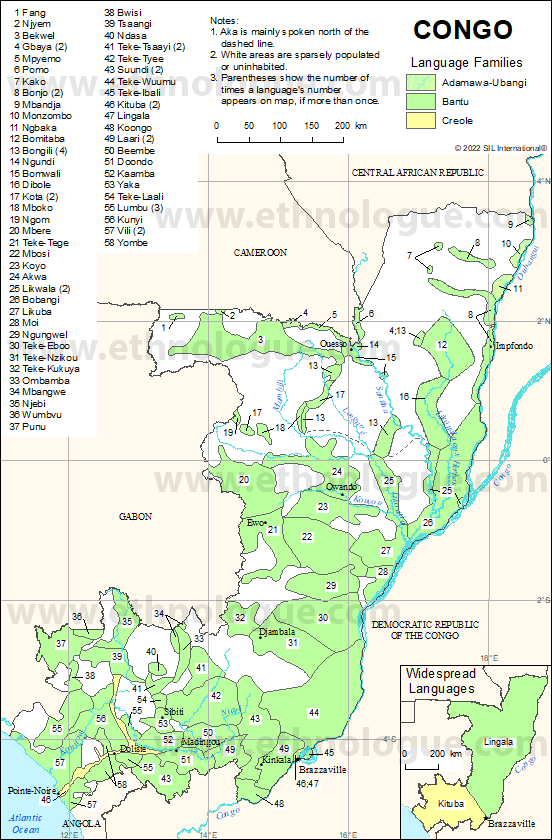
Congo
Graphs
Language Vitality Profile
Full explanation
Language Status Profile
Full explanation
Resources
View Terms
Each Ethnologue country digest is a licensed product with restricted terms of use. Before downloading the product, you must agree to the following terms:
- This is a license for individual use. Just as with a conventionally published book, it is a violation of copyright to make a copy and give it to others.
- You may not redistribute this work in any form, including ingesting the contents into a database that is shared with others or posting it on a web site (whether public or private).
To inquire about permission for reuse or redistribution, please use the Contact Us form in the footer.
Digest of the languages of Congo ($199.95, 46 page PDF)