
CH
Swiss Confederation
Switzerland
Summary
- Official Name
- Swiss Confederation
- Population
- 8,716,000
- Principal Languages
- French, Italian, Standard German
- Literacy Rate
- 99% (Roser and Ortiz-Ospina 2018)
- International Conventions
- CPPDCE (2006), CSICH (2012), ECRML (1992), FCPNM (1998), ICCPR (1966), UNCRPD (2006), UNDRIP (2007)
- General References
- Comrie 1987, Moulton 1988, Stephens 1976
- Deaf Population
- 10,000 (2014 EUD), but other estimates vary widely. Estimated 7,500 deaf signers in all cantons (Boyes Braem and Rathmann 2010)
- Language Counts
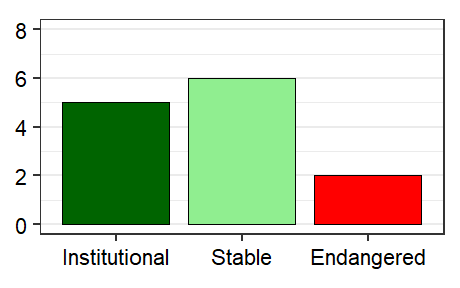
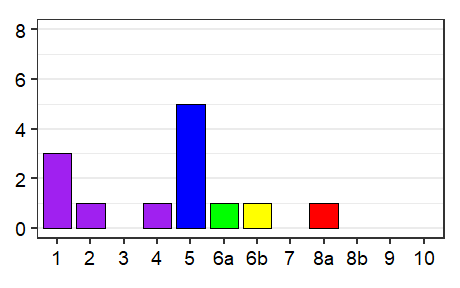
- The number of established languages listed for Switzerland is 13. All are living languages. Of these, 10 are indigenous and 3 are non-indigenous. Furthermore, 5 are institutional, 5 are developing, 1 is vigorous, 1 is in trouble, and 1 is dying. Also listed are 17 unestablished languages.
Languages
- Albanian, Gheg aln
- Users: 171,000 in Switzerland (2012 UNSD). Status: Unestablished. Classification: Indo-European, Albanian, Gheg
- Arabic, North Levantine Spoken apc
- Users: 32,500 in Switzerland (2012 UNSD). Status: Unestablished. Classification: Afro-Asiatic, Semitic, Central, South, Arabic
- Arpitan frp
- Bern canton: Bernese Jura; Fribourg canton: de la Broye, de la Glane, de la Sarine, de la Veveyse, and la Gruyere; Geneva, Neuchâtel, and Vaud cantons; Valais canton: d’Entremont, d’Herens, de Sierre de Monthey, Saint-Maurice, districts. Users: 7,000 in Switzerland (1998). Status: 8a (Moribund). Alternate Names: Patois, Romand Classification: Indo-European, Italic, Romance, Italo-Western, Western, Gallo-Iberian, Gallo-Romance, Gallo-Rhaetian, Oïl, Southeastern
- Bengali ben
- Users: 2,000 in Switzerland (2018), based on nationality. Status: Unestablished. Classification: Indo-European, Indo-Iranian, Indo-Aryan, Outer Languages, Eastern, Bengali-Assamese
- Czech ces
- Users: 11,000 in Switzerland (2012 UNSD). Status: Unestablished. Classification: Indo-European, Balto-Slavic, Slavic, West, Czech-Slovak
- Danish dan
- Users: 5,220 in Switzerland (2012 UNSD). Status: Unestablished. Classification: Indo-European, Germanic, North, East Scandinavian, Danish-Swedish, Danish-Riksmal, Danish
- Dutch nld
- Users: 22,200 in Switzerland (2012 UNSD). Status: Unestablished. Classification: Indo-European, Germanic, West, Low Saxon-Low Franconian, Low Franconian
- English eng
- Users: 4,733,000 in Switzerland, all users. L1 users: 483,000 in Switzerland (2018 census). L2 users: 4,250,000 (2018). Status: 4 (Educational). Alternate Names: Anglais, Englaisa, Englisch, Inglese Classification: Indo-European, Germanic, West, English
- Finnish fin
- Users: 3,930 in Switzerland (2012 UNSD). Status: Unestablished. Classification: Uralic, Finnic
- French fra
- Fribourg, Geneva, Jura, Neuchâtel, and Vaud cantons. Users: 5,732,000 in Switzerland, all users. L1 users: 1,912,000 in Switzerland (2018 census). L2 users: 3,820,000 (Beck et al 2018). Status: 1 (National). Statutory national language (1999, Constitution, Article 70(1)), co-equal with Italian [ita] and Standard German [deu] on the federal level. Alternate Names: Francese, Französisch, Français Classification: Indo-European, Italic, Romance, Italo-Western, Western, Gallo-Iberian, Gallo-Romance, Gallo-Rhaetian, Oïl, French
- German, Standard deu
- Users: 292,000 in Switzerland (2013 census). Status: 1 (National). Statutory national language (1999, Constitution, Article 70(1)), co-equal with Italian [ita] and French [fra] on the federal level. Alternate Names: Allemand, Deutsch, Tedesco, Tudestg Classification: Indo-European, Germanic, West, High German, German, Middle German, East Middle German
- German, Swiss gsw
- Widespread. Users: 5,200,000 in Switzerland (2018 census). Total users in all countries: 6,434,400. Status: 5* (Developing). Alternate Names: Alemanic, Alemannic, Alemannisch, Schweizerdeutsch, Schwiizertüütsch, Schwizerdütsch, Schwizertitsch, Schwizertitsch Mundart, Schwytzertuetsch, Schwyzerdütsch, Schwyzerdütschi Sprooch, Upper Alemannic Autonym: Schwiizerdütsch Classification: Indo-European, Germanic, West, High German, German, Upper German, Alemannic
- Greek ell
- Users: 8,420 in Switzerland (2012 UNSD). Status: Unestablished. Classification: Indo-European, Greek, Attic
- Hungarian hun
- Users: 14,600 in Switzerland (2012 UNSD). Status: Unestablished. Classification: Uralic
- Italian ita
- Graubünden and Ticino cantons. Users: 673,000 in Switzerland (2018 census). Status: 1 (National). Statutory national language (1999, Constitution, Article 70(1)), co-equal with French [fra] and Standard German [deu] on the federal level. Alternate Names: Italiano, Italienisch Classification: Indo-European, Italic, Romance, Italo-Western, Italo-Dalmatian
- Kabuverdianu kea
- Users: 2,100 in Switzerland (2015 Instituto de Apoio ao Emigrante). Status: Unestablished. Classification: Creole, Portuguese based
- Kurdish, Northern kmr
- Users: 35,100 in Switzerland (2000). Status: Unestablished. Classification: Indo-European, Indo-Iranian, Iranian, Western, Northwestern, Kurdish
- Lombard lmo
- Graubünden canton: Bernina, Maloggia, and Moesa districts, south of Saint Moritz; Ticino canton. Users: 303,000 in Switzerland (1995). Status: 6a* (Vigorous). Classification: Indo-European, Italic, Romance, Italo-Western, Western, Gallo-Iberian, Gallo-Romance, Gallo-Italian
- Portuguese por
- Users: 210,000 in Switzerland (2012 UNSD). Status: Unestablished. Classification: Indo-European, Italic, Romance, Italo-Western, Western, Gallo-Iberian, Ibero-Romance, West Iberian, Portuguese-Galician
- Romani, Sinte rmo
- Scattered. Users: 21,000 in Switzerland (Johnstone 1993). Status: 5* (Dispersed). Alternate Names: Romanes, Sinte, Sinti Classification: Indo-European, Indo-Iranian, Indo-Aryan, Intermediate Divisions, Western, Romani, Northern
- Romansh roh
- Graubünden canton: Hinterrhein, Inn, Maloja, and Surselva districts. Users: 40,000 (2012 census). 1 canton. Status: 2 (Provincial). Statutory provincial language in Grisons Canton (2004, Grisons Cantonal Constitution, Article 3(1)). Alternate Names: Rhaeto-Romance, Rheto-Romance, Romanche, Romansch Autonym: Rumantsch Classification: Indo-European, Italic, Romance, Italo-Western, Western, Gallo-Iberian, Gallo-Romance, Gallo-Rhaetian, Rhaetian
- Serbian srp
- Users: 205,000 in Switzerland (2014 World Factbook). Status: Unestablished. Classification: Indo-European, Balto-Slavic, Slavic, South, Western
- Spanish spa
- Users: 140,300 in Switzerland, all users. L1 users: 124,000 in Switzerland (Instituto Cervantes 2019). L2 users: 16,300 (2019). Status: Unestablished. Classification: Indo-European, Italic, Romance, Italo-Western, Western, Gallo-Iberian, Ibero-Romance, West Iberian, Castilian
- Swedish swe
- Users: 9,230 in Switzerland (2012 UNSD). Status: Unestablished. Classification: Indo-European, Germanic, North, East Scandinavian, Danish-Swedish, Swedish
- Swiss-French Sign Language ssr
- Scattered. Fribourg canton: Delémont, Morges, Oron, and Zion; Geneva and Vaud cantons; Neuchâtel canton: La Chaux-de-Fonds. Users: 1,700 (Boyes Braem and Rathmann 2010). Estimated, less than 0.1% of total population of francophone Switzerland. 10,000 deaf signers in all of Switzerland (2014 EUD). Status: 5 (Developing). Recognized language (2002, Federal Parliament, Law on Equality for Disabled People). Alternate Names: LSF, LSF-SR, Langage Gestuelle, Langue des signes française, Langue des signes suisse romande Classification: Sign language, Deaf community sign language
- Swiss-German Sign Language sgg
- Scattered. Users: 5,500 in Switzerland (Boyes Braem and Rathmann 2010). Approximately 0.1% of total population in German-speaking areas. 10,000 deaf signers in all of Switzerland (2014 EUD). Total users in all countries: 5,540. Status: 5 (Developing). Recognized language (2002, Federal Parliament, Law on Equality for Disabled People). Alternate Names: DGS, DSGS, Deutschschweizer Gebärdensprache, Deutschschweizerische Gebärdensprache, Natürliche Gebärde Classification: Sign language, Deaf community sign language
- Swiss-Italian Sign Language slf
- Scattered. Graubünden and Ticino cantons. Users: 300 (Boyes Braem and Rathmann 2010). Estimated, less than 0.1% of total population in Italian areas. 10,000 deaf signers in all of Switzerland (2021 EUD). Status: 5 (Developing). Recognized language (2002, Federal Parliament, Law on Equality for Disabled People). Alternate Names: LIS, LIS-SI, Lingua dei Segni Italiana, Lingua dei segni della Svizzera italiana Classification: Sign language, Deaf community sign language
- Tibetan bod
- Users: 1,430 in Switzerland (2000). Status: Unestablished. Classification: Sino-Tibetan, Tibeto-Burman, Western Tibeto-Burman, Bodish, Central Bodish, Central
- Turkish tur
- Users: 75,500 in Switzerland (2012 UNSD). Status: Unestablished. Classification: Turkic, Southern, Turkish
- Walser wae
- Graubünden canton: Albula, Hinterrhein, Plessur, Prattigau-Davos, and Surselva districts; Ticino canton: Bosco-Gurin; Valais canton: Simplon; 26 communities. Users: 10,000 in Switzerland (2004). Ethnic population: 21,900 (1980 C. Buchli). Total users in all countries: 22,780. Status: 6b* (Threatened). Alternate Names: Walscher Classification: Indo-European, Germanic, West, High German, German, Upper German, Alemannic
Languages by Status
French
[fra] 1 (National). Statutory national language (1999, Constitution, Article 70(1)), co-equal with Italian [ita] and Standard German [deu] on the federal level. 5,732,000 in Switzerland, all users. L1 users: 1,912,000 in Switzerland (2018 census). L2 users: 3,820,000 (Beck et al 2018).
German, Standard
[deu] 1 (National). Statutory national language (1999, Constitution, Article 70(1)), co-equal with Italian [ita] and French [fra] on the federal level. 292,000 in Switzerland (2013 census).
Italian
[ita] 1 (National). Statutory national language (1999, Constitution, Article 70(1)), co-equal with French [fra] and Standard German [deu] on the federal level. 673,000 in Switzerland (2018 census).
Romansh
[roh] 2 (Provincial). Statutory provincial language in Grisons Canton (2004, Grisons Cantonal Constitution, Article 3(1)). 40,000 (2012 census). 1 canton.
English
[eng] 4 (Educational). 4,733,000 in Switzerland, all users. L1 users: 483,000 in Switzerland (2018 census). L2 users: 4,250,000 (2018).
Romani, Sinte
[rmo] 5* (Dispersed). 21,000 in Switzerland (Johnstone 1993).
German, Swiss
[gsw] 5* (Developing). 5,200,000 in Switzerland (2018 census). Total users in all countries: 6,434,400.
Swiss-French Sign Language
[ssr] 5 (Developing). Recognized language (2002, Federal Parliament, Law on Equality for Disabled People). 1,700 (Boyes Braem and Rathmann 2010). Estimated, less than 0.1% of total population of francophone Switzerland. 10,000 deaf signers in all of Switzerland (2014 EUD).
Swiss-German Sign Language
[sgg] 5 (Developing). Recognized language (2002, Federal Parliament, Law on Equality for Disabled People). 5,500 in Switzerland (Boyes Braem and Rathmann 2010). Approximately 0.1% of total population in German-speaking areas. 10,000 deaf signers in all of Switzerland (2014 EUD). Total users in all countries: 5,540.
Swiss-Italian Sign Language
[slf] 5 (Developing). Recognized language (2002, Federal Parliament, Law on Equality for Disabled People). 300 (Boyes Braem and Rathmann 2010). Estimated, less than 0.1% of total population in Italian areas. 10,000 deaf signers in all of Switzerland (2021 EUD).
Lombard
[lmo] 6a* (Vigorous). 303,000 in Switzerland (1995).
Walser
[wae] 6b* (Threatened). 10,000 in Switzerland (2004). Ethnic population: 21,900 (1980 C. Buchli). Total users in all countries: 22,780.
Arpitan
[frp] 8a (Moribund). 7,000 in Switzerland (1998).
Albanian, Gheg
[aln] Unestablished. 171,000 in Switzerland (2012 UNSD).
Arabic, North Levantine Spoken
[apc] Unestablished. 32,500 in Switzerland (2012 UNSD).
Bengali
[ben] Unestablished. 2,000 in Switzerland (2018), based on nationality.
Czech
[ces] Unestablished. 11,000 in Switzerland (2012 UNSD).
Danish
[dan] Unestablished. 5,220 in Switzerland (2012 UNSD).
Dutch
[nld] Unestablished. 22,200 in Switzerland (2012 UNSD).
Finnish
[fin] Unestablished. 3,930 in Switzerland (2012 UNSD).
Greek
[ell] Unestablished. 8,420 in Switzerland (2012 UNSD).
Hungarian
[hun] Unestablished. 14,600 in Switzerland (2012 UNSD).
Kabuverdianu
[kea] Unestablished. 2,100 in Switzerland (2015 Instituto de Apoio ao Emigrante).
Kurdish, Northern
[kmr] Unestablished. 35,100 in Switzerland (2000).
Portuguese
[por] Unestablished. 210,000 in Switzerland (2012 UNSD).
Serbian
[srp] Unestablished. 205,000 in Switzerland (2014 World Factbook).
Spanish
[spa] Unestablished. 140,300 in Switzerland, all users. L1 users: 124,000 in Switzerland (Instituto Cervantes 2019). L2 users: 16,300 (2019).
Swedish
[swe] Unestablished. 9,230 in Switzerland (2012 UNSD).
Tibetan
[bod] Unestablished. 1,430 in Switzerland (2000).
Turkish
[tur] Unestablished. 75,500 in Switzerland (2012 UNSD).
Maps
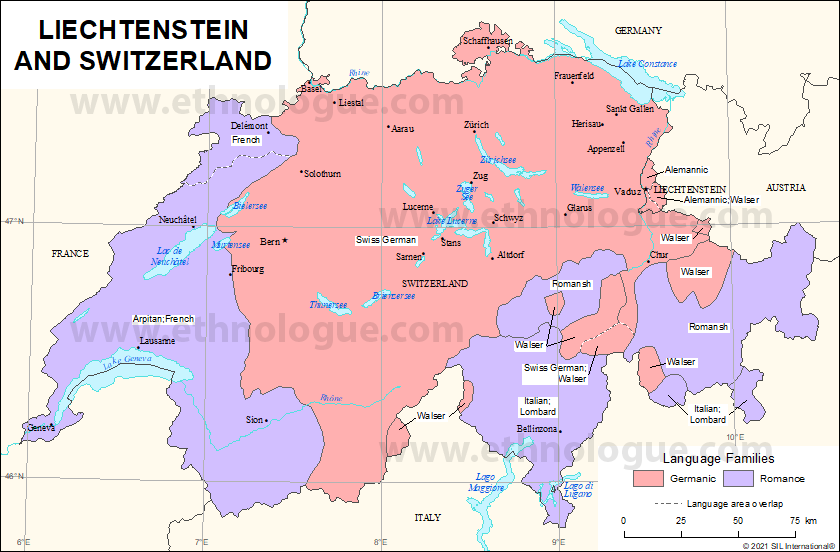
Liechtenstein and Switzerland
Graphs
Language Vitality Profile
Full explanation
Language Status Profile
Full explanation
Resources
View Terms
Each Ethnologue country digest is a licensed product with restricted terms of use. Before downloading the product, you must agree to the following terms:
- This is a license for individual use. Just as with a conventionally published book, it is a violation of copyright to make a copy and give it to others.
- You may not redistribute this work in any form, including ingesting the contents into a database that is shared with others or posting it on a web site (whether public or private).
To inquire about permission for reuse or redistribution, please use the Contact Us form in the footer.
Digest of the languages of Switzerland ($149.95, 25 page PDF)