
CL
Chile
Summary
- Official Name
- Population
- 19,212,000
- Principal Languages
- Spanish
- Literacy Rate
- 98% (2015 World Factbook)
- International Conventions
- CDE (1960), CPPDCE (2006), CSICH (2012), ICCPR (1966), (), UNCRPD (2006), UNDRIP (2007)
- General References
- Besnier 1992, Campbell 1997, Campbell and King 2011, Crevels 2007, Fabre 2007, Tovar 1961, Tovar 1966, Tovar and Larrucea de Tovar 1984, Wurm and Hattori 1981
- Deaf Population
- 66,500 (2002 census)
- Language Counts
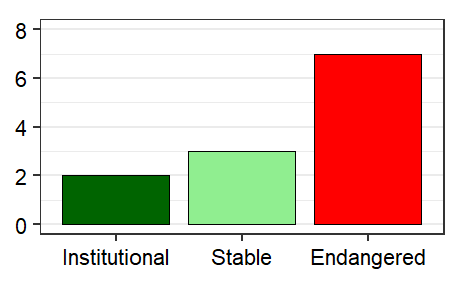
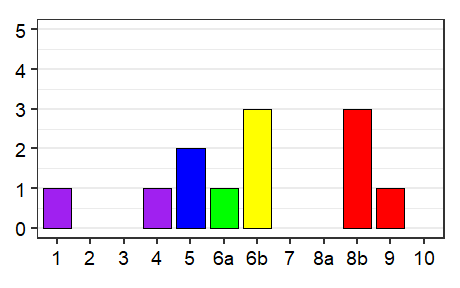
- The number of established languages listed for Chile is 13. Of these, 12 are living and 1 is extinct. Of the living languages, 9 are indigenous and 3 are non-indigenous. Furthermore, 2 are institutional, 2 are developing, 1 is vigorous, 3 are in trouble, and 4 are dying. Also listed are 2 unestablished languages.
Languages
- Aymara, Central ayr
- Antofagasta, Arica and Parinacota, and Tarapacá regions: Iquique area, extreme north mountains. Users: 19,000 in Chile (Fabre 2007). Ethnic population: 48,500 (2002). About half have some knowledge of the language (Crevels 2007). Status: 6b* (Threatened). Recognized language (1993, Indigenous Peoples Law (No. 19.253)), Bilingual education programs in highland areas. Alternate Names: Aimara, Aymar, Aymar aru Classification: Aymaran, Aymara
- Chilean Sign Language csg
- Scattered. Users: 21,000 (Parks et al 2011a). 292,700 people with some level of auditory deficiency (2005 Fondo Nacional de la Discapacidad); 66,500 people with total deafness (23,900 less than 60 years old) (2002 census); others give estimates as high as 500,000 users (2018 J. Atala). Status: 5 (Developing). Recognized language (2010, Article 26 of Law No. 20.422), recognizes sign language as the natural means of communication of the deaf community. Alternate Names: LENSE, LSCh, Lengua de Señas Chilena, Lenguaje Chileno de Signos, Lenguaje de Señas Classification: Sign language, Deaf community sign language
- English eng
- Users: 1,965,500 in Chile, all users. L1 users: 15,500 in Chile (2020 Joshua Project). L2 users: 1,950,000 (2019 World Factbook). Status: 4 (Educational). Alternate Names: Inglés Classification: Indo-European, Germanic, West, English
- German, Standard deu
- Major cities. Users: 45,000 in Chile (2020 Joshua Project), based on ethnicity. Status: 5* (Dispersed). Alternate Names: Alemán, Deutsch Classification: Indo-European, Germanic, West, High German, German, Middle German, East Middle German
- Greek ell
- Users: 7,000 in Chile (2020 Joshua Project). Status: Unestablished. Classification: Indo-European, Greek, Attic
- Huilliche huh
- Los Lagos and Los Ríos regions: Valdivia to Chiloé south of Mapuche. Users: A few elderly speakers (Crevels 2012). Ethnic population: 2,000 (1982 SIL). Status: 8b (Nearly extinct). Alternate Names: Huilche, Huiliche, Veliche, “Beliche” (pej.) Classification: Mapudungu
- Italian ita
- Users: 38,000 in Chile (2020 Joshua Project). Status: Unestablished. Classification: Indo-European, Italic, Romance, Italo-Western, Italo-Dalmatian
- Kunza kuz
- Antofagasta region: El Loa province; Caspana, Peine, and Socaire (Salar de Atacama). Users: No known L1 speakers. The last speakers either died or shifted entirely to Spanish by 1978. Ethnic population: 21,000 (2002 census). Status: 9 (Dormant). Alternate Names: Atacameño, Likan Antai, Likanantaí, Lipe, Ulipe Classification: Language isolate
- Mapudungun arn
- Araucanía, Bíobío, Los Lagos, and Los Ríos regions: Arauco, Bíobío, Valdivia, Osorno. Users: 250,000 in Chile (Crevels 2007). Ethnic population: 604,000 (2002). Total users in all countries: 258,410. Status: 6b (Threatened). Recognized language (1993, Indigenous Peoples Law (No. 19.253)). Alternate Names: Araucana, Mapuche, Mapudungu, Mapuzungun, “Araucano” (pej.) Autonym: Mapudungun Classification: Mapudungu
- Puquina puq
- Arica and Parinacota region. Users: No known L1 speakers in Chile. Last speaker likely died in the 1700s. Status: 10 (Extinct). Alternate Names: Pukina Classification: Language isolate
- Qawasqar alc
- Magallanes region: West Patagonia, Channel area, Isle of Wellington off south Chilean coast, 49 degrees south. Center is Puerto Edén. Users: 12 (2006 O. Aguilera). 10 in Puerto Edén. Ethnic population: 100 (Crevels 2012). Status: 8b (Nearly extinct). Alternate Names: Alacalouf, Alacaluf, Alacalufe, Alaculoof, Alaculuf, Alakaluf, Alikaluf, Alikhoolip, Alikuluf, Alilkoolif, Alokolup, Alooculoof, Alookooloop, Alucaluf, Alukoeluf, Alukulup, Halakwulup, Kaweskar, Kawesqar Classification: Kaweskaran
- Quechua, South Bolivian quh
- Antofagasta region. Users: 1,000 in Chile (Crevels 2012). Ethnic population: 6,180 (Crevels 2012). Status: 6a* (Vigorous). Alternate Names: Qhichwa, Qhishwa Classification: Quechuan, Peripheral Quechua, Chinchay, Southern Chinchay
- Rapa Nui rap
- Valparaíso region: Easter Island, 3,800 km from Chile, 4,000 km from Tahiti. Users: 1,000 (2016 R. Weber). Ethnic population: 5,000 (Kieviet 2016). Approximately 3,600 on Easter Island. Status: 6b (Threatened). Recognized language (1993, Indigenous Peoples Law (No. 19.253)). Alternate Names: Easter Island, Pascuense, Rapanui Autonym: Rapa Nui Classification: Austronesian, Malayo-Polynesian, Central-Eastern Malayo-Polynesian, Eastern Malayo-Polynesian, Oceanic, Central-Eastern Oceanic, Remote Oceanic, Central Pacific, East Fijian-Polynesian, Polynesian, Nuclear, East, Rapanui
- Spanish spa
- Users: 19,083,000 in Chile, all users. L1 users: 18,300,000 in Chile (Instituto Cervantes 2019). L2 users: 783,000 (Instituto Cervantes 2019). Status: 1 (National). De facto national language. Alternate Names: Castellano, Español Classification: Indo-European, Italic, Romance, Italo-Western, Western, Gallo-Iberian, Ibero-Romance, West Iberian, Castilian
- Yámana yag
- Magallanes region: Patagonia area, Navarino island, Puerto Williams, Ukika hamlet. Users: No known L1 speakers in Chile (Reuters). Last fluent speaker, Cristina Calderón, died in 2019. Ethnic population: 70 (Crevels 2012). Total users in all countries: none known. Status: 9 (Dormant). Alternate Names: Tequenica, Yaghan, Yagán, Yahgan Autonym: Háusi Kúta Classification: Language isolate
Languages by Status
Spanish
[spa] 1 (National). De facto national language. 19,083,000 in Chile, all users. L1 users: 18,300,000 in Chile (Instituto Cervantes 2019). L2 users: 783,000 (Instituto Cervantes 2019).
English
[eng] 4 (Educational). 1,965,500 in Chile, all users. L1 users: 15,500 in Chile (2020 Joshua Project). L2 users: 1,950,000 (2019 World Factbook).
German, Standard
[deu] 5* (Dispersed). 45,000 in Chile (2020 Joshua Project), based on ethnicity.
Chilean Sign Language
[csg] 5 (Developing). Recognized language (2010, Article 26 of Law No. 20.422), recognizes sign language as the natural means of communication of the deaf community. 21,000 (Parks et al 2011a). 292,700 people with some level of auditory deficiency (2005 Fondo Nacional de la Discapacidad); 66,500 people with total deafness (23,900 less than 60 years old) (2002 census); others give estimates as high as 500,000 users (2018 J. Atala).
Quechua, South Bolivian
[quh] 6a* (Vigorous). 1,000 in Chile (Crevels 2012). Ethnic population: 6,180 (Crevels 2012).
Aymara, Central
[ayr] 6b* (Threatened). Recognized language (1993, Indigenous Peoples Law (No. 19.253)), Bilingual education programs in highland areas. 19,000 in Chile (Fabre 2007). Ethnic population: 48,500 (2002). About half have some knowledge of the language (Crevels 2007).
Mapudungun
[arn] 6b (Threatened). Recognized language (1993, Indigenous Peoples Law (No. 19.253)). 250,000 in Chile (Crevels 2007). Ethnic population: 604,000 (2002). Total users in all countries: 258,410.
Rapa Nui
[rap] 6b (Threatened). Recognized language (1993, Indigenous Peoples Law (No. 19.253)). 1,000 (2016 R. Weber). Ethnic population: 5,000 (Kieviet 2016). Approximately 3,600 on Easter Island.
Huilliche
[huh] 8b (Nearly extinct). A few elderly speakers (Crevels 2012). Ethnic population: 2,000 (1982 SIL).
Qawasqar
[alc] 8b (Nearly extinct). 12 (2006 O. Aguilera). 10 in Puerto Edén. Ethnic population: 100 (Crevels 2012).
Kunza
[kuz] 9 (Dormant). No known L1 speakers. The last speakers either died or shifted entirely to Spanish by 1978. Ethnic population: 21,000 (2002 census).
Yámana
[yag] 9 (Dormant). No known L1 speakers in Chile (Reuters). Last fluent speaker, Cristina Calderón, died in 2019. Ethnic population: 70 (Crevels 2012). Total users in all countries: none known.
Puquina
[puq] 10 (Extinct). No known L1 speakers in Chile. Last speaker likely died in the 1700s.
Maps
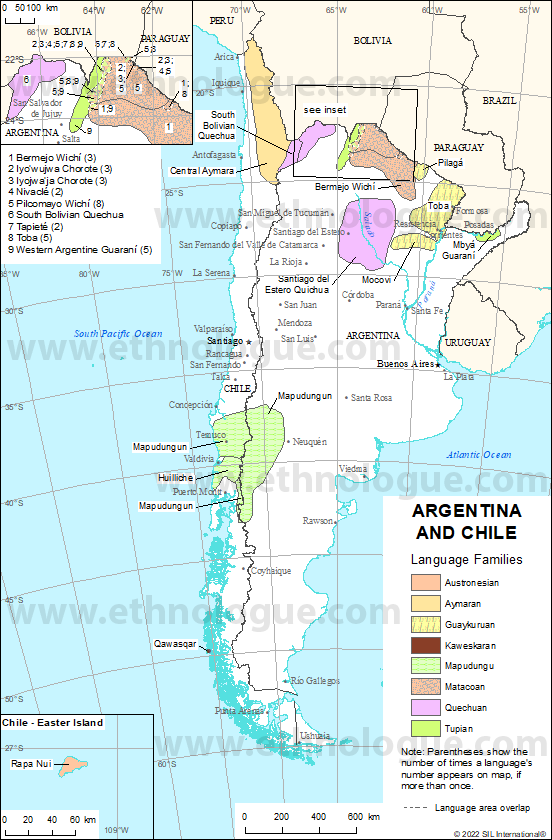
Argentina and Chile
Graphs
Language Vitality Profile
Full explanation
Language Status Profile
Full explanation
Resources
View Terms
Each Ethnologue country digest is a licensed product with restricted terms of use. Before downloading the product, you must agree to the following terms:
- This is a license for individual use. Just as with a conventionally published book, it is a violation of copyright to make a copy and give it to others.
- You may not redistribute this work in any form, including ingesting the contents into a database that is shared with others or posting it on a web site (whether public or private).
To inquire about permission for reuse or redistribution, please use the Contact Us form in the footer.
Digest of the languages of Chile ($149.95, 26 page PDF)