
CO
Colombia
Summary
- Official Name
- Population
- 50,883,000
- Principal Languages
- Spanish
- Literacy Rate
- 95% (2018 UNESCO)
- International Conventions
- CPPDCE (2006), CSICH (2012), ICCPR (1966), (), UNCRPD (2006), UNDRIP (2007)
- General References
- Arango Ochoa and Sánchez Gutierrez 1998; Campbell 1997; Crevels 2007
- Deaf Population
- 450,000 with some limitation due to hearing loss (2016 INSOR)
- Language Counts
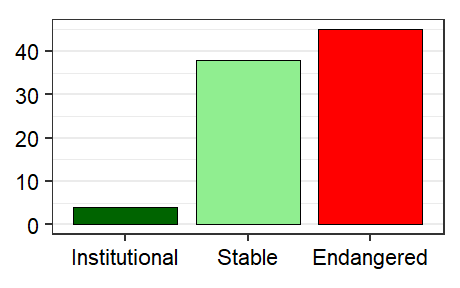
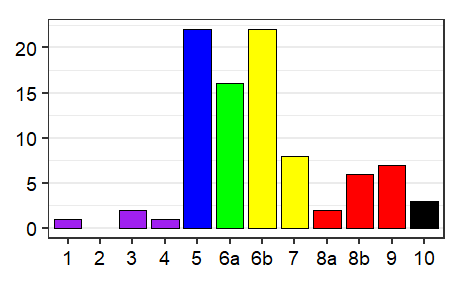
- The number of established languages listed for Colombia is 91. Of these, 89 are living and 2 are extinct. Of the living languages, 83 are indigenous and 6 are non-indigenous. Furthermore, 5 are institutional, 21 are developing, 16 are vigorous, 31 are in trouble, and 16 are dying. Also listed are 2 unestablished languages.
Languages
- Achagua aca
- Casanare department; Meta department: Upper Meta River, between Puerto López and Puerto Gaitán, El Turpial reservation, and Umapo community. Users: 250 (2000 M. Lozano), decreasing. Ethnic population: 980 (2018 census). Status: 6b (Threatened). Alternate Names: Ajagua, Xagua Classification: Maipurean, Northern, Upper Amazon, Western Nawiki, Piapoco
- Andaqui ana
- Caquetá department: upper reaches of Caquetá river; Cauca department, Fragua valley; Huila department: Suaza valley; southern highlands. Users: No known L1 speakers. The last speaker probably died by the 1970s (Loukotka 1968). Status: 9 (Dormant). Alternate Names: Aguanunga, Andaki, Andaquí, Churuba Classification: Paezan
- Andoque ano
- Amazonas department: Aduche tributary of Caquetá, 15 km downriver from Araracuara; Caquetá department: Solano municipality. Users: 370 (2007 B. Pencue), decreasing. 10,000 in 1908 (Landaburu 1979). 50 monolinguals. Ethnic population: 820 (2018 census). Status: 8b (Nearly extinct). Alternate Names: Andoke, Businka, Cha’oie, Cho’oje, Paasi-ahá, Paasiaja, Paatsiaja, Patsiaehé, Poosioho Classification: Language isolate
- Anserma ans
- Caldas, Quindío, and Risaralda departments. Users: No known L1 speakers. 7 families still spoke it in 1995 (Rendón 2011). Status: 10 (Extinct). Alternate Names: Ancerma, Anserna, Caramanta, Cartama, Humbra, Umbra Classification: Paezan, Coconuco
- Arhuaco arh
- Cesar and Magdalena departments: northeast and southern slopes of Sierra Nevada de Santa Marta. Users: 8,000 (2009 P. Frank). 7,200 monolinguals. Ethnic population: 34,700 (2018 census). Status: 5 (Developing). Alternate Names: Arauco, Arhuac, Aruac, Aruaco, Arwako, Auroguac, Bintucua, Bintuk, Bintukwa, Bíntuka, Bíntukua, Bítuncua, Ica, Ijca, Ijka, Ika, Ikan, Ike, Ikʉ Autonym: Iku Classification: Chibchan, Chibchan B, Eastern Chibchan, Colombian, Northern Colombian, Arhuacan, Southern and Eastern Arhuacan
- Awa-Cuaiquer kwi
- Nariño department: Barbacoas area; Cuaiquer del Alto Albí, Cuambíyaslambi, Cumbal, Mallama, and Ricaurte reservations; Pacific slopes of Andes. Users: 12,000 in Colombia (Civallero 2008), decreasing. No monolinguals. Ethnic population: 44,500 (2018 census). Total users in all countries: 14,100. Status: 6b* (Threatened). Alternate Names: Awa, Awa Pit, Coaiquer, Cuaiquer, Kwaiker, Quaiquer, auapit, Înkal Awa Autonym: Awapit Classification: Barbacoan, Northern
- Barasana-Eduria bsn
- Amazonas department: Apaporis river south bank; Vaupés department: Cachivera Pina, Mitú, Sõnanã, Pacoa, Piedra Ñi, San Miguel; Pira-Paraná river and tributaries. Users: 1,890 (1993 census). Ethnic population: 1,030 (2018 census). 910 Barasano and 120 Eduria (2018 census). Status: 6a* (Vigorous). Alternate Names: Banera yae, Barasano, Barasano del Sur, Came-Masa, Come masa, Comea, Comematsa, Hadera, Hanera, Hanera oka, Janena, Janera, Palanoa, Panenoa, Panera, Paneroa, Southern Barasano, Taibano, Taiwaeno, Taiwano, Teiuana, Yebamasa, Yepa-Mahsa, Yepa-Matso Autonym: Jãnerã-Eduria Oca Classification: Tucanoan, Eastern Tucanoan, Bará-Tuyuka
- Barí mot
- Cesar department: Chimichagua, La Gloria, and Pailitas municipalities; Norte de Santander department: Reserva Indígena Motilón-Barí and Resguardo Indígena Gabarra-Catalaura in Upper Catatumbo and Oro rivers and Serranía de los Motilones region. Users: 3,500 in Colombia (Civallero 2008). Ethnic population: 3,020 (2018 census). Total users in all countries: 5,020. Status: 6a* (Vigorous). Alternate Names: Baria, Barira, Cunausaya, Motilone, Motilón, “Dobocubi” (pej.) Classification: Chibchan, Chibchan B, Eastern Chibchan, Colombian, Southern Colombian
- Bora boa
- Amazonas department: Bora, Providencia on Igaraparana (tributary of the Putumayo); Miraña: lower Caquetá river, near Cahuinari river mouth. Users: 600 in Colombia (Crevels 2012). Ethnic population: 1,810 (2018 census). 1,050 Bora, 760 Miraña (2018 census). Status: 7 (Shifting). Alternate Names: Boro, Meamuyna, Miamunaa, Miranya, Miraña, Mirañã, Miriña Classification: Witotoan, Proto-Bora-Muinane
- Cabiyarí cbb
- Amazonas and Vaupés departments: Cananarí river area, tributary of the Apaporis and Vaupés. Users: 270 (Civallero 2008). Ethnic population: 810 (2001 census). Status: 7 (Shifting). Alternate Names: Cabiuarí, Cabuyari, Cauyarí, Cuyare, Kabiyarí, Kauyarí, Kawiarí, Kawillary, Kawiri, Kawiyarí Classification: Maipurean, Northern, Upper Amazon, Western Nawiki
- Cacua cbv
- Vaupés department: Wacará, 30 km east of Mitú. Users: 220 (Crevels 2012). Many monolinguals, especially children. Ethnic population: 150 (2018 census). Status: 4 (Educational). Alternate Names: Báda, Bára, Cakua, Kakua, Kákwa, Wacara, “Macu de Cubeo” (pej.), “Macu de Desano” (pej.), “Macu de Guanano” (pej.) Classification: Puinavean, Cacua
- Caló rmq
- Scattered. Users: Ethnic population: 5,000 (2005 census). Status: 6b* (Threatened). Alternate Names: Gitano, Roma, Romanó Classification: Mixed language, Iberian-Romani
- Camsá kbh
- Putumayo department: Sibundoy valley, near Ingas. Users: 4,000 (Civallero 2008). Ethnic population: 7,520 (2018 census). Status: 5* (Developing). Alternate Names: Camëntxá, Coche, Kamemtxa, Kamsa, Kamse, Kamëntsa, Sibundoy, Sibundoy-Gaché Autonym: Camëntsá Classification: Language isolate
- Carabayo cby
- Amazonas department: halfway between San Bernardo and Pure rivers. At least 3 long houses. Users: 150. Ethnic population: 220 (Crevels 2012). Status: 6b (Threatened). Alternate Names: Yuri, “Amazonas Macusa” (pej.) Classification: Unclassified
- Caramanta crf
- Antioquia department: Jardín municipality, near Andes and Cristianía cities. Users: No known L1 speakers. Extinct by mid 20th century. Status: 10 (Extinct). Classification: Paezan, Coconuco
- Carapana cbc
- Vaupés department: Cano Tí (tributary of middle Vaupés river) and upper Pirá-Paraná and Papurí rivers. Users: 460 in Colombia (Crevels 2012). Ethnic population: 1,040 (2018 census). Total users in all countries: 523. Status: 5* (Developing). Alternate Names: Carapana-Tapuya, Karapano, Karapaná, Karapanã, Mehtã, Mextã, Mi tea, Mochda, Moxdoa, Muxtea, Mõxtã, Möxdöá Autonym: Carapana Classification: Tucanoan, Eastern Tucanoan, Carapano
- Carijona cbd
- Guaviare department: Miraflores municipality southeast of Lake Espajo. Users: 6 (Crevels 2007). 6 speakers near La Pedrera and a few more near Miraflores (Crevels 2007). Ethnic population: 530 (2018 census). Status: 8b (Nearly extinct). Alternate Names: Carifuna, Carihona, Hianacoto, Hianacoto-Umaua, Hianakoto, Huaque, Kaliohona, Karihona, Karijona, Koto, Omagua, Tsahá, Umawa Classification: Cariban, Tiriyó, Karihona
- Chibcha chb
- Boyacá: Altiplano Cundiboyacense. Users: No known L1 speakers. Last fluent speaker likely died in the late 1700s. Ethnic population: 9,000 (2018 B. Johnson). Status: 9 (Dormant). Alternate Names: Mosca, Muisca, Muysc Cubun, Muysca Classification: Chibchan, Chibchan B, Eastern Chibchan, Colombian, Southern Colombian, Cundicocuyese
- Chimila cbg
- Cesar department: Valle du Par minicipality; La Guajira department: La Jagua del Pilar and Urumita municipalities; Magdalena department: lowlands south and west of Fundación. Users: 350 (2009 T. Malone), increasing. Ethnic population: 1,700 (2018 census). Status: 6b (Threatened). Alternate Names: Caca Weranos, Chimile, Ette Ennaka, Ette Taara, San Jorge, Shimizya, Simiza Classification: Chibchan, Chibchan B, Eastern Chibchan, Colombian, Northern Colombian
- Cocama-Cocamilla cod
- Amazonas department: Ronda Island in Amazon River opposite Leticia city, and in Naranjales, Palmeras, and San José villages. Users: No known L1 speakers in Colombia. Last known speakers in Colombia survived into the 1990s. Possibly only a few semi-speakers (Crevels 2007). Ethnic population: 3,220 (2018 census). Status: 9 (Dormant). Alternate Names: Cocama, Inikana, Kokama Classification: Tupian, Tupí-Guaraní, Tupí, Cocama
- Colombian Sign Language csn
- Scattered. Users: 151,000 (2021 DBS/DOOR/SIL). Estimated 101,000–201,000 deaf signers, assuming 0.2%–0.4% of the general population. Status: 5 (Developing). Recognized language (2005, Presidential Law 982). Alternate Names: LSC, Lengua de señas colombiana, Lengua manual colombiana Classification: Sign language, Deaf community sign language
- Cubeo cub
- Vaupés department: Cuduyari, Querarí, and Vaupés rivers and tributaries; possibly also in Guainía department. Users: 6,100 in Colombia (Civallero 2008), increasing. 610 monolinguals. Ethnic population: 14,100 (2018 census). Total users in all countries: 6,260. Status: 3 (Wider communication). Lingua franca for the northwest Vaupes area in the beginning of the 19th century with the development of commerce, animal farming, agricultural production, manufacturing, and handicrafts. Used in church, literacy programs, and oral traditions. Alternate Names: Cuveo, Hehenawa, Hipnwa, Kobeua, Kobewa, Kubeo, Kubwa, Pamiwa Autonym: Pamié Classification: Tucanoan, Central Tucanoan
- Cuiba cui
- Arauca department: Cravo Norte municipality; Casanare department: Betania, El Merey, Esmeralda, Mochuelo, San José de Ariporo, and Santa María on Capanaparo river and tributaries; Vichada department: Meta river south bank. Users: 2,200 in Colombia (Civallero 2008). Ethnic population: 1,440 (2018 census). 900 Cuiba, 520 Masiware, and 20 Chiricoa (2018 census). Total users in all countries: 2,640. Status: 5* (Developing). Alternate Names: Cuiva, Hiwi, Kuiva, Maiben Autonym: Cuiba-Wámonae Classification: Guajiboan
- Curripaco kpc
- Guainía department: Barrio La Primavera and Inírida on Inírida and Isana rivers, headwaters of Río Negro; Vaupés department: Mitu and Papunahua minicipalities. Users: 7,000 in Colombia (Civallero 2008). Ethnic population: 11,900 (2018 census). Total users in all countries: 12,070. Status: 5* (Developing). Alternate Names: Baniva del Isana, Curipaco, Curripaco-Baniva, Karrupaku, Koripako, Kuripaco, Kuripako, Kurripaco, Kúrrim, Waquenia Autonym: Kurripako Classification: Maipurean, Northern, Upper Amazon, Eastern Nawiki, Karu
- Desano des
- Vaupes department: Vaupés river tributaries, Abiyu and Papurí rivers; Papurí tributaries Pacá, Macú Parana and others; Villa Fátima village and Acaricuara, Montfort, Piracuara, and Teresita missions. Users: 2,460 in Colombia (2001 census). Ethnic population: 3,640 (2018 census). Status: 6b (Threatened). Alternate Names: Boleka, Dessana, Desána, Kotedia, Kusibi, Oregu, Wina, Wira, Wirã ya Classification: Tucanoan, Eastern Tucanoan, Desano-Siriano
- Embera Baudó bdc
- Chocó department: Baudó river basin and Pacific coastal rivers between Cabo Corrientes north towards Northern Embera language area. Users: 5,000 (1995 SIL). Ethnic population: Total Emberá in Colombia in 2001: 88,700 (Crevels 2012). Status: 6b* (Threatened). Alternate Names: Baudó, Catrú, Embena, Embera, Embera Bedea Baudó, Epena Classification: Chocoan, Emberá, Southern Emberá
- Embera Catío cto
- Antioquia, Chocó, and Córdoba departments: Murri, San Jorge, San Pedro, and upper Sinu rivers. Users: 15,000 in Colombia (1992 SIL). 13,500 monolinguals. Ethnic population: 48,100 (2018 census). Total users in all countries: 15,040. Status: 6a* (Vigorous). Alternate Names: Catio, Catío Emberá, Embena, Embera, Embera Bedea Katío, Emberá-Katío, Epena, Epẽrã, Eyabida, Katio, ẽbẽrã bed’ea–Katío Autonym: Ẽ́bẽra Katío Classification: Chocoan, Emberá, Northern Emberá
- Embera Chamí cmi
- Antioquia, Caldas, Chocó, Quindío, Risaralda, and Valle del Cauca departments; includes Caramanta municipality. Users: 45,000 (2022 SIL). Ethnic population: Total Emberá in Colombia in 2001: 88,700 (Crevels 2012). Status: 5* (Developing). Alternate Names: Chami, Chamí Emberá, Embena, Embera, Embera Bedea Chamí, Epena Autonym: Ẽbẽra, Ẽbẽra bed̶ea Classification: Chocoan, Emberá, Southern Emberá
- Embera Tadó tdc
- Chocó department: Tadó municipality. Users: 2,300 (2014 SIL). Ethnic population: Total Emberá in Colombia in 2001: 88,700 (Crevels 2012). Status: 6b* (Threatened). Alternate Names: Cholo, Embena, Embera, Embera Pedea Tadó, Epena, Katío, Tadó, Êpêra Autonym: Ẽpẽra Pedea Classification: Chocoan, Emberá, Southern Emberá
- Emberá, Northern emp
- Antioquia and Chocó departments: Atrato river basin; also inland from Cabo Corrientes north to Jurado on Pacific coast. Users: 49,700 in Colombia (2001 census). Ethnic population: Total Emberá in Colombia in 2001: 88,700 (Crevels 2012). Status: 5* (Developing). Alternate Names: Atrato, Cholo, Darién, Eberã, Eberã Bed’ea, Embena, Embera, Emperã, Epena, Eperã Pedea, Epérã Pedée, Panama Embera, Pede, Pede Epenã, Sambú Classification: Chocoan, Emberá, Northern Emberá
- English eng
- San Andrés and Providencia department; scattered elsewhere. Users: 2,023,900 in Colombia, all users. L1 users: 23,900 in Colombia (2020 Joshua Project), based on ethnicity. L2 users: 2,000,000 (2019). Status: 5* (Dispersed). Classification: Indo-European, Germanic, West, English
- Epena sja
- Cauca, Nariño, and Valle del Cauca departments: 2 separate areas on South Pacific coast. Users: 3,500 in Colombia (2004 IMB), increasing. Ethnic population: 7,050 (2018 census). Total users in all countries: 3,552. Status: 4 (Educational). Alternate Names: Cholo, Embena, Embera, Emberá-Saija, Epena Pedee Saija, Epená Saija, Eperara, Epéna Pedée, Saija, Southern Empera Autonym: Eperã pedee Classification: Chocoan, Emberá, Southern Emberá
- German, Standard deu
- Users: 4,500 in Colombia (2020 Joshua Project), based on ethnicity. Status: Unestablished. Classification: Indo-European, Germanic, West, High German, German, Middle German, East Middle German
- Guahibo guh
- Arauca, Casanare, Guainía, Guaviare, Meta, and Vichada departments: plains region, border areas. Users: 23,000 in Colombia (Arango Ochoa and Sánchez Gutierrez 1998). 9,200 monolinguals. Ethnic population: 52,400 (2018 census). Total users in all countries: 35,000. Status: 5 (Developing). Alternate Names: Goahibo, Goahiva, Guaigua, Guajibo, Guayba, Hiwi, Jive, Wahibo, Wahivo, “Sicuani” (pej.), “Sikuani” (pej.) Autonym: Hivi Classification: Guajiboan, Guajibo
- Guanano gvc
- Vaupés department: Vaupés river south banks toward Mitu town. Users: 300 in Colombia (Arango Ochoa and Sánchez Gutierrez 1998). Ethnic population: 3,310 (2018 census). Status: 6b (Threatened). Alternate Names: Anana, Kotiria, Kótedia, Uanano, Wanana, Wanano Classification: Tucanoan, Eastern Tucanoan
- Guayabero guo
- Guaviare and Meta departments: upper Guaviare river. Users: 1,000 (Civallero 2008). Ethnic population: 2,960 (2018 census). Status: 5 (Developing). Alternate Names: Cunimía, Jiw, Mítua, Mítus Autonym: Jiwjame Classification: Guajiboan
- Hupdë jup
- Vaupés department: Papurí and Tiquié river systems. Users: 240 in Colombia (Crevels 2007). Ethnic population: 240 (Crevels 2007). Status: 6a (Vigorous). Alternate Names: Hup, Hupda, Hupdah, Ubdé, “Hupdá Makú” (pej.), “Jupdá Macú” (pej.), “Macú de Tucano” (pej.), “Makú-Hupdá” (pej.) Classification: Puinavean, Hupda
- Inga inb
- Nariño and Putumayo departments; some in Cauca department: Piamonte and Santa Rosa municipalities; 1,000 in Bogotá, some in regional capitals. Users: 18,000 in Colombia (Civallero 2008). Dispersed in various regions; adopted commerce as a survival strategy (Crevels 2007). Ethnic population: 19,600 (2018 census). Total users in all countries: 22,000. Status: 6b* (Threatened). Alternate Names: Highland Inga Classification: Quechuan, Peripheral Quechua, Chinchay, Northern Chinchay
- Inga, Jungle inj
- Cauca, Nariño. and Putumayo departments: upper Caquetá and Putumayo rivers. Users: 11,200 (2007 OCIP). Status: 6a* (Vigorous). Alternate Names: Ingano, Lowland Inga, Mocoa Classification: Quechuan, Peripheral Quechua, Chinchay, Northern Chinchay
- Islander English Creole icr
- San Andrés and Providencia. Users: 12,000 (1981 SIL). Status: 6a* (Vigorous). Alternate Names: Bende, San Andrés Creole Classification: Creole, English based, Atlantic, Western
- Kogi kog
- La Guajira and Magdalena departments: north, east, and west slopes of Sierra Nevada de Santa Marta. Users: 9,910 (2004 DNP). Nearly all monolingual. Ethnic population: 15,800 (2001 census). Status: 6a (Vigorous). Alternate Names: Cagaba, Coghui, Cogui, Kagaba, Kaggaba, Kawgian, Kogui Autonym: Kaugiañ Classification: Chibchan, Chibchan B, Eastern Chibchan, Colombian, Northern Colombian, Arhuacan
- Koreguaje coe
- Caqueta department: Caquetá and Orteguaza rivers and tributaries; Putumayo department: Puerto Guzman municipality. Users: 2,100 (Civallero 2008). Speakers of Koreguaje represent a fusion of various ethnic groups. Also spoken by Inga, Witoto, Carijona, and Tama (Crevels 2007). Ethnic population: 3,260 (2018 census). Status: 6a (Vigorous). Alternate Names: Caquetá, Chaocha Pai, Coreguaja, Coreguaje, Coreguaxe, Correguaje, Ko’reuaju, Korebaju, Korewahe, Koʼrehuajʉ chʉʼo Autonym: Koʼrevajʉ chʉʼo Classification: Tucanoan, Western Tucanoan
- Kuna, Border kvn
- Antioquia department: north coast region near Panama isthmus, east and west banks of Gulf of Uraba; Chocó department: Arquía. Users: 2,600 in Colombia (2012 SIL). Ethnic population: 2,610 (2018 census). Total users in all countries: 3,500. Status: 5* (Developing). Alternate Names: Caiman Nuevo, Colombia Cuna, Cuna, Paya Kuna, Paya-Pucuro Autonym: Tule Classification: Chibchan, Chibchan B, Eastern Chibchan, Cuna
- Macaguaje mcl
- Putumayo department: Caquetá river tributaries. Users: No known L1 speakers. The last speaker either died or shifted to Siona [snn] or Koreguaje [coe] by the 1970s. Ethnic population: 24 (2018 census). Status: 9 (Dormant). Alternate Names: Kakawahe, Makaguaje, Piojé, Secoya Classification: Tucanoan, Western Tucanoan, Macaguaje
- Macaguán mbn
- Arauca department: Puerto Rondon and Tame municipalities; Casanare department: Hato Corozal municipality; Casanare river, other scattered locations. Users: 300 (Civallero 2008). Most are monolingual. Ethnic population: 510 (2018 census). Status: 6b* (Threatened). Alternate Names: Agualinda Guahibo, Hitnü, Jitnu, Macaguane, Macaguane-Hitnu Classification: Guajiboan, Guajibo
- Macuna myy
- Vaupés department: Apaporis tributaries, Mirití-Paraná, and lower Pira-Parana. Users: 1,000 in Colombia (Civallero 2008). Ethnic population: 1,960 (2018 census). Total users in all countries: 1,032. Status: 6a (Vigorous). Alternate Names: Buhagana, Emoa, Ide, Jepa-Matsi, Makuna, Makuna-Erulia, Paneroa, Roea, Suroa, Tabotiro Jejea, Umua, Wuhána, Yeba, Yepá-Mahsá Autonym: Masa ye Classification: Tucanoan, Eastern Tucanoan
- Malayo mbp
- Cesar and La Guajira departments: south and east slopes of Sierra Nevada de Santa Marta. Users: 1,850 (Crevels 2007). Ethnic population: 18,200 (2018 census). Status: 6b (Threatened). Alternate Names: Arosario, Arsario, Dəməna, Damana, Guamaca, Guamaka, Maracasero, Marocasero, Sancá, Sanja, Sanka, Wamaka, Wiwa Autonym: Dʉmʉna Classification: Chibchan, Chibchan B, Eastern Chibchan, Colombian, Northern Colombian, Arhuacan, Southern and Eastern Arhuacan, Guamaca-Atanque
- Misak gum
- Cauca department: Caldono, Jambaló, Silvia, Toribío, and Totoró municipalities, western slopes of Andean Cordillera Central on Piendamó river banks. Users: 21,000 (Civallero 2008), increasing. 2,100 monolinguals. Ethnic population: 39,800 (2018 census). Status: 5* (Developing). Alternate Names: Coconuco, Guambia, Guambiano, Guanaca, Moguex, Nam Trik Autonym: Namdrik Classification: Paezan, Coconuco
- Muinane bmr
- Amazonas department: Puerto Santander municipality, south of Caquetá river; Caqueta department: between Caqueta and Yari rivers. Users: 150 (2007 F. Cuéllar). Ethnic population: 2,110 (2018 census). Status: 7 (Shifting). Alternate Names: Bora-Muinane, Muename, Muinana, Muinani Autonym: Muinane Classification: Witotoan, Proto-Bora-Muinane
- Nasa pbb
- Cauca, Huila, and Tolima departments: Popayán area, central Andes range. Users: 60,000 (Crevels 2012). Ethnic population: 243,000 (2018 census). Status: 6b* (Threatened). Alternate Names: Nasayuwe, “Paes” (pej.), “Páez” (pej.) Autonym: Nasa Yuwe Classification: Paezan, Paezan
- Nhengatu yrl
- Guainía department: Rio Negro; Vaupés department: Caruru and Yavarate municipalities. Users: 8,000 in Colombia (2004 IMB). Ethnic population: 570 (2018 census). Status: 7 (Shifting). Alternate Names: Geral, Modern Tupi, Nheengatú, Nyengato, Waengatu, Yeral, Ñe’engatú Classification: Tupian, Tupí-Guaraní, Tupí, Tupí
- Nonuya noj
- Amazonas department: Puerto Santander municipality, Peña Roja. Users: 2 in Colombia (Crevels 2012). Ethnic population: 290 (2018 census). Status: 8b (Nearly extinct). Alternate Names: Nononota Classification: Witotoan
- Nukak Makú mbr
- Jungle region between Guaviare and Inírida rivers, up to Mapiripan. Near Charco Caimán. Users: 390 (Crevels 2012). 200 monolinguals. Ethnic population: 740 (2018 census). Status: 6a (Vigorous). Alternate Names: Guaviare, Macusa, Nukak Classification: Puinavean, Cacua
- Ocaina oca
- Amazonas department: upper Igará-Paraná and tributaries. Users: 5 in Colombia (Patiño 2000). Ethnic population: 410 (2018 census). Status: 8b (Nearly extinct). Alternate Names: Okaina Classification: Witotoan, Proto-Huitoto-Ocaina
- Palenquero pln
- Atlántico department: border area and 2 neighborhoods in Barranquilla; Bolivar department: San Basilio de Palenque village southeast of Cartagena. Users: 500 (Holm 1989). Ethnic population: 3,500. Status: 6b (Threatened). Alternate Names: Lengua, Palenque Classification: Creole, Spanish based
- Piapoco pio
- Guainía department: Guaviare south bank border areas; Vichada department: between Vichada and Guaviare rivers. Users: 4,930 in Colombia (2007 Moyano). Ethnic population: 14,700 (2018 census). Total users in all countries: 6,680. Status: 5* (Developing). Alternate Names: Piapoko, Tsáçe Autonym: Wenewika Classification: Maipurean, Northern, Upper Amazon, Western Nawiki, Piapoco
- Piaroa pid
- Vichada department: Santa Rita municipality, between Vichada and Guaviare rivers. Users: 770 in Colombia (Crevels 2012). Ethnic population: 1,130 (2018 census). Status: 6a* (Vigorous). Alternate Names: Adole, Ature, De’aruwã thiwene, Guagua, Kuakua, Maco, Quaqua Dearuwa, Wo’tiheh, Wöthüha Classification: Sálivan, Piaroa-Maco
- Pijao pij
- Tolima department. Users: No known L1 speakers. The last speaker may have died by the 1960s (Zwisler 2018). Ethnic population: 51,600 (2018 census). Status: 9 (Dormant). Alternate Names: Piajao, Pijao Paniquita, Pijao Paniquitá, Pinao, Pixao Classification: Unclassified
- Piratapuyo pir
- Vaupés department: Yavarate municipality, Papurí and lower Vaupés rivers; most near Roman Catholic mission at Teresita. Users: 630 in Colombia (Crevels 2012). Ethnic population: 1,110 (2018 census). Status: 6a (Vigorous). Alternate Names: Uaikena, Urubu-Tapuya, Waikino Classification: Tucanoan, Eastern Tucanoan
- Playero gob
- Arauca department: Venezuela border, Arauca river banks from Arauca to Gaviotas Island. Users: 150 in Colombia (Crevels 2007). Ethnic population: 160 (Crevels 2007). Total users in all countries: 350. Status: 6b (Threatened). Alternate Names: Guahibo Playero, Pepojivi, Rio Arauca Guahibo Classification: Guajiboan, Guajibo
- Providencia Sign Language prz
- San Andrés and Providencia: Providencia island. Users: 19 (Washabaugh 1986). Known by most people on Providencia, including 19 born deaf out of 2,500 to 3,000 population (Washabaugh 1986), approximately 0.6%–0.75%. Status: 8b (Nearly extinct). Classification: Sign language, Shared sign language
- Puinave pui
- Guainía and Vichada departments: Inírida river and tributaries. Users: 2,000 in Colombia (Civallero 2008). Ethnic population: 9,000 (2018 census). Total users in all countries: 2,550. Status: 6b* (Threatened). Alternate Names: Puinabe Classification: Puinavean
- Quichua, Napo Lowland qvo
- Putumayo river. Users: Undetermined number in Colombia. Ethnic population: 3,690 (2018 census). Status: 5* (Developing). Alternate Names: Kichua, Kichwa, Kichwa Shimi, Lowland Napo Quechua, Runa Shimi Classification: Quechuan, Peripheral Quechua, Chinchay, Northern Chinchay
- Romani, Vlax rmy
- Users: 4,850 in Colombia (2005 census). Several hundred thousand throughout Latin America (Hancock 1984a). Status: Unestablished. Classification: Indo-European, Indo-Iranian, Indo-Aryan, Intermediate Divisions, Western, Romani, Vlax
- Sáliba slc
- Arauca, Casanare, Meta, and Vichadad departments: upstream from confluence of Meta and Casanare rivers. Users: 1,300 in Colombia (Civallero 2008). Ethnic population: 4,780 (2018 census). Total users in all countries: 1,336. Status: 8a (Moribund). Alternate Names: Sáliva Classification: Sálivan
- Siona snn
- Putumayo department: El Tablero and Resguardo Buenavista, between Poñuna Blanca and Poñuna Negra on Putumayo river and tributaries. Users: 200 in Colombia (Civallero 2008). Ethnic population: 2,600 (2018 census). Total users in all countries: 460. Status: 7 (Shifting). Alternate Names: Ceona, Ganteya, Ganteya bain, Kanú, Koka, Pioche-Sioni, Piohé, Pioje, Pioje-Sioni, Siona-Secoya, Sioni, Zeona Autonym: Gantëya coca Classification: Tucanoan, Western Tucanoan, Macaguaje
- Siriano sri
- Vaupés department: 3 separate areas near Vaupes river, south and west of Mitu town. Users: 200 in Colombia (Civallero 2008). Ethnic population: 1,660 (2018 census). Total users in all countries: 217. Status: 6b (Threatened). Alternate Names: Chiranga, Cirnga, Desana-Siriana, Si-Ra, Sura Masa Autonym: Sʉraya Classification: Tucanoan, Eastern Tucanoan, Desano-Siriano
- Spanish spa
- Users: 48,984,000 in Colombia, all users. L1 users: 48,900,000 in Colombia (2019). L2 users: 84,000 (2019). Status: 1 (National). Statutory national language (1991, Constitution, Article 10). Alternate Names: Español Classification: Indo-European, Italic, Romance, Italo-Western, Western, Gallo-Iberian, Ibero-Romance, West Iberian, Castilian
- Tama ten
- Caquetá department: Vicente, Orteguaza river. Users: No known L1 speakers. The last speaker probably died by the 1960s (Loukotka 1968). Ethnic population: 610 (2018 census). Status: 9 (Dormant). Alternate Names: Dujos, Jabaal Classification: Tucanoan, Western Tucanoan
- Tanimuca-Letuama tnc
- Amazonas and Vaupés departments: Guacayá and Oiyaka rivers (tributaries of the Mirití-Paraná), Apaporis, Mirití-Paraná, and Popeyaca rivers near mouth of Pira river below Popeyaca. Users: 1,800 (Crevels 2007). Retuarã more monolingual than Tanimuca. Ethnic population: 1,280 (2018 census). Status: 6b* (Threatened). Alternate Names: Letuama, Letuhama, Ohañara, Opaina, Retuama, Retuarã, Tanimboka, Tanimuca-Retuarã, Uairã, Ufaina Autonym: Wejeñememaja Classification: Tucanoan, Western Tucanoan
- Tariana tae
- Vaupés department: lower Papurí. Users: No known L1 speakers in Colombia. Last known speaker in Colombia likely survived into the 1990s. Ethnic population: 210 (2018 census). Status: 9 (Dormant). Alternate Names: Tariano, Tariána Classification: Maipurean, Northern, Upper Amazon, Eastern Nawiki
- Tatuyo tav
- Vaupés department: Pira-Paraná headwaters and upper Papurí. Users: 330 (Crevels 2012). Ethnic population: 330 (Crevels 2012). Status: 6a* (Vigorous). Alternate Names: Juna, Oa, Pamoa, Sina, Sura, Tatutapuyo, Wa’ikhana, jʉna ye Autonym: Tatuyo ye Classification: Tucanoan, Eastern Tucanoan, Carapano
- Ticuna tca
- Amazonas department: between Leticia and Perutate, north along the Amazon River. Users: 6,600 in Colombia (Civallero 2008). Ethnic population: 13,800 (2018 census). Status: 6a (Vigorous). Alternate Names: Ticunaga, Tikuna, Tucuna, Tukúna Classification: Language isolate
- Tinigua tit
- Meta department: Sierra de la Macarena. Users: 1 (2013 J. P. Tobal). Status: 8b (Nearly extinct). Alternate Names: Tiniguas Classification: Tiniguan
- Totoro ttk
- Cauca department: Totoro, 17 km west of Silvia. Users: No known L1 speakers. Last known speakers survived into the first decade of the 2000s (Arango Ochoa and Sánchez Gutierrez 1998). Ethnic population: 8,920 (2018 census). Status: 9 (Dormant). Classification: Paezan, Coconuco
- Tucano tuo
- Vaupés department: upper Papurí river and tributaries. Users: 7,020 in Colombia (Crevels 2012). 25 Pisamira and 7,000 Tucano (Crevels 2012). Ethnic population: 4,400 (2018 census). 4,075 Tucano, 196 Pisamira, and 127 Betoye (2018 census). Status: 3 (Wider communication). Tucano is the lingua franca for southeast Vaupés section and Cubeo [cub] is the lingua franca for the northwest area. Alternate Names: Betaya, Betoya, Betoye, Dachsea, Dasea, Dasea ye, Daxsea, Tukana, Tukano Classification: Tucanoan, Eastern Tucanoan, Tucano
- Tunebo, Angosturas tnd
- Arauca department: headwaters and southern tributaries of Casanare river. Users: 50. Ethnic population: All ethnic Tunebos: 10,600 (2018 census). Status: 8b (Nearly extinct). Alternate Names: Uw Cuwa Classification: Chibchan, Chibchan B, Eastern Chibchan, Colombian, Southern Colombian, Cundicocuyese
- Tunebo, Barro Negro tbn
- Arauca and Casanare departments: Barro Negro, San Lope (Casanare), and Tabías (Casanare), south of Tame Arauca; isolated in Andes foothills, eastern plains above Paz de Ariporo. Users: 300 (1981 SIL). Ethnic population: All ethnic Tunebos: 10,600 (2018 census). Status: 6b (Threatened). Alternate Names: Eastern Tunebo Classification: Chibchan, Chibchan B, Eastern Chibchan, Colombian, Southern Colombian, Cundicocuyese
- Tunebo, Central tuf
- Arauca and Boyacá departments: Calafita, Cobaría (Boyacá), Satocá, Tegría (Boyacá) on north slopes of Sierra Nevada de Cocuy; Santander department: Capitanejo and Carcasi municipalities. Users: 2,500 in Colombia (2000 SIL). Ethnic population: All ethnic Tunebos: 10,600 (2018 census). Status: 5 (Developing). Alternate Names: Cobaría Tunebo, Lache, U’wa, Uwa-Tunebo Autonym: Uw Cuwa Classification: Chibchan, Chibchan B, Eastern Chibchan, Colombian, Southern Colombian, Cundicocuyese
- Tunebo, Western tnb
- Norte de Santander and Santander departments: east of Floridablanca; some in Boyacá department. Users: 700 (1998). Ethnic population: All ethnic Tunebos: 10,600 (2018 census). Status: 6a* (Vigorous). Alternate Names: Aguas Blancas, U’wa Classification: Chibchan, Chibchan B, Eastern Chibchan, Colombian, Southern Colombian, Cundicocuyese
- Tuyuca tue
- Vaupés department: on Inambú, Papurí, and upper Tiquié along Comeyaca headwaters. Users: 640 in Colombia (Crevels 2012). Ethnic population: 1,470 (2018 census). Total users in all countries: 1,440. Status: 6b (Threatened). Alternate Names: Borá-Tuyuka, Dochkafuara, Tejuca, Tuyuka Classification: Tucanoan, Eastern Tucanoan, Bará-Tuyuka
- Waimaha bao
- Vaupés department: Mitú, upper Papurí, mid and upper Pira-Paraná tributaries, and Tiquié. Users: 110 in Colombia (Crevels 2012). Some monolinguals over 40. Ethnic population: 1,000 (2018 census). Total users in all countries: 131. Status: 5 (Developing). Alternate Names: Barasano, Barasano del Norte, Bará-Tuyuka, Northern Barasano, Waimasa, Waymasa, “Bará” (pej.) Autonym: Waimaja Classification: Tucanoan, Eastern Tucanoan, Bará-Tuyuka
- Wajiara yui
- Vaupés department: Upper Paca river (Papurí river tributary); Caño Yi and Caño Tuy rivers (Vaupes river tributaries). Users: 1,100 in Colombia (2011 SIL), increasing. Few monolinguals. Status: 5* (Developing). Alternate Names: Juriti, Juriti-Tapuia, Juruti, Luruty-Tapuya, Patsoka, Totsoca, Wadzana, Waijiara masa-wadyana, Waikana, Waimasá, Wayhara, Yuriti, Yuruti, Yuruti-Tapuya, Yurutiye Autonym: Wajiaraye Classification: Tucanoan, Eastern Tucanoan, Tucano
- Wayuu guc
- La Guajira department: Guajira peninsula, Caribbean coast. Users: 122,000 in Colombia (Civallero 2008). Ethnic population: 380,000 (2018 census). Total users in all countries: 416,000. Status: 5* (Developing). Alternate Names: Goajiro, Guajira, Guajiro, Uáira, Wahiro, Waiu, Wayu, Wayuunaiqui, Wayúu Autonym: Wayuunaiki Classification: Maipurean, Northern, Maritime, Ta-Maipurean
- Witoto, Minika hto
- Amazonas and Caquetá departments: Putumayo River basin, along the Igaraparaná River (22 communities, of which the most populated is La Chorrera); Putumayo department: Leguizamo minicipality. Users: 1,500 (2008 K. Wojtylak). Ethnic population: 2,400 (2008 K. Wojtylak). Status: 7 (Shifting). Alternate Names: Huitoto Meneca, Meneca, Meneka, Mɨnɨca, Mɨnɨca Huitoto, Minika, Noaiko-Muína, Southern Witoto, Witoto Meneca Autonym: Huitoto Mɨnɨca Classification: Witotoan, Proto-Huitoto-Ocaina, Early Huitoto, Proto-Minica-Murai
- Witoto, Murui huu
- Amazonas, Caquetá, and Putumayo departments: between Putumayo and Caquetá rivers, north of Porto Arturo. Users: 600 in Colombia (2008). Ethnic population: 12,000 (2019). Total users in all countries: 1,000. Status: 6b* (Threatened). Alternate Names: Bue, Central Witoto proper, Huitoto, Huitoto Murui, Komïne, Murai, Murai Huitoto, Murui Huitoto, Uitoto, Witoto Autonym: Murui Classification: Witotoan, Proto-Huitoto-Ocaina, Early Huitoto, Proto-Minica-Murai
- Witoto, Nipode hux
- Caquetá department: Angosturas, Araracuara, Cuemaní, Monochoa, and Puerto Sábalo. Users: 200 in Colombia (2017 K. Wojtylak). Ethnic population: 480 (Griffiths et al 2001). Total users in all countries: 250. Status: 7 (Shifting). Alternate Names: Nipode, Nipode Huitoto, Nüpode, Nüpode Huitoto Classification: Witotoan, Proto-Huitoto-Ocaina, Early Huitoto
- Woun Meu noa
- Chocó department: middle and lower San Juan river banks, especially north of Buenaventura; some in Valle del Cauca. Users: 4,000 in Colombia (Aikhenvald 2007). Ethnic population: 14,800 (2018 census). Total users in all countries: 10,800. Status: 5* (Developing). Alternate Names: Chocó, Noanama, Waumeo, Waun Meo, Waunana, Waunméu, Waunán, Woun Meo, Wounaan Autonym: Woun Meu, Wounaan Meu Classification: Chocoan
- Yagua yad
- Amazonas department: Tucuchira river near Leticia. Users: 300 in Colombia (Crevels 2012). Ethnic population: 980 (2018 census). Status: 7 (Shifting). Alternate Names: Nijya̱mi̱ Niquejada, Yawa Classification: Yaguan
- Yahuna ynu
- Amazonas department: Apaporis and Mirití rivers. Users: No known L1 speakers. Survived into the early 1900s. Ethnic population: 110 (2018 census). Status: 9 (Dormant). Alternate Names: Jaúna, Yayuna, Yaúna Classification: Tucanoan, Western Tucanoan
- Yucuna ycn
- Amazonas department: Puerto Santander municipality, 3 enclaves; Ararcuara, La Pedrera on lower Caquetá, Leticia, Mirití-Paraná; Caqueta department: part of westernmost enclave. Users: 770 (Crevels 2012). 10 monolinguals. Ethnic population: 1,580 (2018 census). Status: 5* (Developing). Alternate Names: Matapi, Yucuna-Matapí, Yukuna Autonym: Yucuna Classification: Maipurean, Northern, Upper Amazon, Western Nawiki
- Yukpa yup
- Cesar department: Augustín Codazzi municipality and municipalities north and south, Colombia-Venezuela border in Serranía de Perijá mountain range. Río Casacará dialect in Agustín Codassi municipality along Casacará river and Caño Iroka. Yukpa sur dialect, Becerril municipality. Users: 3,000 in Colombia (2009 W. Largo). 600 monolinguals. Ethnic population: 3,610 (2018 census). Total users in all countries: 6,020. Status: 6b* (Threatened). Alternate Names: Carib Motilón, Japrería, Macoíta, Northern Motilone, Northern Motilón, Yuco, Yucpa, Yuko, Yukpa-Japería, Yupa Autonym: Yukpa Classification: Cariban, Yukpa, Yucpa-Yapreria
Languages by Status
Spanish
[spa] 1 (National). Statutory national language (1991, Constitution, Article 10). 48,984,000 in Colombia, all users. L1 users: 48,900,000 in Colombia (2019). L2 users: 84,000 (2019).
Cubeo
[cub] 3 (Wider communication). Lingua franca for the northwest Vaupes area in the beginning of the 19th century with the development of commerce, animal farming, agricultural production, manufacturing, and handicrafts. Used in church, literacy programs, and oral traditions. 6,100 in Colombia (Civallero 2008), increasing. 610 monolinguals. Ethnic population: 14,100 (2018 census). Total users in all countries: 6,260.
Tucano
[tuo] 3 (Wider communication). Tucano is the lingua franca for southeast Vaupés section and Cubeo [cub] is the lingua franca for the northwest area. 7,020 in Colombia (Crevels 2012). 25 Pisamira and 7,000 Tucano (Crevels 2012). Ethnic population: 4,400 (2018 census). 4,075 Tucano, 196 Pisamira, and 127 Betoye (2018 census).
Cacua
[cbv] 4 (Educational). 220 (Crevels 2012). Many monolinguals, especially children. Ethnic population: 150 (2018 census).
Epena
[sja] 4 (Educational). 3,500 in Colombia (2004 IMB), increasing. Ethnic population: 7,050 (2018 census). Total users in all countries: 3,552.
English
[eng] 5* (Dispersed). 2,023,900 in Colombia, all users. L1 users: 23,900 in Colombia (2020 Joshua Project), based on ethnicity. L2 users: 2,000,000 (2019).
Arhuaco
[arh] 5 (Developing). 8,000 (2009 P. Frank). 7,200 monolinguals. Ethnic population: 34,700 (2018 census).
Camsá
[kbh] 5* (Developing). 4,000 (Civallero 2008). Ethnic population: 7,520 (2018 census).
Carapana
[cbc] 5* (Developing). 460 in Colombia (Crevels 2012). Ethnic population: 1,040 (2018 census). Total users in all countries: 523.
Colombian Sign Language
[csn] 5 (Developing). Recognized language (2005, Presidential Law 982). 151,000 (2021 DBS/DOOR/SIL). Estimated 101,000–201,000 deaf signers, assuming 0.2%–0.4% of the general population.
Cuiba
[cui] 5* (Developing). 2,200 in Colombia (Civallero 2008). Ethnic population: 1,440 (2018 census). 900 Cuiba, 520 Masiware, and 20 Chiricoa (2018 census). Total users in all countries: 2,640.
Curripaco
[kpc] 5* (Developing). 7,000 in Colombia (Civallero 2008). Ethnic population: 11,900 (2018 census). Total users in all countries: 12,070.
Embera Chamí
[cmi] 5* (Developing). 45,000 (2022 SIL). Ethnic population: Total Emberá in Colombia in 2001: 88,700 (Crevels 2012).
Emberá, Northern
[emp] 5* (Developing). 49,700 in Colombia (2001 census). Ethnic population: Total Emberá in Colombia in 2001: 88,700 (Crevels 2012).
Guahibo
[guh] 5 (Developing). 23,000 in Colombia (Arango Ochoa and Sánchez Gutierrez 1998). 9,200 monolinguals. Ethnic population: 52,400 (2018 census). Total users in all countries: 35,000.
Guayabero
[guo] 5 (Developing). 1,000 (Civallero 2008). Ethnic population: 2,960 (2018 census).
Kuna, Border
[kvn] 5* (Developing). 2,600 in Colombia (2012 SIL). Ethnic population: 2,610 (2018 census). Total users in all countries: 3,500.
Misak
[gum] 5* (Developing). 21,000 (Civallero 2008), increasing. 2,100 monolinguals. Ethnic population: 39,800 (2018 census).
Piapoco
[pio] 5* (Developing). 4,930 in Colombia (2007 Moyano). Ethnic population: 14,700 (2018 census). Total users in all countries: 6,680.
Quichua, Napo Lowland
[qvo] 5* (Developing). Undetermined number in Colombia. Ethnic population: 3,690 (2018 census).
Tunebo, Central
[tuf] 5 (Developing). 2,500 in Colombia (2000 SIL). Ethnic population: All ethnic Tunebos: 10,600 (2018 census).
Waimaha
[bao] 5 (Developing). 110 in Colombia (Crevels 2012). Some monolinguals over 40. Ethnic population: 1,000 (2018 census). Total users in all countries: 131.
Wajiara
[yui] 5* (Developing). 1,100 in Colombia (2011 SIL), increasing. Few monolinguals.
Wayuu
[guc] 5* (Developing). 122,000 in Colombia (Civallero 2008). Ethnic population: 380,000 (2018 census). Total users in all countries: 416,000.
Woun Meu
[noa] 5* (Developing). 4,000 in Colombia (Aikhenvald 2007). Ethnic population: 14,800 (2018 census). Total users in all countries: 10,800.
Yucuna
[ycn] 5* (Developing). 770 (Crevels 2012). 10 monolinguals. Ethnic population: 1,580 (2018 census).
Barasana-Eduria
[bsn] 6a* (Vigorous). 1,890 (1993 census). Ethnic population: 1,030 (2018 census). 910 Barasano and 120 Eduria (2018 census).
Barí
[mot] 6a* (Vigorous). 3,500 in Colombia (Civallero 2008). Ethnic population: 3,020 (2018 census). Total users in all countries: 5,020.
Embera Catío
[cto] 6a* (Vigorous). 15,000 in Colombia (1992 SIL). 13,500 monolinguals. Ethnic population: 48,100 (2018 census). Total users in all countries: 15,040.
Hupdë
[jup] 6a (Vigorous). 240 in Colombia (Crevels 2007). Ethnic population: 240 (Crevels 2007).
Inga, Jungle
[inj] 6a* (Vigorous). 11,200 (2007 OCIP).
Islander English Creole
[icr] 6a* (Vigorous). 12,000 (1981 SIL).
Kogi
[kog] 6a (Vigorous). 9,910 (2004 DNP). Nearly all monolingual. Ethnic population: 15,800 (2001 census).
Koreguaje
[coe] 6a (Vigorous). 2,100 (Civallero 2008). Speakers of Koreguaje represent a fusion of various ethnic groups. Also spoken by Inga, Witoto, Carijona, and Tama (Crevels 2007). Ethnic population: 3,260 (2018 census).
Macuna
[myy] 6a (Vigorous). 1,000 in Colombia (Civallero 2008). Ethnic population: 1,960 (2018 census). Total users in all countries: 1,032.
Nukak Makú
[mbr] 6a (Vigorous). 390 (Crevels 2012). 200 monolinguals. Ethnic population: 740 (2018 census).
Piaroa
[pid] 6a* (Vigorous). 770 in Colombia (Crevels 2012). Ethnic population: 1,130 (2018 census).
Piratapuyo
[pir] 6a (Vigorous). 630 in Colombia (Crevels 2012). Ethnic population: 1,110 (2018 census).
Tatuyo
[tav] 6a* (Vigorous). 330 (Crevels 2012). Ethnic population: 330 (Crevels 2012).
Ticuna
[tca] 6a (Vigorous). 6,600 in Colombia (Civallero 2008). Ethnic population: 13,800 (2018 census).
Tunebo, Western
[tnb] 6a* (Vigorous). 700 (1998). Ethnic population: All ethnic Tunebos: 10,600 (2018 census).
Achagua
[aca] 6b (Threatened). 250 (2000 M. Lozano), decreasing. Ethnic population: 980 (2018 census).
Awa-Cuaiquer
[kwi] 6b* (Threatened). 12,000 in Colombia (Civallero 2008), decreasing. No monolinguals. Ethnic population: 44,500 (2018 census). Total users in all countries: 14,100.
Caló
[rmq] 6b* (Threatened). Ethnic population: 5,000 (2005 census).
Carabayo
[cby] 6b (Threatened). 150. Ethnic population: 220 (Crevels 2012).
Chimila
[cbg] 6b (Threatened). 350 (2009 T. Malone), increasing. Ethnic population: 1,700 (2018 census).
Desano
[des] 6b (Threatened). 2,460 in Colombia (2001 census). Ethnic population: 3,640 (2018 census).
Embera Baudó
[bdc] 6b* (Threatened). 5,000 (1995 SIL). Ethnic population: Total Emberá in Colombia in 2001: 88,700 (Crevels 2012).
Embera Tadó
[tdc] 6b* (Threatened). 2,300 (2014 SIL). Ethnic population: Total Emberá in Colombia in 2001: 88,700 (Crevels 2012).
Guanano
[gvc] 6b (Threatened). 300 in Colombia (Arango Ochoa and Sánchez Gutierrez 1998). Ethnic population: 3,310 (2018 census).
Inga
[inb] 6b* (Threatened). 18,000 in Colombia (Civallero 2008). Dispersed in various regions; adopted commerce as a survival strategy (Crevels 2007). Ethnic population: 19,600 (2018 census). Total users in all countries: 22,000.
Macaguán
[mbn] 6b* (Threatened). 300 (Civallero 2008). Most are monolingual. Ethnic population: 510 (2018 census).
Malayo
[mbp] 6b (Threatened). 1,850 (Crevels 2007). Ethnic population: 18,200 (2018 census).
Nasa
[pbb] 6b* (Threatened). 60,000 (Crevels 2012). Ethnic population: 243,000 (2018 census).
Palenquero
[pln] 6b (Threatened). 500 (Holm 1989). Ethnic population: 3,500.
Playero
[gob] 6b (Threatened). 150 in Colombia (Crevels 2007). Ethnic population: 160 (Crevels 2007). Total users in all countries: 350.
Puinave
[pui] 6b* (Threatened). 2,000 in Colombia (Civallero 2008). Ethnic population: 9,000 (2018 census). Total users in all countries: 2,550.
Siriano
[sri] 6b (Threatened). 200 in Colombia (Civallero 2008). Ethnic population: 1,660 (2018 census). Total users in all countries: 217.
Tanimuca-Letuama
[tnc] 6b* (Threatened). 1,800 (Crevels 2007). Retuarã more monolingual than Tanimuca. Ethnic population: 1,280 (2018 census).
Tunebo, Barro Negro
[tbn] 6b (Threatened). 300 (1981 SIL). Ethnic population: All ethnic Tunebos: 10,600 (2018 census).
Tuyuca
[tue] 6b (Threatened). 640 in Colombia (Crevels 2012). Ethnic population: 1,470 (2018 census). Total users in all countries: 1,440.
Witoto, Murui
[huu] 6b* (Threatened). 600 in Colombia (2008). Ethnic population: 12,000 (2019). Total users in all countries: 1,000.
Yukpa
[yup] 6b* (Threatened). 3,000 in Colombia (2009 W. Largo). 600 monolinguals. Ethnic population: 3,610 (2018 census). Total users in all countries: 6,020.
Bora
[boa] 7 (Shifting). 600 in Colombia (Crevels 2012). Ethnic population: 1,810 (2018 census). 1,050 Bora, 760 Miraña (2018 census).
Cabiyarí
[cbb] 7 (Shifting). 270 (Civallero 2008). Ethnic population: 810 (2001 census).
Muinane
[bmr] 7 (Shifting). 150 (2007 F. Cuéllar). Ethnic population: 2,110 (2018 census).
Nhengatu
[yrl] 7 (Shifting). 8,000 in Colombia (2004 IMB). Ethnic population: 570 (2018 census).
Siona
[snn] 7 (Shifting). 200 in Colombia (Civallero 2008). Ethnic population: 2,600 (2018 census). Total users in all countries: 460.
Witoto, Minika
[hto] 7 (Shifting). 1,500 (2008 K. Wojtylak). Ethnic population: 2,400 (2008 K. Wojtylak).
Witoto, Nipode
[hux] 7 (Shifting). 200 in Colombia (2017 K. Wojtylak). Ethnic population: 480 (Griffiths et al 2001). Total users in all countries: 250.
Yagua
[yad] 7 (Shifting). 300 in Colombia (Crevels 2012). Ethnic population: 980 (2018 census).
Sáliba
[slc] 8a (Moribund). 1,300 in Colombia (Civallero 2008). Ethnic population: 4,780 (2018 census). Total users in all countries: 1,336.
Andoque
[ano] 8b (Nearly extinct). 370 (2007 B. Pencue), decreasing. 10,000 in 1908 (Landaburu 1979). 50 monolinguals. Ethnic population: 820 (2018 census).
Carijona
[cbd] 8b (Nearly extinct). 6 (Crevels 2007). 6 speakers near La Pedrera and a few more near Miraflores (Crevels 2007). Ethnic population: 530 (2018 census).
Nonuya
[noj] 8b (Nearly extinct). 2 in Colombia (Crevels 2012). Ethnic population: 290 (2018 census).
Ocaina
[oca] 8b (Nearly extinct). 5 in Colombia (Patiño 2000). Ethnic population: 410 (2018 census).
Providencia Sign Language
[prz] 8b (Nearly extinct). 19 (Washabaugh 1986). Known by most people on Providencia, including 19 born deaf out of 2,500 to 3,000 population (Washabaugh 1986), approximately 0.6%–0.75%.
Tinigua
[tit] 8b (Nearly extinct). 1 (2013 J. P. Tobal).
Tunebo, Angosturas
[tnd] 8b (Nearly extinct). 50. Ethnic population: All ethnic Tunebos: 10,600 (2018 census).
Andaqui
[ana] 9 (Dormant). No known L1 speakers. The last speaker probably died by the 1970s (Loukotka 1968).
Chibcha
[chb] 9 (Dormant). No known L1 speakers. Last fluent speaker likely died in the late 1700s. Ethnic population: 9,000 (2018 B. Johnson).
Cocama-Cocamilla
[cod] 9 (Dormant). No known L1 speakers in Colombia. Last known speakers in Colombia survived into the 1990s. Possibly only a few semi-speakers (Crevels 2007). Ethnic population: 3,220 (2018 census).
Macaguaje
[mcl] 9 (Dormant). No known L1 speakers. The last speaker either died or shifted to Siona [snn] or Koreguaje [coe] by the 1970s. Ethnic population: 24 (2018 census).
Pijao
[pij] 9 (Dormant). No known L1 speakers. The last speaker may have died by the 1960s (Zwisler 2018). Ethnic population: 51,600 (2018 census).
Tama
[ten] 9 (Dormant). No known L1 speakers. The last speaker probably died by the 1960s (Loukotka 1968). Ethnic population: 610 (2018 census).
Tariana
[tae] 9 (Dormant). No known L1 speakers in Colombia. Last known speaker in Colombia likely survived into the 1990s. Ethnic population: 210 (2018 census).
Totoro
[ttk] 9 (Dormant). No known L1 speakers. Last known speakers survived into the first decade of the 2000s (Arango Ochoa and Sánchez Gutierrez 1998). Ethnic population: 8,920 (2018 census).
Yahuna
[ynu] 9 (Dormant). No known L1 speakers. Survived into the early 1900s. Ethnic population: 110 (2018 census).
Maps
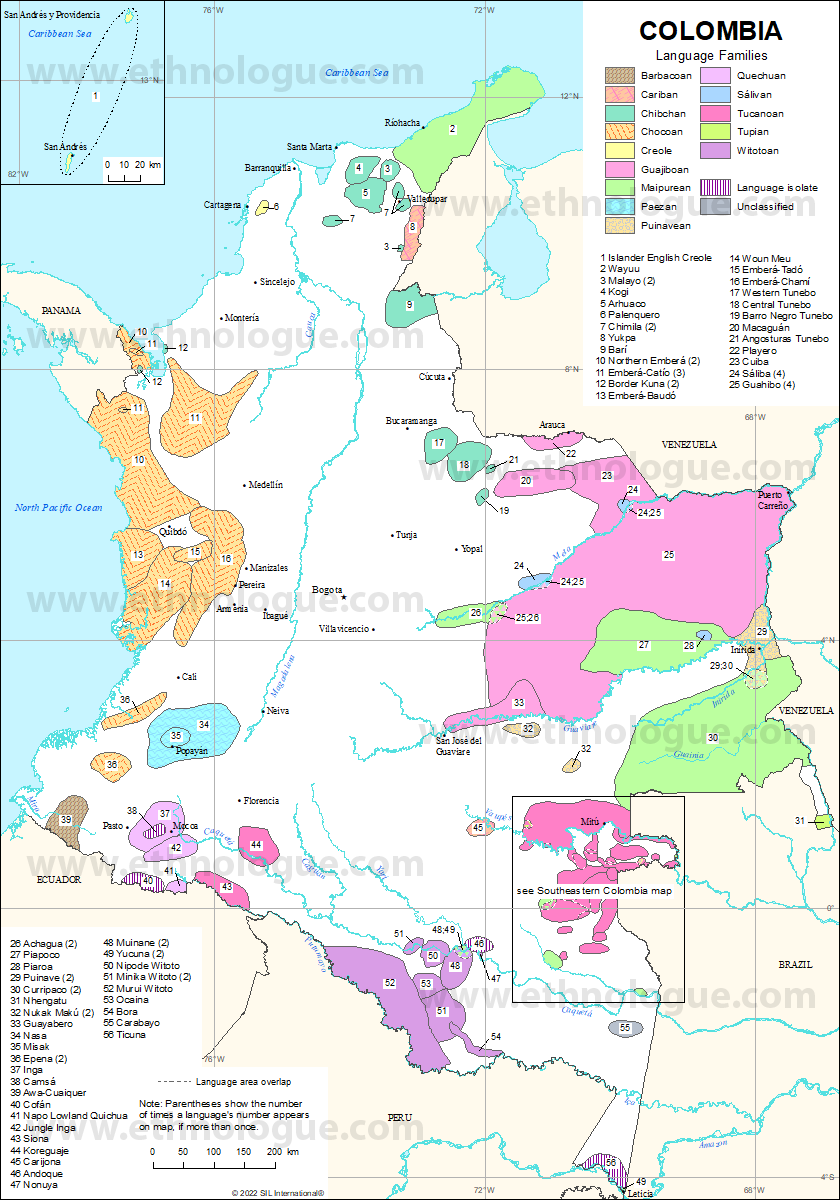
Colombia
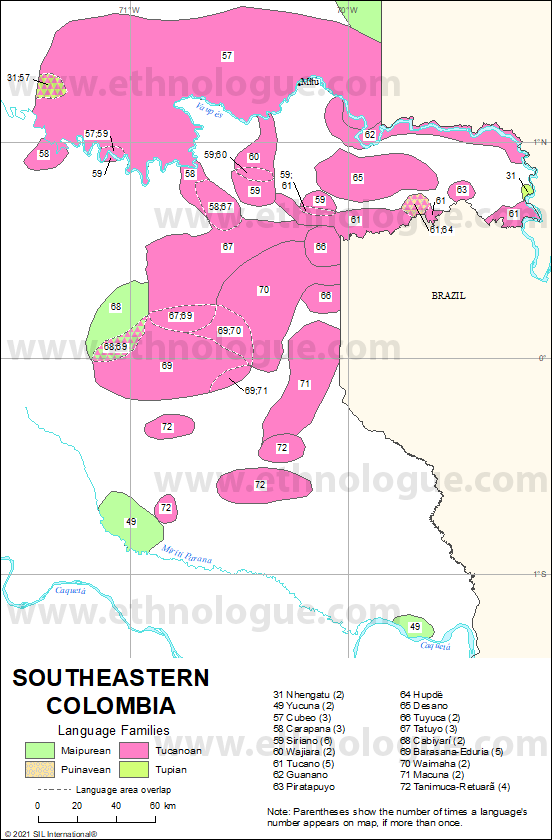
Southeastern Colombia
Graphs
Language Vitality Profile
Full explanation
Language Status Profile
Full explanation
Resources
View Terms
Each Ethnologue country digest is a licensed product with restricted terms of use. Before downloading the product, you must agree to the following terms:
- This is a license for individual use. Just as with a conventionally published book, it is a violation of copyright to make a copy and give it to others.
- You may not redistribute this work in any form, including ingesting the contents into a database that is shared with others or posting it on a web site (whether public or private).
To inquire about permission for reuse or redistribution, please use the Contact Us form in the footer.
Digest of the languages of Colombia ($299.95, 67 page PDF)