
DZ
Democratic and Popular Republic of Algeria
Algeria
Summary
- Official Name
- Democratic and Popular Republic of Algeria
- Population
- 44,179,000
- Principal Languages
- Amazigh, Standard Arabic
- Literacy Rate
- 81% (2018 UNESCO)
- International Conventions
- ACHPR (1987), CDE (1960), CPPDCE (2006), CSICH (2012), ICCPR (1966), UNCRPD (2006), UNDRIP (2007)
- General References
- Applegate 1970, Bateson 1967, Cohen 1985, Fischer and Jastrow 1980, Marçais 1977, Zavadovskii 1962
- Language Counts
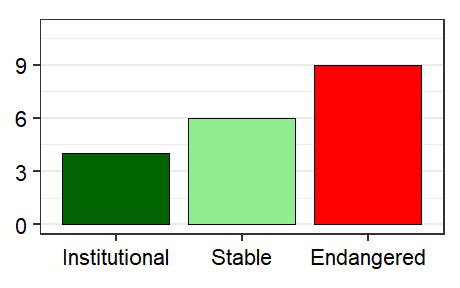
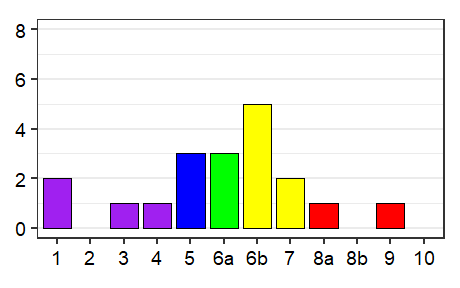
- The number of established languages listed for Algeria is 20. Of these, 19 are living and 1 is extinct. Of the living languages, 14 are indigenous and 5 are non-indigenous. Furthermore, 5 are institutional, 2 are developing, 4 are vigorous, 6 are in trouble, and 2 are dying. Also listed are 3 unestablished languages.
Languages
- Algerian Jewish Sign Language ajs
- Users: 0 in Algeria (Lanesman and Meir 2012a), all users. Status: 10 (Extinct). Alternate Names: Ghardaia Sign Language Classification: Sign language, Shared sign language
- Algerian Sign Language asp
- Scattered. Users: 240,000 (2008 WFD). Federation National Des Sourds d’Algerie reports 240,000 deaf members (2008 WFD). Status: 6a* (Vigorous). Alternate Names: LSA, Langue des signes algérienne, Lghh alesharh aljza’er Classification: Sign language, Deaf community sign language
- Amazigh kab
- Bouira, Béjaïa, Tizi Ouzou, Bordj Bou Arréridj, Sétif, M’Sila, Jijel, Boumerdès, Mila, and Médéa provinces; Mediterranean coast east of Algiers; from Thenia to Béjaïa (Grande Kabylie dialect); coast and inland between Tichy and Ziama Mansouria, Aokas and Tizi n Berber (Lesser Kabyle dialect). Users: 6,220,000 in Algeria (2020). Total users in all countries: 6,819,200. Status: 1 (National). Statutory national language (2016, Constitutional Revision, Article 4), co-official with Arabic. Alternate Names: Kabyl, Kabyle, Kabylia, Tamazight Autonym: Taqbaylit, Tazwawt Classification: Afro-Asiatic, Berber, Northern, Kabyle
- Arabic, Algerian Saharan Spoken aao
- Adrar, Béchar, Biskra, Djelfa, El Bayadh, El Oued, Ghardaïa, Illizi, Laghouat, Naama, Ouargla, Tamanrasset, and Tindouf provinces; border area along Atlas mountains, northeast to Médéa, southeast to Righ Wadi, south as far as plateau du Tademait. Users: 135,000 in Algeria (2020). Total users in all countries: 243,000. Status: 6a* (Vigorous). Alternate Names: Saharan Arabic, Tamanghasset Arabic, Tamanrasset Arabic Classification: Afro-Asiatic, Semitic, Central, South, Arabic
- Arabic, Algerian Spoken arq
- Widespread. Users: 36,500,000 in Algeria, all users. L1 users: 30,900,000 in Algeria (2020), increasing. L2 users: 5,600,000 (2020). Total users in all countries: 40,259,600 (as L1: 34,659,600; as L2: 5,600,000). Status: 3 (Wider communication). De facto language of national identity. Brought to northern Algeria in the 7th century along with the Islam religion. Vernacular of wider communication by 1848 with 72% of the total Algerian population speakers. Mostly used in daily communication and in entertainment. Alternate Names: Algerian, Algerian Arabic, Darija, Darja, Dziria Autonym: العامية (El’aamia), اللهجة الجزائرية (Lahja Djazairia) Classification: Afro-Asiatic, Semitic, Central, South, Arabic
- Arabic, Hassaniyya mey
- Tindouf province. Users: 220,000 in Algeria (2021 Joshua Project). Status: 5* (Dispersed). Classification: Afro-Asiatic, Semitic, Central, South, Arabic
- Arabic, Standard arb
- Users: 28,700,000 in Algeria (2015 SIL), all users. Status: 1 (National). Statutory national language (1996, Constitution, Article 3), co-official with Amazigh (Tamazight) [kab]. Classification: Afro-Asiatic, Semitic, Central, South, Arabic
- Chenoua cnu
- Aïn Defla province: north of Khemis; Chlef province: Mount Bissa area; Tipasa province: generally Mount Chenoua area; Mount Chenoua area (Chenoui dialect), south and west (Beni Menacer dialect); Tacheta forest area, and Beni Haoua village (Djebel Bissa dialect). Users: 76,300 (2004 J. Leclerc). Beni Menacer: 61,000; Chenoui: 15,300 (2004 J. Leclerc). Status: 6b (Threatened). Alternate Names: Chenoui, Haqbaylit̠, Shenwa Classification: Afro-Asiatic, Berber, Northern
- English eng
- Users: 2,527,260 in Algeria, all users. L1 users: 7,260 in Algeria (2015 UNSD). L2 users: 2,520,000 (Ramaswami et al 2012). Status: 4 (Educational). Classification: Indo-European, Germanic, West, English
- French fra
- Major cities. Users: 14,914,300 in Algeria, all users. L1 users: 14,300 in Algeria (2020). L2 users: 14,900,000 (Marcoux et al 2022). Status: 4 (Educational). Alternate Names: Français Classification: Indo-European, Italic, Romance, Italo-Western, Western, Gallo-Iberian, Gallo-Romance, Gallo-Rhaetian, Oïl, French
- Hausa hau
- Users: 11,600 in Algeria (2020). Status: Unestablished. Classification: Afro-Asiatic, Chadic, West, A, A.1
- Korandje kcy
- Tabelbala oasis, about halfway between Béchar and Tindouf, 3 villages: Kwara, Ifrnyu, Yami. Users: 3,000 (2010 L. Souag). Status: 7 (Shifting). Alternate Names: Belbalis, Kwarandzyey, Tabelbala, lbəlbaliyya Classification: Nilo-Saharan, Songhai
- Spanish spa
- Users: 223,000 in Algeria, all users. L1 users: 175,000 in Algeria (Instituto Cervantes 2017). L2 users: 48,000 (Instituto Cervantes 2017). Status: Unestablished. Classification: Indo-European, Italic, Romance, Italo-Western, Western, Gallo-Iberian, Ibero-Romance, West Iberian, Castilian
- Tachawit shy
- Batna, Biskra, Guelma, Khenchela, Oum el-Bouaghi, Souk Ahras, and Tébessa provinces: Aurès mountains, south and southeast of Grand Kabylie. Users: 2,300,000 (2020). Status: 6a* (Vigorous). Alternate Names: Aurès, Awras, Chaouia, Chawi, Shawia, Shawiya, Tacawit Classification: Afro-Asiatic, Berber, Northern, Zenati, Shawiya
- Tachelhit shi
- Béchar province: Tabelbala area south near the border. Users: 6,000 in Algeria (2014). Status: 5* (Developing). Alternate Names: Shilha, Southern Shilha, Tašlḥiyt, Tachilhit, Tashelhait, Tashelhayt, Tashelhit, Tasoussit Classification: Afro-Asiatic, Berber, Northern, Atlas
- Tadaksahak dsq
- Tamanrasset province. Users: 1,800 in Algeria (1983 Nicolai). Mainly young people in search of work. Status: Unestablished. Classification: Nilo-Saharan, Songhai, Northern
- Tagargrent oua
- Ouargla province: N’Goussa and Ouargla are main centers, near Mzab. Users: 20,000 (2014). Status: 6b* (Threatened). Alternate Names: Ouargla, Ouargli, Wargla Classification: Afro-Asiatic, Berber, Northern, Zenati, Mzab-Wargla
- Tamahaq, Tahaggart thv
- Adrar and Illizi provinces; Tamanrasset province: south to Niger border in south Hoggar mountains. Southeast, Ganet area and west (Hoggar Ghat dialect). Users: 71,400 in Algeria (2020). Total users in all countries: 130,700. Status: 6b* (Threatened). Alternate Names: Tamachek, Tamachek’, Tamashekin, Tamasheq, Tomachek, Touareg, Tourage, Tuareg Autonym: Tamahaq Classification: Afro-Asiatic, Berber, Tamasheq, Northern
- Tamazight, Temacine tjo
- Ouargla province: Bledit Amor; also Ghomra, Meggarin, Temacine, and Tamelhat areas. Users: 8,100 (2020). Status: 7 (Shifting). Alternate Names: Touggourt, Tougourt, Tugurt Classification: Afro-Asiatic, Berber, Northern, Zenati, Mzab-Wargla
- Tamazight, Tidikelt tia
- Tamanrasset province: Salah area, Tidikelt, and Tit south. Users: 1,000 (2011), decreasing. Status: 8a (Moribund). Classification: Afro-Asiatic, Berber, Northern, Zenati, Tidikelt
- Tarifit rif
- Oran and Tlemcen provinces. Users: No known L1 speakers in Algeria (2010 L. Souag). Status: 9 (Dormant). Alternate Names: Fifia, Northern Shilha, Rif, Riff, Rifi, Ruafa, Shilha, Tirifie Classification: Afro-Asiatic, Berber, Northern, Zenati, Riff
- Taznatit grr
- Adrar, Béchar, El Bayadh, and Naama provinces; Gourara area; Beni Ounif, Boussemghoun, Igli, Ouakda, Taghit. Users: 11,000 in Algeria (2014 L. Souag). Status: 6b (Threatened). Alternate Names: Sud Oranais-Gourara, Zenatiyya Classification: Afro-Asiatic, Berber, Northern, Zenati, Mzab-Wargla
- Tumzabt mzb
- Ghardaïa province: Mzab region south of Algiers; 7 oases, Ghardaïa is principal one. Users: 191,000 (2022 Joshua Project), based on ethnicity. Women are monolingual. Status: 6a (Vigorous). Alternate Names: Ghardaia, Mozabite, Mzab, Mzabi Classification: Afro-Asiatic, Berber, Northern, Zenati, Mzab-Wargla
Languages by Status
Amazigh
[kab] 1 (National). Statutory national language (2016, Constitutional Revision, Article 4), co-official with Arabic. 6,220,000 in Algeria (2020). Total users in all countries: 6,819,200.
Arabic, Standard
[arb] 1 (National). Statutory national language (1996, Constitution, Article 3), co-official with Amazigh (Tamazight) [kab]. 28,700,000 in Algeria (2015 SIL), all users.
Arabic, Algerian Spoken
[arq] 3 (Wider communication). De facto language of national identity. Brought to northern Algeria in the 7th century along with the Islam religion. Vernacular of wider communication by 1848 with 72% of the total Algerian population speakers. Mostly used in daily communication and in entertainment. 36,500,000 in Algeria, all users. L1 users: 30,900,000 in Algeria (2020), increasing. L2 users: 5,600,000 (2020). Total users in all countries: 40,259,600 (as L1: 34,659,600; as L2: 5,600,000).
English
[eng] 4 (Educational). 2,527,260 in Algeria, all users. L1 users: 7,260 in Algeria (2015 UNSD). L2 users: 2,520,000 (Ramaswami et al 2012).
French
[fra] 4 (Educational). 14,914,300 in Algeria, all users. L1 users: 14,300 in Algeria (2020). L2 users: 14,900,000 (Marcoux et al 2022).
Arabic, Hassaniyya
[mey] 5* (Dispersed). 220,000 in Algeria (2021 Joshua Project).
Tachelhit
[shi] 5* (Developing). 6,000 in Algeria (2014).
Algerian Sign Language
[asp] 6a* (Vigorous). 240,000 (2008 WFD). Federation National Des Sourds d’Algerie reports 240,000 deaf members (2008 WFD).
Arabic, Algerian Saharan Spoken
[aao] 6a* (Vigorous). 135,000 in Algeria (2020). Total users in all countries: 243,000.
Tachawit
[shy] 6a* (Vigorous). 2,300,000 (2020).
Tumzabt
[mzb] 6a (Vigorous). 191,000 (2022 Joshua Project), based on ethnicity. Women are monolingual.
Chenoua
[cnu] 6b (Threatened). 76,300 (2004 J. Leclerc). Beni Menacer: 61,000; Chenoui: 15,300 (2004 J. Leclerc).
Tagargrent
[oua] 6b* (Threatened). 20,000 (2014).
Tamahaq, Tahaggart
[thv] 6b* (Threatened). 71,400 in Algeria (2020). Total users in all countries: 130,700.
Taznatit
[grr] 6b (Threatened). 11,000 in Algeria (2014 L. Souag).
Korandje
[kcy] 7 (Shifting). 3,000 (2010 L. Souag).
Tamazight, Temacine
[tjo] 7 (Shifting). 8,100 (2020).
Tamazight, Tidikelt
[tia] 8a (Moribund). 1,000 (2011), decreasing.
Tarifit
[rif] 9 (Dormant). No known L1 speakers in Algeria (2010 L. Souag).
Algerian Jewish Sign Language
[ajs] 10 (Extinct). 0 in Algeria (Lanesman and Meir 2012a), all users.
Hausa
[hau] Unestablished. 11,600 in Algeria (2020).
Spanish
[spa] Unestablished. 223,000 in Algeria, all users. L1 users: 175,000 in Algeria (Instituto Cervantes 2017). L2 users: 48,000 (Instituto Cervantes 2017).
Tadaksahak
[dsq] Unestablished. 1,800 in Algeria (1983 Nicolai). Mainly young people in search of work.
Maps
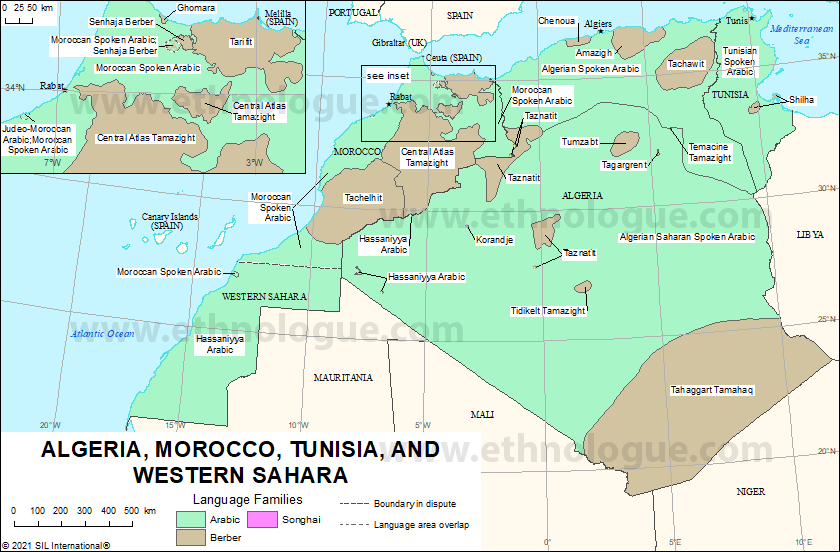
Algeria, Morocco, Tunisia and Western Sahara
Graphs
Language Vitality Profile
Full explanation
Language Status Profile
Full explanation
Resources
View Terms
Each Ethnologue country digest is a licensed product with restricted terms of use. Before downloading the product, you must agree to the following terms:
- This is a license for individual use. Just as with a conventionally published book, it is a violation of copyright to make a copy and give it to others.
- You may not redistribute this work in any form, including ingesting the contents into a database that is shared with others or posting it on a web site (whether public or private).
To inquire about permission for reuse or redistribution, please use the Contact Us form in the footer.
Digest of the languages of Algeria ($149.95, 29 page PDF)