
EG
Arab Republic of Egypt
Egypt
Summary
- Official Name
- Arab Republic of Egypt
- Population
- 104,258,000
- Principal Languages
- Egyptian Spoken Arabic, Standard Arabic
- Literacy Rate
- 74% (2015 World Factbook)
- International Conventions
- ACHPR (1987), CDE (1960), CPPDCE (2006), CSICH (2012), ICCPR (1966), UNCRPD (2006), UNDRIP (2007)
- General References
- Applegate 1970, Wehr and Cowan 1976
- Deaf Population
- WHO in 2007 found 16% with hearing loss (approx. 15 million); of those, 8% had at least severe loss (approx. 1.2 million) (Rashdan 2016)
- Language Counts
- The number of established languages listed for Egypt is 20. All are living languages. Of these, 9 are indigenous and 11 are non-indigenous. Furthermore, 3 are institutional, 6 are developing, 6 are vigorous, 3 are in trouble, and 2 are dying. Also listed are 4 unestablished languages.
Languages
- Amharic amh
- Users: 5,000 in Egypt (2000 J. Leclerc). Status: Unestablished. Classification: Afro-Asiatic, Semitic, South, Ethiopian, South, Transversal, Amharic-Argobba
- Arabic, Algerian Saharan Spoken aao
- Users: 30,000 in Egypt (2018). Status: 6a* (Vigorous). Classification: Afro-Asiatic, Semitic, Central, South, Arabic
- Arabic, Algerian Spoken arq
- Scattered. Users: 1,810,000 in Egypt (2019). Status: 5* (Dispersed). Classification: Afro-Asiatic, Semitic, Central, South, Arabic
- Arabic, Eastern Egyptian Bedawi Spoken avl
- Al Bahr al Ahmar, Al Isma’iliyah, As Suways, and Bur Sa’id governorates: parts of Red Sea coast east bank, almost to south border; Janub Sina’, Shamal Sina’, and Sinai governorates: mainly Bedouin regions. Users: 1,100,000 in Egypt (2019). Total users in all countries: 2,710,300. Status: 6a* (Vigorous). Alternate Names: Levantine Bedawi Arabic, Levantine Bedawi Spoken Arabic Autonym: بدوي (Badawi) Classification: Afro-Asiatic, Semitic, Central, South, Arabic
- Arabic, Egyptian Spoken arz
- Widespread. Users: 92,000,000 in Egypt, all users. L1 users: 67,000,000 in Egypt (2019). L2 users: 25,000,000 (2022). Total users in all countries: 99,826,730 (as L1: 74,826,730; as L2: 25,000,000). Status: 3 (Wider communication). De facto national working language. Originated in the Nile Delta in Lower Egypt. Brought to Egypt in the 7th century during the Muslim conquest. Used in daily exchanges, nonprint media, and as an unofficial medium of education. Alternate Names: Lower Egypt Arabic, Massry, Modern Egyptian Language, Normal Egyptian Arabic Autonym: عامي (Ammi), مصري (Masri) Classification: Afro-Asiatic, Semitic, Central, South, Arabic
- Arabic, Gulf Spoken afb
- Scattered. Users: 1,610,000 in Egypt (2019). Status: 5* (Dispersed). Classification: Afro-Asiatic, Semitic, Central, South, Arabic
- Arabic, Moroccan Spoken ary
- Scattered. Users: 1,710,000 in Egypt (2019). Status: 5* (Dispersed). Classification: Afro-Asiatic, Semitic, Central, South, Arabic
- Arabic, North Levantine Spoken apc
- Users: 173,000 in Egypt (2018). Status: Unestablished. Classification: Afro-Asiatic, Semitic, Central, South, Arabic
- Arabic, Sa’idi Spoken aec
- Widespread: Al-Minya governorate and south to Sudan border; Red Sea area; Cairo area. Users: 24,100,000 (2019). Status: 6a* (Vigorous). Alternate Names: Saidi Arabic, Upper Egypt Arabic Classification: Afro-Asiatic, Semitic, Central, South, Arabic
- Arabic, Standard arb
- Widespread. Users: 65,500,000 in Egypt (2015 SIL), all users. Status: 1 (National). Statutory national language (2014, Constitution, Article 2). Classification: Afro-Asiatic, Semitic, Central, South, Arabic
- Arabic, Sudanese Spoken apd
- Users: 1,810,000 in Egypt (2019). Status: 6a* (Vigorous). Classification: Afro-Asiatic, Semitic, Central, South, Arabic
- Arabic, Ta’izzi-Adeni Spoken acq
- Users: 172,000 in Egypt (2018). Status: Unestablished. Classification: Afro-Asiatic, Semitic, Central, South, Arabic
- Arabic, Western Egyptian Bedawi Spoken ayl
- Al Buhayrah, Al Iskandariyah, and Matruh governorates; Al Fayyum, Al Minya, Al Qahirah, Al Wadi al Jadid, and Bani Suwayf governorates: western oases. Bedouin regions along Mediterranean coast, west to Libya border. Users: 402,000 in Egypt (2019). Status: 6a* (Vigorous). Alternate Names: Bedawi, Libyan Spoken Arabic, Maghrebi Arabic, Sulaimitian Arabic Classification: Afro-Asiatic, Semitic, Central, South, Arabic
- Armenian, Western hyw
- Major cities. Users: 6,000 in Egypt (Zohry 2005). Status: 7 (Shifting). Classification: Indo-European, Armenian
- Bedawiyet bej
- Al Bahr al Ahmar Governorate; north of Marsa al ’Alam south to administrative boundary on Red Sea east coast. Users: 77,000 in Egypt (1993). Status: 5* (Dispersed). Alternate Names: Bedawi, Bedàwie, Beja, Bidhaawyeet, Tu Bdhaawi, Tubdhaawi Classification: Afro-Asiatic, Cushitic, North
- Coptic cop
- Scattered, used liturgically in Coptic Orthodox and Coptic Catholic churches. Users: No known L1 speakers. Ethnic population: No ethnic community. Status: 9 (Second language only). Autonym: ϯⲙⲉⲧⲣⲉⲙⲛ̀ⲭⲏⲙⲓ (timetremənkʰēmi) Classification: Afro-Asiatic, Egyptian
- Egyptian Sign Language esl
- Scattered. Users: 500,000 (2021 DBS/DOOR/SIL). Estimated 300,000–600,000 deaf signers, assuming 0.3%–0.6% of the total population. Another estimate: 474,000 (2014 IMB). Status: 5 (Developing). Alternate Names: ESL, Egypt Sign Language, LIM, Lughat al-Ishaara al-Masriya, Lughat al-‘Ishāra al-Maṣriyya Classification: Sign language, Deaf community sign language
- English eng
- Users: 35,119,000 in Egypt, all users. L1 users: 19,000 in Egypt (2020 Joshua Project), based on ethnicity. L2 users: 35,100,000 (Ramaswami et al 2012). Status: 4 (Educational). Classification: Indo-European, Germanic, West, English
- French fra
- Users: 3,190,000 in Egypt, all users. L1 users: 90,000 in Egypt (2022 Joshua Project), based on ethnicity. L2 users: 3,100,000 (Marcoux et al 2022). Status: 5* (Dispersed). Classification: Indo-European, Italic, Romance, Italo-Western, Western, Gallo-Iberian, Gallo-Romance, Gallo-Rhaetian, Oïl, French
- Greek ell
- Al Iskandariyah (Alexandria) and Al Qahirah (Cairo). Users: A few elderly speakers in Cairo and Alexandria (2014). Status: 8b (Nearly extinct). Classification: Indo-European, Greek, Attic
- Mattokki xnz
- Al Wadi al Jadid governorate: scattered in various cities; Aswan governorate: Lake Nasser northern tip, and near Kom Ombo, 50 km north of Aswan city. Users: 50,000 (2014), decreasing. Status: 7 (Shifting). Alternate Names: Kenuz, Kenuzi, Kenzi, Kunuz, Kunuz Nubian, Kunuzi Autonym: Mattokki Classification: Nilo-Saharan, Satellite-Core, Core, Eastern Sudanic, Northern (k languages), Nubian, Central
- Nobiin fia
- Aswan governorate: Kom Ombo area; shares area with Mattokki [xnz]; scattered in cities. Users: 402,000 in Egypt (2019). Status: 7 (Shifting). Alternate Names: Fadicca, Fadicha, Fadija, Fedicca, Fedija, Fiadidja, Fiadidja-Mahas, Fiyadikkya, Mahas, Mahas-Fiadidja, Sukot Classification: Nilo-Saharan, Satellite-Core, Core, Eastern Sudanic, Northern (k languages), Nubian, Northern
- Siwi siz
- Matruh governorate: northwest desert, Siwa oasis; several isolated villages in Gara oasis. Users: 20,000 in Egypt (2013). Status: 6a* (Vigorous). Alternate Names: Oasis Berber, Sioua, Siwa, Zenati, ijlaan n siwaan Classification: Afro-Asiatic, Berber, Eastern, Siwa
- Turkish tur
- Users: 43,000 in Egypt (2018). Status: Unestablished. Classification: Turkic, Southern, Turkish
Languages by Status
Arabic, Standard
[arb] 1 (National). Statutory national language (2014, Constitution, Article 2). 65,500,000 in Egypt (2015 SIL), all users.
Arabic, Egyptian Spoken
[arz] 3 (Wider communication). De facto national working language. Originated in the Nile Delta in Lower Egypt. Brought to Egypt in the 7th century during the Muslim conquest. Used in daily exchanges, nonprint media, and as an unofficial medium of education. 92,000,000 in Egypt, all users. L1 users: 67,000,000 in Egypt (2019). L2 users: 25,000,000 (2022). Total users in all countries: 99,826,730 (as L1: 74,826,730; as L2: 25,000,000).
English
[eng] 4 (Educational). 35,119,000 in Egypt, all users. L1 users: 19,000 in Egypt (2020 Joshua Project), based on ethnicity. L2 users: 35,100,000 (Ramaswami et al 2012).
Arabic, Algerian Spoken
[arq] 5* (Dispersed). 1,810,000 in Egypt (2019).
Arabic, Gulf Spoken
[afb] 5* (Dispersed). 1,610,000 in Egypt (2019).
Arabic, Moroccan Spoken
[ary] 5* (Dispersed). 1,710,000 in Egypt (2019).
Bedawiyet
[bej] 5* (Dispersed). 77,000 in Egypt (1993).
French
[fra] 5* (Dispersed). 3,190,000 in Egypt, all users. L1 users: 90,000 in Egypt (2022 Joshua Project), based on ethnicity. L2 users: 3,100,000 (Marcoux et al 2022).
Egyptian Sign Language
[esl] 5 (Developing). 500,000 (2021 DBS/DOOR/SIL). Estimated 300,000–600,000 deaf signers, assuming 0.3%–0.6% of the total population. Another estimate: 474,000 (2014 IMB).
Arabic, Algerian Saharan Spoken
[aao] 6a* (Vigorous). 30,000 in Egypt (2018).
Arabic, Eastern Egyptian Bedawi Spoken
[avl] 6a* (Vigorous). 1,100,000 in Egypt (2019). Total users in all countries: 2,710,300.
Arabic, Sa’idi Spoken
[aec] 6a* (Vigorous). 24,100,000 (2019).
Arabic, Sudanese Spoken
[apd] 6a* (Vigorous). 1,810,000 in Egypt (2019).
Arabic, Western Egyptian Bedawi Spoken
[ayl] 6a* (Vigorous). 402,000 in Egypt (2019).
Siwi
[siz] 6a* (Vigorous). 20,000 in Egypt (2013).
Armenian, Western
[hyw] 7 (Shifting). 6,000 in Egypt (Zohry 2005).
Mattokki
[xnz] 7 (Shifting). 50,000 (2014), decreasing.
Nobiin
[fia] 7 (Shifting). 402,000 in Egypt (2019).
Greek
[ell] 8b (Nearly extinct). A few elderly speakers in Cairo and Alexandria (2014).
Maps
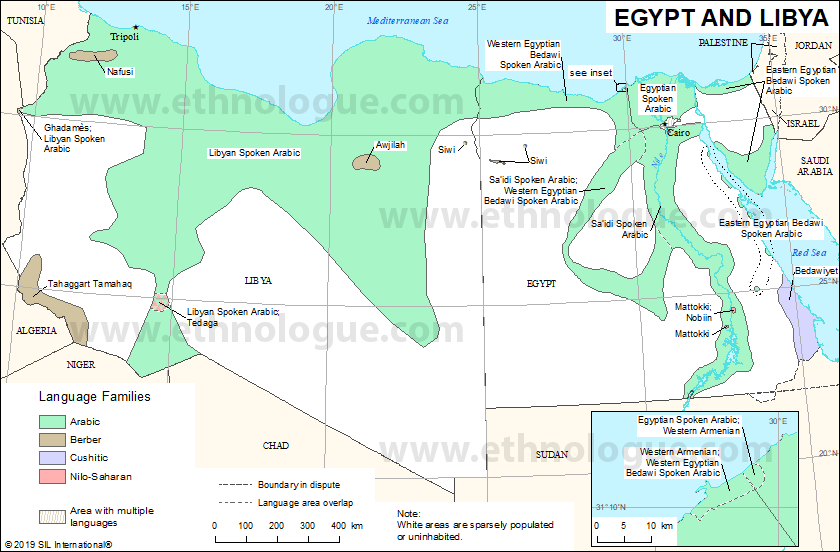
Egypt and Libya
Graphs
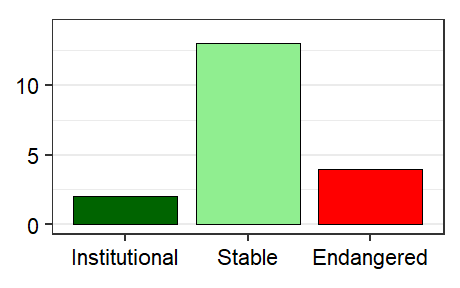
Language Vitality Profile
Full explanation
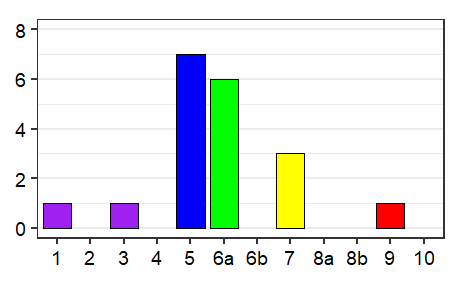
Language Status Profile
Full explanation
Resources
View Terms
Each Ethnologue country digest is a licensed product with restricted terms of use. Before downloading the product, you must agree to the following terms:
- This is a license for individual use. Just as with a conventionally published book, it is a violation of copyright to make a copy and give it to others.
- You may not redistribute this work in any form, including ingesting the contents into a database that is shared with others or posting it on a web site (whether public or private).
To inquire about permission for reuse or redistribution, please use the Contact Us form in the footer.
Digest of the languages of Egypt ($149.95, 25 page PDF)