
GH
Republic of Ghana
Ghana
Summary
- Official Name
- Republic of Ghana
- Population
- 31,073,000
- Principal Languages
- Akan, English
- Literacy Rate
- 79% (2018 UNESCO)
- International Conventions
- ACHPR (1987), CPPDCE (2006), CSICH (2012), ICCPR (1966), UNCRPD (2006), UNDRIP (2007)
- General References
- Barker 1986, Bendor-Samuel and Hartell 1989, Campbell and King 2011, Hall 1983, Kropp Dakubu and Kropp 1988, Vanderaa 1991
- Deaf Population
- 6,000
- Language Counts
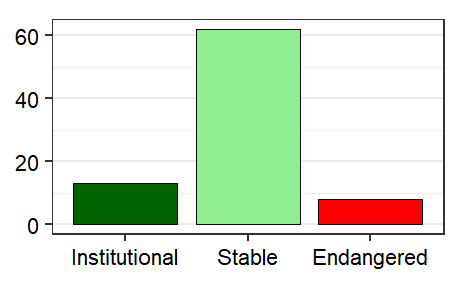
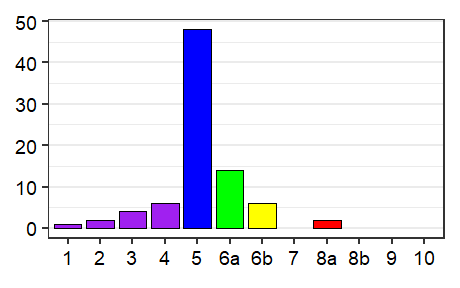
- The number of established languages listed for Ghana is 84. Of these, 83 are living and 1 is extinct. Of the living languages, 73 are indigenous and 10 are non-indigenous. Furthermore, 13 are institutional, 49 are developing, 13 are vigorous, 6 are in trouble, and 2 are dying. Also listed are 5 unestablished languages.
Languages
- Abron abr
- Brong-Ahafo region: southwest. Users: 1,170,000 in Ghana (2013 UNSD). Total users in all countries: 1,393,000. Status: 5* (Developing). Alternate Names: Bron, Brong, Doma, Gyaman Classification: Niger-Congo, Atlantic-Congo, Volta-Congo, Kwa, Nyo, Potou-Tano, Tano, Central, Akan
- Adamorobe Sign Language ads
- Eastern region: Akuapim South municipal district, Adamorobe village. Users: 41 (Kusters 2012). Many of the approximately 3,500 hearing people in Adamorobe village also use Adamorobe Sign Language, to varying degrees of proficiency (Nyst 2007, Kusters 2012). Status: 6a (Vigorous). Alternate Names: AdaSL Classification: Sign language, Shared sign language
- Adangbe adq
- Volta region: south. Users: Ethnic population: 6,000 (Gblem-Poidi and Kantchoa 2012). Total users in all countries: 4,000. Status: 6b* (Threatened). Alternate Names: Adan, Adantonwi, Agotime, Dangbe Classification: Niger-Congo, Atlantic-Congo, Volta-Congo, Kwa, Left Bank, Kposo-Ahlo-Bowili
- Adele ade
- Volta region: Nkwanta district; east central border with Togo. Users: 11,000 in Ghana (2003). Status: 5* (Developing). Alternate Names: Bɛdɩrɛ, Badre, Bedire, Gadre, Gidire, Gɩdɩrɛ Classification: Niger-Congo, Atlantic-Congo, Volta-Congo, Kwa, Nyo, Potou-Tano, Basila-Adele
- Ahanta aha
- Western region: Takoradi to Princes Town on southwest coast. Users: 175,000 (2013 UNSD). Status: 5* (Developing). Autonym: Ayɩnda Classification: Niger-Congo, Atlantic-Congo, Volta-Congo, Kwa, Nyo, Potou-Tano, Tano, Central, Bia, Southern
- Akan aka
- Widespread. Users: 9,100,000 in Ghana, all users. L1 users: 8,100,000 in Ghana (2013 UNSD). Population includes 111,000 Agona, 85,900 Ahafo, 626,000 Akuapem, 3,820,000 Asante, 142,000 Asen, 124,000 Dankyira, 2,730,000 Fante, 443,000 Kwawu, and 15,400 other (2013 UNSD). L2 users: 1,000,000. Total users in all countries: 9,329,800 (as L1: 8,329,800; as L2: 1,000,000). Status: 3 (Wider communication). De facto national working language. Became widely spoken around the 17th century. Used in slave trade by the Akan people in exchange for firearms. Also used in gold mining, trade, and farming. Officially recognized for literacy. Autonym: Akan Classification: Niger-Congo, Atlantic-Congo, Volta-Congo, Kwa, Nyo, Potou-Tano, Tano, Central, Akan
- Akposo kpo
- Volta region: Jasikan district, near Togo border. Users: 7,500 in Ghana (2003). Status: 5* (Developing). Alternate Names: Akposso, Ikposo, Ikposso, Kposo Classification: Niger-Congo, Atlantic-Congo, Volta-Congo, Kwa, Left Bank, Kposo-Ahlo-Bowili
- Animere anf
- Volta region: enclave north of Jasikan town; Kecheibi and Kunda villages, remote. Users: 30 (2006 R. Blench). Only a few fluent speakers left in an ethnic group of several hundred (Dimmendaal and Voeltz 2007). Status: 8a (Moribund). Alternate Names: Anyimere, Kunda Classification: Niger-Congo, Atlantic-Congo, Volta-Congo, Kwa, Left Bank, Kebu-Animere
- Anufo cko
- Northern region: Wawjayga area. Users: 91,300 in Ghana (2013 UNSD). Total users in all countries: 177,200. Status: 5* (Developing). Alternate Names: Chakosi, Chokosi, Kyokosi, Tchokossi, Tiokossi Autonym: Anufo Classification: Niger-Congo, Atlantic-Congo, Volta-Congo, Kwa, Nyo, Potou-Tano, Tano, Central, Bia, Northern
- Anyin any
- Western region: Aowin Suman district. Users: 66,400 in Ghana (2013 UNSD). Status: 5* (Developing). Alternate Names: Agni, Anyi Classification: Niger-Congo, Atlantic-Congo, Volta-Congo, Kwa, Nyo, Potou-Tano, Tano, Central, Bia, Northern
- Avatime avn
- Volta region: center at Amedzofe. Users: 27,200 (2013 UNSD). Status: 5* (Developing). Alternate Names: Afatime, Si-yà, Sia, Siya, Siyase Autonym: Sideme Classification: Niger-Congo, Atlantic-Congo, Volta-Congo, Kwa, Left Bank, Avatime-Nyangbo
- Awutu afu
- Central region: Awutu district, coast west of Accra. Users: 129,000 (2013 UNSD). Status: 5* (Developing). Alternate Names: Efutu Autonym: Awutu Classification: Niger-Congo, Atlantic-Congo, Volta-Congo, Kwa, Nyo, Potou-Tano, Tano, Guang, South Guang
- Baoulé bci
- Users: 4,060 in Ghana (2013 UNSD). Status: Unestablished. Classification: Niger-Congo, Atlantic-Congo, Volta-Congo, Kwa, Nyo, Potou-Tano, Tano, Central, Bia, Northern
- Bimoba bim
- Northern region: Bunkpurugu-Yunyoo and Sabobal-Chereponi districts; Upper East region: Garu-Tempane district. Users: 176,000 (2013 UNSD). Ethnic population: 200,000. Status: 6b* (Threatened). Alternate Names: Moar, Moor Autonym: Mɔɔr Classification: Niger-Congo, Atlantic-Congo, Volta-Congo, North, Gur, Central, Northern, Oti-Volta, Gurma, Moba
- Birifor, Southern biv
- Northern region; Upper West region: Wa West district. Users: 183,000 in Ghana (2017 J. Leclerc), increasing. Total users in all countries: 187,310. Status: 5 (Developing). Alternate Names: Berfoɔr, Birifo, Birifor, Bɩ rfʊ ɔ r, Ghana Birifor, Lobi Autonym: Birfoɔr Classification: Niger-Congo, Atlantic-Congo, Volta-Congo, North, Gur, Central, Northern, Oti-Volta, Western, Northwest, Dagaari-Birifor, Birifor
- Bisa bib
- Upper East region: Bawku Municipal district. Users: 243,000 in Ghana (2017 J. Leclerc). Status: 5* (Developing). Alternate Names: Bissa, Busansi Classification: Niger-Congo, Mande, Eastern, Eastern, Bissa
- Boro xxb
- Volta region: Tapa Amanya and Worawora area. Users: No known L1 speakers. Last fluent speaker likely died in the early 1800s. Status: 10 (Extinct). Classification: Niger-Congo, Atlantic-Congo, Volta-Congo, Kwa
- Buli bwu
- Upper East region; Northern region: White Volta river area. Users: 168,000 (2013 UNSD), increasing. Status: 5 (Developing). Alternate Names: Builsa, Bulisa, Bulsa, Guresha, Kanjaga Autonym: Buli Classification: Niger-Congo, Atlantic-Congo, Volta-Congo, North, Gur, Central, Northern, Oti-Volta, Buli-Koma
- Chakali cli
- Northern region: West Gonja district, Ducie village is largest; Upper West region: Wa East district. Users: 6,000 (2003 GILLBT). Status: 6b (Threatened). Classification: Niger-Congo, Atlantic-Congo, Volta-Congo, North, Gur, Central, Southern, Grusi, Western
- Chala cll
- Northern region: Jadigbe village, near Seipe, is 35% Chala; Volta region: Ago, Nkwanta, and Odomi villages. Users: 3,000 (2003 GILLBT). Status: 6b* (Threatened). Alternate Names: Bogong, Cala, Tshala Classification: Niger-Congo, Atlantic-Congo, Volta-Congo, North, Gur, Central, Southern, Grusi, Eastern
- Cherepon cpn
- Eastern region: east of Koforidua town; a few north of Larteh. Users: 132,000 (2013 UNSD). Status: 6a* (Vigorous). Alternate Names: Chiripon, Chiripong, Kyerepong, Okere Classification: Niger-Congo, Atlantic-Congo, Volta-Congo, Kwa, Nyo, Potou-Tano, Tano, Guang, South Guang
- Chumburung ncu
- Brong-Ahafo region: Sene district; Northern region: East Gonja district; Volta region: Krachi district; triangular area with Volta lake south, Daka river northwest, Yeji dialect is south of the lake. Users: 95,000 (2017 J. Leclerc), increasing. Status: 5 (Developing). Alternate Names: Kyo̱ŋbo̱ro̱ŋ, Kyongborong, Nchimburu, Nchumburu, Nchummuru Autonym: Kyo̱ŋbo̱ro̱ŋ-nɔ Classification: Niger-Congo, Atlantic-Congo, Volta-Congo, Kwa, Nyo, Potou-Tano, Tano, Guang, North Guang
- Dagaare, Southern dga
- Upper West region: northwest corner. Users: 924,000 (2013 UNSD), increasing. Status: 4 (Educational). Recognized language (1951, Laws of the Gold Coast, Vernacular Literature Board Ordinance, as amended by Ordinance No. 44). Alternate Names: Dagara, Dagare, Dagari, Dagati, Degati, Dogaari, Southern Dagari Autonym: Dagaare Classification: Niger-Congo, Atlantic-Congo, Volta-Congo, North, Gur, Central, Northern, Oti-Volta, Western, Northwest, Dagaari-Birifor, Dagaari
- Dagbani dag
- Northern region: northeast of Tamale, as far as Yendi. Users: 1,160,000 (2013 UNSD), increasing. Status: 4 (Educational). Recognized language (1951, Laws of the Gold Coast, Vernacular Literature Board Ordinance, as amended by Ordinance No. 44). Alternate Names: Dagbamba, Dagbane, Dagomba Autonym: Dagbanli Classification: Niger-Congo, Atlantic-Congo, Volta-Congo, North, Gur, Central, Northern, Oti-Volta, Western, Southeast
- Dangme ada
- Eastern region: Asuogyaman, East Akim municipal, Fanteukwa, Lower Manya Krobo, Upper Manya Krobo, New Juaben municipal, and Yilo Krobo municipal districts; Greater Accra region: Dangme East and West districts, southeast coast and inland; Volta region: North Tongu district. Users: 1,020,000 (2013 UNSD). Status: 4 (Educational). Recognized language (1951, Laws of the Gold Coast, Vernacular Literature Board Ordinance, as amended by Ordinance No. 44). Alternate Names: Adaŋgbi, Adangme Autonym: Dangme Classification: Niger-Congo, Atlantic-Congo, Volta-Congo, Kwa, Nyo, Ga-Dangme
- Deg mzw
- Brong-Ahafo region: Kintampo North district; Northern region: Bole district; west of Volta lake. Users: 42,900 in Ghana (2013 UNSD). Total users in all countries: 44,000. Status: 5 (Developing). Alternate Names: Aculo, Buru, Degha, Janela, Mmfo, Mo Autonym: Dɛg Classification: Niger-Congo, Atlantic-Congo, Volta-Congo, North, Gur, Central, Southern, Grusi, Western
- Delo ntr
- Volta region: Pampawie area, Togo border. Users: 10,900 in Ghana (2003), increasing. Total users in all countries: 18,400. Status: 5 (Developing). Alternate Names: Ntribou, Ntribu, Ntrubo Autonym: Delo Classification: Niger-Congo, Atlantic-Congo, Volta-Congo, North, Gur, Central, Southern, Grusi, Eastern
- Dompo doy
- Brong-Ahafo region: Banda district, Dompofie quarter. Users: 65 (Blench 1999a), decreasing. Ethnic population: 970 (2000). Status: 8a (Moribund). Alternate Names: Dumpo, Guang, Ndmpo Classification: Niger-Congo, Atlantic-Congo, Volta-Congo, Kwa, Nyo, Potou-Tano, Tano, Guang, North Guang
- Dwang nnu
- Brong-Ahafo region: south of Volta lake, east of Atebubu. Users: 8,200 (2003 GILLBT). 1,600 Bekye, 3,300 Kenyen, 3,300 Wiase. Status: 6a (Vigorous). Alternate Names: Bassa, Dwan, Nchumunu Classification: Niger-Congo, Atlantic-Congo, Volta-Congo, Kwa, Nyo, Potou-Tano, Tano, Guang, North Guang
- English eng
- Users: 11,708,600 in Ghana, all users. L1 users: 8,600 in Ghana (2020 Joshua Project), based on ethnicity. L2 users: 11,700,000 (2010 census), based on literacy rate in English of respondents 15 years old and older. Status: 1 (National). De facto national language. Classification: Indo-European, Germanic, West, English
- Esahie sfw
- Western region. Users: 305,000 (2013 UNSD). Status: 5* (Developing). Alternate Names: Asahyue, Sefwi, Sehwi Autonym: Esahie Classification: Niger-Congo, Atlantic-Congo, Volta-Congo, Kwa, Nyo, Potou-Tano, Tano, Central, Bia, Northern
- Éwé ewe
- Eastern region: Askuma town area, west of Lake Volta; Greater Accra region: easternmost; Volta region: easternmost. Users: 3,820,000 in Ghana, all users. L1 users: 3,320,000 in Ghana (2013 UNSD), increasing. L2 users: 500,000. Total users in all countries: 5,525,320 (as L1: 5,025,320; as L2: 500,000). Status: 3 (Wider communication). Recognized language (1951, Laws of the Gold Coast, Vernacular Literature Board Ordinance, as amended by Ordinance No. 44). Widely used throughout southeastern Ghana and southern Togo, it is believed that the Éwé migrated south from Nigeria in the 13th century into the Tado region of present-day Togo. In the 18th century, they came in contact with Europeans and were involved in slave trade. Éwé is an official language in both Ghana and Togo. Éwé culture and tradition is rich in folklore, poetry, myths, and songs. Éwé is used in cultural activities, in commerce, weaving, education, farming, and fishing. Alternate Names: Ebwe, Efe, Eibe, Eue, Eve, Gbe, Krepe, Krepi, Popo, Vhe Autonym: Èʋegbe (Èwegbe) Classification: Niger-Congo, Atlantic-Congo, Volta-Congo, Kwa, Left Bank, Gbe
- Farefare gur
- Upper East region: Bolgatanga municipal district, Frafra area, west to Navrongo. Users: 638,000 in Ghana (2013 UNSD), increasing. 588,000 Gur and Nankansi, 49,200 Namnam (2013 UNSD). Total users in all countries: 663,100. Status: 2 (Provincial). De facto provincial language in Upper East Region. Alternate Names: Frafra, Gurene, Gurenne, Gurune Autonym: Farefare, Gurenɛ Classification: Niger-Congo, Atlantic-Congo, Volta-Congo, North, Gur, Central, Northern, Oti-Volta, Western, Northwest
- Foodo fod
- Users: 1,000 in Ghana. Status: Unestablished. Classification: Niger-Congo, Atlantic-Congo, Volta-Congo, Kwa, Nyo, Potou-Tano, Tano, Guang, North Guang
- French fra
- Users: 274,000 in Ghana (Marcoux et al 2022), L2 users. Status: 4 (Educational). Classification: Indo-European, Italic, Romance, Italo-Western, Western, Gallo-Iberian, Gallo-Romance, Gallo-Rhaetian, Oïl, French
- Fulfulde, Maasina ffm
- Widespread north. Users: 4,240 in Ghana (2013 UNSD). Status: 5* (Dispersed). Alternate Names: Fulbe, Fulfulde, Maacina, Maasinankoore, Peul Classification: Niger-Congo, Atlantic-Congo, Atlantic, Northern, Senegambian, Fula-Wolof, Fula, West Central
- Ga gaa
- Greater Accra region: Accra and west. Users: 745,000 in Ghana (2013 UNSD). Total users in all countries: 793,400. Status: 4 (Educational). Recognized language (1951, Laws of the Gold Coast, Vernacular Literature Board Ordinance, as amended by Ordinance No. 44). Alternate Names: Accra, Acra, Amina, Gain, Gamei Autonym: Ga Classification: Niger-Congo, Atlantic-Congo, Volta-Congo, Kwa, Nyo, Ga-Dangme
- Ghanaian Pidgin English gpe
- Greater Accra region: scattered. Users: 5,002,000, all users. L1 users: 2,000 (1990 UBS). L2 users: 5,000,000 (2011 V. Velupillai). Status: 3 (Wider communication). Developed in the 19th and 20th centuries when the British colonized the Gold Coast of West Africa (now Ghana). Lingua franca of Accra and southern towns in Ghana. Used in all domains. Alternate Names: Broken, Kroo Brofo, Kru English, Pidgin, Pidgin English Classification: Creole, English based, Atlantic, Krio
- Ghanaian Sign Language gse
- Scattered. Users: 152,000 (2021 DBS/DOOR/SIL). Estimated 91,000–182,000 deaf signers, assuming 0.3%–0.6% of total population. Estimated 111,000 deaf people served by Ghana National Association of the Deaf (2019 GNAD). Status: 5 (Developing). Alternate Names: GSL Classification: Sign language, Deaf community sign language
- Gikyode acd
- Volta region: Nkwanta district, on Togo border, 9 remote villages. Users: 10,400 (2003), increasing. Status: 5 (Developing). Alternate Names: Achode, Akyode, Chode, Gichode, Kyode Autonym: Gikyode Classification: Niger-Congo, Atlantic-Congo, Volta-Congo, Kwa, Nyo, Potou-Tano, Tano, Guang, North Guang
- Gonja gjn
- Brong-Ahafo region: Kintampa North district, separate area west; Northern region: Volta lake upper basin. Users: 310,000 (2013 UNSD), increasing. Status: 4 (Educational). Recognized language (1951, Laws of the Gold Coast, Vernacular Literature Board Ordinance, as amended by Ordinance No. 44). Alternate Names: Guang Autonym: Ngbanyito Classification: Niger-Congo, Atlantic-Congo, Volta-Congo, Kwa, Nyo, Potou-Tano, Tano, Guang, North Guang
- Gua gwx
- Eastern and Volta regions. Users: 17,600 (2013 UNSD). Status: 6a* (Vigorous). Alternate Names: Anum-Boso, Guan, Gwa Classification: Niger-Congo, Atlantic-Congo, Volta-Congo, Kwa, Nyo, Potou-Tano, Tano, Guang, South Guang
- Hanga hag
- Northern region: Damongo district southeast of Mole Game Reserve; Murugu is largest village. Users: 6,800 (2003 GILLBT), increasing. 4,100 in the traditional area, 2,700 elsewhere. Status: 5* (Developing). Alternate Names: Anga Autonym: Haŋa Classification: Niger-Congo, Atlantic-Congo, Volta-Congo, North, Gur, Central, Northern, Oti-Volta, Western, Southeast
- Hausa hau
- Widespread. Users: 565,000 in Ghana, all users. L1 users: 275,000 in Ghana (2017 J. Leclerc). L2 users: 290,000 (2019 Joshua Project). Status: 3 (Wider communication). Used as L2 in the north. Classification: Afro-Asiatic, Chadic, West, A, A.1
- Ibibio ibb
- Users: 59,000 in Ghana (2017 J. Leclerc). Status: Unestablished. Classification: Niger-Congo, Atlantic-Congo, Volta-Congo, Benue-Congo, Cross River, Delta Cross, Lower Cross, Obolo, Efik
- Igbo ibo
- Users: 61,000 in Ghana (2017 J. Leclerc). Status: Unestablished. Classification: Niger-Congo, Atlantic-Congo, Volta-Congo, Benue-Congo, Igboid, Igbo
- Jwira-Pepesa jwi
- Western region; Jwira from Bamiankaw to Humjibere along Ankobra river (18 villages); Pepesa on Wasa land between Agona Junction and Tarkwa; Dompim is main town. Users: 18,000 (2003 GILLBT). Status: 6a* (Vigorous). Alternate Names: Gwira, Pepesa-Jwira Classification: Niger-Congo, Atlantic-Congo, Volta-Congo, Kwa, Nyo, Potou-Tano, Tano, Central, Bia, Southern
- Kabiyè kbp
- Northern region: near Togo border. Status: 5* (Developing). Alternate Names: Cabrai, Cabrais, Kabire, Kabure, Kabye Classification: Niger-Congo, Atlantic-Congo, Volta-Congo, North, Gur, Central, Southern, Grusi, Eastern
- Kamara jmr
- Northern region: Larabanga village on road west of Damongo. Users: 3,000 (2003 GILLBT), increasing. Ethnic population: 5,000 (2003 GILLBT). Status: 6a (Vigorous). Alternate Names: Mara Classification: Niger-Congo, Atlantic-Congo, Volta-Congo, North, Gur, Central, Northern, Oti-Volta, Western, Southeast
- Kantosi xkt
- Upper East region: Sandema district, Bolgatonga, Kpaliwogo, Nalerigu, Navrongo, and near Wa. Users: 2,300 (2003 GILLBT). 280–400 in Sandema District, probably about 280 in Kpaliwongo. Status: 6b (Threatened). Alternate Names: Dagaare-Dioula, Kantonsi, Yare, Yarsi Classification: Niger-Congo, Atlantic-Congo, Volta-Congo, North, Gur, Central, Northern, Oti-Volta, Western, Southeast
- Kasem xsm
- Upper East region: Navrongo town area; Upper West region: Sissala East and West districts. Users: 149,000 in Ghana (2013 UNSD), increasing. Status: 4 (Educational). Recognized language (1951, Laws of the Gold Coast, Vernacular Literature Board Ordinance, as amended by Ordinance No. 44). Alternate Names: Kasena, Kassena, Kassene Classification: Niger-Congo, Atlantic-Congo, Volta-Congo, North, Gur, Central, Southern, Grusi, Northern
- Konkomba xon
- Northern region: Yendi municipal district, Guerin, east border area; many scattered groups. Users: 831,000 in Ghana (2013 UNSD), increasing. Total users in all countries: 915,700. Status: 5 (Developing). Alternate Names: Bikpakpam, Kpankpamba Autonym: Likpakpaanl Classification: Niger-Congo, Atlantic-Congo, Volta-Congo, North, Gur, Central, Northern, Oti-Volta, Gurma
- Konni kma
- Northern region: West Mamprusi district, 5 villages, Nangruma and Yikpabongo largest, isolated, no roads. Users: 3,800 (2003 GILLBT), increasing. Status: 5 (Developing). Alternate Names: Kɔnni, Koma, Komung, Koni Autonym: Kɔmɩŋ Classification: Niger-Congo, Atlantic-Congo, Volta-Congo, North, Gur, Central, Northern, Oti-Volta, Buli-Koma
- Kplang kph
- Brong-Ahafo region: Sene district, south of Volta lake; Pru district, Yeji town. Users: 1,600 (2003 GILLBT). Status: 6a (Vigorous). Alternate Names: Guang, Prang Classification: Niger-Congo, Atlantic-Congo, Volta-Congo, Kwa, Nyo, Potou-Tano, Tano, Guang, North Guang
- Krache kye
- Volta region: Kete Krachi area near Nchimburu. Users: 83,000 (2017 J. Leclerc), increasing. Status: 5 (Developing). Alternate Names: Kaache, Kaakyi, Kaakyɩ, Krachi, Krakye Autonym: Kaakye Classification: Niger-Congo, Atlantic-Congo, Volta-Congo, Kwa, Nyo, Potou-Tano, Tano, Guang, North Guang
- Kulango, Bondoukou kzc
- Brong-Ahafo region: west of Wenchi. Users: 27,000 in Ghana (2003 GILLBT). Status: 5* (Developing). Alternate Names: Bonduku, Kolango, Koulango, Kulange, Kulango, Nkuraeng, Nkurange Classification: Niger-Congo, Atlantic-Congo, Volta-Congo, North, Gur, Kulango
- Kulango, Bouna nku
- Northern region: Bole district border area. Users: 15,500 in Ghana (1991). Status: 6a* (Vigorous). Alternate Names: Bouna Koulango, Bouna Kulango, Buna Kulango, Nkuraeng Classification: Niger-Congo, Atlantic-Congo, Volta-Congo, North, Gur, Kulango
- Kusaal kus
- Upper East region: Bawku district. Users: 535,000 in Ghana (2013 UNSD), increasing. 350,000 Agole, 70,000 Toende (2004 SIL). Total users in all countries: 549,000. Status: 5 (Developing). Alternate Names: Kusaas, Kusaasi, Kusale, Kusasi Autonym: Kʋsaal Classification: Niger-Congo, Atlantic-Congo, Volta-Congo, North, Gur, Central, Northern, Oti-Volta, Western, Southeast
- Lama las
- Northern region: between Tamale and Yendi. Users: Several hundred or perhaps thousands in Ghana (1996). Status: 5* (Developing). Alternate Names: Lamba, Losso Classification: Niger-Congo, Atlantic-Congo, Volta-Congo, North, Gur, Central, Southern, Grusi, Eastern
- Larteh lar
- Eastern region: Twi area south of Cherepon. Users: 107,000 (2017 J. Leclerc). Status: 6a* (Vigorous). Alternate Names: Gua, Late, Lete Classification: Niger-Congo, Atlantic-Congo, Volta-Congo, Kwa, Nyo, Potou-Tano, Tano, Guang, South Guang
- Lelemi lef
- Volta region: Jasikan district. Users: 72,000 (2017 J. Leclerc), increasing. Status: 5 (Developing). Alternate Names: Buem, Lɛfana, Lafana, Lefana Autonym: Lɛlɛmi Classification: Niger-Congo, Atlantic-Congo, Volta-Congo, Kwa, Nyo, Potou-Tano, Lelemi, Lelemi-Akpafu
- Ligbi lig
- Brong-Ahafo region: Numasa east of Sampa. Users: 15,000 in Ghana (2003 GILLBT). Total users in all countries: 19,000. Status: 6a* (Vigorous). Alternate Names: Banda, Dzowo, Jogo, Ligwi, Namasa, Nigbi, Nigwi, Tsie, Tuba, Weela, Weila, Wiila Classification: Niger-Congo, Mande, Western, Central-Southwestern, Central, Manding-Jogo, Jogo-Jeri, Jogo
- Logba lgq
- Volta region: southeast of Date. Users: 7,500 (2003). Status: 6a* (Vigorous). Autonym: Ikpana Classification: Niger-Congo, Atlantic-Congo, Volta-Congo, Kwa, Nyo, Potou-Tano, Logba
- Mampruli maw
- Northern region: east and west of Gambaga; Upper East region: scattered border areas north of the White Volta river, between Pwalagu and Zongoiri. Users: 316,000 in Ghana (2013 UNSD), increasing. Total users in all countries: 326,000. Status: 2 (Provincial). De facto provincial language in northeast North Region. Alternate Names: Mampelle, Mamprule, Mamprusi, Mamprussi, Manpelle, Ngmamperli, Nmampurli, Ŋmampəlli Autonym: Ŋmampulli Classification: Niger-Congo, Atlantic-Congo, Volta-Congo, North, Gur, Central, Northern, Oti-Volta, Western, Southeast
- Mòoré mos
- Users: 140,000 in Ghana (2013 UNSD). Status: Unestablished. Classification: Niger-Congo, Atlantic-Congo, Volta-Congo, North, Gur, Central, Northern, Oti-Volta, Western, Northwest
- Nafaanra nfr
- Brong-Ahafo region: Jaman North, Jaman South, and Tain districts; Northern region: Bole district border area. Users: 89,000 in Ghana (2017 J. Leclerc), increasing. Status: 5 (Developing). Alternate Names: Banafo, Banda, Dzama, Gambo, Nafaara, Nafana, “Pantera-Fantera” (pej.) Autonym: Nafaanra Classification: Niger-Congo, Atlantic-Congo, Volta-Congo, North, Gur, Senufo, Nafaanra
- Nawdm nmz
- Greater Accra region: scattered; Volta region: Ho and Kpando districts, scattered. Status: 5* (Developing). Alternate Names: Naoudem, Naudm, Nawdam Classification: Niger-Congo, Atlantic-Congo, Volta-Congo, North, Gur, Central, Northern, Oti-Volta, Yom-Nawdm
- Nawuri naw
- Northern and Volta regions: Lake Volta, mostly Oti river west bank branch, northeast of Katiajeli. Users: 14,000 (2003 GILLBT), increasing. Status: 5 (Developing). Autonym: Nawuri Classification: Niger-Congo, Atlantic-Congo, Volta-Congo, Kwa, Nyo, Potou-Tano, Tano, Guang, North Guang
- Nchumbulu nlu
- Brong-Ahafo region: 3 villages west of Lake Volta near Kplang. Users: 1,800 (2003 SIL). Status: 6b* (Threatened). Classification: Niger-Congo, Atlantic-Congo, Volta-Congo, Kwa, Nyo, Potou-Tano, Tano, Guang, North Guang
- Nkami nkq
- Eastern region: Afram Plains district, Amankwakrom. Users: 7,000 (2009 SIL). Status: 6a* (Vigorous). Classification: Niger-Congo, Atlantic-Congo, Volta-Congo, Kwa, Nyo, Potou-Tano, Tano, Guang, North Guang
- Nkonya nko
- Central Volta region: east of Lake Volta, north of Ahenkro. Users: 20,400 (2013 UNSD). 11,000 in the language area, the rest in the larger urban areas of Ghana. Status: 5* (Developing). Alternate Names: Nkunya Autonym: Nkonya Classification: Niger-Congo, Atlantic-Congo, Volta-Congo, Kwa, Nyo, Potou-Tano, Tano, Guang, North Guang
- Ntcham bud
- Northern region: Zabzugul Tantale district. Users: 169,000 in Ghana (2013 UNSD). Status: 5* (Developing). Alternate Names: Basar, Basare, Basari, Bassar, Bassari, Ncam, Ncham, Tobote Classification: Niger-Congo, Atlantic-Congo, Volta-Congo, North, Gur, Central, Northern, Oti-Volta, Gurma, Ntcham
- Nyagbo nyb
- Volta region: east of Afeyi. Users: 11,000 (2022 Joshua Project), based on ethnicity. Status: 6a* (Vigorous). Alternate Names: Nyangbo Autonym: Tutrugbu Classification: Niger-Congo, Atlantic-Congo, Volta-Congo, Kwa, Left Bank, Avatime-Nyangbo
- Nzema nzi
- Western region: Jomoro district. Users: 299,000 in Ghana (2013 UNSD). Includes 27,800 Evalue (2013 UNSD). Total users in all countries: 412,000. Status: 4 (Educational). Recognized language (1951, Laws of the Gold Coast, Vernacular Literature Board Ordinance, as amended by Ordinance No. 44). Alternate Names: Appolo, Nzima Autonym: Nzema Classification: Niger-Congo, Atlantic-Congo, Volta-Congo, Kwa, Nyo, Potou-Tano, Tano, Central, Bia, Southern
- Paasaal sig
- Northern region: West Gonja district; Upper West region: 18 villages south of Tumu. Users: 53,000 (2017 J. Leclerc), increasing. Status: 5 (Developing). Alternate Names: Funsile, Pasaale, Pasaale Sisaala, Sisaala-Pasaale, Southern Sisaala Autonym: Pasaal Classification: Niger-Congo, Atlantic-Congo, Volta-Congo, North, Gur, Central, Southern, Grusi, Western
- Safaliba saf
- Northern region: Gbenfu, Mandari, Manfuli, and Tanyire villages; Bote, Kalba, and Sawla town areas. Users: 5,000 (2013 UNSD), increasing. Status: 5 (Developing). Alternate Names: Safalaba, Safalba, Safali Autonym: Safale̱ba Classification: Niger-Congo, Atlantic-Congo, Volta-Congo, North, Gur, Central, Northern, Oti-Volta, Western, Northwest
- Sekpele lip
- Volta region: north of Hohoe. Users: 23,000 (Ameka 2007). Status: 5 (Developing). Alternate Names: Bosele, Likpe, Mu, Sekpelé Autonym: Sɛkpɛlé Classification: Niger-Congo, Atlantic-Congo, Volta-Congo, Kwa, Nyo, Potou-Tano, Lelemi, Likpe-Santrokofi
- Selee snw
- Volta region: Benua, Bume, and Gbodome villages northeast of Ahenkro. Users: 11,300 (2003 GILLBT). Status: 5 (Developing). Alternate Names: Santrokofi, Sele, Sentrokofi Autonym: Bale Classification: Niger-Congo, Atlantic-Congo, Volta-Congo, Kwa, Nyo, Potou-Tano, Lelemi, Likpe-Santrokofi
- Sisaala, Tumulung sil
- Upper East region: Bulisa district; Upper West region: Tumu area east to Sisili river. Users: 105,000 (2003 GILLBT). 219,000 Sisaala (2010 census). Status: 5 (Developing). Alternate Names: Hissala, Isaalang, Isaalung, Issala, Sisai, Sisala Tumu Autonym: Isaalɩŋ Classification: Niger-Congo, Atlantic-Congo, Volta-Congo, North, Gur, Central, Southern, Grusi, Western
- Sisaala, Western ssl
- Upper West region: between Tumu and Lambusie. Users: 30,000 (2003 GILLBT). 219,000 Sisaala (2010 census). Status: 5* (Developing). Alternate Names: Busillu Sisala, Hissala, Isaalo, Issala, Sisai Classification: Niger-Congo, Atlantic-Congo, Volta-Congo, North, Gur, Central, Southern, Grusi, Western
- Siwu akp
- Volta region: Mpeasem area north of Hohoé. Users: 71,900 (2013 UNSD). Status: 5 (Developing). Alternate Names: Akpafu-Lolobi, Lolobi-Akpafu, Mawu, Siwusi Autonym: Siwu Classification: Niger-Congo, Atlantic-Congo, Volta-Congo, Kwa, Nyo, Potou-Tano, Lelemi, Lelemi-Akpafu
- Tafi tcd
- Volta region: north of Ho, near Togo border. Users: 4,400 (2003). Status: 5* (Developing). Alternate Names: Tegbo Autonym: Tɛgbɔ Classification: Niger-Congo, Atlantic-Congo, Volta-Congo, Kwa, Left Bank, Avatime-Nyangbo
- Tampulma tpm
- Northern region: Damongo district, 25 villages south of Sisaala. Users: 16,000 (2003). Status: 5 (Developing). Alternate Names: Tampele, Tamplima, Tampole, Tampolem, Tampolense, Tamprusi Autonym: Tampulma Classification: Niger-Congo, Atlantic-Congo, Volta-Congo, North, Gur, Central, Southern, Grusi, Western
- Tem kdh
- Greater Accra region. Users: 134,000 in Ghana (2013 UNSD). Status: 5* (Dispersed). Alternate Names: Cotocoli, Kotokoli, Temba, Tim, Timu Classification: Niger-Congo, Atlantic-Congo, Volta-Congo, North, Gur, Central, Southern, Grusi, Eastern
- Tuwuli bov
- Volta region: Volta lake east to Amanfro on Hohoe-Jasikan road. Users: 11,400 (2003 GILLBT). Status: 5 (Developing). Alternate Names: Bawuli, Boviri, Bowili, Bowiri, Bowuri, Luwuli, Tuwili Autonym: Tuwuli Classification: Niger-Congo, Atlantic-Congo, Volta-Congo, Kwa, Left Bank, Kposo-Ahlo-Bowili
- Vagla vag
- Northern region: Damongo district, near Sawla. Users: 13,900 (2013 UNSD), increasing. Status: 5 (Developing). Alternate Names: Konosarola, Paxala, Vagala Autonym: Vagla Classification: Niger-Congo, Atlantic-Congo, Volta-Congo, North, Gur, Central, Southern, Grusi, Western
- Wali wlx
- Upper West region: Wa town; Northern region: northwest. Users: 84,800 (2013 UNSD). Status: 5 (Developing). Alternate Names: Ala, Ouala, Waali, Wala Autonym: Waalii Classification: Niger-Congo, Atlantic-Congo, Volta-Congo, North, Gur, Central, Northern, Oti-Volta, Western, Northwest
- Wasa wss
- Western region: mainly Wasa Amenfi West and Wasa Amenfi East districts. Users: 273,000 (2013 UNSD). Status: 5* (Developing). Alternate Names: Wasaw, Wassa Classification: Niger-Congo, Atlantic-Congo, Volta-Congo, Kwa, Nyo, Potou-Tano, Tano, Central, Akan
- Yoruba yor
- Users: 460,000 in Ghana (2017 J. Leclerc). Status: 5* (Dispersed). Classification: Niger-Congo, Atlantic-Congo, Volta-Congo, Benue-Congo, Defoid, Yoruboid, Edekiri
Languages by Status
English
[eng] 1 (National). De facto national language. 11,708,600 in Ghana, all users. L1 users: 8,600 in Ghana (2020 Joshua Project), based on ethnicity. L2 users: 11,700,000 (2010 census), based on literacy rate in English of respondents 15 years old and older.
Farefare
[gur] 2 (Provincial). De facto provincial language in Upper East Region. 638,000 in Ghana (2013 UNSD), increasing. 588,000 Gur and Nankansi, 49,200 Namnam (2013 UNSD). Total users in all countries: 663,100.
Mampruli
[maw] 2 (Provincial). De facto provincial language in northeast North Region. 316,000 in Ghana (2013 UNSD), increasing. Total users in all countries: 326,000.
Akan
[aka] 3 (Wider communication). De facto national working language. Became widely spoken around the 17th century. Used in slave trade by the Akan people in exchange for firearms. Also used in gold mining, trade, and farming. Officially recognized for literacy. 9,100,000 in Ghana, all users. L1 users: 8,100,000 in Ghana (2013 UNSD). Population includes 111,000 Agona, 85,900 Ahafo, 626,000 Akuapem, 3,820,000 Asante, 142,000 Asen, 124,000 Dankyira, 2,730,000 Fante, 443,000 Kwawu, and 15,400 other (2013 UNSD). L2 users: 1,000,000. Total users in all countries: 9,329,800 (as L1: 8,329,800; as L2: 1,000,000).
Éwé
[ewe] 3 (Wider communication). Recognized language (1951, Laws of the Gold Coast, Vernacular Literature Board Ordinance, as amended by Ordinance No. 44). Widely used throughout southeastern Ghana and southern Togo, it is believed that the Éwé migrated south from Nigeria in the 13th century into the Tado region of present-day Togo. In the 18th century, they came in contact with Europeans and were involved in slave trade. Éwé is an official language in both Ghana and Togo. Éwé culture and tradition is rich in folklore, poetry, myths, and songs. Éwé is used in cultural activities, in commerce, weaving, education, farming, and fishing. 3,820,000 in Ghana, all users. L1 users: 3,320,000 in Ghana (2013 UNSD), increasing. L2 users: 500,000. Total users in all countries: 5,525,320 (as L1: 5,025,320; as L2: 500,000).
Ghanaian Pidgin English
[gpe] 3 (Wider communication). Developed in the 19th and 20th centuries when the British colonized the Gold Coast of West Africa (now Ghana). Lingua franca of Accra and southern towns in Ghana. Used in all domains. 5,002,000, all users. L1 users: 2,000 (1990 UBS). L2 users: 5,000,000 (2011 V. Velupillai).
Hausa
[hau] 3 (Wider communication). Used as L2 in the north. 565,000 in Ghana, all users. L1 users: 275,000 in Ghana (2017 J. Leclerc). L2 users: 290,000 (2019 Joshua Project).
Dagaare, Southern
[dga] 4 (Educational). Recognized language (1951, Laws of the Gold Coast, Vernacular Literature Board Ordinance, as amended by Ordinance No. 44). 924,000 (2013 UNSD), increasing.
Dagbani
[dag] 4 (Educational). Recognized language (1951, Laws of the Gold Coast, Vernacular Literature Board Ordinance, as amended by Ordinance No. 44). 1,160,000 (2013 UNSD), increasing.
Dangme
[ada] 4 (Educational). Recognized language (1951, Laws of the Gold Coast, Vernacular Literature Board Ordinance, as amended by Ordinance No. 44). 1,020,000 (2013 UNSD).
French
[fra] 4 (Educational). 274,000 in Ghana (Marcoux et al 2022), L2 users.
Ga
[gaa] 4 (Educational). Recognized language (1951, Laws of the Gold Coast, Vernacular Literature Board Ordinance, as amended by Ordinance No. 44). 745,000 in Ghana (2013 UNSD). Total users in all countries: 793,400.
Gonja
[gjn] 4 (Educational). Recognized language (1951, Laws of the Gold Coast, Vernacular Literature Board Ordinance, as amended by Ordinance No. 44). 310,000 (2013 UNSD), increasing.
Kasem
[xsm] 4 (Educational). Recognized language (1951, Laws of the Gold Coast, Vernacular Literature Board Ordinance, as amended by Ordinance No. 44). 149,000 in Ghana (2013 UNSD), increasing.
Nzema
[nzi] 4 (Educational). Recognized language (1951, Laws of the Gold Coast, Vernacular Literature Board Ordinance, as amended by Ordinance No. 44). 299,000 in Ghana (2013 UNSD). Includes 27,800 Evalue (2013 UNSD). Total users in all countries: 412,000.
Fulfulde, Maasina
[ffm] 5* (Dispersed). 4,240 in Ghana (2013 UNSD).
Tem
[kdh] 5* (Dispersed). 134,000 in Ghana (2013 UNSD).
Yoruba
[yor] 5* (Dispersed). 460,000 in Ghana (2017 J. Leclerc).
Abron
[abr] 5* (Developing). 1,170,000 in Ghana (2013 UNSD). Total users in all countries: 1,393,000.
Adele
[ade] 5* (Developing). 11,000 in Ghana (2003).
Ahanta
[aha] 5* (Developing). 175,000 (2013 UNSD).
Akposo
[kpo] 5* (Developing). 7,500 in Ghana (2003).
Anufo
[cko] 5* (Developing). 91,300 in Ghana (2013 UNSD). Total users in all countries: 177,200.
Anyin
[any] 5* (Developing). 66,400 in Ghana (2013 UNSD).
Avatime
[avn] 5* (Developing). 27,200 (2013 UNSD).
Awutu
[afu] 5* (Developing). 129,000 (2013 UNSD).
Birifor, Southern
[biv] 5 (Developing). 183,000 in Ghana (2017 J. Leclerc), increasing. Total users in all countries: 187,310.
Bisa
[bib] 5* (Developing). 243,000 in Ghana (2017 J. Leclerc).
Buli
[bwu] 5 (Developing). 168,000 (2013 UNSD), increasing.
Chumburung
[ncu] 5 (Developing). 95,000 (2017 J. Leclerc), increasing.
Deg
[mzw] 5 (Developing). 42,900 in Ghana (2013 UNSD). Total users in all countries: 44,000.
Delo
[ntr] 5 (Developing). 10,900 in Ghana (2003), increasing. Total users in all countries: 18,400.
Esahie
[sfw] 5* (Developing). 305,000 (2013 UNSD).
Ghanaian Sign Language
[gse] 5 (Developing). 152,000 (2021 DBS/DOOR/SIL). Estimated 91,000–182,000 deaf signers, assuming 0.3%–0.6% of total population. Estimated 111,000 deaf people served by Ghana National Association of the Deaf (2019 GNAD).
Gikyode
[acd] 5 (Developing). 10,400 (2003), increasing.
Hanga
[hag] 5* (Developing). 6,800 (2003 GILLBT), increasing. 4,100 in the traditional area, 2,700 elsewhere.
Kabiyè
[kbp] 5* (Developing).
Konkomba
[xon] 5 (Developing). 831,000 in Ghana (2013 UNSD), increasing. Total users in all countries: 915,700.
Konni
[kma] 5 (Developing). 3,800 (2003 GILLBT), increasing.
Krache
[kye] 5 (Developing). 83,000 (2017 J. Leclerc), increasing.
Kulango, Bondoukou
[kzc] 5* (Developing). 27,000 in Ghana (2003 GILLBT).
Kusaal
[kus] 5 (Developing). 535,000 in Ghana (2013 UNSD), increasing. 350,000 Agole, 70,000 Toende (2004 SIL). Total users in all countries: 549,000.
Lama
[las] 5* (Developing). Several hundred or perhaps thousands in Ghana (1996).
Lelemi
[lef] 5 (Developing). 72,000 (2017 J. Leclerc), increasing.
Nafaanra
[nfr] 5 (Developing). 89,000 in Ghana (2017 J. Leclerc), increasing.
Nawdm
[nmz] 5* (Developing).
Nawuri
[naw] 5 (Developing). 14,000 (2003 GILLBT), increasing.
Nkonya
[nko] 5* (Developing). 20,400 (2013 UNSD). 11,000 in the language area, the rest in the larger urban areas of Ghana.
Ntcham
[bud] 5* (Developing). 169,000 in Ghana (2013 UNSD).
Paasaal
[sig] 5 (Developing). 53,000 (2017 J. Leclerc), increasing.
Safaliba
[saf] 5 (Developing). 5,000 (2013 UNSD), increasing.
Sekpele
[lip] 5 (Developing). 23,000 (Ameka 2007).
Selee
[snw] 5 (Developing). 11,300 (2003 GILLBT).
Sisaala, Tumulung
[sil] 5 (Developing). 105,000 (2003 GILLBT). 219,000 Sisaala (2010 census).
Sisaala, Western
[ssl] 5* (Developing). 30,000 (2003 GILLBT). 219,000 Sisaala (2010 census).
Siwu
[akp] 5 (Developing). 71,900 (2013 UNSD).
Tafi
[tcd] 5* (Developing). 4,400 (2003).
Tampulma
[tpm] 5 (Developing). 16,000 (2003).
Tuwuli
[bov] 5 (Developing). 11,400 (2003 GILLBT).
Vagla
[vag] 5 (Developing). 13,900 (2013 UNSD), increasing.
Wali
[wlx] 5 (Developing). 84,800 (2013 UNSD).
Wasa
[wss] 5* (Developing). 273,000 (2013 UNSD).
Adamorobe Sign Language
[ads] 6a (Vigorous). 41 (Kusters 2012). Many of the approximately 3,500 hearing people in Adamorobe village also use Adamorobe Sign Language, to varying degrees of proficiency (Nyst 2007, Kusters 2012).
Cherepon
[cpn] 6a* (Vigorous). 132,000 (2013 UNSD).
Dwang
[nnu] 6a (Vigorous). 8,200 (2003 GILLBT). 1,600 Bekye, 3,300 Kenyen, 3,300 Wiase.
Gua
[gwx] 6a* (Vigorous). 17,600 (2013 UNSD).
Jwira-Pepesa
[jwi] 6a* (Vigorous). 18,000 (2003 GILLBT).
Kamara
[jmr] 6a (Vigorous). 3,000 (2003 GILLBT), increasing. Ethnic population: 5,000 (2003 GILLBT).
Kplang
[kph] 6a (Vigorous). 1,600 (2003 GILLBT).
Kulango, Bouna
[nku] 6a* (Vigorous). 15,500 in Ghana (1991).
Larteh
[lar] 6a* (Vigorous). 107,000 (2017 J. Leclerc).
Ligbi
[lig] 6a* (Vigorous). 15,000 in Ghana (2003 GILLBT). Total users in all countries: 19,000.
Logba
[lgq] 6a* (Vigorous). 7,500 (2003).
Nkami
[nkq] 6a* (Vigorous). 7,000 (2009 SIL).
Nyagbo
[nyb] 6a* (Vigorous). 11,000 (2022 Joshua Project), based on ethnicity.
Adangbe
[adq] 6b* (Threatened). Ethnic population: 6,000 (Gblem-Poidi and Kantchoa 2012). Total users in all countries: 4,000.
Bimoba
[bim] 6b* (Threatened). 176,000 (2013 UNSD). Ethnic population: 200,000.
Chakali
[cli] 6b (Threatened). 6,000 (2003 GILLBT).
Chala
[cll] 6b* (Threatened). 3,000 (2003 GILLBT).
Kantosi
[xkt] 6b (Threatened). 2,300 (2003 GILLBT). 280–400 in Sandema District, probably about 280 in Kpaliwongo.
Nchumbulu
[nlu] 6b* (Threatened). 1,800 (2003 SIL).
Animere
[anf] 8a (Moribund). 30 (2006 R. Blench). Only a few fluent speakers left in an ethnic group of several hundred (Dimmendaal and Voeltz 2007).
Dompo
[doy] 8a (Moribund). 65 (Blench 1999a), decreasing. Ethnic population: 970 (2000).
Boro
[xxb] 10 (Extinct). No known L1 speakers. Last fluent speaker likely died in the early 1800s.
Maps
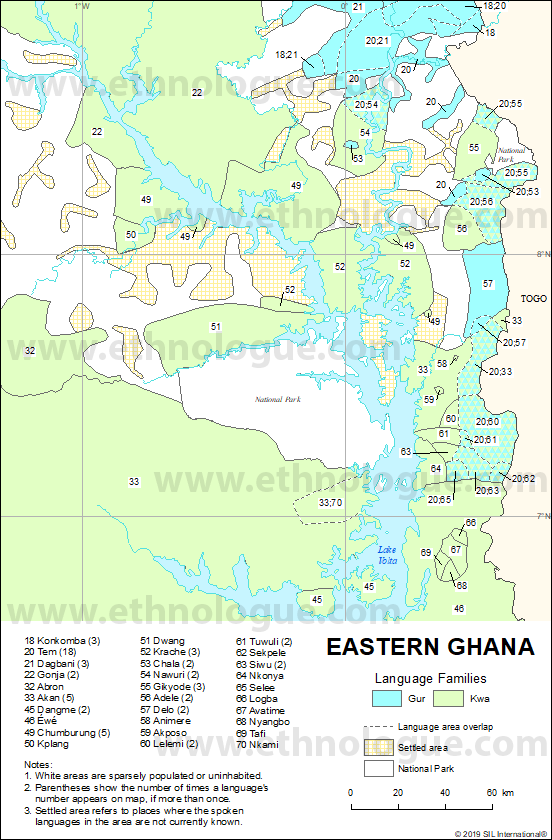
Eastern Ghana
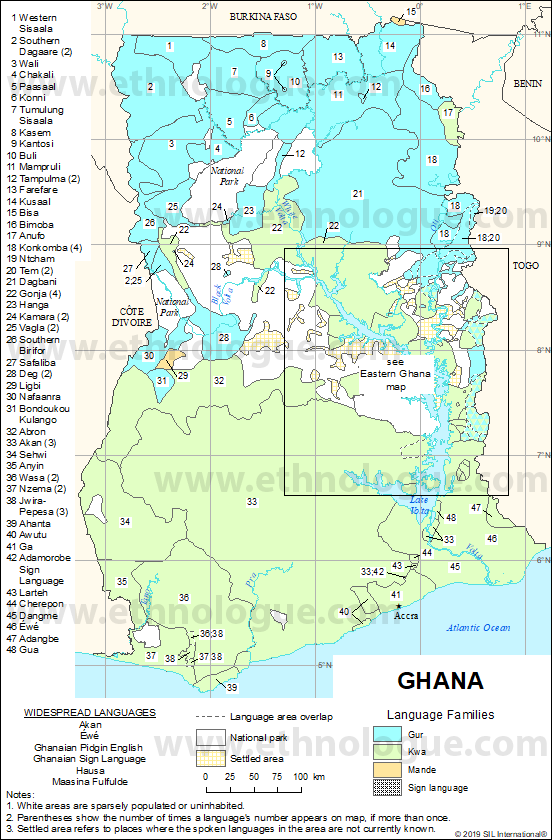
Ghana
Graphs
Language Vitality Profile
Full explanation
Language Status Profile
Full explanation
Resources
View Terms
Each Ethnologue country digest is a licensed product with restricted terms of use. Before downloading the product, you must agree to the following terms:
- This is a license for individual use. Just as with a conventionally published book, it is a violation of copyright to make a copy and give it to others.
- You may not redistribute this work in any form, including ingesting the contents into a database that is shared with others or posting it on a web site (whether public or private).
To inquire about permission for reuse or redistribution, please use the Contact Us form in the footer.
Digest of the languages of Ghana ($299.95, 61 page PDF)