
GN
Republic of Guinea
Guinea
Summary
- Official Name
- Republic of Guinea
- Population
- 13,238,000
- Principal Languages
- French
- Literacy Rate
- 30% (2015 World Factbook)
- International Conventions
- ACHPR (1987), CDE (1960), CPPDCE (2006), CSICH (2012), ICCPR (1966), UNCRPD (2006), UNDRIP (2007)
- General References
- Bendor-Samuel and Hartell 1989, O’Toole 1978, Vanderaa 1991, Welmers 1971a
- Language Counts
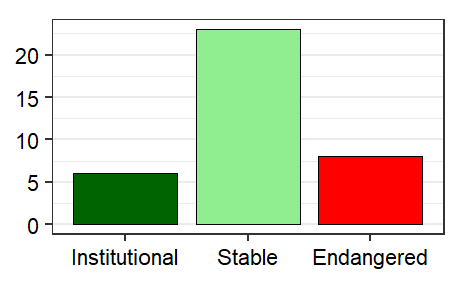
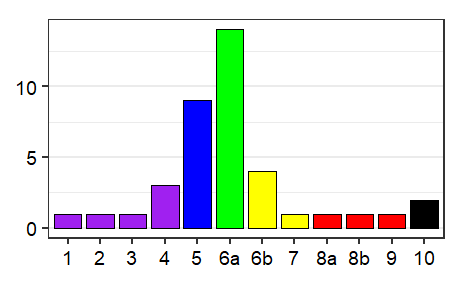
- The number of established languages listed for Guinea is 39. Of these, 37 are living and 2 are extinct. Of the living languages, 35 are indigenous and 2 are non-indigenous. Furthermore, 2 are institutional, 16 are developing, 10 are vigorous, 6 are in trouble, and 3 are dying. Also listed are 2 unestablished languages and 1 macrolanguage.
Languages
- Arabic, North Levantine Spoken apc
- Users: 5,200 in Guinea (Leclerc 2014a). Status: Unestablished. Classification: Afro-Asiatic, Semitic, Central, South, Arabic
- Badyara pbp
- Boké region: Koundara prefecture. Users: 12,400 in Guinea (2017 census). Total users in all countries: 20,510. Status: 6a* (Vigorous). Alternate Names: Badara, Badian, Badjara, Badyaranke, Bigola, Gola, Pajade, Pajadinka Classification: Niger-Congo, Atlantic-Congo, Atlantic, Northern, Eastern Senegal-Guinea, Tenda
- Baga Kaloum bqf
- Boké region. Users: No known L1 speakers. The last speakers either died or assimilated to Susu [sus] by the 1950s (Camara et al 2014). Status: 10 (Extinct). Alternate Names: Baga Classification: Niger-Congo, Atlantic-Congo, Atlantic, Southern, Mel, Temne, Baga
- Baga Koga bgo
- Kindia region: between Pongo and Konkouré rivers, to Île de Kito. Users: Ethnic population: 5,000. Status: 8b (Nearly extinct). Alternate Names: Baka, Koba, Koga Classification: Niger-Congo, Atlantic-Congo, Atlantic, Southern, Mel, Temne, Baga
- Baga Manduri bmd
- Boké region: Kanfarandé and Sansale subprefectures, 39 villages on delta islands between Nunez river and Komponi river. Users: 4,000 (2011 NTM). Status: 6b* (Threatened). Alternate Names: Baga Mandori, Baga Mandouri, Baka, Barka, Madouri, Maduri, Mandari, Mandore, Mandori, Mandouri, Manduri Classification: Niger-Congo, Atlantic-Congo, Atlantic, Southern, Mel, Temne, Baga
- Baga Pokur bcg
- Boké region: Boké prefecture, coast east of Nunez river; Binari and Mboteni villages on Boteni island. Users: 3,700 (2015 NTM). Status: 6b* (Threatened). Alternate Names: Baga, Baga Binari, Baga Mboteni, Baga Poukour, Baga de Binari, Baka, Barka, Binari, Binari-Kouffin, Bohere, Era, Kaloum, Kalum, Mborin, Mboténi, Poukour, Pukur Classification: Niger-Congo, Atlantic-Congo, Atlantic, Southern, Mel, Temne, Baga
- Baga Sitemu bsp
- Boké region: Boffa prefecture, Tougnifil subprefecture; Boké prefecture, Port-Kamsar subprefecture, Nunez river south bank. Users: 40,000 (2018 PBT). Status: 5 (Developing). Alternate Names: Baka, Rio Pongo Baga, Sitemuú, Stem Baga, Tchitem Classification: Niger-Congo, Atlantic-Congo, Atlantic, Southern, Mel, Temne, Baga
- Baga Sobané bsv
- Boké region: Boffa prefecture, between Kapatchez and Pongo rivers. Users: No known L1 speakers. The last speaker either died or shifted to Susu [sus] by the 1950s (Camara et al 2014). Status: 10 (Extinct). Alternate Names: Baga, Baga Kakissa, Baka, Barka, Sobane, Sobané, Temne Classification: Niger-Congo, Atlantic-Congo, Atlantic, Southern, Mel, Temne, Baga
- Bandi bza
- Nzérékoré region: Macenta prefecture, scattered. Users: 12,000 in Guinea (Leclerc 2014a). Status: Unestablished. Alternate Names: Bandé Classification: Niger-Congo, Mande, Western, Central-Southwestern, Southwestern, Mende-Loma, Mende-Bandi, Bandi
- Bassari bsc
- Boké region: Gaoual prefecture; Labe region: Mali prefecture; border area northwest of Touba town, some northeast corner. Users: 12,400 in Guinea (2017 census). Status: 5* (Developing). Alternate Names: Ayan, Basari, Biyan, Oneyan, Onian, Oniyan, Tenda Basari, Wo Classification: Niger-Congo, Atlantic-Congo, Atlantic, Northern, Eastern Senegal-Guinea, Tenda
- Bullom So buy
- Kindia region: a few speakers in Forecariah prefecture near Sierra Leone border. Status: 8a (Moribund). Alternate Names: Bolom, Bulem, Bullin, Bullun, Mandenyi, Mandingi, Mani, Mmani, Northern Bullom Classification: Niger-Congo, Atlantic-Congo, Atlantic, Southern, Mel, Bullom-Kissi, Bullom, Northern
- Dan dnj
- Nzérékoré region: Lola prefecture, Kogota village on Côte d’Ivoire border. Users: 800 in Guinea (2001 G. Pruett). Status: 5 (Developing). Alternate Names: Da, Dàn, Dã̀ã̀, Gio, Gio-Dan, Gyo, Yacouba, Yakuba Classification: Niger-Congo, Mande, Eastern, Southeastern, Guro-Tura, Tura-Dan-Mano, Tura-Dan
- French fra
- Users: 3,782,800 in Guinea, all users. L1 users: 2,800 in Guinea (2022 Joshua Project), based on ethnicity. L2 users: 3,780,000 (Marcoux et al 2022). Status: 1 (National). Statutory national language (2010, Constitution, Article 1). Alternate Names: Français Classification: Indo-European, Italic, Romance, Italo-Western, Western, Gallo-Iberian, Gallo-Romance, Gallo-Rhaetian, Oïl, French
- Guinean Sign Language gus
- Conakry region. Users: 64,000 (2021 DBS/DOOR/SIL). Estimated 38,000–76,000 deaf signers, assuming 0.3%–0.6% of total population. Other estimates: 528 deaf signers (2008 WFD); 27,000 total deaf in Guinea (2014 IMB). Status: 5 (Developing). Classification: Sign language, Deaf community sign language
- Jahanka jad
- Boké region: central Gaoual prefecture, more than 60 villages on Tamine river upper reaches between Boké and Sangea towns. Users: 137,000 in Guinea (2017 census). Total users in all countries: 147,500. Status: 6a* (Vigorous). Alternate Names: Diakanka, Diakhanke, Diakkanke, Dyakanke, Jahanque, Jahonque, Jaxanka Classification: Niger-Congo, Mande, Western, Central-Southwestern, Central, Manding-Jogo, Manding-Vai, Manding-Mokole, Manding
- Kakabe kke
- Faranah region: Dabola prefecture, west and southwest of Faboula and Koumboulou towns; Mamou region: Sokotoro, Wure Kaba, and 33 other villages. Users: 10,000 (2012 V. Vydrin). Ethnic population: 50,000 (2012 V. Vydrin). Status: 6b* (Threatened). Alternate Names: Fulajon Kan, Fulajonkan, Jon Kule, Ourekabakan Classification: Niger-Congo, Mande, Western, Central-Southwestern, Central, Manding-Jogo, Manding-Vai, Manding-Mokole, Mokole
- Kissi, Northern kqs
- Faranah region: Kissidougou prefecture; Nzérékoré region: Gueckedou and western Macenta prefectures. Users: 509,000 in Guinea (2017 census). Total users in all countries: 570,500. Status: 5* (Developing). De facto language of national identity. Alternate Names: Gizi, Kisie, Kissien, kìsìéí Autonym: Kisi Classification: Niger-Congo, Atlantic-Congo, Atlantic, Southern, Mel, Bullom-Kissi, Kissi
- Kla-Dan lda
- Nzérékoré region: Fakolidou, Farakouroudougou, Gbogboda, and Goh villages near Côte d’Ivoire border. About 30 villages between Beyla and Sinko. Status: 6a* (Vigorous). Alternate Names: Kla Classification: Niger-Congo, Mande, Eastern, Southeastern, Guro-Tura, Tura-Dan-Mano, Tura-Dan
- Kono knu
- Nzérékoré region: Lola prefecture, east of Morissimandougou to Cote d’Ivoire border. Users: 99,300 (2017 census). Status: 6a* (Vigorous). Classification: Niger-Congo, Mande, Western, Central-Southwestern, Southwestern, Kpelle
- Kpelle, Guinea gkp
- Nzérékoré region: between Dondano and Nzebola towns. Users: 497,000 (2017 census). Status: 5* (Developing). De facto language of national identity. Alternate Names: Akpese, Gbese, Gerse, Gerze, Guerzé, Kpele, Kpelese, Kpelesetina, Kperese, Kpese, Kpwessi, Northern Kpele, Pessa, Pessy Autonym: Kpɛlɛwoo Classification: Niger-Congo, Mande, Western, Central-Southwestern, Southwestern, Kpelle
- Kuranko knk
- Faranah region: south Faranah and southeast Kissidougou prefectures; Kerouane prefecture, south Kouroussa; Kankan region: southwest. Users: 236,000 in Guinea (2017 census). Status: 5* (Developing). Alternate Names: Koranko Classification: Niger-Congo, Mande, Western, Central-Southwestern, Central, Manding-Jogo, Manding-Vai, Manding-Mokole, Mokole
- Landoma ldm
- Boké region: between Guinea Bissau border and Kogon river, and Boke-Centre subprefecture southeast; Kindia region: north border Boffa and Telimele prefectures; Gaoual prefecture, 2 enclaves near Kambala and Koumbia. Users: 62,100 (2017 census). Status: 6a* (Vigorous). Alternate Names: Cocoli, Landouman, Landuma, Tiapi, Tyapi, Tyopi Classification: Niger-Congo, Atlantic-Congo, Atlantic, Southern, Mel, Temne, Baga
- Lele llc
- Faranah and Nzérékoré regions: main centers are Kassadou, Tangalto, and Yombiro. Users: 48,700 (2017 census). Status: 6a* (Vigorous). Classification: Niger-Congo, Mande, Western, Central-Southwestern, Central, Manding-Jogo, Manding-Vai, Manding-Mokole, Mokole
- Limba, East lma
- Mamou region: Mamou prefecture, Oure-Kaba subprefecture, on Sierra Leone border. Users: 4,000 in Guinea (Johnstone 1993). 2,000 speakers of the Ke subdialect of Northern Limba (1991 J. Kaiser). Total users in all countries: 4,800. Status: 6b* (Threatened). Alternate Names: Yimba, Yumba Classification: Niger-Congo, Atlantic-Congo, Atlantic, Southern, Limba
- Mandingo man
- Users: Population total all languages (L1 only): 8,875,560. Status:
- Maninka, Konyanka mku
- Kankan and Nzérékoré regions: national reserve; Beyle, Kankan, Kerouane, Lola, and Macenta prefectures; Balanfe, Boukorodou, Diatela, Dyibarou, Kabadian Mallerou, and Ouanino villages along Beyla-Sinko road and north of Sinko (Gbasando dialect); Lola (Karagba dialect); Sokourala (Woroduu dialect). Users: 559,000 in Guinea (2017 census). Status: 6a* (Vigorous). Alternate Names: Koniaka, Konya, Konyakakan, Konyanka, Maninya Classification: Niger-Congo, Mande, Western, Central-Southwestern, Central, Manding-Jogo, Manding-Vai, Manding-Mokole, Manding, Manding-East, Southeastern Manding
- Maninka, Sankaran msc
- Kankan region: east Kouroussa prefecture; Faranah region and prefecture; along Niger tributary, Serekoroba area. Users: 100,000 (2019 PBT). Status: 6b (Threatened). Alternate Names: Faranah, Sankarankan Autonym: Sankaran Classification: Niger-Congo, Mande, Western, Central-Southwestern, Central, Manding-Jogo, Manding-Vai, Manding-Mokole, Manding, Manding-East, Southeastern Manding
- Maninkakan, Eastern emk
- Widespread and in all urban areas. Users: 3,100,000 in Guinea (2017 census). 73,500 Wasulu. Total users in all countries: 3,722,300. Status: 3 (Wider communication). De facto language of national identity. Originated in one of the Mali empires (1235-1670). Language of court and government during the Mali empire. Widely spoken in the 1890s during French colonization. Native to Guinea, Mali, Liberia, and Sierra Leone. Maninka people have high regard for their language. Alternate Names: Eastern Malinke, Kankan Maninka, Malinké, Mande, Maninga, Maninkakan, Maninkaxan, Southern Maninka Autonym: Maninka Classification: Niger-Congo, Mande, Western, Central-Southwestern, Central, Manding-Jogo, Manding-Vai, Manding-Mokole, Manding, Manding-East, Southeastern Manding
- Mano mev
- Nzérékoré region: Lola prefecture south of Lola town; Nzérékoré prefecture; Yomou prefecture, Dieke subprefecture. Users: 86,900 in Guinea (2017 census). Status: 5* (Developing). Alternate Names: Mã́ã́, Maa, Maan, Mah, Manon, Mawe Classification: Niger-Congo, Mande, Eastern, Southeastern, Guro-Tura, Tura-Dan-Mano, Mano
- Manya mzj
- Faranah and Nzérékoré regions: west Beyla and southeast Kissidougou prefectures; Macenta-Centre to Liberia border; Kankan region: Keroane prefecture, Diarradou. Users: 25,000 in Guinea (1997 G. Pruett). Ethnic population: 77,000 (Leclerc 2014a). Status: 5* (Developing). Alternate Names: Mandingo, Maninya, Maninyakan, Maniya, Manya Kan, “Toma Maninya” (pej.), “Tuu Kɔlɔ Maninya” (pej.) Classification: Niger-Congo, Mande, Western, Central-Southwestern, Central, Manding-Jogo, Manding-Vai, Manding-Mokole, Manding, Manding-East, Southeastern Manding
- Mbulungish mbv
- Boké region: Boké prefecture, Kanfarande subprefecture, 22 coastal villages north of Nunez river. Users: 5,000 (1998 B. Willits). Status: 5 (Developing). Alternate Names: Baga Foré, Baga Monson, Black Baga, Bulunits, Longich, Mbulongish, Monchon, Monshon Classification: Niger-Congo, Atlantic-Congo, Atlantic, Northern, Mbulungish-Nalu
- Mogofin mfg
- Boké region: Boffa and Boké prefectures. Users: 24,800 (2017 census). Status: 5* (Developing). Alternate Names: Mikifore, Mixifore Classification: Niger-Congo, Mande, Western, Central-Southwestern, Central, Manding-Jogo, Manding-Vai, Manding-Mokole, Mokole
- N’ko nqo
- Widespread. Users: No known L1 speakers in Guinea. Ethnic population: No ethnic community. Total users in all countries: none known. Status: 9 (Second language only). Classification: Mixed language
- Nalu naj
- Boké region: Boké prefecture; Nunez river mouth area and estuary. Users: 12,400 in Guinea (2017 census). Total users in all countries: 21,600. Status: 6a* (Vigorous). Alternate Names: Nalou Classification: Niger-Congo, Atlantic-Congo, Atlantic, Northern, Mbulungish-Nalu
- Pulaar fuc
- Boké region: Koundara prefecture, north of Tamine river. Extreme northwest corner. Users: 5,700 in Guinea (Leclerc 2014a). Status: 5* (Developing). Alternate Names: Fulfulde Pulaar, Haalpulaar, Peul, Peulh Classification: Niger-Congo, Atlantic-Congo, Atlantic, Northern, Senegambian, Fula-Wolof, Fula, Western
- Pular fuf
- Widespread. Users: 4,300,000 in Guinea (2017 census). Total users in all countries: 4,778,200. Status: 2 (Provincial). De facto language of national identity. Alternate Names: Foula Fouta, Fouta Djallon, Fulbe, Fulfulde Jalon, Fullo Fuuta, Futa Fula, Futa Jallon, Fuuta Jalon, Jalon, Poular Autonym: Pular Classification: Niger-Congo, Atlantic-Congo, Atlantic, Northern, Senegambian, Fula-Wolof, Fula, West Central
- Sarakolé snk
- Boké region: Boké and Koundara; Kankan region: Kankan; Kindia region: Conakry and Kindia; Labé region: Badougoula, Linsan, and Manda. Users: 24,800 in Guinea (2017 census). Status: 7 (Shifting). Classification: Niger-Congo, Mande, Western, Northwestern, Soninke-Bobo, Soninke-Boso, Soninke
- Susu sus
- Widespread in southwest. Users: 2,200,000 in Guinea (2017 census). Total users in all countries: 2,433,480. Status: 5* (Developing). De facto language of national identity. Alternate Names: Sose, Soso, Soussou, Susoo Autonym: Sosoxui Classification: Niger-Congo, Mande, Western, Central-Southwestern, Central, Susu-Yalunka
- Toma tod
- Faranah and Nzérékoré regions: Macenta, Kissidougou, and Gueckedou prefectures, between Macenta and Kissidougou towns. Users: 261,000 (2017 census). Status: 5* (Developing). De facto language of national identity. Alternate Names: Toa, Toale, Toali, Tooma Classification: Niger-Congo, Mande, Western, Central-Southwestern, Southwestern, Mende-Loma, Loma
- Wamey cou
- Boké region: Koundara prefecture, Youkounkoun-Koundara area, to Senegal border; small border area in Gaoual prefecture, south bank, Tamine river. Users: 24,800 in Guinea (2017 census). Status: 6a* (Vigorous). Alternate Names: Cogniagui, Conhague, Coniagui, Koniagi, Konyagi, Tenda, Wamay, Wamei, Wameỹ, Wey Classification: Niger-Congo, Atlantic-Congo, Atlantic, Northern, Eastern Senegal-Guinea, Tenda
- Yalunka yal
- Faranah region: south toward Sierra Leone border, and Dinguiraye prefecture, Bafing river, Boukaria area; Labé region: northwest Mali prefecture; north Koubia and north Tougue subprefecture, Senegal-Mali border; Dinguiraye prefecture, Bafing river, Boukaria area; Boké region: Gaouala prefecture, enclave between Guinea-Bissau border and Koumbia. Users: 112,000 in Guinea (2017 census). Total users in all countries: 180,700. Status: 5* (Developing). Alternate Names: Dialonke, Djallonke, Dyalonke, Jalonke, Jalunga, Jalungas, Yalunke Autonym: Jalunga xuwiina’ Classification: Niger-Congo, Mande, Western, Central-Southwestern, Central, Susu-Yalunka
- Zialo zil
- Nzérékoré region: Macenta prefecture, Zembezou and Panziazou subprefectures. 45 villages. About third of Zialo speakers live in the cities of Guinea. Users: 25,000 (2010 V. Vydrin). Status: 6a* (Vigorous). Alternate Names: Shialu, Zialu, Ziolo, Ziyolo Classification: Niger-Congo, Mande, Western, Central-Southwestern, Southwestern, Mende-Loma
Languages by Status
French
[fra] 1 (National). Statutory national language (2010, Constitution, Article 1). 3,782,800 in Guinea, all users. L1 users: 2,800 in Guinea (2022 Joshua Project), based on ethnicity. L2 users: 3,780,000 (Marcoux et al 2022).
Pular
[fuf] 2 (Provincial). De facto language of national identity. 4,300,000 in Guinea (2017 census). Total users in all countries: 4,778,200.
Maninkakan, Eastern
[emk] 3 (Wider communication). De facto language of national identity. Originated in one of the Mali empires (1235-1670). Language of court and government during the Mali empire. Widely spoken in the 1890s during French colonization. Native to Guinea, Mali, Liberia, and Sierra Leone. Maninka people have high regard for their language. 3,100,000 in Guinea (2017 census). 73,500 Wasulu. Total users in all countries: 3,722,300.
Baga Sitemu
[bsp] 5 (Developing). 40,000 (2018 PBT).
Bassari
[bsc] 5* (Developing). 12,400 in Guinea (2017 census).
Dan
[dnj] 5 (Developing). 800 in Guinea (2001 G. Pruett).
Guinean Sign Language
[gus] 5 (Developing). 64,000 (2021 DBS/DOOR/SIL). Estimated 38,000–76,000 deaf signers, assuming 0.3%–0.6% of total population. Other estimates: 528 deaf signers (2008 WFD); 27,000 total deaf in Guinea (2014 IMB).
Kissi, Northern
[kqs] 5* (Developing). De facto language of national identity. 509,000 in Guinea (2017 census). Total users in all countries: 570,500.
Kpelle, Guinea
[gkp] 5* (Developing). De facto language of national identity. 497,000 (2017 census).
Kuranko
[knk] 5* (Developing). 236,000 in Guinea (2017 census).
Mano
[mev] 5* (Developing). 86,900 in Guinea (2017 census).
Manya
[mzj] 5* (Developing). 25,000 in Guinea (1997 G. Pruett). Ethnic population: 77,000 (Leclerc 2014a).
Mbulungish
[mbv] 5 (Developing). 5,000 (1998 B. Willits).
Mogofin
[mfg] 5* (Developing). 24,800 (2017 census).
Pulaar
[fuc] 5* (Developing). 5,700 in Guinea (Leclerc 2014a).
Susu
[sus] 5* (Developing). De facto language of national identity. 2,200,000 in Guinea (2017 census). Total users in all countries: 2,433,480.
Toma
[tod] 5* (Developing). De facto language of national identity. 261,000 (2017 census).
Yalunka
[yal] 5* (Developing). 112,000 in Guinea (2017 census). Total users in all countries: 180,700.
Badyara
[pbp] 6a* (Vigorous). 12,400 in Guinea (2017 census). Total users in all countries: 20,510.
Jahanka
[jad] 6a* (Vigorous). 137,000 in Guinea (2017 census). Total users in all countries: 147,500.
Kla-Dan
[lda] 6a* (Vigorous).
Kono
[knu] 6a* (Vigorous). 99,300 (2017 census).
Landoma
[ldm] 6a* (Vigorous). 62,100 (2017 census).
Lele
[llc] 6a* (Vigorous). 48,700 (2017 census).
Maninka, Konyanka
[mku] 6a* (Vigorous). 559,000 in Guinea (2017 census).
Nalu
[naj] 6a* (Vigorous). 12,400 in Guinea (2017 census). Total users in all countries: 21,600.
Wamey
[cou] 6a* (Vigorous). 24,800 in Guinea (2017 census).
Zialo
[zil] 6a* (Vigorous). 25,000 (2010 V. Vydrin).
Baga Manduri
[bmd] 6b* (Threatened). 4,000 (2011 NTM).
Baga Pokur
[bcg] 6b* (Threatened). 3,700 (2015 NTM).
Kakabe
[kke] 6b* (Threatened). 10,000 (2012 V. Vydrin). Ethnic population: 50,000 (2012 V. Vydrin).
Limba, East
[lma] 6b* (Threatened). 4,000 in Guinea (Johnstone 1993). 2,000 speakers of the Ke subdialect of Northern Limba (1991 J. Kaiser). Total users in all countries: 4,800.
Maninka, Sankaran
[msc] 6b (Threatened). 100,000 (2019 PBT).
Sarakolé
[snk] 7 (Shifting). 24,800 in Guinea (2017 census).
Bullom So
[buy] 8a (Moribund).
Baga Koga
[bgo] 8b (Nearly extinct). Ethnic population: 5,000.
Maps
Guinea

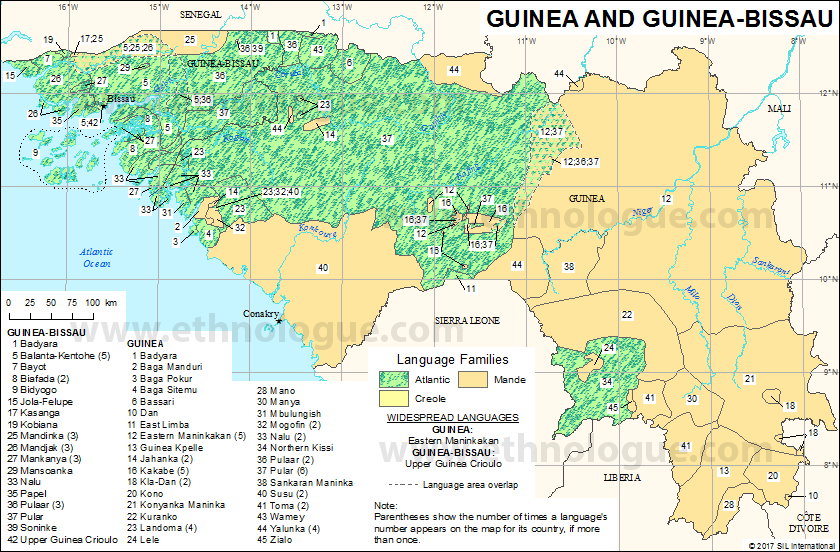
Guinea and Guinea-Bissau
Graphs
Language Vitality Profile
Full explanation
Language Status Profile
Full explanation
Resources
View Terms
Each Ethnologue country digest is a licensed product with restricted terms of use. Before downloading the product, you must agree to the following terms:
- This is a license for individual use. Just as with a conventionally published book, it is a violation of copyright to make a copy and give it to others.
- You may not redistribute this work in any form, including ingesting the contents into a database that is shared with others or posting it on a web site (whether public or private).
To inquire about permission for reuse or redistribution, please use the Contact Us form in the footer.
Digest of the languages of Guinea ($199.95, 37 page PDF)