
GR
Hellenic Republic
Greece
Summary
- Official Name
- Hellenic Republic
- Population
- 10,543,000
- Principal Languages
- Greek
- Literacy Rate
- 98% (2018 UNESCO)
- International Conventions
- CPPDCE (2006), CSICH (2012), ICCPR (1966), UNCRPD (2006), UNDRIP (2007)
- General References
- Campbell and King 2011, Comrie 1987, Salminen 2007
- Deaf Population
- 42,600–634,600 (Van Cleve 1986)
- Language Counts
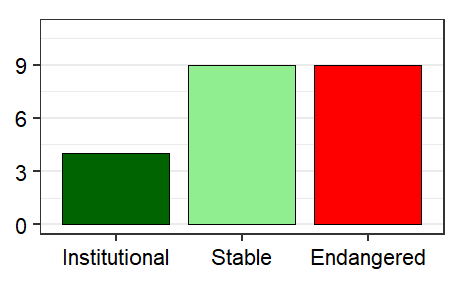
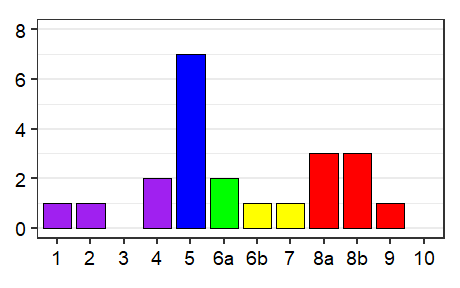
- The number of established languages listed for Greece is 22. All are living languages. Of these, 14 are indigenous and 8 are non-indigenous. Furthermore, 4 are institutional, 8 are developing, 1 is vigorous, 2 are in trouble, and 7 are dying. Also listed are 14 unestablished languages.
Languages
- Albanian, Arvanitika aat
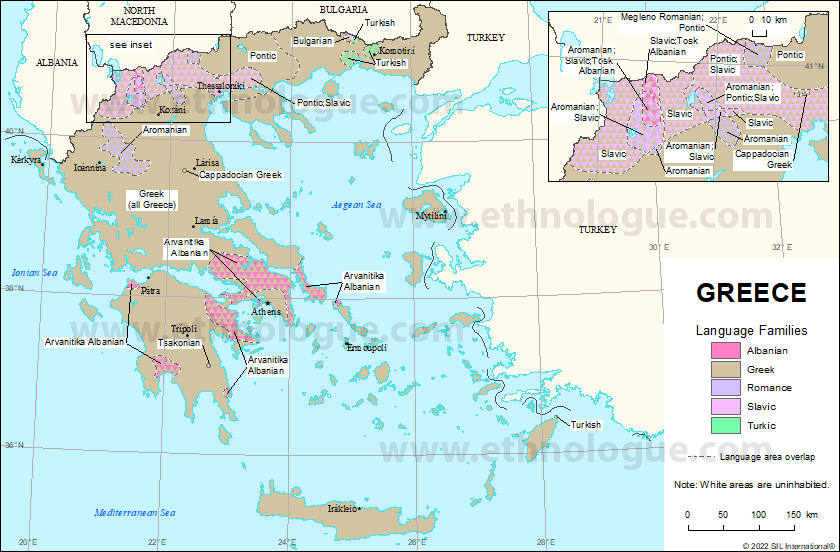
- Attica region: Athens; Central Greece region: Voiotia, south Evvoia and Salamis islands; Peloponnese region: Argolis and Korinthia areas, Messinia, from Kalamitra northwest, Lakonia, east coastal area near Rikhea; Southern Aegean: Kyklades, Andros island north; Western Greece: northwest Achaia, north of Lapas. Mainly rural, 300 villages. Users: 50,000 (Salminen 2007). Ethnic population: 150,000. Status: 8a (Moribund). Alternate Names: Arberichte, Arbërisht, Arvanitic, Arvanitika Autonym: αρbε̰ρίσ̈τ (Arbërisht) Classification: Indo-European, Albanian, Tosk
- Albanian, Tosk als
- Western Macedonia region: Florina and Kastoria, northeast of Lake Orestiada. Users: 10,000 in Greece (2002). Status: 5* (Dispersed). Alternate Names: Arvanitika, Camerija, Shqip Classification: Indo-European, Albanian, Tosk
- Arabic, Egyptian Spoken arz
- Users: 10,500 in Greece (2011 census), based on nationality. Status: Unestablished. Classification: Afro-Asiatic, Semitic, Central, South, Arabic
- Armenian, Western hyw
- Scattered, with largest communities in Attica and Thessaly and Central Greece. Users: 20,000 in Greece (2007). Status: 5* (Developing). Classification: Indo-European, Armenian
- Aromanian rup
- Central Macedonia: Pella area, southeast of Lake Vegoritis and into Imathia, Kastoria into Florina and Kozani; Epirus region: western Ioannina; Thessaly region: Trikala southwest corner; Western Macedonia: Grevena. Users: 50,000 in Greece (Salminen 1999). Ethnic population: 700,000 (Association of French Aromanians). Status: 8a (Moribund). Alternate Names: Armani, Armina, Armini, Arumanian, Arumenian, Macedo Romanian, Macedo-Rumanian, Vlach Classification: Indo-European, Italic, Romance, Eastern
- Assyrian Neo-Aramaic aii
- Users: 2,000 in Greece. Ethnic population: 9,000. Status: Unestablished. Classification: Afro-Asiatic, Semitic, Central, Aramaic, Eastern, Central, Northeastern
- Bengali ben
- Users: 80,000 in Greece (2018), based on nationality. Status: Unestablished. Classification: Indo-European, Indo-Iranian, Indo-Aryan, Outer Languages, Eastern, Bengali-Assamese
- Bulgarian bul
- Eastern Macedonia and Thrace region: Xanthi and 2 other departments. Users: 75,900 in Greece (2011 census), based on nationality. Status: 5* (Dispersed). Classification: Indo-European, Balto-Slavic, Slavic, South, Eastern
- Cappadocian Greek cpg
- Central Greece region: Mandra village; Central Macedonia: Neo Agioneri and Xirohori villages. Users: 2,800 (2015 M. Janse). Status: 8b (Nearly extinct). Alternate Names: Asia Minor Greek, Cappadocian Classification: Indo-European, Greek, Attic
- Chinese, Mandarin cmn
- Users: 19,000 in Greece (Leclerc 2020a), based on ethnicity. Status: Unestablished. Classification: Sino-Tibetan, Chinese
- Dutch nld
- Users: 4,600 in Greece (Leclerc 2020a), based on ethnicity. Status: Unestablished. Classification: Indo-European, Germanic, West, Low Saxon-Low Franconian, Low Franconian
- English eng
- Widespread. Users: 5,535,400 in Greece, all users. L1 users: 15,400 in Greece (2011 census). L2 users: 5,520,000 (European Commission 2012). Status: 4 (Educational). Classification: Indo-European, Germanic, West, English
- French fra
- Scattered. Users: 760,200 in Greece, all users. L1 users: 6,200 in Greece (Leclerc 2020a). L2 users: 754,000 (Marcoux et al 2022). Status: 4 (Educational). Classification: Indo-European, Italic, Romance, Italo-Western, Western, Gallo-Iberian, Gallo-Romance, Gallo-Rhaetian, Oïl, French
- Georgian kat
- Users: 27,400 in Greece (2011 census), based on nationality. Status: Unestablished. Classification: Kartvelian, Georgian
- German, Standard deu
- Scattered. Users: 545,400 in Greece, all users. L1 users: 9,400 in Greece (Leclerc 2020a), based on ethnicity. L2 users: 536,000 (2018). Status: 5* (Dispersed). Alternate Names: Deutsch Classification: Indo-European, Germanic, West, High German, German, Middle German, East Middle German
- Greek ell
- Widespread. Users: 10,700,000 in Greece (European Commission 2012). Total users in all countries: 13,290,550 (as L1: 13,232,050; as L2: 58,500). Status: 1 (National). De facto national language. Alternate Names: Grec, Greco, Neo-Hellenic, Romaic Autonym: Νέα Ελληνικά (Néa Ellīniká), ελληνικά (Elliniká) Classification: Indo-European, Greek, Attic
- Greek Sign Language gss
- Scattered. Users: 11,000 (2021 DBS/DOOR/SIL). Estimated 11,000 signing deaf, assuming 0.1% of total population. Other estimates: 5,000 (2019 EUD); 42,600 (Van Cleve 1986); 62,500 (2014 IMB). Status: 5 (Developing). Recognized language (2000, Law 2817, Official language of deaf community). Alternate Names: Elleniké Noematiké Glossa, GSL Classification: Sign language, Deaf community sign language
- Greek, Ancient grc
- Scattered. Religious language. Users: No known L1 speakers. Ethnic population: No ethnic community. Status: 9 (Second language only). Autonym: Ἑλληνική (Hellēnikḗ) Classification: Indo-European, Greek, Attic
- Italian ita
- Users: 7,700 in Greece (Leclerc 2020a), based on ethnicity. Status: Unestablished. Classification: Indo-European, Italic, Romance, Italo-Western, Italo-Dalmatian
- Judeo-Italian itk
- Ionian Islands region: Kerkyra regional unit. Users: 50 in Greece (Salminen 2007). Status: 7 (Shifting). Alternate Names: Italkian Classification: Indo-European, Italic, Romance, Italo-Western, Italo-Dalmatian
- Kurdish, Northern kmr
- Users: 21,000 in Greece (Leclerc 2020a), based on ethnicity. Status: Unestablished. Classification: Indo-European, Indo-Iranian, Iranian, Western, Northwestern, Kurdish
- Ladino lad
- Central Macedonia: Thessaloniki. Users: 12 in Greece (2017 John Kazaklis). Ethnic population: 1,000 (2018). Status: 8b (Nearly extinct). Alternate Names: Jūdeo-Esupanyōru, Judeo-Espagnol, Tzoudeo-Espaniol Classification: Indo-European, Italic, Romance, Italo-Western, Western, Gallo-Iberian, Ibero-Romance, West Iberian, Castilian
- Polish pol
- Users: 14,100 in Greece (2011 census), based on nationality. Status: Unestablished. Classification: Indo-European, Balto-Slavic, Slavic, West, Lechitic
- Pontic pnt
- Central Macedonia: Kilkis, Pella, Serres, and Thessaloniki except south of Kalamaria borough. Users: 400,000 in Greece (2009 Z. Diakonikolaou). Total users in all countries: 778,000. Status: 5* (Developing). Alternate Names: Pontic Greek, Romeika, Romeyka Autonym: Ποντιακά (Pontiaká), Ποντιακόν λαλίαν (Pontiakón lalían) Classification: Indo-European, Greek, Attic
- Romani, Balkan rmn
- Epirus (Romancilikanes dialect); Western Macedonia (Serres dialect); Peloponnese region: (Pyrgos dialect). Users: 40,000 in Greece (1996 B. Igla). 10,000 Arlija, 30,000 Greek Romani. Status: 6a* (Vigorous). Classification: Indo-European, Indo-Iranian, Indo-Aryan, Intermediate Divisions, Western, Romani, Balkan
- Romani, Vlax rmy
- Attica region: Ajia Varvara, suburb of Athens; Epirus region: Parakalamos; Thessaly region: Karditsa regional unit, Sofades; Trikala regional unit. Users: 1,000 in Greece. Status: 5* (Dispersed). Alternate Names: Rom, Romanés, Tsingani Classification: Indo-European, Indo-Iranian, Indo-Aryan, Intermediate Divisions, Western, Romani, Vlax
- Romanian ron
- Users: 56,900 in Greece (2011 census), based on nationality. Status: Unestablished. Classification: Indo-European, Italic, Romance, Eastern
- Romanian, Megleno ruq
- Central Macedonia region: Kilkis and Pella regional units, Meglen area, north of Salonika. Users: 2,900 in Greece (Leclerc 2020a), based on ethnicity. Total users in all countries: 5,000. Status: 6b (Threatened). Alternate Names: Meglenite, Meglenitic Classification: Indo-European, Italic, Romance, Eastern
- Romano-Greek rge
- Thessaly and Central Greece Administrative Unit; secret language, itinerant builders, especially in Evrytania and Fthiotis. Users: 30 (2000). Status: 8b (Nearly extinct). Alternate Names: Hellenoromani, Romika Classification: Mixed language, Greek-Romani
- Russian rus
- Kavala. Users: 210,000 in Greece (Arefyev 2012), all users. L1 users: 85,000 (European Commission 2012). Status: Unestablished. Classification: Indo-European, Balto-Slavic, Slavic, East
- Serbian srp
- Users: 3,900 in Greece (Leclerc 2020a), based on ethnicity. Status: Unestablished. Classification: Indo-European, Balto-Slavic, Slavic, South, Western
- Slavic mkd
- Central Macedonia region: Florina, Kilkis, Imathia, Pella, Serres, and Thessaloniki; Epirus region: Ioannina; Western Macedonia region: Kastoria except south Nestorio municipality, Kozani. Users: Population for Slavic speakers in Greece is very difficult to find. Status: 5* (Dispersed). Classification: Indo-European, Balto-Slavic, Slavic, South, Eastern
- Tagalog tgl
- Users: 9,800 in Greece (2011 census), based on nationality. Status: Unestablished. Classification: Austronesian, Malayo-Polynesian, Greater Central Philippine, Central Philippine, Tagalog
- Tsakonian tsd
- Peloponnese region: Arkadia regional unit, Leonidio and Prastos towns; Kastanitsa, Melana, Pramatefti, Sapounakeika, Sitena, and Tyros villages. Users: 1,500 (2010 M. Kisilier). Status: 8a (Moribund). Alternate Names: Tsakonia Classification: Indo-European, Greek, Doric
- Turkish tur
- Eastern Macedonia and Thrace region: Xanthi, west of Lake Vistorius, on Bulgaria border; Rodopi, Bulgaria border west of Komotini. Users: 48,900 in Greece (2010). Status: 2 (Provincial). Statutory provincial language in Xanthi, 2 other eastern provinces (1923, Treaty of Lausanne). Alternate Names: Osmanli, Türkçe Classification: Turkic, Southern, Turkish
- Ukrainian ukr
- Users: 17,000 in Greece (2011 census), based on nationality. Status: Unestablished. Classification: Indo-European, Balto-Slavic, Slavic, East
Languages by Status
Greek
[ell] 1 (National). De facto national language. 10,700,000 in Greece (European Commission 2012). Total users in all countries: 13,290,550 (as L1: 13,232,050; as L2: 58,500).
Turkish
[tur] 2 (Provincial). Statutory provincial language in Xanthi, 2 other eastern provinces (1923, Treaty of Lausanne). 48,900 in Greece (2010).
English
[eng] 4 (Educational). 5,535,400 in Greece, all users. L1 users: 15,400 in Greece (2011 census). L2 users: 5,520,000 (European Commission 2012).
French
[fra] 4 (Educational). 760,200 in Greece, all users. L1 users: 6,200 in Greece (Leclerc 2020a). L2 users: 754,000 (Marcoux et al 2022).
Albanian, Tosk
[als] 5* (Dispersed). 10,000 in Greece (2002).
Bulgarian
[bul] 5* (Dispersed). 75,900 in Greece (2011 census), based on nationality.
German, Standard
[deu] 5* (Dispersed). 545,400 in Greece, all users. L1 users: 9,400 in Greece (Leclerc 2020a), based on ethnicity. L2 users: 536,000 (2018).
Romani, Vlax
[rmy] 5* (Dispersed). 1,000 in Greece.
Slavic
[mkd] 5* (Dispersed). Population for Slavic speakers in Greece is very difficult to find.
Armenian, Western
[hyw] 5* (Developing). 20,000 in Greece (2007).
Greek Sign Language
[gss] 5 (Developing). Recognized language (2000, Law 2817, Official language of deaf community). 11,000 (2021 DBS/DOOR/SIL). Estimated 11,000 signing deaf, assuming 0.1% of total population. Other estimates: 5,000 (2019 EUD); 42,600 (Van Cleve 1986); 62,500 (2014 IMB).
Pontic
[pnt] 5* (Developing). 400,000 in Greece (2009 Z. Diakonikolaou). Total users in all countries: 778,000.
Romani, Balkan
[rmn] 6a* (Vigorous). 40,000 in Greece (1996 B. Igla). 10,000 Arlija, 30,000 Greek Romani.
Romanian, Megleno
[ruq] 6b (Threatened). 2,900 in Greece (Leclerc 2020a), based on ethnicity. Total users in all countries: 5,000.
Judeo-Italian
[itk] 7 (Shifting). 50 in Greece (Salminen 2007).
Albanian, Arvanitika
[aat] 8a (Moribund). 50,000 (Salminen 2007). Ethnic population: 150,000.
Aromanian
[rup] 8a (Moribund). 50,000 in Greece (Salminen 1999). Ethnic population: 700,000 (Association of French Aromanians).
Tsakonian
[tsd] 8a (Moribund). 1,500 (2010 M. Kisilier).
Cappadocian Greek
[cpg] 8b (Nearly extinct). 2,800 (2015 M. Janse).
Ladino
[lad] 8b (Nearly extinct). 12 in Greece (2017 John Kazaklis). Ethnic population: 1,000 (2018).
Romano-Greek
[rge] 8b (Nearly extinct). 30 (2000).
Arabic, Egyptian Spoken
[arz] Unestablished. 10,500 in Greece (2011 census), based on nationality.
Assyrian Neo-Aramaic
[aii] Unestablished. 2,000 in Greece. Ethnic population: 9,000.
Bengali
[ben] Unestablished. 80,000 in Greece (2018), based on nationality.
Chinese, Mandarin
[cmn] Unestablished. 19,000 in Greece (Leclerc 2020a), based on ethnicity.
Dutch
[nld] Unestablished. 4,600 in Greece (Leclerc 2020a), based on ethnicity.
Georgian
[kat] Unestablished. 27,400 in Greece (2011 census), based on nationality.
Italian
[ita] Unestablished. 7,700 in Greece (Leclerc 2020a), based on ethnicity.
Kurdish, Northern
[kmr] Unestablished. 21,000 in Greece (Leclerc 2020a), based on ethnicity.
Polish
[pol] Unestablished. 14,100 in Greece (2011 census), based on nationality.
Romanian
[ron] Unestablished. 56,900 in Greece (2011 census), based on nationality.
Russian
[rus] Unestablished. 210,000 in Greece (Arefyev 2012), all users. L1 users: 85,000 (European Commission 2012).
Serbian
[srp] Unestablished. 3,900 in Greece (Leclerc 2020a), based on ethnicity.
Tagalog
[tgl] Unestablished. 9,800 in Greece (2011 census), based on nationality.
Ukrainian
[ukr] Unestablished. 17,000 in Greece (2011 census), based on nationality.
Maps
Greece
Graphs
Language Vitality Profile
Full explanation
Language Status Profile
Full explanation
Resources
View Terms
Each Ethnologue country digest is a licensed product with restricted terms of use. Before downloading the product, you must agree to the following terms:
- This is a license for individual use. Just as with a conventionally published book, it is a violation of copyright to make a copy and give it to others.
- You may not redistribute this work in any form, including ingesting the contents into a database that is shared with others or posting it on a web site (whether public or private).
To inquire about permission for reuse or redistribution, please use the Contact Us form in the footer.
Digest of the languages of Greece ($149.95, 29 page PDF)