
GW
Guinea-Bissau
Summary
- Official Name
- Population
- 1,968,000
- General Remarks
- Bolama region includes the Bijagos archipelago; larger islands: Orango, Formosa, Roxa and Caravela
- Principal Languages
- Portuguese
- Literacy Rate
- 60% (2015 World Factbook)
- International Conventions
- ACHPR (1987), CSICH (2012), ICCPR (1966), UNCRPD (2006)
- General References
- Bendor-Samuel and Hartell 1989, Holm 1989, O’Toole 1978, Vanderaa 1991
- Language Counts
- The number of established languages listed for Guinea-Bissau is 25. All are living languages. Of these, 18 are indigenous and 7 are non-indigenous. Furthermore, 2 are institutional, 5 are developing, 3 are vigorous, and 15 are in trouble. Also listed are 3 unestablished languages.
Languages
- Bainouk-Gunyuño bab
- Cacheu region: São Domingos sector. Users: 6,000 (2022 SIL). Ethnic population: 10,800 (2022 SIL). Status: 6b (Threatened). Alternate Names: Bagnoun, Bainounk-Gujaher, Bainuk, Banhum, Banhun, Banyuk, Banyum, Banyun, Banyung, Elomay, Elunay, Guñuun, Gújááhár Classification: Niger-Congo, Atlantic-Congo, Atlantic, Northern, Eastern Senegal-Guinea, Banyun
- Balanta ble
- Widespread in central west. Users: 338,000 (2022 SIL), decreasing. Ethnic population: 398,000 (2022 SIL). Status: 6b (Threatened). Alternate Names: Alante, Balanda, Balant, Balanta-Kentohe, Balante, Ballante, Belante, Brassa, Bulanda, Frase Autonym: Fraase Classification: Niger-Congo, Atlantic-Congo, Atlantic, Northern, Bak, Balant-Ganja
- Bassari bsc
- Gabu region: Piche sector. Users: 500 in Guinea-Bissau (2018). Status: 6b* (Threatened). Alternate Names: Ayan, Basari, Biyan, Onian, Oniyan, Onëyan, Wo Classification: Niger-Congo, Atlantic-Congo, Atlantic, Northern, Eastern Senegal-Guinea, Tenda
- Biafada bif
- Quinara region: mouth of Rio Grande de Buba inland area; Tombali region: Bedanda and north Catio sectors, into west Quebo sector. Users: 53,000 (2022 SIL). Ethnic population: 69,000 (2022 SIL). Status: 6b (Threatened). Alternate Names: Beafada, Bedfola, Biafar, Bidjola, Bidyola, Dfola, Fada Classification: Niger-Congo, Atlantic-Congo, Atlantic, Northern, Eastern Senegal-Guinea, Tenda
- Bijagó bjg
- Bolama region: Bolama sector nearest mainland, Bijago archipelago in Bubaque sector, Bubaque, Orango, and Roxa islands; Caravela sector northwest, Carache, Caravela, and Uno islands; other associated islands. Roxa island (Anhaqui dialect), Bubaque island (Kagbaaga dialect), Orango and Uno islands (Kajoko dialect), Caravela and Carache islands (Kamona dialect). Users: 36,000 (2022 SIL). Ethnic population: 36,000 (2022 SIL). Status: 5 (Developing). Alternate Names: Bidjago, Bidyago, Bidyogo, Bijogo, Bijougot, Bijuga, Budjago, Bugago Autonym: Kajoukou Classification: Niger-Congo, Atlantic-Congo, Atlantic, Bijago
- Djakanka jad
- Gabu: centered in neighborhoods in and around the town of Gabu, and other nearby towns. Urban dwellers. Users: 10,000 in Guinea-Bissau (2022 SIL), all users. Ethnic population: 10,000 (2022 Joshua Project). Status: 6a (Vigorous). Classification: Niger-Congo, Mande, Western, Central-Southwestern, Central, Manding-Jogo, Manding-Vai, Manding-Mokole, Manding
- English eng
- Users: 42,200 in Guinea-Bissau (2015 UNSD), L2 users. Status: 5* (Dispersed). Classification: Indo-European, Germanic, West, English
- French fra
- Users: 74,900 in Guinea-Bissau, all users. L1 users: 1,000 in Guinea-Bissau (2018). L2 users: 73,900 (2015 UNSD). Status: Unestablished. Classification: Indo-European, Italic, Romance, Italo-Western, Western, Gallo-Iberian, Gallo-Romance, Gallo-Rhaetian, Oïl, French
- Fula fuc
- Bafata region: especially south of Geba river; Gabu region: central and north; Tombali region: between Aldeia Formosa and Carubel river. Users: 660,000 in Guinea-Bissau (2022 SIL). Ethnic population: 660,000 (2022 SIL). Status: 6a (Vigorous). Alternate Names: Fulacunda, Fulado, Fulani, Fulfulde-Pulaar, Peul, Peulh, Pulaar Fulfulde Classification: Niger-Congo, Atlantic-Congo, Atlantic, Northern, Senegambian, Fula-Wolof, Fula, Western
- Futa Fula fuf
- Gabu region: south Bafata and north Tombali regions. Users: 1,200 in Guinea-Bissau (2000). Status: 5 (Dispersed). Alternate Names: Fouta Dyalon, Fulbe, Fullo Fuuta, Futa Jallon, Fuuta Jalon, Pular Classification: Niger-Congo, Atlantic-Congo, Atlantic, Northern, Senegambian, Fula-Wolof, Fula, West Central
- Guinea-Bissau Creole pov
- Widespread, with predominance in the capital. Users: 1,800,000 in Guinea-Bissau, all users. L1 users: 272,000 in Guinea-Bissau (2022 SIL), increasing. Transition from L2 to L1 use is limited to the capital city of Bissau (2019 S. Graham). L2 users: 1,528,000 (2022 SIL). Total users in all countries: 1,888,500 (as L1: 340,500; as L2: 1,548,000). Status: 3 (Wider communication). De facto language of national identity. Primary LWC in Guinea-Bissau. Developed as a trade language with the Portuguese during the colonial period. Has its origins in the Upper Guinea Creole that developed on Santiago island in Cabo Verde, spreading to the mainland and then to the Casamance region of Senegal and to all of Guinea-Bissau. Guinea-Bissau Creole is now an L2 that is actively supported by all ethnic groups in the country and used in most domains of public life outside of education. Has become a marker of national identity and solidarity. Alternate Names: Crioulo, Crioulo de Guinea-Bissau, Guinea-Bissau Kriyol, Guineense, Kriol, Kriulo, Portuguese Creole, Upper Guinea Crioulo Autonym: Kiriol Classification: Creole, Portuguese based
- Jola Bayote bda
- Cacheu region: São Domingos area, Arrame village, on Senegal border. Users: 9,000 in Guinea-Bissau (2022 SIL). Ethnic population: 10,000 (2022 SIL). Status: 6b (Threatened). Alternate Names: Baiot, Bayot, Bayote, Bayotte, Kugere-Kuxinge Classification: Niger-Congo, Atlantic-Congo, Atlantic, Northern, Bak, Jola, Bayot
- Jola-Felupe eja
- Cacheu region: São Domingos sector, east of Cape Roxo. Users: 17,200 in Guinea-Bissau (2022 SIL). Ethnic population: 20,000 (2022 SIL). Total users in all countries: 19,430. Status: 6b (Threatened). Alternate Names: Ediamat, Ejamat, Feloup, Felup, Felupe, Floup, Flup, Fulup Autonym: Djola-Felupe Classification: Niger-Congo, Atlantic-Congo, Atlantic, Northern, Bak, Jola, Jola Proper, Jola Central, Her-Ejamat
- Kabuverdianu kea
- Users: 2,300 in Guinea-Bissau (2015 Instituto de Apoio ao Emigrante). Status: Unestablished. Classification: Creole, Portuguese based
- Kanjad pbp
- Gabu region: northeast corner. Users: 5,570 in Guinea-Bissau (2018). Status: 6a (Vigorous). Alternate Names: Badian, Badjara, Badyara, Badyaranké, Bigola, Gola, Pajade, Pajadinca, Pajadinka Classification: Niger-Congo, Atlantic-Congo, Atlantic, Northern, Eastern Senegal-Guinea, Tenda
- Kasanga ccj
- Cacheu region: Felupe border area, sparsely populated. Users: 80 (2022 SIL). Ethnic population: 800 (2022 Joshua Project). Status: 6b (Threatened). Alternate Names: Cassanga, Guatcha, Guhaaca, Haal, I-Hadja, Kassanga Classification: Niger-Congo, Atlantic-Congo, Atlantic, Northern, Eastern Senegal-Guinea, Nun
- Kobiana kcj
- Cacheu region: near Banyun and Cacheu. Users: 500 in Guinea-Bissau (2022 SIL). Ethnic population: 800 (2022 SIL). Total users in all countries: 1,000. Status: 6b (Threatened). Alternate Names: Buy, Cobiana, Gubhoi, Guboy, Uboi Classification: Niger-Congo, Atlantic-Congo, Atlantic, Northern, Eastern Senegal-Guinea, Nun
- Mandinka mnk
- Bafata region: Contuboel, north Gamamundo, and Sonaca sectors; Cacheu region: Bigene, Cacheu, and São Domingos sectors; Gabu region: Pirada and Sonaco sectors; Oio region: Farim and north Mansaba sectors. Users: 226,000 in Guinea-Bissau (2022 SIL). Ethnic population: 279,000 (2022 SIL). Status: 6b (Threatened). Alternate Names: Mandi’nka kango, Mandinca, Manding, Mandinga, Mandingo, Mandingue, Mandinque Classification: Niger-Congo, Mande, Western, Central-Southwestern, Central, Manding-Jogo, Manding-Vai, Manding-Mokole, Manding, Manding-West
- Mandjak mfv
- Bafata region: Gamamundo sector; Cacheu region; Oio region: north; also present in the east and south of the country. Users: 122,400 in Guinea-Bissau (2022 SIL). Ethnic population: 147,000 (2022 SIL). Total users in all countries: 306,100. Status: 6b (Threatened). Alternate Names: Kanyop, Mandjako-bé, Mandjaque, Mandyak, Manjaca, Manjack, Manjaco, Manjanku, Manjiak, Mendyako, Ndiagó, Ndyak Autonym: Manjáku Classification: Niger-Congo, Atlantic-Congo, Atlantic, Northern, Bak, Manjaku-Papel
- Mankanya knf
- Biombo region; Bolama region: Bolama island; Cacheu region: northwest of Bissau; Oio region; Quinara region: Rio Grande de Buba mouth; Tombali region: Cacine sector. Users: 42,300 in Guinea-Bissau (2022 SIL). Ethnic population: 61,400 (2022 SIL). Total users in all countries: 85,360. Status: 6b (Threatened). Alternate Names: Bola, Bramis, Mancang, Mancanha, Mankaañ, Mankanha Autonym: Uhula Classification: Niger-Congo, Atlantic-Congo, Atlantic, Northern, Bak, Manjaku-Papel
- Mansoanka msw
- Oio region: Mansoa sector, Mantefa area. Users: 18,600 in Guinea-Bissau (2022 SIL). Ethnic population: 27,000 (2022 SIL). Total users in all countries: 20,730. Status: 6b (Threatened). Alternate Names: Kunant, Kunante, Mansoanca, Mansonka, Maswanka, Sua Autonym: Suwa Classification: Niger-Congo, Atlantic-Congo, Atlantic, Southern, Sua
- Nalu naj
- Tombali region: Cacine river estuary near Atlantic coast. Users: 9,200 in Guinea-Bissau (2022 SIL). Ethnic population: 16,700 (2022 SIL). Status: 6b (Threatened). Alternate Names: Babelké, Nalou, Ntché Blék Classification: Niger-Congo, Atlantic-Congo, Atlantic, Northern, Mbulungish-Nalu
- Papel pbo
- Biombo region: Quinhamel area west of Bissau, including Prabis, Safim, and Ondame. Users: 148,500 in Guinea-Bissau (2022 SIL). Ethnic population: 188,000 (2022 SIL). Total users in all countries: 156,000. Status: 6b (Threatened). Alternate Names: Moium, Oium, Papei, Pepel Autonym: Oyum Classification: Niger-Congo, Atlantic-Congo, Atlantic, Northern, Bak, Manjaku-Papel
- Portuguese por
- Bissau region. Users: 396,450 in Guinea-Bissau, all users. L1 users: 5,450 in Guinea-Bissau (2018). L2 users: 391,000 (2015 UNSD). Status: 1 (National). De facto national language. Alternate Names: Português Classification: Indo-European, Italic, Romance, Italo-Western, Western, Gallo-Iberian, Ibero-Romance, West Iberian, Portuguese-Galician
- Soninke snk
- Gabu region: Pirada and Sonaco sectors; scattered in other major towns and cities. Bafatá region: Gamamudo town. Users: 11,900 in Guinea-Bissau (2022 SIL). Ethnic population: 11,900 (2022 SIL). Status: 5 (Developing). Alternate Names: Maraka, Marka, Sarahulanxanne, Sarakole, Sarakolle, Sarakule, Sarakulle, Serahule, Soninkanxanne Classification: Niger-Congo, Mande, Western, Northwestern, Soninke-Bobo, Soninke-Boso, Soninke
- Spanish spa
- Users: 6,950 in Guinea-Bissau (2015 UNSD), L2 users. Status: 5* (Dispersed). Classification: Indo-European, Italic, Romance, Italo-Western, Western, Gallo-Iberian, Ibero-Romance, West Iberian, Castilian
- Susu sus
- Gabu region: Pitche area; Tombali region: Cacine area. Users: 4,680 in Guinea-Bissau (2022 SIL). Ethnic population: 6,600 (2022 SIL). Status: 6b (Threatened). Alternate Names: Sosso, Sussu Classification: Niger-Congo, Mande, Western, Central-Southwestern, Central, Susu-Yalunka
- Wolof wol
- Bissau region. Users: 10,000 in Guinea-Bissau (2022 SIL). Ethnic population: 10,000 (2022 Joshua Project). Status: Unestablished. Classification: Niger-Congo, Atlantic-Congo, Atlantic, Northern, Senegambian, Fula-Wolof, Wolof
Languages by Status
Portuguese
[por] 1 (National). De facto national language. 396,450 in Guinea-Bissau, all users. L1 users: 5,450 in Guinea-Bissau (2018). L2 users: 391,000 (2015 UNSD).
Guinea-Bissau Creole
[pov] 3 (Wider communication). De facto language of national identity. Primary LWC in Guinea-Bissau. Developed as a trade language with the Portuguese during the colonial period. Has its origins in the Upper Guinea Creole that developed on Santiago island in Cabo Verde, spreading to the mainland and then to the Casamance region of Senegal and to all of Guinea-Bissau. Guinea-Bissau Creole is now an L2 that is actively supported by all ethnic groups in the country and used in most domains of public life outside of education. Has become a marker of national identity and solidarity. 1,800,000 in Guinea-Bissau, all users. L1 users: 272,000 in Guinea-Bissau (2022 SIL), increasing. Transition from L2 to L1 use is limited to the capital city of Bissau (2019 S. Graham). L2 users: 1,528,000 (2022 SIL). Total users in all countries: 1,888,500 (as L1: 340,500; as L2: 1,548,000).
English
[eng] 5* (Dispersed). 42,200 in Guinea-Bissau (2015 UNSD), L2 users.
Futa Fula
[fuf] 5 (Dispersed). 1,200 in Guinea-Bissau (2000).
Spanish
[spa] 5* (Dispersed). 6,950 in Guinea-Bissau (2015 UNSD), L2 users.
Bijagó
[bjg] 5 (Developing). 36,000 (2022 SIL). Ethnic population: 36,000 (2022 SIL).
Soninke
[snk] 5 (Developing). 11,900 in Guinea-Bissau (2022 SIL). Ethnic population: 11,900 (2022 SIL).
Djakanka
[jad] 6a (Vigorous). 10,000 in Guinea-Bissau (2022 SIL), all users. Ethnic population: 10,000 (2022 Joshua Project).
Fula
[fuc] 6a (Vigorous). 660,000 in Guinea-Bissau (2022 SIL). Ethnic population: 660,000 (2022 SIL).
Kanjad
[pbp] 6a (Vigorous). 5,570 in Guinea-Bissau (2018).
Bainouk-Gunyuño
[bab] 6b (Threatened). 6,000 (2022 SIL). Ethnic population: 10,800 (2022 SIL).
Balanta
[ble] 6b (Threatened). 338,000 (2022 SIL), decreasing. Ethnic population: 398,000 (2022 SIL).
Bassari
[bsc] 6b* (Threatened). 500 in Guinea-Bissau (2018).
Biafada
[bif] 6b (Threatened). 53,000 (2022 SIL). Ethnic population: 69,000 (2022 SIL).
Jola Bayote
[bda] 6b (Threatened). 9,000 in Guinea-Bissau (2022 SIL). Ethnic population: 10,000 (2022 SIL).
Jola-Felupe
[eja] 6b (Threatened). 17,200 in Guinea-Bissau (2022 SIL). Ethnic population: 20,000 (2022 SIL). Total users in all countries: 19,430.
Kasanga
[ccj] 6b (Threatened). 80 (2022 SIL). Ethnic population: 800 (2022 Joshua Project).
Kobiana
[kcj] 6b (Threatened). 500 in Guinea-Bissau (2022 SIL). Ethnic population: 800 (2022 SIL). Total users in all countries: 1,000.
Mandinka
[mnk] 6b (Threatened). 226,000 in Guinea-Bissau (2022 SIL). Ethnic population: 279,000 (2022 SIL).
Mandjak
[mfv] 6b (Threatened). 122,400 in Guinea-Bissau (2022 SIL). Ethnic population: 147,000 (2022 SIL). Total users in all countries: 306,100.
Mankanya
[knf] 6b (Threatened). 42,300 in Guinea-Bissau (2022 SIL). Ethnic population: 61,400 (2022 SIL). Total users in all countries: 85,360.
Mansoanka
[msw] 6b (Threatened). 18,600 in Guinea-Bissau (2022 SIL). Ethnic population: 27,000 (2022 SIL). Total users in all countries: 20,730.
Nalu
[naj] 6b (Threatened). 9,200 in Guinea-Bissau (2022 SIL). Ethnic population: 16,700 (2022 SIL).
Papel
[pbo] 6b (Threatened). 148,500 in Guinea-Bissau (2022 SIL). Ethnic population: 188,000 (2022 SIL). Total users in all countries: 156,000.
Susu
[sus] 6b (Threatened). 4,680 in Guinea-Bissau (2022 SIL). Ethnic population: 6,600 (2022 SIL).
French
[fra] Unestablished. 74,900 in Guinea-Bissau, all users. L1 users: 1,000 in Guinea-Bissau (2018). L2 users: 73,900 (2015 UNSD).
Kabuverdianu
[kea] Unestablished. 2,300 in Guinea-Bissau (2015 Instituto de Apoio ao Emigrante).
Wolof
[wol] Unestablished. 10,000 in Guinea-Bissau (2022 SIL). Ethnic population: 10,000 (2022 Joshua Project).
Maps
Guinea and Guinea-Bissau
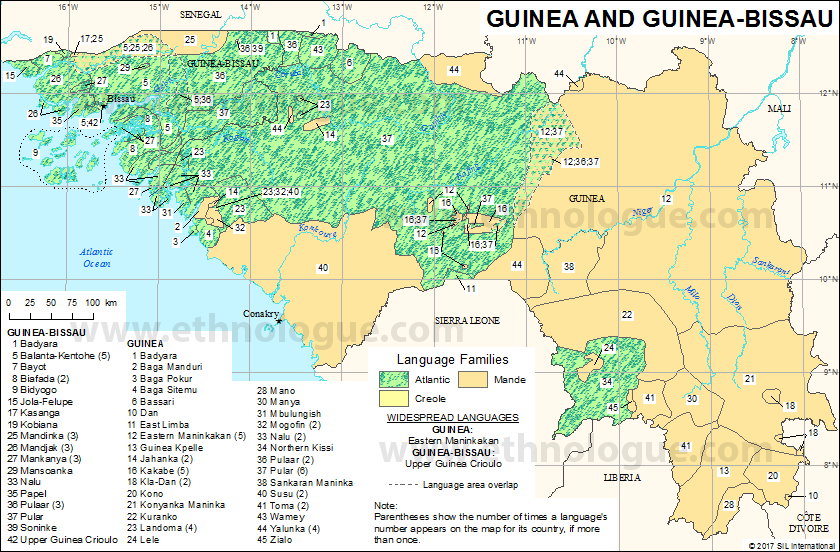
Guinea-Bissau

Graphs
Language Vitality Profile
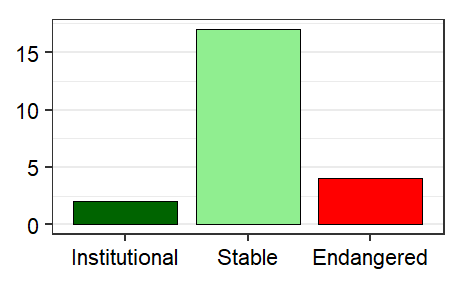
Full explanation
Language Status Profile
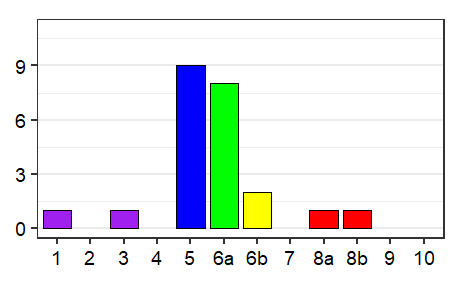
Full explanation
Resources
View Terms
Each Ethnologue country digest is a licensed product with restricted terms of use. Before downloading the product, you must agree to the following terms:
- This is a license for individual use. Just as with a conventionally published book, it is a violation of copyright to make a copy and give it to others.
- You may not redistribute this work in any form, including ingesting the contents into a database that is shared with others or posting it on a web site (whether public or private).
To inquire about permission for reuse or redistribution, please use the Contact Us form in the footer.
Digest of the languages of Guinea-Bissau ($149.95, 29 page PDF)