
HR
Republic of Croatia
Croatia
Summary
- Official Name
- Republic of Croatia
- Population
- 4,082,000
- Principal Languages
- Croatian
- Literacy Rate
- 99% (2015 World Factbook)
- International Conventions
- CDE (1960), CPPDCE (2006), CSICH (2012), ECRML (1992), FCPNM (1998), ICCPR (1966), UNCRPD (2006), UNDRIP (2007)
- General References
- Campbell and King 2011, Comrie 1987
- Language Counts
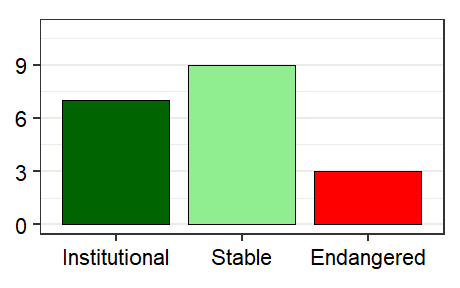
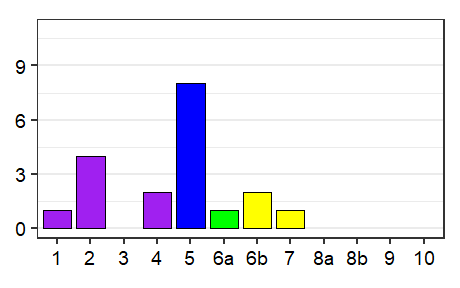
- The number of established languages listed for Croatia is 20. Of these, 19 are living and 1 is extinct. Of the living languages, 7 are indigenous and 12 are non-indigenous. Furthermore, 6 are institutional, 9 are developing, 1 is vigorous, and 3 are in trouble. Also listed are 4 unestablished languages.
Languages
- Albanian, Tosk als
- Users: 17,100 in Croatia (2011 census). Ethnic population: 17,500 (2011 census). Status: Unestablished. Classification: Indo-European, Albanian, Tosk
- Bosnian bos
- Dubrovnik-Neretva, Istria, Primorje-Gorski Kotar, Sisak-Moslavina, Split-Dalmatia, Vukovar-Syrmia, and Zagreb City. Users: 16,900 in Croatia (2011 census). Ethnic population: 31,500 (2011 census). Status: 5* (Dispersed). Recognized language (2002, Constitutional Law on the Rights of Minorities, Article 15). Alternate Names: Serbo-Croatian Classification: Indo-European, Balto-Slavic, Slavic, South, Western
- Chakavian ckm
- Istria county; Primorje-Gorski Kotar and Split-Dalmatia counties: coastal area and islands. Users: 50,000 in Croatia (2019). Total users in all countries: 95,000. Status: 6b (Threatened). Alternate Names: Chakavski, Chekavski, Čakavština, Čakavian, Čakavica, Čekavski, Čokovski Autonym: Čakavski Classification: Indo-European, Balto-Slavic, Slavic, South, Western
- Croatian hrv
- Users: 4,100,000 in Croatia (2011 census). Total users in all countries: 6,773,010 (as L1: 5,513,010; as L2: 1,260,000). Status: 1 (National). Statutory national language (1990, Constitution, Article 12.1). Alternate Names: Serbo-Croatian Autonym: Hrvatski Classification: Indo-European, Balto-Slavic, Slavic, South, Western
- Croatian Sign Language csq
- Scattered. Users: 6,500 (2019 EUD). Other estimates vary: 12,000 (2010 Croatian Association of the Deaf and Hard of Hearing); 13,000 (2014 Union of Deaf of Zagreb). 17,500 (2014 IMB). Ethnic population: 20,000 (2010 Croatian Association of the Deaf and Hard of Hearing). Status: 5 (Developing). Alternate Names: CSL, Croatia Sign Language, HZJ, Hrvatski znakovni jezik Classification: Sign language, Deaf community sign language
- Czech ces
- Bjelovar-Bilogora, Požega-Slavonia, and Sisak-Moslavina counties. Users: 6,290 in Croatia (2011 census). Ethnic population: 9,640 (2011 census). Status: 4 (Educational). Statutory language of provincial identity in Bjelovarsko-Bilogors county (2002, Constitutional Law on the Rights of Minorities, Article 15), based on census results, the Czech minority has the right to elect 1 member to the national legislature. Alternate Names: Češki, Čeština, Český jazyk Classification: Indo-European, Balto-Slavic, Slavic, West, Czech-Slovak
- Dalmatian dlm
- Dubrovnik-Neretva, Šibenik-Knin, Split-Dalmatia, and Zadar counties. Users: No known L1 speakers in Croatia. Tuone Udaina, the last speaker, died in 1898. Total users in all countries: none known. Status: 10 (Extinct). Alternate Names: Dalmatic, Dalmatico, Dalmatski, Lingua Dalmatica Autonym: Dalmato, Langa Dalmata Classification: Indo-European, Italic, Romance, Italo-Western, Italo-Dalmatian
- English eng
- Users: 2,000,800 in Croatia, all users. L1 users: 800 in Croatia (2020 Joshua Project), based on ethnicity. L2 users: 2,000,000 (European Commission 2006). Status: 4 (Educational). Alternate Names: Engelski Classification: Indo-European, Germanic, West, English
- French fra
- Users: 95,700 in Croatia (Marcoux et al 2022), L2 users. Status: 5* (Dispersed). Classification: Indo-European, Italic, Romance, Italo-Western, Western, Gallo-Iberian, Gallo-Romance, Gallo-Rhaetian, Oïl, French
- German, Standard deu
- Widespread. Users: 1,462,990 in Croatia, all users. L1 users: 2,990 in Croatia (2011 census). L2 users: 1,460,000 (European Commission 2006). Ethnic population: 2,970 (2011 census). Status: 5* (Dispersed). Alternate Names: Deutsch, Njemački Classification: Indo-European, Germanic, West, High German, German, Middle German, East Middle German
- Hungarian hun
- Bjelovar-Bilogora, Osijek-Baranja, Vukovar-Syrmia, and Zagreb city. Users: 10,200 in Croatia (2011 census). Ethnic population: 14,000 (2011 census). Status: 4 (Educational). Statutory language of provincial identity in Osjecko-Baranjska county (2002, Constitutional Law on the Rights of Minorities, Article 15), based on census results, the Hungarian minority also has the right to elect 1 member to the national legislature. Alternate Names: Madžarski, Magyar Classification: Uralic
- Istriot ist
- Istria county: Bale, Fažana, Galižana, Rovinj, Šišan, and Vodnjan towns. Istrian peninsula, west coast. Users: 1,300, all users. L1 users: 400 (Salminen 2007). L2 users: 900 (Salminen 2007). Status: 6b (Threatened). Alternate Names: Istriano, Istro-Romance Classification: Indo-European, Italic, Romance, Italo-Western, Italo-Dalmatian
- Italian ita
- Istria county: northwest near Slovenia border, along west coast, Istrian peninsula. Users: 618,600 in Croatia, all users. L1 users: 18,600 in Croatia (2011 census). L2 users: 600,000 (European Commission 2006). Ethnic population: 37,000 (2016 G. Patanè). Status: 2 (Provincial). Statutory provincial language in Istria County (2003, Istrian Regional Statute, Article 6), per Italian bilateral treaty 1996. Alternate Names: Italiano, Talijanski Classification: Indo-European, Italic, Romance, Italo-Western, Italo-Dalmatian
- Macedonian mkd
- Users: 3,520 in Croatia (2011 census). Ethnic population: 4,140 (2011 census). Status: Unestablished. Classification: Indo-European, Balto-Slavic, Slavic, South, Eastern
- Romani, Sinte rmo
- Istria and Međimurje counties. Users: 14,400 in Croatia (2011 census). Ethnic population: 17,000 (2011 census). Status: 2 (Provincial). Statutory provincial working language in Medjimurska county (2002, Constitutional Law on the Rights of Minorities, Article 15). Alternate Names: Romanes, Sinte, Sinti Classification: Indo-European, Indo-Iranian, Indo-Aryan, Intermediate Divisions, Western, Romani, Northern
- Romanian, Istro ruo
- Primorje-Gorski Kotar county: Žejane village, Istrian peninsula, south towards northern reaches of Kvarner gulf. Users: 1,400, all users. L1 users: 300 (Salminen 2007). L2 users: 1,100 (Salminen 2007). Status: 7 (Shifting). Alternate Names: Istrio-Romanian, Istro-Romanian, Roma, Romani Classification: Indo-European, Italic, Romance, Eastern
- Russian rus
- Users: 51,590 in Croatia, all users. L1 users: 1,590 in Croatia (2011 census). L2 users: 50,000 (Arefyev 2012). Ethnic population: 1,280 (2011 census). Status: Unestablished. Classification: Indo-European, Balto-Slavic, Slavic, East
- Ruthenian rsk
- Vukovar-Syrmia county. Users: 1,470 in Croatia (2011 census). Ethnic population: 1,940 (2011 census). Status: 6a* (Vigorous). Recognized language (2002, Constitutional Law on the Rights of Minorities, Article 15). Alternate Names: Rusnak, Rusnatski Classification: Indo-European, Balto-Slavic, Slavic, East
- Serbian srp
- Widespread. Users: 60,700 in Croatia (2011 census). Ethnic population: 187,000 (2011 census). Status: 2 (Provincial). Statutory provincial working language in Bjelovarsko-Bilgors, Brodsko-Posavska, Grad Zgreb, Istarska, Karlovacka, Koprivnicko-Krizevaka, Licok-Senjska, Osjecko-Baranjska, Pozescko-Slavonska, Sibensko-Kninska, and 4 other counties (2002, Constitutional Law on the Rights of Minorities, Article 15), the Serbian minority has the right to elect a maximum of 3 members to the national legislature. Alternate Names: Serbo-Croatian Classification: Indo-European, Balto-Slavic, Slavic, South, Western
- Slovak slk
- Osijek-Baranja and Vukovar-Syrmia counties. Users: 3,790 in Croatia (2011 census). Ethnic population: 4,750 (2011 census). Status: 5* (Dispersed). Alternate Names: Slovenčina, Slovenský Jazyk Classification: Indo-European, Balto-Slavic, Slavic, West, Czech-Slovak
- Slovene slv
- Istria and Primorje-Gorski Kotar counties: scattered; urban areas of Rijeka and Zagreb. Users: 9,220 in Croatia (2011 census). Ethnic population: 10,500 (2011 census). Status: 5* (Dispersed). Recognized language (2002, Constitutional Law on the Rights of Minorities, Article 15). Alternate Names: Slovenščina, Slovenian, Slovenski jezik Classification: Indo-European, Balto-Slavic, Slavic, South, Western
- Spanish spa
- Users: 67,100 in Croatia (2018), L2 users. Status: Unestablished. Classification: Indo-European, Italic, Romance, Italo-Western, Western, Gallo-Iberian, Ibero-Romance, West Iberian, Castilian
- Ukrainian ukr
- Vukovar-Syrmia and Zagreb City. Users: 1,010 in Croatia (2011 census). Ethnic population: 1,880 (2011 census). Status: 5* (Dispersed). Recognized language (2002, Constitutional Law on the Rights of Minorities, Article 15). Classification: Indo-European, Balto-Slavic, Slavic, East
- Venetian vec
- Istria and Split-Dalmatia counties: most of Istria peninsula, Fiume-Rijeka city, some cities in Kvarner and coastal Dalmatia. Users: 50,000 in Croatia (1994 T. Salminen). Status: 5* (Developing). Alternate Names: Veneto Classification: Indo-European, Italic, Romance, Italo-Western, Western, Gallo-Iberian, Gallo-Romance, Gallo-Italian
Languages by Status
Croatian
[hrv] 1 (National). Statutory national language (1990, Constitution, Article 12.1). 4,100,000 in Croatia (2011 census). Total users in all countries: 6,773,010 (as L1: 5,513,010; as L2: 1,260,000).
Italian
[ita] 2 (Provincial). Statutory provincial language in Istria County (2003, Istrian Regional Statute, Article 6), per Italian bilateral treaty 1996. 618,600 in Croatia, all users. L1 users: 18,600 in Croatia (2011 census). L2 users: 600,000 (European Commission 2006). Ethnic population: 37,000 (2016 G. Patanè).
Romani, Sinte
[rmo] 2 (Provincial). Statutory provincial working language in Medjimurska county (2002, Constitutional Law on the Rights of Minorities, Article 15). 14,400 in Croatia (2011 census). Ethnic population: 17,000 (2011 census).
Serbian
[srp] 2 (Provincial). Statutory provincial working language in Bjelovarsko-Bilgors, Brodsko-Posavska, Grad Zgreb, Istarska, Karlovacka, Koprivnicko-Krizevaka, Licok-Senjska, Osjecko-Baranjska, Pozescko-Slavonska, Sibensko-Kninska, and 4 other counties (2002, Constitutional Law on the Rights of Minorities, Article 15), the Serbian minority has the right to elect a maximum of 3 members to the national legislature. 60,700 in Croatia (2011 census). Ethnic population: 187,000 (2011 census).
Czech
[ces] 4 (Educational). Statutory language of provincial identity in Bjelovarsko-Bilogors county (2002, Constitutional Law on the Rights of Minorities, Article 15), based on census results, the Czech minority has the right to elect 1 member to the national legislature. 6,290 in Croatia (2011 census). Ethnic population: 9,640 (2011 census).
English
[eng] 4 (Educational). 2,000,800 in Croatia, all users. L1 users: 800 in Croatia (2020 Joshua Project), based on ethnicity. L2 users: 2,000,000 (European Commission 2006).
Hungarian
[hun] 4 (Educational). Statutory language of provincial identity in Osjecko-Baranjska county (2002, Constitutional Law on the Rights of Minorities, Article 15), based on census results, the Hungarian minority also has the right to elect 1 member to the national legislature. 10,200 in Croatia (2011 census). Ethnic population: 14,000 (2011 census).
Bosnian
[bos] 5* (Dispersed). Recognized language (2002, Constitutional Law on the Rights of Minorities, Article 15). 16,900 in Croatia (2011 census). Ethnic population: 31,500 (2011 census).
French
[fra] 5* (Dispersed). 95,700 in Croatia (Marcoux et al 2022), L2 users.
German, Standard
[deu] 5* (Dispersed). 1,462,990 in Croatia, all users. L1 users: 2,990 in Croatia (2011 census). L2 users: 1,460,000 (European Commission 2006). Ethnic population: 2,970 (2011 census).
Slovak
[slk] 5* (Dispersed). 3,790 in Croatia (2011 census). Ethnic population: 4,750 (2011 census).
Slovene
[slv] 5* (Dispersed). Recognized language (2002, Constitutional Law on the Rights of Minorities, Article 15). 9,220 in Croatia (2011 census). Ethnic population: 10,500 (2011 census).
Ukrainian
[ukr] 5* (Dispersed). Recognized language (2002, Constitutional Law on the Rights of Minorities, Article 15). 1,010 in Croatia (2011 census). Ethnic population: 1,880 (2011 census).
Croatian Sign Language
[csq] 5 (Developing). 6,500 (2019 EUD). Other estimates vary: 12,000 (2010 Croatian Association of the Deaf and Hard of Hearing); 13,000 (2014 Union of Deaf of Zagreb). 17,500 (2014 IMB). Ethnic population: 20,000 (2010 Croatian Association of the Deaf and Hard of Hearing).
Venetian
[vec] 5* (Developing). 50,000 in Croatia (1994 T. Salminen).
Ruthenian
[rsk] 6a* (Vigorous). Recognized language (2002, Constitutional Law on the Rights of Minorities, Article 15). 1,470 in Croatia (2011 census). Ethnic population: 1,940 (2011 census).
Chakavian
[ckm] 6b (Threatened). 50,000 in Croatia (2019). Total users in all countries: 95,000.
Istriot
[ist] 6b (Threatened). 1,300, all users. L1 users: 400 (Salminen 2007). L2 users: 900 (Salminen 2007).
Romanian, Istro
[ruo] 7 (Shifting). 1,400, all users. L1 users: 300 (Salminen 2007). L2 users: 1,100 (Salminen 2007).
Dalmatian
[dlm] 10 (Extinct). No known L1 speakers in Croatia. Tuone Udaina, the last speaker, died in 1898. Total users in all countries: none known.
Albanian, Tosk
[als] Unestablished. 17,100 in Croatia (2011 census). Ethnic population: 17,500 (2011 census).
Macedonian
[mkd] Unestablished. 3,520 in Croatia (2011 census). Ethnic population: 4,140 (2011 census).
Russian
[rus] Unestablished. 51,590 in Croatia, all users. L1 users: 1,590 in Croatia (2011 census). L2 users: 50,000 (Arefyev 2012). Ethnic population: 1,280 (2011 census).
Spanish
[spa] Unestablished. 67,100 in Croatia (2018), L2 users.
Maps
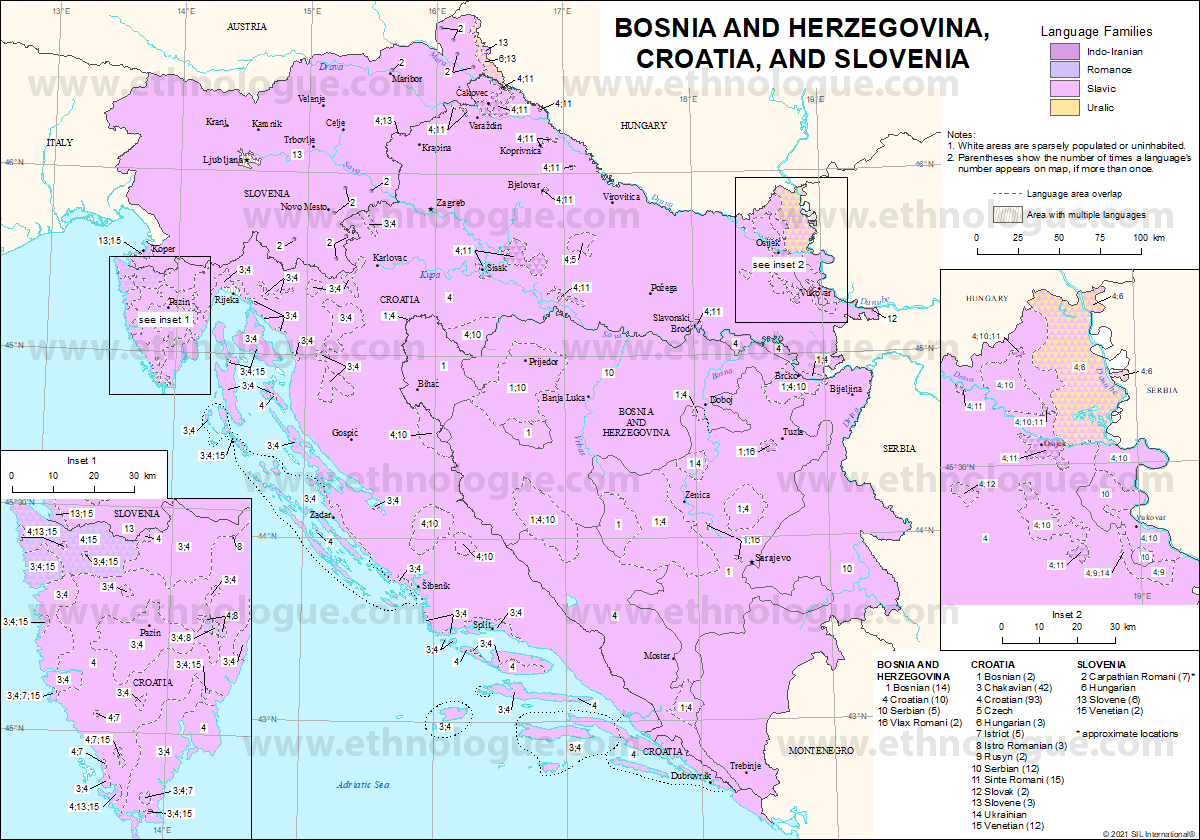
Bosnia and Herzegovina, Croatia and Slovenia
Graphs
Language Vitality Profile
Full explanation
Language Status Profile
Full explanation
Resources
View Terms
Each Ethnologue country digest is a licensed product with restricted terms of use. Before downloading the product, you must agree to the following terms:
- This is a license for individual use. Just as with a conventionally published book, it is a violation of copyright to make a copy and give it to others.
- You may not redistribute this work in any form, including ingesting the contents into a database that is shared with others or posting it on a web site (whether public or private).
To inquire about permission for reuse or redistribution, please use the Contact Us form in the footer.
Digest of the languages of Croatia ($149.95, 25 page PDF)