
HU
Hungary
Hungary
Summary
- Official Name
- Hungary
- Population
- 9,689,000
- Principal Languages
- Hungarian
- Literacy Rate
- 99% (2015 World Factbook)
- International Conventions
- CDE (1960), CPPDCE (2006), CSICH (2012), ECRML (1992), FCPNM (1998), ICCPR (1966), UNCRPD (2006), UNDRIP (2007)
- General References
- Campbell and King 2011
- Deaf Population
- 330,000
- Language Counts
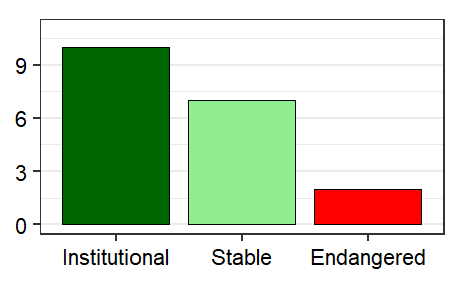
- The number of established languages listed for Hungary is 22. Of these, 20 are living and 2 are extinct. Of the living languages, 5 are indigenous and 15 are non-indigenous. Furthermore, 9 are institutional, 9 are developing, and 2 are in trouble. Also listed are 4 unestablished languages.
Languages
- Arabic, North Levantine Spoken apc
- Users: 2,930 in Hungary (2011 census). Status: Unestablished. Classification: Afro-Asiatic, Semitic, Central, South, Arabic
- Armenian, Western hyw
- Budapest; Pest county. Users: 440 in Hungary (2011 census). Ethnic population: 3,290 (2011 census). Status: 5* (Developing). Classification: Indo-European, Armenian
- Bulgarian bul
- Borsod-Abaúj-Zemplén, Budapest, and Hajdú-Bihar counties. Users: 2,900 in Hungary (2011 census). Ethnic population: 3,560 (2011 census). Status: 5* (Dispersed). Classification: Indo-European, Balto-Slavic, Slavic, South, Eastern
- Chakavian ckm
- Győr-Moson-Sopron and Vas counties. Users: 12,000 in Hungary (2021 K. Tyran). Status: 6b (Threatened). Alternate Names: Gradišćanskohrvatski jezik, Gradišćei Horvát Nyelv Classification: Indo-European, Balto-Slavic, Slavic, South, Western
- Chinese zho
- Users: 5,820 in Hungary (2011 census). Status: Unestablished.
- Croatian hrv
- Bács-Kiskun, Baranya, Pest, Somogy, and Zala counties. Users: 13,700 in Hungary (2011 census). Ethnic population: 23,600 (2011 census). Status: 4 (Educational). Recognized language (1993, Minorities Act No. LXXVII). Alternate Names: Hrvatski, Serbo-Croatian Classification: Indo-European, Balto-Slavic, Slavic, South, Western
- English eng
- Users: 1,957,800 in Hungary, all users. L1 users: 7,800 in Hungary (2020 Joshua Project), based on ethnicity. L2 users: 1,950,000 (European Commission 2012). Status: 4 (Educational). Alternate Names: Angol Classification: Indo-European, Germanic, West, English
- French fra
- Users: 115,800 in Hungary, all users. L1 users: 2,800 in Hungary (2022 Joshua Project), based on ethnicity. L2 users: 113,000 (Marcoux et al 2022). Status: 5* (Dispersed). Classification: Indo-European, Italic, Romance, Italo-Western, Western, Gallo-Iberian, Gallo-Romance, Gallo-Rhaetian, Oïl, French
- German, Standard deu
- Bács-Kiskun, Baranya, Komárom-Esztergom, Pest, Tolna, Vas, and Veszprém counties. Users: 1,795,200 in Hungary, all users. L1 users: 35,200 in Hungary (2020 Eurostat). L2 users: 1,760,000 (2018). Ethnic population: 132,000 (2011 census). Status: 4 (Educational). Recognized language (1993, Minorities Act No. LXXVII). Alternate Names: Deutsch, Német Classification: Indo-European, Germanic, West, High German, German, Middle German, East Middle German
- Greek ell
- Budapest and Fejér counties. Users: 1,870 in Hungary (2011 census). Ethnic population: 3,920 (2011 census). Status: 4 (Educational). Alternate Names: Görög Classification: Indo-European, Greek, Attic
- Hungarian hun
- Widespread. Users: 9,780,000 in Hungary (European Commission 2012). Total users in all countries: 12,564,120. Status: 1 (National). De facto national language. Autonym: Magyar Classification: Uralic
- Hungarian Sign Language hsh
- Scattered. Users: 10,000 in Hungary (2021 DBS/DOOR/SIL). Estimated deaf signers, assuming 0.1% of the total population. Other estimates: 9,000 (2021 EUD), 49,000 Deaf (2014 IMB). Total users in all countries: 11,200. Status: 5 (Developing). Recognized language (2011, Constitution, Article H(3)). Recognized language (2009, Act CXXV on Hungarian Sign Language and the use of Hungarian Sign Language). Alternate Names: Magyar Jelnyelv, Magyarországi jelnyelv Classification: Sign language, Deaf community sign language
- Kuman qwm
- Bács-Kiskun and Jász-Nagykun-Szolnok counties. Users: No known L1 speakers. István Varró, the last speaker, died in 1770. Status: 10 (Extinct). Alternate Names: Cuman Classification: Turkic, Western, Aralo-Caspian
- Polish pol
- Borsod-Abaúj-Zemplén and Budapest counties. Users: 3,050 in Hungary (2011 census). Ethnic population: 5,730 (2011 census). Status: 5* (Dispersed). Alternate Names: Lengyel Classification: Indo-European, Balto-Slavic, Slavic, West, Lechitic
- Romani, Carpathian rmc
- Nógrád county: Hugyag; Csongrád-Csanád county: Szeged (Gurvári dialect). Users: Few speakers. Status: 5* (Developing). Alternate Names: Central Romani, Romanes, Romungro Classification: Indo-European, Indo-Iranian, Indo-Aryan, Intermediate Divisions, Western, Romani, Northern
- Romani, Vlax rmy
- Bács-Kiskun, Baranya, Békés, and Csongrád-Csanád counties. Users: 54,300 in Hungary (2011 census). Ethnic population: 309,000 (2011 census). Status: 4 (Educational). Alternate Names: Beás, Cigány, Roma Classification: Indo-European, Indo-Iranian, Indo-Aryan, Intermediate Divisions, Western, Romani, Vlax
- Romanian ron
- Bács-Kiskun, Békés, Budapest, and Csongrád-Csanád counties. Users: 13,900 in Hungary (2011 census). Ethnic population: 26,300 (2011 census). Status: 4 (Educational). Alternate Names: Daco-Romanian, Limba română, Româneşte, Rumanian Classification: Indo-European, Italic, Romance, Eastern
- Russian rus
- Users: 200,000 in Hungary (Arefyev 2012), all users. L1 users: 7,380 (2011 census). Ethnic population: 6,170 (2011 census). Status: Unestablished. Classification: Indo-European, Balto-Slavic, Slavic, East
- Rusyn rue
- Borsod-Abaúj-Zemplén county: Komlóska and Mucsony; Budapest and Pest counties. Users: 1,000 in Hungary (2011 census). Ethnic population: 3,320 (2011 census). Status: 6b (Threatened). Alternate Names: Carpathian, Carpatho-Rusyn, Ruthenian Classification: Indo-European, Balto-Slavic, Slavic, East
- Serbian srp
- Budapest county; Bács-Kiskun, Baranya, and Csongrád-Csanád counties, urban enclaves. Users: 3,710 in Hungary (2011 census). Ethnic population: 7,210 (2011 census). Status: 4 (Educational). Recognized language (1993, Minorities Act No. LXXVII). Alternate Names: Serbo-Croatian Classification: Indo-European, Balto-Slavic, Slavic, South, Western
- Slovak slk
- Bács-Kiskun, Békés, Borsod-Abaúj-Zemplén, Győr-Moson-Sopron, Komárom-Esztergom, Nógrád, and Pest counties. Users: 9,890 in Hungary (2011 census). Ethnic population: 29,600 (2011 census). Status: 5* (Dispersed). Recognized language (1993, Minorities Act No. LXXVII). Alternate Names: Slovenčina, Slovenský Jazyk Classification: Indo-European, Balto-Slavic, Slavic, West, Czech-Slovak
- Slovene slv
- Vas county; near Slovenia border. Users: 1,720 in Hungary (2011 census). Ethnic population: 2,390 (2011 census). Status: 4 (Educational). Recognized language (1993, Minorities Act No. LXXVII). Alternate Names: Slovenščina, Slovenian Classification: Indo-European, Balto-Slavic, Slavic, South, Western
- Ukrainian ukr
- Budapest and Pest counties. Users: 3,380 in Hungary (2011 census). Ethnic population: 5,630 (2011 census). Status: 5* (Dispersed). Alternate Names: Ukrán Classification: Indo-European, Balto-Slavic, Slavic, East
- Vietnamese vie
- Users: 2,670 in Hungary (2011 census). Ethnic population: 3,020 (2011 census). Status: Unestablished. Classification: Austro-Asiatic, Mon-Khmer, Viet-Muong, Vietnamese
- Yassic ysc
- Jász-Nagykun-Szolnok county: Jászberény district. Users: No known L1 speakers. Last speaker likely died in the 15th century. Status: 10 (Extinct). Alternate Names: Jassic, Jász Classification: Indo-European, Indo-Iranian, Iranian, Eastern, Northeastern
- Yiddish, Eastern ydd
- Major cities. Status: 5* (Dispersed). Classification: Indo-European, Germanic, West, High German, Yiddish
Languages by Status
Hungarian
[hun] 1 (National). De facto national language. 9,780,000 in Hungary (European Commission 2012). Total users in all countries: 12,564,120.
Croatian
[hrv] 4 (Educational). Recognized language (1993, Minorities Act No. LXXVII). 13,700 in Hungary (2011 census). Ethnic population: 23,600 (2011 census).
English
[eng] 4 (Educational). 1,957,800 in Hungary, all users. L1 users: 7,800 in Hungary (2020 Joshua Project), based on ethnicity. L2 users: 1,950,000 (European Commission 2012).
German, Standard
[deu] 4 (Educational). Recognized language (1993, Minorities Act No. LXXVII). 1,795,200 in Hungary, all users. L1 users: 35,200 in Hungary (2020 Eurostat). L2 users: 1,760,000 (2018). Ethnic population: 132,000 (2011 census).
Greek
[ell] 4 (Educational). 1,870 in Hungary (2011 census). Ethnic population: 3,920 (2011 census).
Romani, Vlax
[rmy] 4 (Educational). 54,300 in Hungary (2011 census). Ethnic population: 309,000 (2011 census).
Romanian
[ron] 4 (Educational). 13,900 in Hungary (2011 census). Ethnic population: 26,300 (2011 census).
Serbian
[srp] 4 (Educational). Recognized language (1993, Minorities Act No. LXXVII). 3,710 in Hungary (2011 census). Ethnic population: 7,210 (2011 census).
Slovene
[slv] 4 (Educational). Recognized language (1993, Minorities Act No. LXXVII). 1,720 in Hungary (2011 census). Ethnic population: 2,390 (2011 census).
Bulgarian
[bul] 5* (Dispersed). 2,900 in Hungary (2011 census). Ethnic population: 3,560 (2011 census).
French
[fra] 5* (Dispersed). 115,800 in Hungary, all users. L1 users: 2,800 in Hungary (2022 Joshua Project), based on ethnicity. L2 users: 113,000 (Marcoux et al 2022).
Polish
[pol] 5* (Dispersed). 3,050 in Hungary (2011 census). Ethnic population: 5,730 (2011 census).
Slovak
[slk] 5* (Dispersed). Recognized language (1993, Minorities Act No. LXXVII). 9,890 in Hungary (2011 census). Ethnic population: 29,600 (2011 census).
Ukrainian
[ukr] 5* (Dispersed). 3,380 in Hungary (2011 census). Ethnic population: 5,630 (2011 census).
Yiddish, Eastern
[ydd] 5* (Dispersed).
Armenian, Western
[hyw] 5* (Developing). 440 in Hungary (2011 census). Ethnic population: 3,290 (2011 census).
Hungarian Sign Language
[hsh] 5 (Developing). Recognized language (2011, Constitution, Article H(3)). Recognized language (2009, Act CXXV on Hungarian Sign Language and the use of Hungarian Sign Language). 10,000 in Hungary (2021 DBS/DOOR/SIL). Estimated deaf signers, assuming 0.1% of the total population. Other estimates: 9,000 (2021 EUD), 49,000 Deaf (2014 IMB). Total users in all countries: 11,200.
Romani, Carpathian
[rmc] 5* (Developing). Few speakers.
Chakavian
[ckm] 6b (Threatened). 12,000 in Hungary (2021 K. Tyran).
Rusyn
[rue] 6b (Threatened). 1,000 in Hungary (2011 census). Ethnic population: 3,320 (2011 census).
Kuman
[qwm] 10 (Extinct). No known L1 speakers. István Varró, the last speaker, died in 1770.
Yassic
[ysc] 10 (Extinct). No known L1 speakers. Last speaker likely died in the 15th century.
Arabic, North Levantine Spoken
[apc] Unestablished. 2,930 in Hungary (2011 census).
Chinese
[zho] Unestablished. 5,820 in Hungary (2011 census).
Russian
[rus] Unestablished. 200,000 in Hungary (Arefyev 2012), all users. L1 users: 7,380 (2011 census). Ethnic population: 6,170 (2011 census).
Vietnamese
[vie] Unestablished. 2,670 in Hungary (2011 census). Ethnic population: 3,020 (2011 census).
Maps
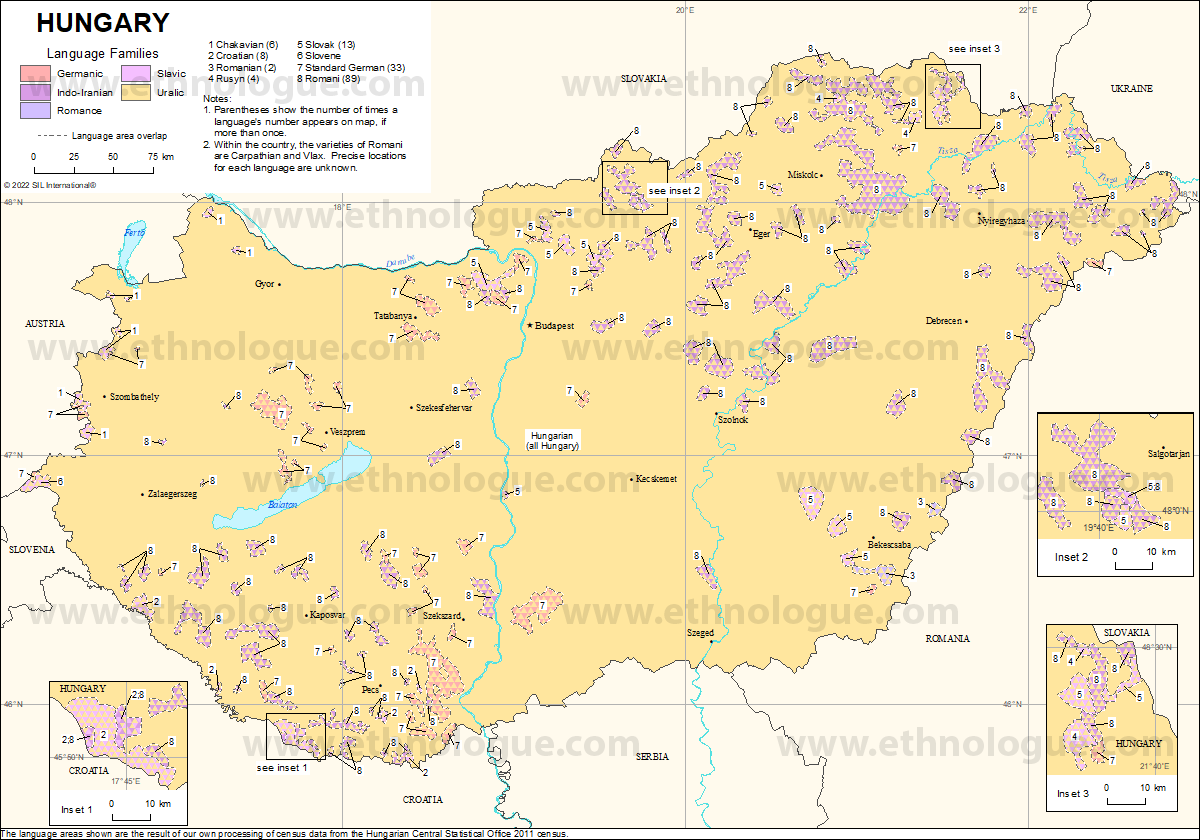
Hungary
Graphs
Language Vitality Profile
Full explanation
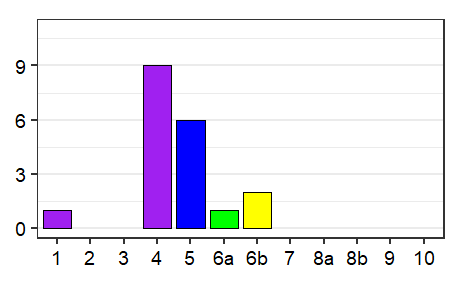
Language Status Profile
Full explanation
Resources
View Terms
Each Ethnologue country digest is a licensed product with restricted terms of use. Before downloading the product, you must agree to the following terms:
- This is a license for individual use. Just as with a conventionally published book, it is a violation of copyright to make a copy and give it to others.
- You may not redistribute this work in any form, including ingesting the contents into a database that is shared with others or posting it on a web site (whether public or private).
To inquire about permission for reuse or redistribution, please use the Contact Us form in the footer.
Digest of the languages of Hungary ($149.95, 26 page PDF)