
IT
Italian Republic
Italy
Summary
- Official Name
- Italian Republic
- Population
- 59,450,000
- Principal Languages
- Italian
- Literacy Rate
- 99% (2018 UNESCO)
- International Conventions
- CDE (1960), CPPDCE (2006), CSICH (2012), FCPNM (1998), ICCPR (1966), UNCRPD (2006), UNDRIP (2007)
- General References
- Agard 1984, Campbell and King 2011, Comrie 1987, Hall 1974, Salminen 2007, Stephens 1976
- Language Counts
- The number of established languages listed for Italy is 35. All are living languages. Of these, 28 are indigenous and 7 are non-indigenous. Furthermore, 1 is institutional, 12 are developing, 2 are vigorous, 17 are in trouble, and 3 are dying. Also listed are 21 unestablished languages and 1 macrolanguage.
Languages
- Albanian, Arbëreshë aae
- Calabria region: Catanzaro and Reggio di Calabria provinces; Molise region: Campobasso province; Sicily region: Palermo province; possibly Apulia and Basilicata regions. Users: 100,000 (Salminen 2007). 380,000 Albanian speakers in Italy (2012 census). Ethnic population: 260,000 (Stephens 1976). Status: 6b (Threatened). Alternate Names: Arbëreshë, Arbërisht, Arbërishtja, Gjegje Autonym: Tarbrisht Classification: Indo-European, Albanian, Tosk
- Arabic, Algerian Spoken arq
- Users: 15,700 in Italy (2012 census). Status: Unestablished. Classification: Afro-Asiatic, Semitic, Central, South, Arabic
- Arabic, Egyptian Spoken arz
- Users: 57,700 in Italy (2012 census). Status: Unestablished. Classification: Afro-Asiatic, Semitic, Central, South, Arabic
- Arabic, Judeo-Tripolitanian yud
- Users: 5,000 in Italy (1994 H. Mutzafi). Status: Unestablished. Classification: Afro-Asiatic, Semitic, Central, South, Arabic
- Arabic, Moroccan Spoken ary
- Users: 309,000 in Italy (2012 census). Status: Unestablished. Classification: Afro-Asiatic, Semitic, Central, South, Arabic
- Arabic, Tunisian Spoken aeb
- Users: 73,400 in Italy (2012 census). Status: Unestablished. Classification: Afro-Asiatic, Semitic, Central, South, Arabic
- Arpitan frp
- Valle d’Aosta region; Piedmont region: Turin province. Users: 70,000 in Italy (Salminen 2007). Status: 6b (Threatened). Alternate Names: Franco-Provençal, Francoprovençal, arpitano Classification: Indo-European, Italic, Romance, Italo-Western, Western, Gallo-Iberian, Gallo-Romance, Gallo-Rhaetian, Oïl, Southeastern
- Bavarian bar
- Trentino-Alto Adige region: south Tyrol. Users: 250,000 in Italy (2005). Status: 5* (Developing). Alternate Names: Bavarian Austrian, Bayerisch, Boarisch Classification: Indo-European, Germanic, West, High German, German, Upper German, Bavarian-Austrian
- Bengali ben
- Users: 400,000 in Italy (2018), based on nationality. Status: Unestablished. Classification: Indo-European, Indo-Iranian, Indo-Aryan, Outer Languages, Eastern, Bengali-Assamese
- Bosnian bos
- Users: 20,700 in Italy (2012 census). Status: Unestablished. Classification: Indo-European, Balto-Slavic, Slavic, South, Western
- Catalan cat
- Sardinia region: Sassari province, Alghero city. Users: 7,480 in Italy (Argenter 2008). Status: 7 (Shifting). Alternate Names: Algherese Catalan, Català Classification: Indo-European, Italic, Romance, Italo-Western, Western, Gallo-Iberian, Ibero-Romance, East Iberian
- Chinese zho
- Users: 160,000 in Italy (2012 census). Status: Unestablished.
- Cimbrian cim
- Veneto region: Vincenza province, Roana commune. Users: 2,230. 500 in Lusernese Cimbrian in Trentino Alto Oolige 40 km southeast from Trento, plus 1,500 Sette Comuni Cimbrian (40% of Roana (Rowan), 70% of Messaselva di Roana Rotzo) in Veneto around 60 km north of Vincenza (Kloss 1978), and 230 or 65% of Giazza (Ijetzan) Veneto, 43 km northeast of Verona (1992 R. Zamponi). 22,700 were in Sieben Gemeinde and 12,400 in Dreizehn Gemeinde in 1854. Status: 6b (Threatened). Alternate Names: Tzimbro, Zimbrisch Classification: Indo-European, Germanic, West, High German, German, Upper German, Bavarian-Austrian
- Corsican cos
- Sardinia region; Maddalena islands, Sardinia northeast coast. Users: 1,000 in Italy (1990). Status: 6b* (Threatened). Alternate Names: Corse, Corsi, Corsu, Còrso Classification: Indo-European, Italic, Romance, Southern, Corsican
- Croatian hrv
- Users: 13,300 in Italy (2012 census). Status: Unestablished. Classification: Indo-European, Balto-Slavic, Slavic, South, Western
- Emilian egl
- Emilia-Romagna region: Reggio Emilia, main town; also in Bologna, Ferrara, Parma, Piacenza, Modena; Piedmont region: Curone valley. Users: 440,000 (2006 S. Grementieri). Ethnic population: 3,000,000 (2008 I. Miani). Status: 7 (Shifting). Alternate Names: Bolognese, Ferrarese, Modenese, Parmigiano, Piacentino, Reggiano Autonym: Emigliân Classification: Indo-European, Italic, Romance, Italo-Western, Western, Gallo-Iberian, Gallo-Romance, Gallo-Italian
- English eng
- Users: 20,734,000 in Italy, all users. L1 users: 34,000 in Italy (2021 Joshua Project), based on ethnicity. L2 users: 20,700,000 (European Commission 2012). Status: 5* (Dispersed). Alternate Names: Inglese Classification: Indo-European, Germanic, West, English
- French fra
- Valle d’Aosta region. Users: 9,516,000 in Italy, all users. L1 users: 116,000 in Italy (2012 census). L2 users: 9,400,000 (European Commission 2012). Status: 2 (Provincial). Statutory provincial language in Valle d’Aoste (1999, Historical Minorities Protection Act, No. 482). Alternate Names: Francese, Français Classification: Indo-European, Italic, Romance, Italo-Western, Western, Gallo-Iberian, Gallo-Romance, Gallo-Rhaetian, Oïl, French
- Friulian fur
- Friuli-Venezia Giulia autonomous region except Trieste province and western and eastern border areas; Veneto region: Venezia province, Portogruaro area. Users: 600,000 (2014 Agjenzie Regjonâl pe Lenghe Furlane), decreasing. 420,000 regular speakers, 180,000 occasional speakers (2014 Agjenzie Regjonâl pe Lenghe Furlane). Status: 6b (Threatened). Statutory language of provincial identity in Friuli-Venezia Giulia autonomous region (2007, Regional law no. 29). Alternate Names: Frioulan, Frioulian, Friulano Autonym: Furlan, Marilenghe Classification: Indo-European, Italic, Romance, Italo-Western, Western, Gallo-Iberian, Gallo-Romance, Gallo-Rhaetian, Rhaetian
- German, Standard deu
- Trentino-Alto Adige region: Bolzano and South Tyrol provinces; Veneto region: Belluno province. Users: 1,276,000 in Italy, all users. L1 users: 36,000 in Italy (2020 Joshua Project), based on ethnicity. L2 users: 1,240,000 (2019 Eurostat). Status: 2 (Provincial). Statutory provincial language in Trentino-Alto Adige region (1999, Historical Minorities Protection Act, No. 482). Alternate Names: Deutsch, Tedesco Classification: Indo-European, Germanic, West, High German, German, Middle German, East Middle German
- Greek ell
- Apulia region: Bari province, Monopoli; Adriatic coast; Calabria region: east of Reggio. Users: 20,000 in Italy (Vincent 1987). Status: 8a (Moribund). Alternate Names: Greco Classification: Indo-European, Greek, Attic
- International Sign ils
- Scattered in many countries. Users: No known L1 users (2015 A. Bickford). No native signers; learned by adults at international gatherings. Ethnic population: No ethnic community (2015 A. Bickford). Status: 9 (Second language only). Alternate Names: Gestuno, IS, International Sign Language Classification: Sign language
- Italian ita
- Users: 59,000,000 in Italy (European Commission 2012). Total users in all countries: 67,907,320 (as L1: 64,827,220; as L2: 3,080,100). Status: 1 (National). Statutory national language (1999, Law No. 482, Article 1.1). Autonym: Italiano Classification: Indo-European, Italic, Romance, Italo-Western, Italo-Dalmatian
- Italian Sign Language ise
- Scattered, including Sardinia and Sicily. Users: 40,000 (2021 EUD). Less than 0.1%. Another estimate: 70,000 profoundly deaf people, including 9,000 school age. (Van Cleve 1986). Status: 5 (Developing). Recognized language (2021, Sostegni Decree, Article 34). Alternate Names: LIS, Lingua Italiana Dei Segni, Lingua dei Segni Italiana Classification: Sign language, Deaf community sign language
- Judeo-Italian itk
- Tuscany region: Siena province, Buonconvento; urban areas central and north, Rome. Users: 200 in Italy. Total users in all countries: 250. Status: 8a (Moribund). Alternate Names: Italkian, Judaico-Romanesco, Judeo-Venetian, La‘az, giudeo-italiano Classification: Indo-European, Italic, Romance, Italo-Western, Italo-Dalmatian
- Kabuverdianu kea
- Users: 4,100 in Italy (2015 Instituto de Apoio ao Emigrante). Status: Unestablished. Classification: Creole, Portuguese based
- Kurdish, Northern kmr
- Users: 3,500 in Italy (2001). Ethnic population: 11,500 (2000). Status: Unestablished. Classification: Indo-European, Indo-Iranian, Iranian, Western, Northwestern, Kurdish
- Ladin lld
- Trentino-Alto Adige region: the autonomous province of Bolzano-South Tyrol, 2 valleys. Users: Ethnic population: 38,000. Status: 6b (Threatened). Alternate Names: Dolomite, Rhaeto-Romance Classification: Indo-European, Italic, Romance, Italo-Western, Western, Gallo-Iberian, Gallo-Romance, Gallo-Rhaetian, Rhaetian
- Ligurian lij
- Liguria region: east and west of Genoa along the Riviera and mountain hinterland; small communities near Piedmont-Liguria regional border (Garessio, Ormea, Saliceto, Seorle, Spigno, Orba valley, Scrivia valley); Piedmont region: Cuneo province; Tuscany region: Massa-Carrara province, small border areas; possible scattered settlements in Sardinia area. Users: 140,000 in Italy (2017 census). Total users in all countries: 148,210. Status: 5* (Developing). Alternate Names: Zeneize Autonym: Ligure Classification: Indo-European, Italic, Romance, Italo-Western, Western, Gallo-Iberian, Gallo-Romance, Gallo-Italian
- Lombard lmo
- Lombardy region: Bregaglia, Mesoldina, and Poschiavo valleys; Piedmont region: Novara province; Trentino-Alto Adige region: west Trentino border area; Emilia-Romagna region: small areas along Po river northwest of Piacenza; Veneto region: east shoreline area, Lake Garda. Users: 3,600,000 in Italy (2002). Total users in all countries: 3,903,000. Status: 6a* (Vigorous). Alternate Names: Lombardo Autonym: Lombard Classification: Indo-European, Italic, Romance, Italo-Western, Western, Gallo-Iberian, Gallo-Romance, Gallo-Italian
- Maltese mlt
- Users: 28,000 in Italy (Johnstone 1993). Status: Unestablished. Classification: Afro-Asiatic, Semitic, Central, South, Arabic
- Mócheno mhn
- Trentino-Alto Adige region: Valle del Fersina. Users: 1,900 (1992 R. Zamponi). 400 Fierozzo, 1,000 Palú, 460 Gereut. Status: 6a* (Vigorous). Classification: Indo-European, Germanic, West, High German, German, Upper German, Bavarian-Austrian
- Napoletano-Calabrese nap
- Calabria and Campania regions. Users: 5,700,000 (2002). Status: 5* (Developing). Alternate Names: Neapolitan-Calabrese Autonym: Napulitano Classification: Indo-European, Italic, Romance, Italo-Western, Italo-Dalmatian
- Occitan oci
- Liguria region: Imperia province; Piedmont region: Entraigas, Limoun, Pignerol, Sestriero, Val d’Esturo, Val Mairo, Val Varacho, Vinai, upper valleys; maybe Calabria region: Guardia Piemontese. Users: 100,000 in Italy (1990 P. Blanchet). Status: 6b (Threatened). Alternate Names: Provenzale, Provençal Classification: Indo-European, Italic, Romance, Italo-Western, Western, Gallo-Iberian, Ibero-Romance, Oc
- Piedmontese pms
- Lombardy region: small communities along Po river north bank, across from Valenza; Piedmont region: all provinces except Novara province, excluding Occitan- and Arpitan-speaking Alpine valleys; Valle d’Aosta region. Users: 700,000 in Italy (Regis 2012). Status: 7 (Shifting). Alternate Names: Piemontese Autonym: Piemontèis Classification: Indo-European, Italic, Romance, Italo-Western, Western, Gallo-Iberian, Gallo-Romance, Gallo-Italian
- Romagnol rgn
- Emilia-Romagna region: Cesena, Imola, Faenza, Forlì, Ravenna, and Rimini. Users: 160,000 in Italy (2006 S. Grementieri). Ethnic population: 1,100,000 (2008 I. Miani). Status: 7 (Shifting). Autonym: Rumagnol Classification: Indo-European, Italic, Romance, Italo-Western, Western, Gallo-Iberian, Gallo-Romance, Gallo-Italian
- Romani, Balkan rmn
- Users: 5,000 in Italy (1990). Status: Unestablished. Classification: Indo-European, Indo-Iranian, Indo-Aryan, Intermediate Divisions, Western, Romani, Balkan
- Romani, Sinte rmo
- Scattered in northern regions. Users: 14,000 in Italy (1980). 10,000 Manouche, 4,000 Slovenian-Croatian. Status: 5* (Dispersed). Alternate Names: Romanes, Sinte, Sinti Classification: Indo-European, Indo-Iranian, Indo-Aryan, Intermediate Divisions, Western, Romani, Northern
- Romani, Vlax rmy
- Major cities. Users: 4,000 in Italy. 1,000–3,000 Kalderash, 1,000 Lovari. Status: 5* (Dispersed). Alternate Names: Rom Classification: Indo-European, Indo-Iranian, Indo-Aryan, Intermediate Divisions, Western, Romani, Vlax
- Romanian ron
- Users: 798,000 in Italy (2012 census). Status: Unestablished. Classification: Indo-European, Italic, Romance, Eastern
- Russian rus
- Users: 127,000 in Italy (2012 census). Status: Unestablished. Classification: Indo-European, Balto-Slavic, Slavic, East
- Sardinian srd
- Users: Population total all languages (L1 only): 1,200,000. Status:
- Sardinian, Campidanese sro
- Sardinia region: southern half of Sardinia island. Users: 500,000 (Salminen 2007). Status: 6b (Threatened). Statutory language of provincial identity in south Sardinia (1999, Atlantic Coast Languages Act No. 162, Article 4). Alternate Names: Campidanese, Campidese, Sardu, South Sardinian Classification: Indo-European, Italic, Romance, Southern, Sardinian
- Sardinian, Gallurese sdn
- Sardinia region: Nuoro, Olbio Tempio, and Sassari provinces, facing Tyrrhenian sea. Users: 100,000 (Salminen 1999). Status: 6b (Threatened). Statutory language of provincial identity in northeast Sardinia (1999, Atlantic Coast Languages Act No. 162, Article 4). Alternate Names: Gallurese, Northeastern Sardinian Classification: Indo-European, Italic, Romance, Southern, Sardinian
- Sardinian, Logudorese src
- Sardinia region: generally south of Sassari town. Users: 500,000 (Salminen 1999). Status: 6b (Threatened). Statutory language of provincial identity in central Sardinia (1999, Atlantic Coast Languages Act No. 162, Article 4). Alternate Names: Central Sardinian, Logudorese, Sard, Sardarese Classification: Indo-European, Italic, Romance, Southern, Sardinian
- Sardinian, Sassarese sdc
- Sardinia region: Sassari province. Users: 100,000 (Salminen 1999). Status: 6b (Threatened). Statutory language of provincial identity in northwest Sardinia (1999, Linguistic Minority Defense Act No. 482, Article 2). Alternate Names: Northwestern Sardinian, Sassarese Classification: Indo-European, Italic, Romance, Southern, Sardinian
- Serbian srp
- Users: 24,300 in Italy (2012 census). Status: Unestablished. Classification: Indo-European, Balto-Slavic, Slavic, South, Western
- Sicilian scn
- Sicily region: Sicily island and nearby island groups. Users: 4,700,000 (2002). Status: 5* (Developing). Alternate Names: Calabro-Sicilian, Siculu Autonym: Sicilianu Classification: Indo-European, Italic, Romance, Italo-Western, Italo-Dalmatian
- Slavomolisano svm
- Molise region: Campobasso province, Montemitro, San Felice del Molise, and Acquaviva-Collecroce villages. Users: 1,000 (2012 W. Breu). Ethnic population: 2,000 (2012 W. Breu). Status: 7 (Shifting). Alternate Names: Croato molisano, Molise Croatian, Molise Slavic, Naš jezik, Slavic of Molise Autonym: Na-našu Classification: Indo-European, Balto-Slavic, Slavic, South, Western
- Slovene slv
- Friuli-Venezia Giulia region: Gorizia, Trieste, and Udine provinces, north and south along Slovenia border. Users: 133,000 in Italy, all users. L1 users: 24,000 in Italy (European Commission 2012). L2 users: 109,000 (European Commission 2012). Status: 2 (Provincial). Statutory provincial language in Trieste and Gorizia provinces (1999, Historical Minorities Protection Act, No. 482). Alternate Names: Slovenščina, Slovenian Classification: Indo-European, Balto-Slavic, Slavic, South, Western
- Somali som
- Users: 50,600 in Italy (2000). Status: Unestablished. Classification: Afro-Asiatic, Cushitic, East, Somali
- Spanish spa
- Users: 2,295,000 in Italy, all users. L1 users: 255,000 in Italy (2012 census). L2 users: 2,040,000 (2019). Status: Unestablished. Classification: Indo-European, Italic, Romance, Italo-Western, Western, Gallo-Iberian, Ibero-Romance, West Iberian, Castilian
- Turkish tur
- Users: 20,900 in Italy (2010 census). Status: Unestablished. Classification: Turkic, Southern, Turkish
- Ukrainian ukr
- Users: 120,000 in Italy (2012 census). Status: Unestablished. Classification: Indo-European, Balto-Slavic, Slavic, East
- Venetian vec
- Friuli-Venezia Giulia region: southern Gorizia province, most of western Pordenone province, Trieste province; Trentino-Alto Adige region: central and east Trento province; Veneto region. Users: 3,800,000 in Italy (2002). Total users in all countries: 3,852,500. Status: 5* (Developing). Alternate Names: Talian, Venet Autonym: Veneto Classification: Indo-European, Italic, Romance, Italo-Western, Western, Gallo-Iberian, Gallo-Romance, Gallo-Italian
- Walser wae
- Valle d’Aosta region: Val Lesa (Val del Lys) (Gressoney, Issime, Gaby); Piedmont region: Valsesia (Alagna, Rima S. Giuseppe, Rimella); Novara, Valle Anzasca (Macugnaga); Val Formazza (Formazza, Pomatt). 10 communities. Users: 3,400 in Italy (Fazzini Giovannucci 1978). Status: 7 (Shifting). Alternate Names: Walscher Classification: Indo-European, Germanic, West, High German, German, Upper German, Alemannic
Languages by Status
Italian
[ita] 1 (National). Statutory national language (1999, Law No. 482, Article 1.1). 59,000,000 in Italy (European Commission 2012). Total users in all countries: 67,907,320 (as L1: 64,827,220; as L2: 3,080,100).
French
[fra] 2 (Provincial). Statutory provincial language in Valle d’Aoste (1999, Historical Minorities Protection Act, No. 482). 9,516,000 in Italy, all users. L1 users: 116,000 in Italy (2012 census). L2 users: 9,400,000 (European Commission 2012).
German, Standard
[deu] 2 (Provincial). Statutory provincial language in Trentino-Alto Adige region (1999, Historical Minorities Protection Act, No. 482). 1,276,000 in Italy, all users. L1 users: 36,000 in Italy (2020 Joshua Project), based on ethnicity. L2 users: 1,240,000 (2019 Eurostat).
Slovene
[slv] 2 (Provincial). Statutory provincial language in Trieste and Gorizia provinces (1999, Historical Minorities Protection Act, No. 482). 133,000 in Italy, all users. L1 users: 24,000 in Italy (European Commission 2012). L2 users: 109,000 (European Commission 2012).
English
[eng] 5* (Dispersed). 20,734,000 in Italy, all users. L1 users: 34,000 in Italy (2021 Joshua Project), based on ethnicity. L2 users: 20,700,000 (European Commission 2012).
Romani, Sinte
[rmo] 5* (Dispersed). 14,000 in Italy (1980). 10,000 Manouche, 4,000 Slovenian-Croatian.
Romani, Vlax
[rmy] 5* (Dispersed). 4,000 in Italy. 1,000–3,000 Kalderash, 1,000 Lovari.
Bavarian
[bar] 5* (Developing). 250,000 in Italy (2005).
Italian Sign Language
[ise] 5 (Developing). Recognized language (2021, Sostegni Decree, Article 34). 40,000 (2021 EUD). Less than 0.1%. Another estimate: 70,000 profoundly deaf people, including 9,000 school age. (Van Cleve 1986).
Ligurian
[lij] 5* (Developing). 140,000 in Italy (2017 census). Total users in all countries: 148,210.
Napoletano-Calabrese
[nap] 5* (Developing). 5,700,000 (2002).
Sicilian
[scn] 5* (Developing). 4,700,000 (2002).
Venetian
[vec] 5* (Developing). 3,800,000 in Italy (2002). Total users in all countries: 3,852,500.
Lombard
[lmo] 6a* (Vigorous). 3,600,000 in Italy (2002). Total users in all countries: 3,903,000.
Mócheno
[mhn] 6a* (Vigorous). 1,900 (1992 R. Zamponi). 400 Fierozzo, 1,000 Palú, 460 Gereut.
Albanian, Arbëreshë
[aae] 6b (Threatened). 100,000 (Salminen 2007). 380,000 Albanian speakers in Italy (2012 census). Ethnic population: 260,000 (Stephens 1976).
Arpitan
[frp] 6b (Threatened). 70,000 in Italy (Salminen 2007).
Cimbrian
[cim] 6b (Threatened). 2,230. 500 in Lusernese Cimbrian in Trentino Alto Oolige 40 km southeast from Trento, plus 1,500 Sette Comuni Cimbrian (40% of Roana (Rowan), 70% of Messaselva di Roana Rotzo) in Veneto around 60 km north of Vincenza (Kloss 1978), and 230 or 65% of Giazza (Ijetzan) Veneto, 43 km northeast of Verona (1992 R. Zamponi). 22,700 were in Sieben Gemeinde and 12,400 in Dreizehn Gemeinde in 1854.
Corsican
[cos] 6b* (Threatened). 1,000 in Italy (1990).
Friulian
[fur] 6b (Threatened). Statutory language of provincial identity in Friuli-Venezia Giulia autonomous region (2007, Regional law no. 29). 600,000 (2014 Agjenzie Regjonâl pe Lenghe Furlane), decreasing. 420,000 regular speakers, 180,000 occasional speakers (2014 Agjenzie Regjonâl pe Lenghe Furlane).
Ladin
[lld] 6b (Threatened). Ethnic population: 38,000.
Occitan
[oci] 6b (Threatened). 100,000 in Italy (1990 P. Blanchet).
Sardinian, Campidanese
[sro] 6b (Threatened). Statutory language of provincial identity in south Sardinia (1999, Atlantic Coast Languages Act No. 162, Article 4). 500,000 (Salminen 2007).
Sardinian, Gallurese
[sdn] 6b (Threatened). Statutory language of provincial identity in northeast Sardinia (1999, Atlantic Coast Languages Act No. 162, Article 4). 100,000 (Salminen 1999).
Sardinian, Logudorese
[src] 6b (Threatened). Statutory language of provincial identity in central Sardinia (1999, Atlantic Coast Languages Act No. 162, Article 4). 500,000 (Salminen 1999).
Sardinian, Sassarese
[sdc] 6b (Threatened). Statutory language of provincial identity in northwest Sardinia (1999, Linguistic Minority Defense Act No. 482, Article 2). 100,000 (Salminen 1999).
Catalan
[cat] 7 (Shifting). 7,480 in Italy (Argenter 2008).
Emilian
[egl] 7 (Shifting). 440,000 (2006 S. Grementieri). Ethnic population: 3,000,000 (2008 I. Miani).
Piedmontese
[pms] 7 (Shifting). 700,000 in Italy (Regis 2012).
Romagnol
[rgn] 7 (Shifting). 160,000 in Italy (2006 S. Grementieri). Ethnic population: 1,100,000 (2008 I. Miani).
Slavomolisano
[svm] 7 (Shifting). 1,000 (2012 W. Breu). Ethnic population: 2,000 (2012 W. Breu).
Walser
[wae] 7 (Shifting). 3,400 in Italy (Fazzini Giovannucci 1978).
Greek
[ell] 8a (Moribund). 20,000 in Italy (Vincent 1987).
Judeo-Italian
[itk] 8a (Moribund). 200 in Italy. Total users in all countries: 250.
Arabic, Algerian Spoken
[arq] Unestablished. 15,700 in Italy (2012 census).
Arabic, Egyptian Spoken
[arz] Unestablished. 57,700 in Italy (2012 census).
Arabic, Judeo-Tripolitanian
[yud] Unestablished. 5,000 in Italy (1994 H. Mutzafi).
Arabic, Moroccan Spoken
[ary] Unestablished. 309,000 in Italy (2012 census).
Arabic, Tunisian Spoken
[aeb] Unestablished. 73,400 in Italy (2012 census).
Bengali
[ben] Unestablished. 400,000 in Italy (2018), based on nationality.
Bosnian
[bos] Unestablished. 20,700 in Italy (2012 census).
Chinese
[zho] Unestablished. 160,000 in Italy (2012 census).
Croatian
[hrv] Unestablished. 13,300 in Italy (2012 census).
Kabuverdianu
[kea] Unestablished. 4,100 in Italy (2015 Instituto de Apoio ao Emigrante).
Kurdish, Northern
[kmr] Unestablished. 3,500 in Italy (2001). Ethnic population: 11,500 (2000).
Maltese
[mlt] Unestablished. 28,000 in Italy (Johnstone 1993).
Romani, Balkan
[rmn] Unestablished. 5,000 in Italy (1990).
Romanian
[ron] Unestablished. 798,000 in Italy (2012 census).
Russian
[rus] Unestablished. 127,000 in Italy (2012 census).
Serbian
[srp] Unestablished. 24,300 in Italy (2012 census).
Somali
[som] Unestablished. 50,600 in Italy (2000).
Spanish
[spa] Unestablished. 2,295,000 in Italy, all users. L1 users: 255,000 in Italy (2012 census). L2 users: 2,040,000 (2019).
Turkish
[tur] Unestablished. 20,900 in Italy (2010 census).
Ukrainian
[ukr] Unestablished. 120,000 in Italy (2012 census).
Maps
Graphs
Language Vitality Profile
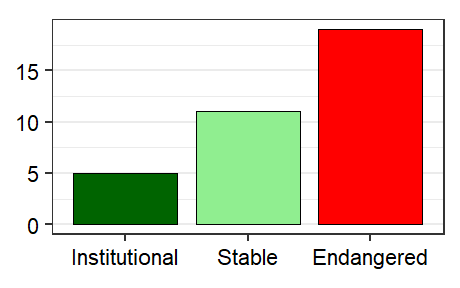
Full explanation
Language Status Profile
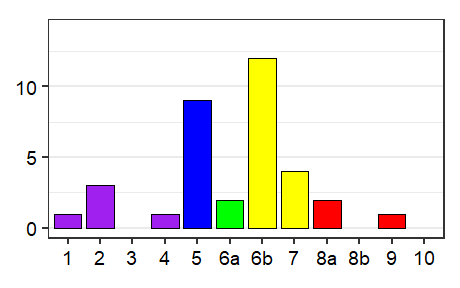
Full explanation
Resources
View Terms
Each Ethnologue country digest is a licensed product with restricted terms of use. Before downloading the product, you must agree to the following terms:
- This is a license for individual use. Just as with a conventionally published book, it is a violation of copyright to make a copy and give it to others.
- You may not redistribute this work in any form, including ingesting the contents into a database that is shared with others or posting it on a web site (whether public or private).
To inquire about permission for reuse or redistribution, please use the Contact Us form in the footer.
Digest of the languages of Italy ($199.95, 40 page PDF)