
JO
Hashemite Kingdom of Jordan
Jordan
Summary
- Official Name
- Hashemite Kingdom of Jordan
- Population
- 10,269,000
- Principal Languages
- South Levantine Spoken Arabic, Standard Arabic
- Literacy Rate
- 98% (2018 UNESCO)
- International Conventions
- CDE (1960), CPPDCE (2006), CSICH (2012), ICCPR (1966), UNCRPD (2006), UNDRIP (2007)
- General References
- Fischer and Jastrow 1980, Ingham 1982, Johnstone 1967, Sebeok 1963
- Deaf Population
- 240,200
- Language Counts
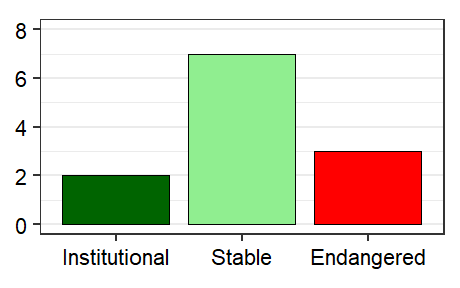
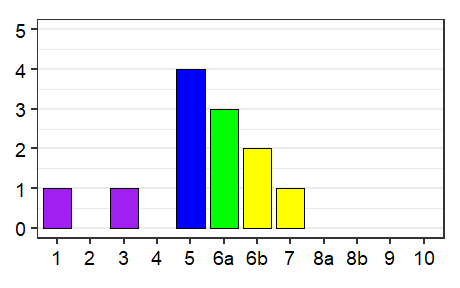
- The number of established languages listed for Jordan is 13. All are living languages. Of these, 4 are indigenous and 9 are non-indigenous. Furthermore, 3 are institutional, 4 are developing, 3 are vigorous, and 3 are in trouble. Also listed are 5 unestablished languages.
Languages
- Adyghe ady
- Major cities. Users: 93,000 in Jordan (Leclerc 2021), based on ethnicity. Status: 5* (Developing). Alternate Names: Adygey, West Circassian Classification: Abkhaz-Adyghe, Circassian
- Arabic, Egyptian Spoken arz
- Users: 1,600,000 in Jordan (2017 Egypt Independent), based on nationality. Status: Unestablished. Classification: Afro-Asiatic, Semitic, Central, South, Arabic
- Arabic, Levantine Bedawi Spoken avl
- Widespread but especially east. Users: 1,390,000 in Jordan (Leclerc 2021), based on ethnicity. Status: 6a* (Vigorous). Classification: Afro-Asiatic, Semitic, Central, South, Arabic
- Arabic, Najdi Spoken ars
- Al ‘Aqabah, Al Mafraq, Az-Zarqa’, and southeast Ma‘an governorates; scattered settlements far eastern Jordan. Users: 104,000 in Jordan (Leclerc 2021), based on ethnicity. Status: 6a* (Vigorous). Alternate Names: Najdi Classification: Afro-Asiatic, Semitic, Central, South, Arabic
- Arabic, North Levantine Spoken apc
- Major cities. Users: 1,300,000 in Jordan (2021 Reliefweb), all users. All are refugees from Syria. Status: Unestablished. Classification: Afro-Asiatic, Semitic, Central, South, Arabic
- Arabic, North Mesopotamian Spoken ayp
- Scattered. Users: 415,000 in Jordan (Leclerc 2021), based on ethnicity. Status: 6a* (Vigorous). Classification: Afro-Asiatic, Semitic, Central, South, Arabic
- Arabic, South Levantine Spoken ajp
- ‘Ajlun, Al Balqa’, Al Karak, Al Mafraq, ‘Amman, Irbid, Jarash, and Madaba governorates. Users: 7,130,000 in Jordan (2021), based on ethnicity. Total users in all countries: 14,543,700. Status: 3 (Wider communication). De facto national working language. Became widespread before 1946 in the coastal region along the eastern Mediterranean. Spoken primarily in Jordan for everyday communication, also spoken throughout the Middle East. Used in entertainment. Alternate Names: Levantine Arabic, Palestinian-Jordanian, South Levantine Arabic Autonym: أردني (Urduni) Classification: Afro-Asiatic, Semitic, Central, South, Arabic
- Arabic, Standard arb
- Widespread. Users: 5,770,000 in Jordan (2015 SIL), all users. Status: 1 (National). Statutory national language (1952, Constitution, Article 2). Classification: Afro-Asiatic, Semitic, Central, South, Arabic
- Armenian, Western hyw
- Widespread. Users: 10,000 in Jordan (Leclerc 2021), based on ethnicity. Status: 7 (Shifting). Classification: Indo-European, Armenian
- Chechen che
- Al Mafraq and Az-Zarqa’ governorates; scattered communities north of Amman. Users: 5,200 in Jordan (Leclerc 2021), based on ethnicity. Status: 5* (Dispersed). Alternate Names: Nokhchi Classification: Nakh-Daghestanian, Nakh, Chechen-Ingush
- Domari rmt
- ‘Amman governorate and Iraqi-Jordan border area (Al Mafraq governorate). Users: A few scattered and isolated speaker populations (Herin 2016). Ethnic population: 4,910 (2000). Status: 6b* (Threatened). Alternate Names: Dom, Gypsy, Middle Eastern Romani, Nawar, Tsigene Classification: Indo-European, Indo-Iranian, Indo-Aryan, Intermediate Divisions, Western, Dom
- English eng
- Users: 4,564,800 in Jordan, all users. L1 users: 14,800 in Jordan (Leclerc 2021), based on ethnicity. L2 users: 4,550,000 (Ramaswami et al 2012). Status: 4 (Educational). Classification: Indo-European, Germanic, West, English
- Greek ell
- Users: 2,000 in Jordan (Leclerc 2021), based on ethnicity. Status: Unestablished. Classification: Indo-European, Greek, Attic
- Jordanian Sign Language jos
- Scattered. Users: 30,000 (2021 DBS/DOOR/SIL). Estimated 20,000–40,000 deaf signers, based on 0.2%–0.4% of the general population. Status: 5 (Developing). Alternate Names: LIU, Lughat al-Ishāra al-Urdunia, Lughat il-Ishaarah il-Urduniyyah Classification: Sign language, Deaf community sign language
- Kabardian kbd
- ‘Amman, Az-Zarqa’, and Jarash governorates; Russeifa and Sweileh urban areas near the capital. Users: 151,000 in Jordan (Leclerc 2021), based on ethnicity. Status: 6b* (Threatened). Classification: Abkhaz-Adyghe, Circassian
- Kurdish, Northern kmr
- Users: 7,400 in Jordan (Leclerc 2021), based on ethnicity. Status: Unestablished. Classification: Indo-European, Indo-Iranian, Iranian, Western, Northwestern, Kurdish
- Tagalog tgl
- Users: 8,900 in Jordan (Leclerc 2021), based on ethnicity. Status: Unestablished. Classification: Austronesian, Malayo-Polynesian, Greater Central Philippine, Central Philippine, Tagalog
- Turkish tur
- Scattered. Users: 8,260 in Jordan (2010 census). Ethnic population: 62,000 (Leclerc 2021). Status: 5* (Dispersed). Classification: Turkic, Southern, Turkish
Languages by Status
Arabic, Standard
[arb] 1 (National). Statutory national language (1952, Constitution, Article 2). 5,770,000 in Jordan (2015 SIL), all users.
Arabic, South Levantine Spoken
[ajp] 3 (Wider communication). De facto national working language. Became widespread before 1946 in the coastal region along the eastern Mediterranean. Spoken primarily in Jordan for everyday communication, also spoken throughout the Middle East. Used in entertainment. 7,130,000 in Jordan (2021), based on ethnicity. Total users in all countries: 14,543,700.
English
[eng] 4 (Educational). 4,564,800 in Jordan, all users. L1 users: 14,800 in Jordan (Leclerc 2021), based on ethnicity. L2 users: 4,550,000 (Ramaswami et al 2012).
Chechen
[che] 5* (Dispersed). 5,200 in Jordan (Leclerc 2021), based on ethnicity.
Turkish
[tur] 5* (Dispersed). 8,260 in Jordan (2010 census). Ethnic population: 62,000 (Leclerc 2021).
Adyghe
[ady] 5* (Developing). 93,000 in Jordan (Leclerc 2021), based on ethnicity.
Jordanian Sign Language
[jos] 5 (Developing). 30,000 (2021 DBS/DOOR/SIL). Estimated 20,000–40,000 deaf signers, based on 0.2%–0.4% of the general population.
Arabic, Levantine Bedawi Spoken
[avl] 6a* (Vigorous). 1,390,000 in Jordan (Leclerc 2021), based on ethnicity.
Arabic, Najdi Spoken
[ars] 6a* (Vigorous). 104,000 in Jordan (Leclerc 2021), based on ethnicity.
Arabic, North Mesopotamian Spoken
[ayp] 6a* (Vigorous). 415,000 in Jordan (Leclerc 2021), based on ethnicity.
Domari
[rmt] 6b* (Threatened). A few scattered and isolated speaker populations (Herin 2016). Ethnic population: 4,910 (2000).
Kabardian
[kbd] 6b* (Threatened). 151,000 in Jordan (Leclerc 2021), based on ethnicity.
Armenian, Western
[hyw] 7 (Shifting). 10,000 in Jordan (Leclerc 2021), based on ethnicity.
Arabic, Egyptian Spoken
[arz] Unestablished. 1,600,000 in Jordan (2017 Egypt Independent), based on nationality.
Arabic, North Levantine Spoken
[apc] Unestablished. 1,300,000 in Jordan (2021 Reliefweb), all users. All are refugees from Syria.
Greek
[ell] Unestablished. 2,000 in Jordan (Leclerc 2021), based on ethnicity.
Kurdish, Northern
[kmr] Unestablished. 7,400 in Jordan (Leclerc 2021), based on ethnicity.
Tagalog
[tgl] Unestablished. 8,900 in Jordan (Leclerc 2021), based on ethnicity.
Maps
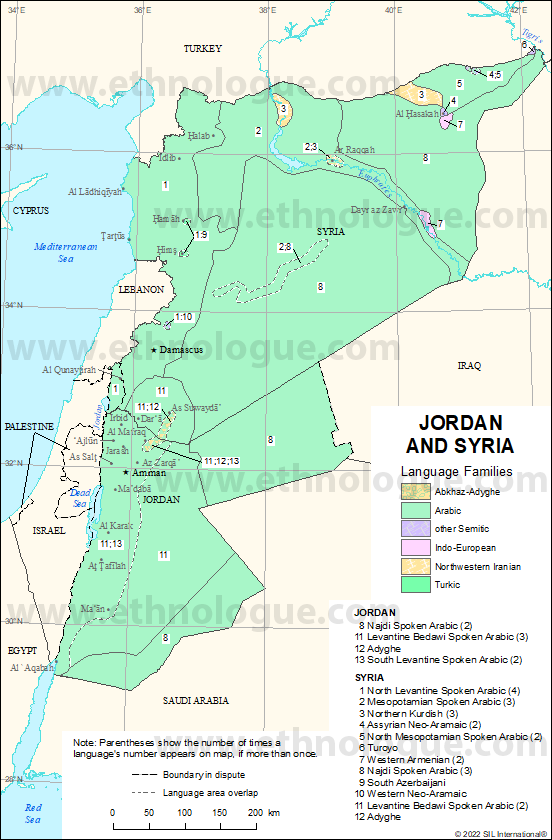
Jordan and Syria
Graphs
Language Vitality Profile
Full explanation
Language Status Profile
Full explanation
Resources
View Terms
Each Ethnologue country digest is a licensed product with restricted terms of use. Before downloading the product, you must agree to the following terms:
- This is a license for individual use. Just as with a conventionally published book, it is a violation of copyright to make a copy and give it to others.
- You may not redistribute this work in any form, including ingesting the contents into a database that is shared with others or posting it on a web site (whether public or private).
To inquire about permission for reuse or redistribution, please use the Contact Us form in the footer.
Digest of the languages of Jordan ($149.95, 22 page PDF)