
JP
Japan
Japan
Summary
- Official Name
- Japan
- Population
- 125,836,000
- Principal Languages
- Japanese
- Literacy Rate
- 99% (Roser and Ortiz-Ospina 2018)
- International Conventions
- CSICH (2012), ICCPR (1966), UNCRPD (2006), UNDRIP (2007)
- General References
- Campbell and King 2011, Shibatani 1990, Wurm and Hattori 1981
- Deaf Population
- 24,000–300,000
- Language Counts
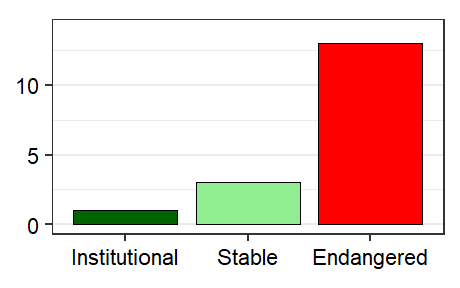
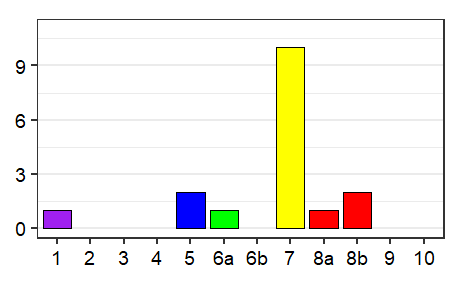
- The number of established languages listed for Japan is 17. All are living languages. Of these, 16 are indigenous and 1 is non-indigenous. Furthermore, 1 is institutional, 2 are developing, 1 is vigorous, 10 are in trouble, and 3 are dying. Also listed are 17 unestablished languages.
Languages
- Ainu ain
- Hokkaido prefecture: Kuril and Tsishima islands. Users: 2 (2008 A. Vovin). Ethnic population: 13,000 (2019 E. Jozuka). Status: 8b (Nearly extinct). Alternate Names: Ainu Itak Autonym: アイヌ イタㇰ (Aynu itak) Classification: Language isolate
- Amami Koniya Sign Language jks
- Kagoshima prefecture: Amami island, Koniya town. Users: 4 (2020 Y. Osugi). One family. Status: 8a (Moribund). Alternate Names: Amami-Oshima Shuwa Classification: Sign language, Shared sign language
- Amami-Oshima, Northern ryn
- Kagoshima prefecture: north Amami-Oshima and northwest Okinawa islands. Users: 9,800 (Leclerc 2020b). Status: 7 (Shifting). Alternate Names: Northern Amami-Osima, Oosima, Oshima, Osima Classification: Japonic, Ryukyuan, Amami-Okinawan, Northern Amami-Okinawan
- Amami-Oshima, Southern ams
- Kagoshima prefecture: south Amami-Oshima, Kakeroma, north Okinawa, Uke, and Yoro islands. Users: 1,800 (2004). Status: 7 (Shifting). Alternate Names: Southern Amami-Osima Classification: Japonic, Ryukyuan, Amami-Okinawan, Northern Amami-Okinawan
- Bengali ben
- Users: 69,000 in Japan (Leclerc 2020b). Status: Unestablished. Classification: Indo-European, Indo-Iranian, Indo-Aryan, Outer Languages, Eastern, Bengali-Assamese
- Chinese, Mandarin cmn
- Users: 549,000 in Japan (Leclerc 2020b). Status: Unestablished. Classification: Sino-Tibetan, Chinese
- Chinese, Min Nan nan
- Users: 75,000 in Japan (Leclerc 2020b). Status: Unestablished. Classification: Sino-Tibetan, Chinese
- Chinese, Wu wuu
- Users: 7,000 in Japan (Leclerc 2020b). Status: Unestablished. Classification: Sino-Tibetan, Chinese
- Chinese, Yue yue
- Users: 36,000 in Japan (Leclerc 2020b). Status: Unestablished. Classification: Sino-Tibetan, Chinese
- English eng
- Users: 10,973,000 in Japan, all users. L1 users: 73,000 in Japan (Leclerc 2020b). L2 users: 10,900,000 (2020). Status: Unestablished. Classification: Indo-European, Germanic, West, English
- French fra
- Users: 6,300 in Japan (Leclerc 2020b). Status: Unestablished. Classification: Indo-European, Italic, Romance, Italo-Western, Western, Gallo-Iberian, Gallo-Romance, Gallo-Rhaetian, Oïl, French
- Japanese jpn
- Widespread. Users: 122,000,000 in Japan (Leclerc 2020b). Total users in all countries: 123,404,290 (as L1: 123,282,790; as L2: 121,500). Status: 1 (National). De facto national language. Autonym: 日本語 (Nihongo) Classification: Japonic
- Japanese Sign Language jsl
- Scattered. Users: 126,000 (2021 DBS/DOOR/SIL). Estimate assuming 0.1% of total population. Other estimates vary widely: 23,900 (2008 WFD); 317,000 (Van Cleve 1986). Status: 5 (Developing). Recognized language (2013, Basic Act of Persons with Disabilities), guarantees the opportunity to choose ‘sign language’, but no further details. Alternate Names: JSL, NS, NSG, Nihon Shuwa, Nihon Shuwa Gengo, Shuwa, Temane Classification: Sign language, Deaf community sign language
- Kikai kzg
- Kagoshima prefecture: Kikai and northeast Okinawa islands. Users: Ethnic population: 13,000 (Leclerc 2020b). Those under 20 are mainly monolingual in Japanese (1989 T. Fukuda). Status: 7 (Shifting). Classification: Japonic, Ryukyuan, Amami-Okinawan, Northern Amami-Okinawan
- Korean kor
- Kyoto prefecture: Gion area; Osaka prefecture: Imazato-Shinchi and Tsuruhashi; Tokyo prefecture: Mikawashima, Okubo, and Ueno areas; Yamaguchi prefecture: Shimonoseki; mainly urban areas. Users: 825,000 in Japan (2019 Korean Ministry of Foreign Affairs), based on nationality. Status: 5* (Dispersed). Alternate Names: Zainichi Korean Classification: Koreanic
- Kunigami xug
- Okinawa prefecture: central and north Okinawa island; Ie-jima, Iheya, Izena, and Sesoko islands. Users: 4,900 (Leclerc 2020b). Status: 7 (Shifting). Classification: Japonic, Ryukyuan, Amami-Okinawan, Southern Amami-Okinawan
- Malay zlm
- Users: 9,900 in Japan (Leclerc 2020b). Status: Unestablished. Classification: Austronesian, Malayo-Polynesian, Malayo-Chamic, Malayic, Malay
- Miyako mvi
- Okinawa prefecture: south; Ikema, Irabu, Kurima, Minna, Miyako, Ogami, and Tarama islands. Users: Ethnic population: 66,000 (Leclerc 2020b). Status: 8a (Moribund). Alternate Names: Miyako-Ikema Classification: Japonic, Ryukyuan, Sakishima
- Miyakubo Sign Language ehs
- Ehime prefecture: Oshima island, Miyakubo village. Users: 70, all users. L1 users: 20 (2020 U. Yano). L2 users: 50 (2020 U. Yano). Status: 6a (Vigorous). Alternate Names: Ehime Oshima Shuwa, Ehime-Oshima Sign Language, Miyakubo Shuwa Classification: Sign language, Shared sign language
- Nepali npi
- Users: 61,000 in Japan (International Organization for Migration (IOM) 2019), based on nationality. Status: Unestablished. Classification: Indo-European, Indo-Iranian, Indo-Aryan, Intermediate Divisions, Eastern, Eastern Pahari
- Oki-No-Erabu okn
- Kagoshima prefecture: north central Okinawa, Oki-no-erabu island. Users: 3,200 (2004). Status: 7 (Shifting). Classification: Japonic, Ryukyuan, Amami-Okinawan, Southern Amami-Okinawan
- Okinawan, Central ryu
- Okinawa prefecture: Aguna Islands, Kerama Islands, Kume-jima, southern Okinawa island, Tonaki, and islands east of Okinawa island. Users: 1,180,000 (Leclerc 2020b). Ethnic population: 1,200,000 (2000 Y. Uemura). Status: 7 (Shifting). Alternate Names: Luchu, Okinawan Autonym: ウチナーグチ (Uchināguchi) Classification: Japonic, Ryukyuan, Amami-Okinawan, Southern Amami-Okinawan
- Persian, Iranian pes
- Users: 50,000 in Japan (Leclerc 2020b). Status: Unestablished. Classification: Indo-European, Indo-Iranian, Iranian, Western, Southwestern, Persian
- Portuguese por
- Users: 266,000 in Japan (Leclerc 2020b). Status: Unestablished. Classification: Indo-European, Italic, Romance, Italo-Western, Western, Gallo-Iberian, Ibero-Romance, West Iberian, Portuguese-Galician
- Punjabi, Eastern pan
- Users: 70,000 in Japan (Leclerc 2020b). Status: Unestablished. Classification: Indo-European, Indo-Iranian, Indo-Aryan, Intermediate Divisions, Western, Panjabi
- Spanish spa
- Users: 168,000 in Japan, all users. L1 users: 108,000 in Japan (Instituto Cervantes 2017). L2 users: 60,000 (2013). Status: Unestablished. Classification: Indo-European, Italic, Romance, Italo-Western, Western, Gallo-Iberian, Ibero-Romance, West Iberian, Castilian
- Tagalog tgl
- Users: 499,000 in Japan (Leclerc 2020b). Status: Unestablished. Classification: Austronesian, Malayo-Polynesian, Greater Central Philippine, Central Philippine, Tagalog
- Thai tha
- Users: 9,900 in Japan (Leclerc 2020b). Status: Unestablished. Classification: Kra-Dai, Kam-Tai, Tai, Southwestern
- Toku-No-Shima tkn
- Kagoshima prefecture: northern Okinawa, Toku-no-shima islands. Users: 5,000 (Leclerc 2020b). Status: 7 (Shifting). Classification: Japonic, Ryukyuan, Amami-Okinawan, Northern Amami-Okinawan
- Turkish tur
- Users: 3,650 in Japan (2010 census). Status: Unestablished. Classification: Turkic, Southern, Turkish
- Vietnamese vie
- Users: 14,000 in Japan (Leclerc 2020b). Status: Unestablished. Classification: Austro-Asiatic, Mon-Khmer, Viet-Muong, Vietnamese
- Yaeyama rys
- Okinawa prefecture: Aregusuku, Hateruma, Hatoma, Iriomote, Ishigaki, Kohama, Kuroshima, and Taketomi islands. Users: Ethnic population: 46,000 (Leclerc 2020b). Status: 7 (Shifting). Alternate Names: Yayeyama Classification: Japonic, Ryukyuan, Sakishima
- Yonaguni yoi
- Okinawa: south; Yonaguni island. Users: 800 (2004). Status: 7 (Shifting). Classification: Japonic, Ryukyuan, Sakishima
- Yoron yox
- Kagoshima prefecture: north central Okinawa, Yoron islands. Users: 950 (2004). Status: 7 (Shifting). Classification: Japonic, Ryukyuan, Amami-Okinawan, Southern Amami-Okinawan
Languages by Status
Japanese
[jpn] 1 (National). De facto national language. 122,000,000 in Japan (Leclerc 2020b). Total users in all countries: 123,404,290 (as L1: 123,282,790; as L2: 121,500).
Korean
[kor] 5* (Dispersed). 825,000 in Japan (2019 Korean Ministry of Foreign Affairs), based on nationality.
Japanese Sign Language
[jsl] 5 (Developing). Recognized language (2013, Basic Act of Persons with Disabilities), guarantees the opportunity to choose ‘sign language’, but no further details. 126,000 (2021 DBS/DOOR/SIL). Estimate assuming 0.1% of total population. Other estimates vary widely: 23,900 (2008 WFD); 317,000 (Van Cleve 1986).
Miyakubo Sign Language
[ehs] 6a (Vigorous). 70, all users. L1 users: 20 (2020 U. Yano). L2 users: 50 (2020 U. Yano).
Amami-Oshima, Northern
[ryn] 7 (Shifting). 9,800 (Leclerc 2020b).
Amami-Oshima, Southern
[ams] 7 (Shifting). 1,800 (2004).
Kikai
[kzg] 7 (Shifting). Ethnic population: 13,000 (Leclerc 2020b). Those under 20 are mainly monolingual in Japanese (1989 T. Fukuda).
Kunigami
[xug] 7 (Shifting). 4,900 (Leclerc 2020b).
Oki-No-Erabu
[okn] 7 (Shifting). 3,200 (2004).
Okinawan, Central
[ryu] 7 (Shifting). 1,180,000 (Leclerc 2020b). Ethnic population: 1,200,000 (2000 Y. Uemura).
Toku-No-Shima
[tkn] 7 (Shifting). 5,000 (Leclerc 2020b).
Yaeyama
[rys] 7 (Shifting). Ethnic population: 46,000 (Leclerc 2020b).
Yonaguni
[yoi] 7 (Shifting). 800 (2004).
Yoron
[yox] 7 (Shifting). 950 (2004).
Amami Koniya Sign Language
[jks] 8a (Moribund). 4 (2020 Y. Osugi). One family.
Miyako
[mvi] 8a (Moribund). Ethnic population: 66,000 (Leclerc 2020b).
Ainu
[ain] 8b (Nearly extinct). 2 (2008 A. Vovin). Ethnic population: 13,000 (2019 E. Jozuka).
Bengali
[ben] Unestablished. 69,000 in Japan (Leclerc 2020b).
Chinese, Mandarin
[cmn] Unestablished. 549,000 in Japan (Leclerc 2020b).
Chinese, Min Nan
[nan] Unestablished. 75,000 in Japan (Leclerc 2020b).
Chinese, Wu
[wuu] Unestablished. 7,000 in Japan (Leclerc 2020b).
Chinese, Yue
[yue] Unestablished. 36,000 in Japan (Leclerc 2020b).
English
[eng] Unestablished. 10,973,000 in Japan, all users. L1 users: 73,000 in Japan (Leclerc 2020b). L2 users: 10,900,000 (2020).
French
[fra] Unestablished. 6,300 in Japan (Leclerc 2020b).
Malay
[zlm] Unestablished. 9,900 in Japan (Leclerc 2020b).
Nepali
[npi] Unestablished. 61,000 in Japan (International Organization for Migration (IOM) 2019), based on nationality.
Persian, Iranian
[pes] Unestablished. 50,000 in Japan (Leclerc 2020b).
Portuguese
[por] Unestablished. 266,000 in Japan (Leclerc 2020b).
Punjabi, Eastern
[pan] Unestablished. 70,000 in Japan (Leclerc 2020b).
Spanish
[spa] Unestablished. 168,000 in Japan, all users. L1 users: 108,000 in Japan (Instituto Cervantes 2017). L2 users: 60,000 (2013).
Tagalog
[tgl] Unestablished. 499,000 in Japan (Leclerc 2020b).
Thai
[tha] Unestablished. 9,900 in Japan (Leclerc 2020b).
Turkish
[tur] Unestablished. 3,650 in Japan (2010 census).
Vietnamese
[vie] Unestablished. 14,000 in Japan (Leclerc 2020b).
Maps
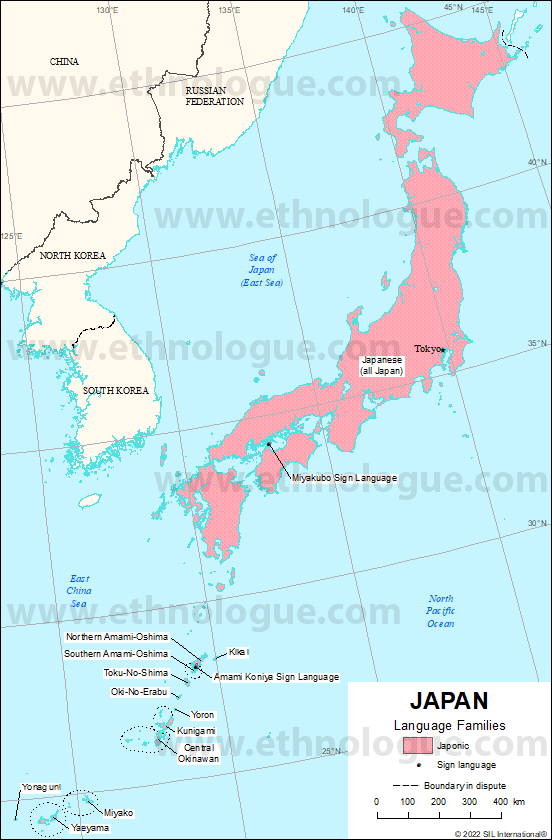
Japan
Graphs
Language Vitality Profile
Full explanation
Language Status Profile
Full explanation
Resources
View Terms
Each Ethnologue country digest is a licensed product with restricted terms of use. Before downloading the product, you must agree to the following terms:
- This is a license for individual use. Just as with a conventionally published book, it is a violation of copyright to make a copy and give it to others.
- You may not redistribute this work in any form, including ingesting the contents into a database that is shared with others or posting it on a web site (whether public or private).
To inquire about permission for reuse or redistribution, please use the Contact Us form in the footer.
Digest of the languages of Japan ($149.95, 24 page PDF)