
KR
Republic of Korea
South Korea
Summary
- Official Name
- Republic of Korea
- Population
- 51,611,000
- Principal Languages
- Korean
- Literacy Rate
- 98% (2019 World Factbook)
- International Conventions
- CPPDCE (2006), CSICH (2012), ICCPR (1966), UNCRPD (2006), UNDRIP (2007)
- General References
- Campbell and King 2011, Comrie 1987
- Language Counts
- The number of established languages listed for South Korea is 4. All are living languages. Of these, 3 are indigenous and 1 is non-indigenous. Furthermore, 3 are institutional and 1 is dying. Also listed are 4 unestablished languages.
Languages
- Chinese, Mandarin cmn
- Users: 198,000 in South Korea (2020 census). Status: Unestablished. Classification: Sino-Tibetan, Chinese
- English eng
- Users: 5,141,000 in South Korea, all users. L1 users: 141,000 in South Korea (2020). L2 users: 5,000,000 (2014 The Diplomat). Status: 4 (Educational). Classification: Indo-European, Germanic, West, English
- Jejueo jje
- Jeju province: Jeju island. Users: 5,000 in South Korea (2014 W. O’Grady). Status: 8a (Moribund). Alternate Names: Cheju, Chejumal, Cheycwu, Cheycwumal, Jeju, Jeju bang-eon, Jeju saturi, Jejumal Classification: Koreanic
- Korean kor
- Widespread. Users: 50,200,000 in South Korea (2020). Total users in all countries: 81,726,960. Status: 1 (National). De facto national language. Autonym: 한국말 (Hanguk-mal), 한국어 (Hanguk-eo) Classification: Koreanic
- Korean Sign Language kvk
- Scattered. Users: 180,000 in South Korea (2008 WFD). Approximately 0.4% of total population. Total users in all countries: 308,000. Status: 4 (Educational). Recognized language (2016, Korean Sign Language Act), Requires a KSL Development Plan every five years, promotion of standardization, use of KSL in education, promotion in other areas of life, competency testing, and interpreters. Alternate Names: Hanguk Sueo, Hanguk Suhwa Eoneo, KSL Classification: Sign language, Deaf community sign language
- Mongolian, Halh khk
- Users: 32,700 in South Korea (2020). Status: Unestablished. Classification: Mongolic, Eastern, Oirat-Khalkha, Khalkha-Buriat, Mongolian Proper
- Nepali npi
- Users: 27,200 in South Korea (International Organization for Migration (IOM) 2019), based on nationality. Status: Unestablished. Classification: Indo-European, Indo-Iranian, Indo-Aryan, Intermediate Divisions, Eastern, Eastern Pahari
- Tagalog tgl
- Users: 30,000 in South Korea (2020). Status: Unestablished. Classification: Austronesian, Malayo-Polynesian, Greater Central Philippine, Central Philippine, Tagalog
Languages by Status
Korean
[kor] 1 (National). De facto national language. 50,200,000 in South Korea (2020). Total users in all countries: 81,726,960.
English
[eng] 4 (Educational). 5,141,000 in South Korea, all users. L1 users: 141,000 in South Korea (2020). L2 users: 5,000,000 (2014 The Diplomat).
Korean Sign Language
[kvk] 4 (Educational). Recognized language (2016, Korean Sign Language Act), Requires a KSL Development Plan every five years, promotion of standardization, use of KSL in education, promotion in other areas of life, competency testing, and interpreters. 180,000 in South Korea (2008 WFD). Approximately 0.4% of total population. Total users in all countries: 308,000.
Jejueo
[jje] 8a (Moribund). 5,000 in South Korea (2014 W. O’Grady).
Chinese, Mandarin
[cmn] Unestablished. 198,000 in South Korea (2020 census).
Mongolian, Halh
[khk] Unestablished. 32,700 in South Korea (2020).
Nepali
[npi] Unestablished. 27,200 in South Korea (International Organization for Migration (IOM) 2019), based on nationality.
Tagalog
[tgl] Unestablished. 30,000 in South Korea (2020).
Maps
Graphs
Language Vitality Profile
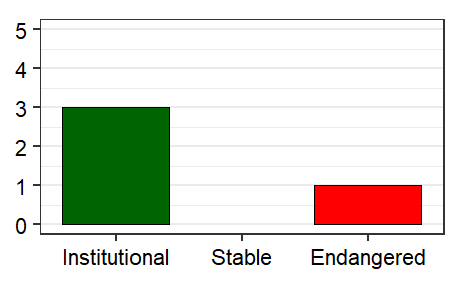
Full explanation
Language Status Profile
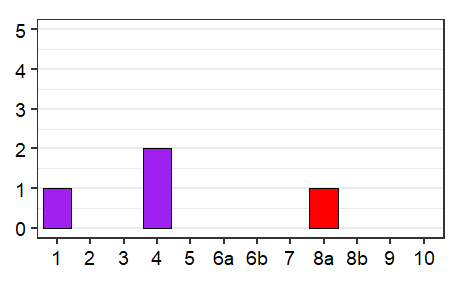
Full explanation
Resources
View Terms
Each Ethnologue country digest is a licensed product with restricted terms of use. Before downloading the product, you must agree to the following terms:
- This is a license for individual use. Just as with a conventionally published book, it is a violation of copyright to make a copy and give it to others.
- You may not redistribute this work in any form, including ingesting the contents into a database that is shared with others or posting it on a web site (whether public or private).
To inquire about permission for reuse or redistribution, please use the Contact Us form in the footer.
Digest of the languages of South Korea ($149.95, PDF)