
LI
Principality of Liechtenstein
Liechtenstein
Summary
- Official Name
- Principality of Liechtenstein
- Population
- 39,300
- Principal Languages
- Standard German
- Literacy Rate
- 100% (Roser and Ortiz-Ospina 2018)
- International Conventions
- ECRML (1992), FCPNM (1998), ICCPR (1966), UNCRPD (2006), UNDRIP (2007)
- Deaf Population
- 2,000
- Language Counts
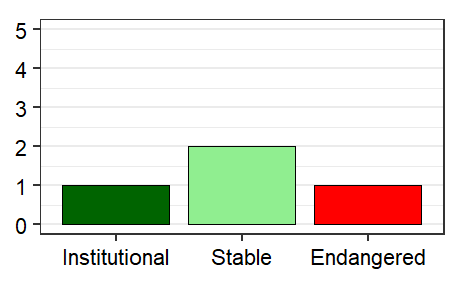
- The number of established languages listed for Liechtenstein is 4. All are living languages. Of these, 2 are indigenous and 2 are non-indigenous. Furthermore, 1 is institutional, 2 are developing, and 1 is in trouble.
Languages
- Alemannic gsw
- Widespread. Users: 34,400 in Liechtenstein (2019 UNSD). Listed as German in the 2015 census (2019 UNSD). Status: 5* (Developing). Alternate Names: Alemannisch, Schwytzertuetsch, Schwyzerdütsch Classification: Indo-European, Germanic, West, High German, German, Upper German, Alemannic
- German, Standard deu
- Users: 1,300 in Liechtenstein (2020 Joshua Project), based on ethnicity. Status: 1 (National). Statutory national language (1921, Constitution, Article 6). Alternate Names: Deutsch Classification: Indo-European, Germanic, West, High German, German, Middle German, East Middle German
- Swiss-German Sign Language sgg
- Scattered. Users: 40 in Liechtenstein (2021 DBS/DOOR/SIL). Estimate assuming 0.1% of total population. Status: 5 (Developing). Classification: Sign language, Deaf community sign language
- Walser wae
- Triesenberg Commune, including Saminatal and Malbun enclaves; otherwise, scattered in southeast. Users: 1,300 in Liechtenstein (1995 C. Buchli). Status: 6b (Threatened). Alternate Names: Walscher Classification: Indo-European, Germanic, West, High German, German, Upper German, Alemannic
Languages by Status
German, Standard
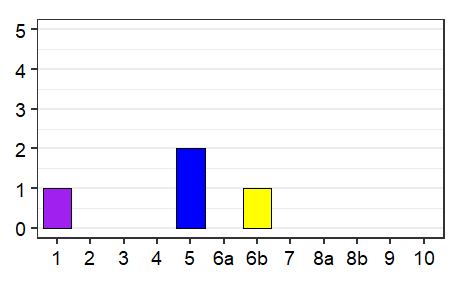
[deu] 1 (National). Statutory national language (1921, Constitution, Article 6). 1,300 in Liechtenstein (2020 Joshua Project), based on ethnicity.
Alemannic
[gsw] 5* (Developing). 34,400 in Liechtenstein (2019 UNSD). Listed as German in the 2015 census (2019 UNSD).
Swiss-German Sign Language
[sgg] 5 (Developing). 40 in Liechtenstein (2021 DBS/DOOR/SIL). Estimate assuming 0.1% of total population.
Walser
[wae] 6b (Threatened). 1,300 in Liechtenstein (1995 C. Buchli).
Maps
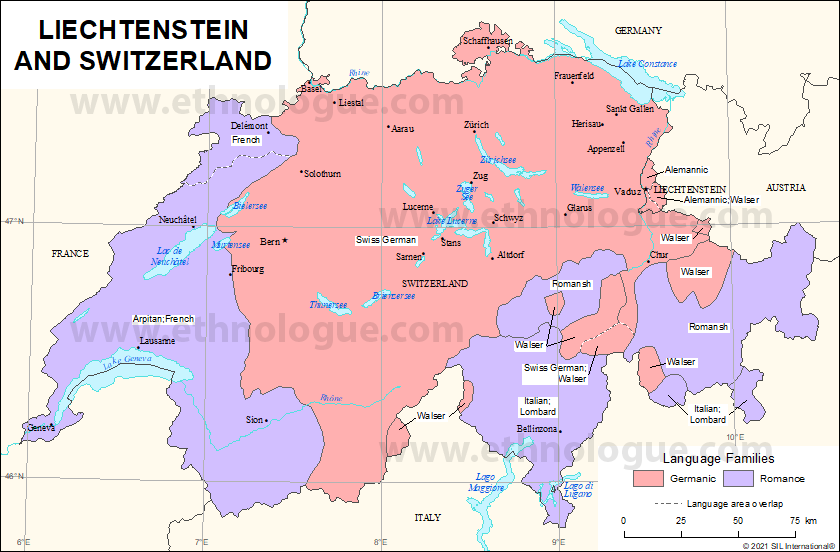
Liechtenstein and Switzerland
Graphs
Language Vitality Profile
Full explanation
Language Status Profile
Full explanation