
LY
State of Libya
Libya
Summary
- Official Name
- State of Libya
- Population
- 6,871,000
- Principal Languages
- Libyan Spoken Arabic, Standard Arabic
- Literacy Rate
- 91% (2015 World Factbook)
- International Conventions
- ACHPR (1987), CDE (1960), ICCPR (1966), UNCRPD (2006), UNDRIP (2007)
- General References
- Applegate 1970, Cohen 1985, Welmers 1971b
- Language Counts
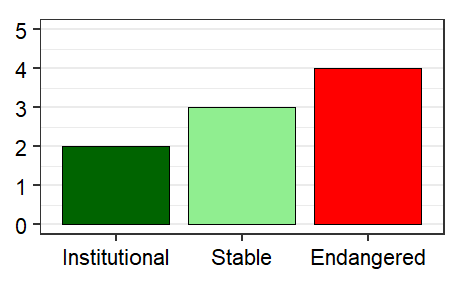
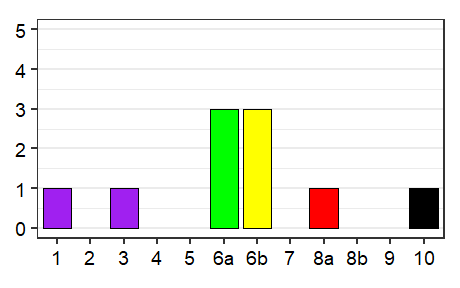
- The number of established languages listed for Libya is 10. Of these, 9 are living and 1 is extinct. Of the living languages, 8 are indigenous and 1 is non-indigenous. Furthermore, 2 are institutional, 3 are vigorous, 3 are in trouble, and 1 is dying. Also listed are 21 unestablished languages.
Languages
- Arabic, Egyptian Spoken arz
- Users: 671,000 in Libya (2020). No monolinguals. Status: Unestablished. Classification: Afro-Asiatic, Semitic, Central, South, Arabic
- Arabic, Hassaniyya mey
- Users: 54,000 in Libya (2020). Status: Unestablished. Classification: Afro-Asiatic, Semitic, Central, South, Arabic
- Arabic, Libyan Spoken ayl
- Widespread, especially north. Users: 4,550,000 in Libya (2020), increasing. Total users in all countries: 5,343,950. Status: 3 (Wider communication). De facto national working language. Shaped by the Sulaimi migration and the migration of Arabs to the Maghreb in 1492 following the Reconquista; spoken throughout northeastern Africa. Used as a lingua franca by Libyans whose L1 is not Arabic. Used in spoken communication in Libya, folk poetry, entertainment, and written communication online. Alternate Names: Libyan Arabic, Libyan Vernacular Arabic, Sulaimitian Arabic, Western Egyptian Bedawi Spoken Arabic Autonym: ليبي (Lībi) Classification: Afro-Asiatic, Semitic, Central, South, Arabic
- Arabic, Moroccan Spoken ary
- Users: 306,000 in Libya (2020). Status: Unestablished. Classification: Afro-Asiatic, Semitic, Central, South, Arabic
- Arabic, North Levantine Spoken apc
- Users: 72,500 in Libya (2020). Status: Unestablished. Classification: Afro-Asiatic, Semitic, Central, South, Arabic
- Arabic, Standard arb
- Users: 5,650,000 in Libya (2015 SIL), all users. Status: 1 (National). Statutory national language (2011, Constitutional Declaration, Article 1). Classification: Afro-Asiatic, Semitic, Central, South, Arabic
- Arabic, Sudanese Spoken apd
- Users: 305,000 in Libya (2020). Status: Unestablished. Classification: Afro-Asiatic, Semitic, Central, South, Arabic
- Arabic, Ta’izzi-Adeni Spoken acq
- Users: 132,000 in Libya (2020). Status: Unestablished. Classification: Afro-Asiatic, Semitic, Central, South, Arabic
- Arabic, Tunisian Spoken aeb
- Users: 213,000 in Libya (2020). Status: Unestablished. Classification: Afro-Asiatic, Semitic, Central, South, Arabic
- Awjilah auj
- Al Wahat district: east, Cyrenaica. Users: 2,690 (2020). Status: 8a (Moribund). Alternate Names: Aoudjila, Augila, Aujila, Awjila, Awjili Classification: Afro-Asiatic, Berber, Eastern, Awjila-Sokna
- Bulgarian bul
- Users: 3,600 in Libya (2020). Status: Unestablished. Classification: Indo-European, Balto-Slavic, Slavic, South, Eastern
- Chinese, Mandarin cmn
- Users: 2,320 in Libya (2020). Status: Unestablished. Classification: Sino-Tibetan, Chinese
- English eng
- Users: 13,700 in Libya (2020). Status: Unestablished. Classification: Indo-European, Germanic, West, English
- French fra
- Users: 8,220 in Libya (2020). Status: Unestablished. Classification: Indo-European, Italic, Romance, Italo-Western, Western, Gallo-Iberian, Gallo-Romance, Gallo-Rhaetian, Oïl, French
- Ghadamès gha
- Nalut district: Ghadamès, a small oasis near Algeria-Tunisia border. Users: 13,400 in Libya (2020). Total users in all countries: 16,500. Status: 6b (Threatened). Alternate Names: Berbère, Ghadāmis, Ghadames Classification: Afro-Asiatic, Berber, Northern, Zenati, East
- Greek ell
- Users: 8,220 in Libya (2020). Status: Unestablished. Classification: Indo-European, Greek, Attic
- Italian ita
- Users: 30,300 in Libya (2020). Status: Unestablished. Classification: Indo-European, Italic, Romance, Italo-Western, Italo-Dalmatian
- Korean kor
- Users: 15,500 in Libya (2020). Status: Unestablished. Classification: Koreanic
- Libyan Sign Language lbs
- Scattered. Users: 20,000 (2021 DBS/DOOR/IMB). Estimated 13,000–27,000 deaf signers, assuming 0.2%–0.4% of total population. Another estimate: 38,000 (2014 IMB). Status: 6a* (Vigorous). Classification: Sign language, Deaf community sign language
- Maltese mlt
- Users: 7,200 in Libya (2020). Status: Unestablished. Classification: Afro-Asiatic, Semitic, Central, South, Arabic
- Nafusi jbn
- Al Jabal al Gharbi and Nalut districts: Jabal Nafusah, Nalut, Tripolitania, and Yafran areas, isolated on Zuara Coast west of Tripoli. Users: 247,000 in Libya (2020). Preschool children are monolingual in Nafusi. Total users in all countries: 297,000. Status: 6a (Vigorous). Alternate Names: Djerbi, Jabal Nafusi, Jbel Nafusi, Jebel Nefusi, Nefusi Classification: Afro-Asiatic, Berber, Northern, Zenati, East
- Punjabi, Western pnb
- Users: 72,500 in Libya (2020). Status: Unestablished. Classification: Indo-European, Indo-Iranian, Indo-Aryan, Intermediate Divisions, Western, Panjabi, Western Panjabi
- Sawknah swn
- Al Jufrah district. Users: No known L1 speakers. The last speaker probably died in the 1950s (Basset 1969). Status: 10 (Extinct). Alternate Names: Sokna, Sokni, Sukna, Tasuknit Classification: Afro-Asiatic, Berber, Eastern, Awjila-Sokna
- Serbian srp
- Users: 28,900 in Libya (2020). Status: Unestablished. Classification: Indo-European, Balto-Slavic, Slavic, South, Western
- Sinhala sin
- Users: 16,400 in Libya (2020). Status: Unestablished. Classification: Indo-European, Indo-Iranian, Indo-Aryan, Outer Languages, Southern, Sinhalese-Maldivian
- Siwi siz
- Al Butnan district: Jaghbub town. Status: 6a* (Vigorous). Classification: Afro-Asiatic, Berber, Eastern, Siwa
- Tagalog tgl
- Users: 13,700 in Libya (2020). Status: Unestablished. Classification: Austronesian, Malayo-Polynesian, Greater Central Philippine, Central Philippine, Tagalog
- Tamahaq, Tahaggart thv
- Ghat and Murzuq districts; south Hoggar mountains, Tamanrasset and south (Hoggar dialect); Ganet and west Libya oases, Ghat area (Ghat dialect). Users: 22,800 in Libya (2020). Status: 6b* (Threatened). Alternate Names: Tamachek, Tamachek’, Tamahaq, Tamashekin, Tamasheq, Tomachek, Tourage, Toureg, Tuareg Classification: Afro-Asiatic, Berber, Tamasheq, Northern
- Tedaga tuq
- Murzuq district: Al Katrun and Maknusa; southwest border area. Users: 2,690 in Libya (2020). Status: 6b* (Threatened). Alternate Names: Tudaga Classification: Nilo-Saharan, Saharan, Western, Tebu
- Turkish tur
- Users: 15,000 in Libya (2010 census). Status: Unestablished. Classification: Turkic, Southern, Turkish
- Zaghawa zag
- Users: 9,400 in Libya (2020). Status: Unestablished. Alternate Names: Beria Classification: Nilo-Saharan, Saharan, Eastern
Languages by Status
Arabic, Standard
[arb] 1 (National). Statutory national language (2011, Constitutional Declaration, Article 1). 5,650,000 in Libya (2015 SIL), all users.
Arabic, Libyan Spoken
[ayl] 3 (Wider communication). De facto national working language. Shaped by the Sulaimi migration and the migration of Arabs to the Maghreb in 1492 following the Reconquista; spoken throughout northeastern Africa. Used as a lingua franca by Libyans whose L1 is not Arabic. Used in spoken communication in Libya, folk poetry, entertainment, and written communication online. 4,550,000 in Libya (2020), increasing. Total users in all countries: 5,343,950.
Libyan Sign Language
[lbs] 6a* (Vigorous). 20,000 (2021 DBS/DOOR/IMB). Estimated 13,000–27,000 deaf signers, assuming 0.2%–0.4% of total population. Another estimate: 38,000 (2014 IMB).
Nafusi
[jbn] 6a (Vigorous). 247,000 in Libya (2020). Preschool children are monolingual in Nafusi. Total users in all countries: 297,000.
Siwi
[siz] 6a* (Vigorous).
Ghadamès
[gha] 6b (Threatened). 13,400 in Libya (2020). Total users in all countries: 16,500.
Tamahaq, Tahaggart
[thv] 6b* (Threatened). 22,800 in Libya (2020).
Tedaga
[tuq] 6b* (Threatened). 2,690 in Libya (2020).
Awjilah
[auj] 8a (Moribund). 2,690 (2020).
Sawknah
[swn] 10 (Extinct). No known L1 speakers. The last speaker probably died in the 1950s (Basset 1969).
Arabic, Egyptian Spoken
[arz] Unestablished. 671,000 in Libya (2020). No monolinguals.
Arabic, Hassaniyya
[mey] Unestablished. 54,000 in Libya (2020).
Arabic, Moroccan Spoken
[ary] Unestablished. 306,000 in Libya (2020).
Arabic, North Levantine Spoken
[apc] Unestablished. 72,500 in Libya (2020).
Arabic, Sudanese Spoken
[apd] Unestablished. 305,000 in Libya (2020).
Arabic, Ta’izzi-Adeni Spoken
[acq] Unestablished. 132,000 in Libya (2020).
Arabic, Tunisian Spoken
[aeb] Unestablished. 213,000 in Libya (2020).
Bulgarian
[bul] Unestablished. 3,600 in Libya (2020).
Chinese, Mandarin
[cmn] Unestablished. 2,320 in Libya (2020).
English
[eng] Unestablished. 13,700 in Libya (2020).
French
[fra] Unestablished. 8,220 in Libya (2020).
Greek
[ell] Unestablished. 8,220 in Libya (2020).
Italian
[ita] Unestablished. 30,300 in Libya (2020).
Korean
[kor] Unestablished. 15,500 in Libya (2020).
Maltese
[mlt] Unestablished. 7,200 in Libya (2020).
Punjabi, Western
[pnb] Unestablished. 72,500 in Libya (2020).
Serbian
[srp] Unestablished. 28,900 in Libya (2020).
Sinhala
[sin] Unestablished. 16,400 in Libya (2020).
Tagalog
[tgl] Unestablished. 13,700 in Libya (2020).
Turkish
[tur] Unestablished. 15,000 in Libya (2010 census).
Zaghawa
[zag] Unestablished. 9,400 in Libya (2020).
Maps
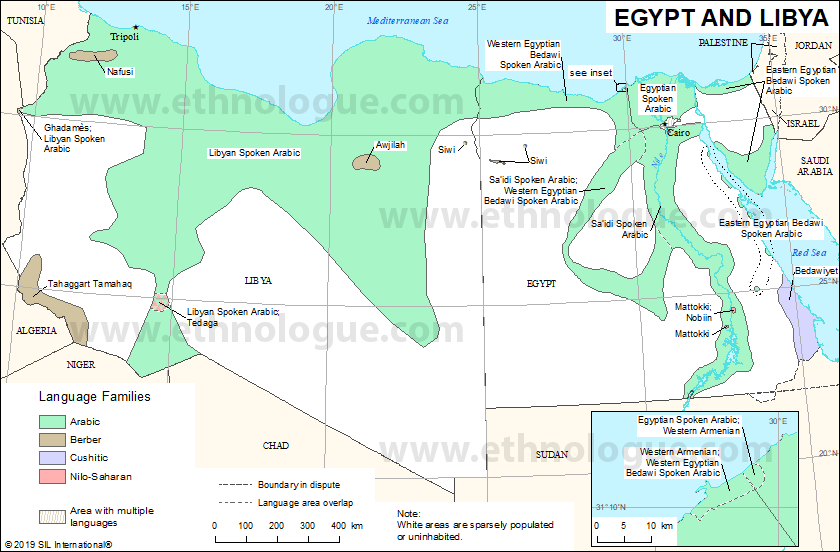
Egypt and Libya
Graphs
Language Vitality Profile
Full explanation
Language Status Profile
Full explanation
Resources
View Terms
Each Ethnologue country digest is a licensed product with restricted terms of use. Before downloading the product, you must agree to the following terms:
- This is a license for individual use. Just as with a conventionally published book, it is a violation of copyright to make a copy and give it to others.
- You may not redistribute this work in any form, including ingesting the contents into a database that is shared with others or posting it on a web site (whether public or private).
To inquire about permission for reuse or redistribution, please use the Contact Us form in the footer.
Digest of the languages of Libya ($149.95, 21 page PDF)