
MK
Republic of North Macedonia
North Macedonia
Summary
- Official Name
- Republic of North Macedonia
- Population
- 2,073,000
- General Remarks
- Admitted to the United Nations in 1993 under the provisional reference of the Former Yugoslav Republic of Macedonia (FYROM) as a result of a conflict with Greece over the name Macedonia, the northernmost region of Greece. In 2018, this conflict was resolved with the agreement to name the country North Macedonia
- Principal Languages
- Gheg Albanian, Macedonian
- Literacy Rate
- 99% (2015 World Factbook)
- International Conventions
- CDE (1960), CPPDCE (2006), CSICH (2012), FCPNM (1998), ICCPR (1966), UNCRPD (2006), UNDRIP (2007)
- General References
- Browne et al 1997, Comrie 1987
- Language Counts
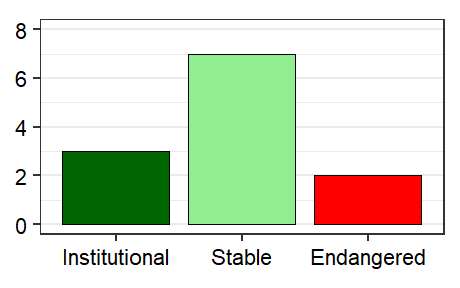
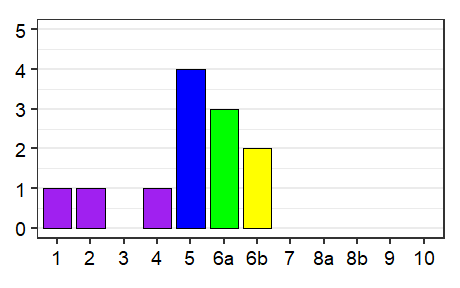
- The number of established languages listed for North Macedonia is 12. All are living languages. Of these, 6 are indigenous and 6 are non-indigenous. Furthermore, 5 are institutional, 2 are developing, 3 are vigorous, and 2 are in trouble. Also listed are 2 unestablished languages.
Languages
- Albanian, Gheg aln
- Debar, Gostivar, Kicevo, Kumanovo, Ohrid, Resen, Skopje, Struga, and Tetovo municipalities. Users: 532,000 in North Macedonia (2018). Ethnic population: 534,000 (2018). Status: 1 (National). Statutory national working language (2019, Official Gazette). Alternate Names: Geg, Gegnisht, Shqip, Shqyp Classification: Indo-European, Albanian, Gheg
- Albanian, Tosk als
- Users: 3,700 in North Macedonia (Leclerc 2018b). Status: Unestablished. Classification: Indo-European, Albanian, Tosk
- Aromanian rup
- Bitola, Ohrid, Prilep, Resen, and Struga municipalities: Gevgelija, Kocani-Vinica, Krusevo, Kumanovo, Skopje, Stip, and Sveti Nikole; north of Ohrid and Presba lakes. Users: 18,200 in North Macedonia (Leclerc 2018b). Total users in all countries: 210,000. Status: 4 (Educational). Alternate Names: Armina, Armini, Aromunian, Arumanian, Arumenian, Macedo Romanian, Macedo-Rumanian, Vlach, Vlav Autonym: Armani Classification: Indo-European, Italic, Romance, Eastern
- Balkan Gagauz Turkish bgx
- Bitola and Kumanovo municipalities. Kumanovo area (Gagauz dialect); Bitola area (Yuruk dialect). Users: 4,000 in North Macedonia (Leclerc 2018b). Status: 7 (Shifting). Alternate Names: Balkan Turkic Classification: Turkic, Southern, Turkish
- Bosnian bos
- Petrovec, Skopje, Veles and Zelenikovo municipalities. Users: 8,560 in North Macedonia (2002 census). Ethnic population: 17,000 (2002 census). Status: 5* (Dispersed). Alternate Names: Serbo-Croatian Classification: Indo-European, Balto-Slavic, Slavic, South, Western
- Croatian hrv
- Users: 2,700 in North Macedonia (Leclerc 2018b). Status: Unestablished. Classification: Indo-European, Balto-Slavic, Slavic, South, Western
- French fra
- Users: 42,700 in North Macedonia (Beck et al 2018), L2 users. Status: 5* (Dispersed). Classification: Indo-European, Italic, Romance, Italo-Western, Western, Gallo-Iberian, Gallo-Romance, Gallo-Rhaetian, Oïl, French
- Macedonian mkd
- Widespread. Users: 1,410,000 in North Macedonia (2018). Ethnic population: 1,360,000 (2018). Total users in all countries: 1,729,740. Status: 1 (National). Statutory national language (1991, Constitution, Article 7(1)). Alternate Names: Macedonian Slavic Autonym: македонски (Makedonski), македонски јазик (makedonski jazik) Classification: Indo-European, Balto-Slavic, Slavic, South, Eastern
- Macedonian Sign Language ysl
- Scattered. Users: 2,000 in North Macedonia (2021 DBS/DOOR/SIL). Estimated assuming 0.1% of total population. Around 6,000 deaf people (Koceski and Koceska 2015). Status: 6a (Vigorous). Recognized language (2009, Law on Use of Sign Language, Article 2). Alternate Names: YSL, Yugoslav Sign Language, Yugoslavian Sign Language Classification: Sign language, Deaf community sign language
- Romani, Balkan rmn
- Scattered. Users: 40,300 in North Macedonia (2018). Ethnic population: 57,200 (2018). Status: 6a* (Vigorous). Alternate Names: Romani ćhib Classification: Indo-European, Indo-Iranian, Indo-Aryan, Intermediate Divisions, Western, Romani, Balkan
- Romani, Vlax rmy
- Bitola, Dolneni, Ohrid, Prilep, and Resen municipalities. Status: 6a* (Vigorous). Classification: Indo-European, Indo-Iranian, Indo-Aryan, Intermediate Divisions, Western, Romani, Vlax
- Romanian, Megleno ruq
- Gevgelija municipality. Users: 2,100 in North Macedonia (Leclerc 2018b). Status: 6b (Threatened). Classification: Indo-European, Italic, Romance, Eastern
- Serbian srp
- Kriva Palanka, Kumanovo, and Skopje municipalities. Users: 25,400 in North Macedonia (2018). Ethnic population: 38,100 (2018). Status: 4 (Educational). Alternate Names: Serbo-Croatian Classification: Indo-European, Balto-Slavic, Slavic, South, Western
- Turkish tur
- Berovo, Bitola, Centar Zupa, Debar, Gostivar, Plasnica, Radovis, Struga, Strumica, and Valandovo municipalities. Users: 74,200 in North Macedonia (2018). Ethnic population: 82,600 (2018). Status: 4 (Educational). Alternate Names: Osmanli, Türkçe Classification: Turkic, Southern, Turkish
Languages by Status
Albanian, Gheg
[aln] 1 (National). Statutory national working language (2019, Official Gazette). 532,000 in North Macedonia (2018). Ethnic population: 534,000 (2018).
Macedonian
[mkd] 1 (National). Statutory national language (1991, Constitution, Article 7(1)). 1,410,000 in North Macedonia (2018). Ethnic population: 1,360,000 (2018). Total users in all countries: 1,729,740.
Aromanian
[rup] 4 (Educational). 18,200 in North Macedonia (Leclerc 2018b). Total users in all countries: 210,000.
Serbian
[srp] 4 (Educational). 25,400 in North Macedonia (2018). Ethnic population: 38,100 (2018).
Turkish
[tur] 4 (Educational). 74,200 in North Macedonia (2018). Ethnic population: 82,600 (2018).
Bosnian
[bos] 5* (Dispersed). 8,560 in North Macedonia (2002 census). Ethnic population: 17,000 (2002 census).
French
[fra] 5* (Dispersed). 42,700 in North Macedonia (Beck et al 2018), L2 users.
Macedonian Sign Language
[ysl] 6a (Vigorous). Recognized language (2009, Law on Use of Sign Language, Article 2). 2,000 in North Macedonia (2021 DBS/DOOR/SIL). Estimated assuming 0.1% of total population. Around 6,000 deaf people (Koceski and Koceska 2015).
Romani, Balkan
[rmn] 6a* (Vigorous). 40,300 in North Macedonia (2018). Ethnic population: 57,200 (2018).
Romani, Vlax
[rmy] 6a* (Vigorous).
Romanian, Megleno
[ruq] 6b (Threatened). 2,100 in North Macedonia (Leclerc 2018b).
Balkan Gagauz Turkish
[bgx] 7 (Shifting). 4,000 in North Macedonia (Leclerc 2018b).
Maps
Albania and Montenegro

Albania, Macedonia and Montenegro
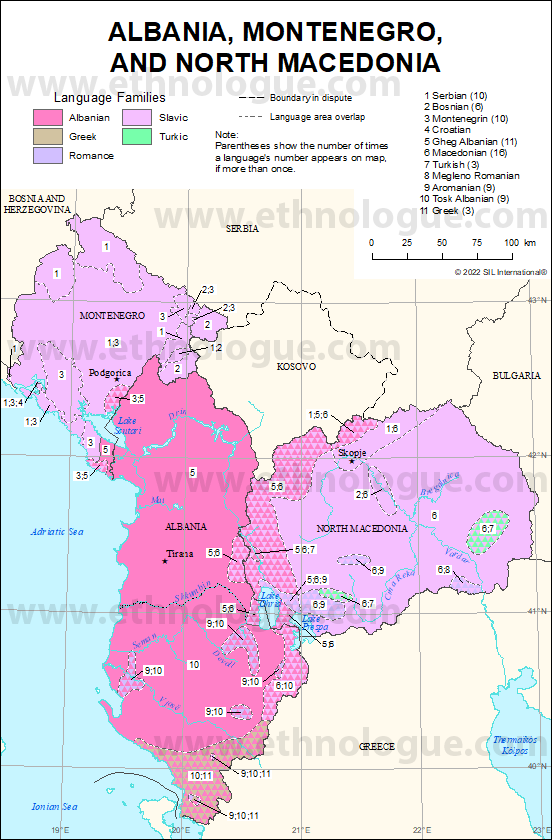
North Macedonia

Graphs
Language Vitality Profile
Full explanation
Language Status Profile
Full explanation
Resources
View Terms
Each Ethnologue country digest is a licensed product with restricted terms of use. Before downloading the product, you must agree to the following terms:
- This is a license for individual use. Just as with a conventionally published book, it is a violation of copyright to make a copy and give it to others.
- You may not redistribute this work in any form, including ingesting the contents into a database that is shared with others or posting it on a web site (whether public or private).
To inquire about permission for reuse or redistribution, please use the Contact Us form in the footer.
Digest of the languages of North Macedonia ($149.95, 22 page PDF)