
MW
Republic of Malawi
Malawi
Summary
- Official Name
- Republic of Malawi
- Population
- 19,130,000
- Principal Languages
- English
- Literacy Rate
- 62% (2015 UNESCO)
- International Conventions
- ACHPR (1987), CPPDCE (2006), CSICH (2012), ICCPR (1966), UNCRPD (2006), UNDRIP (2007)
- General References
- Bendor-Samuel and Hartell 1989, Boeder 1984, Patai 1972
- Deaf Population
- 200,000 audiologically deaf, estimated (Baer 2013, citing Deaf Action)
- Language Counts
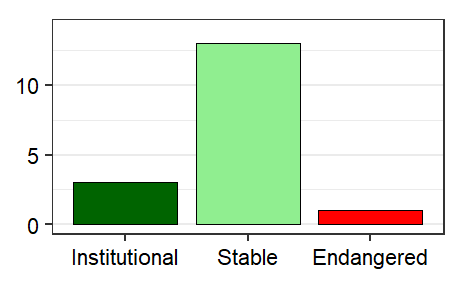
- The number of established languages listed for Malawi is 17. All are living languages. Of these, 13 are indigenous and 4 are non-indigenous. Furthermore, 2 are institutional, 10 are developing, 4 are vigorous, and 1 is in trouble. Also listed are 4 unestablished languages.
Languages
- Afrikaans afr
- Scattered. Users: 3,600 in Malawi (2020 Joshua Project), based on ethnicity. Status: 5* (Dispersed). Classification: Indo-European, Germanic, West, Low Saxon-Low Franconian, Low Franconian
- Chichewa nya
- West central and southwest. Users: 10,500,000 in Malawi (2020 World Factbook), based on ethnicity. 7,271,000 Chewa, 2,200,000 Ngoni, 678,000 Manganja, and 382,000 Nyanja (2020 World Factbook). Total users in all countries: 14,380,700. Status: 3 (Wider communication). De facto language of national identity. Originated in what is today the Democratic Republic of Congo, and brought to Malawi in the 14th or 15th century. Gained speakers when Dutch Reformed missionaries came to the Chewa area of Malawi in 1888 from South Africa. In 1968, was made an official language. Used in media and education. Alternate Names: Chewa, Chinyanja, Nyanja, Nyanja-Chewa Autonym: Chicheŵa Classification: Niger-Congo, Atlantic-Congo, Volta-Congo, Benue-Congo, Bantoid, Southern, Narrow Bantu, Central, N, Chewa-Nyanja (N.31)
- English eng
- Users: 1,091,000 in Malawi, all users. L1 users: 11,000 in Malawi (2020 Joshua Project), based on ethnicity. L2 users: 1,080,000 (2020). Status: 1 (National). Statutory national working language (1994, Constitution, Articles 51.1b, 56.5, 94.2b). Classification: Indo-European, Germanic, West, English
- Greek ell
- Users: 5,400 in Malawi (2020 Joshua Project), based on ethnicity. Status: Unestablished. Classification: Indo-European, Greek, Attic
- Gujarati guj
- Users: 54,000 in Malawi (2020 Joshua Project), based on ethnicity. Status: Unestablished. Classification: Indo-European, Indo-Iranian, Indo-Aryan, Intermediate Divisions, Western, Gujarati
- Kacchi kfr
- Blantyre, Lilongwe, Nkhata Bay, and Zomba districts; Mzuzu and urban centers. Users: 13,000 in Malawi (2020 Joshua Project), based on ethnicity. Status: 6a* (Vigorous). Alternate Names: Cuchi, Cutch, Kachchi, Kachi, Katchi Classification: Indo-European, Indo-Iranian, Indo-Aryan, Outer Languages, Northwestern, Sindhi
- Kokola kzn
- Mulanje district; Thyolo district: Sandama area. Users: 319,000 in Malawi (2020 Joshua Project), based on ethnicity. Total users in all countries: 482,000. Status: 5* (Developing). Alternate Names: Ekokhola, Kokhola Autonym: iKokola Classification: Niger-Congo, Atlantic-Congo, Volta-Congo, Benue-Congo, Bantoid, Southern, Narrow Bantu, Central, P, Makhuwa (P.31)
- Lambya lai
- Chitipa and Karonga districts: along Tanzania and Zambia borders. Users: 59,500 in Malawi (2009 UNSD). Total users in all countries: 106,900. Status: 6a* (Vigorous). Alternate Names: Ichilambya, Kilambya, Lambia, Lambwa, Rambia Autonym: ChiLambya Classification: Niger-Congo, Atlantic-Congo, Volta-Congo, Benue-Congo, Bantoid, Southern, Narrow Bantu, Central, M, Nyiha-Safwa (M.201)
- Lomwe, Malawi lon
- Blantyre, Machinga, Mulanje, Phalombe, Thyolo, and Zomba districts. Users: 3,990,000 (2020 World Factbook), based on ethnicity. Status: 5* (Developing). Alternate Names: Anguru, Elhomwe, Nguru Classification: Niger-Congo, Atlantic-Congo, Volta-Congo, Benue-Congo, Bantoid, Southern, Narrow Bantu, Central, P, Makhuwa (P.331)
- Malawian Sign Language lws
- Scattered. Users: 93,000 (2021 DBS/DOOR/SIL). Estimated 55,000–110,000 deaf signers, assuming 0.3%–0.6% of total population. Deaf Action estimates 200,000 deaf overall (Baer 2013). Status: 5 (Developing). Alternate Names: MSL, Malawi Sign, Malawi Sign Language Classification: Sign language, Deaf community sign language
- Ndali ndh
- Chitipa district: Sukwa Hills. Users: 70,000 in Malawi (2003 SIL). Status: 6a* (Vigorous). Alternate Names: Chindali Classification: Niger-Congo, Atlantic-Congo, Volta-Congo, Benue-Congo, Bantoid, Southern, Narrow Bantu, Central, M, Nyakyusa-Ngonde (M.301)
- Nyakyusa-Ngonde nyy
- Chitipa district: northeast; Karonga district: west of Lake Malawi. Users: 149,000 in Malawi (2009 UNSD). 18,800 Nyakyusa, 130,000 Nkonde (2009 UNSD). Status: 5* (Developing). Alternate Names: Ikingonde, Ikinyikyusa, Kɨnyakyʉsa, Kinyakyusa, Konde, Kukwe, Mombe, Ngonde, Nkhonde, Nkonde, Nyakusa, Nyakyusa, Nyekyosa, Sochile, Sokile Classification: Niger-Congo, Atlantic-Congo, Volta-Congo, Benue-Congo, Bantoid, Southern, Narrow Bantu, Central, M, Nyakyusa-Ngonde (M.31)
- Nyiha, Malawi nyr
- Chitipa district: Kameme town area villages. Users: 10,000 (2007). Status: 6b* (Threatened). Alternate Names: Kinyiha, Shinyiha Classification: Niger-Congo, Atlantic-Congo, Volta-Congo, Benue-Congo, Bantoid, Southern, Narrow Bantu, Central, M, Nyiha-Safwa (M.23)
- Nyika nkv
- Chitipa district: Chisenga area villages; Karonga district: west. Users: 5,000 in Malawi (2007). Total users in all countries: 14,300. Status: 6a (Vigorous). Alternate Names: Chinyika, Kinyika Classification: Niger-Congo, Atlantic-Congo, Volta-Congo, Benue-Congo, Bantoid, Southern, Narrow Bantu, Central, M, Nyiha-Safwa (M.23)
- Portuguese por
- Users: 18,000 in Malawi (2020 Joshua Project), based on ethnicity. Status: Unestablished. Classification: Indo-European, Italic, Romance, Italo-Western, Western, Gallo-Iberian, Ibero-Romance, West Iberian, Portuguese-Galician
- Sena, Malawi swk
- Chikwawa district: south; Nsanje district; along Mozambique border. Users: 805,000 (2020 World Factbook), based on ethnicity. Status: 5* (Developing). Alternate Names: Chisena, Cisena Classification: Niger-Congo, Atlantic-Congo, Volta-Congo, Benue-Congo, Bantoid, Southern, Narrow Bantu, Central, N, Senga-Sena (N.441)
- Shona sna
- Users: 93,000 in Malawi (2021 Joshua Project), based on ethnicity. Status: Unestablished. Classification: Niger-Congo, Atlantic-Congo, Volta-Congo, Benue-Congo, Bantoid, Southern, Narrow Bantu, Central, S, Shona (S.10)
- Tonga tog
- Nkhata Bay district: Lake Malawi west shore; Nkhotakota, Mzimba, and Rumphi districts. Users: 382,000 (2020 World Factbook), based on ethnicity. Status: 5* (Developing). Alternate Names: Kitonga, Siska, Sisya, Western Nyasa Autonym: Chitonga Classification: Niger-Congo, Atlantic-Congo, Volta-Congo, Benue-Congo, Bantoid, Southern, Narrow Bantu, Central, N, Manda (N.15)
- Tumbuka tum
- Chitipa and Karonga districts: Lake Malawi west shore; Nkhata Bay, Nkhotakota, Rumphi, and Mzimba districts. Users: 1,950,000 in Malawi (2020 World Factbook), based on ethnicity. Total users in all countries: 2,316,000. Status: 4 (Educational). Alternate Names: Citumbuka, Tamboka, Tambuka, Timbuka, Tombucas, Tumboka Autonym: Chitumbuka Classification: Niger-Congo, Atlantic-Congo, Volta-Congo, Benue-Congo, Bantoid, Southern, Narrow Bantu, Central, N, Tumbuka (N.21)
- Yao yao
- Balaka, Machinga, Mangochi, and Zomba districts: bordering Mozambique, between southeast tip of Lake Kilwa and Lake Malawi; Chiradzulu district: small area. Users: 2,800,000 in Malawi (2020 World Factbook), based on ethnicity. Total users in all countries: 3,728,000. Status: 5* (Developing). Alternate Names: Achawa, Adsawa, Adsoa, Ajawa, Ayao, Ayawa, Ayo, Chiyao, Chiyawo, Ciyaawo, Ciyao, Djao, Haiao, Hiao, Hyao, Jao, Veiao, Wajao, Yawo, chiYao, ciYao, waYao Autonym: Ciyawo Classification: Niger-Congo, Atlantic-Congo, Volta-Congo, Benue-Congo, Bantoid, Southern, Narrow Bantu, Central, P, Yao (P.21)
- Zulu zul
- Dedza, Karonga, Mzimba, and Ntcheu districts. Users: 72,000 in Malawi (2021 Joshua Project), based on ethnicity. Status: 5* (Dispersed). Alternate Names: Isizulu, Kingoni, Ngoni, Zunda Classification: Niger-Congo, Atlantic-Congo, Volta-Congo, Benue-Congo, Bantoid, Southern, Narrow Bantu, Central, S, Nguni (S.42)
Languages by Status
English
[eng] 1 (National). Statutory national working language (1994, Constitution, Articles 51.1b, 56.5, 94.2b). 1,091,000 in Malawi, all users. L1 users: 11,000 in Malawi (2020 Joshua Project), based on ethnicity. L2 users: 1,080,000 (2020).
Chichewa
[nya] 3 (Wider communication). De facto language of national identity. Originated in what is today the Democratic Republic of Congo, and brought to Malawi in the 14th or 15th century. Gained speakers when Dutch Reformed missionaries came to the Chewa area of Malawi in 1888 from South Africa. In 1968, was made an official language. Used in media and education. 10,500,000 in Malawi (2020 World Factbook), based on ethnicity. 7,271,000 Chewa, 2,200,000 Ngoni, 678,000 Manganja, and 382,000 Nyanja (2020 World Factbook). Total users in all countries: 14,380,700.
Tumbuka
[tum] 4 (Educational). 1,950,000 in Malawi (2020 World Factbook), based on ethnicity. Total users in all countries: 2,316,000.
Afrikaans
[afr] 5* (Dispersed). 3,600 in Malawi (2020 Joshua Project), based on ethnicity.
Zulu
[zul] 5* (Dispersed). 72,000 in Malawi (2021 Joshua Project), based on ethnicity.
Kokola
[kzn] 5* (Developing). 319,000 in Malawi (2020 Joshua Project), based on ethnicity. Total users in all countries: 482,000.
Lomwe, Malawi
[lon] 5* (Developing). 3,990,000 (2020 World Factbook), based on ethnicity.
Malawian Sign Language
[lws] 5 (Developing). 93,000 (2021 DBS/DOOR/SIL). Estimated 55,000–110,000 deaf signers, assuming 0.3%–0.6% of total population. Deaf Action estimates 200,000 deaf overall (Baer 2013).
Nyakyusa-Ngonde
[nyy] 5* (Developing). 149,000 in Malawi (2009 UNSD). 18,800 Nyakyusa, 130,000 Nkonde (2009 UNSD).
Sena, Malawi
[swk] 5* (Developing). 805,000 (2020 World Factbook), based on ethnicity.
Tonga
[tog] 5* (Developing). 382,000 (2020 World Factbook), based on ethnicity.
Yao
[yao] 5* (Developing). 2,800,000 in Malawi (2020 World Factbook), based on ethnicity. Total users in all countries: 3,728,000.
Kacchi
[kfr] 6a* (Vigorous). 13,000 in Malawi (2020 Joshua Project), based on ethnicity.
Lambya
[lai] 6a* (Vigorous). 59,500 in Malawi (2009 UNSD). Total users in all countries: 106,900.
Ndali
[ndh] 6a* (Vigorous). 70,000 in Malawi (2003 SIL).
Nyika
[nkv] 6a (Vigorous). 5,000 in Malawi (2007). Total users in all countries: 14,300.
Nyiha, Malawi
[nyr] 6b* (Threatened). 10,000 (2007).
Greek
[ell] Unestablished. 5,400 in Malawi (2020 Joshua Project), based on ethnicity.
Gujarati
[guj] Unestablished. 54,000 in Malawi (2020 Joshua Project), based on ethnicity.
Portuguese
[por] Unestablished. 18,000 in Malawi (2020 Joshua Project), based on ethnicity.
Shona
[sna] Unestablished. 93,000 in Malawi (2021 Joshua Project), based on ethnicity.
Maps
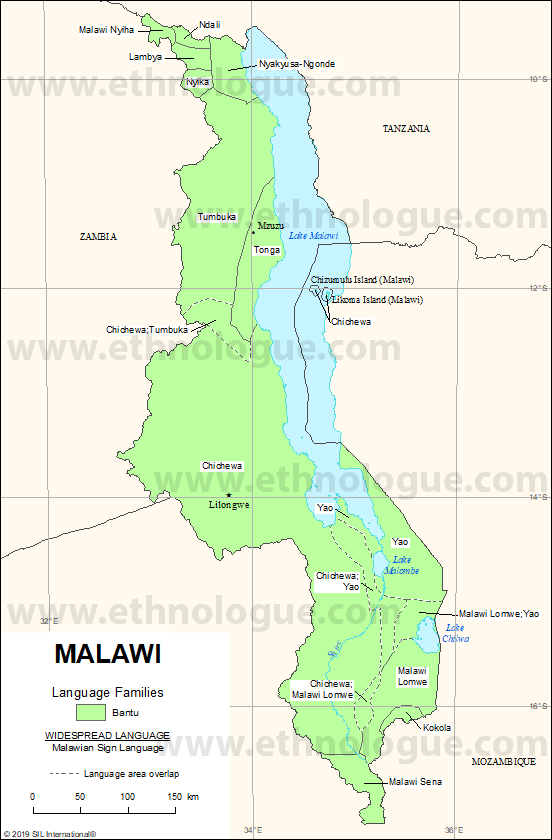
Malawi
Graphs
Language Vitality Profile
Full explanation
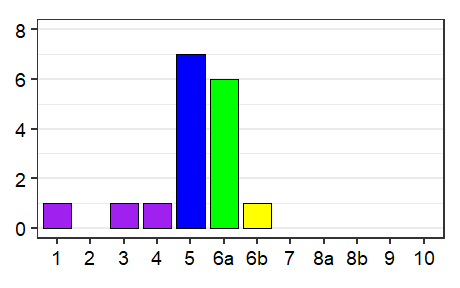
Language Status Profile
Full explanation
Resources
View Terms
Each Ethnologue country digest is a licensed product with restricted terms of use. Before downloading the product, you must agree to the following terms:
- This is a license for individual use. Just as with a conventionally published book, it is a violation of copyright to make a copy and give it to others.
- You may not redistribute this work in any form, including ingesting the contents into a database that is shared with others or posting it on a web site (whether public or private).
To inquire about permission for reuse or redistribution, please use the Contact Us form in the footer.
Digest of the languages of Malawi ($149.95, 27 page PDF)