
MX
Mexico
Summary
- Official Name
- Population
- 130,262,000
- Principal Languages
- Spanish
- Literacy Rate
- 95% (2018 UNESCO)
- International Conventions
- CPPDCE (2006), CSICH (2012), ICCPR (1966), (), UNCRPD (2006), UNDRIP (2007)
- General References
- Adelaar 2007, Campbell 1997, Egland et al 1983
- Deaf Population
- 1,300,000–5,590,000 (1998)
- Language Counts
- The number of established languages listed for Mexico is 303. Of these, 291 are living and 12 are extinct. Of the living languages, 284 are indigenous and 7 are non-indigenous. Furthermore, 1 is institutional, 84 are developing, 74 are vigorous, 88 are in trouble, and 44 are dying. Also listed are 10 unestablished languages and 1 macrolanguage.
Languages
- Afro-Seminole Creole afs
- Coahuila de Zaragoza state: Nacimiento de los Negros. Users: 200 in Mexico (1990). Ethnic population: 500 (2007). Status: 8a (Moribund). Alternate Names: Afro-Seminol Criollo, Afro-Seminole, Mascogos Classification: Creole, English based, Atlantic, Eastern, Northern
- Albarradas Sign Language lsc
- Oaxaca state: Tlacolula district, Santa Catarina Albarradas (also known as San Antonio Albarradas). Users: 10 (2021 A. Bickford). Approximately 10–15 deaf at any one time. There is a hearing population of 250–500, many of whom also sign, but the exact number is unknown. Status: 6a (Vigorous). Alternate Names: LSAlb, Lengua de señas Albarradas Classification: Sign language, Shared sign language
- Amuzgo, Guerrero amu
- Guerrero state: Xochistlahuaca municipality, Cochoapa, Cozoyoapan, Guadalupe Victoria, Huehuetonoc, Huistepec, Rancho del Cura, Tlacoachistlahuaca, and Zacoalpan. Santa Catarina river separates Guerrero variety from Oaxaca varieties. Users: 45,900 (2011 UNSD). Total Amuzgo speakers: 59,900 (2020 INEGI). 10,000 monolinguals (1990 census). Status: 5 (Developing). Alternate Names: Amuzgo de Guerrero, Jñom’ndaa, Nomndaa, Ñonda Autonym: Ñomndaa Classification: Otomanguean, Eastern Otomanguean, Amuzgo-Mixtecan, Amuzgo
- Amuzgo, Ipalapa azm
- Oaxaca state: Putla district, La Ciénaga, Santa María Ipalapa northeast of San Pedro Amuzgos, Tlaxiaco to coast. Users: 900 (2010 INALI). Total Amuzgo speakers: 59,900 (2020 INEGI). 20 monolinguals (2000 census). Status: 6b (Threatened). Alternate Names: Amuzgo Bajo del Este, Ts’unuma Autonym: Jñunda Classification: Otomanguean, Eastern Otomanguean, Amuzgo-Mixtecan, Amuzgo
- Amuzgo, San Pedro Amuzgos azg
- Oaxaca state: Putla district, San Pedro Amuzgos and outlying settlements. Users: 5,200 (2011 UNSD). Total Amuzgo speakers: 59,900 (2020 INEGI). Status: 6a (Vigorous). Alternate Names: Amuzgo Bajo del Este, Amuzgo de Oaxaca, Amuzgo de San Pedro Amuzgos, Jñon’ndaa, Oaxaca Amuzgo, Ñonda Autonym: Jnꞌoon Classification: Otomanguean, Eastern Otomanguean, Amuzgo-Mixtecan, Amuzgo
- Arabic, North Levantine Spoken apc
- Major cities. Users: Few speakers. Ethnic population: 630,000 (Johnstone and Mandryk 2001). Status: 7 (Shifting). Alternate Names: Lebanese, Libano-mexicano Classification: Afro-Asiatic, Semitic, Central, South, Arabic
- Basque eus
- Users: 26,000 in Mexico (2021 Joshua Project), based on ethnicity. Status: Unestablished. Classification: Language isolate
- Catalan cat
- Users: 64,000 in Mexico (2021 Joshua Project), based on ethnicity. Status: Unestablished. Classification: Indo-European, Italic, Romance, Italo-Western, Western, Gallo-Iberian, Ibero-Romance, East Iberian
- Chatino, Eastern Highland cly
- Oaxaca state: Juquila district, Lachao Pueblo Nuevo, and Santa María Yolotepec villages. Users: 1,800 (2000 INALI). Total Chatino speakers: 52,100 (2020 INEGI). Status: 6a (Vigorous). Alternate Names: Chatino Oriental Alto, Chatino de la Zona Alta Oriental, Lachao-Yolotepec Chatino, Sierra Oriental Chatino Autonym: Cha’ jna’a Classification: Otomanguean, Eastern Otomanguean, Popolocan-Zapotecan, Zapotecan, Chatino
- Chatino, Nopala cya
- Oaxaca state: Juquila district; Atotonilco, Cerro el Aire, San Gabriel Mixtepec, San María Magdalena Tiltepec, Santa María Texmaxcaltepec, Santiago Cuixtla, Santos Reyes Nopala, and Teotepec. Users: 8,940 (2000 INALI). Total Chatino speakers: 52,100 (2020 INEGI). 2,300 monolinguals. Status: 5 (Developing). Alternate Names: Chatino Oriental Bajo, Teotepec Chatino Autonym: Chaꞌ jnaꞌa Classification: Otomanguean, Eastern Otomanguean, Popolocan-Zapotecan, Zapotecan, Chatino
- Chatino, Tataltepec cta
- Oaxaca state: Juquila district, extreme west lowland Chatino area, San Pedro Tututepec and Tataltepec de Valdez towns; a few in nearby Spanish centers. Users: 540 (2015 R. Sullivant). Total Chatino speakers: 52,100 (2020 INEGI). 1 monolinguals (2015 R. Sullivant). Status: 6b (Threatened). Alternate Names: Chatino Occidental Bajo, Lowland Chatino Autonym: Chaꞌ jnaꞌa Classification: Otomanguean, Eastern Otomanguean, Popolocan-Zapotecan, Zapotecan, Chatino
- Chatino, Western Highland ctp
- Oaxaca state: Juquila district, Panixtlahuaca, San Juan Quiahije, Yaitepec towns; Ixtapan, Tepenixtelahuaca, Ixpantepec, Amialtepec villages; some hamlets. Users: 16,000 (2000 INALI). Total Chatino speakers: 52,100 (2020 INEGI). 6,000 monolinguals (1990 census). Status: 5 (Developing). Alternate Names: Cha’t-An, Chatino Central, Chatino de la Zona Alta Occidental, Sierra Occidental Chatino Autonym: Chaꞌ jnaꞌa Classification: Otomanguean, Eastern Otomanguean, Popolocan-Zapotecan, Zapotecan, Chatino
- Chatino, Zacatepec ctz
- Oaxaca state: Juquila district, San Marcos Zacatepec and Juquila villages. Users: 450 (2000 INALI). Total Chatino speakers: 52,100 (2020 INEGI). Status: 7 (Shifting). Alternate Names: Chatino de San Marcos Zacatepec, Chatino de Zacatepec Autonym: Cha’ jna’a Classification: Otomanguean, Eastern Otomanguean, Popolocan-Zapotecan, Zapotecan, Chatino
- Chatino, Zenzontepec czn
- Oaxaca state: Juquila district, Santa Cruz Zenzontepec and San Jacinto Tlacotepec municipalities, former Santa María Tlapanalquiahuitl municipality. Users: 8,490 (2000 INALI). Total Chatino speakers: 52,100 (2020 INEGI). 2,000 monolinguals. Status: 6a (Vigorous). Alternate Names: Chatino Occidental Alto, Northern Chatino Autonym: Cha’ jna’a Classification: Otomanguean, Eastern Otomanguean, Popolocan-Zapotecan, Zapotecan, Chatino
- Chiapanec cip
- Chiapas state: El Bosque, Las Margaritas, Ocosingo, Alenque, Sabanilla municipalities. Users: No known L1 speakers. Survived into the 2000s. Ethnic population: 32. Status: 9 (Dormant). Alternate Names: Chaipanec, Chiapaneco, Chiapaneko, Proto Chiapanec Classification: Otomanguean, Western Otomanguean, Tlapanec-Manguean, Manguean
- Chichimeco-Jonaz pei
- Guanajuato state: San Luís de la Paz, Jonáz village. Users: 2,360 (2020 INEGI). Status: 7 (Shifting). Alternate Names: Chichimec, Chichimeca, Chichimeco, Meco, Pame de Chichimeca-Jonaz, Uzá’ Classification: Otomanguean, Western Otomanguean, Oto-Pame-Chinantecan, Oto-Pamean
- Chicomuceltec cob
- Chiapas state: Amatenango de la Frontera municipality near Guatemala border. Users: No known L1 speakers in Mexico. The last competent speakers probably died by the 1930s; some rememberers may have survived into the 1980s (Campbell and Canger 1978). Ethnic population: 1,500. Total users in all countries: none known. Status: 9 (Dormant). Alternate Names: Cac’chiquel Mam, Cakchiquel Mam, Chicomukeltec, Chicomulcelteco Classification: Mayan, Huastecan
- Chinantec, Chiltepec csa
- Oaxaca state: San José Chiltepec. Users: Only a few older speakers (2011 J. Williams). Some possible monolinguals. Status: 8b (Nearly extinct). Alternate Names: Jajme dzä mii, Jmiih kia’ dzä mii Classification: Otomanguean, Western Otomanguean, Oto-Pame-Chinantecan, Chinantecan
- Chinantec, Comaltepec cco
- Oaxaca state: Santiago Comaltepec, Soledad Tectitlán, La Esperanza, San Martín Soyolapan, Vista Hermosa (Quiotepec), San Pedro Yolox, Rosario Temextitlán, Maninaltepec. Users: 2,000 (1990 census). Total Chinantec speakers: 144,000 (2020 INEGI). 150 monolinguals. Ethnic population: 2,000. Status: 5 (Developing). Alternate Names: Chinanteco de Santiago Comaltepec, juu jmiih Autonym: Jmíiˊ Classification: Otomanguean, Western Otomanguean, Oto-Pame-Chinantecan, Chinantecan
- Chinantec, Lalana cnl
- Oaxaca and Veracruz states: border area, Lalana municipality, 25 towns; Jocotepec and Petlapa municipalities. Users: 10,700 (2000 INALI). Total Chinantec speakers: 144,000 (2020 INEGI). 2,500 monolinguals. Status: 5 (Developing). Alternate Names: Chinanteco de San Juan Lalana, Chinanteco del Sureste Bajo Autonym: Jujmi Classification: Otomanguean, Western Otomanguean, Oto-Pame-Chinantecan, Chinantecan
- Chinantec, Lealao cle
- Oaxaca state: La Hondura, Latani, San Juan Lealao, and Tres Arroyos. Users: 2,000 (1990 census). Total Chinantec speakers: 144,000 (2020 INEGI). 500 monolinguals. Status: 5 (Developing). Alternate Names: Chinanteco de San Juan Lealao, Latani Autonym: fáh⁴jmii⁴² Classification: Otomanguean, Western Otomanguean, Oto-Pame-Chinantecan, Chinantecan
- Chinantec, Ojitlán chj
- Oaxaca state: San Lucas Ojitlán, 4 towns and 15 hamlets; Hidalgotitlá, Minatitlán and Veracruz municipalities. Most relocated because a dam flooded their land in 1991. Users: 37,900 (2000 INALI). Total Chinantec speakers: 144,000 (2020 INEGI). 2,800 monolinguals. Status: 5 (Developing). Alternate Names: Chinanteco del Norte, Comaltepec Chinantec Autonym: Jmiih kia’ dzä ‘vï ï, Jujmi Classification: Otomanguean, Western Otomanguean, Oto-Pame-Chinantecan, Chinantecan
- Chinantec, Ozumacín chz
- Oaxaca state: Ayotzintepec, San Pedro Ozumacín and Santiago Progreso. Users: 3,140 (2000 INALI). Total Chinantec speakers: 144,000 (2020 INEGI). 260 monolinguals (1990 census). Status: 6b (Threatened). Alternate Names: Chinanteco de Ayotzintepec, Chinanteco del Sureste Alto Autonym: Jumi dsa mojai, Juujmii Classification: Otomanguean, Western Otomanguean, Oto-Pame-Chinantecan, Chinantecan
- Chinantec, Palantla cpa
- Oaxaca state: San Juan Palantla and more than 21 towns. Users: 25,000 (2007 SIL). Total Chinantec speakers: 144,000 (2020 INEGI). 1,500 monolinguals. Status: 6a* (Vigorous). Alternate Names: Chinanteco de San Pedro Tlatepuzco Autonym: Jajme dzä mii, Jmiih kia’ dzä mii Classification: Otomanguean, Western Otomanguean, Oto-Pame-Chinantecan, Chinantecan
- Chinantec, Quiotepec chq
- Oaxaca state: Etla district, San Juan Bautista Atatlah; Ixtlán district, San Juan Quiotepec, Reforma, Maninaltepec, San Pedro Yolox, and Rosario Temextitlán. Users: 8,000 (1998). Total Chinantec speakers: 144,000 (2020 INEGI). 1,750 monolinguals. Status: 6a* (Vigorous). Alternate Names: Highland Chinantec Autonym: juu jmiih Classification: Otomanguean, Western Otomanguean, Oto-Pame-Chinantecan, Chinantecan
- Chinantec, Sochiapam cso
- Oaxaca state: Cuicatlán, Retumbadero, San Juan Zapotitlán, San Juan Zautla, San Pedro Sochiapan and Santiago Quetzalapa. Users: 3,590 (2000 INALI). Total Chinantec speakers: 144,000 (2020 INEGI). 730 monolinguals (1990 census). Ethnic population: 6,300. Status: 5 (Developing). Alternate Names: Chinanteco del Oeste, Sochiapan Chinantec Autonym: Jaú jm_, Jmiih kia’ dzä jii’ Classification: Otomanguean, Western Otomanguean, Oto-Pame-Chinantecan, Chinantecan
- Chinantec, Tepetotutla cnt
- Oaxaca state: El Naranjal, San Antonio del Barrio, San Pedro Tlatepusco, Santa Cruz Tepetotutla, Santo Tomás Texas, and Vega del Sol. Users: 1,850 (2000 INALI). Total Chinantec speakers: 144,000 (2020 INEGI). Status: 6a (Vigorous). Alternate Names: Chinanteco del Oeste Central Bajo, Jejmei Autonym: Jajmi dzä kï ï’, Jejmi Classification: Otomanguean, Western Otomanguean, Oto-Pame-Chinantecan, Chinantecan
- Chinantec, Tepinapa cte
- Oaxaca state: Choapan district, San Juan Petlapa municipality, San Juan Toavela, Santa Isabel Cajonos and Santa María Lovani; Santiago Jocotepec municipality, Linda Vista, San Pedro Tepinapa Comunal (locally known as Monte de Oro), and San Pedro Tepinapa Ejidal. Users: 11,800 (2000 INALI). Total Chinantec speakers: 144,000 (2020 INEGI). 1,500 monolinguals. Status: 6a (Vigorous). Alternate Names: Chinanteco del Sureste Medio Autonym: Jujmi Classification: Otomanguean, Western Otomanguean, Oto-Pame-Chinantecan, Chinantecan
- Chinantec, Tlacoatzintepec ctl
- Oaxaca state: San Juan Bautista Tlacoatzintepec, San Juan Zapotitlán, San Pedro Alianza, Santiago Quetzalapa. Users: 1,720 (2000 INALI). Total Chinantec speakers: 144,000 (2020 INEGI). 550 monolinguals. Status: 6a (Vigorous). Alternate Names: Chinanteco del Noroeste Autonym: Jau jmai Classification: Otomanguean, Western Otomanguean, Oto-Pame-Chinantecan, Chinantecan
- Chinantec, Usila cuc
- Oaxaca state: San Felipe Usila plus 12 towns; Pueblo Doce, Veracruz. Users: 7,410 (2000 INALI). Total Chinantec speakers: 144,000 (2020 INEGI). 2,200 monolinguals. Status: 6a (Vigorous). Alternate Names: Chinanteco del Oeste Central Alto Autonym: Jaú jm_, Jmiih kia’ dzä jii’ Classification: Otomanguean, Western Otomanguean, Oto-Pame-Chinantecan, Chinantecan
- Chinantec, Valle Nacional cvn
- Oaxaca state: San Mateo Yetla in San Juan Bautista Valle Nacional. Users: 440 (2000 INALI). Total Chinantec speakers: 144,000 (2020 INEGI). Status: 7 (Shifting). Alternate Names: Chinanteco Central Bajo, Jajmi dzä kï ï’, Jejmei, Jejmi Classification: Otomanguean, Western Otomanguean, Oto-Pame-Chinantecan, Chinantecan
- Chinese, Yue yue
- Users: 26,000 in Mexico (2021 Joshua Project), based on ethnicity. Status: Unestablished. Classification: Sino-Tibetan, Chinese
- Chocholtec coz
- Oaxaca state: Nochixtlán district, San Juan Bautista Coixtlahuaca, San Miguel Tulancingo, and Santa María Nativitas. Users: 850 (2020 INEGI). Status: 8b (Nearly extinct). Alternate Names: Chocho, Chocholteco, Chochon, Chochonteco, Chochotec, Ngiba, Ngigua, Ngiwa Classification: Otomanguean, Eastern Otomanguean, Popolocan-Zapotecan, Popolocan
- Chol ctu
- Chiapas state: Chivalito, Limar, Tila, and Vicente Guerrero. Users: 255,000 (2020 INEGI). 40,000 monolinguals. Status: 5 (Developing). Alternate Names: Lak t’an, Lak ty’añ, Lakty’añ Ch’ol Autonym: Ch’ol, Lakty’añ Classification: Mayan, Yucatecan-Core Mayan, Core Mayan, Cholan-Tzeltalan, Cholan, Chol-Chontal, Chol
- Chontal, Highland Oaxaca chd
- Oaxaca state: San José Chiltepec, San Lucas Ixcatepec, and 15 towns west of Tehuantepec isthmus. Users: 2,200 (2000 INALI). Status: 8a (Moribund). Alternate Names: Chontal de Oaxaca Alto, Chontal de la Sierra de Oaxaca, Highland Chontal, Tequistlatec, Tsame Autonym: Tsome Classification: Tequistlatecan
- Chontal, Lowland Oaxaca clo
- Oaxaca state: Tehuantepec district, San Pedro Huamelula and Santiago Astata. Users: 1,280 (2000 INALI). Chontal de Oaxaca bajo: 220; Chontal de Oaxaca de la costa: 1,060 (2000 INALI). No monolinguals. Status: 8b (Nearly extinct). Alternate Names: Chontal de Oaxaca de la costa, Chontal de la Costa de Oaxaca, Huamelula Chontal, Huamelulteco Autonym: Lajltyaygi Classification: Tequistlatecan
- Chontal, Tabasco chf
- Tabasco state: 21 towns north-central and south. Users: 60,600 (2020 INEGI). Status: 6a (Vigorous). Alternate Names: Chontal Maya, Chontal de Tabasco Autonym: Yocot’an Classification: Mayan, Yucatecan-Core Mayan, Core Mayan, Cholan-Tzeltalan, Cholan, Chol-Chontal
- Chuj cac
- Chiapas state: Trinitaria municipality, Cuauhtémoc and Tziscau villages; Campeche and Quintana Roo states. Users: 3,520 in Mexico (2020 INEGI). Status: 6b (Threatened). Alternate Names: Chapai, Chuj de San Mateo Ixtatán, Koti’ Classification: Mayan, Yucatecan-Core Mayan, Q’anjob’alan-Chujean, Chujean
- Coahuilteco xcw
- Coahuila de Zaragoza: northeastern region. Users: No known L1 speakers in Mexico. Last speaker likely died in the late 1700s. Total users in all countries: none known. Status: 10 (Extinct). Classification: Comecrudan
- Cochimi coj
- Baja California state: north of Loreto to north peninsula. Users: No known L1 speakers. Last speaker died by the 1970s (Mixco 1978). Ethnic population: 150 (Adelaar 2007). This may include Kumiai [dih] in La Huerta who call themselves Cochimí. Old Cochimí is extinct (Mixco 1978). Status: 9 (Dormant). Alternate Names: Cadegomeño, Cadegomo, Cochetimi, Cochima, Cochimtee, Cochimí, Didiu, Joaquín, Laimon, Laymon-Cochimi, Laymonem, San Francesco Saverio Mission, San Francisco Xavier de, San Javier, San Xavier, Viggé-Biaundo Mission Classification: Cochimí-Yuman, Yuman
- Cocopa coc
- Baja California state; Sonora state: Mexicali and San Luis Río Colorado municipalities. Users: 180 in Mexico (2020 INEGI). Ethnic population: 200 (1998). Total users in all countries: 550. Status: 7 (Shifting). Alternate Names: Cocopah, Cocopá, Cucapá, Cucupá, Kikimá, Kwikapá Autonym: Kuapá Classification: Cochimí-Yuman, Yuman, Delta-California
- Comecrudo xcm
- Tamaulipas state: Reynosa. Users: No known L1 speakers. Last speakers probably died in the 1860s. Status: 10 (Extinct). Alternate Names: Carrizo Classification: Comecrudan
- Cora, El Nayar crn
- Nayarit state: north-central. Users: 5,370 (2000 INALI). Total Cora speakers: 33,200 (2020 INEGI). Status: 5 (Developing). Alternate Names: Cora, Cora de El Nayar, Cora tereseño, Kora, Naáyeri, Naáyeri Niuka Autonym: Naáyeri Nyuuca Classification: Uto-Aztecan, Southern Uto-Aztecan, Corachol-Aztecan, Cora-Huichol, Cora
- Cora, Santa Teresa cok
- Nayarit state: Dolores, San Blasito and Santa Teresa. Users: 4,110 (2000 INALI). Total Cora speakers: 33,200 (2020 INEGI). Status: 5 (Developing). Alternate Names: Kwéimarusa’na Autonym: Cuéimarusa’na Classification: Uto-Aztecan, Southern Uto-Aztecan, Corachol-Aztecan, Cora-Huichol, Cora
- Cotoname xcn
- Tamaulipas state: Lower Rio Grande valley. Users: No known L1 speakers in Mexico. Last speakers probably died in the late 1800s. Total users in all countries: none known. Status: 10 (Extinct). Classification: Comecrudan
- Cuicatec, Tepeuxila cux
- Oaxaca state: 16 towns in northwest. Users: 8,680 (2000 INALI). Total Cuicatec speakers: 13,000 (2020 INEGI). 850 monolinguals. Status: 6a (Vigorous). Alternate Names: Cuicateco del centro, Dbaku Autonym: Dibaku Classification: Otomanguean, Eastern Otomanguean, Amuzgo-Mixtecan, Mixtecan, Cuiatec
- Cuicatec, Teutila cut
- Oaxaca state: San Pedro Teutila; 8 towns. Users: 3,140 (2000 INALI). Total Cuicatec speakers: 13,000 (2020 INEGI). 260 monolinguals. Status: 6b (Threatened). Alternate Names: Dbaku, Duaku Autonym: Dubaku Classification: Otomanguean, Eastern Otomanguean, Amuzgo-Mixtecan, Mixtecan, Cuiatec
- Cuitlatec cuy
- Guerrero state: Balsas river. Users: No known L1 speakers. Last speaker died in the 1960s (2017 (I. Maddieson). Status: 10 (Extinct). Classification: Language isolate
- English eng
- Chihuahua state: Colonia Dublán, Colonia Juarez; Distrito Federal: Mexico city; Morelos state: Cuernavaca. Users: 6,337,000 in Mexico, all users. L1 users: 537,000 in Mexico (2021 Joshua Project), based on ethnicity. L2 users: 5,800,000 (2019 El Financiero). Status: 5* (Dispersed). Alternate Names: Inglés Classification: Indo-European, Germanic, West, English
- French fra
- Users: 39,200 in Mexico, all users. L1 users: 9,200 in Mexico (2022 Joshua Project), based on ethnicity. L2 users: 30,000 (Marcoux et al 2022). Status: 5* (Dispersed). Alternate Names: Francés Classification: Indo-European, Italic, Romance, Italo-Western, Western, Gallo-Iberian, Gallo-Romance, Gallo-Rhaetian, Oïl, French
- Garza xgr
- Tamaulipas state: Reynosa area. Users: No known L1 speakers in Mexico. Last fluent speaker likely died in the early 1800s. Total users in all countries: none known. Status: 10 (Extinct). Classification: Comecrudan
- German, Standard deu
- Users: 13,000 in Mexico (2021 Joshua Project), based on ethnicity. Status: Unestablished. Classification: Indo-European, Germanic, West, High German, German, Middle German, East Middle German
- Greek ell
- Users: 10,000 in Mexico (2021 Joshua Project), based on ethnicity. Status: Unestablished. Classification: Indo-European, Greek, Attic
- Huarijío var
- Chihuahua state: Río Chinipas east to Sonora state border; San Bernardo, to headwaters of Río Mayo. 17 or more villages or hamlets. West Sierra Madre mountains. Users: 2,140 (2020 INEGI). Status: 6a (Vigorous). Alternate Names: Guarijío, Maculái, Macurawe, Macurái, Makurawe, Varihío, Varijío, Varohio, Vorijío, Warihó Autonym: Warijio Classification: Uto-Aztecan, Southern Uto-Aztecan, Taracahitic, Tarahumaran
- Huastec hus
- Veracruz state: 60 villages; San Luis Potosí state: 12 villages; Cerro Azul on southeast edge, Tepetzintla on south edge, Tantima on north edge, Santa María Ixcatepec on west edge; Amatlán Tuxpan, Galeana y Zaragoza Vieja, San Francisco Chontla, Tamiahua, and Tancoco; east of Huasteco Veracruz-Llave. Users: 169,000 (2020 INEGI). Status: 5 (Developing). Alternate Names: Tenek, Tének Autonym: Teenek Classification: Mayan, Huastecan, Huastec
- Huave, San Dionisio del Mar hve
- Oaxaca state: Juchitán district, San Dionisio del Mar; southeast coast. Users: 2,550 (2005 census). Total Huave speakers: 18,800 (2020 INEGI). Status: 7 (Shifting). Alternate Names: Huave del Este Autonym: Ombeyajts Classification: Huavean
- Huave, San Francisco del Mar hue
- Oaxaca state: Juchitán district, old and new San Francisco del Mar; southeast coast. Users: 620 (2000 census). Total Huave speakers: 18,800 (2020 INEGI). Ethnic population: 3,900 (1990 census). Status: 7 (Shifting). Alternate Names: Huave del Este Autonym: Ombeyajts Classification: Huavean
- Huave, San Mateo del Mar huv
- Oaxaca state: San Mateo del Mar; southeast coast. Users: 11,000 (2005 census). Total Huave speakers: 18,800 (2020 INEGI). 1,550 monolinguals. Status: 5 (Developing). Alternate Names: Huave del Oeste Autonym: Ombeayiüts Classification: Huavean
- Huave, Santa María del Mar hvv
- Oaxaca state: Santa María del Mar; southeast coast. Users: 500 (1993 SIL). Total Huave speakers: 18,800 (2020 INEGI). Status: 7 (Shifting). Alternate Names: Huave del Oeste, Ombeayiüts Classification: Huavean
- Huichol hch
- Nayarit and Jalisco states: Cohamiata, Guadalupe Ocotán, Nayarit, San Andrés San Sebastián, Santa Catarina, and Tuxpan de Bolaños; smaller areas, Durango, southernmost tip, and western Zacatecas. Users: 60,300 (2020 INEGI). Status: 5 (Developing). Alternate Names: Viixáarica, Vixaricacü, Vixaritari, Vixaritari Vaniuqui, Vizaritari Vaniuki, ꞌüquisicayari Autonym: Wixárika, Wixárika Niukiyari Classification: Uto-Aztecan, Southern Uto-Aztecan, Corachol-Aztecan, Cora-Huichol
- Italian ita
- Users: 26,000 in Mexico (2021 Joshua Project), based on ethnicity. Status: Unestablished. Classification: Indo-European, Italic, Romance, Italo-Western, Italo-Dalmatian
- Ixcatec ixc
- Oaxaca state: Nochixtlan, Santa María Ixcatlán. Users: 9 (2009 ELDP). Only a few elderly speakers (M. Swanton). Status: 8b (Nearly extinct). Alternate Names: Ixcateco Autonym: Xwja Classification: Otomanguean, Eastern Otomanguean, Popolocan-Zapotecan, Popolocan
- Jakalteko jac
- Chiapas state: Amatenango de la Frontera municipality; Concepción Saravia near Frontera Comalapa municipality. Users: 480 in Mexico (2020 INEGI). Status: 8b (Nearly extinct). Alternate Names: Abꞌxubꞌal Poptiꞌ, Jabʼ xubʼal, Jakalteko del Oeste, Jakalteko-Popti’ Classification: Mayan, Yucatecan-Core Mayan, Q’anjob’alan-Chujean, Q’anjob’alan, Q’anjob’al-Akateko-Jakalteko
- Japanese jpn
- Users: 51,000 in Mexico (2021 Joshua Project), based on ethnicity. Status: Unestablished. Classification: Japonic
- Kanjobal, Western knj
- Campeche, Chiapas and Quintana Roo states: Champotón, Frontera Comalapa, La Trinitaria, Othón P. Blanco. Users: 2,890 in Mexico (2020 INEGI). Status: 6a (Vigorous). Alternate Names: Acatec, Acateco, Conob, K’anjob’al, Kanjobal de San Miguel Acatán, Kuti’ Classification: Mayan, Yucatecan-Core Mayan, Q’anjob’alan-Chujean, Q’anjob’alan, Q’anjob’al-Akateko-Jakalteko
- Kickapoo kic
- Coahuila de Zaragoza state: Nacimiento de Kikapú, 40 km northeast of Muzquiz. Users: 63 in Mexico (2020 INEGI). Status: 6b (Threatened). Alternate Names: Kicapoux, Kicapus, Kikabeeux, Kikapaux, Kikapú, Quicapause Classification: Algic, Algonquian, Fox
- Kiliwa klb
- Baja California state: Agua Escondida, Arroyo León, La Parra southeast of Ensenada, south of the Paipai, Tipai, and Cocopa. Users: 10 (Golla 2007). 29 (2000 INALI). No monolinguals (1993). Status: 8b (Nearly extinct). Alternate Names: Kiliwi, Ko’lew, Quiligua Classification: Cochimí-Yuman, Yuman
- Korean kor
- Users: 11,900 in Mexico (2019 Korean Ministry of Foreign Affairs), based on nationality. Status: Unestablished. Classification: Koreanic
- Kumiai dih
- Baja California state: Cañon de los Encinos, Ja’áa, La Huerta de los Indios, Rancho Nejí, San Antonio Nécua, and San José de la Zorra; mountains southeast of Tecate, 60 km east of Ensenada. Users: 290 in Mexico (2011 UNSD). No monolinguals (1993). Total users in all countries: 440. Status: 8a (Moribund). Alternate Names: Campo, Cochimí, Comeya, Cuchimí, Diegueño, Jamul Diegueño, Jamul Tiipay, Kamia, Kamiai, Kamiyahi, Kamiyai, Ki-Miai, Ko’al, Ku’ahl, Kumeyaai, Kumeyaay, Kumia, Kw’aal, Quemayá, Tiipay, Tipai’, Tipái, Tipéi Classification: Cochimí-Yuman, Yuman, Delta-California
- Lacandon lac
- Chiapas state: Betel, Lacanjá San Quintín, Lake Metzaboc, Metzaboc, Najá. Users: 770 (2020 INEGI). Ethnic population: 1,000 (2000). Status: 5 (Developing). Alternate Names: Hach tʼan, Lacandón, Lakantún, Maya Lacandón Autonym: Jach-t’aan Classification: Mayan, Yucatecan-Core Mayan, Yucatecan, Yucatec-Lacandon
- Mam mam
- Chiapas state: Buenos Aires hills above Motozintla, Cacahuatán, Mazapa, Ojo de Agua near Guadalupe, outside Pacayal near La Mesilla border, and Tapachula. Users: 11,400 in Mexico (2020 INEGI). Status: 5 (Developing). Alternate Names: B’anax Mam, Qyool Classification: Mayan, Yucatecan-Core Mayan, K’ichean-Mamean, Mamean, Teco-Mam
- Mamulique emm
- Nuevo León state: Mamulique. Users: No known L1 speakers. Last speakers likely died in the 1850s. Status: 10 (Extinct). Classification: Comecrudan
- Matlatzinca, Atzingo ocu
- México state: Ocuilan Municipality, San Juan Atzingo, Santa Lucía del Progreso. Users: 100 (2011 SIL). Total Matlatzinca speakers: 1,250 (2020 INEGI). Status: 8a (Moribund). Alternate Names: Atzinteco, Matlatzinka, Ocuiltec, Ocuilteco, Tlahuica, Tlahura Classification: Otomanguean, Western Otomanguean, Oto-Pame-Chinantecan, Oto-Pamean, Matlatzinca-Ocuilteco
- Matlatzinca, San Francisco mat
- México state: San Francisco de los Ranchos. Users: 650 (2000 INALI). Total Matlatzinca speakers: 1,250 (2020 INEGI). Status: 8a (Moribund). Alternate Names: Bot’una, Matlatzinca, Matlatzinca de San Francisco de los Ranchos Classification: Otomanguean, Western Otomanguean, Oto-Pame-Chinantecan, Oto-Pamean, Matlatzinca-Ocuilteco
- Maya, Yucatec yua
- Quintana Roo and Yucatán states; Campeche state: except west of Rio Chompan; Tabasco state. Users: 775,000 in Mexico (2020 INEGI). 58,800 monolinguals (2007). Total users in all countries: 802,520. Status: 5 (Developing). Alternate Names: Maaya, Maayáa, Peninsular Maya, Yucatan Maya, Yucatec, Yucateco, Yukatek Autonym: Maaya t’aan Classification: Mayan, Yucatecan-Core Mayan, Yucatecan, Yucatec-Lacandon
- Mayo mfy
- Sonora state: Navojoa (Huatabampo) area; Sinaloa state: Guasave, Los Mochis, Juan José Ríos, north of Guamuchil. 100 villages or more. Users: 25,000 (2019 N. Hagberg). 120 monolinguals (1995 census). Ethnic population: 100,000 (1983). Status: 8a (Moribund). Autonym: Yoreme Nokki Classification: Uto-Aztecan, Southern Uto-Aztecan, Taracahitic, Cahitan
- Mazahua, Central maz
- México state: border area; northwest Michoacán de Ocampo; Queretaro de Arteaga state: southern tip. Users: 74,000 (2000 INALI). Total Mazahua speakers: 154,000 (2020 INEGI). Status: 5 (Developing). Alternate Names: Jñatrjo, Masawa, Mazahua de oriente Autonym: Jñatjo Classification: Otomanguean, Western Otomanguean, Oto-Pame-Chinantecan, Oto-Pamean, Mazahua
- Mazahua, Michoacán mmc
- Michoacán de Ocampo state: east of Cuidad Hidalgo. Users: 26,600 (2000 INALI). Total Mazahua speakers: 154,000 (2020 INEGI). Status: 6a (Vigorous). Alternate Names: Mazahua de occidente Autonym: Jñatjo Classification: Otomanguean, Western Otomanguean, Oto-Pame-Chinantecan, Oto-Pamean, Mazahua
- Mazatec, Ayautla vmy
- Oaxaca state: Teotitlán district, San Bartolomé Ayautla. Users: 3,700 (2005 census). Total Mazatec speakers: 237,000 (2020 INEGI). 2,800 monolinguals. Status: 5 (Developing). Alternate Names: Mazateco del Sureste Autonym: Enre naxinanda nguifi Classification: Otomanguean, Eastern Otomanguean, Popolocan-Zapotecan, Popolocan, Mazatec
- Mazatec, Chiquihuitlán maq
- Oaxaca state. Users: 1,500 (2000 INALI). Total Mazatec speakers: 237,000 (2020 INEGI). 340 monolinguals. Status: 6b (Threatened). Alternate Names: Mazateco de San Juan Chiquihuitlán, Mazateco del Sur Autonym: Hne naja, Nne nangui ngaxni Classification: Otomanguean, Eastern Otomanguean, Popolocan-Zapotecan, Popolocan, Mazatec
- Mazatec, Huautla mau
- Oaxaca state: Huautla northeast to Presa Miguel Aleman, and Puebla. Users: 74,600 (2000 INALI). Total Mazatec speakers: 237,000 (2020 INEGI). Over 100,000 Mazatec speakers live outside the Mazatec homeland, mostly in major cities (2005 census). Probably at least half speak L1. 22,400 monolinguals. Status: 6a (Vigorous). Alternate Names: Enna, Highland Mazatec, Mazateco de Huautla de Jimenez, Mazateco de la Sierra, Mazateco del Centro Autonym: Én‑ná Classification: Otomanguean, Eastern Otomanguean, Popolocan-Zapotecan, Popolocan, Mazatec
- Mazatec, Ixcatlán mzi
- Oaxaca state: Chichicazapa, Nuevo Ixcatlán, and San Pedro Ixcatlán. Users: 8,590 (2000 INALI). Total Mazatec speakers: 237,000 (2020 INEGI). 1,980 monolinguals. Status: 6a (Vigorous). Alternate Names: Mazateco de Presa Bajo, Mazateco de San Pedro Ixcatlán Autonym: En ningotsie Classification: Otomanguean, Eastern Otomanguean, Popolocan-Zapotecan, Popolocan, Mazatec
- Mazatec, Jalapa de Díaz maj
- Oaxaca and Veracruz states: 13 towns. Users: 17,500 (2000 INALI). Total Mazatec speakers: 237,000 (2020 INEGI). 4,030 monolinguals. Status: 6a (Vigorous). Alternate Names: Jalapa Mazatec, Lowland Mazatec, Mazateco de San Felipe Jalapa de Díaz, Mazateco del Este Bajo Autonym: Kinꞌekꞌatiya, Ntaxjo̱ Classification: Otomanguean, Eastern Otomanguean, Popolocan-Zapotecan, Popolocan, Mazatec
- Mazatec, Mazatlán vmz
- Oaxaca state: Teotitlán district, Mazatlán Villa de Flores in 32 towns and villages; Distrito Federal. Users: 12,000 (2000 INALI). Total Mazatec speakers: 237,000 (2020 INEGI). 1,440 monolinguals. Status: 6a (Vigorous). Alternate Names: Mazateco de Mazatlán Villa de Flores, Mazateco del Suroeste, ꞌíénná Autonym: Ienra naxinandana nnandia Classification: Otomanguean, Eastern Otomanguean, Popolocan-Zapotecan, Popolocan, Mazatec
- Mazatec, Puebla and Northeastern pbm
- Oaxaca state: San Francisco Huehuetlán, San Lorenzo Cuaunecuiltitla, and Santa Ana Ateixlahuaca, Oaxaca; Puebla state: San Sebastian Tlacotepec, Santa María Coyomeapan, Tezonapa, Veracruz. Users: 33,800 (2016 R. Klint). Total Mazatec speakers: 237,000 (2020 INEGI). Status: 6a* (Vigorous). Alternate Names: An xo’boo, Mazateco de Puebla, Mazateco de Puebla y del Noroeste, ’an Xo’boó Classification: Otomanguean, Eastern Otomanguean, Popolocan-Zapotecan, Popolocan, Mazatec
- Mazatec, San Jerónimo Tecóatl maa
- Oaxaca state: San Antonio Eloxochitlán, San Jerónimo Tecóatl, San Lorenzo, San Lucas Zoquiapan, San Pedro Ocopetatillo, Santa Ana, and Santa Cruz Acatepec municipalities; a few in Puebla and San Sebastian Tlacotepec municipalities. 12 towns. Users: 18,900 (2000 INALI). 4,000 in state of Puebla. Total Mazatec speakers: 237,000 (2020 INEGI). 3,780 monolinguals. Status: 6a (Vigorous). Alternate Names: Enna, Mazateco de San Jerónimo Tecóatl, Mazateco de Tecóatl, Mazateco del Oeste, Northern Highland Mazatec Autonym: ꞌÉn-ná Classification: Otomanguean, Eastern Otomanguean, Popolocan-Zapotecan, Popolocan, Mazatec
- Mazatec, Soyaltepec vmp
- Oaxaca state: Tuxtepec district, Soyaltepec municipality, San Miguel Soyaltepec, Santa María Jacatepec and Soyaltepec island. Users: 27,500 (2000 INALI). Original Soyaltepec variety may only be 900, mostly monolingual. Total Mazatec speakers: 237,000 (2020 INEGI). 1,930 monolinguals. Status: 6a (Vigorous). Alternate Names: Mazateco de San Miguel Soyaltepec, Mazateco de Temascal, Mazateco del Noreste Autonym: En naxijen Classification: Otomanguean, Eastern Otomanguean, Popolocan-Zapotecan, Popolocan, Mazatec
- Me’phaa, Acatepec tpx
- Guerrero state: Acatepec municipality, Acatepec, Apetzuca, Barranca Pobre, Caxitepec, El Fuereño, Escalería ZapataLlano Grande, Mezcaltepec, Tres Cruces, Xilotlancingo; Ayutla municipality, El Camlote, El Salto and Plan de Gatica; Zapotitlán municipality (and dialect), Escalería Lagunas, Huixtlazala, Zapotitlán Tablas; Atlixtac municipality, Huitzapula (and dialect); Atlixtac municipality (Teocuitlapa dialect), Caxitepec, Tonalapa, and Zoquitlán; Quechultenango municipality, El Tojoruco, Nanzintla, and Platanillo. Users: 40,200 (2005 INALI). Total Tlapaneco (Me’phaa) speakers: 147,000 (2020 INEGI). 15,000 monolinguals. Status: 6a* (Vigorous). Alternate Names: Acatepec Tlapanec, Me’pa, Me’pa Wí’ìn, Me’phaa, Me’pàà Wí’ììn, Tlapaneco de Acatepec, Tlapaneco del Suroeste, Western Tlapanec Autonym: Meꞌpa̱a̱ Wíꞌi̱i̱n Classification: Otomanguean, Western Otomanguean, Tlapanec-Manguean, Tlapanec-Subtiaba, Tlapanec
- Me’phaa, Azoyú tpc
- Guerrero state: Azoyú municipality, Macahuite, Maxmadí, Toxnene, and Zapotitlán de la Fuente. Users: 590 (2000 INALI). Total Tlapaneco (Me’phaa) speakers: 147,000 (2020 INEGI). Status: 8a (Moribund). Alternate Names: Azoyú Tlapanec, Me’phaa, Mè’phàà, Tlapaneco de Azoyú, Tlapaneco del Sur Autonym: Mè’pháà Tsìndíì Classification: Otomanguean, Western Otomanguean, Tlapanec-Manguean, Tlapanec-Subtiaba, Tlapanec
- Me’phaa, Malinaltepec tcf
- Guerrero state: Acapulco municipality, San Martín del Jovero; Atlamajalcingo del Monte municipality, Huehuetepec, San Isidro Labrador and Zilacayotitlán; Iliatenco municipality, Alchipáhuac, and Aserradero, Cruztomáhuac, Iliatenco and San José Vista Hermosa; Malinaltepec municipality, Colombia de Guadalupe, El Rincón, El Tejocote, Malinaltepec, Moyotepec, Ojo de Agua, Paraje Montero, Tierra Colorada; San Luís Acatlán municipality, Pascala del Oro and Pueblo Hidalgo; Metlatónoc municipality, Francisco I. Madero, Juanacatlán and San Juan Puerto Montaña; Tlapa municipality, Las Pilas, San Pedro Acatlán and Santa María Tonaya. Users: 37,500 (2000 INALI). Total Tlapaneco (Me’phaa) speakers: 147,000 (2020 INEGI). 8,000 monolinguals (2011 SIL). Status: 5* (Developing). Alternate Names: Malinaltepec Tlapanec, Me’phaa, Tlapaneco, Tlapaneco Central Bajo, Tlapaneco de Malinaltepec, Tlapaneko Autonym: Mè’phàà Mañuwìín Classification: Otomanguean, Western Otomanguean, Tlapanec-Manguean, Tlapanec-Subtiaba, Tlapanec
- Me’phaa, Tlacoapa tpl
- Guerrero state: Tlacoapa municipality, Laguna Seca, Sabana, Tenamazapa, Tlacoapa, Tlacotepec and Totomixtlahuaca. Users: 7,500 (2005 INALI). Total Tlapaneco (Me’phaa) speakers: 147,000 (2020 INEGI). Status: 5* (Developing). Alternate Names: Me’phaa, Me’phaa de Tlacoapa, Mi’phaa, Tlacoapa Tlapanec, Tlapaneco, Tlapaneco de Tlacoapa, Tlapaneco del Centro Autonym: Meꞌpa̱a̱ Wíꞌi̱i̱n Classification: Otomanguean, Western Otomanguean, Tlapanec-Manguean, Tlapanec-Subtiaba, Tlapanec
- Mexican Sign Language mfs
- Scattered, except in Yucatan Peninsula (see Yucatec Mayan Sign Language [msd]) and other rural areas. Users: 130,000 (2010 DBS/DOOR/SIL). Estimated, assuming 0.1% of total population. Earlier estimate: 87,000–100,000 mainly monolingual users (1986 T. Smith-Stark). Status: 5 (Developing). Recognized language (2011, Ley general para la inclusión de las personas con discapacidad (General law for the inclusion of disabled people), especially Article XXII). Alternate Names: LSM, Lengua de Señas Mexicana, Lenguaje Manual Mexicana, Lenguaje de Señas Mexicano, Lenguaje de Señas de México, Lenguaje de Signos Mexicano, Lenguaje de las Manos Classification: Sign language, Deaf community sign language
- Mixe, Coatlán mco
- Oaxaca state: Coatlán, Camotlán, Ixcuintepec, San José, and Santa Isabel. Users: 5,000 (1993 SIL). Total Mixe speakers: 140,000 (2020 INEGI). Status: 5* (Developing). Alternate Names: Ayuk, Ayuuc, Lowland Mixe, Mixe Bajo, Southeastern Mixe Autonym: Ayuc Classification: Mixe-Zoquean, Mixean, Oaxaca Mixean, Lowland Mixe
- Mixe, Isthmus mir
- Oaxaca state: San Juan Guichicovi municipality, Tehuantepec isthmus near Veracruz state border. 3 towns. Users: 22,500 (2000 INALI). Total Mixe speakers: 140,000 (2020 INEGI). Status: 5* (Developing). Alternate Names: Ayuk, Ayuuc, Eastern Mixe, Guichicovi Mixe, Lowland Mixe, Mixe Bajo, Mixe del Istmo, Mixe medio del este, hagunaax, hayuuc Autonym: Ayuuk Classification: Mixe-Zoquean, Mixean, Oaxaca Mixean, Lowland Mixe
- Mixe, Juquila mxq
- Oaxaca state: Ocotepec municipality, Juquila and Quetzaltepec. Users: 8,000 (2002 SIL). Total Mixe speakers: 140,000 (2020 INEGI). Status: 5* (Developing). Alternate Names: Ayuuk, Midland Mixe, Mixe Medio del Este, South Central Mixe Autonym: Ayuk Classification: Mixe-Zoquean, Mixean, Oaxaca Mixean, Midland Mixe
- Mixe, Mazatlán mzl
- Oaxaca state: 7 towns in the east. Users: 19,200 (2000). Total Mixe speakers: 140,000 (2020 INEGI). Status: 5* (Developing). Alternate Names: Ayuk, East Central Mixe, Lowland Mixe, Mixe Bajo, Tutla Mixe Autonym: Ayuuk Classification: Mixe-Zoquean, Mixean, Oaxaca Mixean, Lowland Mixe
- Mixe, North Central neq
- Oaxaca state: northeast Mixe district, towns including those listed as dialects. Users: 13,000 (2002 SIL). Total Mixe speakers: 140,000 (2020 INEGI). Ethnic population: 13,000 (2002 SIL). Status: 5* (Developing). Alternate Names: Hayuuk, Midland Mixe, Mixe Medio del Este, Northeastern Mixe Autonym: Ayuuk Classification: Mixe-Zoquean, Mixean, Oaxaca Mixean
- Mixe, Quetzaltepec pxm
- Oaxaca state: northeast Mixe district. Users: 8,090 (2000 INALI). Total Mixe speakers: 140,000 (2020 INEGI). Status: 6b* (Threatened). Alternate Names: Ayuuk, Central Mixe, Chuxnabán Mixe, Midland Mixe, Mixe Alto del Sur, Mixe Medio del Este Autonym: Ayuk, Kuna’tsmʉdʉ Ayuk Classification: Mixe-Zoquean, Mixean, Oaxaca Mixean
- Mixe, Tlahuitoltepec mxp
- Oaxaca state: Albarradas Zapoteco area. 3 towns. Users: 16,800 (2000 INALI). Total Mixe speakers: 140,000 (2020 INEGI). Status: 6a* (Vigorous). Alternate Names: Mixe Alto del Centro, South Highland Mixe, West Central Mixe Autonym: Ayuujk Classification: Mixe-Zoquean, Mixean, Oaxaca Mixean, South Highland Mixe
- Mixe, Totontepec mto
- Oaxaca state: north of Zacatepec, 10 towns. Users: 5,470 (2000 INALI). Total Mixe speakers: 140,000 (2020 INEGI). 870 monolinguals. Status: 5 (Developing). Alternate Names: Ayooc, Ayuk, Ayuujk, Ayuuk, Ayuuk-Mixe, Mixe Alto del Norte, North Highland Mixe, Northwestern Mixe Autonym: Ayöök Classification: Mixe-Zoquean, Mixean, Oaxaca Mixean
- Mixtec, Alacatlatzala mim
- Guerrero state: Alacatlatzala, Cahuatache, Cuautipa, Cuba Libre, Jilotepec, Ocuapa, and Potoichan, Quiahuitlatlatzala, San Isidro Labrador, Tenaztalcingo, Tepecocatlán, Tototepec, Xonacatlán, and Zacatipa towns; across western border, into Oaxaca state. Users: 30,000 (2011 SIL). Total Mixtec speakers: 527,000 (2020 INEGI). 18,000 monolinguals. Status: 5 (Developing). Alternate Names: Central Misteko, Highland Guerrero Mixtec, Mixteco de Alacatlatzala, Tu’un savi Autonym: To’on savi Classification: Otomanguean, Eastern Otomanguean, Amuzgo-Mixtecan, Mixtecan, Mixtec
- Mixtec, Alcozauca xta
- Guerrero: near Metlatónoc, 14 villages; Oaxaca state: south of San Mateo Neyapan. Users: 10,000 (1994 SIL). Total Mixtec speakers: 527,000 (2020 INEGI). 4,000 monolinguals. Status: 6a (Vigorous). Alternate Names: Mixteco de Alocozauca, Mixteco de Xochapa Autonym: Tu̱’un sâvi Classification: Otomanguean, Eastern Otomanguean, Amuzgo-Mixtecan, Mixtecan, Mixtec
- Mixtec, Amoltepec mbz
- Oaxaca state: Santiago Amoltepec municipality, Sola de Vega district, Barranca Oscura, Colonia de Jesús, El Armadillo, El Cocal, El Laurel, El Mamey, El Zapote, La Mesilla, La Tortuga, Las Cuevas, Llano Conejo and Llano Tigre. 20 villages. Users: 5,630 (2000 INALI). Total Mixtec speakers: 527,000 (2020 INEGI). 500 monolinguals (2005 census). Ethnic population: 12,000. Status: 6b (Threatened). Alternate Names: Mixteco de Amoltepec, Western Sola de Vega Mixtec Autonym: Tnu’u Ñuu Savi Classification: Otomanguean, Eastern Otomanguean, Amuzgo-Mixtecan, Mixtecan, Mixtec
- Mixtec, Apasco-Apoala mip
- Oaxaca state: Jocotipac, Nduayaco, San Miguel Chicahua, San Miguel Huautla, Santa María Apasco and other towns. Users: 10,000 (1990 SIL). Total Mixtec speakers: 527,000 (2020 INEGI). 1,000 monolinguals (1990). Status: 6b* (Threatened). Alternate Names: Apasco Mixtec, Apoala Mixtec, Mixteco de Santiago Apoala, Mixteco del Noreste, Northern Nochixtlán Mixtec Autonym: Da’an davi Classification: Otomanguean, Eastern Otomanguean, Amuzgo-Mixtecan, Mixtecan, Mixtec
- Mixtec, Atatlahuca mib
- Oaxaca state: San Esteban Atatlahuca and Santa Catarina Yosonotú towns. Users: 8,300 (1995 census). Total Mixtec speakers: 527,000 (2020 INEGI). 440 monolinguals. Status: 5* (Developing). Alternate Names: Mixteco de San Esteban Atatlahuca, Mixteco del Sur Medio, San Esteban Atatlahuca Mixteco, Sasavú, South Central Tlaxiaco Mixtec, Tu’un savi Classification: Otomanguean, Eastern Otomanguean, Amuzgo-Mixtecan, Mixtecan, Mixtec
- Mixtec, Ayutla miy
- Guerrero state: Ayutla and scattered in about 30 mountain towns. Users: 11,600 (2000 INALI). Total Mixtec speakers: 527,000 (2020 INEGI). 3,000 monolinguals. Status: 6a (Vigorous). Alternate Names: Coastal Guerrero Mixtec, Libres Mixtec, Mixteco de Ayutla, Mixteco de Ayutla de los Libres, Tu’un savi Autonym: Tu̱n savi̱ꞌ Tu̱tyoo̱ꞌ Classification: Otomanguean, Eastern Otomanguean, Amuzgo-Mixtecan, Mixtecan, Mixtec
- Mixtec, Cacaloxtepec miu
- Oaxaca state: Santiago Cacaloxtepec town. Users: 460 (2005 census). 100 monolinguals. Ethnic population: 1,250. Status: 8a (Moribund). Alternate Names: Huajuapan Mixtec, Mixteco de Cacaloxtepec, Mixteco del Oeste Alto, Tu’un davi Classification: Otomanguean, Eastern Otomanguean, Amuzgo-Mixtecan, Mixtecan, Mixtec
- Mixtec, Chayuco mih
- Oaxaca state: Saint Catarina Mechoacán and San Agustín Chayuco municipalities. Users: 10,000 (1990 SIL). Total Mixtec speakers: 527,000 (2020 INEGI). 950 monolinguals. Status: 6b* (Threatened). Alternate Names: Eastern Jamiltepec-Chayuco Mixtec, Mixteco de Chayucu, Mixteco de Oaxaca de la Costa Central, Tu’un savi Autonym: Tuhun savi Classification: Otomanguean, Eastern Otomanguean, Amuzgo-Mixtecan, Mixtecan, Mixtec
- Mixtec, Chazumba xtb
- Oaxaca state: Santiago Chazumba municipality and town, San Pedro y San Pablo Tequixtepec; Puebla state: Petlalcingo, Santa Gertrudis Cosoltepec, Totoltepec de Guerrero and Zapotitlán villages. Users: 3,790 (2000 INALI). 30 monolinguals. Status: 8a (Moribund). Alternate Names: Da’an davi, Mixteco de Chazumba, Mixteco de la Frontera Puebla-Oaxaca, Northern Oaxaca Mixtec Classification: Otomanguean, Eastern Otomanguean, Amuzgo-Mixtecan, Mixtecan, Mixtec
- Mixtec, Chigmecatitlán mii
- Puebla state: Santa Catarina Tlaltempan and Santa María Chigmecatitlán south of Puebla City. Users: 1,350 (2010 INEGI). Total Mixtec speakers: 527,000 (2020 INEGI). 160 monolinguals (2010 INEGI). Status: 6b* (Threatened). Alternate Names: Central Puebla Mixtec, Da’an davi, De’e dau, Dehe dau, Mixteco de Santa María Chigmecatitlán, Mixteco del Suroeste de Puebla Classification: Otomanguean, Eastern Otomanguean, Amuzgo-Mixtecan, Mixtecan, Mixtec
- Mixtec, Coatzospan miz
- Oaxaca state: San Juan Coatzóspan. Users: 2,090 (2000 INALI). Total Mixtec speakers: 527,000 (2020 INEGI). 300 monolinguals (2005 census). Status: 6b* (Threatened). Alternate Names: Mixteco de Coatzóspan, Mixteco de San Juan Coatzospan, Teotitlán Mixtec, Tuhun davi Autonym: Tu’un davi Classification: Otomanguean, Eastern Otomanguean, Amuzgo-Mixtecan, Mixtecan, Mixtec
- Mixtec, Cuyamecalco xtu
- Oaxaca state: Cuicatlán district, Cuyamecalco, San Miguel Santa Flor, and Santa Ana Cuauhtémoc. Users: 1,880 (2000 INALI). Total Mixtec speakers: 527,000 (2020 INEGI). 70 monolinguals in San Miguel. Status: 6b (Threatened). Alternate Names: Cuicatlán Mixtec, Mixteco de Cañada central, Mixteco de Cuyamecalco, Tu’un savi Classification: Otomanguean, Eastern Otomanguean, Amuzgo-Mixtecan, Mixtecan, Mixtec
- Mixtec, Diuxi-Tilantongo xtd
- Oaxaca state: Diuxi and Tilantongo areas, 20 towns or villages. Mexico City, Oaxaca City and Puebla City. Users: 3,410 (2000 INALI), decreasing. Total Mixtec speakers: 527,000 (2020 INEGI). In rapid decline due to migration to the United States. 150 monolinguals. Status: 6b (Threatened). Alternate Names: Central Nochistlán Mixtec, Mixteco de Diuxi-Tilantongo, Mixteco de San Juan Diuxi y Santiago Tilantongo, Mixteco del Este Central, Tnu’un dau Autonym: Tnuꞌu ñudau Classification: Otomanguean, Eastern Otomanguean, Amuzgo-Mixtecan, Mixtecan, Mixtec
- Mixtec, Huitepec mxs
- Oaxaca state: Huitepec municipality, San Antonio Huitepec, San Francisco Yucucundo and Santiago Huajolotipac. Baja California state: near Ensenada. Users: 2,400 (2000 INALI). Total Mixtec speakers: 527,000 (2020 INEGI). 200 monolinguals. Status: 6a (Vigorous). Alternate Names: Mixteco de Huitepec, Mixteco de San Antonio Huitepec, Mixteco de Zaachila, Tu’un savi Classification: Otomanguean, Eastern Otomanguean, Amuzgo-Mixtecan, Mixtecan, Mixtec
- Mixtec, Itundujia mce
- Oaxaca state: Putla district, Guerrero and Morelos villages southwest of Yosondúa, southeast of Putla. Users: 850 (2000 INALI). 17 monolinguals (2005 census). Status: 7 (Shifting). Alternate Names: Eastern Putla Mixtec, Mixteco de Santa Cruz Itundujia, Tu’un savi Classification: Otomanguean, Eastern Otomanguean, Amuzgo-Mixtecan, Mixtecan, Mixtec
- Mixtec, Ixtayutla vmj
- Oaxaca state: Jamiltepec district, Carasul, El Carasol, El Huamuche, El Mosco, Frutillo, Ixtayutla, La Humedad, Las Limas, Llano Escondido, Llano Verde, Macahuite, Nuyuku, Olintepec, Pueblo Viejo, San Lucas, Santiago Ixtayutla, Xiniyuba, Yomuche, Yucuyá. Users: 6,380 (2000 INALI). Total Mixtec speakers: 527,000 (2020 INEGI). 3,800 monolinguals (2005 census). Status: 6a* (Vigorous). Alternate Names: Mixteco de Ixtayutla, Mixteco de Santiago Ixtayutla, Northeastern Jamiltepec Mixtec Autonym: Tu’un savi Classification: Otomanguean, Eastern Otomanguean, Amuzgo-Mixtecan, Mixtecan, Mixtec
- Mixtec, Jamiltepec mxt
- Oaxaca state: San Andrés Huaxtaltepec, Santa Elena Comaltepec, Santa María Huazolotitlán, Santiago Jamiltepec, Santiago Tetepec. Users: 9,760 (2000 INALI). Total Mixtec speakers: 527,000 (2020 INEGI). 1,300 monolinguals. Status: 6a (Vigorous). Alternate Names: Eastern Jamiltepec-San Cristobal Mixtec, Mixteco de Jamiltepec, Mixteco de Oaxaca de Costa Central Baja, Mixteco de Santa María Huazolotitlán, Tu’un savi Classification: Otomanguean, Eastern Otomanguean, Amuzgo-Mixtecan, Mixtecan, Mixtec
- Mixtec, Juxtlahuaca vmc
- Oaxaca state: San Martin Duraznos, San Miguel Tlacotepec, San Sebastián Tecomaxtlahuaca, Santa María Tindú, and Santa María Yucunicoco, central Santiago Juxtlahuaca, Santos Reyes Tepejillo; Baja California state: San Quintín valley. Users: 16,000 (1990 census). Total Mixtec speakers: 527,000 (2020 INEGI). 5,500 monolinguals. Status: 6a (Vigorous). Alternate Names: Central Juxtlahuaca Mixtec, Mixteco de Juxtlahuaca, Mixteco del Oeste Alto, Tu’un davi Classification: Otomanguean, Eastern Otomanguean, Amuzgo-Mixtecan, Mixtecan, Mixtec
- Mixtec, Magdalena Peñasco xtm
- Oaxaca state: Tlaxiaco district, San Agustín Tlacotepec, San Cristobal Amoltepec, San Mateo Peñasco, and Santa María Magdalena Peñasco municipalities. Users: 7,350 (2005 census). Total Mixtec speakers: 527,000 (2020 INEGI). 1,170 monolinguals (2000 census). Status: 6b (Threatened). Alternate Names: Mixteco Central, Peñasco Mixtec, Tu’un savi Autonym: Sa’an Ñuu Savi Classification: Otomanguean, Eastern Otomanguean, Amuzgo-Mixtecan, Mixtecan, Mixtec
- Mixtec, Metlatónoc mxv
- Guerrero state: Cochoapa and Tlacoachistlahuaca municipalities, Metlatónoc, San Rafael, and towns south. Users: 46,600 (2000). Total Mixtec speakers: 527,000 (2020 INEGI). Many monolinguals. Status: 6a (Vigorous). Alternate Names: Guerrero Mixteco, Isavi, Mixteco de Chochoapa, Mixteco de Guerrero del Este Medio, Mixteco de Metlatónoc, Tu’un isasi, Tu’un isavi Autonym: Tu’un Sávi, Tuꞌun Savi de Metlatónoc y Cochoapa el Grande Classification: Otomanguean, Eastern Otomanguean, Amuzgo-Mixtecan, Mixtecan, Mixtec
- Mixtec, Mitlatongo vmm
- Oaxaca state: Nochixtlán, Santa Cruz Mitlatongo, and Santiago Mitlatongo. Users: 1,800 (2011 SIL). Total Mixtec speakers: 527,000 (2020 INEGI). Status: 6a (Vigorous). Alternate Names: Mixteco de Mitlatongo, Tu’un lavi Autonym: Jnu’u lavi Classification: Otomanguean, Eastern Otomanguean, Amuzgo-Mixtecan, Mixtecan, Mixtec
- Mixtec, Mixtepec mix
- Oaxaca state: San Juan Mixtepec, Tlaxiaco (district head); Baja California state: San Quintín valley. Users: 9,170 in Mexico (2000 INALI). Total Mixtec speakers: 527,000 (2020 INEGI). 2,500–3,000 located in Tlaxiaco (district head). 2,600 monolinguals (1990 census). Status: 6a (Vigorous). Alternate Names: Eastern Juxtlahuaca Mixtec, Mixteco de Mixtepec, Mixteco de Oeste Central, Mixteco de San Juan Mixtepec, Sa’an ntavi, Sahan lin savi, San Juan Mixtepec, Saꞌan Ntavi Xnuviko Autonym: Sa’an Savi Snuviko, Sa’an savi Classification: Otomanguean, Eastern Otomanguean, Amuzgo-Mixtecan, Mixtecan, Mixtec
- Mixtec, Northern Tlaxiaco xtn
- Oaxaca state: Teposcolula district, San Antonino Monte Verde and San Sebastián Nicananduta municipalities; Tlaxiaco district, San Juan Ñumí and Santiago Nundichi municipalities. Users: 5,790 (2000 INALI). Total Mixtec speakers: 527,000 (2020 INEGI). 1,600 monolinguals. Status: 5 (Developing). Alternate Names: Mixteco de San Juan Ñumí, Mixteco de Ñumi, Mixteco del Norte de Tlaxiaco, Sa’an nda’u, Sa’an sau, Ñumí Mixtec Autonym: Sa’an savi Classification: Otomanguean, Eastern Otomanguean, Amuzgo-Mixtecan, Mixtecan, Mixtec
- Mixtec, Northwest Oaxaca mxa
- Oaxaca state: Guadalupe Portezuelo, San Simón Zahuatlán, and Santos Reyes Yucuná. Users: 5,430 (2000 INALI). Total Mixtec speakers: 527,000 (2020 INEGI). 1,000 monolinguals. Status: 6a (Vigorous). Alternate Names: Mixteco de Yucuná, Mixteco del Noroeste, Mixteco del Noroeste de Oaxaca, Tu’un savi Classification: Otomanguean, Eastern Otomanguean, Amuzgo-Mixtecan, Mixtecan, Mixtec
- Mixtec, Ocotepec mie
- Oaxaca state: west central. Users: 6,170 (2000 INALI). Total Mixtec speakers: 527,000 (2020 INEGI). 600 monolinguals. Status: 6a (Vigorous). Alternate Names: Mixteco de Santo Tomás Ocotepec, Mixteco de Sierra Sur Noroeste, Ocotepec Mixtec, Santo Tomás Ocotepec Mixtec, Tu’un savi Classification: Otomanguean, Eastern Otomanguean, Amuzgo-Mixtecan, Mixtecan, Mixtec
- Mixtec, Peñoles mil
- Oaxaca state: Santa María Peñoles municipality, Cholula, Huazolotipac, and Monteflor agencies. Users: 5,500 (2000 INALI). Total Mixtec speakers: 527,000 (2020 INEGI). 1,000 monolinguals. Status: 5 (Developing). Alternate Names: Eastern Mixtec, Mixteco de Santa María Peñoles, Tu’un savi Autonym: Tnúhu dàú Classification: Otomanguean, Eastern Otomanguean, Amuzgo-Mixtecan, Mixtecan, Mixtec
- Mixtec, Pinotepa Nacional mio
- Oaxaca state: Jamiltepec district, Pinotepa de Don Luis, San Antonio Tepetlapa, San Francisco Sayultepec, San Juan Atoyac, San Juan Cacahuatepec, San Juan Jicayán, San Miguel Tlacamama, San Pedro Jicayán, San Pedro Tulixtlahuaca, San Sebastian Ixcapa, Santa Cruz Itacuán, Santa María Jicaltepec, Santiago Pinotepa Nacional, and Tulixtlahuaca. Users: 20,000 (1990 census). Total Mixtec speakers: 527,000 (2020 INEGI). 2,200 monolinguals. Status: 6a (Vigorous). Alternate Names: Coastal Mixtec, Jicaltepec Mixtec, Lowland Jicaltepec Mixtec, Mechoacán Mixtec, Mixteco de Oaxaca de la Costa Oeste Central, Mixteco de Pinotepa Nacional, Mixteco del Oeste de la Costa, Se’en savi, Western Jamiltepec Mixtec Autonym: Tu’un savi Classification: Otomanguean, Eastern Otomanguean, Amuzgo-Mixtecan, Mixtecan, Mixtec
- Mixtec, San Juan Colorado mjc
- Oaxaca state: San Juan Colorado and San Pedro Atoyac in coastal area. Users: 5,580 (2000 INALI). Total Mixtec speakers: 527,000 (2020 INEGI). 1,890 monolinguals. Status: 5 (Developing). Alternate Names: Mixteco de Oaxaca de la Costa Noroeste, Mixteco de San Juan Colorado Autonym: Tu’un sav Classification: Otomanguean, Eastern Otomanguean, Amuzgo-Mixtecan, Mixtecan, Mixtec
- Mixtec, San Juan Teita xtj
- Oaxaca state: Tlaxiaco district, San Juan Teita town. Users: 370 (2000 INALI). 35 monolinguals. Status: 6b (Threatened). Alternate Names: Mixteco de San Juan Teita, Teita Mixtec Autonym: Dañudavi Classification: Otomanguean, Eastern Otomanguean, Amuzgo-Mixtecan, Mixtecan, Mixtec
- Mixtec, San Miguel el Grande mig
- Oaxaca state: Chalcatongo. Users: 6,000 (2005 census). Total Mixtec speakers: 527,000 (2020 INEGI). 330 monolinguals. Status: 6b* (Threatened). Alternate Names: Mixteco de San Pedro Molinos, Mixteco del Sur Bajo Autonym: Sahin sau Classification: Otomanguean, Eastern Otomanguean, Amuzgo-Mixtecan, Mixtecan, Mixtec
- Mixtec, San Miguel Piedras xtp
- Oaxaca state: Nochixtlán district. Users: 240 (2000 INALI). Ethnic population: 1,120 (1990 census). Status: 8a (Moribund). Alternate Names: Mixteco de San Miguel Piedras, Tu’un savi Classification: Otomanguean, Eastern Otomanguean, Amuzgo-Mixtecan, Mixtecan, Mixtec
- Mixtec, Santa Lucía Monteverde mdv
- Oaxaca state: Putla district, mostly Agua del Toro and Ocotlán. Users: 5,330 (2000 INALI). Total Mixtec speakers: 527,000 (2020 INEGI). 480 monolinguals. Mostly in Agua del Toro and Ocotlán. Ethnic population: 6,000 (1995 census). Status: 6b (Threatened). Alternate Names: Mixteco de Santa Lucía Monteverde, Mixteco de Yosonotú Autonym: Sasau Classification: Otomanguean, Eastern Otomanguean, Amuzgo-Mixtecan, Mixtecan, Mixtec
- Mixtec, Santa María Zacatepec mza
- Oaxaca state: Atotonilco, Las Palmas, Nejapa, Rancho de la Virgen, San Juan Viejo, San Miguel, and Tapanco towns. Users: 2,570 (2005 census). Total Mixtec speakers: 527,000 (2020 INEGI). 510 monolinguals. Status: 6a (Vigorous). Alternate Names: Mixteco de Santa María Zacatepec, Mixteco de Sierra Sur Oeste, Southern Putla Mixtec, Zacatepec Mixtec, “Tacuate” (pej.) Autonym: Tu’un va’a Classification: Otomanguean, Eastern Otomanguean, Amuzgo-Mixtecan, Mixtecan, Mixtec
- Mixtec, Silacayoapan mks
- Oaxaca state: San Jorge Nuchita, Santo Domingo Tonala, and Tijuana. Users: 18,700 (2000). Total Mixtec speakers: 527,000 (2020 INEGI). 1,500 monolinguals (1990 census). Status: 5 (Developing). Alternate Names: Mixteco de Santo Domingo Tonalá, Mixteco del Oeste Alto, To’on nda’vi, Tu’un davi Autonym: Tu̱hun ndáhví Classification: Otomanguean, Eastern Otomanguean, Amuzgo-Mixtecan, Mixtecan, Mixtec
- Mixtec, Sindihui xts
- Oaxaca state: Sindihui municipality. Users: 34 (2005 census). Status: 8a (Moribund). Classification: Otomanguean, Eastern Otomanguean, Amuzgo-Mixtecan, Mixtecan, Mixtec
- Mixtec, Sinicahua xti
- Oaxaca state: Tlaxiaco district, Sinicahua municipality, San Antonio Sinicahua and Siniyucu. Users: 1,110 (2005 census). Total Mixtec speakers: 527,000 (2020 INEGI). 150 monolinguals. Status: 6a (Vigorous). Alternate Names: Mixteco de San Antonio Sinicahua Autonym: Tnu’un savi Classification: Otomanguean, Eastern Otomanguean, Amuzgo-Mixtecan, Mixtecan, Mixtec
- Mixtec, Southeastern Nochixtlán mxy
- Oaxaca state: Nochixtlán district, El Oro, La Herradura, La Paz, La Unión Zaragoza, Ojo de Agua Nuxaá, Reforma, San Andrés Nuxiño, Santa Inés de Zaragoza, and Santo Domingo Nuxaá. Users: 4,200 (2000 INALI). Total Mixtec speakers: 527,000 (2020 INEGI). 180 monolinguals. Status: 6b* (Threatened). Alternate Names: Mixteco de Santo Domingo Nuxaá, Mixteco del Este, Mixteco del Sureste de Nochixtlán, Nuxaá Mixtec Autonym: Tu’un davi Classification: Otomanguean, Eastern Otomanguean, Amuzgo-Mixtecan, Mixtecan, Mixtec
- Mixtec, Southern Puebla mit
- Oaxaca state: Zapotitlán Palmas municipality; Puebla state: Acatlán, Petlalcingo, San Jerónimo Xayacatlán, and Xayacatlán de Bravo municipalities. Users: 3,180 (2010 INEGI). 150 monolinguals (2010). Status: 7 (Shifting). Alternate Names: Acatlán Mixtec, Dahan davi, Mixteco de la Frontera Puebla-Oaxaca, Mixteco del Sur de Puebla, Mixteco del Suroeste de Puebla, Xayacatlán de Bravo Autonym: Da’an davi Classification: Otomanguean, Eastern Otomanguean, Amuzgo-Mixtecan, Mixtecan, Mixtec
- Mixtec, Southwestern Tlaxiaco meh
- Oaxaca state. Users: 7,340 (2000 census). Total Mixtec speakers: 527,000 (2020 INEGI). 1,000 monolinguals. Status: 5 (Developing). Alternate Names: Mixteco de Santiago Nuyoo, Mixteco del Suroeste, Mixteco del Suroeste de Tlaxiaco, Mixteco del suroeste del distrito de Tlaxiaco, Nuyoo Mixtec, Southeastern Ocotepec Mixtec, Tu’un savi Autonym: Tu̱ꞌun káꞌánꞌ kájí Classification: Otomanguean, Eastern Otomanguean, Amuzgo-Mixtecan, Mixtecan, Mixtec
- Mixtec, Soyaltepec vmq
- Oaxaca state: Teposcolula district, Guadalupe Gabilera and San Bartolo Soyaltepec villages. Users: 220 (2000 INALI). Ethnic population: 930 (1990 census). Status: 6b (Threatened). Alternate Names: Mixteco de San Bartolo Soyaltepec, Mixteco del Noreste Bajo, San Bartolo Soyaltepec, Tu’un savi Classification: Otomanguean, Eastern Otomanguean, Amuzgo-Mixtecan, Mixtecan, Mixtec
- Mixtec, Tacahua xtt
- Oaxaca state: Tlaxiaco district, southeast of San Miguel el Grande, east of Yosondúa. Users: 390 (2005 census). 60 monolinguals. Status: 6b (Threatened). Alternate Names: Mixteco de Santa Cruz Tacahua, Mixteco del Sur Medio, Tu’un savi Classification: Otomanguean, Eastern Otomanguean, Amuzgo-Mixtecan, Mixtecan, Mixtec
- Mixtec, Tamazola vmx
- Oaxaca state: Nochixtlán and San Juan Tamazola. Users: 1,550 (2000 INALI). Total Mixtec speakers: 527,000 (2020 INEGI). 30 monolinguals. Status: 6b (Threatened). Alternate Names: Mixteco de San Juan Tamazola, Tnu’un davi Classification: Otomanguean, Eastern Otomanguean, Amuzgo-Mixtecan, Mixtecan, Mixtec
- Mixtec, Tezoatlán mxb
- Oaxaca state: Tezoatlán area, San Andrés Yutatío, San Isidro de Zaragoza, San Juan Diquiyú, San Marcos de Garzón, San Martín del Río, San Valentín de Gomez, Santa Catarina Yotandú, Yucuñuti de Benito Juárez, and Yucuquimi de Ocampo. Users: 5,080 (2005 census). Total Mixtec speakers: 527,000 (2020 INEGI). 670 monolinguals. Status: 5 (Developing). Alternate Names: Mixteco de Tezoatlán de Segura y Luna, Mixteco del Municipio de Tezoatlán, Mixteco del Noroeste Central Alto, Mixteco del Noroeste Central Bajo, Mixteco del Noroeste Medio, Mixteco del Oeste Alto, Tu’un davi, Tu’un djavi, Tu’un javi, Tu’un nda’i Autonym: To̱ꞌon nda’í Classification: Otomanguean, Eastern Otomanguean, Amuzgo-Mixtecan, Mixtecan, Mixtec
- Mixtec, Tidaá mtx
- Oaxaca state. Users: 380 (2000 INALI). No monolinguals. Ethnic population: 900 (1990 census). Status: 6b (Threatened). Alternate Names: Mixteco de San Pedro Tidaá, Mixteco de Tidaá, North Central Nochixtlán Mixtec, Tnu’un dawi Classification: Otomanguean, Eastern Otomanguean, Amuzgo-Mixtecan, Mixtecan, Mixtec
- Mixtec, Tijaltepec xtl
- Oaxaca state: Tlaxiaco district, San Pablo Tijaltepec, and Santa María Yosoyúa towns. Users: 3,250 (2005 census). Total Mixtec speakers: 527,000 (2020 INEGI). 420 monolinguals. Status: 6a (Vigorous). Alternate Names: Mixteco de San Pablo Tijaltepec, Mixteco de Santa María Yosoyúa, Tu’un savi Classification: Otomanguean, Eastern Otomanguean, Amuzgo-Mixtecan, Mixtecan, Mixtec
- Mixtec, Tlazoyaltepec mqh
- Oaxaca state: Santiago Tlazoyaltepec municipality; Baja California state: Maneadero area south of Ensenada. Users: 6,030 (2000 INALI). Total Mixtec speakers: 527,000 (2020 INEGI). 1,000 monolinguals. Status: 6a (Vigorous). Alternate Names: Mixteco Bajo de Valles, Mixteco de Santiago Tlazoyaltepec, Tu’un dau Classification: Otomanguean, Eastern Otomanguean, Amuzgo-Mixtecan, Mixtecan, Mixtec
- Mixtec, Tututepec mtu
- Oaxaca state: San Pedro Tututepec, Santa Cruz Tututepec, Santa María Acatepec, and other towns. Users: 1,020 (2000 INALI). Ethnic population: 30,000 (1990 census). Status: 8a (Moribund). Alternate Names: Mixteco de San Pedro Tututepec, Mixteco de Villa de Tututepec, Tu’un savi Classification: Otomanguean, Eastern Otomanguean, Amuzgo-Mixtecan, Mixtecan, Mixtec
- Mixtec, Western Juxtlahuaca jmx
- Oaxaca, San Martín Peras and Río Frijol; Guerrero, Santa Cruz Yucucani, and San José Yoxocaño municipalities, Malvabisco, Rancho Limón, Río Aguacate, Boca de Mamey, Oaxaca-Guerrero border due west of Juxtlahuaca; Baja California, and Mexico (San Quintin valley, Maneadero, Tijuana, San Antonio de las Minas). Users: 20,000 (2005 census). Total Mixtec speakers: 527,000 (2020 INEGI). 9,000 monolinguals (2005 census). Coicoyan Municipality: 3,520 monolinguals (2005). San Martin Peras Municipality: 4,820 monolinguals. Status: 6a (Vigorous). Alternate Names: Coicoyán Mixtec, Mixteco del Oeste Alto, Mixteco del Oeste de Juxtlahuaca, Tu̱’un davi, Tu̱’un savi Autonym: Tu̱’un-yó Classification: Otomanguean, Eastern Otomanguean, Amuzgo-Mixtecan, Mixtecan, Mixtec
- Mixtec, Yoloxóchitl xty
- Guerrero state: San Luís Acatlán municipality, Cuanacastitlán and Yoloxóchitl, south of Tlapa, halfway between the Metlatónoc and Ayutla Mixtec. Users: 10,600 (2000 INALI). Total Mixtec speakers: 527,000 (2020 INEGI). Status: 6a (Vigorous). Alternate Names: Mixteco de San Luis Acatlán, Mixteco de Yoloxóchitl, Tu’un savi Classification: Otomanguean, Eastern Otomanguean, Amuzgo-Mixtecan, Mixtecan, Mixtec
- Mixtec, Yosondúa mpm
- Oaxaca state. Users: 2,000 (2010 SIL). Total Mixtec speakers: 527,000 (2020 INEGI). 60 monolinguals. Status: 6b (Threatened). Alternate Names: Mixteco de Santiago Yosondúa, Mixteco de Yosondúa, Sa’an sau, Southern Tlaxiaco Mixtec Classification: Otomanguean, Eastern Otomanguean, Amuzgo-Mixtecan, Mixtecan, Mixtec
- Mixtec, Yucuañe mvg
- Oaxaca state: northeast Tlaxiaco district, San Bartolomé Yucuañe. Many work in Mexico City and the United States. Users: 710 (2000 INALI). 90 monolinguals. Status: 7 (Shifting). Alternate Names: Mixteco de San Bartolomé Yucuañe, Mixteco del Sureste Central, Tnu’u savi Classification: Otomanguean, Eastern Otomanguean, Amuzgo-Mixtecan, Mixtecan, Mixtec
- Mixtec, Yutanduchi mab
- Oaxaca state: Nochixtlán district, Yutanduchi de Guerrero. Users: 960 (2000 INALI). 8 monolinguals. Status: 6a (Vigorous). Alternate Names: Mixteco de Yutanduchi, Mixteco de Yutanduchi de Guerrero, Southern Nochixtlan Mixtec, Tu’un savi Classification: Otomanguean, Eastern Otomanguean, Amuzgo-Mixtecan, Mixtecan, Mixtec
- Mocho mhc
- Chiapas state: Motozintla and Tuzantán on Guatemala-Mexico border. Users: 130 (2020 INEGI). No monolinguals. Status: 8a (Moribund). Alternate Names: Motocintleco, Motozintleco, Qato’k Classification: Mayan, Yucatecan-Core Mayan, Q’anjob’alan-Chujean, Q’anjob’alan
- Nahuatl, Central nhn
- Tlaxcala and Puebla states. Users: 40,000 (1980 census). Total Nahuatl speakers: 1,650,000 (2020 INEGI). 1,000 monolinguals (1990 census). Ethnic population: 63,000 (1986). Status: 6b* (Threatened). Alternate Names: Central Aztec, Nawa, Náhuatl del Centro, Tlaxcala-Puebla Nahuatl Classification: Uto-Aztecan, Southern Uto-Aztecan, Corachol-Aztecan, Core Nahua, Nahuatl
- Nahuatl, Central Huasteca nch
- Hidalgo state: Platon Sanchez border area west of Cototlan and Veracruz-Llave; possibly San Louis Potosi. Users: 196,000 (2000 INALI). Total Nahuatl speakers: 1,650,000 (2020 INEGI). Status: 5* (Developing). Alternate Names: Mexicano, Mexicano de la Huasteca Hidalguense, Náhuat, Náhuat de la Huasteca Central, Náhuatl, Náhuatl de la Huasteca Autonym: Nāhuatlahtōlli Classification: Uto-Aztecan, Southern Uto-Aztecan, Corachol-Aztecan, Core Nahua, Nahuatl
- Nahuatl, Central Puebla ncx
- Atoyatempan, Huatlathauca, and Huehuetlán near Molcaxac, south of Puebla city, Teopantlán, Tepatlaxco de Hidalgo, Tochimilco. Users: 16,000 (1998 SIL). Total Nahuatl speakers: 1,650,000 (2020 INEGI). 1,430 monolinguals. Status: 6b (Threatened). Alternate Names: Central Puebla Aztec, Náhuatl del Suroeste de Puebla, Southwestern Puebla Nahuatl Classification: Uto-Aztecan, Southern Uto-Aztecan, Corachol-Aztecan, Core Nahua, Nahuatl
- Nahuatl, Coatepec naz
- Mexico state: Acapetlahuaya, Chilacachapa, Coatepec Costales, Guerrero, Los Sabinos, Machito de las Flores, Maxela, Miacacsingo, Texcalco, Tlacultlapa, Tonalapa. Users: 1,400 (1990 census). 15 monolinguals. Status: 7 (Shifting). Alternate Names: Coatepec Aztec, Mexicano, Mexicano de Guerrero, Náhuatl de Coatepec Classification: Uto-Aztecan, Southern Uto-Aztecan, Corachol-Aztecan, Core Nahua, Nahuatl
- Nahuatl, Eastern Durango azd
- Durango state: Mezquital municipality, Agua Caliente, Agua Fria, La Tinaja, and San Pedro Jicora; Nayarit state: Del Nayer municipality. Users: 400 (2011 SIL). Status: 6b (Threatened). Alternate Names: Eastern Durango Aztec, Meshikan del Este, Mexicanero del Este, Nahuat del Este de Durango Autonym: Meshikan de San Pedro Shikora Classification: Uto-Aztecan, Southern Uto-Aztecan, Corachol-Aztecan, Core Nahua, Nahuatl
- Nahuatl, Eastern Huasteca nhe
- Hidalgo state; Puebla state: Fransico Z. Mena municipality; Veracruz state: interior west of Tuxpan. 1500 villages. Users: 410,000 (1991 SIL). Total Nahuatl speakers: 1,650,000 (2020 INEGI). Status: 5* (Developing). Alternate Names: Eastern Huasteca Aztec, Huasteca Nahuatl, Mexicano, Náhuatl de Hidalgo, Náhuatl de la Huasteca Oriental, nāhuatlahtōlli Classification: Uto-Aztecan, Southern Uto-Aztecan, Corachol-Aztecan, Core Nahua, Nahuatl
- Nahuatl, Guerrero ngu
- Ahuacuotzingo, Alcozauca de Guerrero, Alpoyeca, Atenango del Río, Atlixtac, Ayutla de los Libres, Chiulapa de Álvarez, Comonfort, Copalillo, Cualác, Huamuxtitlán, Huitzuco de los Figueroa, Mártir de Cuilapan, Mochitlán, Olinalá, Quechultenango, Tepecoacuilco de Trujano, Tixtla de Guerrero, Tlapa de Xalpatláhuac, Xochihuehuetlán, Zapotitlan Tablas, and Zitlala municipalities, Balsas river area. Users: 125,000 (2000 INALI). Total Nahuatl speakers: 1,650,000 (2020 INEGI). Status: 6a* (Vigorous). Alternate Names: Guerrero Aztec, Mexicano, Mexicano de Guerrero, Nawatlajtoli, Náhuatl de Guerrero, Xalitla Nahuatl Autonym: Nauatlajtojli Classification: Uto-Aztecan, Southern Uto-Aztecan, Corachol-Aztecan, Core Nahua, Nahuatl
- Nahuatl, Highland Puebla azz
- Puebla state: near Jopala; Veracruz state: south of Entabladero. Users: 125,000 (1983). Total Nahuatl speakers: 1,650,000 (2020 INEGI). Status: 5* (Developing). Alternate Names: Mejicano, Mejicano de Zacapoaxtla, Mexicano, Mexicano tlajtol, Nahuatlahtolli, Nauta, Náhuatl de la Sierra Noreste de Puebla, Náhuatl de la Sierra de Puebla, Sierra Aztec, Sierra Puebla Náhuatl, Sierra de Zacapoaxtla Nahuatl, Zacapoaxtla Náhuat Classification: Uto-Aztecan, Southern Uto-Aztecan, Corachol-Aztecan, Core Nahua, Nahuatl
- Nahuatl, Huaxcaleca nhq
- Veracruz state: inland area surrounding Cordoba. Users: 7,000 (1990 census). 55 monolinguals. Status: 7 (Shifting). Alternate Names: Huaxcaleca Aztec, Mexicano, Nahuatlahtolli, Náhuatl de Chichiquila Classification: Uto-Aztecan, Southern Uto-Aztecan, Corachol-Aztecan, Core Nahua, Nahuatl
- Nahuatl, Isthmus-Cosoleacaque nhk
- Veracruz-Llave, from Jáltipan de Morelos southeast to Rio Chiquito, north bank; other communities Cosoleacaque, Oteapan, Hidalgotitlán, and Soconusco. Users: 5,140 (1990 census). 10 monolinguals. Most monolinguals are older adults. Status: 8a (Moribund). Alternate Names: Cosoleacaque Aztec, Náhuatl, Náhuatl del Istmo, Náhuatl del Istmo-Cosoleacaque Classification: Uto-Aztecan, Southern Uto-Aztecan, Corachol-Aztecan, Core Nahua, Nahuatl
- Nahuatl, Isthmus-Mecayapan nhx
- Veracruz state: Mecayapan municipality, Mecayapan and Tatahuicapan towns. Users: 26,600 (2000 INALI). Total Nahuatl speakers: 1,650,000 (2020 INEGI). Status: 5 (Developing). Alternate Names: Isthmus Aztec-Mecayapan, Isthmus Nahuat, Isthmus Nahuatl, Mecayapan Isthmus Nahuatl, Mejicano, Mejicano de Mecayapan, Mejicano del Istmo, Mexicano, Mexicano de Mecayapan, Nahuatl del Istmo, Náhuat de Mecayapan, Náhuatl, Náhuatl sur de Veracruz, Tatahuicapan Nahuatl Autonym: Melaꞌtájto̱l Classification: Uto-Aztecan, Southern Uto-Aztecan, Corachol-Aztecan, Core Nahua, Nahuatl
- Nahuatl, Isthmus-Pajapan nhp
- Veracruz state: Pajapan municipality on Gulf of Mexico, Jicacal, San Juan Volador, Santanón, and Sayultepec towns. Users: 6,800 (2000 INALI). Total Nahuatl speakers: 1,650,000 (2020 INEGI). 500 monolinguals. Status: 6b (Threatened). Alternate Names: Nahuatl del Istmo bajo, Náhuat de Pajapan, Náhuatl, Náhuatl del Istmo, Pajapan Nahuatl Classification: Uto-Aztecan, Southern Uto-Aztecan, Corachol-Aztecan, Core Nahua, Nahuatl
- Nahuatl, Michoacán ncl
- Michoacán de Ocampo state: Maruata Pómaro on Pacific ocean coast. Users: 3,000 (1990 census). Total Nahuatl speakers: 1,650,000 (2020 INEGI). Status: 6b (Threatened). Alternate Names: Mexicano, Michoacan Aztec, Nahuatl de Michoacán Autonym: Gente natural Classification: Uto-Aztecan, Southern Uto-Aztecan, Corachol-Aztecan, Core Nahua, Nahuatl
- Nahuatl, Morelos nhm
- Morelos state: Miacatlán municipality, Coatetelco; Puente de Ixtla municipality, Xoxocotla; Temixco municipality, Cuentepec; Tepoztlán municipality, Santa Catarina; Tetela del Volcán municipality, Hueyapan, Alpanocan; Puebla state: Acteopan municipality, San Marcos Acteopan and San Felipe Toctla. Users: 18,700 (2000 census). Total Nahuatl speakers: 1,650,000 (2020 INEGI). 300 monolinguals. Status: 6a (Vigorous). Alternate Names: Mexicano, Mexicano de Temixco, Náhuatl de Cuentepec Autonym: Ika mejikano, Ika nauatl Classification: Uto-Aztecan, Southern Uto-Aztecan, Corachol-Aztecan, Core Nahua, Nahuatl
- Nahuatl, Northern Oaxaca nhy
- Oaxaca state: Apixtepec, Cosolapa, El Manzano de Mazatlán, San Antonio Nanahuatipan, San Gabriel Casa Blanca, San Martín Toxpalan, Santa María Teopoxco, Teotitlán del Camino; Ignacio Zaragosa, and Tesonapa (1 of the last 2 towns in Veracruz); Puebla state: Coxcatlán. Users: 8,130 (2000 INALI). Total Nahuatl speakers: 1,650,000 (2020 INEGI). 1,400 monolinguals. Status: 5* (Developing). Alternate Names: Mexicano, Nahuatl de Oaxaca, Náhuatl, Náhuatl del Norte de Oaxaca Autonym: Nāhuatlahtōlli Classification: Uto-Aztecan, Southern Uto-Aztecan, Corachol-Aztecan, Core Nahua, Nahuatl
- Nahuatl, Northern Puebla ncj
- Puebla state: Naupan. Users: 60,000 (1990 census). Total Nahuatl speakers: 1,650,000 (2020 INEGI). Status: 6a* (Vigorous). Alternate Names: Maseual tla’tol, North Puebla Aztec, North Puebla Sierra Nahuatl, Náhuatl del Noroeste Central, Náhuatl del Norte de Puebla Autonym: Mexicatl Classification: Uto-Aztecan, Southern Uto-Aztecan, Corachol-Aztecan, Core Nahua, Nahuatl
- Nahuatl, Ometepec nht
- Guerrero state: Acatepec, Arcelia, El Carmen, Quetzalapa de Azoyú, and Rancho de Cuananchinicha; Oaxaca state: Juxtlahuaca district, Cruz Alta and San Vicente Piñas; Putla district, Concepción Guerrero. Users: 430 (1990 census). Status: 7 (Shifting). Alternate Names: Ometepec Aztec Classification: Uto-Aztecan, Southern Uto-Aztecan, Corachol-Aztecan, Core Nahua, Nahuatl
- Nahuatl, Orizaba nlv
- Veracruz state: Orizaba; Puebla state: north of Miguel Aleman reservoir; Oaxaca state: small area northwest of Acatlan. Users: 120,000 (1991 SIL). Total Nahuatl speakers: 1,650,000 (2020 INEGI). Status: 6a* (Vigorous). Alternate Names: Mexicano, Nahuatl, Nawatl de Orizaba, Náhuatl Central de Veracruz, Náhuatl de Orizaba, Náhuatl de la Sierra de Zongolica, Orizaba Aztec, Āwillisāpan Nāwatl Autonym: Nawatl Classification: Uto-Aztecan, Southern Uto-Aztecan, Corachol-Aztecan, Core Nahua, Nahuatl
- Nahuatl, Santa María la Alta nhz
- Puebla state: Atenayuca, Santa María la Alta; a few northwest of Tehuacán. Users: 2,470 (2000). 9 monolinguals. Status: 7 (Shifting). Alternate Names: Mexicano, Náhuatl, Náhuatl de Santa María la Alta, Náhuatl de la Sierra Negra Norte Classification: Uto-Aztecan, Southern Uto-Aztecan, Corachol-Aztecan, Core Nahua, Nahuatl
- Nahuatl, Sierra Negra nsu
- Puebla state: 13 towns in south. Users: 25,000 (2006 SIL). Total Nahuatl speakers: 1,650,000 (2020 INEGI). 16,000 monolinguals. Status: 6a* (Vigorous). Alternate Names: Mexicano, Mexicatl, Náhuatl de la Sierra Negra, Náhuatl de la Sierra Negra Norte, Totlajtol tlen ik titlapovah Alcomunga Autonym: Nahuatl, Nahuatlajtoli Classification: Uto-Aztecan, Southern Uto-Aztecan, Corachol-Aztecan, Core Nahua, Nahuatl
- Nahuatl, Southeastern Puebla npl
- Puebla state: Tehuacán region, Chilac and San Sebastián Zinacatepec areas. Users: 92,000 (1991 SIL). Total Nahuatl speakers: 1,650,000 (2020 INEGI). Status: 5* (Developing). Alternate Names: Mexicano, Náhuatl, Náhuatl de la Sierra Negra Sur, Náhuatl del Sureste de Puebla, Náhuatl del Valle de Tehuacán, Tehuacán Náhuatl Classification: Uto-Aztecan, Southern Uto-Aztecan, Corachol-Aztecan, Core Nahua, Nahuatl
- Nahuatl, Tabasco nhc
- Tabasco state: Comalcalco municipality, La Lagartera and Paso de Cupilco. Users: 30 (2014 M. Hansen). Status: 8b (Nearly extinct). Alternate Names: Mexicano, Mexicano del Oriente, Tabasco Aztec Classification: Uto-Aztecan, Southern Uto-Aztecan, Corachol-Aztecan, Core Nahua, Nahuatl
- Nahuatl, Temascaltepec nhv
- México state: La Comunidad, Potrero de San José, San Mateo Almomoloa, and Santa Ana, southwest of Toluca. Users: 310 (1990 census). Status: 7 (Shifting). Alternate Names: Almomoloa Náhuatl, Mexicano, Mexicano del Centro Bajo, San Mateo Almomoloa, Temascaltepec Aztec, Temazcaltepēc nāhuatlahtōlli Classification: Uto-Aztecan, Southern Uto-Aztecan, Corachol-Aztecan, Core Nahua, Nahuatl
- Nahuatl, Tetelcingo nhg
- Morelos state: Tetelcingo. Users: 3,500 (1990 census). Total Nahuatl speakers: 1,650,000 (2020 INEGI). Status: 6b* (Threatened). Alternate Names: Tetelcingo Aztec Autonym: Mösiehuali̱ Classification: Uto-Aztecan, Southern Uto-Aztecan, Corachol-Aztecan, Core Nahua, Nahuatl
- Nahuatl, Tlamacazapa nuz
- Guerrero state: border area northeast of Taxco; Morelos state: west of Tequesquitengo lake. Users: 1,550 (1990 census). Total Nahuatl speakers: 1,650,000 (2020 INEGI). 10 monolinguals. Status: 6b (Threatened). Alternate Names: Mexicano, Mexicano de Guerrero Autonym: Nawatlajtoli Classification: Uto-Aztecan, Southern Uto-Aztecan, Corachol-Aztecan, Core Nahua, Nahuatl
- Nahuatl, Western Durango azn
- Durango state: Mezquital municipality, Alacranes, Curachitos de Buenavista, San Agustin de Buenaventura, San Diego, Tepalcates, and Tepetates II (Berenjenas); Nayarit state: Acaponeta municipality, El Duraznito, La Laguna, Mesa de las Arpas, and Santa Cruz. Users: 900 (2011 SIL). Status: 5 (Developing). Alternate Names: Meshikan del occidente, Mexicanero del occidente, Nahuat del Occidente en Durango y Nayarit, Western Durango Aztec Autonym: Meshikan de San Agustin Buenaventura y de Santa Cruz Classification: Uto-Aztecan, Southern Uto-Aztecan, Corachol-Aztecan, Core Nahua, Nahuatl
- Nahuatl, Western Huasteca nhw
- San Luis Potosí state: Tamazunchale center; Hidalgo state: Chapulhuacan, Lolotla, Pisaflores, portions of San Felipe Orizatlan, Tepehuacan de Gerrero, and Tlanchinol municipalities. 1,500 villages. Users: 400,000 (1991 SIL). Total Nahuatl speakers: 1,650,000 (2020 INEGI). Status: 5* (Developing). Alternate Names: Mexicano, Náhuatl, Náhuatl de Tamazunchale, Náhuatl de la Huasteca Occidental, Western Huasteca Aztec, nāhuatlahtōlli Classification: Uto-Aztecan, Southern Uto-Aztecan, Corachol-Aztecan, Core Nahua, Nahuatl
- Nahuatl, Zacatlán-Ahuacatlán-Tepetzintla nhi
- Ahuacatlán, Chachayohquila, Cuacuila, Cuacuilco, Cualtepec Ixquihuacán, San Miguel Tenango, Santa Catarina Omitlán, Tenantitla, Tepetzintla, Tetelancingo, Tlalitzlipa, Xochitlaxco, Xonotla, Yehuala, Zacatlán north of Puebla City, Zoquitla. Users: 17,100 (2007 SIL). Total Nahuatl speakers: 1,650,000 (2020 INEGI). Status: 5 (Developing). Alternate Names: Ahuacatlán and Tepetzintla, Aztec of Zacatlán, Masehual tla’tol, Mejicano, Mexicano, Mexicanohtlahtol, Náhuatl de la Sierra Oeste de Puebla, Tenango Nahuatl Autonym: Mehcanohtlahtol, Mehcanohtlahtol de Zacatlán-Ahuacatlán uan Tepetzintla Classification: Uto-Aztecan, Southern Uto-Aztecan, Corachol-Aztecan, Core Nahua, Nahuatl
- Opata opt
- Sonora state: Arivechi, Bacanora, Nacori, Onavas, Sahuaripa, Suaqui. Tecoripa is the traditional area. Users: No known L1 speakers. The last fluent speaker probably died by 1940 (Mason 1940). Status: 10 (Extinct). Alternate Names: Dohema, Eudeve, Heve, Teguima Classification: Uto-Aztecan, Southern Uto-Aztecan, Taracahitic, Opatan
- Otomi, Eastern Highland otm
- Hidalgo state: Huehuetla, Otomi de la Sierra Baja, Otomi-Tepehua, and San Bartolo Tutotepec municipalities; Puebla state: Pahuatlan, Pantepec, Tlacuilotepec, Tlaxco municipalities; Veracruz state: Ixhuatlan de Madero and Tlachichilco municipalities. Users: 49,300 (2007). Total Otomí speakers: 299,000 (2020 INEGI). 4,700 monolinguals. Status: 5* (Developing). Alternate Names: Eastern Otomi, Otomí de Huehuetla, Otomí de la Sierra, Otomí de la Sierra Madre Oriental, Otomí de la Sierra Oriental, Otomí del Oriente, Sierra Oriental Otomi, Sierra Otomi, Yųhų, Yuhu Autonym: Nyuhu Classification: Otomanguean, Western Otomanguean, Oto-Pame-Chinantecan, Oto-Pamean, Otomi
- Otomí, Estado de México ots
- México state: Chapa de Mota, San Bartolo Morelos, San Felipe Santiago, and Santa Clara de Juarez. Users: 20,000 (2010 SIL). Total Otomí speakers: 299,000 (2020 INEGI). 440 monolinguals. Status: 5* (Developing). Alternate Names: Otomí de San Felipe Santiago, Otomí del Estado de México, State of Mexico Otomi Autonym: Hñatho Classification: Otomanguean, Western Otomanguean, Oto-Pame-Chinantecan, Oto-Pamean, Otomi
- Otomi, Ixtenco otz
- Tlaxcala state: El Carmen Tequexquitla municipality, dialect San Juan Bautista Ixtenco; Puebla state: Heroica Puebla de Zaragoza, Tepeaca, and Teptlaxco municipalities. Users: 460 (2000 INALI). No monolinguals. Ethnic population: 5,360 (1990 census). Status: 8a (Moribund). Alternate Names: Otomí de Ixtenco, Southeastern Otomí, Yühmu Classification: Otomanguean, Western Otomanguean, Oto-Pame-Chinantecan, Oto-Pamean, Otomi
- Otomi, Mezquital ote
- Hidalgo state: Mezquital valley; México state: north border. Users: 88,500 (2000 INALI). Total Otomí speakers: 299,000 (2020 INEGI). Status: 5* (Developing). Alternate Names: Otomí del Valle del Mezquital Autonym: Hñähñu Classification: Otomanguean, Western Otomanguean, Oto-Pame-Chinantecan, Oto-Pamean, Otomi
- Otomi, Querétaro otq
- Queretaro de Arteaga, Amealco municipalilty, San Ildefonso and Santiago Mexquititlán; Michoacán de Ocampo, Las Delores area; México, Acambay municipality; southeast Guanajuato, small border area. Users: 33,000 (1990 census). Total Otomí speakers: 299,000 (2020 INEGI). 1,900 monolinguals (1990). Status: 5* (Developing). Alternate Names: Hñąñho, Hñohño, Northwestern Otomi, Otomí de Querétaro, Santiago Mexquititlán Otomi, Western Otomi, Ñañhų, Ñǫthǫ Autonym: Ñhöñhö Classification: Otomanguean, Western Otomanguean, Oto-Pame-Chinantecan, Oto-Pamean, Otomi
- Otomi, Temoaya ott
- México state: Temoyaya municipality, Enthavi, Jiquipilco el Viejo, San Pedro Abajo, San Pedro Arriba, Solalpan. 16 communities. Users: 37,000 (1990 census). Total Otomí speakers: 299,000 (2020 INEGI). 850 monolinguals. Status: 7 (Shifting). Alternate Names: Otomi of San Andrés Cuexcontitlan, Toluca Otomi Autonym: Ñatho Classification: Otomanguean, Western Otomanguean, Oto-Pame-Chinantecan, Oto-Pamean, Otomi
- Otomi, Tenango otn
- Hidalgo, Puebla, and San Nicolás. Users: 10,000 (1990 census). Total Otomí speakers: 299,000 (2020 INEGI). 2,200 monolinguals (1990). Status: 5* (Developing). Alternate Names: Otomi, Otomí de Tenango Autonym: Ñųhų Classification: Otomanguean, Western Otomanguean, Oto-Pame-Chinantecan, Oto-Pamean, Otomi
- Otomi, Texcatepec otx
- Veracruz state: Texcatepec municipality, Ayotuxtla, Texcatepec, Tzicatlán; Zontecomatlán municipality, Amajac and Hueytepec. Users: 12,000 (1990 census). Total Otomí speakers: 299,000 (2020 INEGI). 3,000 monolinguals. 25% of monolinguals are 5 to 9 years old. Status: 6a* (Vigorous). Alternate Names: Northeastern Otomi, Otomí de Texcatepec Autonym: Ñųhų Classification: Otomanguean, Western Otomanguean, Oto-Pame-Chinantecan, Oto-Pamean, Otomi
- Otomi, Tilapa otl
- México state: Santiago Tilapa, between Mexico City and Toluca. Users: 290 (2000 INALI). Status: 8a (Moribund). Classification: Otomanguean, Western Otomanguean, Oto-Pame-Chinantecan, Oto-Pamean, Otomi
- Paipai ppi
- Baja California state: Ensenada, south of Diegueño [dih] language area; Estado Valle de la Trinidad, La Palmita, Los Pocitos in Valle de la Trinidad, Rancho Aguascalientes, and Santa Catarina. Users: 100 (Golla 2007). Status: 8a (Moribund). Alternate Names: Akwa’ala, Jaspuy pai Classification: Cochimí-Yuman, Yuman, Pai
- Pame, Central pbs
- El Madrono area, Queretaro de Arteaga; San Luis Potosí state: Lagunillas, Santa Catarina, and Santa María Acapulco. Users: 7,370 (2000 INALI). Total Pame speakers: 11,900 (2020 INEGI). There are monolingual Pame speaking children in about 30 villages. Status: 6a (Vigorous). Alternate Names: Chichimeca, Pame de Santa María Acapulco, Pame del Centro, Southern Pame Autonym: Xi’oi Classification: Otomanguean, Western Otomanguean, Oto-Pame-Chinantecan, Oto-Pamean, Pame
- Pame, Northern pmq
- San Luis Potosí state: Alaquines, Ciudad del Maíz, Rayón, Tamasopo municipalities. Users: 340 (2000 INALI). Total Pame speakers: 11,900 (2020 INEGI). Status: 6b* (Threatened). Alternate Names: Pame del Norte Autonym: Xi’iuy Classification: Otomanguean, Western Otomanguean, Oto-Pame-Chinantecan, Oto-Pamean, Pame
- Pame, Southern pmz
- México state: Jiliapan area; possibly Hidalgo state. Users: No known L1 speakers. The last speaker died by the 1960s (Manrique 1967). Status: 10 (Extinct). Alternate Names: Pame, Pamean, South Pame Classification: Otomanguean, Western Otomanguean, Oto-Pame-Chinantecan, Oto-Pamean, Pame
- Pima Bajo pia
- Sonora-Chihuahua states border, scattered. Users: 1,040 (2020 INEGI). Status: 6b (Threatened). Alternate Names: Lower Piman, Mountain Pima, Névome Autonym: Oob No’ok Classification: Uto-Aztecan, Southern Uto-Aztecan, Pimic
- Plautdietsch pdt
- Campeche state: Chávez, Progreso, Yalnon; Chihuahua state: Buenos Aires, Capulín, Cuauhtemoc, Virginias; Durango state: Canatlán, Nuevo Ideal; Zacatecas state: La Batea, La Honda. Users: 55,000 in Mexico (2021 Joshua Project), based on ethnicity. Status: 6b* (Threatened). Alternate Names: Low German, Mennonite German Classification: Indo-European, Germanic, West, Low Saxon-Low Franconian, Low Saxon
- Pochutec xpo
- Oaxaca state: San Pedro Pochutla. Users: No known L1 speakers. By 1917 the language was considered nearly extinct. In the 1970s 2 speakers were found who still remembered a few words. Status: 10 (Extinct). Classification: Uto-Aztecan, Southern Uto-Aztecan, Corachol-Aztecan
- Popoloca, Coyotepec pbf
- Puebla state: Coyotepec and San Mateo west of Tehuacán city, east of Ahuatempan. Users: 500 (1990 census). Total Popoloca speakers: 61,800 (2020 INEGI). Ethnic population: 7,000. Status: 8a (Moribund). Alternate Names: Ngiba, Ngigua, Ngiwa, Popoloca de Oriente, San Vicente Coyotepec Popoloca Classification: Otomanguean, Eastern Otomanguean, Popolocan-Zapotecan, Popolocan, Popoloca
- Popoloca, Mezontla pbe
- Puebla state: southwest of Tehuacan city, 1 town; Oaxaca state: border area. Users: 2,000 (1993 SIL). Total Popoloca speakers: 61,800 (2020 INEGI). Status: 8a (Moribund). Alternate Names: Los Reyes Metzontla Popoloca, Ngiba, Ngigua, Ngiwa, Popoloca de Mezontla, Popoloca de Oriente, Southern Popoloca Classification: Otomanguean, Eastern Otomanguean, Popolocan-Zapotecan, Popolocan, Popoloca
- Popoloca, San Felipe Otlaltepec pow
- Puebla state: Huejonapan, San Felipe Otlaltepec, Santa María Nativitas. Users: 3,000 (2000 SIL). Total Popoloca speakers: 61,800 (2020 INEGI). 50 monolinguals. Ethnic population: 6,590. Status: 7 (Shifting). Alternate Names: Ngiba, Ngiwa, Popoloca de San Felipe Otlaltepec, Popoloca del Poniente, Western Popoloca Autonym: Nguiva Classification: Otomanguean, Eastern Otomanguean, Popolocan-Zapotecan, Popolocan, Popoloca
- Popoloca, San Juan Atzingo poe
- Puebla state: San Juan Atzingo. Users: 3,690 (2000 INALI). Total Popoloca speakers: 61,800 (2020 INEGI). 500 monolinguals. Most women over 60 functionally monolingual. Status: 5 (Developing). Alternate Names: Atzingo Popoloca, Eastern Popoloca, Ngiba, Ngigua, Ngiwa, Nkiva, Nquiva, Popoloca de Oriente, Popoloca de San Juan Atzingo, Popoloca del Oriente, Southern Popoloca Autonym: Ngiva Classification: Otomanguean, Eastern Otomanguean, Popolocan-Zapotecan, Popolocan, Popoloca
- Popoloca, San Luís Temalacayuca pps
- Puebla state: San Luís Temalacayuca. Users: 4,730 (1994 SIL). Total Popoloca speakers: 61,800 (2020 INEGI). Status: 6a (Vigorous). Alternate Names: Ngiba, Ngiwa, Popoloca de San Luis Temalacayuca Autonym: Ngigua, Ngigua Temalacayuca Classification: Otomanguean, Eastern Otomanguean, Popolocan-Zapotecan, Popolocan, Popoloca
- Popoloca, San Marcos Tlacoyalco pls
- Puebla state: San Francisco Esperilla, San José Buenavista, San Juan Sacavasco, San Marcos Tlacoyalco, and San Martin Esperilla. Users: 8,440 (2000 INALI). Total Popoloca speakers: 61,800 (2020 INEGI). Status: 6a* (Vigorous). Alternate Names: Ngiwa, Northern Popoloca, Popoloca de San Marcos Tlalcoyalco, Popoluca del Norte, San Marcos Tlalcoyalco Popoloca Autonym: Ngigua Classification: Otomanguean, Eastern Otomanguean, Popolocan-Zapotecan, Popolocan, Popoloca
- Popoloca, Santa Inés Ahuatempan pca
- Puebla state: Santa Inés Ahuatempan and Todos Santos Almolonga west of Coyotepec and Tehuacán. Users: 4,000 (2000 SIL). Total Popoloca speakers: 61,800 (2020 INEGI). Few monolinguals. Status: 7 (Shifting). Alternate Names: Ngiba, Ngigua, Popoloca de Santa Inés Ahuatempan, Popoloca del Poniente Autonym: Nquivā Classification: Otomanguean, Eastern Otomanguean, Popolocan-Zapotecan, Popolocan, Popoloca
- Popoluca, Highland poi
- Veracruz state: Amamaloya, Barosa, Buena Vista, Col Benito Juárez, Cuilonia, El Aguacate, Estrivera, Guadalupe Victoria, Horno de Cal, Kilómetro Diez, La Florida, La Magdalena, Las Palmas, Soteapan; Bay of Campeche, area inland between Lake Catemaco and San Juan point, towards Hueyapan and Acayucan. Users: 37,700 (2015 INEGI). Total Popoloca speakers: 61,800 (2020 INEGI). Status: 5 (Developing). Alternate Names: Popoluca, Popoluca de la Sierra Autonym: Nuntajɨyi Classification: Mixe-Zoquean, Zoquean, Gulf Zoquean
- Popoluca, Oluta plo
- Veracruz state: Oluta, inland, west of Texistepec, south of Acayucan, east of Sayula. Users: 1 (2018 J. Reyes). Ethnic population: 10,000 (1990 census). Status: 8b (Nearly extinct). Alternate Names: Oluta, Oluta Mijean, Olutec, Popoluca de Oluta Classification: Mixe-Zoquean, Mixean
- Popoluca, Sayula pos
- Veracruz state: south of Sayula. Users: 4,000 (Yasugi 2007). Total Popoloca speakers: 61,800 (2020 INEGI). 15 monolinguals. Status: 6b* (Threatened). Classification: Mixe-Zoquean, Mixean
- Popoluca, Texistepec poq
- Veracruz state: Texistepec area east of Oluta. Users: 1 (Campbell and Belew 2018). Ethnic population: 15,800 (1990 census). Status: 8b (Nearly extinct). Alternate Names: Texistepec Classification: Mixe-Zoquean, Zoquean, Gulf Zoquean
- Portuguese por
- Users: 5,100 in Mexico (2021 Joshua Project), based on ethnicity. Status: Unestablished. Classification: Indo-European, Italic, Romance, Italo-Western, Western, Gallo-Iberian, Ibero-Romance, West Iberian, Portuguese-Galician
- Purepecha tsz
- Michoacán de Ocampo state: Lake Pátzcuaro area, Cuanajo southeast edge, San Francisco Pichataro west edge, and Zipiajo north edge. Users: 41,100 in Mexico (2010 INALI). Total Purepecha speakers: 142,000 (2020 INEGI). Total users in all countries: 56,100. Status: 5 (Developing). Alternate Names: Eastern Lake Purepecha, P’orhe, P’orhépecha, Phorhépecha, Porhé, Purépecha de la Zona Lacustre, “Tarascan” (pej.), “Tarasco” (pej.), “Tarasko” (pej.) Autonym: P’urhe, P’urhépecha Classification: Tarascan
- Purepecha, Western Highland pua
- Jalisco state: Jilotlan de los Dolores municipality, small border area; Michoacán de Ocampo state: Comachuén east, Cañada de los Once Pueblos north, Nuevo Parangaricutiro south; Tarecuato west. Users: 124,000 in Mexico (2010 INALI). Total Purepecha speakers: 142,000 (2020 INEGI). Total users in all countries: 169,000. Status: 5* (Developing). Alternate Names: P’orhe, P’orhépecha, Purépecha, Purépecha de la Meseta, Purépecha de las Sierras, Purépecha del Oeste de Sierra Occidental, “Tarascan” (pej.), “Tarasco” (pej.) Autonym: P’urhe, P’urhépecha Classification: Tarascan
- Q’anjob’al kjb
- Users: 10,900 in Mexico (2020 INEGI). Status: Unestablished. Classification: Mayan, Yucatecan-Core Mayan, Q’anjob’alan-Chujean, Q’anjob’alan, Q’anjob’al-Akateko-Jakalteko
- Romani, Vlax rmy
- Oaxaca state. Users: 5,000 in Mexico (1993). Status: 5* (Dispersed). Classification: Indo-European, Indo-Iranian, Indo-Aryan, Intermediate Divisions, Western, Romani, Vlax
- Seri sei
- Sonora state: coast. 2 villages. Users: 720 (2020 INEGI). Status: 6b (Threatened). Alternate Names: Comcaac, Comcáac, Comcáackg, Concaac, Concáac, Congcaac, Cuncaac, Komkak, Konkaak, Kunkaahac, Kunkaak, Könkáak Autonym: Cmiique Iitom Classification: Language isolate
- Solano xso
- Coahuila de Zaragoza state: Piedras Negras. Users: No known L1 speakers. Last speaker likely died in the 18th century. Status: 10 (Extinct). Alternate Names: San Francisco Solano Classification: Unclassified
- Spanish spa
- Users: 125,000,000 in Mexico, all users. L1 users: 117,000,000 in Mexico (2019). L2 users: 8,000,000 (2019). Status: 1 (National). De facto national language. Alternate Names: Castellano, Español Classification: Indo-European, Italic, Romance, Italo-Western, Western, Gallo-Iberian, Ibero-Romance, West Iberian, Castilian
- Tarahumara, Central tar
- Chihuahua state: Balleza north, Chinantu southeast, Cuautemoc southwest to Creel down Urique river, east up Sinforosa canyon. Users: 29,700 (2000 INALI). Total Tarahumara speakers: 91,600 (2020 INEGI). 10,000 monolinguals. Status: 6a (Vigorous). Alternate Names: Alta Tarahumara, Ralámuli de la Tarahumara Alta, Samachique Tarahumara, Tarahumara de Cumbres, Tarahumara del Centro Autonym: Ralámuli raicha Classification: Uto-Aztecan, Southern Uto-Aztecan, Taracahitic, Tarahumaran, Tarahumara
- Tarahumara, Northern thh
- Chihuahua state: Agua Caliente Ariseachi, Bilaguchi, La Nopalera, Santa Rosa Ariseachi, Tomochi. Users: No known L1 speakers. Last speaker survived into the 2000s. Ethnic population: 1,500 (1993 SIL). Status: 9 (Dormant). Alternate Names: Arisiachi Tarahumara, Tarahumara del Norte Classification: Uto-Aztecan, Southern Uto-Aztecan, Taracahitic, Tarahumaran, Tarahumara
- Tarahumara, Southeastern tcu
- Chihuahua state: Chinatú. Users: 5,410 (2000 INALI). Total Tarahumara speakers: 91,600 (2020 INEGI). Status: 7 (Shifting). Alternate Names: Balleza, Chinatú, Rarámari raicha, Tarahumara de Chinatú, Tarahumara del Sur, Tarahumara del Sureste, Uruachi Classification: Uto-Aztecan, Southern Uto-Aztecan, Taracahitic, Tarahumaran, Tarahumara
- Tarahumara, Southwestern twr
- Chihuahua state: Tubare. Users: 100 (1983 SIL). Status: 8a (Moribund). Alternate Names: Tarahumara del Suroeste, Tubare Classification: Uto-Aztecan, Southern Uto-Aztecan, Taracahitic, Tarahumaran, Tarahumara
- Tarahumara, Western tac
- Chihuahua state: Guazapares, Urique, and Uruachi. Users: 9,230 (2000 INALI). Total Tarahumara speakers: 91,600 (2020 INEGI). Status: 5 (Developing). Alternate Names: Baja Tarahumara, Lowland Tarahumara, Ralámuli de la Baja Tarahumara, Rarámuri, Rocoroibo, Tarahumara del Oeste, Tarahumara del Poniente Autonym: Rarómari raicha Classification: Uto-Aztecan, Southern Uto-Aztecan, Taracahitic, Tarahumaran, Tarahumara
- Tectitec ttc
- Chiapas state: Amatenango de la Frontera, Mazapa de Madero, and Motozintla. Users: 78 in Mexico (2020 INEGI). Status: 8a (Moribund). Alternate Names: B’a’aj, K’onti’l, Qyool, Teco, Tectitán Mame, Teko, Tujqyol Classification: Mayan, Yucatecan-Core Mayan, K’ichean-Mamean, Mamean, Teco-Mam
- Tepecano tep
- Jalisco state: San Martin de Bolaños area. Users: No known L1 speakers. The last speaker, Lino de la Rosa, may have survived into the 1980s. Status: 10 (Extinct). Classification: Uto-Aztecan, Southern Uto-Aztecan, Pimic
- Tepehua, Huehuetla tee
- Hidalgo state: Huehuetla; Puebla state: half of Mecapalapa town; Veracruz state: northwest. Users: 3,000 (1982 SIL). Total Tepehua speakers: 8,880 (2020 INEGI). Status: 6a* (Vigorous). Alternate Names: Lhīmakꞌalhkāmaꞌ, Lhiimaqalhqama’, Lhimakalhkama’, Tepehua de Hidalgo, Tepehua de Huehuetla Autonym: Lhima’alh’ama’ Classification: Totonacan, Tepehua
- Tepehua, Pisaflores tpp
- Veracruz state: Ixhuatlán de Madero, Pisaflores, 1 other town. Users: 4,000 (1990 census). Total Tepehua speakers: 8,880 (2020 INEGI). Status: 6a* (Vigorous). Alternate Names: North Tepehua Autonym: Llhichiwin Classification: Totonacan, Tepehua
- Tepehua, Tlachichilco tpt
- Veracruz state: Tlachichilco, west of La Jabonera. Users: 3,000 (1990 SIL). Total Tepehua speakers: 8,880 (2020 INEGI). Status: 6b* (Threatened). Alternate Names: Lhiimaasipijni, Liimaasipijni, West Tepehua Autonym: Lhimasipijni Classification: Totonacan, Tepehua
- Tepehuan, Northern ntp
- Chihuahua state: Baborigame area; Sinaloa state: Choix municipality, border area. Users: 9,860 (2020 INEGI). Status: 5* (Developing). Alternate Names: O’otham, Tepehuán del Norte Autonym: Oodamicʌdʌ Classification: Uto-Aztecan, Southern Uto-Aztecan, Pimic, Tepehuan
- Tepehuan, Southeastern stp
- Durango state: Mezquital municipality, Santa María Ocotán; Nayarit state: some in northeast. Users: 10,600 (2005 census). Status: 5 (Developing). Alternate Names: Tepehuano, Tepehuán del Sureste Autonym: O’dam Classification: Uto-Aztecan, Southern Uto-Aztecan, Pimic, Tepehuan
- Tepehuan, Southwestern tla
- Durango state: Lajas, Taxicaringa, and Teneraca; Nayarit state: Huajicori municipality. Users: 8,700 (2005 census). Status: 6a* (Vigorous). Alternate Names: Tepehuán del Suroeste Classification: Uto-Aztecan, Southern Uto-Aztecan, Pimic, Tepehuan
- Tohono O’odham ood
- Northern Sonora. Users: 200 in Mexico (2020 INEGI). Status: 6b (Threatened). Alternate Names: O’odham, Oʼodham ha-ñeʼokĭ, Oʼodham ñiok, Pápago, Tohono O’otham Classification: Uto-Aztecan, Southern Uto-Aztecan, Pimic
- Tojolabal toj
- Chiapas state: Altamirano and Margaritas. Users: 67,000 (2020 INEGI). 7,700 monolinguals. Status: 5 (Developing). Alternate Names: Chañabal, Comiteco Autonym: Tojol-ab’al Classification: Mayan, Yucatecan-Core Mayan, Q’anjob’alan-Chujean, Chujean
- Totonac, Coyutla toc
- Puebla state: foot of mountains north of Sierra Totonaca and Olintla river; Veracruz state: border areas noth and south. Users: 48,100 (2000). Total Totonac speakers: 256,000 (2020 INEGI). Status: 5* (Developing). Alternate Names: Totonaco, Totonaco Central del Sur, Totonaco de Coyutla Autonym: Tutunakú Classification: Totonacan, Totonac
- Totonac, Filomena Mata-Coahuitlán tlp
- Veracruz state: Acatlán municipality, highlands; possibly in Puebla state. Users: 15,100 (2000 INALI). Total Totonac speakers: 256,000 (2020 INEGI). Status: 6a* (Vigorous). Alternate Names: Liisantutumínku, Santo Domingo Totonac, Totonaco Central Alto, Totonaco central del norte, Totonaco de Filomena Mata-Coahuitlán, Tutunáku Classification: Totonacan, Totonac
- Totonac, Highland tos
- Veracruz state: Acatlán municipality, southwest of Pozo Rico; Puebla state: Francisco Z. Mena municipaliy. Users: 120,000 (1982 SIL). Total Totonac speakers: 256,000 (2020 INEGI). Status: 5* (Developing). Alternate Names: Sierra Totonac, Totonaco Central Alto, Totonaco Central del Sur, Totonaco de la Sierra Autonym: Totonaco, Tutunakú Classification: Totonacan, Totonac
- Totonac, Papantla top
- Veracruz state: Gulf of Mexico, Cazonas river mouth, along coast to La Guadalupe; inland south past Paso del Correro; inland north past Tihuatlan; Puebla state: border area west of Pozo Rico. Users: 80,000 (1982 SIL). Total Totonac speakers: 256,000 (2020 INEGI). Status: 5* (Developing). Alternate Names: Lowland Totonaca, Totonaco, Totonaco de Papantla, Totonaco de la Costa Autonym: Lichiwin Tutunaku, Tutunakú Classification: Totonacan, Totonac
- Totonac, Tecpatlán tcw
- Puebla state: Tecpatlán village, 2 communities northwest on Necaxa river tributary. Users: 540 (2000 census). 110 monolinguals. Status: 6b (Threatened). Alternate Names: Tachaqawaxti, Totonaca, Totonaco Central del Norte Autonym: Tachiwiin, Tutunakuj Classification: Totonacan, Totonac
- Totonac, Upper Necaxa tku
- Puebla state: Cacahuatlán, Chicontla, Patla, and San Pedro Tlalontongo in Necaxa river valley. Users: 3,270 (2000 INALI). Total Totonac speakers: 256,000 (2020 INEGI). 680 monolinguals. Ethnic population: 5,800. Status: 6b (Threatened). Alternate Names: Totonaca, Totonaco del río Necaxa Autonym: Totonaco, Totonaco xalac Patla Classification: Totonacan, Totonac
- Totonac, Xicotepec de Juárez too
- Puebla state: Xicotepec de Juárez; Veracruz state. 30 towns. Users: 3,000 (2000 SIL). 500 monolinguals. Ethnic population: 13,700. Status: 7 (Shifting). Alternate Names: Apapantilla Totonac, Northern Totonac, Tachiwiin, Totonaca, Totonaco, Totonaco Central del Norte, Totonaco de Villa Juárez, Totonaco del Norte, Totonako, Xicotepec Totonac Autonym: Tachihuin Classification: Totonacan, Totonac
- Totonac, Yecuatla tlc
- Veracruz state: San Rafael area on lower Naulta river; possibly in Misantla and Yecuatla south. Users: 500 (1994 SIL). Status: 8a (Moribund). Alternate Names: Laakanaachiwíin, Misantla Totonac Classification: Totonacan, Totonac
- Totonaco del cerro Xinolatépetl tqt
- Puebla state: Ozomatlán, Tepetzintla de Galeana, and Cuahueyatla. Users: 1,610 (2000 census), decreasing. Total Totonac speakers: 256,000 (2020 INEGI). Status: 6b (Threatened). Alternate Names: Kintachiuinkan, Ozumatlán Totonac, Totonaco Norte de Huauchinango, Totonaco de Ozomatlán, Western Totonac, Xinolatépetl Totonac Autonym: Xinulajgsípij Totonaco Classification: Totonacan, Totonac
- Triqui, Chicahuaxtla trs
- Oaxaca state: Tlaxiaco district, San José Xochistlán; Putla district, Santo Domingo del Estado. Users: 4,060 (Adelaar 2007). Total Triqui speakers: 29,500 (2020 INEGI). Status: 6a* (Vigorous). Alternate Names: Chicahuaxtla Trique, Trike, Trique, Triqui Alto, Triqui de San Andrés Chicahuaxtla Autonym: nánj nï’ïn Classification: Otomanguean, Eastern Otomanguean, Amuzgo-Mixtecan, Mixtecan, Trique
- Triqui, Copala trc
- Oaxaca state: Juxtlahuaca, Miguel Alemán, San Juan Copala, Sonora (1,000 users); Baja California state: San Quintín valley; Mexico City. Groups in most tourist centers. Users: 25,000 in Mexico (2007 SIL). Total Triqui speakers: 29,500 (2020 INEGI). Total users in all countries: 30,000. Status: 5* (Developing). Alternate Names: Copala Trique, Copala-Trique, Trike, Trique, Triqui Bajo, Triqui de San Juan Copala Autonym: Xnaꞌánj nu̱ꞌ Classification: Otomanguean, Eastern Otomanguean, Amuzgo-Mixtecan, Mixtecan, Trique
- Triqui, San Martín Itunyoso trq
- Oaxaca state: Tlaxiaco. Users: 2,000 (1983). Total Triqui speakers: 29,500 (2020 INEGI). Status: 6b* (Threatened). Alternate Names: San Martín Itunyoso Trique, Triqui Alto, Triqui de San Martín Itunyoso Autonym: sná’ánj nì’ Classification: Otomanguean, Eastern Otomanguean, Amuzgo-Mixtecan, Mixtecan, Trique
- Tubar tbu
- Chihuahua state: Sinaloa and Sonora states’ border area. Users: No known L1 speakers. Most sources seem to agree that the last speaker probably died by the 1970s, but possibly as early as 1940 (Jaquith 1970). Status: 10 (Extinct). Alternate Names: Tubare Classification: Uto-Aztecan, Southern Uto-Aztecan, Taracahitic
- Tzeltal tzh
- Chiapas: Oxchuc area. Users: 589,000 (2020 INEGI). 50,000 monolinguals. Status: 5 (Developing). Alternate Names: Cancuc, Chanal, Highland Tzeltal, Oxchuc Tzeltal, Tenango, Tenejapa, Tenejapa Tzeltal, Tseltal Autonym: Bats’il k’op Classification: Mayan, Yucatecan-Core Mayan, Core Mayan, Cholan-Tzeltalan, Tzeltalan, Tzeltal
- Tzotzil tzo
- Central Chiapas, Venustiano Carranza municipality, Venustiano Carranza, El Puerto, and El Paraiso de Grijalva towns; West central Chiapas, San Juan Chamula, Huitiupan, Simojovel, San Juan del Bosque, San Cristóbal Las Casas, Bochil, Pueblo Nuevo Solistahuacan, Ocozocoautla, Ixtapa (Nibak), Jitotol, Teopisca, Amatan, and Ishuatan; Chiapas, Chenalhó and Huixtán regions. Users: 550,000 (2020 INEGI). Status: 6b* (Threatened). Alternate Names: Bats’i c’op, Tsotsil Autonym: Bats’i k’op Classification: Mayan, Yucatecan-Core Mayan, Core Mayan, Cholan-Tzeltalan, Tzeltalan, Tzotzil
- Venetian vec
- Puebla state: Chipilo. Users: 2,500 in Mexico (2011 H. Barnes). Status: 6b (Threatened). Alternate Names: Chipileño, Veneto Classification: Indo-European, Italic, Romance, Italo-Western, Western, Gallo-Iberian, Gallo-Romance, Gallo-Italian
- Yaqui yaq
- Sonora state: Cócorit, Bácum, Tórim, Vícam, Pótam, Ráhum, Huirivis, and Bélen. Users: 19,400 in Mexico (2020 INEGI). Total users in all countries: 20,040. Status: 8a (Moribund). Alternate Names: Cahita, Hiak-nooki, Hiaki, Yoem Noki Autonym: Yoeme Classification: Uto-Aztecan, Southern Uto-Aztecan, Taracahitic, Cahitan
- Yucatec Maya Sign Language msd
- Quintana Roo and Yucatán states: Chicán, Carillo Puerto, Oxkutzcab, Tixméhuac, Xyatil. (1999 H. Smith, Zeshan et al 2013). Users: 400 (2021 SIL). 16 deaf and up to 720 hearing in Chicán, with other deaf using similar sign languages in other communities in Yucatán (Safar 2021). 16 monolinguals (Safar 2021). Status: 6a (Vigorous). Alternate Names: Chican Sign Language, LSChicana, Lengua de Señas Chicana, Lenguaje Manual Maya, MSL, Maya Sign Language, Mayan Sign Language, Nohya Sign Language, YMSL, “Lengua Mímica Maya” (pej.) Classification: Sign language, Shared sign language
- Zapotec zap
- Users: Population total all languages (L1 only): 457,882. Status:
- Zapotec, Aloápam zaq
- Oaxaca state: San Isidro Aloápam and San Miguel Aloápam. Users: 3,400 (2000 census). Total Zapotec speakers: 491,000 (2020 INEGI). Status: 6a* (Vigorous). Alternate Names: Tizha’, Zapoteco de Aloápam, Zapoteco de San Miguel Aloápam Autonym: Tisa Classification: Otomanguean, Eastern Otomanguean, Popolocan-Zapotecan, Zapotecan, Zapotec
- Zapotec, Amatlán zpo
- Oaxaca state: east of Miahuatlán. 2 towns. Users: 10,000 (2000 SIL). Total Zapotec speakers: 491,000 (2020 INEGI). 2,000 monolinguals. Status: 5 (Developing). Alternate Names: Zapoteco de Mixtepec, Zapoteco de San Cristóbal Amatlán, Zapoteco del Noreste de Miahuatlán Autonym: Dizhze, Dizhze Amatlan Classification: Otomanguean, Eastern Otomanguean, Popolocan-Zapotecan, Zapotecan, Zapotec
- Zapotec, Asunción Mixtepec zoo
- Oaxaca state: Asunción Mixtepec, 1 other town southwest of Oaxaca City. Users: 100 (1990 census). Ethnic population: 2,480 (1990 census). Status: 8b (Nearly extinct). Alternate Names: Dixasà, Dizë, North Central Zimatlan Zapotec, Zapoteco de Asunción Mixtepec, Zapoteco de Valles Oeste Classification: Otomanguean, Eastern Otomanguean, Popolocan-Zapotecan, Zapotecan, Zapotec
- Zapotec, Ayoquesco zaf
- Oaxaca state: San Andrés Zabache, San Martín Lachila, Santa Cruz Nexila, Santa María Ayoquesco. Users: 880 (1990 census). Total Zapotec speakers: 491,000 (2020 INEGI). 9 monolinguals. Status: 6b (Threatened). Alternate Names: Dísè, Western Ejutla Zapotec, Zapoteco de Santa María Ayoquesco, Zapoteco de Valles del Sur Autonym: Didzé Classification: Otomanguean, Eastern Otomanguean, Popolocan-Zapotecan, Zapotecan, Zapotec
- Zapotec, Cajonos zad
- Oaxaca state: San Francisco Cajonos, San Mateo Cajonos, San Miguel Cajonos, San Pablo Yaganiza, San Pedro Cajonos, and Xagacía. Users: 5,000 (1993 SIL). Total Zapotec speakers: 491,000 (2020 INEGI). Many monolinguals. Status: 5* (Developing). Alternate Names: Ditse’, Didza-xhon, Ditse’ hualats, Southern Villa Alta Zapotec, Yaganiza Zapotec, Zapoteco Serrano del Sureste Bajo, Zapoteco de San Pedro Cajonos Autonym: Xtillꞌchonaꞌ Classification: Otomanguean, Eastern Otomanguean, Popolocan-Zapotecan, Zapotecan, Zapotec
- Zapotec, Chichicapan zpv
- Oaxaca state. Users: 2,720 (2005 INEGI). Total Zapotec speakers: 491,000 (2020 INEGI). Status: 7 (Shifting). Alternate Names: Dzhi’iza, Eastern Ocotlán Zapotec, Zapoteco, Zapoteco de San Baltazar Chichicapan Autonym: Dxiꞌzah Classification: Otomanguean, Eastern Otomanguean, Popolocan-Zapotecan, Zapotecan, Zapotec
- Zapotec, Choapan zpc
- Oaxaca state: from Comaltepec northeast; Veracruz state: Arena and Playa Vincente border area. Users: 12,000 (2007 SIL). Total Zapotec speakers: 491,000 (2020 INEGI). Status: 6b (Threatened). Alternate Names: Choápam Zapotec, Diza shisa’, Diza shitsá, Zapoteco de Choapan, Zapoteco de San Juan Comaltepec, Zapoteco del Oeste de Tuxtepec Autonym: Diꞌidzaꞌ xidzaꞌ Classification: Otomanguean, Eastern Otomanguean, Popolocan-Zapotecan, Zapotecan, Zapotec
- Zapotec, Coatecas Altas zca
- Oaxaca state: Ejutla. Users: 4,880 (2005 census). Total Zapotec speakers: 491,000 (2020 INEGI). 100 monolinguals. Status: 6a* (Vigorous). Alternate Names: Didzé, Dizhze, Diꞌzhzë cheꞌn men Latyezh, Zapoteco de San Juan Coatecas Altas, Zapoteco de Valles del Sur Autonym: Diꞌzhzë Classification: Otomanguean, Eastern Otomanguean, Popolocan-Zapotecan, Zapotecan, Zapotec
- Zapotec, Coatlán zps
- Oaxaca state: Santo Domingo Coatlán, 7 towns near Chatino region. Users: 500 (1992 SIL). Status: 7 (Shifting). Alternate Names: Didxke’, San Miguel Zapotec, Santo Domingo Coatlán Zapotec, Western Miahuatlán Zapotec, Zapoteco de Santa María Coatlán, Zapoteco de la Sierra Sur del Este Bajo Classification: Otomanguean, Eastern Otomanguean, Popolocan-Zapotecan, Zapotecan, Zapotec
- Zapotec, El Alto zpp
- Oaxaca state: San Andrés el Alto, San Antonino el Alto, San Pedro el Alto. Users: 900 (1990 census). Total Zapotec speakers: 491,000 (2020 INEGI). 30 monolinguals. Status: 6b (Threatened). Alternate Names: Di’tse’e, Dixasà, South Central Zimatlan Zapotec, Zapoteco de San Antonino el Alto, Zapoteco de San Pedro el Alto, Zapoteco de Zimatlán de Álvarez Classification: Otomanguean, Eastern Otomanguean, Popolocan-Zapotecan, Zapotecan, Zapotec
- Zapotec, Elotepec zte
- Oaxaca state: 1 village west of Zimatlán. Users: 200 (1990 census). Status: 8a (Moribund). Alternate Names: Papabuco, Risna, Rixhna, Zapoteco de San Juan Elotepec, Zapoteco de la Sierra Sur Noroeste Classification: Otomanguean, Eastern Otomanguean, Popolocan-Zapotecan, Zapotecan, Zapotec
- Zapotec, Guevea de Humboldt zpg
- Oaxaca state. Users: 4,720 (2000 INEGI). Total Zapotec speakers: 491,000 (2020 INEGI). Status: 5* (Developing). Alternate Names: Di’tsiri’e, Ditsire, Guevea Zapotec, Northern Isthmus Zapotec, Zapoteco de Guevea de Humboldt, Zapoteco de la Montaña del Istmo Bajo Autonym: Didz-rieꞌ Classification: Otomanguean, Eastern Otomanguean, Popolocan-Zapotecan, Zapotecan, Zapotec
- Zapotec, Güilá ztu
- Oaxaca state: San Dionisio Ocotepec municipality, Matatlan and San Pablo Güilá agencies. Users: 9,500 (1990 census). Total Zapotec speakers: 491,000 (2020 INEGI). 2,300 monolinguals. Status: 6a* (Vigorous). Alternate Names: Disàa, San Dionisio Ocotepec Zapotec, Zapoteco de San Dionisio Ocotepec, Zapoteco de San Pablo Güilá, Zapoteco de Valles del Este Central Autonym: Diza Classification: Otomanguean, Eastern Otomanguean, Popolocan-Zapotecan, Zapotecan, Zapotec
- Zapotec, Isthmus zai
- Oaxaca state: Juchitán and Tehuantepec. Users: 85,000 (1990 census). Total Zapotec speakers: 491,000 (2020 INEGI). Status: 5* (Developing). Alternate Names: Juchitán Zapotec, Sapoteko, Zapoteco Istmeño, Zapoteco de la Planicie Costera, Zapoteco del Istmo Autonym: Diidxazá Classification: Otomanguean, Eastern Otomanguean, Popolocan-Zapotecan, Zapotecan, Zapotec
- Zapotec, Lachiguiri zpa
- Oaxaca state: Jalapa, Magdalena, and Santa María Totolapilla, north of Isthmus, southwest of Guevea de Humboldt in neighboring municipalities. Users: 5,000 (1977 SIL). Total Zapotec speakers: 491,000 (2020 INEGI). Status: 6b* (Threatened). Alternate Names: Ditsá, Northwestern Tehuantepec Zapotec, Zapoteco de Santiago Lachiguiri, Zapoteco de la Montaña del Istmo Alto Autonym: Didxsá Classification: Otomanguean, Eastern Otomanguean, Popolocan-Zapotecan, Zapotecan, Zapotec
- Zapotec, Lachixío zpl
- Oaxaca state: Sola de Vega municipality, San Mateo Mixtepec, San Vicente Lachixío, and Santa María Lachixío. Users: 6,500 (1990 census). Total Zapotec speakers: 491,000 (2020 INEGI). 3,250 monolinguals. Status: 5* (Developing). Alternate Names: Beeh Dicchah Xe7yyoh, Dialó, Eastern Sola de Vega Zapotec, Zapoteco de Lachixío, Zapoteco de la Sierra Sur Noroeste Alto Autonym: Dialu Classification: Otomanguean, Eastern Otomanguean, Popolocan-Zapotecan, Zapotecan, Zapotec
- Zapotec, Lapaguía-Guivini ztl
- Oaxaca state: La Merced del Potrero, Lapaguía, southeast Miahuatlán, San Felipe Lachillo, and San Juan Guivini. Users: 4,200 (1983 SIL). Total Zapotec speakers: 491,000 (2020 INEGI). Status: 6a* (Vigorous). Alternate Names: Ditsa’, Lapaguía Zapotec, Santiago Lapaguia Zapotec, Zapoteco de Lapaguía-Guivini, Zapoteco de Santiago Lapaguía, Zapoteco de la Costa Este Classification: Otomanguean, Eastern Otomanguean, Popolocan-Zapotecan, Zapotecan, Zapotec
- Zapotec, Las Delicias zcd
- Oaxaca state: Sierra Norte de Oaxaca, Villa Alta district, San Juan Juquila Vijanos municipality, Las Delicias. Users: 16,700 (2021 The Seed Co). Status: 5* (Developing). Alternate Names: Zapoteco de Las Delicias Autonym: Didza Xhidza Classification: Otomanguean, Eastern Otomanguean, Popolocan-Zapotecan, Zapotecan, Zapotec
- Zapotec, Loxicha ztp
- Oaxaca state: Candelaria Loxicha, San Agustín Loxicha, San Andrés Paxtlán, San Bartolomé Loxicha, San Francisco Cozoaltepec, San Miguel Suchixtepec, San Pedro el Alto, San Pedro Pochutla, Santa María Colotepec, Santa María Tonameca, Santo Domingo Morelos between Miahuatlán, Pochutla, and Puerto Escondido. Users: 75,000 (2000 census). Total Zapotec speakers: 491,000 (2020 INEGI). 22,500 monolinguals (2005 census). Status: 6a* (Vigorous). Alternate Names: Distèe, Western Pochutla Zapotec, Zapoteco de Loxicha, Zapoteco de la Costa Central Autonym: Diste Classification: Otomanguean, Eastern Otomanguean, Popolocan-Zapotecan, Zapotecan, Zapotec
- Zapotec, Mazaltepec zpy
- Oaxaca state: Etla district, San Andrés Zautla, San Pedro y San Pablo Etla, Santo Tomás Mazaltepec in Oaxaca valley northwest of Oaxaca city. Users: 2,200 (1990 census). Total Zapotec speakers: 491,000 (2020 INEGI). 25 monolinguals. Status: 6a (Vigorous). Alternate Names: Etla Zapotec, Tizá, Zapoteco de Santo Tomás Mazaltepec, Zapoteco de Valles Noroeste Classification: Otomanguean, Eastern Otomanguean, Popolocan-Zapotecan, Zapotecan, Zapotec
- Zapotec, Miahuatlán zam
- Oaxaca state: Cuixtla. Users: 1,000 (2007 SIL). Total Zapotec speakers: 491,000 (2020 INEGI). Status: 6b (Threatened). Alternate Names: Cuixtla Zapotec, Zapoteco de Miahuatlán, Zapoteco de la Sierra Sur Central Autonym: Diiste Classification: Otomanguean, Eastern Otomanguean, Popolocan-Zapotecan, Zapotecan, Zapotec
- Zapotec, Mitla zaw
- Oaxaca state: Mitla valley. Users: 19,500 (1983 SIL). Total Zapotec speakers: 491,000 (2020 INEGI). 190 monolinguals. Status: 5 (Developing). Alternate Names: Dichsah, Dixdà, East Central Tlacolula Zapotec, East Valley Zapotec, Zapoteco de Valles del Este Medio, Zapoteco de Valles del Noreste Autonym: Didxsaj Classification: Otomanguean, Eastern Otomanguean, Popolocan-Zapotecan, Zapotecan, Zapotec
- Zapotec, Mixtepec zpm
- Oaxaca state. Users: 7,000 (1991 SIL). Total Zapotec speakers: 491,000 (2020 INEGI). Status: 5* (Developing). Alternate Names: Diitsë, Ditsë, Dizde, Dìidz-zÈ, Eastern Miahuatlán Zapotec, San Juan Mixtepec Zapoteco, Zapoteco de San Juan Mixtepec, Zapoteco de la Sierra Sur Noreste Autonym: Diidz-zë Classification: Otomanguean, Eastern Otomanguean, Popolocan-Zapotecan, Zapotecan, Zapotec
- Zapotec, Ocotlán zac
- Oaxaca state: Ocotlán and Santiago Apóstol areas. Users: 15,000 (1993 SIL). Total Zapotec speakers: 491,000 (2020 INEGI). Status: 6a* (Vigorous). Alternate Names: Dizá, Ocotlán Oeste Zapotec, Zapoteco de Valles de Suroeste Alto, Zapoteco de Valles del Suroeste Central, Zapoteco de Valles del Suroeste Medio, Zapoteco del Poniente de Ocotlán Autonym: Dizë́ Classification: Otomanguean, Eastern Otomanguean, Popolocan-Zapotecan, Zapotecan, Zapotec
- Zapotec, Ozolotepec zao
- Oaxaca state: southeast Miahuatlán, halfway to the coast. Most towns with ‘Ozolotepec’ in the name included, but not San Francisco Ozolotepec or San José Ozolotepec. Users: 6,500 (1990 census). Total Zapotec speakers: 491,000 (2020 INEGI). People in San Marcial, San Gregorio, San Esteban, and Santo Domingo are monolingual. Status: 5* (Developing). Alternate Names: Desté, Diste, Distèe, Zapoteco de Ozolotepec, Zapoteco de la Costa Noreste Autonym: Dizte chaan zha Ozolotepec Classification: Otomanguean, Eastern Otomanguean, Popolocan-Zapotecan, Zapotecan, Zapotec
- Zapotec, Petapa zpe
- Oaxaca state: Juchitán district, Santa María Petapa and Santo Domingo Petapa north of the isthmus. Users: 8,000 (1990 census). Total Zapotec speakers: 491,000 (2020 INEGI). 220 monolinguals. Status: 6b* (Threatened). Alternate Names: Didxazé, Dizazi, Zapoteco de Petapa, Zapoteco de Santa María Petapa Classification: Otomanguean, Eastern Otomanguean, Popolocan-Zapotecan, Zapotecan, Zapotec
- Zapotec, Quiavicuzas zpj
- Oaxaca state: Yautepec district, Guevea de Humboldt municipality, Guadalupe Guevea; Nejapa de Madero municipality, Carrizal, Corral de Piedra, San Juan Lachixila; San Carlos Yautepec municipality, Santiago Quiavicuzas; northeast of Pan American highway. Users: 4,000 (1990 census). Total Zapotec speakers: 491,000 (2020 INEGI). 180 monolinguals. Status: 6a (Vigorous). Alternate Names: Ditsere’, Dixhtiò, Northeastern Yautepec Zapotec, Zapoteco de Quiavicuzas, Zapoteco de San Juan Lachixila Classification: Otomanguean, Eastern Otomanguean, Popolocan-Zapotecan, Zapotecan, Zapotec
- Zapotec, Quioquitani-Quierí ztq
- Oaxaca state: Yautepec municipality, San Pedro Leapi, Santa Catalina Quierí, Santa Catarina Quioquitani, Santiago Lachivía, Santo Domingo Lachivitó, Santo Tomás Quierí. Users: 4,000 (1991 SIL). Total Zapotec speakers: 491,000 (2020 INEGI). Status: 5* (Developing). Alternate Names: Distse’, Ditsè, Ditsëë, Zapoteco de Quioquitani y Quierí, Zapoteco de la Sierra Sur Noroeste Medio Autonym: Tiitssë Classification: Otomanguean, Eastern Otomanguean, Popolocan-Zapotecan, Zapotecan, Zapotec
- Zapotec, Rincón zar
- Oaxaca state: north. Users: 29,200 (2000). Total Zapotec speakers: 491,000 (2020 INEGI). Status: 5* (Developing). Alternate Names: Didsaˀ Shidsaˀ, Northern Villa Alta Zapotec, San Juan Yaeé Zapotec, Tidza’, Zapoteco Serrano del Noroeste Bajo, Zapoteco de Yagallo, Zapoteco del Rincón Autonym: Didza Xidza Classification: Otomanguean, Eastern Otomanguean, Popolocan-Zapotecan, Zapotecan, Zapotec
- Zapotec, San Agustín Mixtepec ztm
- Oaxaca state: Miahuatlán and San Agustín Mixtepec. Users: 59 (1994 SIL). Status: 8b (Nearly extinct). Alternate Names: Dizde, Zapoteco de Mixtepec Classification: Otomanguean, Eastern Otomanguean, Popolocan-Zapotecan, Zapotecan, Zapotec
- Zapotec, San Baltazar Loxicha zpx
- Oaxaca state: San Baltázar Loxicha and Santa Catarina Loxicha south of Oaxaca City. Users: 1,500 (1990 census). Total Zapotec speakers: 491,000 (2020 INEGI). 20 monolinguals. Status: 6b (Threatened). Alternate Names: Dixhque’, Northwestern Pochutla Zapotec, Ristee’, San Baltázar Loxicha Zapotec, Zapoteco de San Baltázar Loxicha, Zapoteco de la Costa Oeste Autonym: Diste’ Classification: Otomanguean, Eastern Otomanguean, Popolocan-Zapotecan, Zapotecan, Zapotec
- Zapotec, San Pedro Quiatoni zpf
- Oaxaca state: Salinas, San Pedro Quiatoni, Unión Juárez, and 20 nearby settlements. Users: 14,800 (2000). Total Zapotec speakers: 491,000 (2020 INEGI). Status: 5* (Developing). Alternate Names: Dichsà, Didzá, Ditsáh, Eastern Tlacolula Zapotec, Quiatoni Zapotec, Zapoteco de San Pedro Quiatoni, Zapoteco de Sierra Sur del Noreste Alto Autonym: Diidx Zah Classification: Otomanguean, Eastern Otomanguean, Popolocan-Zapotecan, Zapotecan, Zapotec
- Zapotec, San Vicente Coatlán zpt
- Oaxaca state: Ejutla district, San Vicente Coatlán, a municipality town south of Oaxaca City. Users: 3,380 (2005 census). Total Zapotec speakers: 491,000 (2020 INEGI). 340 monolinguals. Status: 6a* (Vigorous). Alternate Names: Coatlán Zapotec, Didxnde, Diꞌizhnde, Southern Ejutla Zapotec, Zapoteco de San Vicente Coatlán Autonym: Dizhnde Classification: Otomanguean, Eastern Otomanguean, Popolocan-Zapotecan, Zapotecan, Zapotec
- Zapotec, Santa Catarina Albarradas ztn
- Oaxaca state: Santa Catarina Albarradas (also known as San Antonio Albarradas). Users: 1,000 (1990 census). Total Zapotec speakers: 491,000 (2020 INEGI). Status: 6b (Threatened). Alternate Names: Zapoteco de Santa Catarina Albarradas, Zapoteco de Valles del Noreste Autonym: Dichsah Classification: Otomanguean, Eastern Otomanguean, Popolocan-Zapotecan, Zapotecan, Zapotec
- Zapotec, Santa Inés Yatzechi zpn
- Oaxaca state: Zimatlán district. Users: 2,240 (1990 census). Total Zapotec speakers: 491,000 (2020 INEGI). 180 monolinguals. Status: 6b (Threatened). Alternate Names: Southeastern Zimatlán Zapotec, Zapoteco de Santa Inés Yatzechi, Zapoteco de Zegache Classification: Otomanguean, Eastern Otomanguean, Popolocan-Zapotecan, Zapotecan, Zapotec
- Zapotec, Santa María Quiegolani zpi
- Oaxaca state: central. Users: 2,000 (2000 census). Total Zapotec speakers: 491,000 (2020 INEGI). Status: 6b* (Threatened). Alternate Names: Quiegolani Zapotec, Western Yautepec Zapotec, Zapoteco de Santa María Quiegolani Autonym: disa Classification: Otomanguean, Eastern Otomanguean, Popolocan-Zapotecan, Zapotecan, Zapotec
- Zapotec, Santiago Xanica zpr
- Oaxaca state: southeast Miahuatlán, San Andrés Lovene, San Antonio Ozolotepec, Santa María Coixtepec, Santiago Xanica. Users: 2,500 (1990 census). Total Zapotec speakers: 491,000 (2020 INEGI). Status: 6b (Threatened). Alternate Names: Distse’e, Xanica Zapotec, Zapoteco de la Sierra Sur del Sureste Bajo Autonym: Diste’ Classification: Otomanguean, Eastern Otomanguean, Popolocan-Zapotecan, Zapotecan, Zapotec
- Zapotec, Santo Domingo Albarradas zas
- Oaxaca state: San Miguel Albarradas, Santa María Albarradas, Santo Domingo Albarradas. Users: 5,500 (1980 census). Total Zapotec speakers: 491,000 (2020 INEGI). Status: 5* (Developing). Alternate Names: Albarradas Zapotec, Didxazá, Dihidx Bilyáhab, Zapoteco de Santo Domingo Albarradas, Zapoteco de Valles del Noreste Autonym: Diidxzaj Classification: Otomanguean, Eastern Otomanguean, Popolocan-Zapotecan, Zapotecan, Zapotec
- Zapotec, Sierra de Juárez zaa
- Oaxaca state: north. Users: 4,000 (1990 census). Total Zapotec speakers: 491,000 (2020 INEGI). 150 monolinguals. Status: 6a* (Vigorous). Alternate Names: Didzá, Ixtlán Zapoteco, Juárez Zapotec, Zapoteco Serrano Bajo, Zapoteco de Atepec Autonym: Titsaꞌ Classification: Otomanguean, Eastern Otomanguean, Popolocan-Zapotecan, Zapotecan, Zapotec
- Zapotec, Southeastern Ixtlán zpd
- Oaxaca state: Benito Juárez, Capulalpan de Morelos, Carrizal, Guelatao de Juárez, Ixtlán de Juárez, La Trinidad, Latuvi, Llano Grande, Natividad, Nevería, San Miguel Amatlán, Santa Catarina Lachatao, Santa María Yavesía (center), Santiago Xiacui. Users: 6,000 (1992 SIL). Total Zapotec speakers: 491,000 (2020 INEGI). Status: 6b* (Threatened). Alternate Names: Didzá, Ixtlan Zapotec, Latuvi Zapotec, Yavesía Zapotec, Zapoteco Serrano Bajo, Zapoteco del Sureste de Ixtlán Classification: Otomanguean, Eastern Otomanguean, Popolocan-Zapotecan, Zapotecan, Zapotec
- Zapotec, Southern Rincon zsr
- Oaxaca state. Users: 12,000 (1990 census). Total Zapotec speakers: 491,000 (2020 INEGI). Status: 5* (Developing). Alternate Names: Tidza’, Zapoteco Serrano del Noroeste Bajo, Zapoteco de Rincón Sur Autonym: Didza’ Classification: Otomanguean, Eastern Otomanguean, Popolocan-Zapotecan, Zapotecan, Zapotec
- Zapotec, Tabaa zat
- Oaxaca state. Users: 2,000 (1992 SIL). Total Zapotec speakers: 491,000 (2020 INEGI). Status: 6b* (Threatened). Alternate Names: Central Villa Alta Zapotec, Dilla xhon, Diya dxon, Zapoteco Serrano del Sureste Alto, Zapoteco de Tabaa Classification: Otomanguean, Eastern Otomanguean, Popolocan-Zapotecan, Zapotecan, Zapotec
- Zapotec, Tejalapan ztt
- Oaxaca state: Etla district, San Felipe Tejalapan. Users: 50 (2000 INALI). Ethnic population: 4,660. Status: 8a (Moribund). Alternate Names: Tizá, Zapoteco de San Felipe Tejalapan, Zapoteco de San Felipe Tejalápam, Zapoteco de Tejalápam Classification: Otomanguean, Eastern Otomanguean, Popolocan-Zapotecan, Zapotecan, Zapotec
- Zapotec, Texmelucan zpz
- Oaxaca state: west. Users: 4,630 (2000 INALI). Total Zapotec speakers: 491,000 (2020 INEGI). Status: 5* (Developing). Alternate Names: Central Sola de Vega Zapotec, Papabuco, Rixhquei, Zapoteco de San Lorenzo Texmelucan, Zapoteco de Texmelucan Classification: Otomanguean, Eastern Otomanguean, Popolocan-Zapotecan, Zapotecan, Zapotec
- Zapotec, Tilquiapan zts
- Oaxaca state: Ocotlán and San Miguel Tilquiapan. Users: 5,000 (2007 SIL). Total Zapotec speakers: 491,000 (2020 INEGI). 900 monolinguals. Status: 6a* (Vigorous). Alternate Names: San Miguel Tilquiapam, Zapoteco de San Miguel Tilquiapan, Zapoteco de Valles del Centro Bajo Autonym: Diza Classification: Otomanguean, Eastern Otomanguean, Popolocan-Zapotecan, Zapotecan, Zapotec
- Zapotec, Tlacolulita zpk
- Oaxaca state: Asunción Tlacolulita and San Juan Alotepec. Users: 53 (2000 INALI). Ethnic population: 900 (1990 census). Status: 8a (Moribund). Alternate Names: Southeastern Yautepec Zapotec, Tixh nguizë, Zapoteco de Asunción Tlacolulita Classification: Otomanguean, Eastern Otomanguean, Popolocan-Zapotecan, Zapotecan, Zapotec
- Zapotec, Totomachapan zph
- Oaxaca state: west; 2 towns. Users: 260 (1990 census). Ethnic population: 1,010 (1990 census). Status: 8a (Moribund). Alternate Names: Dixasà, Western Zimatlán Zapotec, Zapoteco de San Pedro Totomachapan, Zapoteco de Zimatlán de Álvarez Classification: Otomanguean, Eastern Otomanguean, Popolocan-Zapotecan, Zapotecan, Zapotec
- Zapotec, Western Tlacolula Valley zab
- Oaxaca state: central. Users: 28,000 (1990 census). Total Zapotec speakers: 491,000 (2020 INEGI). Status: 5* (Developing). Alternate Names: Dixzhá, Guelavía, San Juan Guelavía Zapotec, Western Tlacolula Zapotec, Zapoteco de San Juan, Zapoteco de Tlacolula occidental, Zapoteco de Valles del Norte Central Autonym: Ditsa Classification: Otomanguean, Eastern Otomanguean, Popolocan-Zapotecan, Zapotecan, Zapotec
- Zapotec, Xadani zax
- Oaxaca state: Pochutla district, San Miguel del Puerto municipality, Santa María Xadani. 16 towns. Users: 340 (1990 census). 1 monolinguals (1990). Status: 7 (Shifting). Alternate Names: Ditsa’, Eastern Pochutla Zapotec, Zapoteco de Santa María Xadani, Zapoteco de la Costa Este Classification: Otomanguean, Eastern Otomanguean, Popolocan-Zapotecan, Zapotecan, Zapotec
- Zapotec, Xanaguía ztg
- Oaxaca state: southeast Miahuatlán, San Francisco Ozolotepec, and San José Ozolotepec, Santa Catarina Xanaguía. Users: 2,500 (1990 census). Total Zapotec speakers: 491,000 (2020 INEGI). 880 monolinguals. Mainly older women. Status: 6a (Vigorous). Alternate Names: Didsé, Diidz Zë, Ditsa, Ditsè, San Francisco Ozolotepec, San Francisco Ozolotepec Zapotec, Zapotec of San Francisco and San José Ozolotepec, Zapoteco de Santa Catarina Xanaguía, Zapoteco de la Sierra Sur del Sureste Alto Autonym: Di’tsë gu’n xne’ minn, Diꞌtsë Classification: Otomanguean, Eastern Otomanguean, Popolocan-Zapotecan, Zapotecan, Zapotec
- Zapotec, Yalálag zpu
- Cuidad de México; Oaxaca state: Oaxaca city; Veracruz state: Yalálag. Users: 3,500 (2005). Total Zapotec speakers: 491,000 (2020 INEGI). Status: 5* (Developing). Alternate Names: Dilla xidza, Diya xhon, Dìʼll Wlhàll Yàlhálhg, Zapoteco Serrano del Sureste, Zapoteco de Yalálag Autonym: Dill Gurall ke Yarar’j Classification: Otomanguean, Eastern Otomanguean, Popolocan-Zapotecan, Zapotecan, Zapotec
- Zapotec, Yareni zae
- Oaxaca state. Users: 2,900 (2000 census). Total Zapotec speakers: 491,000 (2020 INEGI). Status: 6a* (Vigorous). Alternate Names: Etla Zapotec, Tizha, Western Ixtlán Zapotec, Zapoteco Serrano del Oeste Medio, Zapoteco de Santa Ana Yareni, Zapoteco de Teococuilco de Marcos Pérez Autonym: Tisa Classification: Otomanguean, Eastern Otomanguean, Popolocan-Zapotecan, Zapotecan, Zapotec
- Zapotec, Yatee zty
- Oaxaca state: San Cristóbal Lachiruáj, San Francisco Yatee, 4 towns. Users: 5,000 (2004 SIL). Total Zapotec speakers: 491,000 (2020 INEGI). 3,000 Yatee, 2,000 Lachirioag. Status: 5* (Developing). Alternate Names: Didxa shiza’, Didza shon, Northern Sapoteko, Zapoteco Serrano del Sureste, Zapoteco de Yatee Classification: Otomanguean, Eastern Otomanguean, Popolocan-Zapotecan, Zapotecan, Zapotec
- Zapotec, Yatzachi zav
- Oaxaca state: Xoochixtepec, Yalina, Yatzachi el Alto, Yatzachi el Bajo, Yohueche, Zoochila, Zoochina. Users: 2,500 (1990 census). Total Zapotec speakers: 491,000 (2020 INEGI). Status: 6b* (Threatened). Alternate Names: Didza shon, Dilla xhon, Dille xhon, Diosənꞌ, Diozənꞌ, Villa Alta Zapotec, Zapoteco de Yatzachi Autonym: Dižə’əxon Classification: Otomanguean, Eastern Otomanguean, Popolocan-Zapotecan, Zapotecan, Zapotec
- Zapotec, Yautepec zpb
- Oaxaca state: San Bartolo Yautepec. Users: 250 (2000 INALI). 4 monolinguals (1990). All over 50. Status: 7 (Shifting). Alternate Names: Di’izhdë, Northwestern Yautepec Zapotec, Zapoteco de San Bartolo Yautepec Classification: Otomanguean, Eastern Otomanguean, Popolocan-Zapotecan, Zapotecan, Zapotec
- Zapotec, Zaachila ztx
- Oaxaca state; south Oaxaca City, San Bartolo Coyotepec, San Pablo Cuatro Venados, San Raymundo Jalpan, Santa María Coyotepec, Zaachila. Users: 550 (1990 census). Ethnic population: 10,000 (1990 census). Status: 8a (Moribund). Alternate Names: Dixsà, Dizá, San Raymundo Jalpan Zapotec, Zapoteco de Valles del Noroeste Bajo, Zapoteco de Valles del Noroeste Medio Classification: Otomanguean, Eastern Otomanguean, Popolocan-Zapotecan, Zapotecan, Zapotec
- Zapotec, Zaniza zpw
- Oaxaca state: Buenavista, El Frijol, Santa María Zaniza, Santiago Textitlán, Santiago Xochiltepec. Users: 770 (1990 census). Total Zapotec speakers: 491,000 (2020 INEGI). 4 monolinguals. Status: 6b (Threatened). Alternate Names: Papabuco, Risna, Rixhna, Western Sola de Vega Zapotec, Zapoteco de Santa María Zaniza, Zapoteco de la Sierra Sur Noroeste Classification: Otomanguean, Eastern Otomanguean, Popolocan-Zapotecan, Zapotecan, Zapotec
- Zapotec, Zoogocho zpq
- Cuidad de México; Oaxaca state: Oaxaca city, Tabehua, Yalina, Zoogocho. Users: 1,000 (1991 SIL). Total Zapotec speakers: 491,000 (2020 INEGI). Status: 6b* (Threatened). Alternate Names: Didza shon, Dizha’ Xhon, Zapoteco Serrano del Sureste Medio, Zapoteco de San Bartolomé Zoogocho Autonym: Diža’xon Classification: Otomanguean, Eastern Otomanguean, Popolocan-Zapotecan, Zapotecan, Zapotec
- Zoque, Chimalapa zoh
- Oaxaca state: San Miguel Chimalapa and Santa María Chimalapa. Users: 4,500 (1990 census). Total Zoque speakers: 74,000 (2020 INEGI). 15 monolinguals. Status: 6b* (Threatened). Alternate Names: San Miguel Chimalapa Zoque Autonym: Tzunitzame Classification: Mixe-Zoquean, Zoquean
- Zoque, Copainalá zoc
- Chiapas state: Copainalá. Users: 10,000 (1990 census). Total Zoque speakers: 74,000 (2020 INEGI). Status: 6a* (Vigorous). Alternate Names: O’de pʌt, Zoque de Copainalá Autonym: Tzunitzame Classification: Mixe-Zoquean, Zoquean, Chiapas Zoquean
- Zoque, Francisco León zos
- Four separate enclaves in 4 states; largest, northwest Mezcalapa Chiapas, into Tabasco, Veracruz-Llave, and Oaxaca, mainly near Grijalve river, Sayula area; second area, southern Mezcalapa Chiapas, Grijalve river near Argostura reservoir; third, eastern Mezcalapa Chiapas and Tabasco states, area surrounding northwest Guatemala tip, west bank, San Antonio river and Laguna de Naja; fourth, west central Mezcalapa Chiapas, upper reaches, Grijalve river. Users: 20,000 (1990 census). Total Zoque speakers: 74,000 (2020 INEGI). Status: 6a* (Vigorous). Alternate Names: O’de pʌt, Santa Magdalena Zoque, Zoque de Francisco León Autonym: Otetzame Classification: Mixe-Zoquean, Zoquean, Chiapas Zoquean
- Zoque, Rayón zor
- Chiapas state: Rayón and Tapilula. Users: 2,100 (1990 census). Total Zoque speakers: 74,000 (2020 INEGI). 20 monolinguals (1990 census). Ethnic population: 10,400 (1990 census). Status: 7 (Shifting). Alternate Names: O’de pʌt, Zoque de Rayón Autonym: Otetzame Classification: Mixe-Zoquean, Zoquean, Chiapas Zoquean, Northeast Zoque
- Zoque, Tabasco zoq
- Tabasco state: Jalapa de Méndez municipality, Ayapa. Users: 12 (2016 J. Rangel). Status: 8b (Nearly extinct). Alternate Names: Ayapanec, Zoque de Ayapanec, Zoque de Tabasco, numte oote Classification: Mixe-Zoquean, Zoquean, Gulf Zoquean
Languages by Status
Spanish
[spa] 1 (National). De facto national language. 125,000,000 in Mexico, all users. L1 users: 117,000,000 in Mexico (2019). L2 users: 8,000,000 (2019).
English
[eng] 5* (Dispersed). 6,337,000 in Mexico, all users. L1 users: 537,000 in Mexico (2021 Joshua Project), based on ethnicity. L2 users: 5,800,000 (2019 El Financiero).
French
[fra] 5* (Dispersed). 39,200 in Mexico, all users. L1 users: 9,200 in Mexico (2022 Joshua Project), based on ethnicity. L2 users: 30,000 (Marcoux et al 2022).
Romani, Vlax
[rmy] 5* (Dispersed). 5,000 in Mexico (1993).
Amuzgo, Guerrero
[amu] 5 (Developing). 45,900 (2011 UNSD). Total Amuzgo speakers: 59,900 (2020 INEGI). 10,000 monolinguals (1990 census).
Chatino, Nopala
[cya] 5 (Developing). 8,940 (2000 INALI). Total Chatino speakers: 52,100 (2020 INEGI). 2,300 monolinguals.
Chatino, Western Highland
[ctp] 5 (Developing). 16,000 (2000 INALI). Total Chatino speakers: 52,100 (2020 INEGI). 6,000 monolinguals (1990 census).
Chinantec, Comaltepec
[cco] 5 (Developing). 2,000 (1990 census). Total Chinantec speakers: 144,000 (2020 INEGI). 150 monolinguals. Ethnic population: 2,000.
Chinantec, Lalana
[cnl] 5 (Developing). 10,700 (2000 INALI). Total Chinantec speakers: 144,000 (2020 INEGI). 2,500 monolinguals.
Chinantec, Lealao
[cle] 5 (Developing). 2,000 (1990 census). Total Chinantec speakers: 144,000 (2020 INEGI). 500 monolinguals.
Chinantec, Ojitlán
[chj] 5 (Developing). 37,900 (2000 INALI). Total Chinantec speakers: 144,000 (2020 INEGI). 2,800 monolinguals.
Chinantec, Sochiapam
[cso] 5 (Developing). 3,590 (2000 INALI). Total Chinantec speakers: 144,000 (2020 INEGI). 730 monolinguals (1990 census). Ethnic population: 6,300.
Chol
[ctu] 5 (Developing). 255,000 (2020 INEGI). 40,000 monolinguals.
Cora, El Nayar
[crn] 5 (Developing). 5,370 (2000 INALI). Total Cora speakers: 33,200 (2020 INEGI).
Cora, Santa Teresa
[cok] 5 (Developing). 4,110 (2000 INALI). Total Cora speakers: 33,200 (2020 INEGI).
Huastec
[hus] 5 (Developing). 169,000 (2020 INEGI).
Huave, San Mateo del Mar
[huv] 5 (Developing). 11,000 (2005 census). Total Huave speakers: 18,800 (2020 INEGI). 1,550 monolinguals.
Huichol
[hch] 5 (Developing). 60,300 (2020 INEGI).
Lacandon
[lac] 5 (Developing). 770 (2020 INEGI). Ethnic population: 1,000 (2000).
Mam
[mam] 5 (Developing). 11,400 in Mexico (2020 INEGI).
Maya, Yucatec
[yua] 5 (Developing). 775,000 in Mexico (2020 INEGI). 58,800 monolinguals (2007). Total users in all countries: 802,520.
Mazahua, Central
[maz] 5 (Developing). 74,000 (2000 INALI). Total Mazahua speakers: 154,000 (2020 INEGI).
Mazatec, Ayautla
[vmy] 5 (Developing). 3,700 (2005 census). Total Mazatec speakers: 237,000 (2020 INEGI). 2,800 monolinguals.
Me’phaa, Malinaltepec
[tcf] 5* (Developing). 37,500 (2000 INALI). Total Tlapaneco (Me’phaa) speakers: 147,000 (2020 INEGI). 8,000 monolinguals (2011 SIL).
Me’phaa, Tlacoapa
[tpl] 5* (Developing). 7,500 (2005 INALI). Total Tlapaneco (Me’phaa) speakers: 147,000 (2020 INEGI).
Mexican Sign Language
[mfs] 5 (Developing). Recognized language (2011, Ley general para la inclusión de las personas con discapacidad (General law for the inclusion of disabled people), especially Article XXII). 130,000 (2010 DBS/DOOR/SIL). Estimated, assuming 0.1% of total population. Earlier estimate: 87,000–100,000 mainly monolingual users (1986 T. Smith-Stark).
Mixe, Coatlán
[mco] 5* (Developing). 5,000 (1993 SIL). Total Mixe speakers: 140,000 (2020 INEGI).
Mixe, Isthmus
[mir] 5* (Developing). 22,500 (2000 INALI). Total Mixe speakers: 140,000 (2020 INEGI).
Mixe, Juquila
[mxq] 5* (Developing). 8,000 (2002 SIL). Total Mixe speakers: 140,000 (2020 INEGI).
Mixe, Mazatlán
[mzl] 5* (Developing). 19,200 (2000). Total Mixe speakers: 140,000 (2020 INEGI).
Mixe, North Central
[neq] 5* (Developing). 13,000 (2002 SIL). Total Mixe speakers: 140,000 (2020 INEGI). Ethnic population: 13,000 (2002 SIL).
Mixe, Totontepec
[mto] 5 (Developing). 5,470 (2000 INALI). Total Mixe speakers: 140,000 (2020 INEGI). 870 monolinguals.
Mixtec, Alacatlatzala
[mim] 5 (Developing). 30,000 (2011 SIL). Total Mixtec speakers: 527,000 (2020 INEGI). 18,000 monolinguals.
Mixtec, Atatlahuca
[mib] 5* (Developing). 8,300 (1995 census). Total Mixtec speakers: 527,000 (2020 INEGI). 440 monolinguals.
Mixtec, Northern Tlaxiaco
[xtn] 5 (Developing). 5,790 (2000 INALI). Total Mixtec speakers: 527,000 (2020 INEGI). 1,600 monolinguals.
Mixtec, Peñoles
[mil] 5 (Developing). 5,500 (2000 INALI). Total Mixtec speakers: 527,000 (2020 INEGI). 1,000 monolinguals.
Mixtec, San Juan Colorado
[mjc] 5 (Developing). 5,580 (2000 INALI). Total Mixtec speakers: 527,000 (2020 INEGI). 1,890 monolinguals.
Mixtec, Silacayoapan
[mks] 5 (Developing). 18,700 (2000). Total Mixtec speakers: 527,000 (2020 INEGI). 1,500 monolinguals (1990 census).
Mixtec, Southwestern Tlaxiaco
[meh] 5 (Developing). 7,340 (2000 census). Total Mixtec speakers: 527,000 (2020 INEGI). 1,000 monolinguals.
Mixtec, Tezoatlán
[mxb] 5 (Developing). 5,080 (2005 census). Total Mixtec speakers: 527,000 (2020 INEGI). 670 monolinguals.
Nahuatl, Central Huasteca
[nch] 5* (Developing). 196,000 (2000 INALI). Total Nahuatl speakers: 1,650,000 (2020 INEGI).
Nahuatl, Eastern Huasteca
[nhe] 5* (Developing). 410,000 (1991 SIL). Total Nahuatl speakers: 1,650,000 (2020 INEGI).
Nahuatl, Highland Puebla
[azz] 5* (Developing). 125,000 (1983). Total Nahuatl speakers: 1,650,000 (2020 INEGI).
Nahuatl, Isthmus-Mecayapan
[nhx] 5 (Developing). 26,600 (2000 INALI). Total Nahuatl speakers: 1,650,000 (2020 INEGI).
Nahuatl, Northern Oaxaca
[nhy] 5* (Developing). 8,130 (2000 INALI). Total Nahuatl speakers: 1,650,000 (2020 INEGI). 1,400 monolinguals.
Nahuatl, Southeastern Puebla
[npl] 5* (Developing). 92,000 (1991 SIL). Total Nahuatl speakers: 1,650,000 (2020 INEGI).
Nahuatl, Western Durango
[azn] 5 (Developing). 900 (2011 SIL).
Nahuatl, Western Huasteca
[nhw] 5* (Developing). 400,000 (1991 SIL). Total Nahuatl speakers: 1,650,000 (2020 INEGI).
Nahuatl, Zacatlán-Ahuacatlán-Tepetzintla
[nhi] 5 (Developing). 17,100 (2007 SIL). Total Nahuatl speakers: 1,650,000 (2020 INEGI).
Otomi, Eastern Highland
[otm] 5* (Developing). 49,300 (2007). Total Otomí speakers: 299,000 (2020 INEGI). 4,700 monolinguals.
Otomí, Estado de México
[ots] 5* (Developing). 20,000 (2010 SIL). Total Otomí speakers: 299,000 (2020 INEGI). 440 monolinguals.
Otomi, Mezquital
[ote] 5* (Developing). 88,500 (2000 INALI). Total Otomí speakers: 299,000 (2020 INEGI).
Otomi, Querétaro
[otq] 5* (Developing). 33,000 (1990 census). Total Otomí speakers: 299,000 (2020 INEGI). 1,900 monolinguals (1990).
Otomi, Tenango
[otn] 5* (Developing). 10,000 (1990 census). Total Otomí speakers: 299,000 (2020 INEGI). 2,200 monolinguals (1990).
Popoloca, San Juan Atzingo
[poe] 5 (Developing). 3,690 (2000 INALI). Total Popoloca speakers: 61,800 (2020 INEGI). 500 monolinguals. Most women over 60 functionally monolingual.
Popoluca, Highland
[poi] 5 (Developing). 37,700 (2015 INEGI). Total Popoloca speakers: 61,800 (2020 INEGI).
Purepecha
[tsz] 5 (Developing). 41,100 in Mexico (2010 INALI). Total Purepecha speakers: 142,000 (2020 INEGI). Total users in all countries: 56,100.
Purepecha, Western Highland
[pua] 5* (Developing). 124,000 in Mexico (2010 INALI). Total Purepecha speakers: 142,000 (2020 INEGI). Total users in all countries: 169,000.
Tarahumara, Western
[tac] 5 (Developing). 9,230 (2000 INALI). Total Tarahumara speakers: 91,600 (2020 INEGI).
Tepehuan, Northern
[ntp] 5* (Developing). 9,860 (2020 INEGI).
Tepehuan, Southeastern
[stp] 5 (Developing). 10,600 (2005 census).
Tojolabal
[toj] 5 (Developing). 67,000 (2020 INEGI). 7,700 monolinguals.
Totonac, Coyutla
[toc] 5* (Developing). 48,100 (2000). Total Totonac speakers: 256,000 (2020 INEGI).
Totonac, Highland
[tos] 5* (Developing). 120,000 (1982 SIL). Total Totonac speakers: 256,000 (2020 INEGI).
Totonac, Papantla
[top] 5* (Developing). 80,000 (1982 SIL). Total Totonac speakers: 256,000 (2020 INEGI).
Triqui, Copala
[trc] 5* (Developing). 25,000 in Mexico (2007 SIL). Total Triqui speakers: 29,500 (2020 INEGI). Total users in all countries: 30,000.
Tzeltal
[tzh] 5 (Developing). 589,000 (2020 INEGI). 50,000 monolinguals.
Zapotec, Amatlán
[zpo] 5 (Developing). 10,000 (2000 SIL). Total Zapotec speakers: 491,000 (2020 INEGI). 2,000 monolinguals.
Zapotec, Cajonos
[zad] 5* (Developing). 5,000 (1993 SIL). Total Zapotec speakers: 491,000 (2020 INEGI). Many monolinguals.
Zapotec, Guevea de Humboldt
[zpg] 5* (Developing). 4,720 (2000 INEGI). Total Zapotec speakers: 491,000 (2020 INEGI).
Zapotec, Isthmus
[zai] 5* (Developing). 85,000 (1990 census). Total Zapotec speakers: 491,000 (2020 INEGI).
Zapotec, Lachixío
[zpl] 5* (Developing). 6,500 (1990 census). Total Zapotec speakers: 491,000 (2020 INEGI). 3,250 monolinguals.
Zapotec, Las Delicias
[zcd] 5* (Developing). 16,700 (2021 The Seed Co).
Zapotec, Mitla
[zaw] 5 (Developing). 19,500 (1983 SIL). Total Zapotec speakers: 491,000 (2020 INEGI). 190 monolinguals.
Zapotec, Mixtepec
[zpm] 5* (Developing). 7,000 (1991 SIL). Total Zapotec speakers: 491,000 (2020 INEGI).
Zapotec, Ozolotepec
[zao] 5* (Developing). 6,500 (1990 census). Total Zapotec speakers: 491,000 (2020 INEGI). People in San Marcial, San Gregorio, San Esteban, and Santo Domingo are monolingual.
Zapotec, Quioquitani-Quierí
[ztq] 5* (Developing). 4,000 (1991 SIL). Total Zapotec speakers: 491,000 (2020 INEGI).
Zapotec, Rincón
[zar] 5* (Developing). 29,200 (2000). Total Zapotec speakers: 491,000 (2020 INEGI).
Zapotec, San Pedro Quiatoni
[zpf] 5* (Developing). 14,800 (2000). Total Zapotec speakers: 491,000 (2020 INEGI).
Zapotec, Santo Domingo Albarradas
[zas] 5* (Developing). 5,500 (1980 census). Total Zapotec speakers: 491,000 (2020 INEGI).
Zapotec, Southern Rincon
[zsr] 5* (Developing). 12,000 (1990 census). Total Zapotec speakers: 491,000 (2020 INEGI).
Zapotec, Texmelucan
[zpz] 5* (Developing). 4,630 (2000 INALI). Total Zapotec speakers: 491,000 (2020 INEGI).
Zapotec, Western Tlacolula Valley
[zab] 5* (Developing). 28,000 (1990 census). Total Zapotec speakers: 491,000 (2020 INEGI).
Zapotec, Yalálag
[zpu] 5* (Developing). 3,500 (2005). Total Zapotec speakers: 491,000 (2020 INEGI).
Zapotec, Yatee
[zty] 5* (Developing). 5,000 (2004 SIL). Total Zapotec speakers: 491,000 (2020 INEGI). 3,000 Yatee, 2,000 Lachirioag.
Albarradas Sign Language
[lsc] 6a (Vigorous). 10 (2021 A. Bickford). Approximately 10–15 deaf at any one time. There is a hearing population of 250–500, many of whom also sign, but the exact number is unknown.
Amuzgo, San Pedro Amuzgos
[azg] 6a (Vigorous). 5,200 (2011 UNSD). Total Amuzgo speakers: 59,900 (2020 INEGI).
Chatino, Eastern Highland
[cly] 6a (Vigorous). 1,800 (2000 INALI). Total Chatino speakers: 52,100 (2020 INEGI).
Chatino, Zenzontepec
[czn] 6a (Vigorous). 8,490 (2000 INALI). Total Chatino speakers: 52,100 (2020 INEGI). 2,000 monolinguals.
Chinantec, Palantla
[cpa] 6a* (Vigorous). 25,000 (2007 SIL). Total Chinantec speakers: 144,000 (2020 INEGI). 1,500 monolinguals.
Chinantec, Quiotepec
[chq] 6a* (Vigorous). 8,000 (1998). Total Chinantec speakers: 144,000 (2020 INEGI). 1,750 monolinguals.
Chinantec, Tepetotutla
[cnt] 6a (Vigorous). 1,850 (2000 INALI). Total Chinantec speakers: 144,000 (2020 INEGI).
Chinantec, Tepinapa
[cte] 6a (Vigorous). 11,800 (2000 INALI). Total Chinantec speakers: 144,000 (2020 INEGI). 1,500 monolinguals.
Chinantec, Tlacoatzintepec
[ctl] 6a (Vigorous). 1,720 (2000 INALI). Total Chinantec speakers: 144,000 (2020 INEGI). 550 monolinguals.
Chinantec, Usila
[cuc] 6a (Vigorous). 7,410 (2000 INALI). Total Chinantec speakers: 144,000 (2020 INEGI). 2,200 monolinguals.
Chontal, Tabasco
[chf] 6a (Vigorous). 60,600 (2020 INEGI).
Cuicatec, Tepeuxila
[cux] 6a (Vigorous). 8,680 (2000 INALI). Total Cuicatec speakers: 13,000 (2020 INEGI). 850 monolinguals.
Huarijío
[var] 6a (Vigorous). 2,140 (2020 INEGI).
Kanjobal, Western
[knj] 6a (Vigorous). 2,890 in Mexico (2020 INEGI).
Mazahua, Michoacán
[mmc] 6a (Vigorous). 26,600 (2000 INALI). Total Mazahua speakers: 154,000 (2020 INEGI).
Mazatec, Huautla
[mau] 6a (Vigorous). 74,600 (2000 INALI). Total Mazatec speakers: 237,000 (2020 INEGI). Over 100,000 Mazatec speakers live outside the Mazatec homeland, mostly in major cities (2005 census). Probably at least half speak L1. 22,400 monolinguals.
Mazatec, Ixcatlán
[mzi] 6a (Vigorous). 8,590 (2000 INALI). Total Mazatec speakers: 237,000 (2020 INEGI). 1,980 monolinguals.
Mazatec, Jalapa de Díaz
[maj] 6a (Vigorous). 17,500 (2000 INALI). Total Mazatec speakers: 237,000 (2020 INEGI). 4,030 monolinguals.
Mazatec, Mazatlán
[vmz] 6a (Vigorous). 12,000 (2000 INALI). Total Mazatec speakers: 237,000 (2020 INEGI). 1,440 monolinguals.
Mazatec, Puebla and Northeastern
[pbm] 6a* (Vigorous). 33,800 (2016 R. Klint). Total Mazatec speakers: 237,000 (2020 INEGI).
Mazatec, San Jerónimo Tecóatl
[maa] 6a (Vigorous). 18,900 (2000 INALI). 4,000 in state of Puebla. Total Mazatec speakers: 237,000 (2020 INEGI). 3,780 monolinguals.
Mazatec, Soyaltepec
[vmp] 6a (Vigorous). 27,500 (2000 INALI). Original Soyaltepec variety may only be 900, mostly monolingual. Total Mazatec speakers: 237,000 (2020 INEGI). 1,930 monolinguals.
Me’phaa, Acatepec
[tpx] 6a* (Vigorous). 40,200 (2005 INALI). Total Tlapaneco (Me’phaa) speakers: 147,000 (2020 INEGI). 15,000 monolinguals.
Mixe, Tlahuitoltepec
[mxp] 6a* (Vigorous). 16,800 (2000 INALI). Total Mixe speakers: 140,000 (2020 INEGI).
Mixtec, Alcozauca
[xta] 6a (Vigorous). 10,000 (1994 SIL). Total Mixtec speakers: 527,000 (2020 INEGI). 4,000 monolinguals.
Mixtec, Ayutla
[miy] 6a (Vigorous). 11,600 (2000 INALI). Total Mixtec speakers: 527,000 (2020 INEGI). 3,000 monolinguals.
Mixtec, Huitepec
[mxs] 6a (Vigorous). 2,400 (2000 INALI). Total Mixtec speakers: 527,000 (2020 INEGI). 200 monolinguals.
Mixtec, Ixtayutla
[vmj] 6a* (Vigorous). 6,380 (2000 INALI). Total Mixtec speakers: 527,000 (2020 INEGI). 3,800 monolinguals (2005 census).
Mixtec, Jamiltepec
[mxt] 6a (Vigorous). 9,760 (2000 INALI). Total Mixtec speakers: 527,000 (2020 INEGI). 1,300 monolinguals.
Mixtec, Juxtlahuaca
[vmc] 6a (Vigorous). 16,000 (1990 census). Total Mixtec speakers: 527,000 (2020 INEGI). 5,500 monolinguals.
Mixtec, Metlatónoc
[mxv] 6a (Vigorous). 46,600 (2000). Total Mixtec speakers: 527,000 (2020 INEGI). Many monolinguals.
Mixtec, Mitlatongo
[vmm] 6a (Vigorous). 1,800 (2011 SIL). Total Mixtec speakers: 527,000 (2020 INEGI).
Mixtec, Mixtepec
[mix] 6a (Vigorous). 9,170 in Mexico (2000 INALI). Total Mixtec speakers: 527,000 (2020 INEGI). 2,500–3,000 located in Tlaxiaco (district head). 2,600 monolinguals (1990 census).
Mixtec, Northwest Oaxaca
[mxa] 6a (Vigorous). 5,430 (2000 INALI). Total Mixtec speakers: 527,000 (2020 INEGI). 1,000 monolinguals.
Mixtec, Ocotepec
[mie] 6a (Vigorous). 6,170 (2000 INALI). Total Mixtec speakers: 527,000 (2020 INEGI). 600 monolinguals.
Mixtec, Pinotepa Nacional
[mio] 6a (Vigorous). 20,000 (1990 census). Total Mixtec speakers: 527,000 (2020 INEGI). 2,200 monolinguals.
Mixtec, Santa María Zacatepec
[mza] 6a (Vigorous). 2,570 (2005 census). Total Mixtec speakers: 527,000 (2020 INEGI). 510 monolinguals.
Mixtec, Sinicahua
[xti] 6a (Vigorous). 1,110 (2005 census). Total Mixtec speakers: 527,000 (2020 INEGI). 150 monolinguals.
Mixtec, Tijaltepec
[xtl] 6a (Vigorous). 3,250 (2005 census). Total Mixtec speakers: 527,000 (2020 INEGI). 420 monolinguals.
Mixtec, Tlazoyaltepec
[mqh] 6a (Vigorous). 6,030 (2000 INALI). Total Mixtec speakers: 527,000 (2020 INEGI). 1,000 monolinguals.
Mixtec, Western Juxtlahuaca
[jmx] 6a (Vigorous). 20,000 (2005 census). Total Mixtec speakers: 527,000 (2020 INEGI). 9,000 monolinguals (2005 census). Coicoyan Municipality: 3,520 monolinguals (2005). San Martin Peras Municipality: 4,820 monolinguals.
Mixtec, Yoloxóchitl
[xty] 6a (Vigorous). 10,600 (2000 INALI). Total Mixtec speakers: 527,000 (2020 INEGI).
Mixtec, Yutanduchi
[mab] 6a (Vigorous). 960 (2000 INALI). 8 monolinguals.
Nahuatl, Guerrero
[ngu] 6a* (Vigorous). 125,000 (2000 INALI). Total Nahuatl speakers: 1,650,000 (2020 INEGI).
Nahuatl, Morelos
[nhm] 6a (Vigorous). 18,700 (2000 census). Total Nahuatl speakers: 1,650,000 (2020 INEGI). 300 monolinguals.
Nahuatl, Northern Puebla
[ncj] 6a* (Vigorous). 60,000 (1990 census). Total Nahuatl speakers: 1,650,000 (2020 INEGI).
Nahuatl, Orizaba
[nlv] 6a* (Vigorous). 120,000 (1991 SIL). Total Nahuatl speakers: 1,650,000 (2020 INEGI).
Nahuatl, Sierra Negra
[nsu] 6a* (Vigorous). 25,000 (2006 SIL). Total Nahuatl speakers: 1,650,000 (2020 INEGI). 16,000 monolinguals.
Otomi, Texcatepec
[otx] 6a* (Vigorous). 12,000 (1990 census). Total Otomí speakers: 299,000 (2020 INEGI). 3,000 monolinguals. 25% of monolinguals are 5 to 9 years old.
Pame, Central
[pbs] 6a (Vigorous). 7,370 (2000 INALI). Total Pame speakers: 11,900 (2020 INEGI). There are monolingual Pame speaking children in about 30 villages.
Popoloca, San Luís Temalacayuca
[pps] 6a (Vigorous). 4,730 (1994 SIL). Total Popoloca speakers: 61,800 (2020 INEGI).
Popoloca, San Marcos Tlacoyalco
[pls] 6a* (Vigorous). 8,440 (2000 INALI). Total Popoloca speakers: 61,800 (2020 INEGI).
Tarahumara, Central
[tar] 6a (Vigorous). 29,700 (2000 INALI). Total Tarahumara speakers: 91,600 (2020 INEGI). 10,000 monolinguals.
Tepehua, Huehuetla
[tee] 6a* (Vigorous). 3,000 (1982 SIL). Total Tepehua speakers: 8,880 (2020 INEGI).
Tepehua, Pisaflores
[tpp] 6a* (Vigorous). 4,000 (1990 census). Total Tepehua speakers: 8,880 (2020 INEGI).
Tepehuan, Southwestern
[tla] 6a* (Vigorous). 8,700 (2005 census).
Totonac, Filomena Mata-Coahuitlán
[tlp] 6a* (Vigorous). 15,100 (2000 INALI). Total Totonac speakers: 256,000 (2020 INEGI).
Triqui, Chicahuaxtla
[trs] 6a* (Vigorous). 4,060 (Adelaar 2007). Total Triqui speakers: 29,500 (2020 INEGI).
Yucatec Maya Sign Language
[msd] 6a (Vigorous). 400 (2021 SIL). 16 deaf and up to 720 hearing in Chicán, with other deaf using similar sign languages in other communities in Yucatán (Safar 2021). 16 monolinguals (Safar 2021).
Zapotec, Aloápam
[zaq] 6a* (Vigorous). 3,400 (2000 census). Total Zapotec speakers: 491,000 (2020 INEGI).
Zapotec, Coatecas Altas
[zca] 6a* (Vigorous). 4,880 (2005 census). Total Zapotec speakers: 491,000 (2020 INEGI). 100 monolinguals.
Zapotec, Güilá
[ztu] 6a* (Vigorous). 9,500 (1990 census). Total Zapotec speakers: 491,000 (2020 INEGI). 2,300 monolinguals.
Zapotec, Lapaguía-Guivini
[ztl] 6a* (Vigorous). 4,200 (1983 SIL). Total Zapotec speakers: 491,000 (2020 INEGI).
Zapotec, Loxicha
[ztp] 6a* (Vigorous). 75,000 (2000 census). Total Zapotec speakers: 491,000 (2020 INEGI). 22,500 monolinguals (2005 census).
Zapotec, Mazaltepec
[zpy] 6a (Vigorous). 2,200 (1990 census). Total Zapotec speakers: 491,000 (2020 INEGI). 25 monolinguals.
Zapotec, Ocotlán
[zac] 6a* (Vigorous). 15,000 (1993 SIL). Total Zapotec speakers: 491,000 (2020 INEGI).
Zapotec, Quiavicuzas
[zpj] 6a (Vigorous). 4,000 (1990 census). Total Zapotec speakers: 491,000 (2020 INEGI). 180 monolinguals.
Zapotec, San Vicente Coatlán
[zpt] 6a* (Vigorous). 3,380 (2005 census). Total Zapotec speakers: 491,000 (2020 INEGI). 340 monolinguals.
Zapotec, Sierra de Juárez
[zaa] 6a* (Vigorous). 4,000 (1990 census). Total Zapotec speakers: 491,000 (2020 INEGI). 150 monolinguals.
Zapotec, Tilquiapan
[zts] 6a* (Vigorous). 5,000 (2007 SIL). Total Zapotec speakers: 491,000 (2020 INEGI). 900 monolinguals.
Zapotec, Xanaguía
[ztg] 6a (Vigorous). 2,500 (1990 census). Total Zapotec speakers: 491,000 (2020 INEGI). 880 monolinguals. Mainly older women.
Zapotec, Yareni
[zae] 6a* (Vigorous). 2,900 (2000 census). Total Zapotec speakers: 491,000 (2020 INEGI).
Zoque, Copainalá
[zoc] 6a* (Vigorous). 10,000 (1990 census). Total Zoque speakers: 74,000 (2020 INEGI).
Zoque, Francisco León
[zos] 6a* (Vigorous). 20,000 (1990 census). Total Zoque speakers: 74,000 (2020 INEGI).
Amuzgo, Ipalapa
[azm] 6b (Threatened). 900 (2010 INALI). Total Amuzgo speakers: 59,900 (2020 INEGI). 20 monolinguals (2000 census).
Chatino, Tataltepec
[cta] 6b (Threatened). 540 (2015 R. Sullivant). Total Chatino speakers: 52,100 (2020 INEGI). 1 monolinguals (2015 R. Sullivant).
Chinantec, Ozumacín
[chz] 6b (Threatened). 3,140 (2000 INALI). Total Chinantec speakers: 144,000 (2020 INEGI). 260 monolinguals (1990 census).
Chuj
[cac] 6b (Threatened). 3,520 in Mexico (2020 INEGI).
Cuicatec, Teutila
[cut] 6b (Threatened). 3,140 (2000 INALI). Total Cuicatec speakers: 13,000 (2020 INEGI). 260 monolinguals.
Kickapoo
[kic] 6b (Threatened). 63 in Mexico (2020 INEGI).
Mazatec, Chiquihuitlán
[maq] 6b (Threatened). 1,500 (2000 INALI). Total Mazatec speakers: 237,000 (2020 INEGI). 340 monolinguals.
Mixe, Quetzaltepec
[pxm] 6b* (Threatened). 8,090 (2000 INALI). Total Mixe speakers: 140,000 (2020 INEGI).
Mixtec, Amoltepec
[mbz] 6b (Threatened). 5,630 (2000 INALI). Total Mixtec speakers: 527,000 (2020 INEGI). 500 monolinguals (2005 census). Ethnic population: 12,000.
Mixtec, Apasco-Apoala
[mip] 6b* (Threatened). 10,000 (1990 SIL). Total Mixtec speakers: 527,000 (2020 INEGI). 1,000 monolinguals (1990).
Mixtec, Chayuco
[mih] 6b* (Threatened). 10,000 (1990 SIL). Total Mixtec speakers: 527,000 (2020 INEGI). 950 monolinguals.
Mixtec, Chigmecatitlán
[mii] 6b* (Threatened). 1,350 (2010 INEGI). Total Mixtec speakers: 527,000 (2020 INEGI). 160 monolinguals (2010 INEGI).
Mixtec, Coatzospan
[miz] 6b* (Threatened). 2,090 (2000 INALI). Total Mixtec speakers: 527,000 (2020 INEGI). 300 monolinguals (2005 census).
Mixtec, Cuyamecalco
[xtu] 6b (Threatened). 1,880 (2000 INALI). Total Mixtec speakers: 527,000 (2020 INEGI). 70 monolinguals in San Miguel.
Mixtec, Diuxi-Tilantongo
[xtd] 6b (Threatened). 3,410 (2000 INALI), decreasing. Total Mixtec speakers: 527,000 (2020 INEGI). In rapid decline due to migration to the United States. 150 monolinguals.
Mixtec, Magdalena Peñasco
[xtm] 6b (Threatened). 7,350 (2005 census). Total Mixtec speakers: 527,000 (2020 INEGI). 1,170 monolinguals (2000 census).
Mixtec, San Juan Teita
[xtj] 6b (Threatened). 370 (2000 INALI). 35 monolinguals.
Mixtec, San Miguel el Grande
[mig] 6b* (Threatened). 6,000 (2005 census). Total Mixtec speakers: 527,000 (2020 INEGI). 330 monolinguals.
Mixtec, Santa Lucía Monteverde
[mdv] 6b (Threatened). 5,330 (2000 INALI). Total Mixtec speakers: 527,000 (2020 INEGI). 480 monolinguals. Mostly in Agua del Toro and Ocotlán. Ethnic population: 6,000 (1995 census).
Mixtec, Southeastern Nochixtlán
[mxy] 6b* (Threatened). 4,200 (2000 INALI). Total Mixtec speakers: 527,000 (2020 INEGI). 180 monolinguals.
Mixtec, Soyaltepec
[vmq] 6b (Threatened). 220 (2000 INALI). Ethnic population: 930 (1990 census).
Mixtec, Tacahua
[xtt] 6b (Threatened). 390 (2005 census). 60 monolinguals.
Mixtec, Tamazola
[vmx] 6b (Threatened). 1,550 (2000 INALI). Total Mixtec speakers: 527,000 (2020 INEGI). 30 monolinguals.
Mixtec, Tidaá
[mtx] 6b (Threatened). 380 (2000 INALI). No monolinguals. Ethnic population: 900 (1990 census).
Mixtec, Yosondúa
[mpm] 6b (Threatened). 2,000 (2010 SIL). Total Mixtec speakers: 527,000 (2020 INEGI). 60 monolinguals.
Nahuatl, Central
[nhn] 6b* (Threatened). 40,000 (1980 census). Total Nahuatl speakers: 1,650,000 (2020 INEGI). 1,000 monolinguals (1990 census). Ethnic population: 63,000 (1986).
Nahuatl, Central Puebla
[ncx] 6b (Threatened). 16,000 (1998 SIL). Total Nahuatl speakers: 1,650,000 (2020 INEGI). 1,430 monolinguals.
Nahuatl, Eastern Durango
[azd] 6b (Threatened). 400 (2011 SIL).
Nahuatl, Isthmus-Pajapan
[nhp] 6b (Threatened). 6,800 (2000 INALI). Total Nahuatl speakers: 1,650,000 (2020 INEGI). 500 monolinguals.
Nahuatl, Michoacán
[ncl] 6b (Threatened). 3,000 (1990 census). Total Nahuatl speakers: 1,650,000 (2020 INEGI).
Nahuatl, Tetelcingo
[nhg] 6b* (Threatened). 3,500 (1990 census). Total Nahuatl speakers: 1,650,000 (2020 INEGI).
Nahuatl, Tlamacazapa
[nuz] 6b (Threatened). 1,550 (1990 census). Total Nahuatl speakers: 1,650,000 (2020 INEGI). 10 monolinguals.
Pame, Northern
[pmq] 6b* (Threatened). 340 (2000 INALI). Total Pame speakers: 11,900 (2020 INEGI).
Pima Bajo
[pia] 6b (Threatened). 1,040 (2020 INEGI).
Plautdietsch
[pdt] 6b* (Threatened). 55,000 in Mexico (2021 Joshua Project), based on ethnicity.
Popoluca, Sayula
[pos] 6b* (Threatened). 4,000 (Yasugi 2007). Total Popoloca speakers: 61,800 (2020 INEGI). 15 monolinguals.
Seri
[sei] 6b (Threatened). 720 (2020 INEGI).
Tepehua, Tlachichilco
[tpt] 6b* (Threatened). 3,000 (1990 SIL). Total Tepehua speakers: 8,880 (2020 INEGI).
Tohono O’odham
[ood] 6b (Threatened). 200 in Mexico (2020 INEGI).
Totonac, Tecpatlán
[tcw] 6b (Threatened). 540 (2000 census). 110 monolinguals.
Totonac, Upper Necaxa
[tku] 6b (Threatened). 3,270 (2000 INALI). Total Totonac speakers: 256,000 (2020 INEGI). 680 monolinguals. Ethnic population: 5,800.
Totonaco del cerro Xinolatépetl
[tqt] 6b (Threatened). 1,610 (2000 census), decreasing. Total Totonac speakers: 256,000 (2020 INEGI).
Triqui, San Martín Itunyoso
[trq] 6b* (Threatened). 2,000 (1983). Total Triqui speakers: 29,500 (2020 INEGI).
Tzotzil
[tzo] 6b* (Threatened). 550,000 (2020 INEGI).
Venetian
[vec] 6b (Threatened). 2,500 in Mexico (2011 H. Barnes).
Zapotec, Ayoquesco
[zaf] 6b (Threatened). 880 (1990 census). Total Zapotec speakers: 491,000 (2020 INEGI). 9 monolinguals.
Zapotec, Choapan
[zpc] 6b (Threatened). 12,000 (2007 SIL). Total Zapotec speakers: 491,000 (2020 INEGI).
Zapotec, El Alto
[zpp] 6b (Threatened). 900 (1990 census). Total Zapotec speakers: 491,000 (2020 INEGI). 30 monolinguals.
Zapotec, Lachiguiri
[zpa] 6b* (Threatened). 5,000 (1977 SIL). Total Zapotec speakers: 491,000 (2020 INEGI).
Zapotec, Miahuatlán
[zam] 6b (Threatened). 1,000 (2007 SIL). Total Zapotec speakers: 491,000 (2020 INEGI).
Zapotec, Petapa
[zpe] 6b* (Threatened). 8,000 (1990 census). Total Zapotec speakers: 491,000 (2020 INEGI). 220 monolinguals.
Zapotec, San Baltazar Loxicha
[zpx] 6b (Threatened). 1,500 (1990 census). Total Zapotec speakers: 491,000 (2020 INEGI). 20 monolinguals.
Zapotec, Santa Catarina Albarradas
[ztn] 6b (Threatened). 1,000 (1990 census). Total Zapotec speakers: 491,000 (2020 INEGI).
Zapotec, Santa Inés Yatzechi
[zpn] 6b (Threatened). 2,240 (1990 census). Total Zapotec speakers: 491,000 (2020 INEGI). 180 monolinguals.
Zapotec, Santa María Quiegolani
[zpi] 6b* (Threatened). 2,000 (2000 census). Total Zapotec speakers: 491,000 (2020 INEGI).
Zapotec, Santiago Xanica
[zpr] 6b (Threatened). 2,500 (1990 census). Total Zapotec speakers: 491,000 (2020 INEGI).
Zapotec, Southeastern Ixtlán
[zpd] 6b* (Threatened). 6,000 (1992 SIL). Total Zapotec speakers: 491,000 (2020 INEGI).
Zapotec, Tabaa
[zat] 6b* (Threatened). 2,000 (1992 SIL). Total Zapotec speakers: 491,000 (2020 INEGI).
Zapotec, Yatzachi
[zav] 6b* (Threatened). 2,500 (1990 census). Total Zapotec speakers: 491,000 (2020 INEGI).
Zapotec, Zaniza
[zpw] 6b (Threatened). 770 (1990 census). Total Zapotec speakers: 491,000 (2020 INEGI). 4 monolinguals.
Zapotec, Zoogocho
[zpq] 6b* (Threatened). 1,000 (1991 SIL). Total Zapotec speakers: 491,000 (2020 INEGI).
Zoque, Chimalapa
[zoh] 6b* (Threatened). 4,500 (1990 census). Total Zoque speakers: 74,000 (2020 INEGI). 15 monolinguals.
Arabic, North Levantine Spoken
[apc] 7 (Shifting). Few speakers. Ethnic population: 630,000 (Johnstone and Mandryk 2001).
Chatino, Zacatepec
[ctz] 7 (Shifting). 450 (2000 INALI). Total Chatino speakers: 52,100 (2020 INEGI).
Chichimeco-Jonaz
[pei] 7 (Shifting). 2,360 (2020 INEGI).
Chinantec, Valle Nacional
[cvn] 7 (Shifting). 440 (2000 INALI). Total Chinantec speakers: 144,000 (2020 INEGI).
Cocopa
[coc] 7 (Shifting). 180 in Mexico (2020 INEGI). Ethnic population: 200 (1998). Total users in all countries: 550.
Huave, San Dionisio del Mar
[hve] 7 (Shifting). 2,550 (2005 census). Total Huave speakers: 18,800 (2020 INEGI).
Huave, San Francisco del Mar
[hue] 7 (Shifting). 620 (2000 census). Total Huave speakers: 18,800 (2020 INEGI). Ethnic population: 3,900 (1990 census).
Huave, Santa María del Mar
[hvv] 7 (Shifting). 500 (1993 SIL). Total Huave speakers: 18,800 (2020 INEGI).
Mixtec, Itundujia
[mce] 7 (Shifting). 850 (2000 INALI). 17 monolinguals (2005 census).
Mixtec, Southern Puebla
[mit] 7 (Shifting). 3,180 (2010 INEGI). 150 monolinguals (2010).
Mixtec, Yucuañe
[mvg] 7 (Shifting). 710 (2000 INALI). 90 monolinguals.
Nahuatl, Coatepec
[naz] 7 (Shifting). 1,400 (1990 census). 15 monolinguals.
Nahuatl, Huaxcaleca
[nhq] 7 (Shifting). 7,000 (1990 census). 55 monolinguals.
Nahuatl, Ometepec
[nht] 7 (Shifting). 430 (1990 census).
Nahuatl, Santa María la Alta
[nhz] 7 (Shifting). 2,470 (2000). 9 monolinguals.
Nahuatl, Temascaltepec
[nhv] 7 (Shifting). 310 (1990 census).
Otomi, Temoaya
[ott] 7 (Shifting). 37,000 (1990 census). Total Otomí speakers: 299,000 (2020 INEGI). 850 monolinguals.
Popoloca, San Felipe Otlaltepec
[pow] 7 (Shifting). 3,000 (2000 SIL). Total Popoloca speakers: 61,800 (2020 INEGI). 50 monolinguals. Ethnic population: 6,590.
Popoloca, Santa Inés Ahuatempan
[pca] 7 (Shifting). 4,000 (2000 SIL). Total Popoloca speakers: 61,800 (2020 INEGI). Few monolinguals.
Tarahumara, Southeastern
[tcu] 7 (Shifting). 5,410 (2000 INALI). Total Tarahumara speakers: 91,600 (2020 INEGI).
Totonac, Xicotepec de Juárez
[too] 7 (Shifting). 3,000 (2000 SIL). 500 monolinguals. Ethnic population: 13,700.
Zapotec, Chichicapan
[zpv] 7 (Shifting). 2,720 (2005 INEGI). Total Zapotec speakers: 491,000 (2020 INEGI).
Zapotec, Coatlán
[zps] 7 (Shifting). 500 (1992 SIL).
Zapotec, Xadani
[zax] 7 (Shifting). 340 (1990 census). 1 monolinguals (1990).
Zapotec, Yautepec
[zpb] 7 (Shifting). 250 (2000 INALI). 4 monolinguals (1990). All over 50.
Zoque, Rayón
[zor] 7 (Shifting). 2,100 (1990 census). Total Zoque speakers: 74,000 (2020 INEGI). 20 monolinguals (1990 census). Ethnic population: 10,400 (1990 census).
Afro-Seminole Creole
[afs] 8a (Moribund). 200 in Mexico (1990). Ethnic population: 500 (2007).
Chontal, Highland Oaxaca
[chd] 8a (Moribund). 2,200 (2000 INALI).
Kumiai
[dih] 8a (Moribund). 290 in Mexico (2011 UNSD). No monolinguals (1993). Total users in all countries: 440.
Matlatzinca, Atzingo
[ocu] 8a (Moribund). 100 (2011 SIL). Total Matlatzinca speakers: 1,250 (2020 INEGI).
Matlatzinca, San Francisco
[mat] 8a (Moribund). 650 (2000 INALI). Total Matlatzinca speakers: 1,250 (2020 INEGI).
Mayo
[mfy] 8a (Moribund). 25,000 (2019 N. Hagberg). 120 monolinguals (1995 census). Ethnic population: 100,000 (1983).
Me’phaa, Azoyú
[tpc] 8a (Moribund). 590 (2000 INALI). Total Tlapaneco (Me’phaa) speakers: 147,000 (2020 INEGI).
Mixtec, Cacaloxtepec
[miu] 8a (Moribund). 460 (2005 census). 100 monolinguals. Ethnic population: 1,250.
Mixtec, Chazumba
[xtb] 8a (Moribund). 3,790 (2000 INALI). 30 monolinguals.
Mixtec, San Miguel Piedras
[xtp] 8a (Moribund). 240 (2000 INALI). Ethnic population: 1,120 (1990 census).
Mixtec, Sindihui
[xts] 8a (Moribund). 34 (2005 census).
Mixtec, Tututepec
[mtu] 8a (Moribund). 1,020 (2000 INALI). Ethnic population: 30,000 (1990 census).
Mocho
[mhc] 8a (Moribund). 130 (2020 INEGI). No monolinguals.
Nahuatl, Isthmus-Cosoleacaque
[nhk] 8a (Moribund). 5,140 (1990 census). 10 monolinguals. Most monolinguals are older adults.
Otomi, Ixtenco
[otz] 8a (Moribund). 460 (2000 INALI). No monolinguals. Ethnic population: 5,360 (1990 census).
Otomi, Tilapa
[otl] 8a (Moribund). 290 (2000 INALI).
Paipai
[ppi] 8a (Moribund). 100 (Golla 2007).
Popoloca, Coyotepec
[pbf] 8a (Moribund). 500 (1990 census). Total Popoloca speakers: 61,800 (2020 INEGI). Ethnic population: 7,000.
Popoloca, Mezontla
[pbe] 8a (Moribund). 2,000 (1993 SIL). Total Popoloca speakers: 61,800 (2020 INEGI).
Tarahumara, Southwestern
[twr] 8a (Moribund). 100 (1983 SIL).
Tectitec
[ttc] 8a (Moribund). 78 in Mexico (2020 INEGI).
Totonac, Yecuatla
[tlc] 8a (Moribund). 500 (1994 SIL).
Yaqui
[yaq] 8a (Moribund). 19,400 in Mexico (2020 INEGI). Total users in all countries: 20,040.
Zapotec, Elotepec
[zte] 8a (Moribund). 200 (1990 census).
Zapotec, Tejalapan
[ztt] 8a (Moribund). 50 (2000 INALI). Ethnic population: 4,660.
Zapotec, Tlacolulita
[zpk] 8a (Moribund). 53 (2000 INALI). Ethnic population: 900 (1990 census).
Zapotec, Totomachapan
[zph] 8a (Moribund). 260 (1990 census). Ethnic population: 1,010 (1990 census).
Zapotec, Zaachila
[ztx] 8a (Moribund). 550 (1990 census). Ethnic population: 10,000 (1990 census).
Chinantec, Chiltepec
[csa] 8b (Nearly extinct). Only a few older speakers (2011 J. Williams). Some possible monolinguals.
Chocholtec
[coz] 8b (Nearly extinct). 850 (2020 INEGI).
Chontal, Lowland Oaxaca
[clo] 8b (Nearly extinct). 1,280 (2000 INALI). Chontal de Oaxaca bajo: 220; Chontal de Oaxaca de la costa: 1,060 (2000 INALI). No monolinguals.
Ixcatec
[ixc] 8b (Nearly extinct). 9 (2009 ELDP). Only a few elderly speakers (M. Swanton).
Jakalteko
[jac] 8b (Nearly extinct). 480 in Mexico (2020 INEGI).
Kiliwa
[klb] 8b (Nearly extinct). 10 (Golla 2007). 29 (2000 INALI). No monolinguals (1993).
Nahuatl, Tabasco
[nhc] 8b (Nearly extinct). 30 (2014 M. Hansen).
Popoluca, Oluta
[plo] 8b (Nearly extinct). 1 (2018 J. Reyes). Ethnic population: 10,000 (1990 census).
Popoluca, Texistepec
[poq] 8b (Nearly extinct). 1 (Campbell and Belew 2018). Ethnic population: 15,800 (1990 census).
Zapotec, Asunción Mixtepec
[zoo] 8b (Nearly extinct). 100 (1990 census). Ethnic population: 2,480 (1990 census).
Zapotec, San Agustín Mixtepec
[ztm] 8b (Nearly extinct). 59 (1994 SIL).
Zoque, Tabasco
[zoq] 8b (Nearly extinct). 12 (2016 J. Rangel).
Chiapanec
[cip] 9 (Dormant). No known L1 speakers. Survived into the 2000s. Ethnic population: 32.
Chicomuceltec
[cob] 9 (Dormant). No known L1 speakers in Mexico. The last competent speakers probably died by the 1930s; some rememberers may have survived into the 1980s (Campbell and Canger 1978). Ethnic population: 1,500. Total users in all countries: none known.
Cochimi
[coj] 9 (Dormant). No known L1 speakers. Last speaker died by the 1970s (Mixco 1978). Ethnic population: 150 (Adelaar 2007). This may include Kumiai [dih] in La Huerta who call themselves Cochimí. Old Cochimí is extinct (Mixco 1978).
Tarahumara, Northern
[thh] 9 (Dormant). No known L1 speakers. Last speaker survived into the 2000s. Ethnic population: 1,500 (1993 SIL).
Coahuilteco
[xcw] 10 (Extinct). No known L1 speakers in Mexico. Last speaker likely died in the late 1700s. Total users in all countries: none known.
Comecrudo
[xcm] 10 (Extinct). No known L1 speakers. Last speakers probably died in the 1860s.
Cotoname
[xcn] 10 (Extinct). No known L1 speakers in Mexico. Last speakers probably died in the late 1800s. Total users in all countries: none known.
Cuitlatec
[cuy] 10 (Extinct). No known L1 speakers. Last speaker died in the 1960s (2017 (I. Maddieson).
Garza
[xgr] 10 (Extinct). No known L1 speakers in Mexico. Last fluent speaker likely died in the early 1800s. Total users in all countries: none known.
Mamulique
[emm] 10 (Extinct). No known L1 speakers. Last speakers likely died in the 1850s.
Opata
[opt] 10 (Extinct). No known L1 speakers. The last fluent speaker probably died by 1940 (Mason 1940).
Pame, Southern
[pmz] 10 (Extinct). No known L1 speakers. The last speaker died by the 1960s (Manrique 1967).
Pochutec
[xpo] 10 (Extinct). No known L1 speakers. By 1917 the language was considered nearly extinct. In the 1970s 2 speakers were found who still remembered a few words.
Solano
[xso] 10 (Extinct). No known L1 speakers. Last speaker likely died in the 18th century.
Tepecano
[tep] 10 (Extinct). No known L1 speakers. The last speaker, Lino de la Rosa, may have survived into the 1980s.
Tubar
[tbu] 10 (Extinct). No known L1 speakers. Most sources seem to agree that the last speaker probably died by the 1970s, but possibly as early as 1940 (Jaquith 1970).
Basque
[eus] Unestablished. 26,000 in Mexico (2021 Joshua Project), based on ethnicity.
Catalan
[cat] Unestablished. 64,000 in Mexico (2021 Joshua Project), based on ethnicity.
Chinese, Yue
[yue] Unestablished. 26,000 in Mexico (2021 Joshua Project), based on ethnicity.
German, Standard
[deu] Unestablished. 13,000 in Mexico (2021 Joshua Project), based on ethnicity.
Greek
[ell] Unestablished. 10,000 in Mexico (2021 Joshua Project), based on ethnicity.
Italian
[ita] Unestablished. 26,000 in Mexico (2021 Joshua Project), based on ethnicity.
Japanese
[jpn] Unestablished. 51,000 in Mexico (2021 Joshua Project), based on ethnicity.
Korean
[kor] Unestablished. 11,900 in Mexico (2019 Korean Ministry of Foreign Affairs), based on nationality.
Portuguese
[por] Unestablished. 5,100 in Mexico (2021 Joshua Project), based on ethnicity.
Q’anjob’al
[kjb] Unestablished. 10,900 in Mexico (2020 INEGI).
Maps
Eastern Central Mexico
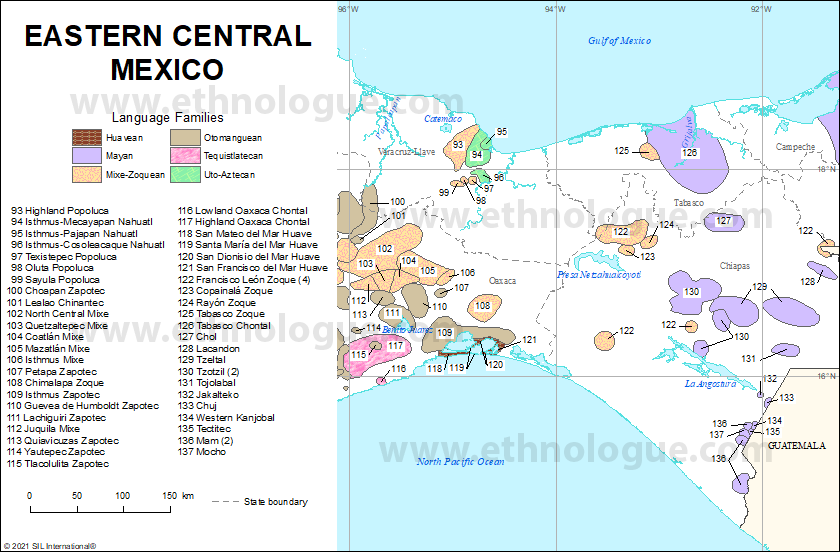
Mexico
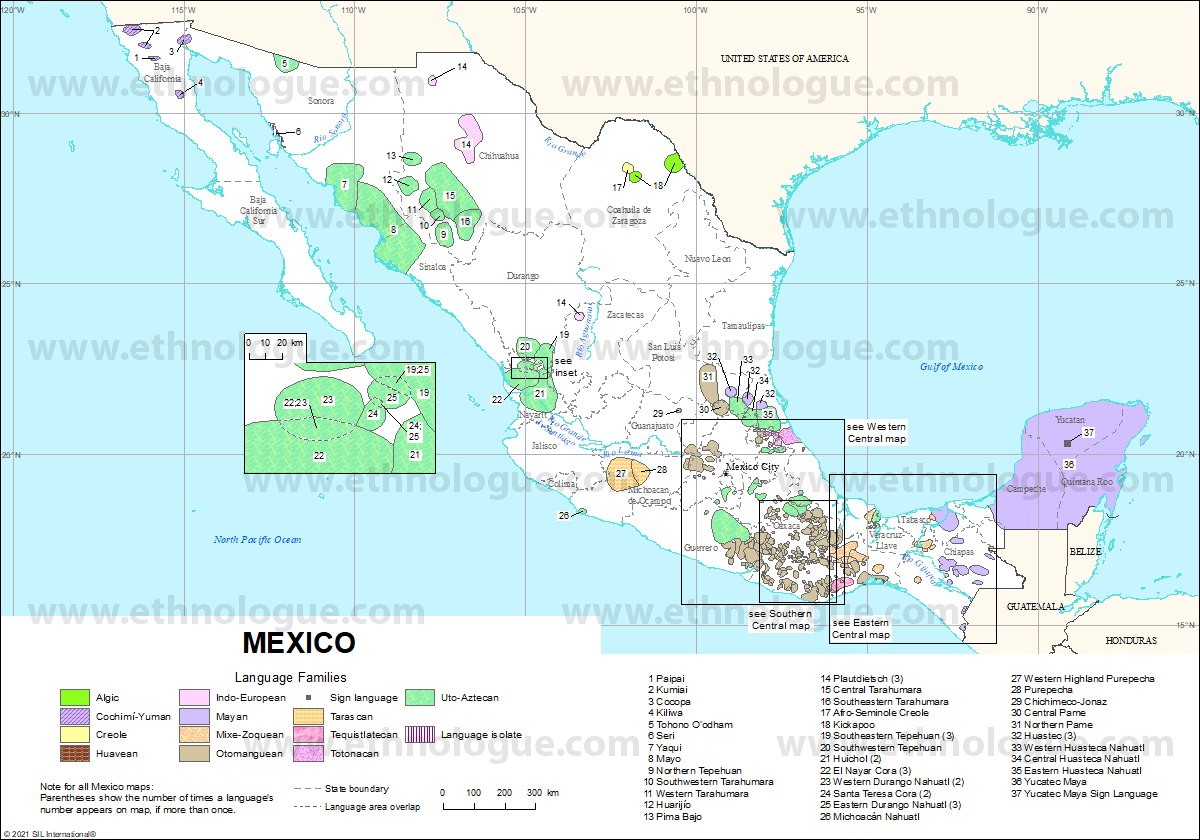
Southern Central Mexico
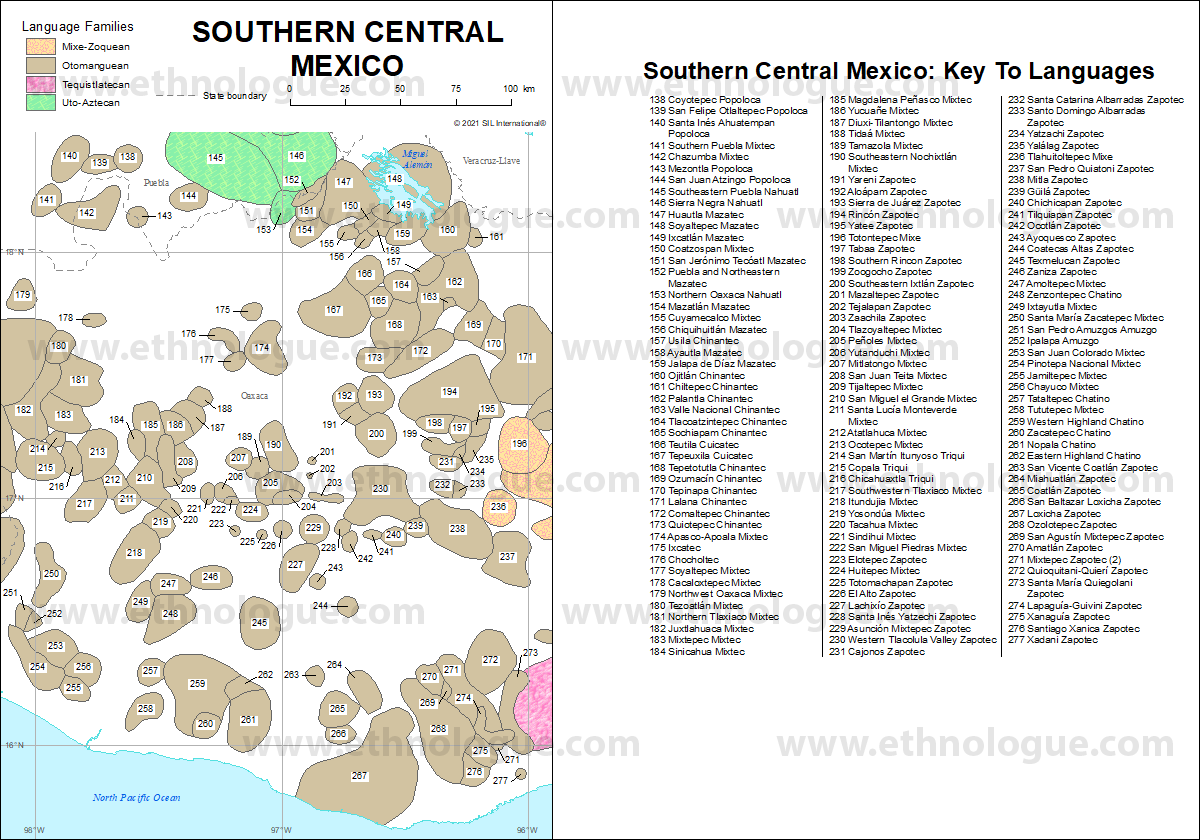
Western Central Mexico
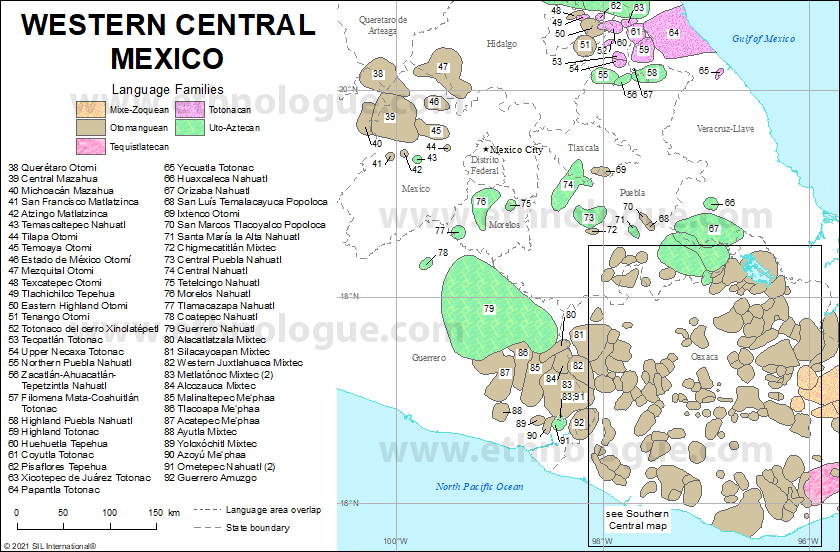
Graphs
Language Vitality Profile
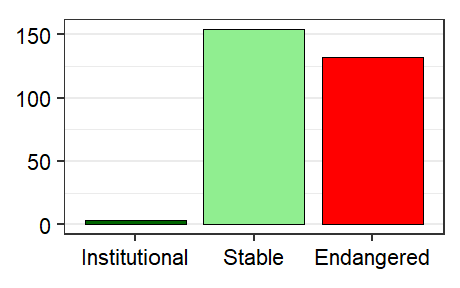
Full explanation
Language Status Profile
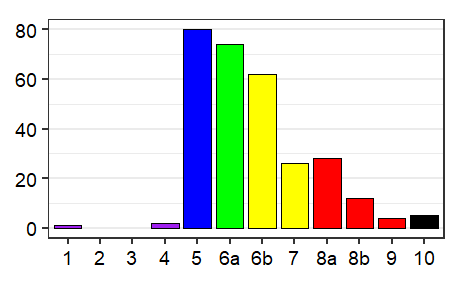
Full explanation
Resources
View Terms
Each Ethnologue country digest is a licensed product with restricted terms of use. Before downloading the product, you must agree to the following terms:
- This is a license for individual use. Just as with a conventionally published book, it is a violation of copyright to make a copy and give it to others.
- You may not redistribute this work in any form, including ingesting the contents into a database that is shared with others or posting it on a web site (whether public or private).
To inquire about permission for reuse or redistribution, please use the Contact Us form in the footer.
Digest of the languages of Mexico ($399.95, 164 page PDF)