
NA
Republic of Namibia
Namibia
Summary
- Official Name
- Republic of Namibia
- Population
- 2,634,000
- Principal Languages
- English
- Literacy Rate
- 92% (2018 UNESCO)
- International Conventions
- ACHPR (1987), CPPDCE (2006), CSICH (2012), ICCPR (1966), UNCRPD (2006), UNDRIP (2007)
- General References
- Brenzinger 1998, Brenzinger 2013a, Campbell and King 2011, Güldemann 1998, Güldemann 2003, Güldemann and Vossen 2000, Haacke and Elderkin 1997, Maho 1998, Stanley 1968
- Deaf Population
- 8,300
- Language Counts
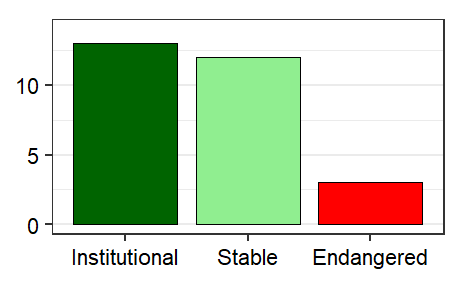
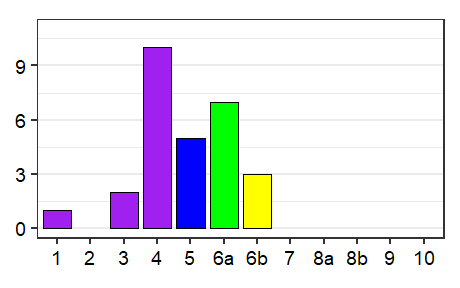
- The number of established languages listed for Namibia is 28. All are living languages. Of these, 23 are indigenous and 5 are non-indigenous. Furthermore, 13 are institutional, 5 are developing, 6 are vigorous, and 4 are in trouble. Also listed are 2 unestablished languages.
Languages
- !Xóõ nmn
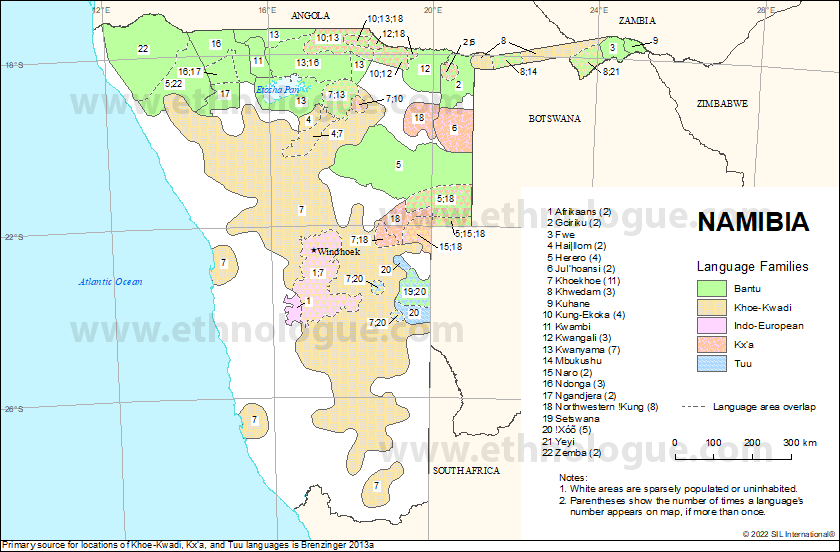
- Hardap region: Aranos and Leonardville area on Botswana border. Users: 500 in Namibia (2014 C. Naumann). Status: 6b (Threatened). Classification: Tuu, Taa
- Afrikaans afr
- Hardap and Khomas regions. Users: 127,000 in Namibia (2018). Status: 3 (Wider communication). Recognized language (2009, National Curriculum, Basic Education, Sections 4.1, 5.1, 5.5), Most commonly used as educational medium. Classification: Indo-European, Germanic, West, Low Saxon-Low Franconian, Low Franconian
- English eng
- Users: 444,100 in Namibia, all users. L1 users: 24,100 in Namibia (2018). L2 users: 420,000 (2020). Status: 1 (National). Statutory national language (1990, Constitution, Article 3(1)). Classification: Indo-European, Germanic, West, English
- Fwe fwe
- Zambezi region: Kongola, Linyanti, and Sibbinda electoral constituencies. Users: 13,700 in Namibia (2016). Total users in all countries: 25,700. Status: 6a (Vigorous). Alternate Names: Mafwe, Sifwe Autonym: Cìfwè Classification: Niger-Congo, Atlantic-Congo, Volta-Congo, Benue-Congo, Bantoid, Southern, Narrow Bantu, Central, K, Subiya-Totela (K.402)
- Gciriku diu
- Kavango East, Kavango West, Otjozondjupa, and Zambezi regions. Users: 55,700 in Namibia (2018). Total users in all countries: 81,700. Status: 4 (Educational). Recognized language (2009, National Curriculum, Basic Education, Sections 4.1.5.1 and 5.5), mainly used as education medium in primary grades. Alternate Names: Dciriku, Diriko, Diriku, Manyo, Mbogedo, Mbogedu, Rugciriku, Rusambyu, Shimbogedu Autonym: Rumanyo Classification: Niger-Congo, Atlantic-Congo, Volta-Congo, Benue-Congo, Bantoid, Southern, Narrow Bantu, Central, K, Luyana (K.332)
- German, Standard deu
- Khomas region: large Windhoek community; Omaruru, Otjiwarongo, and larger cities. Users: 39,300 in Namibia (2018). Status: 4 (Educational). Recognized language (2009, National Curriculum, Basic Education, Sections 4.1, 5.1, 5.5), mostly as a language medium in government schools. Alternate Names: Deutsch Classification: Indo-European, Germanic, West, High German, German, Middle German, East Middle German
- Hai|ǁom hgm
- Otjozondjupa region: Grootfontein area. Users: 22,000 in Namibia (2016). Total users in all countries: 52,000. Status: 6a* (Vigorous). Alternate Names: Haikom, Haikum, Heikom, Heikom Bushman, Heikum, Hei|ǁom, Oshikwankala Haiǁom, Xwaga Classification: Khoe-Kwadi, Khoe, Khoekhoe, Hainum
- Herero her
- Kunene region: Sesfontein north to Angola border area; Omaheke region; Otjozondjupa region: Otumborombonga, southeast corner and central area. Users: 210,000 in Namibia (2018). Total users in all countries: 248,700. Status: 4 (Educational). Recognized language (2009, National Curriculum, Basic Education, Sections 4.1.5.1 and 5.5), mainly used as education medium in primary grades. Alternate Names: Ochiherero, Otshiherero, Ovaherero Autonym: Otjiherero Classification: Niger-Congo, Atlantic-Congo, Volta-Congo, Benue-Congo, Bantoid, Southern, Narrow Bantu, Central, R, Herero (R.30)
- Juǀ’hoansi ktz
- Kavango East and Kavango West regions; Omaheke region: north border; Otjozondjupa region: east central. Users: 40,500 in Namibia (2018). Total users in all countries: 45,500. Status: 4 (Educational). Recognized language (2009, National Curriculum, Basic Education, Sections 4.1.5.1 and 5.5), used in primary education. Alternate Names: !Xo, !Xun, Dobe Kung, Dzu’oasi, Ju’oasi, Juǀ’hoan, Kung, Kung-Tsumkwe, South-Eastern Ju, Tshumkwe, Xaixai, Xû, Zhu’oasi Autonym: Juǀ’hoansi Classification: Kx’a, !Kung
- Khoekhoe naq
- Erongo, Kunene, and Otjozondjupa (Otiwarongo area) regions; south central near ||karas and Hardap regions. Users: 279,000 in Namibia (2018). Total users in all countries: 281,200. Status: 4 (Educational). Recognized language (2009, National Curriculum, Basic Education, Sections 4.1.5.1 and 5.5), mainly used as education medium in primary grades. Alternate Names: Bergdamara, Damara, Hai||’om, Khoekhoegowap, Maqua, Nama, Namagowab, Namakwa, Naman, Namaqua, Tama, Tamakwa, Tamma, “Hottentot” (pej.) Autonym: Khoekhoegowab Classification: Khoe-Kwadi, Khoe, Khoekhoe, Nama
- Khwedam xuu
- Kavango East and Zambezi regions: between Okavango and Zambezi rivers. Users: 4,000 in Namibia (Brenzinger 2013b). Total users in all countries: 7,860. Status: 5 (Developing). Alternate Names: Khoe, Khwe, Khwe-||Ani, Kxoe, Kxoedam, Xun, “Barakwena” (pej.), “Barakwengo” (pej.), “Mbarakwena” (pej.), “Water Bushmen” (pej.) Autonym: Khwedam Classification: Khoe-Kwadi, Khoe, Kalahari Khoe, Northwest
- Kuhane sbs
- Zambezi region. Users: 31,700 in Namibia (2016). Total users in all countries: 39,570. Status: 6a* (Vigorous). Alternate Names: Chikuahane, Chikwahane, Ciikuhane, Echisubia, Ikuhane, Mbalangwe, Subia, Subiya, Supia Classification: Niger-Congo, Atlantic-Congo, Volta-Congo, Benue-Congo, Bantoid, Southern, Narrow Bantu, Central, K, Subiya-Totela (K.42)
- Kung-Ekoka knw
- Erongo and Otjozondjupa regions: to Dunguati and Usakos; Khomas region: small border group. Users: 9,000 in Namibia (Brenzinger 2013b). Total users in all countries: 16,500. Status: 6a* (Vigorous). Alternate Names: !Hu, !Khung, !Ku, !Kung, !Xu, !Xun, !Xung, Ekoka !Xung, Ekoka-!Xû, Kung, Qxû, Qxü Classification: Kx’a, !Kung
- Kwambi kwm
- Oshana region; Omusati and Ohangwena regions bordering Oshana; Oshikoto region: southwest. Users: 39,000 (2016). Status: 5* (Developing). Alternate Names: Otjiwambo, Owambo Autonym: Oshikwambi Classification: Niger-Congo, Atlantic-Congo, Volta-Congo, Benue-Congo, Bantoid, Southern, Narrow Bantu, Central, R, Wambo (R.23)
- Kwangali kwn
- Kavango East and Kavango West regions. Users: 170,000 in Namibia (2018). Ethnic population: 175,000 (2018). Total users in all countries: 192,000. Status: 4 (Educational). Recognized language (2009, National Curriculum, Basic Education, Sections 4.1.5.1 and 5.5), mainly used as education medium in primary grades. Alternate Names: Kwangare, Kwangari, Rukwangari, Sikwangali, Vakwángali Autonym: Rukwángali Classification: Niger-Congo, Atlantic-Congo, Volta-Congo, Benue-Congo, Bantoid, Southern, Narrow Bantu, Central, K, Luyana (K.33)
- Kwanyama kua
- Kavango West, Kunene, Ohangwena, and Oshikoto regions; northeast Omusati and east Oshana regions. Users: 608,000 in Namibia (2018). Status: 4 (Educational). Recognized language (2009, National Curriculum, Basic Education, Sections 4.1.5.1 and 5.5), mainly used as education medium in primary grades. Alternate Names: Humba, Kuanyama, Kwancama, Kwanjama, Ochikwanyama, Oshikwanyama, Oshiwambo, Otjiwambo, Ovambo, Owambo Classification: Niger-Congo, Atlantic-Congo, Volta-Congo, Benue-Congo, Bantoid, Southern, Narrow Bantu, Central, R, Wambo (R.21)
- Lozi loz
- Kavango East and Zambezi regions: widespread. Users: 38,000 in Namibia (2018). Status: 3 (Wider communication). Recognized language (2009, National Curriculum, Basic Education, Sections 4.1.5.1 and 5.5), mainly used as primary educational medium in certain areas. Spoken as lingua franca by all residents of East Caprivi Strip. Alternate Names: Kololo, Rotse, Rozi, Rutse, Silozi, Tozvi Classification: Niger-Congo, Atlantic-Congo, Volta-Congo, Benue-Congo, Bantoid, Southern, Narrow Bantu, Central, K, Lozi (K.21)
- Luchazi lch
- Users: 1,400 in Namibia (2016). Status: Unestablished. Classification: Niger-Congo, Atlantic-Congo, Volta-Congo, Benue-Congo, Bantoid, Southern, Narrow Bantu, Central, K, Ciokwe-Luchazi (K.13)
- Mashi mho
- Kavango East and Zambezi regions; scattered nomadic groups. Users: 300 in Namibia (2016). Status: 6b* (Threatened). Alternate Names: Masi Classification: Niger-Congo, Atlantic-Congo, Volta-Congo, Benue-Congo, Bantoid, Southern, Narrow Bantu, Central, K, Luyana (K.34)
- Mbalanhu lnb
- Kunene region. Users: 300 (2016). Status: 6b (Threatened). Alternate Names: Mbaanhu, Mbalantu, Mbaluntu Classification: Niger-Congo, Atlantic-Congo, Volta-Congo, Benue-Congo, Bantoid, Southern, Narrow Bantu, Central, R, Wambo (R.214)
- Mbukushu mhw
- Kavango East and Zambezi regions. Users: 43,100 in Namibia (2018). Status: 4 (Educational). Recognized language (2009, National Curriculum, Basic Education, Sections 4.1.5.1 and 5.5), mainly used as education medium in primary grades. Alternate Names: Gova, Hambukushu, Kusso, Mambukush, Mampukush, Mbukuhu, Mbukushi, Thimbukushu Classification: Niger-Congo, Atlantic-Congo, Volta-Congo, Benue-Congo, Bantoid, Southern, Narrow Bantu, Central, K, Luyana (K.333)
- Namibian Sign Language nbs
- Scattered. Users: 8,310 (2008 WFD). Approximately 0.35% of total population. Estimated 18,000 ‘deaf or hearing impaired’ (2010 Centre for Communication and Deaf Studies). Status: 5 (Developing). Recognized language (2009, National Curriculum, Basic Education, Sections 4.1.5.1 and 5.5). Classification: Sign language, Deaf community sign language
- Naro nhr
- Omaheke region: east of Gobabis to Botswana border. Users: 2,000 in Namibia (Brenzinger 2013b). Status: 5* (Dispersed). Alternate Names: Nharo Classification: Khoe-Kwadi, Khoe, Kalahari Khoe, Southwest
- Ndonga ndo
- Kunene and Oshana regions: small scattered areas; Omusati region; Ohangwena and Oshikoto regions: east. Users: 279,000 (2018). Status: 4 (Educational). Recognized language (2009, National Curriculum, Basic Education, Sections 4.1.5.1 and 5.5), mainly used as education medium in primary grades. Alternate Names: Ambo, Ochindonga, Osindonga, Otjiwambo, Owambo Autonym: Oshindonga, Oshiwambo Classification: Niger-Congo, Atlantic-Congo, Volta-Congo, Benue-Congo, Bantoid, Southern, Narrow Bantu, Central, R, Wambo (R.22)
- Ngandjera nne
- Omusati region: in and around Okahao electoral constituency. Users: 13,100 (2000). Status: 6a* (Vigorous). Alternate Names: Ngandyera, Oshingandjera Classification: Niger-Congo, Atlantic-Congo, Volta-Congo, Benue-Congo, Bantoid, Southern, Narrow Bantu, Central, R, Wambo (R.24)
- Northwestern !Kung vaj
- Kavango East and Zambezi regions; Otjozondjupa region: southeast of Omataku river. Users: 1,300 in Namibia (Brenzinger 2013b). Status: 6b* (Threatened). Alternate Names: !’O-!Khung, !Ku, !Kung, !Xun, Sekela, Vasekela Bushman, Vasekele Classification: Kx’a, !Kung
- Nyemba nba
- Mines. Users: 9,540 in Namibia (1982). Status: Unestablished. Classification: Niger-Congo, Atlantic-Congo, Volta-Congo, Benue-Congo, Bantoid, Southern, Narrow Bantu, Central, K, Ciokwe-Luchazi (K.12)
- Setswana tsn
- Hardap region; Omaheke region: Botswana border. Users: 6,330 in Namibia (2018). Status: 4 (Educational). Recognized language (2009, National Curriculum, Basic Education, Sections 4.1.5.1 and 5.5), mainly used as education medium in primary grades. Alternate Names: Tswana Classification: Niger-Congo, Atlantic-Congo, Volta-Congo, Benue-Congo, Bantoid, Southern, Narrow Bantu, Central, S, Sotho-Tswana (S.31)
- Yeyi yey
- Zambezi region. Users: 7,000 in Namibia (2016). Status: 6a (Vigorous). Alternate Names: Ciyei, Mayeyi, Seyeyi, Shiyeyi, Yeei, Yei, “Koba” (pej.), “Kuba” (pej.), “Sekoba” (pej.) Classification: Niger-Congo, Atlantic-Congo, Volta-Congo, Benue-Congo, Bantoid, Southern, Narrow Bantu, Central, R, Yeyi (R.41)
- Zemba dhm
- Kunene region: south of Kunene river. Users: 7,000 in Namibia (2016). Status: 5* (Developing). Alternate Names: Dhimba, Himba, Luzimba, Oludhimba, Oluthimba, Otjidhimba, Simba Classification: Niger-Congo, Atlantic-Congo, Volta-Congo, Benue-Congo, Bantoid, Southern, Narrow Bantu, Central, R, Herero (R.311)
Languages by Status
English
[eng] 1 (National). Statutory national language (1990, Constitution, Article 3(1)). 444,100 in Namibia, all users. L1 users: 24,100 in Namibia (2018). L2 users: 420,000 (2020).
Afrikaans
[afr] 3 (Wider communication). Recognized language (2009, National Curriculum, Basic Education, Sections 4.1, 5.1, 5.5), Most commonly used as educational medium. 127,000 in Namibia (2018).
Lozi
[loz] 3 (Wider communication). Recognized language (2009, National Curriculum, Basic Education, Sections 4.1.5.1 and 5.5), mainly used as primary educational medium in certain areas. Spoken as lingua franca by all residents of East Caprivi Strip. 38,000 in Namibia (2018).
Gciriku
[diu] 4 (Educational). Recognized language (2009, National Curriculum, Basic Education, Sections 4.1.5.1 and 5.5), mainly used as education medium in primary grades. 55,700 in Namibia (2018). Total users in all countries: 81,700.
German, Standard
[deu] 4 (Educational). Recognized language (2009, National Curriculum, Basic Education, Sections 4.1, 5.1, 5.5), mostly as a language medium in government schools. 39,300 in Namibia (2018).
Herero
[her] 4 (Educational). Recognized language (2009, National Curriculum, Basic Education, Sections 4.1.5.1 and 5.5), mainly used as education medium in primary grades. 210,000 in Namibia (2018). Total users in all countries: 248,700.
Juǀ’hoansi
[ktz] 4 (Educational). Recognized language (2009, National Curriculum, Basic Education, Sections 4.1.5.1 and 5.5), used in primary education. 40,500 in Namibia (2018). Total users in all countries: 45,500.
Khoekhoe
[naq] 4 (Educational). Recognized language (2009, National Curriculum, Basic Education, Sections 4.1.5.1 and 5.5), mainly used as education medium in primary grades. 279,000 in Namibia (2018). Total users in all countries: 281,200.
Kwangali
[kwn] 4 (Educational). Recognized language (2009, National Curriculum, Basic Education, Sections 4.1.5.1 and 5.5), mainly used as education medium in primary grades. 170,000 in Namibia (2018). Ethnic population: 175,000 (2018). Total users in all countries: 192,000.
Kwanyama
[kua] 4 (Educational). Recognized language (2009, National Curriculum, Basic Education, Sections 4.1.5.1 and 5.5), mainly used as education medium in primary grades. 608,000 in Namibia (2018).
Mbukushu
[mhw] 4 (Educational). Recognized language (2009, National Curriculum, Basic Education, Sections 4.1.5.1 and 5.5), mainly used as education medium in primary grades. 43,100 in Namibia (2018).
Ndonga
[ndo] 4 (Educational). Recognized language (2009, National Curriculum, Basic Education, Sections 4.1.5.1 and 5.5), mainly used as education medium in primary grades. 279,000 (2018).
Setswana
[tsn] 4 (Educational). Recognized language (2009, National Curriculum, Basic Education, Sections 4.1.5.1 and 5.5), mainly used as education medium in primary grades. 6,330 in Namibia (2018).
Naro
[nhr] 5* (Dispersed). 2,000 in Namibia (Brenzinger 2013b).
Khwedam
[xuu] 5 (Developing). 4,000 in Namibia (Brenzinger 2013b). Total users in all countries: 7,860.
Kwambi
[kwm] 5* (Developing). 39,000 (2016).
Namibian Sign Language
[nbs] 5 (Developing). Recognized language (2009, National Curriculum, Basic Education, Sections 4.1.5.1 and 5.5). 8,310 (2008 WFD). Approximately 0.35% of total population. Estimated 18,000 ‘deaf or hearing impaired’ (2010 Centre for Communication and Deaf Studies).
Zemba
[dhm] 5* (Developing). 7,000 in Namibia (2016).
Fwe
[fwe] 6a (Vigorous). 13,700 in Namibia (2016). Total users in all countries: 25,700.
Hai|ǁom
[hgm] 6a* (Vigorous). 22,000 in Namibia (2016). Total users in all countries: 52,000.
Kuhane
[sbs] 6a* (Vigorous). 31,700 in Namibia (2016). Total users in all countries: 39,570.
Kung-Ekoka
[knw] 6a* (Vigorous). 9,000 in Namibia (Brenzinger 2013b). Total users in all countries: 16,500.
Ngandjera
[nne] 6a* (Vigorous). 13,100 (2000).
Yeyi
[yey] 6a (Vigorous). 7,000 in Namibia (2016).
Maps
Namibia
Graphs
Language Vitality Profile
Full explanation
Language Status Profile
Full explanation
Resources
View Terms
Each Ethnologue country digest is a licensed product with restricted terms of use. Before downloading the product, you must agree to the following terms:
- This is a license for individual use. Just as with a conventionally published book, it is a violation of copyright to make a copy and give it to others.
- You may not redistribute this work in any form, including ingesting the contents into a database that is shared with others or posting it on a web site (whether public or private).
To inquire about permission for reuse or redistribution, please use the Contact Us form in the footer.
Digest of the languages of Namibia ($199.95, 35 page PDF)