
NL
Kingdom of the Netherlands
Netherlands
Summary
- Official Name
- Kingdom of the Netherlands
- Population
- 17,401,000
- Principal Languages
- Dutch
- Literacy Rate
- 99% (Roser and Ortiz-Ospina 2018)
- International Conventions
- CDE (1960), CPPDCE (2006), CSICH (2012), ECRML (1992), FCPNM (1998), ICCPR (1966), (), UNCRPD (2006), UNDRIP (2007)
- General References
- Campbell and King 2011, Comrie 1987, Kooij 1987, Stephens 1976
- Deaf Population
- 28,000–932,000 (1998)
- Language Counts
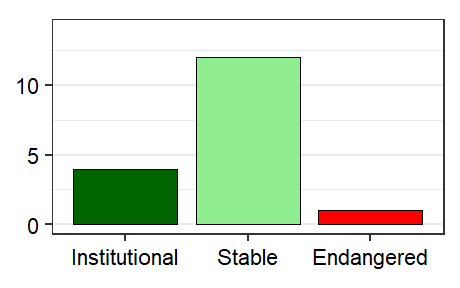
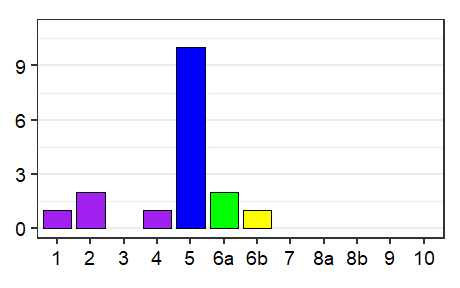
- The number of established languages listed for Netherlands is 18. All are living languages. Of these, 13 are indigenous and 5 are non-indigenous. Furthermore, 3 are institutional, 11 are developing, 2 are vigorous, and 2 are in trouble. Also listed are 38 unestablished languages.
Languages
- Achterhoeks act
- Gelderland province. Users: 211,000 (Herweijer and Jans 2009). Status: 5* (Developing). Alternate Names: Aachterhoeks, Achterhoek, Winterwiek Autonym: Achterhooks Classification: Indo-European, Germanic, West, Low Saxon-Low Franconian, Low Saxon
- Afrikaans afr
- Users: 14,500 in Netherlands (2019). Status: Unestablished. Classification: Indo-European, Germanic, West, Low Saxon-Low Franconian, Low Franconian
- Akan aka
- Users: 18,700 in Netherlands (2019). Status: Unestablished. Classification: Niger-Congo, Atlantic-Congo, Volta-Congo, Kwa, Nyo, Potou-Tano, Tano, Central, Akan
- Arabic, Algerian Spoken arq
- Users: 90,300 in Netherlands (2019). Status: Unestablished. Classification: Afro-Asiatic, Semitic, Central, South, Arabic
- Arabic, Egyptian Spoken arz
- Users: 16,600 in Netherlands (2019). Status: Unestablished. Classification: Afro-Asiatic, Semitic, Central, South, Arabic
- Arabic, Mesopotamian Spoken acm
- Users: 41,500 in Netherlands (2019). Status: Unestablished. Classification: Afro-Asiatic, Semitic, Central, South, Arabic
- Arabic, Moroccan Spoken ary
- Users: 481,000 in Netherlands, all users. L1 users: 361,000 in Netherlands (2019). L2 users: 120,000. Status: Unestablished. Classification: Afro-Asiatic, Semitic, Central, South, Arabic
- Arabic, North Levantine Spoken apc
- Users: 3,400 in Netherlands (2019). Status: Unestablished. Classification: Afro-Asiatic, Semitic, Central, South, Arabic
- Arabic, Tunisian Spoken aeb
- Users: 86,100 in Netherlands (2019). Status: Unestablished. Classification: Afro-Asiatic, Semitic, Central, South, Arabic
- Bengali ben
- Users: 6,000 in Netherlands (2018), based on nationality. Status: Unestablished. Classification: Indo-European, Indo-Iranian, Indo-Aryan, Outer Languages, Eastern, Bengali-Assamese
- Chinese, Mandarin cmn
- Users: 78,900 in Netherlands (2019). Status: Unestablished. Classification: Sino-Tibetan, Chinese
- Chinese, Wu wuu
- Users: 3,900 in Netherlands (2019). Status: Unestablished. Classification: Sino-Tibetan, Chinese
- Drents drt
- Drenthe province: near German border; Overijssel province: Steenwijkerland municipality. Users: 255,000 (Herweijer and Jans 2009). Status: 5* (Developing). Alternate Names: Dreins, Dreints, Drente, Drenthe Autonym: Drèents Classification: Indo-European, Germanic, West, Low Saxon-Low Franconian, Low Saxon
- Dutch nld
- Users: 16,000,000 in Netherlands (European Commission 2012). Total users in all countries: 24,448,250 (as L1: 22,843,250; as L2: 1,605,000). Status: 1 (National). De facto national language. Autonym: Nederlands Classification: Indo-European, Germanic, West, Low Saxon-Low Franconian, Low Franconian
- English eng
- Widespread. Users: 15,577,800 in Netherlands, all users. L1 users: 77,800 in Netherlands (2019). L2 users: 15,500,000 (European Commission 2012). Status: 4 (Educational). Alternate Names: Engels Classification: Indo-European, Germanic, West, English
- French fra
- Widespread. Users: 3,227,900 in Netherlands, all users. L1 users: 27,900 in Netherlands (2019). L2 users: 3,200,000 (2018). Status: 5* (Dispersed). Classification: Indo-European, Italic, Romance, Italo-Western, Western, Gallo-Iberian, Gallo-Romance, Gallo-Rhaetian, Oïl, French
- Frisian fry
- Friesland province; Groningen province: De Marne municipality. Users: 873,000 in Netherlands (2019), decreasing. Total users in all countries: 875,100. Status: 2 (Provincial). Statutory provincial language in Friesland Province (1996, Ratification Act, ECRML, No. 136). Alternate Names: Fries, Westlauwers Fries Autonym: Frysk Classification: Indo-European, Germanic, West, Frisian
- German, Standard deu
- Users: 12,373,300 in Netherlands, all users. L1 users: 73,300 in Netherlands (2017 Eurostat), based on nationality. L2 users: 12,300,000 (2019). Status: 5* (Dispersed). Alternate Names: Deutsch Classification: Indo-European, Germanic, West, High German, German, Middle German, East Middle German
- Greek ell
- Users: 5,200 in Netherlands (2019). Status: Unestablished. Classification: Indo-European, Greek, Attic
- Gronings gos
- Drenthe and Groningen provinces: Bellingwedde, Delfzijl, and Oldambt municipalties. Users: 262,000 (Herweijer and Jans 2009). Status: 5* (Developing). Alternate Names: Groningen, Grunnings, Grönnegs Autonym: Grunnegs Classification: Indo-European, Germanic, West, Low Saxon-Low Franconian, Low Saxon
- Guinea-Bissau Creole pov
- Users: 13,500 in Netherlands (2019). Status: Unestablished. Classification: Creole, Portuguese based
- Hindustani, Sarnami hns
- Users: 119,000 in Netherlands (2019). Status: Unestablished. Classification: Indo-European, Indo-Iranian, Indo-Aryan, Outer Languages, Eastern, Bihari
- Hungarian hun
- Users: 12,500 in Netherlands (2019). Status: Unestablished. Classification: Uralic
- Indonesian ind
- Users: 137,000 in Netherlands (2019). Status: Unestablished. Classification: Austronesian, Malayo-Polynesian, Malayo-Chamic, Malayic, Malay
- Italian ita
- Users: 17,600 in Netherlands (2019). Status: Unestablished. Classification: Indo-European, Italic, Romance, Italo-Western, Italo-Dalmatian
- Javanese jav
- Users: 42,900 in Netherlands (2019). Status: Unestablished. Classification: Austronesian, Malayo-Polynesian, Javanese
- Kabuverdianu kea
- Users: 20,800 in Netherlands (2019). Status: Unestablished. Classification: Creole, Portuguese based
- Korean kor
- Users: 8,600 in Netherlands (2019 Korean Ministry of Foreign Affairs), based on nationality. Status: Unestablished. Classification: Koreanic
- Kurdish, Northern kmr
- Users: 74,700 in Netherlands (2019). Status: Unestablished. Classification: Indo-European, Indo-Iranian, Iranian, Western, Northwestern, Kurdish
- Limburgish lim
- Limburg province: Heerlen, Maastricht, Roermond, Venlo. Users: 700,000 in Netherlands (2001). Total users in all countries: 1,300,000. Status: 2 (Provincial). Statutory provincial language in Limburg Province (1996, Ratification Act, ECRML, No. 136), effective 1997. Alternate Names: Limberger, Limburgan, Limburgian, Limburgic, Limburgs, Limburgs Plat Autonym: Lèmburgs Classification: Indo-European, Germanic, West, Low Saxon-Low Franconian, Low Franconian
- Macedonian mkd
- Users: 13,500 in Netherlands (2019). Status: Unestablished. Classification: Indo-European, Balto-Slavic, Slavic, South, Eastern
- Malay, Ambonese abs
- Users: 50,900 in Netherlands (2019). Status: Unestablished. Classification: Creole, Malay based
- Papiamentu pap
- Users: 133,000 in Netherlands (2019). Status: Unestablished. Alternate Names: Papiments Classification: Creole, Iberian based
- Persian, Iranian pes
- Users: 31,100 in Netherlands (2019). Status: Unestablished. Classification: Indo-European, Indo-Iranian, Iranian, Western, Southwestern, Persian
- Polish pol
- Users: 32,200 in Netherlands (2019). Status: Unestablished. Classification: Indo-European, Balto-Slavic, Slavic, West, Lechitic
- Portuguese por
- Users: 16,600 in Netherlands (2019). Status: Unestablished. Classification: Indo-European, Italic, Romance, Italo-Western, Western, Gallo-Iberian, Ibero-Romance, West Iberian, Portuguese-Galician
- Romani, Sinte rmo
- Scattered. Users: 1,300 in Netherlands (2010 J. Leclerc). Status: 5* (Dispersed). Alternate Names: Romanes, Sinte, Sinti Classification: Indo-European, Indo-Iranian, Indo-Aryan, Intermediate Divisions, Western, Romani, Northern
- Romani, Vlax rmy
- Users: 1,000 in Netherlands. 500 Kalderash, 500 Lovari. Status: Unestablished. Classification: Indo-European, Indo-Iranian, Indo-Aryan, Intermediate Divisions, Western, Romani, Vlax
- Russian rus
- Users: 5,200 in Netherlands (2019). Status: Unestablished. Classification: Indo-European, Balto-Slavic, Slavic, East
- Sallands sdz
- Overijssels province: Sallands. Users: 347,000 (Herweijer and Jans 2009). Status: 6a* (Vigorous). Alternate Names: Sallan, Salland Classification: Indo-European, Germanic, West, Low Saxon-Low Franconian, Low Saxon
- Serbian srp
- Users: 2,230 in Netherlands (2015 census). Status: Unestablished. Classification: Indo-European, Balto-Slavic, Slavic, South, Western
- Sign Language of the Netherlands dse
- Scattered. Users: 20,500 in Netherlands, all users. L1 users: 15,000 in Netherlands (2019 EUD). Population estimates vary widely, in part because they count different things: 15,000 deaf sign language users (2019 EUD), about 0.1% of total population; 10,000–13,000 deaf or severely hard of hearing (Dovenschap brochure); 10,500 deaf and 5,500 hearing sign language users (Crasborn 2001); 45,000 deaf, 495,000 hard of hearing (2005 National Hearing Foundation); 86,500 deaf (2014 IMB). L2 users: 5,500 (1997 Commissie Nederlandse Gebarentaal). Total users in all countries: 22,800 (as L1: 17,300; as L2: 5,500). Status: 5 (Developing). Alternate Names: Dutch Sign Language, NGT, Nederlandse Gebarentaal, SLN Classification: Sign language, Deaf community sign language
- Somali som
- Major cities. Users: 15,600 in Netherlands (2019). Status: Unestablished. Classification: Afro-Asiatic, Cushitic, East, Somali
- Spanish spa
- Users: 705,700 in Netherlands, all users. L1 users: 18,700 in Netherlands (2019). L2 users: 687,000 (2019). Status: 5* (Dispersed). Classification: Indo-European, Italic, Romance, Italo-Western, Western, Gallo-Iberian, Ibero-Romance, West Iberian, Castilian
- Sranan Tongo srn
- Users: 361,000 in Netherlands (2019). Status: Unestablished. Classification: Creole, English based, Atlantic, Suriname
- Stellingwerfs stl
- Friesland province: Stellingwerven region, Oosterwolde and Wolvega centers. Users: 5,000 (2016 J. Feenstra), decreasing. Status: 5* (Developing). Alternate Names: Stellingwerf Autonym: Stellingwarfs Classification: Indo-European, Germanic, West, Low Saxon-Low Franconian, Low Saxon
- Tagalog tgl
- Users: 11,400 in Netherlands (2019). Status: Unestablished. Classification: Austronesian, Malayo-Polynesian, Greater Central Philippine, Central Philippine, Tagalog
- Tamil tam
- Users: 20,800 in Netherlands (2019). Status: Unestablished. Classification: Dravidian, Southern, Tamil-Kannada, Tamil-Kodagu, Tamil-Malayalam, Tamil
- Tarifit rif
- Users: 159,000 in Netherlands (2019). Status: Unestablished. Classification: Afro-Asiatic, Berber, Northern, Zenati, Riff
- Turkish tur
- Users: 400,000 in Netherlands (2019). Status: Unestablished. Classification: Turkic, Southern, Turkish
- Turoyo tru
- Users: 4,000 in Netherlands (1994). Status: Unestablished. Classification: Afro-Asiatic, Semitic, Central, Aramaic, Eastern, Central, Northwestern
- Twents twd
- Overijssels province. Users: 334,000 (Herweijer and Jans 2009). Status: 5* (Developing). Alternate Names: Twente Autonym: Twents Classification: Indo-European, Germanic, West, Low Saxon-Low Franconian, Low Saxon
- Veluws vel
- Gelderland province. Users: 175,000 (Herweijer and Jans 2009). Status: 6a* (Vigorous). Alternate Names: Veluwe Classification: Indo-European, Germanic, West, Low Saxon-Low Franconian, Low Saxon
- Vietnamese vie
- Users: 8,600 in Netherlands (2019). Status: Unestablished. Classification: Austro-Asiatic, Mon-Khmer, Viet-Muong, Vietnamese
- West Flemish vls
- Zeeland province. Users: 132,000 in Netherlands (2016). Status: 6b (Threatened). Alternate Names: Vlaams, West Vlaams, West-Vlams Classification: Indo-European, Germanic, West, Low Saxon-Low Franconian, Low Franconian
- Zeeuws zea
- South Holland and Zeeland provinces. Rhine-Scheldt Delta islands have their own dialects. Users: 220,000. Status: 5* (Developing). Alternate Names: Zeaws, Zeelandic Autonym: Zeêuws Classification: Indo-European, Germanic, West, Low Saxon-Low Franconian, Low Franconian
Languages by Status
Dutch
[nld] 1 (National). De facto national language. 16,000,000 in Netherlands (European Commission 2012). Total users in all countries: 24,448,250 (as L1: 22,843,250; as L2: 1,605,000).
Frisian
[fry] 2 (Provincial). Statutory provincial language in Friesland Province (1996, Ratification Act, ECRML, No. 136). 873,000 in Netherlands (2019), decreasing. Total users in all countries: 875,100.
Limburgish
[lim] 2 (Provincial). Statutory provincial language in Limburg Province (1996, Ratification Act, ECRML, No. 136), effective 1997. 700,000 in Netherlands (2001). Total users in all countries: 1,300,000.
English
[eng] 4 (Educational). 15,577,800 in Netherlands, all users. L1 users: 77,800 in Netherlands (2019). L2 users: 15,500,000 (European Commission 2012).
French
[fra] 5* (Dispersed). 3,227,900 in Netherlands, all users. L1 users: 27,900 in Netherlands (2019). L2 users: 3,200,000 (2018).
German, Standard
[deu] 5* (Dispersed). 12,373,300 in Netherlands, all users. L1 users: 73,300 in Netherlands (2017 Eurostat), based on nationality. L2 users: 12,300,000 (2019).
Romani, Sinte
[rmo] 5* (Dispersed). 1,300 in Netherlands (2010 J. Leclerc).
Spanish
[spa] 5* (Dispersed). 705,700 in Netherlands, all users. L1 users: 18,700 in Netherlands (2019). L2 users: 687,000 (2019).
Achterhoeks
[act] 5* (Developing). 211,000 (Herweijer and Jans 2009).
Drents
[drt] 5* (Developing). 255,000 (Herweijer and Jans 2009).
Gronings
[gos] 5* (Developing). 262,000 (Herweijer and Jans 2009).
Sign Language of the Netherlands
[dse] 5 (Developing). 20,500 in Netherlands, all users. L1 users: 15,000 in Netherlands (2019 EUD). Population estimates vary widely, in part because they count different things: 15,000 deaf sign language users (2019 EUD), about 0.1% of total population; 10,000–13,000 deaf or severely hard of hearing (Dovenschap brochure); 10,500 deaf and 5,500 hearing sign language users (Crasborn 2001); 45,000 deaf, 495,000 hard of hearing (2005 National Hearing Foundation); 86,500 deaf (2014 IMB). L2 users: 5,500 (1997 Commissie Nederlandse Gebarentaal). Total users in all countries: 22,800 (as L1: 17,300; as L2: 5,500).
Stellingwerfs
[stl] 5* (Developing). 5,000 (2016 J. Feenstra), decreasing.
Twents
[twd] 5* (Developing). 334,000 (Herweijer and Jans 2009).
Zeeuws
[zea] 5* (Developing). 220,000.
Sallands
[sdz] 6a* (Vigorous). 347,000 (Herweijer and Jans 2009).
Veluws
[vel] 6a* (Vigorous). 175,000 (Herweijer and Jans 2009).
West Flemish
[vls] 6b (Threatened). 132,000 in Netherlands (2016).
Afrikaans
[afr] Unestablished. 14,500 in Netherlands (2019).
Akan
[aka] Unestablished. 18,700 in Netherlands (2019).
Arabic, Algerian Spoken
[arq] Unestablished. 90,300 in Netherlands (2019).
Arabic, Egyptian Spoken
[arz] Unestablished. 16,600 in Netherlands (2019).
Arabic, Mesopotamian Spoken
[acm] Unestablished. 41,500 in Netherlands (2019).
Arabic, Moroccan Spoken
[ary] Unestablished. 481,000 in Netherlands, all users. L1 users: 361,000 in Netherlands (2019). L2 users: 120,000.
Arabic, North Levantine Spoken
[apc] Unestablished. 3,400 in Netherlands (2019).
Arabic, Tunisian Spoken
[aeb] Unestablished. 86,100 in Netherlands (2019).
Bengali
[ben] Unestablished. 6,000 in Netherlands (2018), based on nationality.
Chinese, Mandarin
[cmn] Unestablished. 78,900 in Netherlands (2019).
Chinese, Wu
[wuu] Unestablished. 3,900 in Netherlands (2019).
Greek
[ell] Unestablished. 5,200 in Netherlands (2019).
Guinea-Bissau Creole
[pov] Unestablished. 13,500 in Netherlands (2019).
Hindustani, Sarnami
[hns] Unestablished. 119,000 in Netherlands (2019).
Hungarian
[hun] Unestablished. 12,500 in Netherlands (2019).
Indonesian
[ind] Unestablished. 137,000 in Netherlands (2019).
Italian
[ita] Unestablished. 17,600 in Netherlands (2019).
Javanese
[jav] Unestablished. 42,900 in Netherlands (2019).
Kabuverdianu
[kea] Unestablished. 20,800 in Netherlands (2019).
Korean
[kor] Unestablished. 8,600 in Netherlands (2019 Korean Ministry of Foreign Affairs), based on nationality.
Kurdish, Northern
[kmr] Unestablished. 74,700 in Netherlands (2019).
Macedonian
[mkd] Unestablished. 13,500 in Netherlands (2019).
Malay, Ambonese
[abs] Unestablished. 50,900 in Netherlands (2019).
Papiamentu
[pap] Unestablished. 133,000 in Netherlands (2019).
Persian, Iranian
[pes] Unestablished. 31,100 in Netherlands (2019).
Polish
[pol] Unestablished. 32,200 in Netherlands (2019).
Portuguese
[por] Unestablished. 16,600 in Netherlands (2019).
Romani, Vlax
[rmy] Unestablished. 1,000 in Netherlands. 500 Kalderash, 500 Lovari.
Russian
[rus] Unestablished. 5,200 in Netherlands (2019).
Serbian
[srp] Unestablished. 2,230 in Netherlands (2015 census).
Somali
[som] Unestablished. 15,600 in Netherlands (2019).
Sranan Tongo
[srn] Unestablished. 361,000 in Netherlands (2019).
Tagalog
[tgl] Unestablished. 11,400 in Netherlands (2019).
Tamil
[tam] Unestablished. 20,800 in Netherlands (2019).
Tarifit
[rif] Unestablished. 159,000 in Netherlands (2019).
Turkish
[tur] Unestablished. 400,000 in Netherlands (2019).
Turoyo
[tru] Unestablished. 4,000 in Netherlands (1994).
Vietnamese
[vie] Unestablished. 8,600 in Netherlands (2019).
Maps
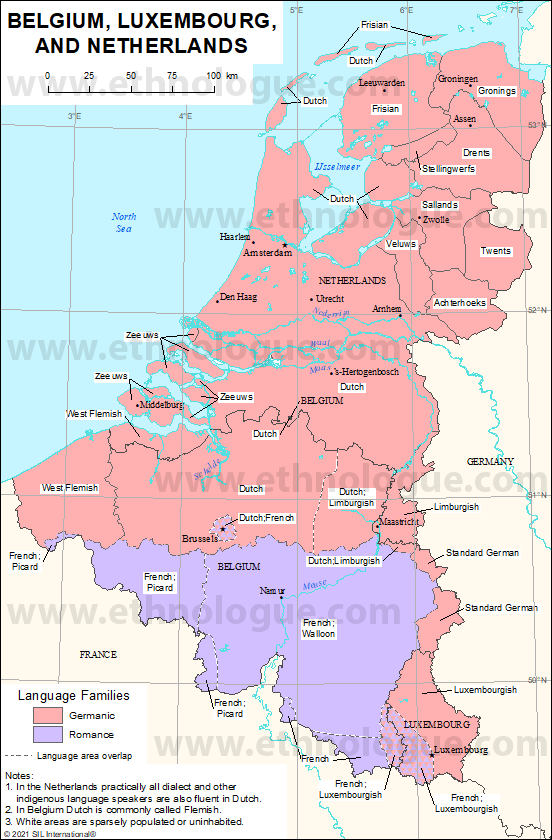
Belgium, Luxembourg and Netherlands
Graphs
Language Vitality Profile
Full explanation
Language Status Profile
Full explanation
Resources
View Terms
Each Ethnologue country digest is a licensed product with restricted terms of use. Before downloading the product, you must agree to the following terms:
- This is a license for individual use. Just as with a conventionally published book, it is a violation of copyright to make a copy and give it to others.
- You may not redistribute this work in any form, including ingesting the contents into a database that is shared with others or posting it on a web site (whether public or private).
To inquire about permission for reuse or redistribution, please use the Contact Us form in the footer.
Digest of the languages of Netherlands ($149.95, 24 page PDF)