
PH
Republic of the Philippines
Philippines
Summary
- Official Name
- Republic of the Philippines
- Population
- 111,047,000
- Principal Languages
- English, Filipino, Tagalog
- Literacy Rate
- 98% (2015 UNESCO)
- International Conventions
- CDE (1960), CSICH (2012), ICCPR (1966), UNCRPD (2006), UNDRIP (2007)
- General References
- Campbell and King 2011, Crystal 2003a, Lobel 2004, Lobel 2005, Lobel 2013b, Reid 1971, Wurm 2007, Zorc 1977
- Deaf Population
- 518,000 totally or partially deaf (2009 B. Aquino)
- Language Counts
- The number of established languages listed for Philippines is 186. Of these, 184 are living and 2 are extinct. Of the living languages, 175 are indigenous and 9 are non-indigenous. Furthermore, 25 are institutional, 78 are developing, 33 are vigorous, 37 are in trouble, and 11 are dying. Also listed are 4 unestablished languages and 2 macrolanguages.
Languages
- Adasen tiu
- Cordillera Administrative Region: northeast Abra province, west Apayao province. Users: 4,000 (NTM). Ethnic population: 10,300 (2010 census). Status: 6b (Threatened). Alternate Names: Addasen, Addasen Tinguian, Addassen, Itneg Adasen Classification: Austronesian, Malayo-Polynesian, Northern Luzon, Northern Cordilleran, Cagayan Valley, Isnag
- Agta, Casiguran Dumagat dgc
- Central Luzon region: Aurora province, Casiguran and Dipaculao municipalities; Cagayan Valley region: Isabela province, Dinapigue municipality; Quirino province, border area. All on central Luzon east coast. Users: 610 (Headland 1989). Status: 5 (Developing). Alternate Names: Agta Casiguran, Casiguran Agta, Casiguran Dumagat Autonym: Agta Classification: Austronesian, Malayo-Polynesian, Northern Luzon, Northern Cordilleran, Northeastern Luzon, Northern
- Agta, Central Cagayan agt
- Cagayan Valley region: Cagayan province inland area, east and northeast from Baggao. Users: 780 (2000). Ethnic population: 820. Status: 5 (Developing). Alternate Names: Labin Agta Autonym: Agta Classification: Austronesian, Malayo-Polynesian, Northern Luzon, Northern Cordilleran, Cagayan Valley, Ibanagic, Gaddangic
- Agta, Dicamay duy
- Cagayan Valley region: Isabela province, Jones municipality. Users: No known L1 speakers. The last speaker died in the 1960s (Headland 2010). Status: 10 (Extinct). Alternate Names: Dicamay Dumagat Classification: Austronesian, Malayo-Polynesian, Northern Luzon, Northern Cordilleran, Northeastern Luzon, Northern
- Agta, Dupaninan duo
- Cagayan Valley region: Cagayan and Isabela provinces, south Divilacan bay north to Palaui island. Users: 1,400 (Robinson, L. 2011). Ethnic population: 1,500 (2007 L. Reid). Status: 6b (Threatened). Alternate Names: Dupaningan Agta, East Cagayan Negrito, Eastern Cagayan Agta, Eastern Cagayan Dumagat Classification: Austronesian, Malayo-Polynesian, Northern Luzon, Northern Cordilleran, Northeastern Luzon, Northern
- Agta, Katubung agk
- Bicol region: Camarines Sur province, Mount Isarog area; Goa, Lagonoy, Ocampo, Sagnay, and Tigaon towns. Users: 12 (2018 I. Imperial). Ethnic population: 1,370 (2018 I. Imperial). Status: 8b (Nearly extinct). Alternate Names: Agta, Inagta Partido, Isarog Agta Classification: Austronesian, Malayo-Polynesian, Greater Central Philippine, Central Philippine, Bikol, Coastal, Naga
- Agta, Mt. Iraya atl
- Bicol region: Camarines Sur province, Buhi area. Users: 150 (Wurm 2000). Ethnic population: 380. Status: 6b (Threatened). Alternate Names: Agta, Inagta of Mt. Iraya, Itbeg Rugnot, Lake Buhi, Rugnot of Lake Buhi East Classification: Austronesian, Malayo-Polynesian, Greater Central Philippine, Central Philippine, Bikol, Coastal, Naga
- Agta, Mt. Iriga agz
- Bicol region: Camarines Sur province, east of Iriga city. Users: 1,500 (1979 SIL). Status: 6b* (Threatened). Alternate Names: Agta, Lake Buhi West, Mount Iriga Negrito, San Ramon Inagta Classification: Austronesian, Malayo-Polynesian, Greater Central Philippine, Central Philippine, Bikol, Inland
- Agta, Pahanan apf
- Cagayan Valley region: Isabela province east coast, between Divilacan bay and Dinapigue town, inland to San Mariano. Users: 1,700 (2009 J. Lobel), increasing. Status: 5 (Developing). Alternate Names: Palanan Agta Autonym: Pahanan Classification: Austronesian, Malayo-Polynesian, Northern Luzon, Northern Cordilleran, Northeastern Luzon
- Agta, Umiray Dumaget due
- Calabarzon region: Aurora and Quezon provinces along Philippine Sea coast; Central Luzon region: Bulacan and Nueva Ecija provinces in small border areas inland. Users: 3,000 (1994 SIL), decreasing. Status: 6b (Threatened). Alternate Names: Aeta, Agta Umiray Dumaget, Dumagat, Dumagat-Bulos, Dumaget, Dumagot, Umiray Agta, Umirey Dumagat Autonym: Dumaget-Bulus Classification: Austronesian, Malayo-Polynesian, Greater Central Philippine, Umiray Dumaget
- Agta, Villa Viciosa dyg
- Cordillera Administrative Region: Abra province. Users: No known L1 speakers. Last speaker probably died by the 1990s (Headland 2010). Status: 10 (Extinct). Alternate Names: Agta Classification: Austronesian, Malayo-Polynesian
- Agutaynen agn
- Mimaropa region: Palawan province, Brooke’s Point, Roxas, and San Vicente municipalities; Agutaya and 5 surrounding islands, and Linapacan. Users: 15,000 (2007 SIL). Ethnic population: 19,600 (2010 census). Status: 5 (Developing). Alternate Names: Agutayano, Agutayno, Agutaynon Autonym: Agutaynen Classification: Austronesian, Malayo-Polynesian, Kalamian
- Aklanon akl
- Western Visayas region: Aklan province, north Panay island; Antique province, Libertad and Pandan municipalities far north; northwest Capiz province border. Users: 526,000 in Philippines (2010 census). Ethnic population: 559,000 (2010 census). Total users in all countries: 549,600. Status: 4 (Educational). De facto language of provincial identity in Aklan and Capiz provinces. Alternate Names: Akeanon, Aklan, Aklano, Aklanon-Bisayan, Panay Autonym: Inakeanon Classification: Austronesian, Malayo-Polynesian, Greater Central Philippine, Central Philippine, Bisayan, West, Aklan
- Alangan alj
- Mimaropa region: Oriental Mindoro province, Naujan and Victoria municipalities, Occidental Mindoro province, Sablayan municipality. Users: 14,600 (2010 census). Ethnic population: 18,100 (2010 census). Status: 6b* (Threatened). Classification: Austronesian, Malayo-Polynesian, North Mangyan
- Alta, Northern aqn
- Central Luzon region: Aurora province, San Luis municipality, Bayanihan area, Diteki river. Users: 250 (Headland 2010). Ethnic population: 400. Status: 6b (Threatened). Alternate Names: Alta, Baler Negrito, Ditaylin Alta, Ditaylin Dumagat, Edimala Classification: Austronesian, Malayo-Polynesian, Northern Luzon, Meso-Cordilleran, Alta
- Alta, Southern agy
- Central Luzon region: Aurora province: San Luis, Aurora; Bulacan province, In Sitio Bato, Kabayunan, Doña Remedios Trinidad town; Nueva Ecija province, Gabaldon and General Tinio towns. Users: 450 (Abreu 2020). Status: 6b (Threatened). Alternate Names: Ita, Kaboloan, Kabuluen, Kabuluwan, Kabuluwen Autonym: Kabulowan Classification: Austronesian, Malayo-Polynesian, Northern Luzon, Meso-Cordilleran, Alta
- American Sign Language ase
- Scattered. Status: 5 (Developing). Alternate Names: ASL Classification: Sign language, Deaf community sign language
- Arta atz
- Cagayan Valley region: Quirino province, Aglipay municipality, Cagayan river area. Users: 11 (2013 Y. Kimoto). 35–45 have some knowledge of the language, but cannot speak properly (2013 Y. Kimoto). Ethnic population: 150. Status: 8a (Moribund). Classification: Austronesian, Malayo-Polynesian, Northern Luzon, Arta
- Ata atm
- Central Visayas region: Negros Oriental province, Mabinay. Users: 3 (Lobel 2013a). Status: 8b (Nearly extinct). Alternate Names: Inata Classification: Austronesian, Malayo-Polynesian, Greater Central Philippine, Central Philippine
- Ati atk
- Western Visayas region: southwest Aklan, west central Capiz, and north and west Iloilo provinces; Antique province border areas east of San Remigio; Panay island. Users: 1,500 (1980 SIL). Status: 6b* (Threatened). Alternate Names: Inati Classification: Austronesian, Malayo-Polynesian, Greater Central Philippine, Central Philippine, Bisayan, Central, Peripheral
- Atta, Faire azt
- Cagayan Valley region: Cagayan province, Santo Nino municipality, near Faire-Rizal. Users: 300 (Wurm 2000). Ethnic population: 600. Status: 6b (Threatened). Alternate Names: Southern Atta Classification: Austronesian, Malayo-Polynesian, Northern Luzon, Northern Cordilleran, Cagayan Valley, Ibanagic
- Atta, Pamplona att
- Cagayan Valley region: northwest Cagayan province. Users: 1,000 (1998 SIL). Status: 5 (Developing). Alternate Names: Northern Cagayan Negrito Autonym: Atta Classification: Austronesian, Malayo-Polynesian, Northern Luzon, Northern Cordilleran, Cagayan Valley, Ibanagic
- Atta, Pudtol atp
- Cordillera Administrative Region: Apayao province, Pudtol, and Abulog river south of Pamplona. Users: 710 (2000). Status: 6b* (Threatened). Classification: Austronesian, Malayo-Polynesian, Northern Luzon, Northern Cordilleran, Cagayan Valley, Ibanagic
- Ayta, Abellen abp
- Central Luzon region: Tarlac province, Capas, Santa Juliana village; San Jose, Maamot village; Mayantoc. Users: 3,000 (2008 SIL), decreasing. 45 monolinguals. Ethnic population: 5,000. Status: 6b (Threatened). Alternate Names: Abenlen, Aburlen Negrito, Aburlin, Ayta Abellen Sambal Autonym: Abellen, Ayta Abellen Classification: Austronesian, Malayo-Polynesian, Central Luzon, Sambalic
- Ayta, Ambala abc
- Central Luzon region: Bataan province, Dinalupinan municipality; Zambales province, Castillejos, San Marcelino and Subic municipalities, Olongapo City. Users: 1,660 (1986 SIL). Ethnic population: 1,740 (2010 census). Status: 6b* (Threatened). Alternate Names: Ambala Agta, Ambala Sambal Autonym: Ayta Ambala Classification: Austronesian, Malayo-Polynesian, Central Luzon, Sambalic
- Ayta, Mag-antsi sgb
- Central Luzon region: Pampanga province, Angeles City, Mabalacat City, Porac municipality; Tarlac province, Bamban and Capas municipalities; Zambales province, Olongapo City, Castillejos and San Marcelino municipalities. Users: 8,200 (1992 SIL). Status: 6b (Threatened). Alternate Names: Anchi, Antsi, Mag-Anchi Ayta, Mag-Anchi Sambal Autonym: Ayta Mag-Antsi Classification: Austronesian, Malayo-Polynesian, Central Luzon, Sambalic
- Ayta, Mag-Indi blx
- Central Luzon region: Pampanga province, barrios in Floridablanca and Porac; Zambales province, San Marcelino. Users: 5,000 (1998 SIL), increasing. Status: 5 (Developing). Alternate Names: Ayta, Indi, Indi Ayta, Mag-Indi Sambal Autonym: Ayta Mag-Indi Classification: Austronesian, Malayo-Polynesian, Central Luzon, Sambalic
- Ayta, Magbukun ayt
- Central Luzon region: Bataan province, Mariveles. Users: 1,000 (2011 SIL). Ethnic population: 2,000 (2011). Status: 6b (Threatened). Alternate Names: Bataan Ayta, Bataan Sambal, Magbikin, Magbukun Ayta, Mariveles Ayta, Mariveleño Classification: Austronesian, Malayo-Polynesian, Central Luzon, Sambalic
- Ayta, Sorsogon ays
- Bicol region: Sorsogon province, Prieto Diaz municipality. Users: 15 (Wurm 2000). Ethnic population: 180. Status: 8b (Nearly extinct). Classification: Austronesian, Malayo-Polynesian, Greater Central Philippine, Central Philippine
- Bagobo-Klata bgi
- Davao region: Davao del Sur province, east slopes of Mount Apo; Davao City. Users: 58,500 (2005 UNSD). Status: 7 (Shifting). Alternate Names: Bagobo, Bagobo-Guiangga, Clata, Diangan, Giangan, Guanga, Gulanga, Jangan, Klata Classification: Austronesian, Malayo-Polynesian, Bilic
- Balangao blw
- Cordillera Administrative Region: Kalinga province, Tanudan municipality; central Mountain province. Users: 11,500 (2005 UNSD), decreasing. No monolinguals. Ethnic population: 17,100 (2010 census). Status: 5 (Developing). Alternate Names: Balangao Bontoc, Balangaw, Farangao Autonym: Finarangao Classification: Austronesian, Malayo-Polynesian, Northern Luzon, Meso-Cordilleran, South-Central Cordilleran, Central Cordilleran, North Central Cordilleran, Nuclear Cordilleran, Balangaw
- Bangon bnj
- Mimaropa region: Mindoro Occidental province; Mindoro Oriental province border area. Users: 1,130 (2002 UNSD). Ethnic population: 8,560 (2010 census). Status: 6b* (Threatened). Alternate Names: Barangan, Batangan, Binatangan, Eastern Tawbuid, Fanawbuid, Silangan bahagi Tawbuid, Suri, Tabuid, Taubuid, Tiron Classification: Austronesian, Malayo-Polynesian, Greater Central Philippine, South Mangyan, Buhid-Taubuid
- Bantayanon bfx
- Central Visayas region: Cebu province, Bantayan and surrounding islands. Users: 71,600 (2007 J. Lobel). Status: 6a* (Vigorous). Classification: Austronesian, Malayo-Polynesian, Greater Central Philippine, Central Philippine, Bisayan, Central
- Bantoanon bno
- Mimaropa region: Romblon province. Users: 75,000 (2011 Governor’s Office, Romblon Province), decreasing. 500 monolinguals. Ethnic population: 75,000. Status: 5 (Developing). Alternate Names: Asiq, Binisaya, Bisaya Autonym: Asi, Bantoanon Classification: Austronesian, Malayo-Polynesian, Greater Central Philippine, Central Philippine, Bisayan, Banton
- Basque eus
- Major cities and towns, especially in Negros, Panay and Cebu. Status: 5* (Dispersed). Alternate Names: Euskara Classification: Language isolate
- Batak bya
- Mimaropa region: Palawan province, central Palawan island, Sulu sea coast, southwest from Malcampo toward Puerto Princesa. Users: 360 (2005 UNSD), decreasing. Ethnic population: 4,720 (2010 census). Status: 7 (Shifting). Alternate Names: Babuyan, Palawan Batak, Tinitianes Autonym: Batak Classification: Austronesian, Malayo-Polynesian, Greater Central Philippine, Palawanic
- Baybayanon bvy
- Eastern Visayas region: Leyte island, Baybay town in Pangasugan river area, Gabas, Guadalupe (Utod), Kilim, Pangasugan, and Patag villages. Users: 10,000 (2009 J. Lobel). Status: 6a* (Vigorous). Alternate Names: Leyte, Utudnon Classification: Austronesian, Malayo-Polynesian, Greater Central Philippine, Central Philippine, Bisayan, Central, Warayan
- Bikol bik
- Users: Population total all languages (L1 only): 3,799,900. Status:
- Bikol, Buhi’non ubl
- Bicol region: Camarines Sur province, Buhi town. Users: 73,600 (2009 SIL). Speakers of all Bikol languages: 3,890,000 (2005 UNSD). No monolinguals. Status: 6a (Vigorous). Alternate Names: Bikol Buhi, Boie’nen, Boînan, Buhi, Buhi’non, Buhi-non Autonym: Bikol-Boînën, Boînën Classification: Austronesian, Malayo-Polynesian, Greater Central Philippine, Central Philippine, Bikol, Inland
- Bikol, Central bcl
- Bicol region: west Albay province, Legapi area; Camarines Norte province, Philippine Sea from east coast marshes to Mandao, San Miguel bay; Camarines Sur province, San Miguel bay area, Ragay gulf, Caramoan peninsula to Lagonay gulf; southwest third of Catanduanes province; Masbate province, Burias and Ticao islands; north Sorsogon province, Sorsogon bay mouth, inland; Calabarzon region: east tip of Quezon province. Users: 2,500,000 (1990 census), increasing. Speakers of all Bikol languages: 3,890,000 (2005 UNSD). Status: 3 (Wider communication). Statutory language of provincial identity in Camarines Norte, 4 other provinces (1991, ACFLC Section 3(f)). Became widely spoken in the 16th century during the Spanish occupation (1521–1898). Used in agriculture, trade, church, and daily communication. Alternate Names: Bicol, Bicol-Naga, Bicolano, Bikol Naga, Bikolano, Bikolnon, Central Bicolano, Coastal Bikol, Coastal-Naga Bikol Autonym: Bikol Classification: Austronesian, Malayo-Polynesian, Greater Central Philippine, Central Philippine, Bikol, Coastal, Naga
- Bikol, Libon lbl
- Bicol region: Albay province, Libon town. Users: 68,800 (2009 SIL). Speakers of all Bikol languages: 3,890,000 (2005 UNSD). No monolinguals. Status: 6a* (Vigorous). Alternate Names: Libongeño Classification: Austronesian, Malayo-Polynesian, Greater Central Philippine, Central Philippine, Bikol, Inland
- Bikol, Miraya rbl
- Bicol region: Albay province, Camalig, Daraga, Guinobatan, and Jovellar towns; Sorsogon province, Donsol town. Users: 300,000 (2009 SIL). Speakers of all Bikol languages: 3,890,000 (2005 UNSD). No monolinguals. Status: 6a* (Vigorous). Alternate Names: Bikol, Daraga, Miraya Classification: Austronesian, Malayo-Polynesian, Greater Central Philippine, Central Philippine, Bikol, Inland
- Bikol, Northern Catanduanes cts
- Bicol region: Catanduanes province, Bato, Caramonan, Pandan, Panganiban, and Viga. Users: 77,500 (2000 census). Speakers of all Bikol languages: 3,890,000 (2005 UNSD). Status: 6a (Vigorous). Alternate Names: Northern Catanduanes Bicolano, Pandan, Pandan Bikol Classification: Austronesian, Malayo-Polynesian, Greater Central Philippine, Central Philippine, Bikol, Pandan
- Bikol, Rinconada bto
- Bicol region: Camarines Sur province, Rinconada district, Baao, Balatan, Bato, Buhi, Bula, Iriga city, and Nabua municipalities. Users: 385,000 (2010 census), increasing. Speakers of all Bikol languages: 3,890,000 (2005 UNSD). 2,300 monolinguals. Monolingual speakers are elderly; boast of their identity as Rinconada. Status: 6a (Vigorous). Alternate Names: Bicol-Rinconada, Bikol-Rinconada, Iriga Bicolano, Riŋkonāda, Rinconada, Rinconada Bicolano Classification: Austronesian, Malayo-Polynesian, Greater Central Philippine, Central Philippine, Bikol, Inland, Iriga
- Bikol, Southern Catanduanes bln
- Bicol region: Catanduanes province, southern municipalities of Baras, Bato, Gigmoto, San Andres, San Miguel, and Virac. Users: 135,000 (2000 census). Speakers of all Bikol languages: 3,890,000 (2005 UNSD). Status: 6a* (Vigorous). Alternate Names: Coastal-Virac Bikol, Southern Catanduanes Bikolano, Virac Classification: Austronesian, Malayo-Polynesian, Greater Central Philippine, Central Philippine, Bikol, Coastal, Virac
- Bikol, West Albay fbl
- Bicol region: Albay province, Ligao, Oas, Pio Duran, and Polangui towns. Users: 260,000 (2009 SIL). Speakers of all Bikol languages: 3,890,000 (2005 UNSD). No monolinguals. Status: 6a* (Vigorous). Alternate Names: Bicol, Bikol, Ligaoeño, Oasnun, Oasnün, Polanguinon Classification: Austronesian, Malayo-Polynesian, Greater Central Philippine, Central Philippine, Bikol, Inland
- Binukid bkd
- Northern Mindanao region: north Bukidnon province and northeast Lanao del Norte provinces; Misamis Oriental province, Cagayan de Oro including southwest of Gingoog bay; Autonomous Region in Muslim Mindanao: Lanao del Sur province, small border strip. Users: 122,000 (2005 UNSD). Status: 5* (Developing). Alternate Names: Binokid, Binukid Manobo, Bukidnon Autonym: Binukid Classification: Austronesian, Malayo-Polynesian, Greater Central Philippine, Manobo, North
- Binukidnon, Northern kyn
- Central Visayas region: Negros Occidental province, Kabankalan. Users: 15,100 (2000). Status: 6a* (Vigorous). Alternate Names: Karolanos Classification: Austronesian, Malayo-Polynesian, Greater Central Philippine, Central Philippine
- Binukidnon, Southern mtw
- Central Visayas region: Negros Oriental province, Bayawan, Santa Catalina, Siaton, upper Tayaban, and Tanjag municipalities; Mount Arniyo near Bayawan. Users: 7,570 (2000). Status: 6a* (Vigorous). Alternate Names: Bukidnon, “Magahat” (pej.) Classification: Austronesian, Malayo-Polynesian, Greater Central Philippine, Central Philippine
- Blaan, Koronadal bpr
- Davao region: Davao del Sur province; Soccsksargen region: Sarangani and South Cotabato (east) provinces; Sultan Kudarat province, Lutayan area. Users: 150,000 (2007 SIL). 40,000 monolinguals. Status: 5 (Developing). Alternate Names: Baraan, Bilanes, Biraan, Blaan, Koronadal Bilaan, Tagalagad Autonym: Koronadal B’laan Classification: Austronesian, Malayo-Polynesian, Bilic, Blaan
- Blaan, Sarangani bps
- Davao region: Davao del Sur province, across from north Sarangani border; Soccsksargen region: Sarangani province; South Cotabato province, General Santos and north. Users: 90,800 (2000). Status: 5* (Developing). Alternate Names: Balud, Bilaan, Sarangani Bilaan, Sarangani Blaan, Tumanao Autonym: Blaan Classification: Austronesian, Malayo-Polynesian, Bilic, Blaan
- Bogkalot ilk
- Cagayan Valley region: south Nueva Vizcaya province; Quirino province, Nagtipunan area. Users: 5,710 (2010 census), decreasing. Ethnic population: 14,600 (2010 census). Status: 6b (Threatened). Alternate Names: Bugkalot, Bugkalut, Bukalot, Ilongot, Lingotes Autonym: Bogkalot Classification: Austronesian, Malayo-Polynesian, Northern Luzon, Meso-Cordilleran, South-Central Cordilleran, Southern Cordilleran, Ilongot
- Bolinao smk
- Ilocos region: west Pangasinan province, Anda and Bolinao municipalities. Users: 56,200, all users. L1 users: 51,200 (2007 census), decreasing. L2 users: 5,000. 510 monolinguals. Ethnic population: 104,000 (2007). Status: 6b (Threatened). Alternate Names: Bino-Bolinao, Binubolinao, Binubulinao, Boliano, Bolinao Sambal, Bolinao Zambal, Bulinaw, Sambal Bolinao Autonym: Binobolinao Classification: Austronesian, Malayo-Polynesian, Central Luzon, Sambalic
- Bontok bnc
- Users: Population total all languages (L1 only): 40,700. Status:
- Bontok, Central lbk
- Cordillera Administrative Region: Mountain province, Bontoc municipality, Bontoc ili, Caluttit, Dalican, Guina-ang, Ma-init, Maligcong, Samoki, and Tocucan villages. Users: 19,600 (2007 census). Status: 5* (Developing). Alternate Names: Bontoc, Bontoc Igorot, Central Bontoc, Kali Classification: Austronesian, Malayo-Polynesian, Northern Luzon, Meso-Cordilleran, South-Central Cordilleran, Central Cordilleran, North Central Cordilleran, Nuclear Cordilleran, Bontok-Kankanay, Bontok
- Bontok, Eastern ebk
- Cordillera Administrative Region: east Mountain province, Barlig municipality, Barlig, Kadaklan, and Lias villages. Users: 6,170 (2007 census). Status: 5 (Developing). Alternate Names: Eastern Bontoc, Finallig, Southern Bontoc Classification: Austronesian, Malayo-Polynesian, Northern Luzon, Meso-Cordilleran, South-Central Cordilleran, Central Cordilleran, North Central Cordilleran, Nuclear Cordilleran, Bontok-Kankanay, Bontok
- Bontok, Northern rbk
- Cordillera Administrative Region: north Mountain province, Sadanga municipality, Anabel, Bekigan, Belwang, Betwagan, Demang, Sacasacan, Saclit, and the municipal center, Sadanga Poblacion; some in south Kalinga province. Users: 9,700 (2007 census). Status: 8a (Moribund). Alternate Names: Bontoc, Central Bontoc, Northern Bontoc Classification: Austronesian, Malayo-Polynesian, Northern Luzon, Meso-Cordilleran, South-Central Cordilleran, Central Cordilleran, North Central Cordilleran, Nuclear Cordilleran, Bontok-Kankanay, Bontok
- Bontok, Southern obk
- Cordillera Administrative Region: Mountain province, south of Bontoc municipality, Bayyo, Can-eo, and Talubin towns. Users: 2,760 (2007 census). Status: 6a* (Vigorous). Alternate Names: Bontoc, Southern Bontoc Classification: Austronesian, Malayo-Polynesian, Northern Luzon, Meso-Cordilleran, South-Central Cordilleran, Central Cordilleran, North Central Cordilleran, Nuclear Cordilleran, Bontok-Kankanay, Bontok
- Bontok, Southwestern vbk
- Cordillera Administrative Region: Mountain province, Bontoc municipality, Alab, Balili, Gonogon and villages in Chico river valley, southwest of Bontoc municipal capital. Users: 2,470 (2007 census). Status: 8a (Moribund). Alternate Names: Bontoc Classification: Austronesian, Malayo-Polynesian, Northern Luzon, Meso-Cordilleran, South-Central Cordilleran, Central Cordilleran, North Central Cordilleran, Nuclear Cordilleran, Bontok-Kankanay, Bontok
- Buhid bku
- Mimaropa region: Mindoro Occidental and Mindoro Oriental provinces, remote central highlands. Users: 11,600 (2010 census). Ethnic population: 12,700 (2010 census). Status: 5* (Developing). Alternate Names: Bangon, Batangan, Buhid-Mangyan, Bukil Classification: Austronesian, Malayo-Polynesian, Greater Central Philippine, South Mangyan, Buhid-Taubuid
- Butuanon btw
- Caraga region: Agusan del Norte province, Butuan city. Users: 71,500 (2005 UNSD). Status: 7 (Shifting). Classification: Austronesian, Malayo-Polynesian, Greater Central Philippine, Central Philippine, Bisayan, South, Butuan-Tausug
- Caluyanun clu
- Western Visayas region: Aklan province, Caluya Islands northwest. Users: 30,000 (1994 SIL). Very few monolinguals. Status: 5 (Developing). Alternate Names: Caluyanen, Caluyanhon, Caluyanon Autonym: Caluyanun Classification: Austronesian, Malayo-Polynesian, Greater Central Philippine, Central Philippine, Bisayan, West
- Capiznon cps
- Western Visayas region: Capiz province on northeast Panay island; Iloilo province, Balasan. Users: 639,000 (2000). Ethnic population: 710,000 (2010 census). Status: 6a* (Vigorous). Alternate Names: Capisano, Capiseño, Capizeño Classification: Austronesian, Malayo-Polynesian, Greater Central Philippine, Central Philippine, Bisayan, Central, Peripheral
- Cebuano ceb
- Autonomous Region in Muslim Mindanao, Bicol, Central Visayas, Eastern Visayas, Northern Mindanao, and Western Visayas regions. Users: 15,900,000 in Philippines (2005 UNSD). Total users in all countries: 15,943,990. Status: 3 (Wider communication). Statutory language of provincial identity in Cebu Province, 4 other areas (1991, ACFLC Section 3(f)). Native to the Philippines; used as a lingua franca in Central Visayas and most parts of Mindanao. Second most spoken language in the Philippines. Used in education, newspapers, films, and literature. Alternate Names: Bisaya, Sebuano, Sugbuanon, Sugbuhanon, Visayan Autonym: Binisaya Classification: Austronesian, Malayo-Polynesian, Greater Central Philippine, Central Philippine, Bisayan, Cebuan
- Chavacano cbk
- Autonomous Region in Muslim Mindanao: Basilan province; Zamboanga Peninsula region: Zamboanga del Norte, Zamboanga del Sur, and Zamboanga Sibugay provinces; scattered in Alicia, Buug, Cotabato city, Ipil, Isabela, Kabasalan, Lamitan, Lapuyan, Malamawi, Malangas, Maluso, Margosatubig, Siay, and Tungawan; Cavite, Ermita, and Ternate near Manila. Users: 431,000 (2005 UNSD). 37,553 Caviteño Chavacano, 22,221 Cotabato Chavacano, 55,400 Davao Chavacano, 4,698 Ternateño Chavacano, 311,066 Zamboangeño Chavacano (2005 UNSD). Ethnic population: 427,000 (2010 census). Status: 4 (Educational). Alternate Names: Chabacano, Chabakano Autonym: Chavacano Classification: Creole, Spanish based
- Chinese, Mandarin cmn
- Major cities. Users: 500 in Philippines. Ethnic population: All ethnic Chinese are 53,300 (1990 census). Status: 5* (Dispersed). Classification: Sino-Tibetan, Chinese
- Chinese, Min Nan nan
- Major cities. Users: 1,000,000 in Philippines (2010 J. Leclerc). 99% of Chinese population in the Philippines (1982). Status: 5* (Dispersed). Alternate Names: Banlamgi, Min Nan Classification: Sino-Tibetan, Chinese
- Chinese, Yue yue
- National Capital Region: Manila. Users: 9,780 in Philippines (2000). Status: 5* (Dispersed). Classification: Sino-Tibetan, Chinese
- Cuyonon cyo
- Mimaropa region: Palawan coast, Cuyo Islands between Palawan and Panay. Users: 189,000 (2010 J. Leclerc). Ethnic population: 278,000 (2010 census). Status: 5* (Developing). Alternate Names: Cuyo, Cuyono, Cuyunon, Kuyonon, Kuyunon, Visayan Autonym: Cuyonon Classification: Austronesian, Malayo-Polynesian, Greater Central Philippine, Central Philippine, Bisayan, West, Kuyan
- Davawenyo daw
- Davao region: Davao Oriental and Davao del Sur provinces. Users: 154,000 (2005 UNSD). Status: 6a* (Vigorous). Alternate Names: Davaoeño, Davaweño, Matino Classification: Austronesian, Malayo-Polynesian, Greater Central Philippine, Central Philippine, Mansakan, Davawenyo
- Dumagat, Remontado agv
- Calabarzon region: Laguna province, Santa Maria municipality; Quezon province, General Nakar, Paimohuan; Rizal province, Santa Inez. Users: 2,530 (2000). Ethnic population: 2,180 (2010 census). Status: 8a (Moribund). Alternate Names: Hatang-Kayey, Hatang-Kayi, Remontado Agta, Sinauna, Sinauna Tagalog Classification: Austronesian, Malayo-Polynesian, Central Luzon, Sinauna
- English eng
- Widespread. Users: 52,163,000 in Philippines, all users. L1 users: 163,000 in Philippines (2020). L2 users: 52,000,000 (2020). Status: 1 (National). Statutory national working language (1987, Constitution, Article 14(7)). Classification: Indo-European, Germanic, West, English
- Eskayan esy
- Central Visayas region: Bohol province, Biabas, Cadapdapan, Canta-ub, Lundag, and Taytay villages. Users: 500, all users. L1 users: No known L1 speakers. L2 users: 500 (2013 P. Kelly). Ethnic population: 2,290 (2010 census). Status: 9 (Dormant). Alternate Names: Bisayan Declarado, Bisayan Diklaradu, Bisayan-Eskaya, Eskaya’, Ineskaya, Iniskaya, Iskaya’ Classification: Mixed language, Cebuano-Spanish-English
- Filipino fil
- Widespread. Status: 1 (National). Statutory national language (1987, Constitution, Article 14(6)), not used in all official domains. Alternate Names: Pilipino, Wikang Filipino Autonym: Filipino Classification: Austronesian, Malayo-Polynesian, Greater Central Philippine, Central Philippine, Tagalog
- Filipino Sign Language psp
- Scattered. Users: 540,000 (2021 DBS/DOOR/SIL). Estimated 325,000–650,000 deaf signers, assuming 0.3%–0.5% of the total population. Another estimate: 121,000 (2008 WFD). Status: 5 (Developing). Recognized language (2018, Republic Act, No. 11106), Recognized as the national sign language of the deaf, with a mandate for use in education, the courts, public services, broadcast media, and workplaces, and standards for the interpreting profession. Alternate Names: FSL, Local Sign Language, Philippine Sign Language Classification: Sign language, Deaf community sign language
- Ga’dang gdg
- Cordillera Administrative Region: Ifugao province, Potia; Kalinga province, Tabuk city; Mountain province, Paracelis. Users: 6,000 (2002 SIL). Very few monolinguals. Status: 5* (Developing). Alternate Names: Baliwon, Gaddang, Ginabwal Autonym: Ga’dang Classification: Austronesian, Malayo-Polynesian, Northern Luzon, Northern Cordilleran, Cagayan Valley, Ibanagic, Gaddangic
- Gaddang gad
- Cordillera Administrative Region: Ifugao province, north of Magat reservoir; Cagayan Valley region: Isabela province, small group in Tuboc area on Cagayan river middle branch; Nueva Vizcaya province, Bagabag, Bayombong, and Solano municipalities. Users: 30,300 (2005 UNSD). Status: 6a* (Vigorous). Alternate Names: Cagayan Classification: Austronesian, Malayo-Polynesian, Northern Luzon, Northern Cordilleran, Cagayan Valley, Ibanagic, Gaddangic
- Hanunoo hnn
- Mimaropa region: Mindoro Occidental province, from Ilin island inland; Mindoro Oriental province, north from San Pedro. Users: 25,100 (2010 census). Ethnic population: 32,100 (2010 census). Status: 5 (Developing). Alternate Names: Hanonoo, Hanunoo-Mangyan, Hanunó’o, Mangyan, minaŋyan Classification: Austronesian, Malayo-Polynesian, Greater Central Philippine, South Mangyan, Hanunoo
- Higaonon mba
- Caraga region: Agusan del Norte province, south of Butuan city; northwest Agusan del Sur province, Butuan river basin. Users: 30,000 (1996 NTM). Ethnic population: 338,000 (2010 census). Status: 5* (Developing). Alternate Names: Higaonon Manobo, Hinigaunon, Misamis Higaonon Manobo Autonym: Higaunon Classification: Austronesian, Malayo-Polynesian, Greater Central Philippine, Manobo, North
- Hiligaynon hil
- Autonomous Region in Muslim Mindanao: Maguindanao province, small border area south of Timbangan; Bicol region: Masbate province, Jintotolo peninsula, south of Panguiranan; Central Visayas region: most of Negros Occidental province; Negros Oriental province, Basay, Bayawan, and Canlaon municipalities; Soccsksargen region: North Cotabato province west of Lake Buluan; South Cotabato province towards Bayabas; east and west central Sultan Kudarat province; Western Visayas region: west and central Capiz province, and Guimaras island; Iloilo province, Iloilo city northeast along Guimaras strait to Binon-an, nearby islands. Users: 6,240,000 in Philippines (2005 UNSD). Ethnic population: 7,770,000 (2010 census). Total users in all countries: 6,246,880. Status: 3 (Wider communication). Statutory language of provincial identity in Iloilo, 4 other provinces (1991, ACFLC Section 3(f)). Native to the Philippines; became widespread in the 19th century at the end of Spanish colonial era. Used in farming, fishing, and education. Alternate Names: Hiligainon, Illogo Autonym: Hiligaynon, Ilonggo Classification: Austronesian, Malayo-Polynesian, Greater Central Philippine, Central Philippine, Bisayan, Central, Peripheral
- Hindi hin
- Users: 4,400 in Philippines (2020 Joshua Project), based on ethnicity. Status: Unestablished. Classification: Indo-European, Indo-Iranian, Indo-Aryan, Western Hindi, Hindustani
- I-wak iwk
- Cordillera Administrative Region: Benguet province, east Itogon municipality, Bakes, Bujasjas, Domolpos, Kayo-ko, Lebeng, and Tojongan villages; Cagayan Valley region: Nueva Vizcaya province, Kayapa municipality, Salaksak village. Users: 2,570 (2005 UNSD). Status: 6b* (Threatened). Alternate Names: Iwaak Classification: Austronesian, Malayo-Polynesian, Northern Luzon, Meso-Cordilleran, South-Central Cordilleran, Southern Cordilleran, West Southern Cordilleran, Nuclear Southern Cordilleran, Ibaloy
- Ibaloi ibl
- Cagayan Valley region: west Nueva Vizcaya province; Cordillera Administrative Region: central and south Benguet province; Ilocos region: La Union province, Pugo and Burgos municipalities; Pangasinan province, Bugallon, Mabini, Infanta, San Manuel, San Nicolas, and Sual municipalities. Users: 116,000 (2005 UNSD). Status: 5* (Developing). Alternate Names: Benguet-Igorot, Ibadoy, Ibaloy, Igodor, Nabaloi Autonym: Inibaloi Classification: Austronesian, Malayo-Polynesian, Northern Luzon, Meso-Cordilleran, South-Central Cordilleran, Southern Cordilleran, West Southern Cordilleran, Nuclear Southern Cordilleran, Ibaloy
- Ibanag ibg
- Cagayan Valley region: Cagayan and Isabela provinces. Users: 277,000 (2005 UNSD). Ethnic population: 403,000 (2010 census). Status: 4 (Educational). De facto language of provincial identity in Cagayan and Isabela provinces. Alternate Names: Ibanak, Ybanag Autonym: Ibanag Classification: Austronesian, Malayo-Polynesian, Northern Luzon, Northern Cordilleran, Cagayan Valley, Ibanagic
- Ibatan ivb
- Cagayan Valley region: Cagayan province, Aparri municipality on Fuga island, Calayan municipality; on Babuyan islands. Users: 1,240 (2007 NCIP). No monolinguals. Ethnic population: 2,430 (2010 census). Status: 6b (Threatened). Alternate Names: Babuyan, Ibataan, Ivatan Autonym: Ibatan Classification: Austronesian, Malayo-Polynesian, Bashiic, Ivatan
- Ifugao, Amganad ifa
- Cordillera Administrative Region: Ifugao province, Banaue and Hungduan municipalities; southwest Mountain province. Users: 27,100 (2000 SIL). 185,000 all Ifugao (2005 UNSD). 10,000 monolinguals. Status: 5 (Developing). Alternate Names: Amganad, Amganad Ifugao, Amgode Ifugao, Central Ifugao, Ifugao, Ifugaw Autonym: Ipugaw Classification: Austronesian, Malayo-Polynesian, Northern Luzon, Meso-Cordilleran, South-Central Cordilleran, Central Cordilleran, North Central Cordilleran, Nuclear Cordilleran, Ifugaw
- Ifugao, Batad ifb
- Cordillera Administrative Region: central Ifugao province; Cagayan Valley region: Isabela province, Magat reservoir eastern shore. Users: 10,100 (2002 UNSD). 185,000 all Ifugao (2005 UNSD). Status: 5* (Developing). Alternate Names: Ayangan, Ayangan Ifugao, Batad, Eastern Ifugao, Ifugaw Autonym: Ipugaw Classification: Austronesian, Malayo-Polynesian, Northern Luzon, Meso-Cordilleran, South-Central Cordilleran, Central Cordilleran, North Central Cordilleran, Nuclear Cordilleran, Ifugaw
- Ifugao, Mayoyao ifu
- Cordillera Administrative Region: Ifugao province, Aguinaldo, Alfonso Lista, and north Mayoyao municipalities; Mountain province, 2 small border areas. Users: 30,000 (2007 SIL). 185,000 all Ifugao (2005 UNSD). Status: 4 (Educational). Alternate Names: Ifugaw, Mayaoyaw, Mayayao Ifugao, Mayoyao Autonym: Ipugaw Classification: Austronesian, Malayo-Polynesian, Northern Luzon, Meso-Cordilleran, South-Central Cordilleran, Central Cordilleran, North Central Cordilleran, Nuclear Cordilleran, Ifugaw
- Ifugao, Tuwali ifk
- Cordillera Administrative Region: south Ifugao province. Users: 30,000 (2000 SIL), increasing. 185,000 all Ifugao (2005 UNSD). Only those below grade-school age are monolingual. Status: 5 (Developing). Alternate Names: Gilipanes, Ifugaw, Kiangan Ifugao, Quiangan Autonym: Ipugaw, Tuwali Classification: Austronesian, Malayo-Polynesian, Northern Luzon, Meso-Cordilleran, South-Central Cordilleran, Central Cordilleran, North Central Cordilleran, Nuclear Cordilleran, Ifugaw
- Ilocano ilo
- Widespread; Ilocos region: La Union and Ilocos provinces; Cagayan Valley region: Babuyan islands; Mindoro, Mindanao areas. Users: 6,370,000 in Philippines (2005 UNSD). Ethnic population: 8,070,000 (2010 census). Total users in all countries: 6,482,100. Status: 3 (Wider communication). Statutory language of provincial identity in northwest Luzon Island, other areas (1991, ACFLC Section 3(f)). Native to the Philippines with origin in Taiwan; became the lingua franca for the northern Luzon area toward the end of the 19th century. Widespread through that region and spoken internationally. Used in commerce. Alternate Names: Iloko Autonym: Ilokano Classification: Austronesian, Malayo-Polynesian, Northern Luzon, Ilocano
- Inabaknon abx
- Eastern Visayas region: Northern Samar province, San Bernardino strait, Capul island, east to San Isidro island; Manila. Users: 26,400 (2010 M. Jacobson). Population increases 300–500 yearly. About 500 leave annually to find opportunities elsewhere. 3,000 monolinguals. Almost all children. Status: 5 (Developing). Alternate Names: Abaknon, Abaknon Sama, Capuleño, Kapul, Sama, Sama Abaknon Autonym: Inabaknon Classification: Austronesian, Malayo-Polynesian, Greater Barito, Sama-Bajaw, Abaknon
- Inagta Alabat dul
- Calabarzon region: eastern Quezon province, Alabat and Lopez towns. Users: 10 (2018 L. Zubiri). Ethnic population: 160 (2019 L. Zubiri). Status: 8a (Moribund). Alternate Names: Agta, Alabat Island Agta, Alabat Island Dumagat, Inagta, Inagta Alabat Agta Classification: Austronesian, Malayo-Polynesian, Greater Central Philippine, Umiray Dumaget
- Indonesian ind
- Users: 2,580 in Philippines (1990 census). Status: Unestablished. Classification: Austronesian, Malayo-Polynesian, Malayo-Chamic, Malayic, Malay
- Inonhan loc
- Mimaropa region: Mindoro Occidental and Mindoro Oriental provinces; Romblon province, south Tablas island. Users: 85,800 (2000). Status: 5* (Developing). Alternate Names: Bisaya-Inunhan, Loocnon, Looknon, Onhan, “Unhan” (pej.) Classification: Austronesian, Malayo-Polynesian, Greater Central Philippine, Central Philippine, Bisayan, West, North Central
- Iranun ilp
- Autonomous Region in Muslim Mindanao: Maguindanao province, Barida, Buidon, Parang, Sultan Kudarat, and Sultan Mastera municipalities; Lanao del Sur province, southeast tip; Northern Mindanao region: Bukidnon province, Kalilangan municipality; Soccsksargen region: North Cotabato province, Alamada, Banasilan, Carmen, Libungan, and Pigcawayan municipalities. Users: 241,000 (2015 S. Conklin). Ethnic population: 270,000 (2010 census). Status: 6a* (Vigorous). Alternate Names: Ilanun, Illanun Autonym: Iranun Classification: Austronesian, Malayo-Polynesian, Greater Central Philippine, Danao, Maranao-Iranon
- Iraya iry
- Mimaropa region: Mindoro Occidental province, Abra de Ilog, northern Mamburao, Paluan, and Santa Cruz municipalities; Mindoro Oriental province, Puerto Galera and San Teadoro municipalities. Users: 10,000 (1991 OMF). Ethnic population: 28,600 (2010 census). Status: 5* (Developing). Alternate Names: Iraya Mangyan Autonym: Iraya Classification: Austronesian, Malayo-Polynesian, North Mangyan
- Isinay inn
- Cagayan Valley region: Nueva Vizcaya province, Aritao, Bambang, and Dupax Del Sur municipalities. Users: 5,360 (2010 census). Ethnic population: 14,200 (2010 census). Status: 6b (Threatened). Alternate Names: Inmeas, Isinai Classification: Austronesian, Malayo-Polynesian, Northern Luzon, Meso-Cordilleran, South-Central Cordilleran, Central Cordilleran, Isinai
- Isnag isd
- Cagayan Valley region: Cagayan province, Claveria and Santa Praxedes municipalites; Cordillera Administrative Region: Abra province, scattered along west Apayao province border; Apayao province northern two-thirds; Ilocos region: Ilocos Norte province, scattered along west Apayao border. Users: 32,600 (2005 UNSD). Status: 5* (Developing). Alternate Names: Apayao, Isneg, Maragat Autonym: Isnag Classification: Austronesian, Malayo-Polynesian, Northern Luzon, Northern Cordilleran, Cagayan Valley, Isnag
- Itawit itv
- Cordillera Administrative Region: Apayao province, Conner municipality; Cagayan Valley region: south central Cagayan province. Users: 189,000 (2005 UNSD). 171,000 Itawis and 18,000 Malaueg (2005 UNSD). Ethnic population: 253,000 (2010 census). Status: 5* (Developing). Alternate Names: Itawes, Itawis, Tawit Autonym: Itawit Classification: Austronesian, Malayo-Polynesian, Northern Luzon, Northern Cordilleran, Cagayan Valley, Ibanagic
- Itneg, Binongan itb
- Cordillera Administrative Region: Abra province, Licuan-Baay. Users: 7,500 (2003 SIL). 61,500 in all Itneg varieties (2005 UNSD). Status: 6a (Vigorous). Alternate Names: Tingguian, Tinguian Classification: Austronesian, Malayo-Polynesian, Northern Luzon, Meso-Cordilleran, South-Central Cordilleran, Central Cordilleran, North Central Cordilleran, Kalinga-Itneg, Itneg
- Itneg, Inlaud iti
- Cordillera Administrative Region: Abra province, a few villages in Danglas, Lagangilang, Langiden, and Penarubia municipalities; Ilocos region: Ilocos Norte province, Nueva Era municipality; Ilocos Sur province, Cabugao, San Juan, Magsingal, Santo Domingo, and Nagbukel municipalities. Users: 9,000 (2003 SIL). 61,500 in all Itneg varieties (2005 UNSD). Status: 6b (Threatened). Alternate Names: Inlaod, Inlaod Itneg, Inlaud Itneg, Tinggian, Tinguian Classification: Austronesian, Malayo-Polynesian, Northern Luzon, Meso-Cordilleran, South-Central Cordilleran, Central Cordilleran, North Central Cordilleran, Kalinga-Itneg, Itneg
- Itneg, Maeng itt
- Cordillera Administrative Region: south Abra province, Luba, Tubo, and Villavisciosa municipalities. Users: 18,000 (2003 SIL). 61,500 in all Itneg varieties (2005 UNSD). Ethnic population: 18,000. Status: 6a (Vigorous). Alternate Names: Luba-Tiempo Itneg, Southern Itneg Classification: Austronesian, Malayo-Polynesian, Northern Luzon, Meso-Cordilleran, South-Central Cordilleran, Central Cordilleran, North Central Cordilleran, Kalinga-Itneg, Itneg
- Itneg, Masadiit tis
- Cordillera Administrative Region: Abra province, Boliney, Bucloc, and Sallapadan municipalities; Kalinga province, western border. Users: 7,500. 61,500 in all Itneg varieties (2005 UNSD). Status: 6a (Vigorous). Classification: Austronesian, Malayo-Polynesian, Northern Luzon, Meso-Cordilleran, South-Central Cordilleran, Central Cordilleran, North Central Cordilleran, Kalinga-Itneg, Itneg
- Itneg, Moyadan ity
- Cordillera Administrative Region: Abra province, Moyadan municipality. Users: 12,000 (2003 SIL). 61,500 in all Itneg varieties (2005 UNSD). Status: 6a (Vigorous). Alternate Names: Tinggian, Tinguian Classification: Austronesian, Malayo-Polynesian, Northern Luzon, Meso-Cordilleran, South-Central Cordilleran, Central Cordilleran, North Central Cordilleran, Kalinga-Itneg, Itneg
- Ivatan ivv
- Cagayan Valley region: Batanes province; MIMAROPA region: Palawan province. Many scattered in Mindanao; Manila. Users: 35,000 (1998 SIL), increasing. 3,450 Itbayatan (1996 census). Status: 4 (Educational). De facto language of provincial identity in Batanes province. Alternate Names: Ivatanen Autonym: Chirin nu Ibatan Classification: Austronesian, Malayo-Polynesian, Bashiic, Ivatan
- Japanese jpn
- Users: 2,900 in Philippines (1990 census). Status: Unestablished. Classification: Japonic
- Kagayanen cgc
- Calabarzon region: Quezon and Rizal provinces; Central Visayas region: Negros Occidental province, Silay city; Mimaropa region: Palawan province, Cagayan island between Negros and Palawan; Palawan coastal communities; north Palawan, Busuanga and Coron municipalities; south Palawan, Balabac island; National Capital Region; Western Visayas region: Iloilo province. Users: 30,000 (2007 SIL), increasing. Few monolinguals. Ethnic population: 64,300 (2010 census). Status: 5 (Developing). Alternate Names: Cagayano, Kagay-anen, Kinagayanen Autonym: Kagayanen Classification: Austronesian, Malayo-Polynesian, Greater Central Philippine, Manobo, North
- Kalagan kqe
- Davao region: Davao del Sur province, southwest of Davao city, inland along coast; Compostela Valley and Davao del Norte provinces, Samal and nearby islands, and inland on Davao gulf eastern shores; Davao Oriental province, highlands; Soccsksargen region: north Cotabato province. Western dialect: Davao region: Davao del Sur province (near Digos, Hagonoy), along the Western shore of the Davao Gulf; Davao City; Compostela Valley and Davao del Norte provinces, towards Tagum and all the way to Lupon. Eastern dialect: Davao Oriental province. Users: 70,000 (2021 SIL), decreasing. 7,000 monolinguals. Ethnic population: 68,400 (2010 census). Status: 6b (Threatened). Alternate Names: Kaagan, Kinalagan, Minuslim Kalagan Autonym: Kagan, Kalagan Classification: Austronesian, Malayo-Polynesian, Greater Central Philippine, Central Philippine, Mansakan, Western
- Kalagan, Kagan kll
- Davao region: Davao del Sur province, near Digos city. Users: 500 (2005 UNSD). Status: 6b* (Threatened). Alternate Names: Kaagan, Kagan, Kagan Kalagan Classification: Austronesian, Malayo-Polynesian, Greater Central Philippine, Central Philippine, Mansakan, Western
- Kalanguya kak
- Cagayan Valley region: Benguet province, Bokod municipality; western Nueva Vizcaya province; Cordillera Administrative Region: Ifugao province, Hungduan municipality; Ilocos region: Pangasinan province, San Nicolas municipality. Users: 100,000 (2010), increasing. census. Status: 5 (Developing). Alternate Names: Ahin-Kayapa Kalanguya, Ikalahan, Kalangoya, Kalangoya-Ikalahan, Kayapa Kallahan Autonym: Kalanguya Classification: Austronesian, Malayo-Polynesian, Northern Luzon, Meso-Cordilleran, South-Central Cordilleran, Southern Cordilleran, West Southern Cordilleran, Nuclear Southern Cordilleran, Kallahan
- Kalinga, Butbut kyb
- Calabarzon region; Cordillera Administrative Region: Kalinga province, Tinglayan municipality, Bugnay, Buscalan, Butbut Proper, Loccong, and Ngibat villages; Tabuk City, Dinongsay, Ileb, Kataw, Lacnog, and Pakak villages; Rizal municipality, Andaraya, Anonang, Bua, and Malapiat villages. Users: 15,000 (2008), increasing. 113,000 all Kalinga (2005 UNSD). 1,000 monolinguals. Status: 5 (Developing). Alternate Names: Butbut, Kalinga Butbut Autonym: Butbut Kalinga Classification: Austronesian, Malayo-Polynesian, Northern Luzon, Meso-Cordilleran, South-Central Cordilleran, Central Cordilleran, North Central Cordilleran, Kalinga-Itneg, Kalinga
- Kalinga, Limos kmk
- Cordillera Administrative Region: Apayao province, Conner municipality; Kalinga province, Tabuk city, north to border. Users: 12,700 (2007 census), increasing. 113,000 all Kalinga (2005 UNSD). Status: 5 (Developing). Alternate Names: Limos-Liwan Kalinga, Northern Kalinga Autonym: Linimos Classification: Austronesian, Malayo-Polynesian, Northern Luzon, Meso-Cordilleran, South-Central Cordilleran, Central Cordilleran, North Central Cordilleran, Kalinga-Itneg, Kalinga
- Kalinga, Lubuagan knb
- Cordillera Administrative Region: Kalinga province, Lubuagan municipality and Tabuk city; Baguio city; National Capital Region: Manila. Users: 30,000 (2008 V. Dumatog), increasing. 113,000 all Kalinga (2005 UNSD). Status: 5 (Developing). Alternate Names: Lubuagan Autonym: Lilubuagen Classification: Austronesian, Malayo-Polynesian, Northern Luzon, Meso-Cordilleran, South-Central Cordilleran, Central Cordilleran, North Central Cordilleran, Kalinga-Itneg, Kalinga
- Kalinga, Mabaka Valley kkg
- Cordillera Administrative Region: Apayao province, Conner municipality; western Abra and northern Kalinga provinces. Status: 6a* (Vigorous). Alternate Names: Kal-Uwan, Mabaka, Mabaka Itneg Classification: Austronesian, Malayo-Polynesian, Northern Luzon, Meso-Cordilleran, South-Central Cordilleran, Central Cordilleran, North Central Cordilleran, Kalinga-Itneg, Kalinga
- Kalinga, Majukayang kmd
- Cordillera Administrative Region: southeast Kalinga province, Tabuk City; Mountain province, Paracelis municipality. Users: 1,500 (1990 SIL), increasing. 113,000 all Kalinga (2005 UNSD). Status: 6a (Vigorous). Alternate Names: Madukayang Kalinga, Majukayong Classification: Austronesian, Malayo-Polynesian, Northern Luzon, Meso-Cordilleran, South-Central Cordilleran, Central Cordilleran, North Central Cordilleran, Kalinga-Itneg, Kalinga
- Kalinga, Southern ksc
- Cordillera Administrative Region: Kalinga province, Lubuagan municipality; Mountain province, Sadanga and Sagada municipalities, 13 villages; some in Tabuk city. Users: 13,000 (2000 SIL), increasing. 113,000 all Kalinga (2005 UNSD). 7,540 monolinguals. Status: 5 (Developing). Alternate Names: Kinalingga Autonym: Kinalingka Classification: Austronesian, Malayo-Polynesian, Northern Luzon, Meso-Cordilleran, South-Central Cordilleran, Central Cordilleran, North Central Cordilleran, Kalinga-Itneg, Kalinga
- Kalinga, Tanudan kml
- Cordillera Administrative Region: south Kalinga province, south end of Tanudan valley. Users: 11,200 (1998 SIL), increasing. 113,000 all Kalinga (2005 UNSD). 1,120 monolinguals. Status: 5 (Developing). Alternate Names: Lower Tanudan, Lower Tanudan Kalinga, Mangali Kalinga, Tanudan Classification: Austronesian, Malayo-Polynesian, Northern Luzon, Meso-Cordilleran, South-Central Cordilleran, Central Cordilleran, North Central Cordilleran, Kalinga-Itneg, Kalinga
- Kalinga, Vanaw bjx
- Cordillera Administrative Region: Abra province, mainly in Daguioman and Malibcong municipalities; Kalinga province, Balbalan municipality, Balbalasang, Pantikian, and Talalang barangays. Users: 6,890 (2021 S. Saboy). 2,970 speakers of main dialect, 2,090 Vanaw Jagyuman, and 1,830 Vanaw Malibkung (2021 S. Saboy). Status: 6a (Vigorous). Alternate Names: Banao, Banao Itneg, Banaw, Bhanaw Tinggian, Itneg, Timggian, Tinguian, Vanaw, Vyanaw Classification: Austronesian, Malayo-Polynesian, Northern Luzon, Meso-Cordilleran, South-Central Cordilleran, Central Cordilleran, North Central Cordilleran, Kalinga-Itneg, Kalinga
- Kallahan, Keley-i ify
- Cagayan Valley Region: Nueva Vizcaya province, Aritao and Santa Fe municipalities; Cordillera Administrative Region: Ifugao province, Kiangan municipality. Users: 8,000 (2000 SIL). Only children under 5 are monolingual. Status: 5 (Developing). Alternate Names: Antipolo Ifugao, Hanalulo, Keley-i, Keley-i Kalanguya, Keleyqiq Ifugao Classification: Austronesian, Malayo-Polynesian, Northern Luzon, Meso-Cordilleran, South-Central Cordilleran, Southern Cordilleran, West Southern Cordilleran, Nuclear Southern Cordilleran, Kallahan
- Kamayo kyk
- Caraga region: Surigao del Sur province, between Marihatag and Lingig; Agusan del Sur province border areas; Davao region: Davao Oriental province, between Lingig and Boston. Users: 153,000 (2005 UNSD). Status: 4 (Educational). Alternate Names: Davawenyo, Davaweño, Kadi, Kinadi, Kinamayo, Mandaya Classification: Austronesian, Malayo-Polynesian, Greater Central Philippine, Central Philippine, Mansakan, Northern
- Kankanaey kne
- Cordillera Administrative Region: north Benguet and southwest Ifugao provinces, southwest Mountain province; Ilocos region: southeast Ilocos Sur province, northeast La Union province. Users: 167,000 (2005 UNSD). All Kankanai 261,000 (2005 UNSD). Ethnic population: 363,000 (2010 census). Status: 5* (Developing). Alternate Names: Central Kankanaey, Kankanai, Kankanay Autonym: Kankanaey Classification: Austronesian, Malayo-Polynesian, Northern Luzon, Meso-Cordilleran, South-Central Cordilleran, Central Cordilleran, North Central Cordilleran, Nuclear Cordilleran, Bontok-Kankanay, Kankanay
- Kankanay, Northern xnn
- Cordillera Administrative Region: Abra province, Tubo municipality, west Mountain province; Ilocos region: Ilocos Sur province, Cervantes, Gregorio del Pilar, Quirino, and San Emilio municipalities. Users: 94,100 (2005 UNSD). Status: 5* (Developing). Alternate Names: Kataugnan, Northern Kankanaey, Sagada Igorot, Western Bontoc Classification: Austronesian, Malayo-Polynesian, Northern Luzon, Meso-Cordilleran, South-Central Cordilleran, Central Cordilleran, North Central Cordilleran, Nuclear Cordilleran, Bontok-Kankanay, Kankanay
- Kapampangan pam
- Central Luzon region: Bataan province, Abucay, Dinalupihan, Hermosa, and Samal municipalities; southwest Nueva Ecija province; Tarlac province; most of Pampanga province west of Pampanga river; Zambales province, scattered along east border. Users: 2,040,000 in Philippines (2005 UNSD). Ethnic population: 2,780,000 (2010 census). Total users in all countries: 2,049,670. Status: 3 (Wider communication). Statutory language of provincial identity in Pampanga and 2 other Luzon provinces (1991, ACFLC Section 3(f)). Became widespread in the 18th century during Spanish colonial rule. Used in commerce, entrepreneurship, religion, trade, and handicrafts. Alternate Names: Amánung Sísuan, Pampangan, Pampango, Pampangueño Autonym: Kapampangan Classification: Austronesian, Malayo-Polynesian, Central Luzon, Pampangan
- Karao kyj
- Cordillera Administrative Region: Benguet province, Bokod municipality, Ekip and Karao villages. Users: 2,000 (2011 SIL). Ethnic population: 3,690 (2010 census). Status: 5 (Developing). Alternate Names: Karaw Autonym: Karao Classification: Austronesian, Malayo-Polynesian, Northern Luzon, Meso-Cordilleran, South-Central Cordilleran, Southern Cordilleran, West Southern Cordilleran, Nuclear Southern Cordilleran, Karaw
- Kasiguranin ksn
- Central Luzon region: Aurora province, Casiguran municipality. Users: 12,100 (2005 UNSD). Status: 6a* (Vigorous). Alternate Names: Casiguranin Classification: Austronesian, Malayo-Polynesian, Northern Luzon, Northern Cordilleran, Northeastern Luzon, Northern
- Katabagan ktq
- Calabarzon region: Quezon province, Bondoc peninsula. Status: Unattested. Alternate Names: Katabaga Classification: Austronesian, Malayo-Polynesian, Unclassified
- Kinabalian cbw
- Eastern Visayas region: Southern Leyte province, 6 villages in San Juan (Cabalian) town. Users: 14,000 (2009 J. Lobel). Status: 6a* (Vigorous). Alternate Names: Bisaya’, Cabalian, Cabalianon, Kinabalianon Classification: Austronesian, Malayo-Polynesian, Greater Central Philippine, Central Philippine, Bisayan, Central, Warayan
- Kinaray-a krj
- Western Visayas region: scattered in Aklan, most of Antique, west Iloilo, and west Capiz provinces. Users: 433,000 (2005 UNSD), increasing. 1,000 monolinguals. Ethnic population: 601,000 (2010 census). Status: 4 (Educational). Alternate Names: Antiqueño, Ati, Binisaya nga Karay-a, Bisaya nga Kinaray-a, Hamtikanon, Hamtiknon, Hinaray-a, Hiniraya, Karay-a, Kiniray-a, Panayano, Sulud Autonym: Kinaray-a Classification: Austronesian, Malayo-Polynesian, Greater Central Philippine, Central Philippine, Bisayan, West, Kinarayan
- Korean kor
- Scattered communities, mostly in urban areas: Baguio (English studies), Cebu, Davao, Iloilo, and Metro Manila cities, dating generally from after World War II. Users: 85,100 in Philippines (2019 Korean Ministry of Foreign Affairs), based on nationality. Status: Unestablished. Classification: Koreanic
- Maguindanaon mdh
- Autonomous Region in Muslim Mindanao: Maguindanao province, Cotabato city southeast to Lake Buluan; Soccsksargen region: North Cotabato province, south central area from Dillian to Kayaga; South Cotabato province, northern tip; central Sultan Kudarat province west of Lake Buluan. Users: 1,100,000 (2010 SIL). Ethnic population: 1,460,000 (2010 census). Status: 4 (Educational). Statutory language of provincial identity in North Cotabato and 3 other Mindanao provinces (1991, ACFLC Section 3(f)). Alternate Names: Magindanao, Magindanaon, Magindanaw, Maguindanao, Maguindanaw Autonym: Magindanawn Classification: Austronesian, Malayo-Polynesian, Greater Central Philippine, Danao, Magindanao
- Malaynon mlz
- Western Visayas region: northwest Aklan province, Malay municipality, lowland. Users: 8,500 (1973 SIL). Status: 6a* (Vigorous). Classification: Austronesian, Malayo-Polynesian, Greater Central Philippine, Central Philippine, Bisayan, West, Aklan
- Mandaya mry
- Davao region: Davao del Norte province; Davao Oriental province, Baganga, Caraga, Cateel, and Manay municipalities. Users: 82,000 (2005 UNSD). Ethnic population: 250,000 (2010 E. Arcenas). Status: 6a (Vigorous). Alternate Names: Davawenyo Classification: Austronesian, Malayo-Polynesian, Greater Central Philippine, Central Philippine, Mansakan, Eastern
- Manide abd
- Bicol region: Camarines Norte province, Labo and Santa Elena municipalities. Users: 3,800 (Lobel 2010). Status: 6b (Threatened). Alternate Names: Abiyan, Agta, Camarinas Norte Agta Classification: Austronesian, Malayo-Polynesian, Greater Central Philippine, Umiray Dumaget
- Manobo, Agusan msm
- Caraga region: Agusan del Norte province west; Agusan del Sur province, west area southeast of Lake Buluan; Surigao del Norte province south tip, inland; Surigao del Sur province southwest of Lanuza peninsula to Lianga bay; Davao region: Compostela Valley and Davao del Norte provinces’ north borders; Davao Oriental province scattered; Northern Mindanao region: Bukidnon province, scattered. Users: 60,000 (2002 SIL). 227,000 all Manobo (2005 UNSD). Status: 5* (Developing). Alternate Names: Agusan, Manobo Autonym: Minanubu Classification: Austronesian, Malayo-Polynesian, Greater Central Philippine, Manobo, Central, East
- Manobo, Ata atd
- Davao region: Compostela Valley, Davao del Norte, and Davao del Sur provinces, areas all northwest; Northern Mindanao region: southeast Bukidnon province. Users: 11,600 (2005 UNSD). 227,000 all Manobo (2005 UNSD). Ethnic population: 22,700 (2010 census). Status: 5* (Developing). Alternate Names: Ata, Ata of Davao, Atao Manobo, Langilan Autonym: Minanobo Classification: Austronesian, Malayo-Polynesian, Greater Central Philippine, Manobo, Central, South, Ata-Tigwa
- Manobo, Cotabato mta
- Soccsksargen region: Sultan Kudarat province, Kalamansig, Ninoy Aquino, and Palimbang municipalities; South Cotabato province, T’Boli municipality. Users: 30,000 (2007 SIL), increasing. 227,000 all Manobo (2005 UNSD). 5,000 monolinguals. Ethnic population: 24,600 (2010 census). Status: 5 (Developing). Alternate Names: Dulangan Manobo, Menubù Autonym: Kagi Cotabato Menubù, Kagi Menubù Classification: Austronesian, Malayo-Polynesian, Greater Central Philippine, Manobo, South
- Manobo, Dibabawon mbd
- Davao region: north Compostela Valley province, upper Agusan river area; Davao del Norte province, Asuncion municipality, Manguagan; Davao Oriental province, Boston and Cateel municipalities. Users: 9,060 (2005 UNSD). 227,000 all Manobo (2005 UNSD). Status: 5* (Developing). Alternate Names: Debabaon, Dibabaon, Dibabauon, Mandaya Autonym: Dibabawon Classification: Austronesian, Malayo-Polynesian, Greater Central Philippine, Manobo, Central, East
- Manobo, Ilianen mbi
- Autonomous Region in Muslim Mindanao: Maguindanao province, Datu Montawal and north Kambutalan municipalities; Northern Mindanao region: Bukidnon province, Darnulong, Kandingilan, and Kibawe, municipalities; Soccsksargen region: North Cotabato province, north and central watershed of Mindanao river. Users: 14,600 (2000). 227,000 all Manobo (2005 UNSD). Few monolinguals. Status: 5* (Developing). Alternate Names: Ilianen Autonym: Menuvù Classification: Austronesian, Malayo-Polynesian, Greater Central Philippine, Manobo, Central, West
- Manobo, Kinamiging mkx
- Northern Mindanao region: Camiguin province, entire island north of Mindanao. Users: 12,800 (2005 UNSD). 227,000 all Manobo (2005 UNSD). Status: 6b* (Threatened). Alternate Names: Cinamiguin, Cinamiguin Manobo, Kamigin, Kinamigin, Kinamiguin Classification: Austronesian, Malayo-Polynesian, Greater Central Philippine, Manobo, North
- Manobo, Matigsalug mbt
- Davao region: northwest Davao del Sur province; Northern Mindanao region: south-central Bukidnon province; Soccsksargen region: northeast North Cotabato region. Users: 50,000 (2010 SIL), increasing. 227,000 all Manobo (2005 UNSD). 5,000 monolinguals. Status: 5 (Developing). Alternate Names: Matig-Salug Manobo, Salug-Tigwa Manobo, Tigwa, Tigwa Manobo Autonym: Matigsalug Classification: Austronesian, Malayo-Polynesian, Greater Central Philippine, Manobo, Central, South, Ata-Tigwa
- Manobo, Obo obo
- Davao and Soccsksargen regions: northeast slope of Mount Apo, between Davao del Sur and North Cotabato provinces. Users: 60,000 (2007 SIL). 227,000 all Manobo (2005 UNSD). 20,000 monolinguals. Status: 4 (Educational). Alternate Names: Bagobo, Kidapawan Manobo, Manuvu’, Obo Bagobo Autonym: Manobo Classification: Austronesian, Malayo-Polynesian, Greater Central Philippine, Manobo, Central, South, Obo
- Manobo, Rajah Kabunsuwan mqk
- Caraga region: Agusan del Sur province southeast corner; south Surigao del Sur province, Cabungsuan, Lingig, and Rajah; Davao region: Davao Oriental province, northern border. Users: 7,560 (2000). 227,000 all Manobo (2005 UNSD). Status: 6a* (Vigorous). Alternate Names: Rajah Kabungsuan Manobo Classification: Austronesian, Malayo-Polynesian, Greater Central Philippine, Manobo, Central, East
- Manobo, Sarangani mbs
- Davao region: Davao del Sur province, Jose Abad Santos municipality; Davao Oriental province, Governor Generoso municipality; Soccsksargen region: Sarangani province, Glan municipality. Users: 58,000 (2000 census). 227,000 all Manobo (2005 UNSD). Status: 5* (Developing). Alternate Names: Sarangani Autonym: Menobò Classification: Austronesian, Malayo-Polynesian, Greater Central Philippine, Manobo, South
- Manobo, Western Bukidnon mbb
- Northern Mindanao region: south Bukidnon province, Dangcagan, Don Carlos, Kitaotao, and especially Maramag municipalities; Soccsksargen region: North Cotabato province, Banisilan municipality. Users: 15,000 (2008 SIL). 227,000 all Manobo (2005 UNSD). Ethnic population: 15,000. Status: 5 (Developing). Alternate Names: Manobo, Western Bukidnon Autonym: Menuvù Classification: Austronesian, Malayo-Polynesian, Greater Central Philippine, Manobo, Central, West
- Mansaka msk
- Davao region: Davao Oriental province, west Baganga municipality; central west Compostela Valley province; Davao Oriental province, south to Pujada Bay. Users: 26,100 (2005 UNSD). Ethnic population: 55,600 (2010 census). Status: 5* (Developing). Alternate Names: Mandaya Mansaka Autonym: Minansaka Classification: Austronesian, Malayo-Polynesian, Greater Central Philippine, Central Philippine, Mansakan, Eastern
- Mapun sjm
- Autonomous Region in Muslim Mindanao: Tawi-Tawi province, Cagayan de Sulu (Mapun) island. Users: 43,000 in Philippines (2011 SIL). 4,000 monolinguals. Ethnic population: 40,000 (2010 census). Total users in all countries: 58,000. Status: 5 (Developing). Alternate Names: Bajau Kagayan, Cagayan, Cagayan de Sulu, Cagayanen, Cagayano, Cagayanon, Jama Mapun, Kagayan, Orang, Sama Mapun Autonym: Pullun Mapun Classification: Austronesian, Malayo-Polynesian, Greater Barito, Sama-Bajaw, Sulu-Borneo, Borneo Coast Bajaw
- Maranao mrw
- Autonomous Region in Muslim Mindanao: almost all Lanao del Sur province; northwest Maguindanao province, Bariya, Buldon, Matanog, and north Parang municipalities; Northern Mindanao region: west central Bukidnon province; south Lanao del Norte province, north of Lake Lano; Soccsksargen region: northwest North Cotabato province. Users: 866,000 (2005 UNSD). Ethnic population: 1,350,000 (2010 census). Status: 4 (Educational). De facto language of provincial identity in Lanao del Sur. Alternate Names: Maranaw, Mëranaw, Ranao Autonym: Maranao Classification: Austronesian, Malayo-Polynesian, Greater Central Philippine, Danao, Maranao-Iranon
- Masbatenyo msb
- Bicol region: Masbate province, 3 islands. Users: 724,000, all users. L1 users: 474,000 (2005 UNSD), increasing. L2 users: 250,000 (2002 SIL). 50,000 monolinguals. Mostly children. Ethnic population: 678,000 (2010 census). Status: 3 (Wider communication). Statutory language of provincial identity in Masbate Province (1991, ACFLC Section 3(f)). Became the lingua franca for the province of Masbate and the whole northen half of Masbate island in the 19th century. Used at home, at market, work, education, newspapers, church, and radio programs. Alternate Names: Masbateño, Minasbate Autonym: Masbatenyo Classification: Austronesian, Malayo-Polynesian, Greater Central Philippine, Central Philippine, Bisayan, Central, Peripheral
- Minamanwa mmn
- Caraga region: Agusan del Norte and Surigao del Norte provinces in Lake Mainit area. Users: 4,070 (2005 UNSD). Status: 5* (Developing). Alternate Names: Mamanwa, Mamanwa Negrito Autonym: Minamanwa Classification: Austronesian, Malayo-Polynesian, Greater Central Philippine, Central Philippine, Mamanwa
- Molbog pwm
- Mimaropa region: Palawan province, Balabac, Balambangam, Banggi, Bataraza, Palawan, and Ramos islands. Users: 7,940 in Philippines (2005 UNSD). Ethnic population: 17,100 (2010 census). Total users in all countries: 10,440. Status: 5 (Developing). Alternate Names: Balabak, Molbog Palawan Autonym: Molbog Classification: Austronesian, Malayo-Polynesian, Greater Central Philippine, Palawanic
- Palawano, Brooke’s Point plw
- Mimaropa region: southeast Palawan island, south of Abu Abu to Bataraza, mostly along upland rivers, some along the coast. Users: 14,400 (2000). 44,800 all Palawano (2005 UNSD). Status: 5* (Developing). Alternate Names: Brooke’s Point Palawan, Palawan, Palawanun, Palaweño, Pelaꞌwan, Pelewan, Pinalawan, Pinelawan Autonym: Palawano Classification: Austronesian, Malayo-Polynesian, Greater Central Philippine, Palawanic
- Palawano, Central plc
- Mimaropa region: southwest Palawan island, north of Quezon to north of Rizal; east Abu Abu area, mostly along upland rivers, some along the coast. Users: 12,000 (1981 UBS). 44,800 all Palawano (2005 UNSD). Status: 5* (Developing). Alternate Names: Palawanen, Palaweño, Quezon Palawano Classification: Austronesian, Malayo-Polynesian, Greater Central Philippine, Palawanic
- Palawano, Southwest plv
- Mimaropa region: southwest Palawan island, north of Rizal to the south tip, east side from Bataraza south, mostly along upland rivers, some along the coast. Users: 12,000 (2005 W. Davis). 44,800 all Palawano (2005 UNSD). Status: 6a* (Vigorous). Classification: Austronesian, Malayo-Polynesian, Greater Central Philippine, Palawanic
- Pangasinan pag
- Ilocos region: Pangasinan province. Users: 1,240,000 in Philippines (2005 UNSD). Ethnic population: 1,820,000 (2010 census). Total users in all countries: 1,243,660. Status: 3 (Wider communication). Statutory language of provincial identity in Pangasinan Province (1991, ACFLC Section 3(f)). Language of wider communication since the 17th century during the Spanish colonial period. Used in government work, trade, shipbuilding, fisheries, farming, salt making, and education. Autonym: Pangasinan Classification: Austronesian, Malayo-Polynesian, Northern Luzon, Meso-Cordilleran, South-Central Cordilleran, Southern Cordilleran, West Southern Cordilleran
- Paranan prf
- Cagayan Valley region: Isabela province east coast, between Divilacan bay and Dinapigue town and inland to San Mariano. Users: 15,000 (2009 J. Lobel). Status: 5 (Developing). Alternate Names: Palanan, Palanenyo Autonym: Paranan Classification: Austronesian, Malayo-Polynesian, Northern Luzon, Northern Cordilleran, Northeastern Luzon
- Porohanon prh
- Central Visayas region: Cebu province, Camotes Islands (Pacijun, Ponsoon, Poro) between Cebu and Leyte. Users: 23,000. Status: 6a* (Vigorous). Alternate Names: Camotes Classification: Austronesian, Malayo-Polynesian, Greater Central Philippine, Central Philippine, Bisayan, Central, Peripheral
- Ratagnon btn
- Mimaropa region: Mindoro Occidental province extreme south tip, including Ilin islands; Mindoro Oriental province south tip, Bulalacao municipality. Users: 370 (2010 census). Ethnic population: 2,250 (2010 census). Status: 8b (Nearly extinct). Alternate Names: Aradigi, Datagnon, Lactan, Latagnun, Latan Classification: Austronesian, Malayo-Polynesian, Greater Central Philippine, Central Philippine, Bisayan, West, Kuyan
- Romblomanon rol
- Mimaropa region: Romblon province, Romblon island; Sibuyan Island north of Panay. Users: 94,000 (2011 SIL). Ethnic population: 157,000 (2010 census). Status: 5* (Developing). Alternate Names: Basi, Ini, Niromblon, Rombloanon, Romblon, Tiyad Ini Autonym: Rumblumãnun Classification: Austronesian, Malayo-Polynesian, Greater Central Philippine, Central Philippine, Bisayan, Central, Romblon
- Sama, Balangingih sse
- Autonomous Region in Muslim Mindanao: Sulu and Basilan provinces; Zamboanga Peninsula region: coast peninsula, islands. Central Luzon region: White Beach near Subic bay (Northern Sama dialect); Zamboanga Peninsula region: Zamboanga Sibugay province, Olutangga island (Lutangan dialect). Users: 80,000 in Philippines (2007). Ethnic population: 73,600 (2010 census). Total users in all countries: 85,000. Status: 5 (Developing). Alternate Names: Baangingi’, Balanguingui, Bangingi, Bangingih Sama, Northern Sama, Northern Sinama, Sama Baangingi, Samal, Sinama Baangingi Autonym: Bangingih, Sama Bangingih Classification: Austronesian, Malayo-Polynesian, Greater Barito, Sama-Bajaw, Sulu-Borneo, Inner Sulu Sama
- Sama, Central sml
- Autonomous Region in Muslim Mindanao: Basilan province, Basilan island, Maluso municipality, Malamawi island; Sulu and Tawi-Tawi provinces, Cagayan de Sulu island, Siasi and Sitangkai municipalities, Bonggao and Tabawan; Calabarzon region: Batangas province; Central Visayas region: Bohol province, Tagbilaran; Cebu province; Negros Occidental province, Sasa; Mimaropa region: Palawan province, Puerto Princesa; Northern Mindanao region: Misamis Oriental province, Cagayan de Oro; Zamboanga Peninsula region: Zamboanga del Norte province, Olutangga; Zamboanga del Sur province, Batuan Lumbayaw; Rio Hondo, Sangali, and Taluk Sangay areas in Zamboanga City; Davao City, Isla Verde. Users: 90,000 in Philippines (2000). 30,000 monolinguals. Total users in all countries: 105,000. Status: 5 (Developing). Alternate Names: Central Sinama, Orang Laut, Sama, Samal, “Bajaw” (pej.) Autonym: Sinama Classification: Austronesian, Malayo-Polynesian, Greater Barito, Sama-Bajaw, Sulu-Borneo, Inner Sulu Sama
- Sama, Pangutaran slm
- Autonomous Region in Muslim Mindanao: west central Sulu province, Pangutaran island; Tawi-Tawi province, Cagayan de Tawi-Tawi island. Users: 35,200 (2000). Status: 5* (Developing). Alternate Names: Pangutaran, Sama Pangutaran, Siyama Autonym: Siyama Pangutaran Classification: Austronesian, Malayo-Polynesian, Greater Barito, Sama-Bajaw, Sulu-Borneo, Western Sulu Sama
- Sama, Southern ssb
- Autonomous Region in Muslim Mindanao: Tawi-Tawi province, Tawi-Tawi, Simunul, and Sibutu municipalities; other major islands. Users: 200,000 in Philippines (2007 SIL), increasing. 20,000 monolinguals. Total users in all countries: 260,000. Status: 4 (Educational). Alternate Names: Sama, Sama Tawi-Tawi, Southern Sinama, Tawi-Tawi Sinama Autonym: Sinama, Sinama Tawi-Tawi Classification: Austronesian, Malayo-Polynesian, Greater Barito, Sama-Bajaw, Sulu-Borneo, Inner Sulu Sama
- Sambal xsb
- Central Luzon region: Tarlac province, western border; Ilocos region: Pangasinan province, 2 villages; Mimaropa region: Palawan province, Quezon municipality, Panitian village; north Zambales province, 5 towns. Users: 70,000 (2000 SIL), decreasing. No monolinguals. Ethnic population: 70,000. Status: 7 (Shifting). De facto language of provincial identity in Zambales province. Alternate Names: Sambali, “Tina” (pej.), “Tina Sambal” (pej.) Autonym: Sambalì Classification: Austronesian, Malayo-Polynesian, Central Luzon, Sambalic
- Sambal, Botolan sbl
- Central Luzon region: Zambales province, Botolan and Cabangan municipalities. Users: 32,900 (2000 SIL), increasing. Status: 5 (Developing). Alternate Names: Aeta Negrito, Aeta Sambal, Botolan, Botolan Zambal Autonym: Sambal Botolan Classification: Austronesian, Malayo-Polynesian, Central Luzon, Sambalic
- Sangil snl
- Davao region: Davao del Sur province, Balut island off extreme south tip. Users: 15,000 (1996 SIL). Ethnic population: 16,000 (2010 census). Status: 5 (Developing). Alternate Names: Sanggil, Sangihé, Sangirese Autonym: Sangiré Classification: Austronesian, Malayo-Polynesian, Sangiric, Northern
- Sangir sxn
- Davao region: Davao del Sur province, Sarangani island off extreme south tip. Users: 55,000 in Philippines (1981 SIL). Status: 5* (Developing). Alternate Names: Sangihé, Sangirese Classification: Austronesian, Malayo-Polynesian, Sangiric, Northern
- Sindhi snd
- National Capital Region: Metro Manila. Users: 20,000 in Philippines (1997). Status: 5* (Dispersed). Classification: Indo-European, Indo-Iranian, Indo-Aryan, Outer Languages, Northwestern, Sindhi
- Sorsoganon, Northern bks
- Bicol region: Sorsogon province, Sorsogon city; Central Luzon region: Aurora province, Casiguran and Juban municipalities. Users: 85,000 (1975 census). Status: 6a* (Vigorous). Alternate Names: Masbate Sorsogon, Northern Sorsogon, Sorsogon Bicolano, Sursugúnun Classification: Austronesian, Malayo-Polynesian, Greater Central Philippine, Central Philippine, Bisayan, Central, Warayan
- Sorsoganon, Southern srv
- Bicol region: south Sorsogon province. Users: 185,000 (1975 census). Status: 6a* (Vigorous). Alternate Names: Bikol Sorsogon, Gubat, Southern Sorsogon, Waray Sorsogon Classification: Austronesian, Malayo-Polynesian, Greater Central Philippine, Central Philippine, Bisayan, Central, Warayan, Gubat
- Spanish spa
- Major cities. Users: 465,330 in Philippines, all users. L1 users: 3,330 in Philippines (Instituto Cervantes 2019). L2 users: 462,000 (Instituto Cervantes 2019). Status: 5* (Dispersed). Classification: Indo-European, Italic, Romance, Italo-Western, Western, Gallo-Iberian, Ibero-Romance, West Iberian, Castilian
- Subanen, Central syb
- Zamboanga Peninsula region: Zamboanga del Norte province eastern half; Zamboanga del Sur province, west of Molave and Pagadian; Zamboanga Sibugay province, Diplahan, Kabasalan, and Siay municipalities. Users: 140,000 (2000), increasing. Status: 5 (Developing). Alternate Names: Sindangan Subanun, Subaanen Autonym: Sinubaanen, Subanen Classification: Austronesian, Malayo-Polynesian, Greater Central Philippine, Subanon, Eastern
- Subanen, Eastern sfe
- Zamboanga Peninsula region: Zamboanga del Norte province, Don Victoriano Chiongban municipality on Mount Malindang western slopes; northeast Zamboanga del Sur province; Northern Mindanao region: Misamis Occidental province, border area west of Mount Malindang. Users: 7,000 (2011 SIL). Status: 6b* (Threatened). Alternate Names: Guinselugnen, Salugnen Classification: Austronesian, Malayo-Polynesian, Greater Central Philippine, Subanon, Eastern
- Subanen, Northern stb
- Calabarzon region: Rizal province, Disoy; Siayan municipality, Dumugok; Central Visayas region: Negros Island province, La Libertad municipality; Northern Mindanao region: Misamis Occidental province, Jose Dalman Manukan (Linay and Pangandaw), Manuel A. Roxas, and Polanco municipalities; Zamboanga Peninsula region: Zamboanga del Norte province, Mutia and Sergio Osmeña, and Sibutad municipalities, inland from Dipolog and Dapitan cities. Users: 85,400 (2010 SIL), increasing. No monolinguals. Ethnic population: 85,400. Status: 5 (Developing). Alternate Names: Northern Subaanen, Tuboy Subanon Classification: Austronesian, Malayo-Polynesian, Greater Central Philippine, Subanon, Eastern
- Subanen, Southern laa
- Zamboanga Peninsula region: Zamboanga del Sur province, peninsula west of Illana bay, Margosatubig city; Zamboanga Sibugay province, peninsula east of Sibuguey bay, Malangas city. Users: 25,000 (1978 SIL). Status: 5* (Developing). Alternate Names: Lapuyan Subanun, Lapuyen, Margosatubig, Subanen Autonym: Sinubanen Classification: Austronesian, Malayo-Polynesian, Greater Central Philippine, Subanon, Eastern
- Subanon, Kolibugan skn
- Zamboanga Peninsula region: Zamboanga del Norte province, Sulu Sea coast, Kanapun area to Liloy, also Sibuco to Siocon; Zamboanga del Sur province, Sibuguey bay head, Ipil and inland to Kabasalan; Zamboanga City, south from north provincial border to Curuan. Users: 25,100 (2005 UNSD). Ethnic population: 40,300 (2010 census). Status: 6a (Vigorous). Alternate Names: Calibugan, Kalibugan, Kolibugan Classification: Austronesian, Malayo-Polynesian, Greater Central Philippine, Subanon, Eastern
- Subanon, Western suc
- Zamboanga Peninsula region: Zamboanga del Norte province, Labason town to southern border, mostly inland on Zamboanga Peninsula western slopes; Zamboanga Sibugay province, Ipil, Rosseler T Lim, and Tungawan municipalities on eastern slopes of peninsula. Users: 125,000 (2011 SIL). Status: 6b (Threatened). Alternate Names: Siocon Autonym: Subanon Classification: Austronesian, Malayo-Polynesian, Greater Central Philippine, Subanon
- Sulod srg
- Western Visayas region: Antique province, Valderrama, Panay; Capiz province, Tapaz; Iloilo province, Lambunao. Users: 1,990 (2005 UNSD). Status: 6b* (Threatened). Alternate Names: Bukidnon, Mondo Classification: Austronesian, Malayo-Polynesian, Greater Central Philippine, Central Philippine
- Surigaonon sgd
- Caraga region: Surigao del Norte, north Agusan del Norte, and north Surigao del Sur provinces. Users: 501,000 (2005 UNSD). Status: 4 (Educational). Alternate Names: Cantilangnon, Jaun-Jaun, Sinurigao, Waya-Waya Autonym: Surigaonon Classification: Austronesian, Malayo-Polynesian, Greater Central Philippine, Central Philippine, Bisayan, South
- Tadyawan tdy
- Mimaropa region: east central Mindoro Oriental province, Lake Naujan south. Users: 2,620 (2010 census). Ethnic population: 5,100 (2010 census). Status: 6b (Threatened). Alternate Names: Balaban, Pula, Tadianan Classification: Austronesian, Malayo-Polynesian, North Mangyan
- Tagabawa bgs
- Davao region: Davao del Sur province; Soccsksargen region: North Cotabato province; Mount Apo slopes west of Davao city. Users: 43,000 (1998 SIL). Status: 5* (Developing). Alternate Names: Tagabawa Bagobo, Tagabawa Manobo Autonym: Bagobo Classification: Austronesian, Malayo-Polynesian, Greater Central Philippine, Manobo, South
- Tagakaulo klg
- Davao region: Davao del Sur province, Digos south to Bugis; Davao Occidental; Soccsksargen region: South Cotabato province, Tampakan municipality; Sultan Kudarat province, Colombia municipality. Users: 69,900 (2005 UNSD). 40,000 monolinguals. Ethnic population: 121,000 (2010 census). Status: 5 (Developing). Alternate Names: Tagakaolo, Tagakaulu Kalagan Autonym: Tagakaulo Classification: Austronesian, Malayo-Polynesian, Greater Central Philippine, Central Philippine, Mansakan, Western
- Tagalog tgl
- Cordillera Administrative Region; National Capital Region; Cagayan Valley, Calabarzon, Central Luzon, Ilocos, and Mimaropa regions. Users: 76,500,000 in Philippines, all users. L1 users: 22,500,000 in Philippines (2010 census). L2 users: 54,000,000 (2020). Total users in all countries: 82,339,880 (as L1: 28,177,880; as L2: 54,162,000). Status: 3 (Wider communication). De facto national working language. Became a dominant language in the 17th century under Spanish occupation. Widespread in the Philippines and internationally. Used in trade, education, religion, daily life, literature, education, and the military. Alternate Names: Wikang Tagalog Autonym: Tagalog Classification: Austronesian, Malayo-Polynesian, Greater Central Philippine, Central Philippine, Tagalog
- Tagbanwa tbw
- MIMAROPA region: Palawan province, scattered communities from about 120 km south to 60 km north on both sides of Puerto Princesa island. Users: 17,200 (2005 UNSD). 500 monolinguals (2002). Ethnic population: 29,600 (2010 census). Status: 5 (Developing). Alternate Names: Aborlan Tagbanwa, Apurawnon, Tagbanua Autonym: Tagbanwa Classification: Austronesian, Malayo-Polynesian, Greater Central Philippine, Palawanic
- Tagbanwa, Calamian tbk
- Mimaropa region: north Palawan province, Busuanga, Coron, Culion, and Linapacan municipalities (Calamian and Linapacan groups); Palawan Island northeast coast, 3 Tagbanwa communities. Users: 10,000 (2007 SIL), increasing. Ethnic population: 10,000. Status: 5 (Developing). Alternate Names: Kalamian Tagbanwa, Kalamianon, “Unggoy” (pej.) Autonym: Tinagbanwa Classification: Austronesian, Malayo-Polynesian, Kalamian
- Tagbanwa, Central tgt
- Mimaropa region: northwest Palawan province, Taytay municipality, Malipu bay area on South China seacoast. Users: 2,000 (1985 SIL). Status: 8b (Nearly extinct). Alternate Names: Tagbanwa Classification: Austronesian, Malayo-Polynesian, Greater Central Philippine, Palawanic
- Tandaganon tgn
- Caraga region: central Surigao del Sur province, Bayabas, Cagwait, Tago, and Tandag towns. Users: 100,000 (2009 B. Hall). Status: 6a* (Vigorous). Alternate Names: Naturalis, Tagon-on Classification: Austronesian, Malayo-Polynesian, Greater Central Philippine, Central Philippine, Bisayan, South
- Tausug tsg
- Autonomous Region in Muslim Mindanao: Sulu province, Jolo, in Sulu archipelago; Basilan province, Basilan island; Mimaropa region: Palawan province on Palawan island; Zamboanga Peninsula region: Zamboanga city and environs. Users: 784,000 in Philippines (2005 UNSD), increasing. 250,000 monolinguals. Ethnic population: 1,230,000 (2010 census). Total users in all countries: 946,000. Status: 3 (Wider communication). De facto language of provincial identity in Sulu and Tawi-Tawi provinces. Came as a trade language from northeast Mindanao around the 10th century. Lingua franca of the Sulu sultanate at the beginning of the 15th century. Tausug people now the dominant group in the Sulu archipelago. Used in all domains by all generations. Alternate Names: Jolohano, Moro Joloano, Sinug, Sinug Tausug, Sulu, Suluk, Tausog, Taw Sug Autonym: Bahasa Sūg, بَهَسَ سُوگ (Bahasa Sūg) Classification: Austronesian, Malayo-Polynesian, Greater Central Philippine, Central Philippine, Bisayan, South, Butuan-Tausug
- Tawbuid twb
- Mimaropa region: Mindoro Occidental province, mainly Calintaan and Sablayan municipalities. Users: 6,810 (2000). Ethnic population: 6,960 (2010 census). Status: 5 (Developing). Alternate Names: Batangan Taubuid, Fanawbuid, Kanlurang bahagi Tawbuid, Occidental Tawbuid, Taubuid, Western Taubuid, Western Tawbuid Classification: Austronesian, Malayo-Polynesian, Greater Central Philippine, South Mangyan, Buhid-Taubuid
- Tboli tbl
- Soccsksargen region: Sarangani province, Katabau west to provincial border on Celebes seacoast; South Cotabato province, Mount Busa area and west; Sultan Kudarat province, Bagumbayan municipality and Kraun area. Users: 87,200 (2005 UNSD). 10,000 monolinguals. Ethnic population: 145,000 (2010 census). Status: 4 (Educational). Alternate Names: T’boli, Tiboli, “Tagabili” (pej.) Autonym: Tboli Classification: Austronesian, Malayo-Polynesian, Bilic, Tboli
- Teduray tiy
- Autonomous Region in Muslim Mindanao: Maguindanao province southwest, Datu Blah T. Sinsuat, North Upi, and south Upi municipalities; Soccsksargen region: Sultan Kudarat province northwest, Lebak municipality. Users: 60,500 (2005 UNSD). Ethnic population: 103,000 (2010 census). Status: 5* (Developing). Alternate Names: Tirurai, Tiruray Autonym: Teduray Classification: Austronesian, Malayo-Polynesian, Bilic
- Waray-Waray war
- Eastern Visayas region: east Biliran, Eastern Samar and Northern Samar provinces, all of Samar and associated islands; Leyte province, Leyte town east, Carigara bay, south to Tacloban, Leyte gulf shore south, inland west to highlands. Users: 2,610,000 in Philippines (2005 UNSD). Ethnic population: 3,660,000 (2010 census). Total users in all countries: 2,611,110. Status: 3 (Wider communication). Statutory language of provincial identity in Samar, Leyte islands (1991, ACFLC Section 3(f)). Increasing since the second half of the 16th century under Spanish rule, Waray-Waray is native to and widely spoken in the Eastern Visayas Region of the Philippines. Used in daily life and most informal situations. Alternate Names: Binisaya, Lineyte-Samarnon, Samaran, Samarenyo, Samareño, Winaray Autonym: Waray, Waray-Waray Classification: Austronesian, Malayo-Polynesian, Greater Central Philippine, Central Philippine, Bisayan, Central, Warayan, Samar-Waray
- Yakan yka
- Autonomous Region in Muslim Mindanao: Basilan and Sulu provinces and small surrounding islands, Sakol island; Zamboanga Peninsula region: Zamboanga east coast, concentrated inland. Users: 130,000 (2005 UNSD), increasing. 86,900 in Basilan Province. 35,000 monolinguals (1990). Ethnic population: 202,000 (2010 census). Status: 4 (Educational). De facto language of provincial identity in Basilan province. Alternate Names: Yacan Autonym: Yakan Classification: Austronesian, Malayo-Polynesian, Greater Barito, Sama-Bajaw
- Yogad yog
- Cagayan Valley region: Isabela province, Echague and nearby towns. Users: 17,900 (2005 UNSD). Ethnic population: 29,100 (2010 census). Status: 6b (Threatened). Classification: Austronesian, Malayo-Polynesian, Northern Luzon, Northern Cordilleran, Cagayan Valley, Ibanagic
Languages by Status
English
[eng] 1 (National). Statutory national working language (1987, Constitution, Article 14(7)). 52,163,000 in Philippines, all users. L1 users: 163,000 in Philippines (2020). L2 users: 52,000,000 (2020).
Filipino
[fil] 1 (National). Statutory national language (1987, Constitution, Article 14(6)), not used in all official domains.
Bikol, Central
[bcl] 3 (Wider communication). Statutory language of provincial identity in Camarines Norte, 4 other provinces (1991, ACFLC Section 3(f)). Became widely spoken in the 16th century during the Spanish occupation (1521–1898). Used in agriculture, trade, church, and daily communication. 2,500,000 (1990 census), increasing. Speakers of all Bikol languages: 3,890,000 (2005 UNSD).
Cebuano
[ceb] 3 (Wider communication). Statutory language of provincial identity in Cebu Province, 4 other areas (1991, ACFLC Section 3(f)). Native to the Philippines; used as a lingua franca in Central Visayas and most parts of Mindanao. Second most spoken language in the Philippines. Used in education, newspapers, films, and literature. 15,900,000 in Philippines (2005 UNSD). Total users in all countries: 15,943,990.
Hiligaynon
[hil] 3 (Wider communication). Statutory language of provincial identity in Iloilo, 4 other provinces (1991, ACFLC Section 3(f)). Native to the Philippines; became widespread in the 19th century at the end of Spanish colonial era. Used in farming, fishing, and education. 6,240,000 in Philippines (2005 UNSD). Ethnic population: 7,770,000 (2010 census). Total users in all countries: 6,246,880.
Ilocano
[ilo] 3 (Wider communication). Statutory language of provincial identity in northwest Luzon Island, other areas (1991, ACFLC Section 3(f)). Native to the Philippines with origin in Taiwan; became the lingua franca for the northern Luzon area toward the end of the 19th century. Widespread through that region and spoken internationally. Used in commerce. 6,370,000 in Philippines (2005 UNSD). Ethnic population: 8,070,000 (2010 census). Total users in all countries: 6,482,100.
Kapampangan
[pam] 3 (Wider communication). Statutory language of provincial identity in Pampanga and 2 other Luzon provinces (1991, ACFLC Section 3(f)). Became widespread in the 18th century during Spanish colonial rule. Used in commerce, entrepreneurship, religion, trade, and handicrafts. 2,040,000 in Philippines (2005 UNSD). Ethnic population: 2,780,000 (2010 census). Total users in all countries: 2,049,670.
Masbatenyo
[msb] 3 (Wider communication). Statutory language of provincial identity in Masbate Province (1991, ACFLC Section 3(f)). Became the lingua franca for the province of Masbate and the whole northen half of Masbate island in the 19th century. Used at home, at market, work, education, newspapers, church, and radio programs. 724,000, all users. L1 users: 474,000 (2005 UNSD), increasing. L2 users: 250,000 (2002 SIL). 50,000 monolinguals. Mostly children. Ethnic population: 678,000 (2010 census).
Pangasinan
[pag] 3 (Wider communication). Statutory language of provincial identity in Pangasinan Province (1991, ACFLC Section 3(f)). Language of wider communication since the 17th century during the Spanish colonial period. Used in government work, trade, shipbuilding, fisheries, farming, salt making, and education. 1,240,000 in Philippines (2005 UNSD). Ethnic population: 1,820,000 (2010 census). Total users in all countries: 1,243,660.
Tagalog
[tgl] 3 (Wider communication). De facto national working language. Became a dominant language in the 17th century under Spanish occupation. Widespread in the Philippines and internationally. Used in trade, education, religion, daily life, literature, education, and the military. 76,500,000 in Philippines, all users. L1 users: 22,500,000 in Philippines (2010 census). L2 users: 54,000,000 (2020). Total users in all countries: 82,339,880 (as L1: 28,177,880; as L2: 54,162,000).
Tausug
[tsg] 3 (Wider communication). De facto language of provincial identity in Sulu and Tawi-Tawi provinces. Came as a trade language from northeast Mindanao around the 10th century. Lingua franca of the Sulu sultanate at the beginning of the 15th century. Tausug people now the dominant group in the Sulu archipelago. Used in all domains by all generations. 784,000 in Philippines (2005 UNSD), increasing. 250,000 monolinguals. Ethnic population: 1,230,000 (2010 census). Total users in all countries: 946,000.
Waray-Waray
[war] 3 (Wider communication). Statutory language of provincial identity in Samar, Leyte islands (1991, ACFLC Section 3(f)). Increasing since the second half of the 16th century under Spanish rule, Waray-Waray is native to and widely spoken in the Eastern Visayas Region of the Philippines. Used in daily life and most informal situations. 2,610,000 in Philippines (2005 UNSD). Ethnic population: 3,660,000 (2010 census). Total users in all countries: 2,611,110.
Aklanon
[akl] 4 (Educational). De facto language of provincial identity in Aklan and Capiz provinces. 526,000 in Philippines (2010 census). Ethnic population: 559,000 (2010 census). Total users in all countries: 549,600.
Chavacano
[cbk] 4 (Educational). 431,000 (2005 UNSD). 37,553 Caviteño Chavacano, 22,221 Cotabato Chavacano, 55,400 Davao Chavacano, 4,698 Ternateño Chavacano, 311,066 Zamboangeño Chavacano (2005 UNSD). Ethnic population: 427,000 (2010 census).
Ibanag
[ibg] 4 (Educational). De facto language of provincial identity in Cagayan and Isabela provinces. 277,000 (2005 UNSD). Ethnic population: 403,000 (2010 census).
Ifugao, Mayoyao
[ifu] 4 (Educational). 30,000 (2007 SIL). 185,000 all Ifugao (2005 UNSD).
Ivatan
[ivv] 4 (Educational). De facto language of provincial identity in Batanes province. 35,000 (1998 SIL), increasing. 3,450 Itbayatan (1996 census).
Kamayo
[kyk] 4 (Educational). 153,000 (2005 UNSD).
Kinaray-a
[krj] 4 (Educational). 433,000 (2005 UNSD), increasing. 1,000 monolinguals. Ethnic population: 601,000 (2010 census).
Maguindanaon
[mdh] 4 (Educational). Statutory language of provincial identity in North Cotabato and 3 other Mindanao provinces (1991, ACFLC Section 3(f)). 1,100,000 (2010 SIL). Ethnic population: 1,460,000 (2010 census).
Manobo, Obo
[obo] 4 (Educational). 60,000 (2007 SIL). 227,000 all Manobo (2005 UNSD). 20,000 monolinguals.
Maranao
[mrw] 4 (Educational). De facto language of provincial identity in Lanao del Sur. 866,000 (2005 UNSD). Ethnic population: 1,350,000 (2010 census).
Sama, Southern
[ssb] 4 (Educational). 200,000 in Philippines (2007 SIL), increasing. 20,000 monolinguals. Total users in all countries: 260,000.
Surigaonon
[sgd] 4 (Educational). 501,000 (2005 UNSD).
Tboli
[tbl] 4 (Educational). 87,200 (2005 UNSD). 10,000 monolinguals. Ethnic population: 145,000 (2010 census).
Yakan
[yka] 4 (Educational). De facto language of provincial identity in Basilan province. 130,000 (2005 UNSD), increasing. 86,900 in Basilan Province. 35,000 monolinguals (1990). Ethnic population: 202,000 (2010 census).
Basque
[eus] 5* (Dispersed).
Chinese, Mandarin
[cmn] 5* (Dispersed). 500 in Philippines. Ethnic population: All ethnic Chinese are 53,300 (1990 census).
Chinese, Min Nan
[nan] 5* (Dispersed). 1,000,000 in Philippines (2010 J. Leclerc). 99% of Chinese population in the Philippines (1982).
Chinese, Yue
[yue] 5* (Dispersed). 9,780 in Philippines (2000).
Sindhi
[snd] 5* (Dispersed). 20,000 in Philippines (1997).
Spanish
[spa] 5* (Dispersed). 465,330 in Philippines, all users. L1 users: 3,330 in Philippines (Instituto Cervantes 2019). L2 users: 462,000 (Instituto Cervantes 2019).
Agta, Casiguran Dumagat
[dgc] 5 (Developing). 610 (Headland 1989).
Agta, Central Cagayan
[agt] 5 (Developing). 780 (2000). Ethnic population: 820.
Agta, Pahanan
[apf] 5 (Developing). 1,700 (2009 J. Lobel), increasing.
Agutaynen
[agn] 5 (Developing). 15,000 (2007 SIL). Ethnic population: 19,600 (2010 census).
American Sign Language
[ase] 5 (Developing).
Atta, Pamplona
[att] 5 (Developing). 1,000 (1998 SIL).
Ayta, Mag-Indi
[blx] 5 (Developing). 5,000 (1998 SIL), increasing.
Balangao
[blw] 5 (Developing). 11,500 (2005 UNSD), decreasing. No monolinguals. Ethnic population: 17,100 (2010 census).
Bantoanon
[bno] 5 (Developing). 75,000 (2011 Governor’s Office, Romblon Province), decreasing. 500 monolinguals. Ethnic population: 75,000.
Binukid
[bkd] 5* (Developing). 122,000 (2005 UNSD).
Blaan, Koronadal
[bpr] 5 (Developing). 150,000 (2007 SIL). 40,000 monolinguals.
Blaan, Sarangani
[bps] 5* (Developing). 90,800 (2000).
Bontok, Central
[lbk] 5* (Developing). 19,600 (2007 census).
Bontok, Eastern
[ebk] 5 (Developing). 6,170 (2007 census).
Buhid
[bku] 5* (Developing). 11,600 (2010 census). Ethnic population: 12,700 (2010 census).
Caluyanun
[clu] 5 (Developing). 30,000 (1994 SIL). Very few monolinguals.
Cuyonon
[cyo] 5* (Developing). 189,000 (2010 J. Leclerc). Ethnic population: 278,000 (2010 census).
Filipino Sign Language
[psp] 5 (Developing). Recognized language (2018, Republic Act, No. 11106), Recognized as the national sign language of the deaf, with a mandate for use in education, the courts, public services, broadcast media, and workplaces, and standards for the interpreting profession. 540,000 (2021 DBS/DOOR/SIL). Estimated 325,000–650,000 deaf signers, assuming 0.3%–0.5% of the total population. Another estimate: 121,000 (2008 WFD).
Ga’dang
[gdg] 5* (Developing). 6,000 (2002 SIL). Very few monolinguals.
Hanunoo
[hnn] 5 (Developing). 25,100 (2010 census). Ethnic population: 32,100 (2010 census).
Higaonon
[mba] 5* (Developing). 30,000 (1996 NTM). Ethnic population: 338,000 (2010 census).
Ibaloi
[ibl] 5* (Developing). 116,000 (2005 UNSD).
Ifugao, Amganad
[ifa] 5 (Developing). 27,100 (2000 SIL). 185,000 all Ifugao (2005 UNSD). 10,000 monolinguals.
Ifugao, Batad
[ifb] 5* (Developing). 10,100 (2002 UNSD). 185,000 all Ifugao (2005 UNSD).
Ifugao, Tuwali
[ifk] 5 (Developing). 30,000 (2000 SIL), increasing. 185,000 all Ifugao (2005 UNSD). Only those below grade-school age are monolingual.
Inabaknon
[abx] 5 (Developing). 26,400 (2010 M. Jacobson). Population increases 300–500 yearly. About 500 leave annually to find opportunities elsewhere. 3,000 monolinguals. Almost all children.
Inonhan
[loc] 5* (Developing). 85,800 (2000).
Iraya
[iry] 5* (Developing). 10,000 (1991 OMF). Ethnic population: 28,600 (2010 census).
Isnag
[isd] 5* (Developing). 32,600 (2005 UNSD).
Itawit
[itv] 5* (Developing). 189,000 (2005 UNSD). 171,000 Itawis and 18,000 Malaueg (2005 UNSD). Ethnic population: 253,000 (2010 census).
Kagayanen
[cgc] 5 (Developing). 30,000 (2007 SIL), increasing. Few monolinguals. Ethnic population: 64,300 (2010 census).
Kalanguya
[kak] 5 (Developing). 100,000 (2010), increasing. census.
Kalinga, Butbut
[kyb] 5 (Developing). 15,000 (2008), increasing. 113,000 all Kalinga (2005 UNSD). 1,000 monolinguals.
Kalinga, Limos
[kmk] 5 (Developing). 12,700 (2007 census), increasing. 113,000 all Kalinga (2005 UNSD).
Kalinga, Lubuagan
[knb] 5 (Developing). 30,000 (2008 V. Dumatog), increasing. 113,000 all Kalinga (2005 UNSD).
Kalinga, Southern
[ksc] 5 (Developing). 13,000 (2000 SIL), increasing. 113,000 all Kalinga (2005 UNSD). 7,540 monolinguals.
Kalinga, Tanudan
[kml] 5 (Developing). 11,200 (1998 SIL), increasing. 113,000 all Kalinga (2005 UNSD). 1,120 monolinguals.
Kallahan, Keley-i
[ify] 5 (Developing). 8,000 (2000 SIL). Only children under 5 are monolingual.
Kankanaey
[kne] 5* (Developing). 167,000 (2005 UNSD). All Kankanai 261,000 (2005 UNSD). Ethnic population: 363,000 (2010 census).
Kankanay, Northern
[xnn] 5* (Developing). 94,100 (2005 UNSD).
Karao
[kyj] 5 (Developing). 2,000 (2011 SIL). Ethnic population: 3,690 (2010 census).
Manobo, Agusan
[msm] 5* (Developing). 60,000 (2002 SIL). 227,000 all Manobo (2005 UNSD).
Manobo, Ata
[atd] 5* (Developing). 11,600 (2005 UNSD). 227,000 all Manobo (2005 UNSD). Ethnic population: 22,700 (2010 census).
Manobo, Cotabato
[mta] 5 (Developing). 30,000 (2007 SIL), increasing. 227,000 all Manobo (2005 UNSD). 5,000 monolinguals. Ethnic population: 24,600 (2010 census).
Manobo, Dibabawon
[mbd] 5* (Developing). 9,060 (2005 UNSD). 227,000 all Manobo (2005 UNSD).
Manobo, Ilianen
[mbi] 5* (Developing). 14,600 (2000). 227,000 all Manobo (2005 UNSD). Few monolinguals.
Manobo, Matigsalug
[mbt] 5 (Developing). 50,000 (2010 SIL), increasing. 227,000 all Manobo (2005 UNSD). 5,000 monolinguals.
Manobo, Sarangani
[mbs] 5* (Developing). 58,000 (2000 census). 227,000 all Manobo (2005 UNSD).
Manobo, Western Bukidnon
[mbb] 5 (Developing). 15,000 (2008 SIL). 227,000 all Manobo (2005 UNSD). Ethnic population: 15,000.
Mansaka
[msk] 5* (Developing). 26,100 (2005 UNSD). Ethnic population: 55,600 (2010 census).
Mapun
[sjm] 5 (Developing). 43,000 in Philippines (2011 SIL). 4,000 monolinguals. Ethnic population: 40,000 (2010 census). Total users in all countries: 58,000.
Minamanwa
[mmn] 5* (Developing). 4,070 (2005 UNSD).
Molbog
[pwm] 5 (Developing). 7,940 in Philippines (2005 UNSD). Ethnic population: 17,100 (2010 census). Total users in all countries: 10,440.
Palawano, Brooke’s Point
[plw] 5* (Developing). 14,400 (2000). 44,800 all Palawano (2005 UNSD).
Palawano, Central
[plc] 5* (Developing). 12,000 (1981 UBS). 44,800 all Palawano (2005 UNSD).
Paranan
[prf] 5 (Developing). 15,000 (2009 J. Lobel).
Romblomanon
[rol] 5* (Developing). 94,000 (2011 SIL). Ethnic population: 157,000 (2010 census).
Sama, Balangingih
[sse] 5 (Developing). 80,000 in Philippines (2007). Ethnic population: 73,600 (2010 census). Total users in all countries: 85,000.
Sama, Central
[sml] 5 (Developing). 90,000 in Philippines (2000). 30,000 monolinguals. Total users in all countries: 105,000.
Sama, Pangutaran
[slm] 5* (Developing). 35,200 (2000).
Sambal, Botolan
[sbl] 5 (Developing). 32,900 (2000 SIL), increasing.
Sangil
[snl] 5 (Developing). 15,000 (1996 SIL). Ethnic population: 16,000 (2010 census).
Sangir
[sxn] 5* (Developing). 55,000 in Philippines (1981 SIL).
Subanen, Central
[syb] 5 (Developing). 140,000 (2000), increasing.
Subanen, Northern
[stb] 5 (Developing). 85,400 (2010 SIL), increasing. No monolinguals. Ethnic population: 85,400.
Subanen, Southern
[laa] 5* (Developing). 25,000 (1978 SIL).
Tagabawa
[bgs] 5* (Developing). 43,000 (1998 SIL).
Tagakaulo
[klg] 5 (Developing). 69,900 (2005 UNSD). 40,000 monolinguals. Ethnic population: 121,000 (2010 census).
Tagbanwa
[tbw] 5 (Developing). 17,200 (2005 UNSD). 500 monolinguals (2002). Ethnic population: 29,600 (2010 census).
Tagbanwa, Calamian
[tbk] 5 (Developing). 10,000 (2007 SIL), increasing. Ethnic population: 10,000.
Tawbuid
[twb] 5 (Developing). 6,810 (2000). Ethnic population: 6,960 (2010 census).
Teduray
[tiy] 5* (Developing). 60,500 (2005 UNSD). Ethnic population: 103,000 (2010 census).
Bantayanon
[bfx] 6a* (Vigorous). 71,600 (2007 J. Lobel).
Baybayanon
[bvy] 6a* (Vigorous). 10,000 (2009 J. Lobel).
Bikol, Buhi’non
[ubl] 6a (Vigorous). 73,600 (2009 SIL). Speakers of all Bikol languages: 3,890,000 (2005 UNSD). No monolinguals.
Bikol, Libon
[lbl] 6a* (Vigorous). 68,800 (2009 SIL). Speakers of all Bikol languages: 3,890,000 (2005 UNSD). No monolinguals.
Bikol, Miraya
[rbl] 6a* (Vigorous). 300,000 (2009 SIL). Speakers of all Bikol languages: 3,890,000 (2005 UNSD). No monolinguals.
Bikol, Northern Catanduanes
[cts] 6a (Vigorous). 77,500 (2000 census). Speakers of all Bikol languages: 3,890,000 (2005 UNSD).
Bikol, Rinconada
[bto] 6a (Vigorous). 385,000 (2010 census), increasing. Speakers of all Bikol languages: 3,890,000 (2005 UNSD). 2,300 monolinguals. Monolingual speakers are elderly; boast of their identity as Rinconada.
Bikol, Southern Catanduanes
[bln] 6a* (Vigorous). 135,000 (2000 census). Speakers of all Bikol languages: 3,890,000 (2005 UNSD).
Bikol, West Albay
[fbl] 6a* (Vigorous). 260,000 (2009 SIL). Speakers of all Bikol languages: 3,890,000 (2005 UNSD). No monolinguals.
Binukidnon, Northern
[kyn] 6a* (Vigorous). 15,100 (2000).
Binukidnon, Southern
[mtw] 6a* (Vigorous). 7,570 (2000).
Bontok, Southern
[obk] 6a* (Vigorous). 2,760 (2007 census).
Capiznon
[cps] 6a* (Vigorous). 639,000 (2000). Ethnic population: 710,000 (2010 census).
Davawenyo
[daw] 6a* (Vigorous). 154,000 (2005 UNSD).
Gaddang
[gad] 6a* (Vigorous). 30,300 (2005 UNSD).
Iranun
[ilp] 6a* (Vigorous). 241,000 (2015 S. Conklin). Ethnic population: 270,000 (2010 census).
Itneg, Binongan
[itb] 6a (Vigorous). 7,500 (2003 SIL). 61,500 in all Itneg varieties (2005 UNSD).
Itneg, Maeng
[itt] 6a (Vigorous). 18,000 (2003 SIL). 61,500 in all Itneg varieties (2005 UNSD). Ethnic population: 18,000.
Itneg, Masadiit
[tis] 6a (Vigorous). 7,500. 61,500 in all Itneg varieties (2005 UNSD).
Itneg, Moyadan
[ity] 6a (Vigorous). 12,000 (2003 SIL). 61,500 in all Itneg varieties (2005 UNSD).
Kalinga, Mabaka Valley
[kkg] 6a* (Vigorous).
Kalinga, Majukayang
[kmd] 6a (Vigorous). 1,500 (1990 SIL), increasing. 113,000 all Kalinga (2005 UNSD).
Kalinga, Vanaw
[bjx] 6a (Vigorous). 6,890 (2021 S. Saboy). 2,970 speakers of main dialect, 2,090 Vanaw Jagyuman, and 1,830 Vanaw Malibkung (2021 S. Saboy).
Kasiguranin
[ksn] 6a* (Vigorous). 12,100 (2005 UNSD).
Kinabalian
[cbw] 6a* (Vigorous). 14,000 (2009 J. Lobel).
Malaynon
[mlz] 6a* (Vigorous). 8,500 (1973 SIL).
Mandaya
[mry] 6a (Vigorous). 82,000 (2005 UNSD). Ethnic population: 250,000 (2010 E. Arcenas).
Manobo, Rajah Kabunsuwan
[mqk] 6a* (Vigorous). 7,560 (2000). 227,000 all Manobo (2005 UNSD).
Palawano, Southwest
[plv] 6a* (Vigorous). 12,000 (2005 W. Davis). 44,800 all Palawano (2005 UNSD).
Porohanon
[prh] 6a* (Vigorous). 23,000.
Sorsoganon, Northern
[bks] 6a* (Vigorous). 85,000 (1975 census).
Sorsoganon, Southern
[srv] 6a* (Vigorous). 185,000 (1975 census).
Subanon, Kolibugan
[skn] 6a (Vigorous). 25,100 (2005 UNSD). Ethnic population: 40,300 (2010 census).
Tandaganon
[tgn] 6a* (Vigorous). 100,000 (2009 B. Hall).
Adasen
[tiu] 6b (Threatened). 4,000 (NTM). Ethnic population: 10,300 (2010 census).
Agta, Dupaninan
[duo] 6b (Threatened). 1,400 (Robinson, L. 2011). Ethnic population: 1,500 (2007 L. Reid).
Agta, Mt. Iraya
[atl] 6b (Threatened). 150 (Wurm 2000). Ethnic population: 380.
Agta, Mt. Iriga
[agz] 6b* (Threatened). 1,500 (1979 SIL).
Agta, Umiray Dumaget
[due] 6b (Threatened). 3,000 (1994 SIL), decreasing.
Alangan
[alj] 6b* (Threatened). 14,600 (2010 census). Ethnic population: 18,100 (2010 census).
Alta, Northern
[aqn] 6b (Threatened). 250 (Headland 2010). Ethnic population: 400.
Alta, Southern
[agy] 6b (Threatened). 450 (Abreu 2020).
Ati
[atk] 6b* (Threatened). 1,500 (1980 SIL).
Atta, Faire
[azt] 6b (Threatened). 300 (Wurm 2000). Ethnic population: 600.
Atta, Pudtol
[atp] 6b* (Threatened). 710 (2000).
Ayta, Abellen
[abp] 6b (Threatened). 3,000 (2008 SIL), decreasing. 45 monolinguals. Ethnic population: 5,000.
Ayta, Ambala
[abc] 6b* (Threatened). 1,660 (1986 SIL). Ethnic population: 1,740 (2010 census).
Ayta, Mag-antsi
[sgb] 6b (Threatened). 8,200 (1992 SIL).
Ayta, Magbukun
[ayt] 6b (Threatened). 1,000 (2011 SIL). Ethnic population: 2,000 (2011).
Bangon
[bnj] 6b* (Threatened). 1,130 (2002 UNSD). Ethnic population: 8,560 (2010 census).
Bogkalot
[ilk] 6b (Threatened). 5,710 (2010 census), decreasing. Ethnic population: 14,600 (2010 census).
Bolinao
[smk] 6b (Threatened). 56,200, all users. L1 users: 51,200 (2007 census), decreasing. L2 users: 5,000. 510 monolinguals. Ethnic population: 104,000 (2007).
I-wak
[iwk] 6b* (Threatened). 2,570 (2005 UNSD).
Ibatan
[ivb] 6b (Threatened). 1,240 (2007 NCIP). No monolinguals. Ethnic population: 2,430 (2010 census).
Isinay
[inn] 6b (Threatened). 5,360 (2010 census). Ethnic population: 14,200 (2010 census).
Itneg, Inlaud
[iti] 6b (Threatened). 9,000 (2003 SIL). 61,500 in all Itneg varieties (2005 UNSD).
Kalagan
[kqe] 6b (Threatened). 70,000 (2021 SIL), decreasing. 7,000 monolinguals. Ethnic population: 68,400 (2010 census).
Kalagan, Kagan
[kll] 6b* (Threatened). 500 (2005 UNSD).
Manide
[abd] 6b (Threatened). 3,800 (Lobel 2010).
Manobo, Kinamiging
[mkx] 6b* (Threatened). 12,800 (2005 UNSD). 227,000 all Manobo (2005 UNSD).
Subanen, Eastern
[sfe] 6b* (Threatened). 7,000 (2011 SIL).
Subanon, Western
[suc] 6b (Threatened). 125,000 (2011 SIL).
Sulod
[srg] 6b* (Threatened). 1,990 (2005 UNSD).
Tadyawan
[tdy] 6b (Threatened). 2,620 (2010 census). Ethnic population: 5,100 (2010 census).
Yogad
[yog] 6b (Threatened). 17,900 (2005 UNSD). Ethnic population: 29,100 (2010 census).
Bagobo-Klata
[bgi] 7 (Shifting). 58,500 (2005 UNSD).
Batak
[bya] 7 (Shifting). 360 (2005 UNSD), decreasing. Ethnic population: 4,720 (2010 census).
Butuanon
[btw] 7 (Shifting). 71,500 (2005 UNSD).
Sambal
[xsb] 7 (Shifting). De facto language of provincial identity in Zambales province. 70,000 (2000 SIL), decreasing. No monolinguals. Ethnic population: 70,000.
Arta
[atz] 8a (Moribund). 11 (2013 Y. Kimoto). 35–45 have some knowledge of the language, but cannot speak properly (2013 Y. Kimoto). Ethnic population: 150.
Bontok, Northern
[rbk] 8a (Moribund). 9,700 (2007 census).
Bontok, Southwestern
[vbk] 8a (Moribund). 2,470 (2007 census).
Dumagat, Remontado
[agv] 8a (Moribund). 2,530 (2000). Ethnic population: 2,180 (2010 census).
Inagta Alabat
[dul] 8a (Moribund). 10 (2018 L. Zubiri). Ethnic population: 160 (2019 L. Zubiri).
Agta, Katubung
[agk] 8b (Nearly extinct). 12 (2018 I. Imperial). Ethnic population: 1,370 (2018 I. Imperial).
Ata
[atm] 8b (Nearly extinct). 3 (Lobel 2013a).
Ayta, Sorsogon
[ays] 8b (Nearly extinct). 15 (Wurm 2000). Ethnic population: 180.
Ratagnon
[btn] 8b (Nearly extinct). 370 (2010 census). Ethnic population: 2,250 (2010 census).
Tagbanwa, Central
[tgt] 8b (Nearly extinct). 2,000 (1985 SIL).
Eskayan
[esy] 9 (Dormant). 500, all users. L1 users: No known L1 speakers. L2 users: 500 (2013 P. Kelly). Ethnic population: 2,290 (2010 census).
Agta, Dicamay
[duy] 10 (Extinct). No known L1 speakers. The last speaker died in the 1960s (Headland 2010).
Agta, Villa Viciosa
[dyg] 10 (Extinct). No known L1 speakers. Last speaker probably died by the 1990s (Headland 2010).
Hindi
[hin] Unestablished. 4,400 in Philippines (2020 Joshua Project), based on ethnicity.
Indonesian
[ind] Unestablished. 2,580 in Philippines (1990 census).
Japanese
[jpn] Unestablished. 2,900 in Philippines (1990 census).
Korean
[kor] Unestablished. 85,100 in Philippines (2019 Korean Ministry of Foreign Affairs), based on nationality.
Maps
Northern Philippines
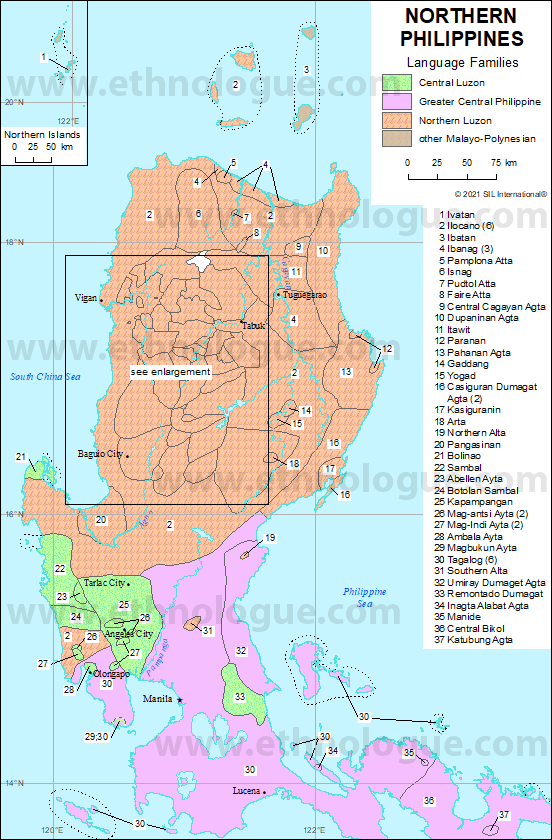
Northern Philippines: Enlarged Area
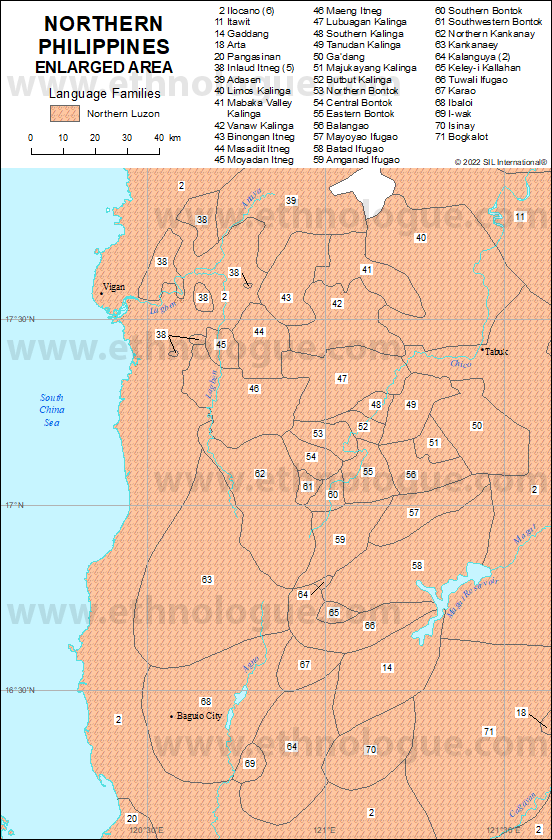
Philippines: Index map
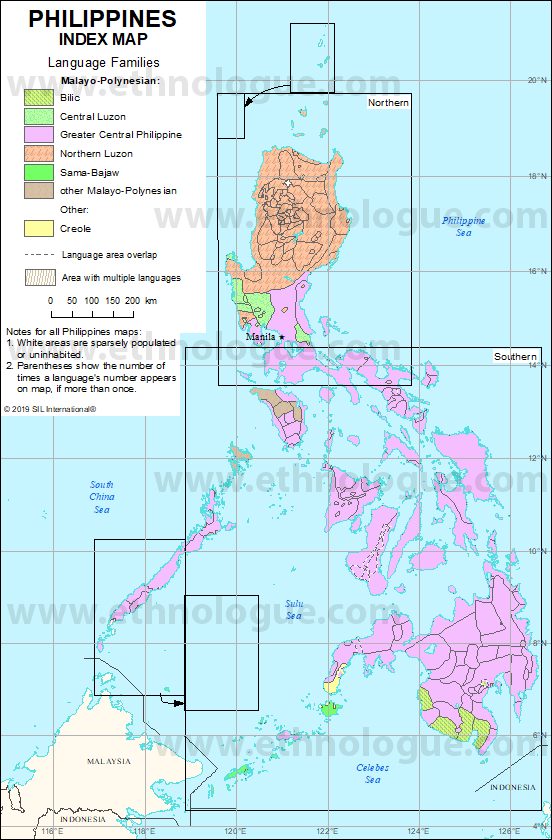
Southern Philippines
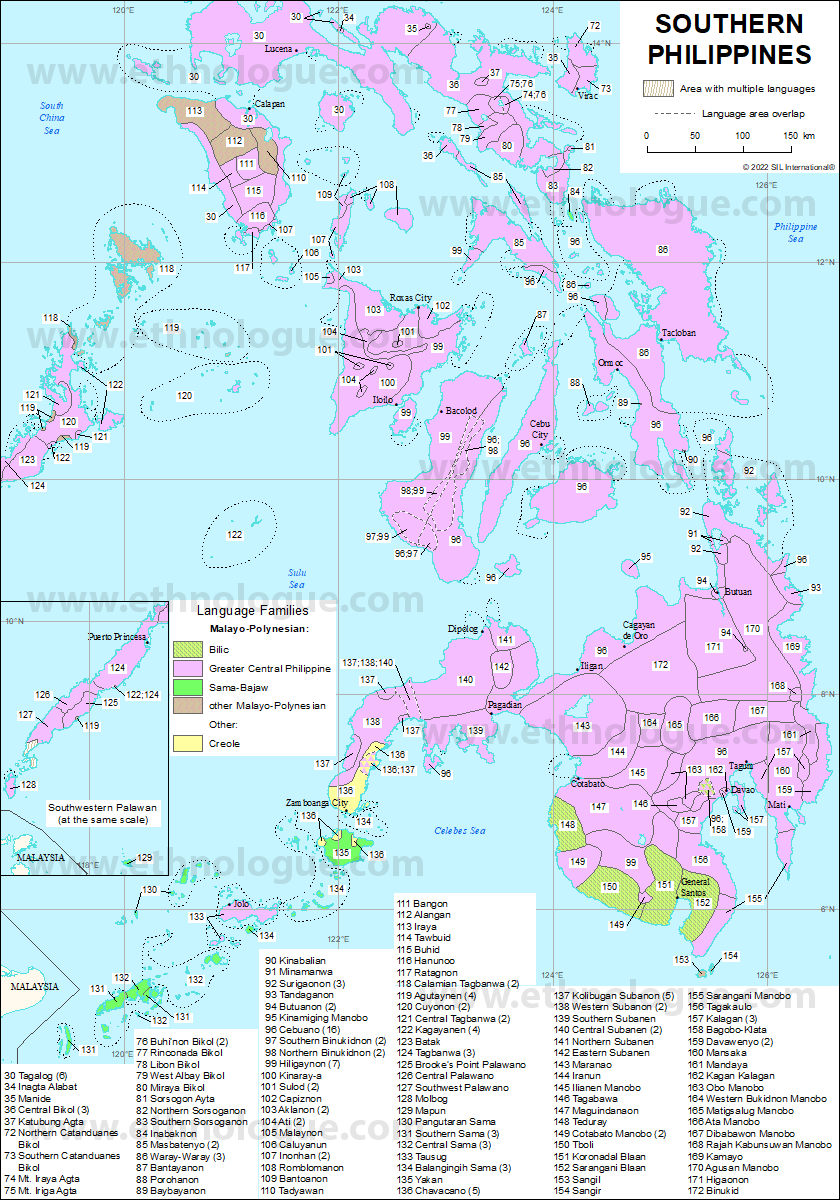
Graphs
Language Vitality Profile
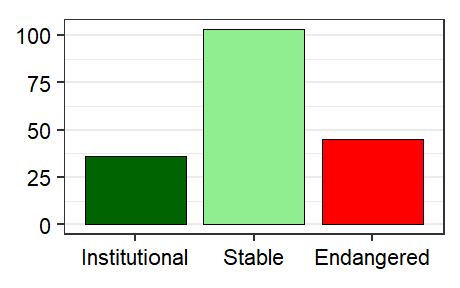
Full explanation
Language Status Profile
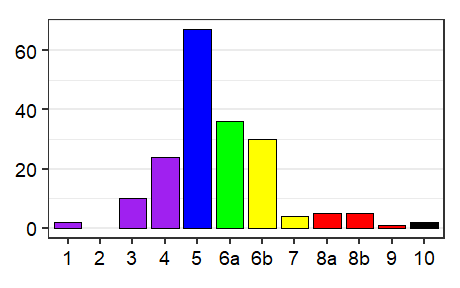
Full explanation
Resources
View Terms
Each Ethnologue country digest is a licensed product with restricted terms of use. Before downloading the product, you must agree to the following terms:
- This is a license for individual use. Just as with a conventionally published book, it is a violation of copyright to make a copy and give it to others.
- You may not redistribute this work in any form, including ingesting the contents into a database that is shared with others or posting it on a web site (whether public or private).
To inquire about permission for reuse or redistribution, please use the Contact Us form in the footer.
Digest of the languages of Philippines ($399.95, 127 page PDF)