
PK
Islamic Republic of Pakistan
Pakistan
Summary
- Official Name
- Islamic Republic of Pakistan
- Population
- 225,200,000
- Principal Languages
- English, Urdu
- Literacy Rate
- 59% (2017 UNESCO)
- International Conventions
- CSICH (2012), ICCPR (1966), UNCRPD (2006), UNDRIP (2007)
- General References
- Addleton 1986, Bashir 2003, Campbell and King 2011, Decker and Decker 1992, Masica 1991, Morgenstierne 1974, Payne 1987, Rensch et al 1992, Shackle 1979, Shackle 1980, Strand 1973, Strand 2001, Van Driem 2007
- Deaf Population
- 244,000
- Language Counts
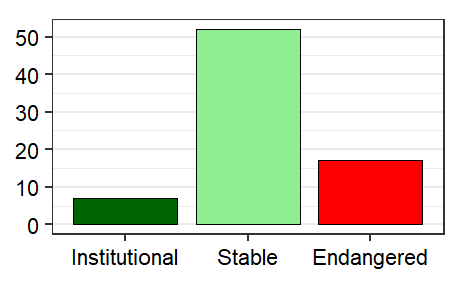
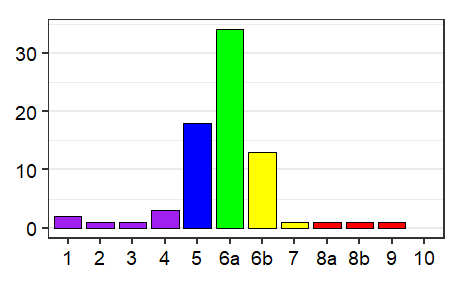
- The number of established languages listed for Pakistan is 78. All are living languages. Of these, 69 are indigenous and 9 are non-indigenous. Furthermore, 4 are institutional, 24 are developing, 30 are vigorous, 16 are in trouble, and 4 are dying. Also listed are 10 unestablished languages and 3 macrolanguages.
Languages
- Aer aeq
- Sindh province: Jikrio Goth near Kunri; Deh area, Hyderabad, Jamesabad. Users: 100 (1998). Women monolingual. Ethnic population: 330 Aer in Deh area. Status: 6b (Threatened). Classification: Indo-European, Indo-Iranian, Indo-Aryan, Intermediate Divisions, Western, Gujarati
- Badeshi bdz
- Khyber Pakhtunkwa province: Bishigram valley upper reaches, Swat Kohistan; small groups in Pooran Chakesar, Swat, and Tirat valleys; Alai. Users: No known L1 speakers. Last speakers survived into the 2000s. Ethnic population: 2,830 (2000). Status: 9 (Dormant). Alternate Names: Badakhshi Classification: Indo-European, Indo-Iranian, Unclassified
- Bagri bgq
- Punjab and Sindh provinces. Users: 306,000 in Pakistan (2018). Status: 6a* (Vigorous). Alternate Names: Bagari, Bagria, Bagris, Bahgri, Baorias, Bawri Classification: Indo-European, Indo-Iranian, Indo-Aryan, Intermediate Divisions, Western, Rajasthani, Unclassified
- Balochi, Eastern bgp
- Balochistan province: northeast; Punjab province: southwest; Sindh province: northwest. Users: 2,930,000 in Pakistan (2017 census). Total users in all countries: 2,930,800. Status: 5* (Developing). Alternate Names: Baloci, Baluchi, Baluci, Eastern Hill Balochi Autonym: بلوچی (Balochi) Classification: Indo-European, Indo-Iranian, Iranian, Western, Northwestern, Balochi
- Balochi, Southern bcc
- South Balochistan and Sindh provinces, Karachi. Users: 2,450,000 in Pakistan (2017 census). Total users in all countries: 3,555,700. Status: 5* (Developing). Alternate Names: Baloci, Baluchi, Baluci, Makrani Autonym: Balóchi, بلوچی (Balochi) Classification: Indo-European, Indo-Iranian, Iranian, Western, Northwestern, Balochi
- Balochi, Western bgn
- Balochistan province: northwest; Sindh province: Dadu district. Users: 1,050,000 in Pakistan (2017 census). Total users in all countries: 2,264,350. Status: 5* (Developing). Alternate Names: Baloci, Baluchi, Baluci Autonym: بلوچی (Balochi) Classification: Indo-European, Indo-Iranian, Iranian, Western, Northwestern, Balochi
- Balti bft
- Gilgit Baltistan province: Hunza-Nagar district; Baltistan region, Gultari, Khapalu, Kharmang, Rondu, Shigar, and Skardu valleys. Users: 425,000 in Pakistan (2018). Total users in all countries: 438,800. Status: 5* (Developing). Alternate Names: Baltistani, Bhotia of Baltistan, Byltae, Sbalti Autonym: بلتی (Baltī) Classification: Sino-Tibetan, Tibeto-Burman, Western Tibeto-Burman, Bodish, Central Bodish, Western
- Baluchi bal
- Users: Population total all languages (L1 only): 8,750,850. Status:
- Bateri btv
- Khyber Pakhtunkwa province: south Kohistan district; Indus river east bank, some north of Besham, Batera area. Users: 39,000 in Pakistan (2018). Total users in all countries: 39,800. Status: 6a* (Vigorous). Alternate Names: Batera Kohistani, Baterawal, Baterawal Kohistani, Bateri Kohistani, Bhaṭʹe-sa zʹib Classification: Indo-European, Indo-Iranian, Indo-Aryan, Outer Languages, Northwestern, Dardic, Kohistani
- Bengali ben
- Users: 326,000 in Pakistan (2018). Status: Unestablished. Classification: Indo-European, Indo-Iranian, Indo-Aryan, Outer Languages, Eastern, Bengali-Assamese
- Bhaya bhe
- Sindh province: Jamesabad, Kapri Goth, Khipro area, Mirke goth, Mirpurkhas, Phuladia, and a few in Hyderabad. Possibly in India. Users: 70 (1998). Status: 6b (Threatened). Classification: Indo-European, Indo-Iranian, Indo-Aryan, Western Hindi, Unclassified
- Brahui brh
- Balochistan and Sindh provinces: east in Kalat and Quetta region. Users: 2,640,000 in Pakistan (2017 census). Total users in all countries: 2,864,400. Status: 5* (Developing). Alternate Names: Birahui, Brahuidi, Brahuigi, Kur Galli Autonym: براہوئی (brāhūʾī) Classification: Dravidian, Northern
- Brokskat bkk
- Gilgit-Baltistan province: Ganche district, Ganokh village. Users: 400 in Pakistan (2022). Status: 6b* (Threatened). Classification: Indo-European, Indo-Iranian, Indo-Aryan, Outer Languages, Northwestern, Dardic, Shina
- Burushaski bsk
- Gilgit Baltistan province: north Gilgit district areas, Hunza-Nagar and Yasin areas; scattered in Gilgit, Kashmir, and various cities. Users: 126,000 in Pakistan (2018), increasing. Total users in all countries: 126,300. Status: 6a* (Vigorous). Alternate Names: Biltum, Brooshaaski, Brushaski, Burucaki, Burucaski, Burushaki, Burushashki, Burushaski Hunza, Burushki, Miśa:ski, Mishāski Autonym: Burushaski, بروشسکی (Burushaski) Classification: Language isolate
- Chilisso clh
- Khyber Pakhtunkwa province: Kohistan district, Indus river east bank, Indus Kohistan, Koli, Palas area. Users: 1,000 (1992 SIL). Ethnic population: 1,600. Status: 6b* (Threatened). Alternate Names: Chiliss, Galos Classification: Indo-European, Indo-Iranian, Indo-Aryan, Outer Languages, Northwestern, Dardic, Kohistani
- Chinese, Mandarin cmn
- Users: 10,000 in Pakistan (2018). Status: Unestablished. Classification: Sino-Tibetan, Chinese
- Dameli dml
- Khyber Pakhtunkwa province: south Chitral district, Damel valley; 4 main and several smaller villages. Users: 5,000 (Perder 2013), increasing. Status: 6a (Vigorous). Alternate Names: Damedi, Damel, Damia, Damiabaasha, Gidoji, Gudoji Classification: Indo-European, Indo-Iranian, Indo-Aryan, Outer Languages, Northwestern, Dardic, Kunar
- Dari prs
- Khyber Pakhtunkwa province: southeast Chitral, Shishi Koh valley, Madaglasht village; Karachi, Lahore, Peshawar, Rawalpindi, and other large cities. Users: 921,000 in Pakistan (2022 Joshua Project), based on ethnicity, included 909,000 ethnic Tajiks who speak Dari. Status: 5* (Dispersed). Alternate Names: Afghan Persian, Badakhshi, Madaglashti Classification: Indo-European, Indo-Iranian, Iranian, Western, Southwestern, Persian
- Dehwari deh
- Balochistan province: Kalat and Mastung. Users: 19,000 (2018). Status: 6a* (Vigorous). Alternate Names: Deghwari Classification: Indo-European, Indo-Iranian, Iranian, Western, Southwestern, Persian
- Dhatki mki
- Sindh province: Sanghar and Tharparkar districts. Users: 190,000 in Pakistan (2018). Total users in all countries: 206,400. Status: 5* (Developing). Alternate Names: Dhati, Thari Autonym: ڍاٽڪِي (Dhatki) Classification: Indo-European, Indo-Iranian, Indo-Aryan, Intermediate Divisions, Western, Rajasthani, Marwari
- Domaaki dmk
- Gilgit Baltistan province: Hunza-Nagar district, Bakor village, Big Nagar, Gilgit, Mominabad village, Oshkandas east of Gilgit, Punyal, and Shishkat; mainly in Hunza valley. Users: 340 (Matthias 2011), decreasing. Concentrated mostly in one village (Van Driem 2007). Status: 8b (Nearly extinct). Alternate Names: Bericho, Dawoodi, Dom, Doma, Dumaki Classification: Indo-European, Indo-Iranian, Indo-Aryan, Intermediate Divisions, Western
- English eng
- Users: 104,016,300 in Pakistan, all users. L1 users: 16,300 in Pakistan (2018). L2 users: 104,000,000 (Ramaswami et al 2012). Status: 1 (National). Statutory national language (1973, Constitution, Article 251(2)). Classification: Indo-European, Germanic, West, English
- Gawar-Bati gwt
- Khyber Pakhtunkwa province: south Chitral district, Arandu area; Kunar river area. Users: 4,000 in Pakistan (2021). Status: 6a* (Vigorous). Alternate Names: Arandui, Gowar-Bati, Gowari, Narisati, Narsati, Satre Classification: Indo-European, Indo-Iranian, Indo-Aryan, Outer Languages, Northwestern, Dardic, Kunar
- Gawri gwc
- Khyber Pakhtunkwa province: Swat district, Biar, Lamuti, Rajkot, and Thal villages in Dir Kohistan; upper Swat Kohistan, between Peshmal and Kalam north to Kalam area upper valleys. Users: 96,400 (2018). Status: 6b (Threatened). Alternate Names: Bashgharik, Bashkarik, Baskarik, Dir Kohistani, Diri, Dirwali, Gaawro, Garwa, Garwi, Gowri, Kalam Kohistani, Kalami, Kohistana, Kohistani Autonym: گاؤری (Gauri) Classification: Indo-European, Indo-Iranian, Indo-Aryan, Outer Languages, Northwestern, Dardic, Kohistani
- Ghera ghr
- Sindh province: Hyderabad district, 1 enclave between main bus stop and railway station in Hyderabad city. Users: 10,000 (1998). Status: 6a* (Vigorous). Alternate Names: Bara, Sindhi Ghera Classification: Indo-European, Indo-Iranian, Indo-Aryan, Western Hindi, Unclassified
- Goaria gig
- Sindh province: widespread (except Karachi), Badin, Larkana, Moro, and Umerkot on lower Indus river valley between Hyderabad and Sukkur. Users: 25,400 (2000). Status: 6a (Vigorous). Classification: Indo-European, Indo-Iranian, Indo-Aryan, Intermediate Divisions, Western, Rajasthani, Marwari
- Gowro gwf
- Khyber Pakhtunkwa province: Kohistan district, Kolai area, Mahrin village on Indus east bank. Users: 1,000 (2003 J. Baart), decreasing. Status: 6b (Threatened). Alternate Names: Gabar Khel, Gabaro Classification: Indo-European, Indo-Iranian, Indo-Aryan, Outer Languages, Northwestern, Dardic, Kohistani
- Gujarati guj
- Sindh and lower Punjab provinces. Status: 5* (Dispersed). Classification: Indo-European, Indo-Iranian, Indo-Aryan, Intermediate Divisions, Western, Gujarati
- Gujari gju
- Azad Kashmir province: widespread north; Gilgit Baltistan province: Diamer district, Gilgit; Khyber Pakhtunkwa province: east Hazara district, Kaghan valley, scattered in south Chitral district, Dir Kohistan and Swat Kohistan; Punjab province: Rawalpindi district; Islamabad. Users: 391,000 in Pakistan (2018). Status: 5* (Developing). Alternate Names: Gogri, Gojari, Gojri, Gujer, Gujjari, Gujuri, Gujuri Rajasthani, Kashmir Gujuri Classification: Indo-European, Indo-Iranian, Indo-Aryan, Intermediate Divisions, Western, Rajasthani, Unclassified
- Gurgula ggg
- Sindh province: Bhens colony, Karachi; smaller urban centers of Mirpur Khas, Moro, Panj, Sabura, Shahdadpur, and Tando Allahyar. Users: 35,300 (2000). Status: 6a* (Vigorous). Alternate Names: Marwari Ghera Classification: Indo-European, Indo-Iranian, Indo-Aryan, Intermediate Divisions, Western, Rajasthani, Unclassified
- Hazaragi haz
- Balochistan province: Quetta district; Qunduz area, Karachi and Islamabad. Users: 97,600 in Pakistan (2018). Status: 6a* (Vigorous). Alternate Names: Azargi, Hazara, Hezareh Classification: Indo-European, Indo-Iranian, Iranian, Western, Southwestern, Persian
- Hindko, Northern hno
- Azad Kashmir province: Muzaffarabad district, and Islamabad; Khyber Pakhtunkwa province: Hazara division, Abbotabad and Mansehra districts; Indus and Kaghan valleys and Indus valley tributaries. Users: 3,570,000 (2017 census), increasing. Status: 5 (Developing). Alternate Names: Hazara Hindko, Hindko, Kagani, Kaghani, “Hindki” (pej.) Autonym: ہندکو (Hindko) Classification: Indo-European, Indo-Iranian, Indo-Aryan, Intermediate Divisions, Western, Panjabi, Western Panjabi
- Hindko, Southern hnd
- Khyber Pakhtunkwa province: Kohat and Peshawar districts; Punjab province: Attock district, to south Hazara division; Islamabad. Users: 1,170,000 (2017 census). Status: 5* (Developing). Alternate Names: Hindko Autonym: ہندکو (Hindko) Classification: Indo-European, Indo-Iranian, Indo-Aryan, Intermediate Divisions, Western, Panjabi, Western Panjabi
- Jadgali jdg
- Balochistan province: Lasbela district; Sindh province: Karachi district. Users: 15,600 in Pakistan (2004 J. Leclerc). Total users in all countries: 25,600. Status: 6a* (Vigorous). Alternate Names: Jat, Jatgali, Jatki Classification: Indo-European, Indo-Iranian, Indo-Aryan, Outer Languages, Northwestern, Sindhi
- Jandavra jnd
- Sindh province: Hyderabad to east of Mirpur Khas. Reportedly also in Jodhpur, Rajasthan, India. Users: 5,000 (1998). Status: 6a (Vigorous). Alternate Names: Jhandoria Classification: Indo-European, Indo-Iranian, Indo-Aryan, Intermediate Divisions, Western, Gujarati
- Jogi jog
- Sindh province: Badin, Hala, Hyderabad, Jusab Jang, Karachi Habchopi, Khokhar Bughera, Makli, Matli, Mirpurkhas, Nabisar, Nagar Parkar, Sato Mel, Tando Adam, Tando Allahyar, Tando Jam, Tando Sain Dad, Taz Mori, Thatta, Umerkot. Users: 50,000 (1996 R. Hoyle). Status: 6a (Vigorous). Classification: Indo-European, Indo-Iranian, Indo-Aryan, Intermediate Divisions, Western, Rajasthani, Marwari
- Kabutra kbu
- Sindh province: Kunri, Nara Dhoro, and Umerkot areas. Users: 1,000 (1998). Status: 6b* (Threatened). Alternate Names: Nat, Natra Classification: Indo-European, Indo-Iranian, Indo-Aryan, Western Hindi, Hindustani, Sansi
- Kacchi kfr
- Sindh province: notably in Karachi. Users: 50,000 in Pakistan (1998). Status: 6a* (Vigorous). Alternate Names: Cuchi, Cutch, Kachchhi, Kachchi, Kachi, Katch, Katchi, Kautchy, Kutchchi, Kutchie Classification: Indo-European, Indo-Iranian, Indo-Aryan, Outer Languages, Northwestern, Sindhi
- Kalasha kls
- Khyber Pakhtunkwa province: south Chitral district, Urtsun valley (southern Kalasha dialect); Birir, Bumboret, and Rumbur valleys (northern Kalasha dialect). Users: 5,000 (Heegård Petersen 2006). 3,200 in Northern Kalasha area; unknown and decreasing number in Southern Kalasha area. Status: 6a* (Vigorous). Alternate Names: Calasa, Dardu, Kalasa, Kalash, Kalashamon, Kalashamond, Kalashamondr, Kalashi Autonym: Kal’as’amon Classification: Indo-European, Indo-Iranian, Indo-Aryan, Outer Languages, Northwestern, Dardic, Chitral
- Kalkoti xka
- Khyber Pakhtunkwa province: Dir Kohistan, Kalkot village. Users: 6,600 (2018). Status: 7 (Shifting). Classification: Indo-European, Indo-Iranian, Indo-Aryan, Outer Languages, Northwestern, Dardic, Shina
- Kamviri xvi
- Khyber Pakhtunkwa province: south Chitral district, Badrugal, Lamerot, Langorbat, and Urtsun valley. Users: 2,000 in Pakistan (2004). Status: 6a* (Vigorous). Alternate Names: Kamdeshi, Kamik, Lamertiviri, Shekhani Classification: Indo-European, Indo-Iranian, Nuristani
- Kashmiri kas
- Azad Kashmir province: south of Shina. Users: 361,000 in Pakistan (2017 census). Status: 5* (Dispersed). Alternate Names: Cashmeeree, Cashmiri, Kacmiri, Kaschemiri, Keshuri Classification: Indo-European, Indo-Iranian, Indo-Aryan, Outer Languages, Northwestern, Dardic, Kashmiri
- Kati bsh
- Khyber Pakhtunkwa province: Chitral district (eastern Kativiri dialect), Bumboret, Lutkuh, Rumbur, and Urtsun valleys. Users: 7,800 in Pakistan (2018). Status: 6a* (Vigorous). Alternate Names: Bashgali, Kata viri, Kativiri, Kâtʹa-vari, Nuristani, Shekhaniwar Classification: Indo-European, Indo-Iranian, Nuristani
- Khetrani xhe
- Balochistan province: Barkhan district. Users: 20,000 (2018). Status: 6a* (Vigorous). Classification: Indo-European, Indo-Iranian, Indo-Aryan, Intermediate Divisions, Western, Panjabi, Western Panjabi
- Khowar khw
- Gilgit Baltistan province: Gilgit district, Ghizr valley, Shandur pass to Gupis; Khyber Pakhtunkwa province: Chitral and Peshawar districts; Ishkhoman and Yasin valleys, north Swat valley, Ushu; probably in Rawalpindi and other northern cities. Users: 351,000 in Pakistan (2018). Total users in all countries: 379,100. Status: 3 (Wider communication). Lingua franca in Chitral and adjacent areas of Gilgit and Swat districts since the 17th century. Also spoken in Peshawar and Rawalpindi. Used at home and in literature. Alternate Names: Arniya, Chitrali, Chitrari, Citrali, Kashkari, Khawar, Patu, Qashqari Autonym: کھووار (Khowar) Classification: Indo-European, Indo-Iranian, Indo-Aryan, Outer Languages, Northwestern, Dardic, Chitral
- Kohistani, Indus mvy
- Khyber Pakhtunkwa province: Kohistan district, west bank Indus river. Users: 200,000 (1992). Status: 5* (Developing). Alternate Names: Khili, Kohistani, Kohistẽ, Mair, Maiyon, Maiyã, Shuthun Classification: Indo-European, Indo-Iranian, Indo-Aryan, Outer Languages, Northwestern, Dardic, Kohistani
- Koli, Kachi gjk
- Sindh province: Nawabshah and Sakrand north, Matli south, and east beyond Mirpur Khas and Jamesabad, Tando Adam and Tando Allahyar town areas. Users: 130,000 in Pakistan (2018). 80,000–100,000 Kachi Koli, 5,000–6,000 Rabari, 10,000 Kachi Bhil, 50,000 Vagri, 10,000 Katai Meghwar, 1,000 Zalavaria Koli. Total users in all countries: 530,000. Status: 5* (Developing). Alternate Names: Kachi, Kachi Gujarati, Katchi, Kohli, Kolhi, Koli, Kori, Kuchi, Vagari, Vagaria Autonym: گجراتی کچی کوہلی (Gujarati Kuchi Kohli) Classification: Indo-European, Indo-Iranian, Indo-Aryan, Intermediate Divisions, Western, Gujarati
- Koli, Parkari kvx
- Sindh province: Tharparkar district, Nagar Parkar in southeast tip bordering India; lower Thar desert, to Indus river west, bordered north and west by Hyderabad, to south and west of Badin. Users: 358,000 (2018). Status: 5* (Developing). Alternate Names: Parkari Autonym: پارڪرِي (Parkari) Classification: Indo-European, Indo-Iranian, Indo-Aryan, Intermediate Divisions, Western, Gujarati
- Koli, Wadiyari kxp
- Sindh province: bounded by Hyderabad, Mirpur Khas, and Tando Allahyar north, Jamesabad and Matli south. Users: 179,000 in Pakistan (2018). Status: 5* (Developing). Alternate Names: Wadaria, Wadhiara, Wadiyara, Wadiyara Koli, Wadiyari Classification: Indo-European, Indo-Iranian, Indo-Aryan, Intermediate Divisions, Western, Gujarati
- Konkani, Goan gom
- Users: 67,400 in Pakistan (2018). Status: Unestablished. Classification: Indo-European, Indo-Iranian, Indo-Aryan, Outer Languages, Southern, Konkani
- Kundal Shahi shd
- Azad Kashmir province: Neelam district, Kundal Shahi village. Users: 700 (Rehman and Baart 2005). Status: 8a (Moribund). Alternate Names: Apeen Bol, “Rawri” (pej.) Classification: Indo-European, Indo-Iranian, Indo-Aryan, Outer Languages, Northwestern, Dardic, Shina
- Lahnda lah
- Users: Population total all languages (L1 only): 100,963,380. Status:
- Lasi lss
- Balochistan province: Kalat division, Lasbela district, north-northwest of Karachi. Users: 14,300 (2018). Status: 6a* (Vigorous). Alternate Names: Lassi Classification: Indo-European, Indo-Iranian, Indo-Aryan, Outer Languages, Northwestern, Sindhi
- Loarki lrk
- Sindh province: rural. Users: 20,000 (1998). Status: 6a (Vigorous). Classification: Indo-European, Indo-Iranian, Indo-Aryan, Intermediate Divisions, Western, Rajasthani, Marwari
- Mankiyali nlm
- Khyber Pakhtunkwa province: Mansehra district, Badi Shungli union council, Dana village. Users: 500 (Anjum 2016). Status: 6b (Threatened). Alternate Names: Tarawara, Tarawari, Trawari Classification: Indo-European, Indo-Iranian, Indo-Aryan, Outer Languages, Northwestern, Dardic, Kohistani
- Marwari mve
- Punjab province: Bahawalnagar, Bahawalpur, and Rahim Yar Khan districts; Sindh province: widespread Karachi to Sukkur. Users: 164,000 (2018). 78,300 Northern Marwari and 85,600 Southern Marwari. Status: 5* (Developing). Alternate Names: Jaiselmer, Marawar, Merwari, Rajasthani Autonym: مارواڑی (Mārwāṛī) Classification: Indo-European, Indo-Iranian, Indo-Aryan, Intermediate Divisions, Western, Rajasthani, Marwari
- Memoni mby
- Sindhi province: scattered; Karachi. Status: 7 (Shifting). Classification: Indo-European, Indo-Iranian, Indo-Aryan, Unclassified
- Oadki odk
- Sindh and in south Punjab provinces: widespread. Users: 76,100 in Pakistan (2018). Ethnic population: 250,000 (2017 A. Ranjha). Status: 6a* (Vigorous). Alternate Names: Oad, Od, Odh, Odki Classification: Indo-European, Indo-Iranian, Indo-Aryan, Unclassified
- Ormuri oru
- Khyber Pakhtunkwa province: South Wazirstan agency, Kaniguram. Users: 5,000 in Pakistan (2018), decreasing. Total users in all countries: 5,050. Status: 6b* (Threatened). Alternate Names: Baraki, Bargista, Berki, Birki, Brakee, Braki, Burki, Ormar, Ormari, Ormui, Ormur, Urmar, Urmuri, Warmaro Classification: Indo-European, Indo-Iranian, Iranian, Western, Northwestern, Ormuri-Parachi
- Pahari-Potwari phr
- Azad Kashmir province: all but far north; Khyber Pakhtunkwa province: Abbottabad district; Punjab province: Gujarat, Jhelum, and Rawalpindi districts; Islamabad. Users: 2,500,000 in Pakistan (Lothers and Lothers 2007). Total users in all countries: 3,541,900. Status: 6a* (Vigorous). Alternate Names: Pahari, Pahari-Pothowari, Pothohari, Potohari, Potwari Classification: Indo-European, Indo-Iranian, Indo-Aryan, Intermediate Divisions, Western, Panjabi, Western Panjabi
- Pakistan Sign Language pks
- Scattered. Users: 1,080,000 (2021 DBS/DOOR/SIL). Estimated 650,000–1,300,000 deaf signers, assuming 0.3%–0.6% of total population. Status: 5 (Developing). Alternate Names: IPSL, Indo-Pakistani Sign Language, Isharon Ki Zubann, PSL Classification: Sign language, Deaf community sign language
- Palula phl
- Khyber Pakhtunkwa province: Chitral district, Ashret and Biori, 12 villages on lower east Chitral river; some in main valley, Kalkatak, and Shishi Koh valley, Purigal; some in Dir Kohistan. Ashret valley (Ashreti dialect); Biori valley, Kalkatak, and Purigal (northern Palula dialect). Users: 14,400 (2018). Population of Ashret and Biori Valleys is almost completely monolingual (Liljegren 2008). Status: 5 (Developing). Alternate Names: Biyori, Dangarikwar, Palola, Phalulo, Phalura Classification: Indo-European, Indo-Iranian, Indo-Aryan, Outer Languages, Northwestern, Dardic, Shina
- Parsi prp
- Users: 20,000 in Pakistan (1999). Status: Unestablished. Classification: Indo-European, Indo-Iranian, Iranian, Western, Northwestern, Central Iran
- Pashto, Central pst
- Balochistan province: north; Khyber Pakhtunkwa province: Bannu and Karak districts; Wazirstan agencies and Lakki Marwat and Tank regions; Punjab province: some border areas in Bhakkar district. Users: 8,490,000 (2017 census). Status: 6a* (Vigorous). Alternate Names: Mahsudi Autonym: پښتو (Pashto) Classification: Indo-European, Indo-Iranian, Iranian, Eastern, Southeastern, Pashto
- Pashto, Northern pbu
- Khyber Pakhtunkwa province: Peshawar district and Yusufzai area; Punjab province: Mianwali district; all along Afghanistan border. Users: 24,300,000 in Pakistan (2017 census). Ethnic population: Possibly 49,600,000 Pashto in all countries. Total users in all countries: 30,173,140 (as L1: 28,813,140; as L2: 1,360,000). Status: 5* (Developing). Alternate Names: Pakhto, Pashtu, Pushto, Yousafzai Pashto, Yusufzai Pashto Autonym: پښتو (Pashto) Classification: Indo-European, Indo-Iranian, Iranian, Eastern, Southeastern, Pashto
- Pashto, Southern pbt
- Balochistan province: Loralai, Mastung, Quetta, Pishin, Sibi, and Ziarat districts, and adjacent areas; Khyber Pakhtunkwa province: Dera Ismail Khan district; Punjab province: Dera Ghazi Khan district. Users: 5,960,000 in Pakistan (2017 census). Status: 5* (Dispersed). Alternate Names: Pashtu, Pushto, Pushtu, Quetta-Kandahari Pashto Classification: Indo-European, Indo-Iranian, Iranian, Eastern, Southeastern, Pashto
- Persian, Iranian pes
- Users: 185,000 in Pakistan (2018). Status: Unestablished. Classification: Indo-European, Indo-Iranian, Iranian, Western, Southwestern, Persian
- Punjabi, Eastern pan
- Punjab province: Bahawalnagar, Faisalabad, Toba Tek Singh, and Vehari districts. Users: 15,000,000 in Pakistan (2017 census). Status: 5 (Dispersed). Alternate Names: Eastern Panjabi, Punjabi Classification: Indo-European, Indo-Iranian, Indo-Aryan, Intermediate Divisions, Western, Panjabi
- Punjabi, Western pnb
- Punjab province: Chakwal, Gujranwala, Gujrat, Hafizabad, Jhang, Jhelum, Kasur, Khushab, Lahore, Mandi Bahauddin, Nankana, Narowal, Okara, Pakpattan, Sahiwal, Sargodha, Shekhupura, and Sialkot districts. Users: 65,000,000 in Pakistan (2017 census). Total users in all countries: 66,442,480. Status: 5 (Developing). Alternate Names: Jangli, Lahanda, Lahnda, Lahndi, Panjabi, Panjabi Proper, Punjabi, Punjapi, Shahmukhi Autonym: پنجابی (Panjābī) Classification: Indo-European, Indo-Iranian, Indo-Aryan, Intermediate Divisions, Western, Panjabi, Western Panjabi
- Pushto pus
- Users: Population total all languages (L1 only): 53,557,070. Status:
- Rohingya rhg
- Users: 350,000 in Pakistan (2017 The Arakan Project), based on nationality. Status: Unestablished. Classification: Indo-European, Indo-Iranian, Indo-Aryan, Outer Languages, Eastern, Bengali-Assamese
- Sansi ssi
- Sindh province: Karachi. Users: 20,000 in Pakistan (2018). Status: 7 (Shifting). Alternate Names: Bhilki Classification: Indo-European, Indo-Iranian, Indo-Aryan, Western Hindi, Hindustani, Sansi
- Saraiki skr
- Balochistan province: Barkhan, Jaffarabad, Jhal Magsi, and Nasirabad districts; Khyber Pakhtunkwa province: Dera Ismail Khan and Tank districts; Punjab province: Bahawalpur, Bhakkar, Dera Ghazi Khan, Layyah, Lodhran, Mianwali, Multan, Muzaffargarh, Rahim Yar Khan, Rajanpur, and Taunsa districts; Sindh province: Ghotki, Jacobabad, Kashmore, Larkana, Qambar Shahdadkot, Shikarpur and Sukkur districts. Users: 25,900,000 in Pakistan (2017 census). Total users in all countries: 26,219,000. Status: 5 (Developing). Alternate Names: Belochki, Seraiki, Siraiki Autonym: سرائیکی (Saraiki) Classification: Indo-European, Indo-Iranian, Indo-Aryan, Intermediate Divisions, Western, Panjabi, Western Panjabi
- Sarikoli srh
- Khyber Pakhtunkwa province: Chitral district, bordering the Wakhan corridor. Users: 70 in Pakistan (Torwali 2021). Status: 8b (Nearly extinct). Alternate Names: Sariquli Classification: Indo-European, Indo-Iranian, Iranian, Eastern, Southeastern, Pamir, Shugni-Yazgulami
- Savi sdg
- Khyber Pakhtunkwa province: Kunar valley, Dir district, many in refugee camps near Timargarha; Chitral, near Drosh; a few in Jalalabad. Users: 4,000 in Pakistan (2021 FLI). Ethnic population: 4,000 (2021 FLI). Status: 6a (Vigorous). Alternate Names: Sau, Sauji, Sawi Classification: Indo-European, Indo-Iranian, Indo-Aryan, Outer Languages, Northwestern, Dardic, Shina
- Shina scl
- Azad Kashmir province: east Neelum district; Gilgit Baltistan province: Baltistan, Diamer, and Gilgit districts, Chilas area, Darel, Gilgit, Haramosh, lower Hunza Valley, Punial, and Tangir valleys, Astor, Kharmang, Kachura, Satpara, and other small valleys, scattered villages in Ishkoman and Yasin valleys; Khyber Pakhtunkwa province: east Kohistan district, Harban and Sazin. Users: 688,000 in Pakistan (2018), increasing. Total users in all countries: 720,200. Status: 6a (Vigorous). Alternate Names: Brokpa, Shinaki, Sina Autonym: شینا (Shina) Classification: Indo-European, Indo-Iranian, Indo-Aryan, Outer Languages, Northwestern, Dardic, Shina
- Shina, Kohistani plk
- Khyber Pakhtunkwa province: Kohistan district, east bank Indus river, Jalkot, Kolai, and Palas valley areas. Users: 458,000 (2018), increasing. Status: 6a (Vigorous). Alternate Names: Kohistani, Kohistyo, Palasi-Kohistani Classification: Indo-European, Indo-Iranian, Indo-Aryan, Outer Languages, Northwestern, Dardic, Shina
- Sindhi snd
- Balochistan province: Khuzdar and Lasbela districts; Sindh province: widespread, Indus river lower reaches; Hyderabad, Karachi. Users: 31,000,000 in Pakistan (2017 census). Ethnic population: 26,000,000 (2014 World Factbook). Total users in all countries: 33,217,150. Status: 2 (Provincial). De facto provincial language in Sindh. Autonym: سنڌي (Sindhi) Classification: Indo-European, Indo-Iranian, Indo-Aryan, Outer Languages, Northwestern, Sindhi
- Sindhi Bhil sbn
- Sindh province: Badin-Matli-Thatta, Ghorabari west, and Mohrano. Badin-Matli to Tando Allahyar scattered (Sindhi Meghwar dialect). Users: 56,500 (2000). Status: 6a* (Vigorous). Alternate Names: Meghwar Bhil Classification: Indo-European, Indo-Iranian, Indo-Aryan, Outer Languages, Northwestern, Sindhi
- Tamil tam
- Sindh province: Karachi, Korangi, Madrasi Para, and Tri Road. Users: 2,000 in Pakistan (2020 BBC). Status: 6b (Threatened). Classification: Dravidian, Southern, Tamil-Kannada, Tamil-Kodagu, Tamil-Malayalam, Tamil
- Torwali trw
- Khyber Pakhtunkwa province: Swat district; upper Swat district, both sides of Swat river, north of Madyan up to Asret (Bahrain dialect); 2 villages in Chail valley (Chail dialect). Users: 114,000 (2018). Ethnic population: 120,000 (Lunsford et al 2021), with an additional 10,000 more living and working abroad. Status: 6b (Threatened). Alternate Names: Kohistani, Torwalak, Torwalik, Turvali Autonym: توروالی (Torwali) Classification: Indo-European, Indo-Iranian, Indo-Aryan, Outer Languages, Northwestern, Dardic, Kohistani
- Turkish tur
- Users: 6,000 in Pakistan (2018). Status: Unestablished. Classification: Turkic, Southern, Turkish
- Turkmen tuk
- Several refugee camps near Quetta, and in cities. Users: 10,900 in Pakistan (2016). Status: Unestablished. Classification: Turkic, Southern, Turkmenian
- Urdu urd
- Widespread. Users: 164,000,000 in Pakistan, all users. L1 users: 15,000,000 in Pakistan (2018 census). L2 users: 149,000,000 (2018). Total users in all countries: 231,294,700 (as L1: 70,248,900; as L2: 161,045,800). Status: 1 (National). Statutory national language (1973, Constitution, Article 251(1)). Alternate Names: Bihari, Modern Standard Urdu Autonym: اُردُو (Urdū) Classification: Indo-European, Indo-Iranian, Indo-Aryan, Western Hindi, Hindustani
- Ushojo ush
- Khyber Pakhtunkwa province: Swat district, upper Bishigram valley, east of Madyan, 12 villages. Users: 3,000 (2018). Status: 6b (Threatened). Alternate Names: Ushuji Classification: Indo-European, Indo-Iranian, Indo-Aryan, Outer Languages, Northwestern, Dardic, Shina
- Uyghur uig
- Users: 10,000 in Pakistan (2018). A few families permanently settled in Pakistan. Status: Unestablished. Classification: Turkic, Eastern
- Uzbek, Southern uzs
- Users: 267,000 in Pakistan (2022 Joshua Project). Status: Unestablished. Classification: Turkic, Eastern
- Vaghri vgr
- Sindh province: Badin, Digri, Hala, Jang Sai, Karachi, Matli, Mirpur Khas, Nawabshah, Noakot, Sakrand, Sanghar, Sukkur, Tando Adam, Tando Allahyar, Tando Ghulam Ali, and Tando Mohammed Khan. Users: 4,800 (2018). Status: 6a* (Vigorous). Alternate Names: Bavri, Salavta, Vaghri Koli Classification: Indo-European, Indo-Iranian, Indo-Aryan, Intermediate Divisions, Western, Gujarati
- Wakhi wbl
- Gilgit Baltistan province: Ghizer, Gilgit, and Hunza-Najar districts; Khyber Pakhtunkwa province: northernmost Chitral district, Baroghil, in glacier area; Chupursan, upper Ishkoman, Shimshal, and upper Yarkhun valleys; upper Hunza valley from Gulmit to Chinese and Afghanistan borders (Gojal dialect). Users: 14,200 in Pakistan (2018), increasing. Status: 6a (Vigorous). Alternate Names: Khik, Khikwar, Vakhan, Wakhani, Wakhigi, X̌ik zik, X̌ikwor, Xhikwor Classification: Indo-European, Indo-Iranian, Iranian, Eastern, Southeastern, Pamir
- Waneci wne
- Balochistan province: northeast in Harnai area. Users: 141,000 (2018). Status: 6a* (Vigorous). Alternate Names: Chalgari, Tarino, Vanechi, Wanechi, Wanetsi Classification: Indo-European, Indo-Iranian, Iranian, Eastern, Southeastern, Pashto
- Yadgha ydg
- Khyber Pakhtunkwa province: Chitral district, upper Lotkoh valley, west of Garam Chashma. Users: 6,150 (2000). Status: 6b (Threatened). Alternate Names: Lotkohiwar, Munji-war, Yidga, Yidgha, Yudga, Yudgha Classification: Indo-European, Indo-Iranian, Iranian, Eastern, Southeastern, Pamir
Languages by Status
English
[eng] 1 (National). Statutory national language (1973, Constitution, Article 251(2)). 104,016,300 in Pakistan, all users. L1 users: 16,300 in Pakistan (2018). L2 users: 104,000,000 (Ramaswami et al 2012).
Urdu
[urd] 1 (National). Statutory national language (1973, Constitution, Article 251(1)). 164,000,000 in Pakistan, all users. L1 users: 15,000,000 in Pakistan (2018 census). L2 users: 149,000,000 (2018). Total users in all countries: 231,294,700 (as L1: 70,248,900; as L2: 161,045,800).
Sindhi
[snd] 2 (Provincial). De facto provincial language in Sindh. 31,000,000 in Pakistan (2017 census). Ethnic population: 26,000,000 (2014 World Factbook). Total users in all countries: 33,217,150.
Khowar
[khw] 3 (Wider communication). Lingua franca in Chitral and adjacent areas of Gilgit and Swat districts since the 17th century. Also spoken in Peshawar and Rawalpindi. Used at home and in literature. 351,000 in Pakistan (2018). Total users in all countries: 379,100.
Dari
[prs] 5* (Dispersed). 921,000 in Pakistan (2022 Joshua Project), based on ethnicity, included 909,000 ethnic Tajiks who speak Dari.
Gujarati
[guj] 5* (Dispersed).
Kashmiri
[kas] 5* (Dispersed). 361,000 in Pakistan (2017 census).
Pashto, Southern
[pbt] 5* (Dispersed). 5,960,000 in Pakistan (2017 census).
Punjabi, Eastern
[pan] 5 (Dispersed). 15,000,000 in Pakistan (2017 census).
Balochi, Eastern
[bgp] 5* (Developing). 2,930,000 in Pakistan (2017 census). Total users in all countries: 2,930,800.
Balochi, Southern
[bcc] 5* (Developing). 2,450,000 in Pakistan (2017 census). Total users in all countries: 3,555,700.
Balochi, Western
[bgn] 5* (Developing). 1,050,000 in Pakistan (2017 census). Total users in all countries: 2,264,350.
Balti
[bft] 5* (Developing). 425,000 in Pakistan (2018). Total users in all countries: 438,800.
Brahui
[brh] 5* (Developing). 2,640,000 in Pakistan (2017 census). Total users in all countries: 2,864,400.
Dhatki
[mki] 5* (Developing). 190,000 in Pakistan (2018). Total users in all countries: 206,400.
Gujari
[gju] 5* (Developing). 391,000 in Pakistan (2018).
Hindko, Northern
[hno] 5 (Developing). 3,570,000 (2017 census), increasing.
Hindko, Southern
[hnd] 5* (Developing). 1,170,000 (2017 census).
Kohistani, Indus
[mvy] 5* (Developing). 200,000 (1992).
Koli, Kachi
[gjk] 5* (Developing). 130,000 in Pakistan (2018). 80,000–100,000 Kachi Koli, 5,000–6,000 Rabari, 10,000 Kachi Bhil, 50,000 Vagri, 10,000 Katai Meghwar, 1,000 Zalavaria Koli. Total users in all countries: 530,000.
Koli, Parkari
[kvx] 5* (Developing). 358,000 (2018).
Koli, Wadiyari
[kxp] 5* (Developing). 179,000 in Pakistan (2018).
Marwari
[mve] 5* (Developing). 164,000 (2018). 78,300 Northern Marwari and 85,600 Southern Marwari.
Pakistan Sign Language
[pks] 5 (Developing). 1,080,000 (2021 DBS/DOOR/SIL). Estimated 650,000–1,300,000 deaf signers, assuming 0.3%–0.6% of total population.
Palula
[phl] 5 (Developing). 14,400 (2018). Population of Ashret and Biori Valleys is almost completely monolingual (Liljegren 2008).
Pashto, Northern
[pbu] 5* (Developing). 24,300,000 in Pakistan (2017 census). Ethnic population: Possibly 49,600,000 Pashto in all countries. Total users in all countries: 30,173,140 (as L1: 28,813,140; as L2: 1,360,000).
Punjabi, Western
[pnb] 5 (Developing). 65,000,000 in Pakistan (2017 census). Total users in all countries: 66,442,480.
Saraiki
[skr] 5 (Developing). 25,900,000 in Pakistan (2017 census). Total users in all countries: 26,219,000.
Bagri
[bgq] 6a* (Vigorous). 306,000 in Pakistan (2018).
Bateri
[btv] 6a* (Vigorous). 39,000 in Pakistan (2018). Total users in all countries: 39,800.
Burushaski
[bsk] 6a* (Vigorous). 126,000 in Pakistan (2018), increasing. Total users in all countries: 126,300.
Dameli
[dml] 6a (Vigorous). 5,000 (Perder 2013), increasing.
Dehwari
[deh] 6a* (Vigorous). 19,000 (2018).
Gawar-Bati
[gwt] 6a* (Vigorous). 4,000 in Pakistan (2021).
Ghera
[ghr] 6a* (Vigorous). 10,000 (1998).
Goaria
[gig] 6a (Vigorous). 25,400 (2000).
Gurgula
[ggg] 6a* (Vigorous). 35,300 (2000).
Hazaragi
[haz] 6a* (Vigorous). 97,600 in Pakistan (2018).
Jadgali
[jdg] 6a* (Vigorous). 15,600 in Pakistan (2004 J. Leclerc). Total users in all countries: 25,600.
Jandavra
[jnd] 6a (Vigorous). 5,000 (1998).
Jogi
[jog] 6a (Vigorous). 50,000 (1996 R. Hoyle).
Kacchi
[kfr] 6a* (Vigorous). 50,000 in Pakistan (1998).
Kalasha
[kls] 6a* (Vigorous). 5,000 (Heegård Petersen 2006). 3,200 in Northern Kalasha area; unknown and decreasing number in Southern Kalasha area.
Kamviri
[xvi] 6a* (Vigorous). 2,000 in Pakistan (2004).
Kati
[bsh] 6a* (Vigorous). 7,800 in Pakistan (2018).
Khetrani
[xhe] 6a* (Vigorous). 20,000 (2018).
Lasi
[lss] 6a* (Vigorous). 14,300 (2018).
Loarki
[lrk] 6a (Vigorous). 20,000 (1998).
Oadki
[odk] 6a* (Vigorous). 76,100 in Pakistan (2018). Ethnic population: 250,000 (2017 A. Ranjha).
Pahari-Potwari
[phr] 6a* (Vigorous). 2,500,000 in Pakistan (Lothers and Lothers 2007). Total users in all countries: 3,541,900.
Pashto, Central
[pst] 6a* (Vigorous). 8,490,000 (2017 census).
Savi
[sdg] 6a (Vigorous). 4,000 in Pakistan (2021 FLI). Ethnic population: 4,000 (2021 FLI).
Shina
[scl] 6a (Vigorous). 688,000 in Pakistan (2018), increasing. Total users in all countries: 720,200.
Shina, Kohistani
[plk] 6a (Vigorous). 458,000 (2018), increasing.
Sindhi Bhil
[sbn] 6a* (Vigorous). 56,500 (2000).
Vaghri
[vgr] 6a* (Vigorous). 4,800 (2018).
Wakhi
[wbl] 6a (Vigorous). 14,200 in Pakistan (2018), increasing.
Waneci
[wne] 6a* (Vigorous). 141,000 (2018).
Aer
[aeq] 6b (Threatened). 100 (1998). Women monolingual. Ethnic population: 330 Aer in Deh area.
Bhaya
[bhe] 6b (Threatened). 70 (1998).
Brokskat
[bkk] 6b* (Threatened). 400 in Pakistan (2022).
Chilisso
[clh] 6b* (Threatened). 1,000 (1992 SIL). Ethnic population: 1,600.
Gawri
[gwc] 6b (Threatened). 96,400 (2018).
Gowro
[gwf] 6b (Threatened). 1,000 (2003 J. Baart), decreasing.
Kabutra
[kbu] 6b* (Threatened). 1,000 (1998).
Mankiyali
[nlm] 6b (Threatened). 500 (Anjum 2016).
Ormuri
[oru] 6b* (Threatened). 5,000 in Pakistan (2018), decreasing. Total users in all countries: 5,050.
Tamil
[tam] 6b (Threatened). 2,000 in Pakistan (2020 BBC).
Torwali
[trw] 6b (Threatened). 114,000 (2018). Ethnic population: 120,000 (Lunsford et al 2021), with an additional 10,000 more living and working abroad.
Ushojo
[ush] 6b (Threatened). 3,000 (2018).
Yadgha
[ydg] 6b (Threatened). 6,150 (2000).
Kalkoti
[xka] 7 (Shifting). 6,600 (2018).
Memoni
[mby] 7 (Shifting).
Sansi
[ssi] 7 (Shifting). 20,000 in Pakistan (2018).
Kundal Shahi
[shd] 8a (Moribund). 700 (Rehman and Baart 2005).
Domaaki
[dmk] 8b (Nearly extinct). 340 (Matthias 2011), decreasing. Concentrated mostly in one village (Van Driem 2007).
Sarikoli
[srh] 8b (Nearly extinct). 70 in Pakistan (Torwali 2021).
Badeshi
[bdz] 9 (Dormant). No known L1 speakers. Last speakers survived into the 2000s. Ethnic population: 2,830 (2000).
Bengali
[ben] Unestablished. 326,000 in Pakistan (2018).
Chinese, Mandarin
[cmn] Unestablished. 10,000 in Pakistan (2018).
Konkani, Goan
[gom] Unestablished. 67,400 in Pakistan (2018).
Parsi
[prp] Unestablished. 20,000 in Pakistan (1999).
Persian, Iranian
[pes] Unestablished. 185,000 in Pakistan (2018).
Rohingya
[rhg] Unestablished. 350,000 in Pakistan (2017 The Arakan Project), based on nationality.
Turkish
[tur] Unestablished. 6,000 in Pakistan (2018).
Turkmen
[tuk] Unestablished. 10,900 in Pakistan (2016).
Uyghur
[uig] Unestablished. 10,000 in Pakistan (2018). A few families permanently settled in Pakistan.
Uzbek, Southern
[uzs] Unestablished. 267,000 in Pakistan (2022 Joshua Project).
Maps
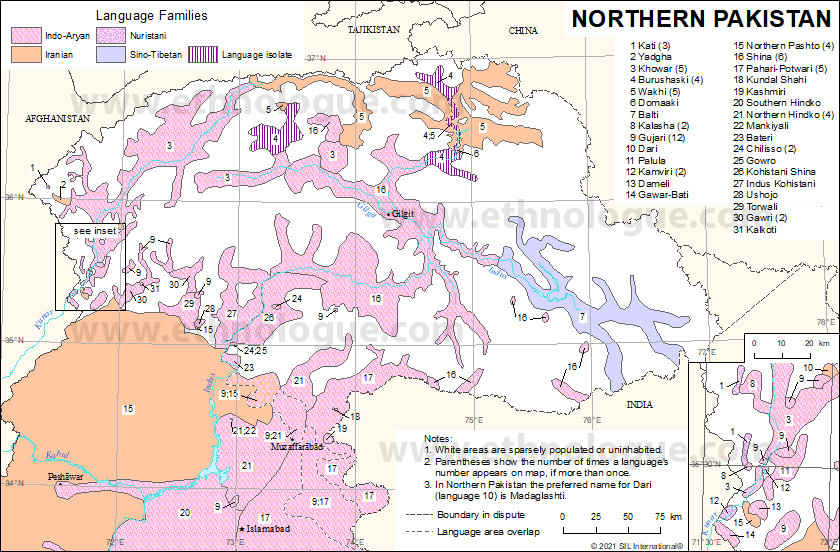
Northern Pakistan
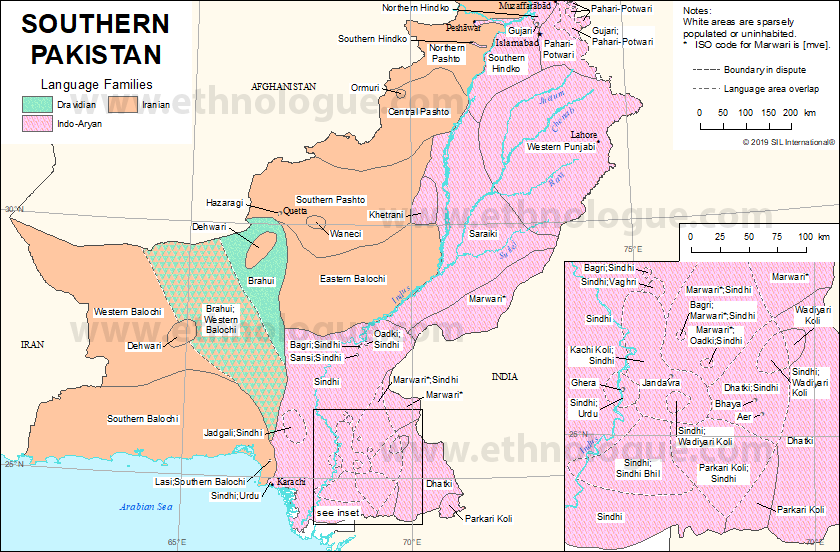
Southern Pakistan
Graphs
Language Vitality Profile
Full explanation
Language Status Profile
Full explanation
Resources
View Terms
Each Ethnologue country digest is a licensed product with restricted terms of use. Before downloading the product, you must agree to the following terms:
- This is a license for individual use. Just as with a conventionally published book, it is a violation of copyright to make a copy and give it to others.
- You may not redistribute this work in any form, including ingesting the contents into a database that is shared with others or posting it on a web site (whether public or private).
To inquire about permission for reuse or redistribution, please use the Contact Us form in the footer.
Digest of the languages of Pakistan ($299.95, 64 page PDF)