
PL
Republic of Poland
Poland
Summary
- Official Name
- Republic of Poland
- Population
- 37,740,000
- Principal Languages
- Polish
- Literacy Rate
- 100% (2015 World Factbook)
- International Conventions
- CDE (1960), CPPDCE (2006), CSICH (2012), ECRML (1992), FCPNM (1998), ICCPR (1966), UNCRPD (2006), UNDRIP (2007)
- General References
- Campbell and King 2011, Comrie 1987, Schenker and Stankiewicz 1980
- Deaf Population
- 50,000–2,342,000 (1998)
- Language Counts
- The number of established languages listed for Poland is 25. Of these, 23 are living and 2 are extinct. Of the living languages, 7 are indigenous and 16 are non-indigenous. Furthermore, 5 are institutional, 11 are developing, 2 are vigorous, 2 are in trouble, and 3 are dying. Also listed are 6 unestablished languages.
Languages
- Arabic ara
- Users: 2,380 in Poland (2013 UNSD). Status: Unestablished.
- Armenian, Western hyw
- Major cities. Users: 2,210 in Poland (2013 UNSD). Status: 5* (Developing). Recognized language (2005, Minorities Act of 2 January, Article 2(2)). Classification: Indo-European, Armenian
- Belarusian bel
- Podlaskie voivodship. Users: 26,700 in Poland (2013 UNSD). Status: 5* (Developing). Recognized language (2005, Minorities Act of 2 January, Article 2(2)). Alternate Names: Belarusan, Byelorussian, White Russian Classification: Indo-European, Balto-Slavic, Slavic, East
- Bulgarian bul
- Users: 1,700 in Poland (2013 UNSD). Status: Unestablished. Classification: Indo-European, Balto-Slavic, Slavic, South, Eastern
- Czech ces
- Łódź voivodship: Bełchatów county, Zelów; Lower Silesia voivodship: Kłodzko county; Masovia voivodship: Warsaw; Silesia voivodship: Cieszyn county. Users: 1,430 in Poland (2013 UNSD). Status: 5* (Dispersed). Recognized language (2005, Minorities Act of 2 January, Article 2(2)). Alternate Names: Čeština, Český jazyk Classification: Indo-European, Balto-Slavic, Slavic, West, Czech-Slovak
- English eng
- Users: 12,511,300 in Poland, all users. L1 users: 11,300 in Poland (2020 J. Leclerc). L2 users: 12,500,000 (European Commission 2012). Status: 4 (Educational). Alternate Names: Język angielski Classification: Indo-European, Germanic, West, English
- Esperanto epo
- Scattered internationally. Most widely represented in Japan, China, France, Germany, Italy, Poland, United States, Brazil, Belgium, and United Kingdom (in order of number of members in the World Esperanto Association). Users: 101,000, all users. L1 users: 1,000 (Corsetti et al 2004), increasing. L2 users: 100,000 (2017 S.V. Nielsen). Status: 3 (Wider communication). Constructed language in 1887 by L. L. Zamenhof hoping to bring about world peace. Widely spoken internationally in the 20th century. Used at home, communication, among close friends, literature, and in literary publications. Autonym: Esperanto, Lingvo Internacia Classification: Constructed language
- French fra
- Users: 948,890 in Poland, all users. L1 users: 8,890 in Poland (2013 UNSD). L2 users: 940,000 (2018). Status: 4 (Educational). Classification: Indo-European, Italic, Romance, Italo-Western, Western, Gallo-Iberian, Gallo-Romance, Gallo-Rhaetian, Oïl, French
- German, Standard deu
- Lower Silesia, Opole, and Silesia voivodships. Users: 7,263,600 in Poland, all users. L1 users: 63,600 in Poland (2013 UNSD). L2 users: 7,200,000 (2019). Status: 2 (Provincial). Statutory provincial language in Opolskie and Silesian provinces (2005, Minorities Act of 2 January, Articles 2(2), 9). Alternate Names: Deutsch, Niemiec Classification: Indo-European, Germanic, West, High German, German, Middle German, East Middle German
- Italian ita
- Users: 7,730 in Poland (2013 UNSD). Status: Unestablished. Classification: Indo-European, Italic, Romance, Italo-Western, Italo-Dalmatian
- Kashubian csb
- Pomerania voivodship: near Baltic coast, lower Vistula left bank; west of Gdansk bay; narrow strip inland, southwest from Gdynia. Users: 107,000 in Poland (2013 UNSD). Ethnic population: 233,000 (2011). Total users in all countries: 117,000 (as L1: 107,000; as L2: 10,000). Status: 6b (Threatened). Recognized language (2005, Minorities Act of 2 January, Article 19). Alternate Names: Cashubian, Cassubian, Kaszubski Autonym: Kaszëbsczi jãzëk Classification: Indo-European, Balto-Slavic, Slavic, West, Lechitic
- Knaanic czk
- Users: No known L1 speakers in Poland. Last speaker died in the Late Middle Ages (1250–1500). Status: 10 (Extinct). Alternate Names: Canaanic, Judaeo-Czech, Judeo-Slavic, Leshon Knaan Classification: Indo-European, Balto-Slavic, Slavic, West, Czech-Slovak
- Lithuanian lit
- Podlaskie voivodship: scattered. Users: 5,050 in Poland (2013 UNSD). Status: 2 (Provincial). Statutory provincial language in Podlaskie Province (2005, Minorities Act of 2 January, Article 2(2)). Alternate Names: Lietuviškai, Lietuvių kalba, Litewski Classification: Indo-European, Balto-Slavic, Baltic, Eastern
- Polish pol
- Widespread. Users: 36,711,000 in Poland, all users. L1 users: 36,500,000 in Poland (European Commission 2012). L2 users: 211,000 (European Commission 2012). Total users in all countries: 40,635,760 (as L1: 39,970,760; as L2: 665,000). Status: 1 (National). Statutory national language (1997, Constitution, Article 27). Alternate Names: Polnisch Autonym: język polski Classification: Indo-European, Balto-Slavic, Slavic, West, Lechitic
- Polish Sign Language pso
- Scattered. Users: 38,000 (2014 IMB). About 0.1% of total population. Another estimate: 50,000 signers (2021 EUD). Status: 5 (Developing). Alternate Names: PJM, Polski Język Migowy Classification: Sign language, Deaf community sign language
- Prussian prg
- Warmia-Masuria voivodship. Users: 50, all users. L1 users: No known L1 speakers. The last L1 speaker died in the early 18th century. L2 users: 50. Status: 9 (Dormant). Alternate Names: Old Prussian Autonym: Prūsiskai Classification: Indo-European, Balto-Slavic, Baltic, Western
- Romani, Baltic rml
- Łódź, Lubusz, and Warmia-Masuria voivodships. Users: 13,600 in Poland (2013 UNSD). Total users in all countries: 34,010. Status: 5* (Developing). Recognized language (2005, Minorities Act of 2 January, Article 2(4)). Alternate Names: Balt Romani, Balt Slavic Romani, Baltic Slavic Romani, Roma Autonym: Romani Classification: Indo-European, Indo-Iranian, Indo-Aryan, Intermediate Divisions, Western, Romani, Northern
- Romani, Carpathian rmc
- Scattered, Lesser Poland, Silesian, and Subcarpathian voivodships: border with Ukraine (historical Galicia); one dialect in south Poland border region with Hungary. Status: 5* (Developing). Alternate Names: Romanes, South Polish Romani Classification: Indo-European, Indo-Iranian, Indo-Aryan, Intermediate Divisions, Western, Romani, Northern
- Romani, Sinte rmo
- Scattered. Status: 5* (Dispersed). Alternate Names: Romanes, Sinte, Sinti, Tsigane Classification: Indo-European, Indo-Iranian, Indo-Aryan, Intermediate Divisions, Western, Romani, Northern
- Romani, Vlax rmy
- Scattered. Users: 5,000 in Poland. Status: 5* (Dispersed). Alternate Names: Rom Classification: Indo-European, Indo-Iranian, Indo-Aryan, Intermediate Divisions, Western, Romani, Vlax
- Russian rus
- Scattered. Users: 6,941,900 in Poland, all users. L1 users: 21,900 in Poland (2013 UNSD). L2 users: 6,920,000 (European Commission 2012). Status: 5* (Dispersed). Recognized language (2005, Minorities Act of 2 January, Article 2(2)). Alternate Names: Rosyjski Classification: Indo-European, Balto-Slavic, Slavic, East
- Rusyn rue
- Subcarpathia voivodship: Lemko area, scattered along Slovak border. Users: 6,180 in Poland (2013 UNSD). Ethnic population: 11,000 (2011 census). Status: 6b (Threatened). Recognized language (2005, Minorities Act of 2 January, Article 2(4)). Alternate Names: Lemko Classification: Indo-European, Balto-Slavic, Slavic, East
- Silesian szl
- Silesia voivodship: scattered. Users: 522,000 (2013 UNSD). Status: 6a* (Vigorous). Alternate Names: Slonska Godka, Szlonzokian, ślōnskŏ gŏdka Autonym: ślůnsko godka Classification: Indo-European, Balto-Slavic, Slavic, West, Lechitic
- Silesian, Lower sli
- Lower Silesia voivodship: scattered. Users: 12,000 in Poland. Total users in all countries: 22,900. Status: 6a* (Vigorous). Alternate Names: Schlesisch, Schlesische Sprache, Schläsche Sproache, Silesian German Classification: Indo-European, Germanic, West, High German, German, Middle German, East Middle German
- Spanish spa
- Users: 315,640 in Poland, all users. L1 users: 4,640 in Poland (2013 UNSD). L2 users: 311,000 (2019). Status: Unestablished. Classification: Indo-European, Italic, Romance, Italo-Western, Western, Gallo-Iberian, Ibero-Romance, West Iberian, Castilian
- Sudovian xsv
- Podlaskie voidvodship: Białystok, Suwałki county. Users: No known L1 speakers in Poland. Last speaker died by the 1600s. Total users in all countries: none known. Status: 10 (Extinct). Alternate Names: Jatvingian, Yatvingian, Yotvingian Classification: Indo-European, Balto-Slavic, Baltic, Western
- Turkish tur
- Users: 3,250 in Poland (2010 census). Status: Unestablished. Classification: Turkic, Southern, Turkish
- Ukrainian ukr
- Major cities. Users: 26,400 in Poland (2013 UNSD). Status: 5* (Dispersed). Recognized language (2005, Minorities Act of 2 January, Article 2(2)). Alternate Names: Ukraiński Classification: Indo-European, Balto-Slavic, Slavic, East
- Vietnamese vie
- Users: 3,970 in Poland (2013 UNSD). Status: Unestablished. Classification: Austro-Asiatic, Mon-Khmer, Viet-Muong, Vietnamese
- Wymysorys wym
- Silesia voivodship: Bielsko county, Wilamowice village. Users: 20 (Wicherkiewicz et al 2018). Status: 8b (Nearly extinct). Alternate Names: Vilamovian, Vilamovician, Wilamowicean Autonym: Wymysiöeryś Classification: Indo-European, Germanic, West, High German, German, Middle German, East Middle German
- Yiddish, Eastern ydd
- Major cities. Users: 37 in Poland (2002 census). Status: 8b (Nearly extinct). Recognized language (2005, Minorities Act of 2 January, Article 2(2)). Classification: Indo-European, Germanic, West, High German, Yiddish
Languages by Status
Polish
[pol] 1 (National). Statutory national language (1997, Constitution, Article 27). 36,711,000 in Poland, all users. L1 users: 36,500,000 in Poland (European Commission 2012). L2 users: 211,000 (European Commission 2012). Total users in all countries: 40,635,760 (as L1: 39,970,760; as L2: 665,000).
German, Standard
[deu] 2 (Provincial). Statutory provincial language in Opolskie and Silesian provinces (2005, Minorities Act of 2 January, Articles 2(2), 9). 7,263,600 in Poland, all users. L1 users: 63,600 in Poland (2013 UNSD). L2 users: 7,200,000 (2019).
Lithuanian
[lit] 2 (Provincial). Statutory provincial language in Podlaskie Province (2005, Minorities Act of 2 January, Article 2(2)). 5,050 in Poland (2013 UNSD).
Esperanto
[epo] 3 (Wider communication). Constructed language in 1887 by L. L. Zamenhof hoping to bring about world peace. Widely spoken internationally in the 20th century. Used at home, communication, among close friends, literature, and in literary publications. 101,000, all users. L1 users: 1,000 (Corsetti et al 2004), increasing. L2 users: 100,000 (2017 S.V. Nielsen).
English
[eng] 4 (Educational). 12,511,300 in Poland, all users. L1 users: 11,300 in Poland (2020 J. Leclerc). L2 users: 12,500,000 (European Commission 2012).
French
[fra] 4 (Educational). 948,890 in Poland, all users. L1 users: 8,890 in Poland (2013 UNSD). L2 users: 940,000 (2018).
Czech
[ces] 5* (Dispersed). Recognized language (2005, Minorities Act of 2 January, Article 2(2)). 1,430 in Poland (2013 UNSD).
Romani, Sinte
[rmo] 5* (Dispersed).
Romani, Vlax
[rmy] 5* (Dispersed). 5,000 in Poland.
Russian
[rus] 5* (Dispersed). Recognized language (2005, Minorities Act of 2 January, Article 2(2)). 6,941,900 in Poland, all users. L1 users: 21,900 in Poland (2013 UNSD). L2 users: 6,920,000 (European Commission 2012).
Ukrainian
[ukr] 5* (Dispersed). Recognized language (2005, Minorities Act of 2 January, Article 2(2)). 26,400 in Poland (2013 UNSD).
Armenian, Western
[hyw] 5* (Developing). Recognized language (2005, Minorities Act of 2 January, Article 2(2)). 2,210 in Poland (2013 UNSD).
Belarusian
[bel] 5* (Developing). Recognized language (2005, Minorities Act of 2 January, Article 2(2)). 26,700 in Poland (2013 UNSD).
Polish Sign Language
[pso] 5 (Developing). 38,000 (2014 IMB). About 0.1% of total population. Another estimate: 50,000 signers (2021 EUD).
Romani, Baltic
[rml] 5* (Developing). Recognized language (2005, Minorities Act of 2 January, Article 2(4)). 13,600 in Poland (2013 UNSD). Total users in all countries: 34,010.
Romani, Carpathian
[rmc] 5* (Developing).
Silesian
[szl] 6a* (Vigorous). 522,000 (2013 UNSD).
Silesian, Lower
[sli] 6a* (Vigorous). 12,000 in Poland. Total users in all countries: 22,900.
Kashubian
[csb] 6b (Threatened). Recognized language (2005, Minorities Act of 2 January, Article 19). 107,000 in Poland (2013 UNSD). Ethnic population: 233,000 (2011). Total users in all countries: 117,000 (as L1: 107,000; as L2: 10,000).
Rusyn
[rue] 6b (Threatened). Recognized language (2005, Minorities Act of 2 January, Article 2(4)). 6,180 in Poland (2013 UNSD). Ethnic population: 11,000 (2011 census).
Wymysorys
[wym] 8b (Nearly extinct). 20 (Wicherkiewicz et al 2018).
Yiddish, Eastern
[ydd] 8b (Nearly extinct). Recognized language (2005, Minorities Act of 2 January, Article 2(2)). 37 in Poland (2002 census).
Prussian
[prg] 9 (Dormant). 50, all users. L1 users: No known L1 speakers. The last L1 speaker died in the early 18th century. L2 users: 50.
Knaanic
[czk] 10 (Extinct). No known L1 speakers in Poland. Last speaker died in the Late Middle Ages (1250–1500).
Sudovian
[xsv] 10 (Extinct). No known L1 speakers in Poland. Last speaker died by the 1600s. Total users in all countries: none known.
Arabic
[ara] Unestablished. 2,380 in Poland (2013 UNSD).
Bulgarian
[bul] Unestablished. 1,700 in Poland (2013 UNSD).
Italian
[ita] Unestablished. 7,730 in Poland (2013 UNSD).
Spanish
[spa] Unestablished. 315,640 in Poland, all users. L1 users: 4,640 in Poland (2013 UNSD). L2 users: 311,000 (2019).
Turkish
[tur] Unestablished. 3,250 in Poland (2010 census).
Vietnamese
[vie] Unestablished. 3,970 in Poland (2013 UNSD).
Maps
Graphs
Language Vitality Profile
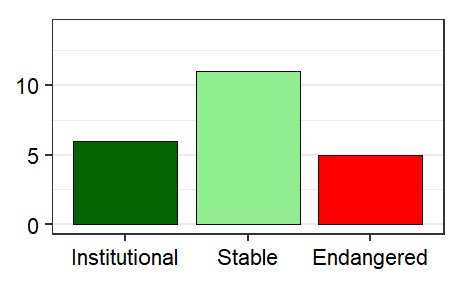
Full explanation
Language Status Profile
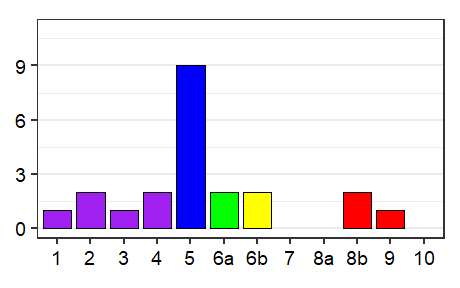
Full explanation
Resources
View Terms
Each Ethnologue country digest is a licensed product with restricted terms of use. Before downloading the product, you must agree to the following terms:
- This is a license for individual use. Just as with a conventionally published book, it is a violation of copyright to make a copy and give it to others.
- You may not redistribute this work in any form, including ingesting the contents into a database that is shared with others or posting it on a web site (whether public or private).
To inquire about permission for reuse or redistribution, please use the Contact Us form in the footer.
Digest of the languages of Poland ($149.95, 27 page PDF)