
PT
Portuguese Republic
Portugal
Summary
- Official Name
- Portuguese Republic
- Population
- 10,242,000
- Principal Languages
- Portuguese
- Literacy Rate
- 96% (2018 UNESCO)
- International Conventions
- CDE (1960), CPPDCE (2006), CSICH (2012), FCPNM (1998), ICCPR (1966), UNCRPD (2006), UNDRIP (2007)
- General References
- Agard 1984, Campbell and King 2011, Comrie 1987
- Deaf Population
- 150,000 audiologically deaf people (Federação Portuguesa das Associações de Surdos)
- Language Counts
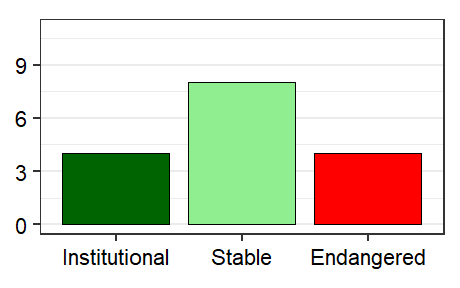
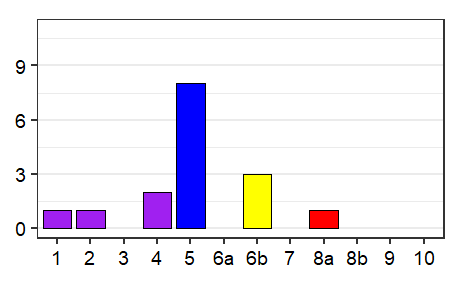
- The number of established languages listed for Portugal is 16. All are living languages. Of these, 6 are indigenous and 10 are non-indigenous. Furthermore, 5 are institutional, 7 are developing, 3 are in trouble, and 1 is dying. Also listed are 10 unestablished languages.
Languages
- Arabic, Moroccan Spoken ary
- Users: 5,800 in Portugal (2021 Joshua Project), based on ethnicity. Total Arabic speakers in Portugal: 25,800 (2021 Joshua Project). Status: Unestablished. Classification: Afro-Asiatic, Semitic, Central, South, Arabic
- Arabic, North Levantine Spoken apc
- Users: 20,000 in Portugal (2021 Joshua Project), based on ethnicity. Total Arabic speakers in Portugal: 28,500 (2021 Joshua Project). Status: Unestablished. Classification: Afro-Asiatic, Semitic, Central, South, Arabic
- Asturian ast
- Bragança district: Miranda do Douro and Vimioso municipalities, 2 towns. Users: 10,000 in Portugal (Salminen 2007). Status: 6b* (Threatened). Alternate Names: Asturian-Leonese, Asturianu Classification: Indo-European, Italic, Romance, Italo-Western, Western, Gallo-Iberian, Ibero-Romance, West Iberian, Asturo-Leonese
- Barranquian ext
- Beja district: Barrancos municipality. Users: 1,500 in Portugal. Status: 7 (Shifting). Alternate Names: Barranquenho, Barranquênhu, Cahtúo, Cahtúö, Ehtremeñu, Extremaduran, Extremeño Classification: Indo-European, Italic, Romance, Italo-Western, Western, Gallo-Iberian, Ibero-Romance, West Iberian, Castilian
- Bulgarian bul
- Users: 5,030 in Portugal (2007 J. Leclerc). Status: Unestablished. Classification: Indo-European, Balto-Slavic, Slavic, South, Eastern
- Caló rmq
- Scattered. Users: 5,000 in Portugal. Status: 5* (Developing). Alternate Names: Calão, Gitano, Iberian Romani Classification: Mixed language, Iberian-Romani
- Chinese zho
- Users: 10,400 in Portugal (2007 J. Leclerc). Status: Unestablished.
- Dutch nld
- Users: 6,590 in Portugal (2007 J. Leclerc). Status: Unestablished. Classification: Indo-European, Germanic, West, Low Saxon-Low Franconian, Low Franconian
- English eng
- Users: 2,778,500 in Portugal, all users. L1 users: 18,500 in Portugal (2021 Joshua Project), based on ethnicity. L2 users: 2,760,000 (European Commission 2012). Status: 4 (Educational). Alternate Names: Inglês Classification: Indo-European, Germanic, West, English
- French fra
- Widespread. Users: 2,590,600 in Portugal, all users. L1 users: 10,600 in Portugal (2007 J. Leclerc). L2 users: 2,580,000 (2018). Status: 4 (Educational). Alternate Names: Inglês Classification: Indo-European, Italic, Romance, Italo-Western, Western, Gallo-Iberian, Gallo-Romance, Gallo-Rhaetian, Oïl, French
- Galician glg
- Bragança and Vila Real districts: northern portions. Users: 15,000 in Portugal (1994 SIL). Status: 5* (Dispersed). Alternate Names: Galego, Gallego Classification: Indo-European, Italic, Romance, Italo-Western, Western, Gallo-Iberian, Ibero-Romance, West Iberian, Portuguese-Galician
- German, Standard deu
- Users: 124,000 in Portugal, all users. L1 users: 20,000 in Portugal (2019 Eurostat). L2 users: 104,000 (2019 Eurostat). Status: 4 (Educational). Alternate Names: Deutsch Classification: Indo-European, Germanic, West, High German, German, Middle German, East Middle German
- Guinea-Bissau Creole pov
- Users: 23,700 in Portugal (2007 J. Leclerc). Status: 5* (Dispersed). Classification: Creole, Portuguese based
- Hindi hin
- Users: 4,100 in Portugal (2007 J. Leclerc). Status: Unestablished. Classification: Indo-European, Indo-Iranian, Indo-Aryan, Western Hindi, Hindustani
- Italian ita
- Users: 5,990 in Portugal (2007 J. Leclerc). Status: Unestablished. Classification: Indo-European, Italic, Romance, Italo-Western, Italo-Dalmatian
- Kabuverdianu kea
- Lisboa: Primarily in the neighborhoods on the outskirts of Lisbon. Users: 63,900 in Portugal (2007 J. Leclerc), increasing. Status: 5 (Dispersed). Classification: Creole, Portuguese based
- Minderico drc
- Leiria district: Porto de Mós municipality, Mira de Aire; Santarém district: Alacanena municipality, Minde. Users: 500 (2010 V. Ferreira). Status: 8a (Moribund). Alternate Names: Calão de Minde Autonym: Minderico, Piação dos Charales do Ninhou Classification: Indo-European, Italic, Romance, Italo-Western, Western, Gallo-Iberian, Ibero-Romance, West Iberian, Portuguese-Galician
- Mirandese mwl
- Bragança district: Miranda do Douro and Vimioso municipalities, Miranda city; Spain border. Users: 15,000 (2000). 10,000 use it regularly, 5,000 when they return to the area. 2,000 Sendinese in Sendim Vila. Status: 2 (Provincial). Statutory language of provincial identity in 4 municipalities, northeast Portugal (1999, Law No. 7-99 of 29 January). Alternate Names: Mirandês Autonym: Mirandés Classification: Indo-European, Italic, Romance, Italo-Western, Western, Gallo-Iberian, Ibero-Romance, West Iberian, Asturo-Leonese
- Portuguese por
- Widespread. Users: 9,900,000 in Portugal (European Commission 2012). Total users in all countries: 258,292,150 (as L1: 232,866,150; as L2: 25,426,000). Status: 1 (National). Statutory national language (2005, Constitution, Article 11(3)). Autonym: Português Classification: Indo-European, Italic, Romance, Italo-Western, Western, Gallo-Iberian, Ibero-Romance, West Iberian, Portuguese-Galician
- Portuguese Sign Language psr
- Scattered, including Azores and Madeira islands. Users: 10,000 in Portugal (2021 DBS/DOOR/SIL). About 0.1% of total population. Other estimates: 52,000 (2014 IMB); 60,000 (2021 EUD). Used by many of 8,000 deaf persons (Van Cleve 1986). Total users in all countries: 10,550. Status: 5 (Developing). Recognized language (1997, Constitution, Article 74(2h)). Alternate Names: LGP, Língua Gestual Portuguesa Classification: Sign language, Deaf community sign language
- Romani, Vlax rmy
- Scattered. Users: 500 in Portugal. Status: 5* (Dispersed). Classification: Indo-European, Indo-Iranian, Indo-Aryan, Intermediate Divisions, Western, Romani, Vlax
- Romanian ron
- Users: 33,200 in Portugal (2007 J. Leclerc). Status: Unestablished. Classification: Indo-European, Italic, Romance, Eastern
- Russian rus
- Users: 5,110 in Portugal (2007 J. Leclerc). Status: Unestablished. Classification: Indo-European, Balto-Slavic, Slavic, East
- Sãotomense cri
- Users: 10,600 in Portugal (2007 J. Leclerc). Status: 6b* (Threatened). Classification: Creole, Portuguese based
- Spanish spa
- Users: 706,330 in Portugal, all users. L1 users: 9,330 in Portugal (2019). L2 users: 697,000 (2019). Status: 5* (Dispersed). Classification: Indo-European, Italic, Romance, Italo-Western, Western, Gallo-Iberian, Ibero-Romance, West Iberian, Castilian
- Ukrainian ukr
- Users: 39,500 in Portugal (2007 J. Leclerc). Status: Unestablished. Classification: Indo-European, Balto-Slavic, Slavic, East
Languages by Status
Portuguese
[por] 1 (National). Statutory national language (2005, Constitution, Article 11(3)). 9,900,000 in Portugal (European Commission 2012). Total users in all countries: 258,292,150 (as L1: 232,866,150; as L2: 25,426,000).
Mirandese
[mwl] 2 (Provincial). Statutory language of provincial identity in 4 municipalities, northeast Portugal (1999, Law No. 7-99 of 29 January). 15,000 (2000). 10,000 use it regularly, 5,000 when they return to the area. 2,000 Sendinese in Sendim Vila.
English
[eng] 4 (Educational). 2,778,500 in Portugal, all users. L1 users: 18,500 in Portugal (2021 Joshua Project), based on ethnicity. L2 users: 2,760,000 (European Commission 2012).
French
[fra] 4 (Educational). 2,590,600 in Portugal, all users. L1 users: 10,600 in Portugal (2007 J. Leclerc). L2 users: 2,580,000 (2018).
German, Standard
[deu] 4 (Educational). 124,000 in Portugal, all users. L1 users: 20,000 in Portugal (2019 Eurostat). L2 users: 104,000 (2019 Eurostat).
Galician
[glg] 5* (Dispersed). 15,000 in Portugal (1994 SIL).
Guinea-Bissau Creole
[pov] 5* (Dispersed). 23,700 in Portugal (2007 J. Leclerc).
Kabuverdianu
[kea] 5 (Dispersed). 63,900 in Portugal (2007 J. Leclerc), increasing.
Romani, Vlax
[rmy] 5* (Dispersed). 500 in Portugal.
Spanish
[spa] 5* (Dispersed). 706,330 in Portugal, all users. L1 users: 9,330 in Portugal (2019). L2 users: 697,000 (2019).
Caló
[rmq] 5* (Developing). 5,000 in Portugal.
Portuguese Sign Language
[psr] 5 (Developing). Recognized language (1997, Constitution, Article 74(2h)). 10,000 in Portugal (2021 DBS/DOOR/SIL). About 0.1% of total population. Other estimates: 52,000 (2014 IMB); 60,000 (2021 EUD). Used by many of 8,000 deaf persons (Van Cleve 1986). Total users in all countries: 10,550.
Asturian
[ast] 6b* (Threatened). 10,000 in Portugal (Salminen 2007).
Sãotomense
[cri] 6b* (Threatened). 10,600 in Portugal (2007 J. Leclerc).
Barranquian
[ext] 7 (Shifting). 1,500 in Portugal.
Minderico
[drc] 8a (Moribund). 500 (2010 V. Ferreira).
Arabic, Moroccan Spoken
[ary] Unestablished. 5,800 in Portugal (2021 Joshua Project), based on ethnicity. Total Arabic speakers in Portugal: 25,800 (2021 Joshua Project).
Arabic, North Levantine Spoken
[apc] Unestablished. 20,000 in Portugal (2021 Joshua Project), based on ethnicity. Total Arabic speakers in Portugal: 28,500 (2021 Joshua Project).
Bulgarian
[bul] Unestablished. 5,030 in Portugal (2007 J. Leclerc).
Chinese
[zho] Unestablished. 10,400 in Portugal (2007 J. Leclerc).
Dutch
[nld] Unestablished. 6,590 in Portugal (2007 J. Leclerc).
Hindi
[hin] Unestablished. 4,100 in Portugal (2007 J. Leclerc).
Italian
[ita] Unestablished. 5,990 in Portugal (2007 J. Leclerc).
Romanian
[ron] Unestablished. 33,200 in Portugal (2007 J. Leclerc).
Russian
[rus] Unestablished. 5,110 in Portugal (2007 J. Leclerc).
Ukrainian
[ukr] Unestablished. 39,500 in Portugal (2007 J. Leclerc).
Maps
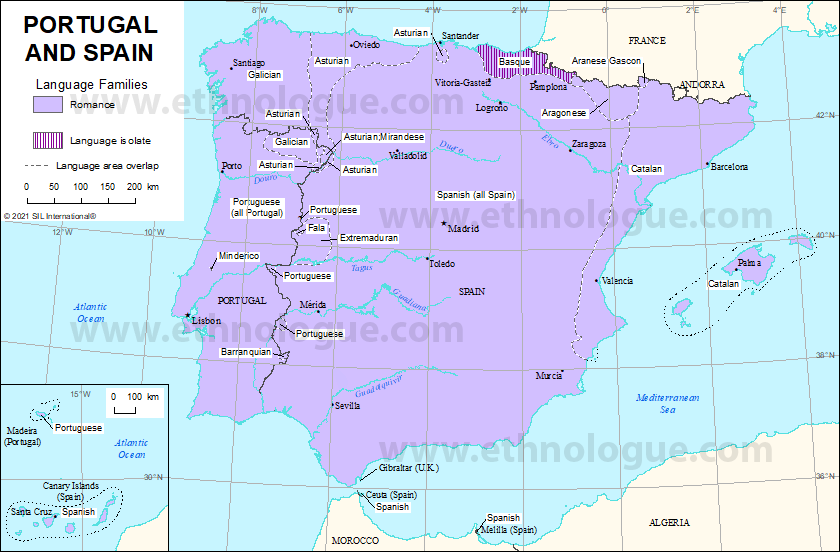
Portugal and Spain
Graphs
Language Vitality Profile
Full explanation
Language Status Profile
Full explanation
Resources
View Terms
Each Ethnologue country digest is a licensed product with restricted terms of use. Before downloading the product, you must agree to the following terms:
- This is a license for individual use. Just as with a conventionally published book, it is a violation of copyright to make a copy and give it to others.
- You may not redistribute this work in any form, including ingesting the contents into a database that is shared with others or posting it on a web site (whether public or private).
To inquire about permission for reuse or redistribution, please use the Contact Us form in the footer.
Digest of the languages of Portugal ($149.95, 22 page PDF)