
RS
Republic of Serbia
Serbia
Summary
- Official Name
- Republic of Serbia
- Population
- 8,698,000
- Principal Languages
- Serbian
- Literacy Rate
- 99% (2016 UNESCO)
- International Conventions
- CDE (1960), CPPDCE (2006), CSICH (2012), ECRML (1992), FCPNM (1998), ICCPR (1966), UNCRPD (2006), UNDRIP (2007)
- General References
- Campbell and King 2011, Comrie 1987, Stephens 1976
- Deaf Population
- 60,000 (Van Cleve 1986)
- Language Counts
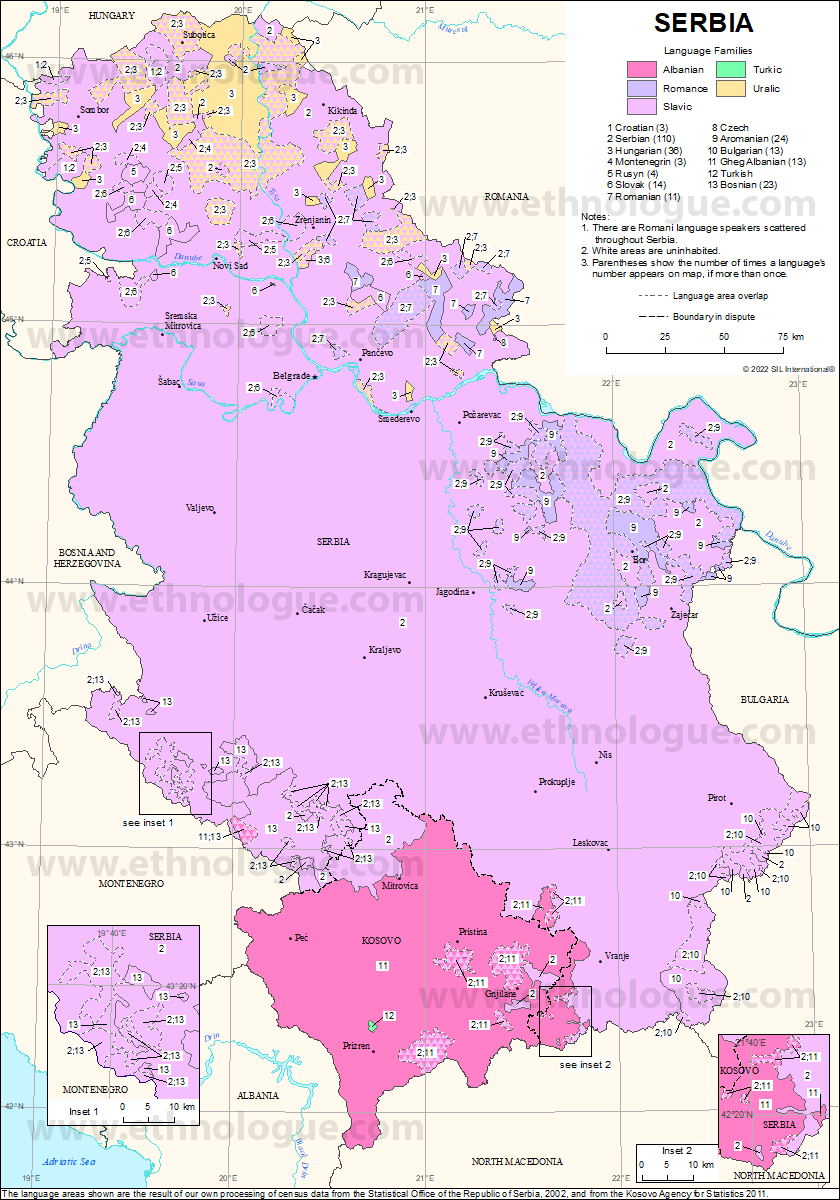
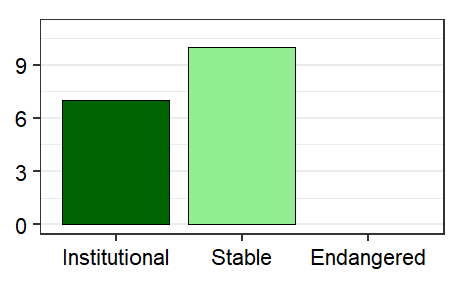
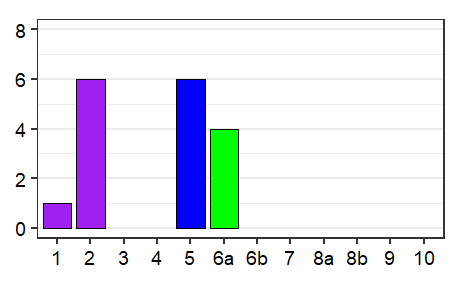
- The number of established languages listed for Serbia is 22. All are living languages. Of these, 9 are indigenous and 13 are non-indigenous. Furthermore, 13 are institutional, 6 are developing, and 3 are vigorous. Also listed are 6 unestablished languages and 1 macrolanguage.
Languages
- Albanian, Gheg aln
- Jablanica, Kosovo, Kosovsko-Mitrovica, Kosovsko-Pomoravlje, Pčinja, Peć, Prizren, Raška, Toplica, and Zlatibor districts. Users: 1,840,000 in Serbia (2021), including 1,830,000 in Kosovo (2021 World Factbook). Ethnic population: 1,800,000 (2021 World Factbook). Status: 2 (Provincial). Statutory language of provincial identity in Bjanovac, 2 other municipalities (2009, Constitution, Article 10(2)). De facto provincial language in Kosovo. Alternate Names: Geg, Gegnisht, Shqip, Shqyp Classification: Indo-European, Albanian, Gheg
- Arabic, North Levantine Spoken apc
- Users: 22,000 in Serbia (Leclerc 2020c). Status: Unestablished. Classification: Afro-Asiatic, Semitic, Central, South, Arabic
- Aromanian rup
- Bor, Braničevo, Pomoravlje, and Zaječar districts. Users: 32,000 in Serbia (Leclerc 2020c). Status: 6a* (Vigorous). Alternate Names: Armani, Macedo Romania Classification: Indo-European, Italic, Romance, Eastern
- Bosnian bos
- Raška district: Novi Pazar and Tutin municipalities; Peć and Prizren districts, Zlatibor district: Priboj, Prijepolje, and Sjenica municipalities. Users: 172,000 in Serbia (2013 UNSD), including 33,000 in Kosovo (2021 World Factbook). Status: 4 (Educational). Statutory language of provincial identity in Bujanovac, Medveda, Presevo (1991, Official Language Use Law No. 45, Article 3). Alternate Names: Serbo-Croatian Classification: Indo-European, Balto-Slavic, Slavic, South, Western
- Bulgarian bul
- Pčinja district: Bosiljgrad; Pirot district: Dmitrovgrad. Users: 13,300 in Serbia (2013 UNSD). Status: 2 (Provincial). Statutory provincial language in Novi Pazar, Sjenica, Tutin (1991, Official Language Use Law No. 45, Article 3). Classification: Indo-European, Balto-Slavic, Slavic, South, Eastern
- Chinese, Mandarin cmn
- Users: 14,000 in Serbia (Leclerc 2020c). Status: Unestablished. Classification: Sino-Tibetan, Chinese
- Croatian hrv
- North Backa district: Bela Crkva municipality. Users: 19,200 in Serbia (2013 UNSD). Status: 2 (Provincial). Statutory provincial language in Autonomous Province Vojvodina (2009, Autonomous Province Vojvodina Statute, Article 26). Alternate Names: Hrvatski, Serbo-Croatian Classification: Indo-European, Balto-Slavic, Slavic, South, Western
- Czech ces
- South Banat district: Bela Crkva municipality, Češko Selo village. Users: 45,000 in Serbia (Leclerc 2020c). Status: 5* (Dispersed). Alternate Names: Češki, Čeština, Český jazyk Classification: Indo-European, Balto-Slavic, Slavic, West, Czech-Slovak
- English eng
- Users: 4,200 in Serbia (Leclerc 2020c). Status: 4 (Educational). Classification: Indo-European, Germanic, West, English
- French fra
- Users: 276,000 in Serbia (2018), L2 users. Status: 4 (Educational). Classification: Indo-European, Italic, Romance, Italo-Western, Western, Gallo-Iberian, Gallo-Romance, Gallo-Rhaetian, Oïl, French
- German, Standard deu
- Users: 2,190 in Serbia (2013 UNSD). Status: 4 (Educational). Alternate Names: Nemački Classification: Indo-European, Germanic, West, High German, German, Middle German, East Middle German
- Hungarian hun
- Central Banat, North Backa, North Banat, South Backa, and West Backa districts; Vojvodina area. Users: 243,000 in Serbia (2013 UNSD). Status: 2 (Provincial). Statutory provincial language in Autonomous Province Vojvodina (2009, Autonomous Province Vojvodina Statute, Article 26). Alternate Names: Mađarski, Magyar Classification: Uralic
- Italian ita
- Users: 2,600 in Serbia (Leclerc 2020c). Status: Unestablished. Classification: Indo-European, Italic, Romance, Italo-Western, Italo-Dalmatian
- Macedonian mkd
- Users: 12,700 in Serbia (2013 UNSD). Status: Unestablished. Classification: Indo-European, Balto-Slavic, Slavic, South, Eastern
- Montenegrin cnr
- Raška and Zlatibor districts. Users: 2,520 in Serbia (2013 UNSD). Status: 5* (Dispersed). Classification: Indo-European, Balto-Slavic, Slavic, South, Western
- Polish pol
- Users: 29,000 in Serbia (Leclerc 2020c). Status: Unestablished. Classification: Indo-European, Balto-Slavic, Slavic, West, Lechitic
- Romani, Balkan rmn
- Kosovo: scattered. Users: 101,000 in Serbia (2013 UNSD). 100,000 Arlija. Total users in all countries: 802,840 (as L1: 602,840; as L2: 200,000). Status: 5* (Developing). Alternate Names: Roma, “Balkan Gypsy” (pej.) Autonym: Romani, Romani ćhib Classification: Indo-European, Indo-Iranian, Indo-Aryan, Intermediate Divisions, Western, Romani, Balkan
- Romani, Sinte rmo
- Belgrade City, Jablanica, Nišava, Pčinja, and Pirot districts; scattered in Kosovo. Users: 39,000 in Serbia (Leclerc 2020c). Status: 5* (Dispersed). Alternate Names: Romanes, Sasítka Romá, Sinte, Sinti Classification: Indo-European, Indo-Iranian, Indo-Aryan, Intermediate Divisions, Western, Romani, Northern
- Romani, Vlax rmy
- Widespread. Status: 6a* (Vigorous). Alternate Names: Rom Classification: Indo-European, Indo-Iranian, Indo-Aryan, Intermediate Divisions, Western, Romani, Vlax
- Romanian ron
- South Backa district: Timoc valley. Users: 29,100 in Serbia (2013 UNSD). Status: 2 (Provincial). Statutory provincial language in Autonomous Province Vodjvodina (2009, Autonomous Province Vodjvodina Statute, Article 26). Alternate Names: Daco-Rumanian, Română, Rumanian Classification: Indo-European, Italic, Romance, Eastern
- Romano-Serbian rsb
- Srem district. Users: 95,000 (Leclerc 2020c). Status: 6a* (Vigorous). Alternate Names: Tent Gypsy Classification: Mixed language, Serbian-Romani
- Russian rus
- Users: 1,400,000 in Serbia (Arefyev 2012), all users. L1 users: 3,180 (2013 UNSD). Status: 4 (Educational). Classification: Indo-European, Balto-Slavic, Slavic, East
- Ruthenian rsk
- North Backa district: Bačka Topola municipality; South Backa district: Novi Sad, Vrbas municipality, Kucura; Srem district: Šid municipality, Bikič Do; West Backa district: Kula municipality, Ruski Krstur. Users: 11,300 in Serbia (2013 UNSD). Total users in all countries: 12,770. Status: 4 (Educational). Statutory language of provincial identity in Autonomous Province Vodjvodina (2009, Autonomous Province Vodjvodina Statute, Article 26). Alternate Names: Pannonian Rusyn, Rusnak, Rusnatski Autonym: руски (Ruski) Classification: Indo-European, Balto-Slavic, Slavic, East
- Serbian srp
- Widespread. Users: 7,760,000 in Serbia (2019), including 31,000 in Kosovo (2021 World Factbook). Total users in all countries: 10,309,546. Status: 1 (National). Statutory national language (2006, Constitution, Article 10(1)). Alternate Names: Serbo-Croatian Autonym: српски (Srpski) Classification: Indo-European, Balto-Slavic, Slavic, South, Western
- Serbian Sign Language ysl
- Scattered. Users: 10,000 in Serbia (2014 EUD). Estimated deaf signers, approximately 0.05% of total population. Other estimates: 30,000 signers (2014 European Forum of Sign Language Interpreters); 30,000 deaf and 90,000 hard of hearing (2013 Association of the Deaf and Hard Hearing); 47,500 (2014 IMB). Status: 5 (Developing). Recognized language (2015, Law on the Use of Sign Language). Alternate Names: SZJ, Srpski Znakovni Jezik, YSL, Yugoslav Sign Language, Yugoslavian Sign Language Classification: Sign language, Deaf community sign language
- Serbo-Croatian hbs
- Users: Population total all languages (L1 only): 18,830,366. Status:
- Slovak slk
- South Backa district: Vojvodine. Users: 49,800 in Serbia (2013 UNSD). Status: 2 (Provincial). Statutory provincial language in Autonomous Province Vodjvodina (2009, Autonomous Province Vodjvodina Statute, Article 26). Alternate Names: Slovenčina, Slovenský Jazyk Classification: Indo-European, Balto-Slavic, Slavic, West, Czech-Slovak
- Turkish tur
- Users: 23,800 in Serbia (2021), including 21,300 in Kosovo (2021 World Factbook). Status: 5* (Dispersed). Classification: Turkic, Southern, Turkish
- Ukrainian ukr
- Users: 8,100 in Serbia (Leclerc 2020c). Status: Unestablished. Classification: Indo-European, Balto-Slavic, Slavic, East
Languages by Status
Serbian
[srp] 1 (National). Statutory national language (2006, Constitution, Article 10(1)). 7,760,000 in Serbia (2019), including 31,000 in Kosovo (2021 World Factbook). Total users in all countries: 10,309,546.
Albanian, Gheg
[aln] 2 (Provincial). Statutory language of provincial identity in Bjanovac, 2 other municipalities (2009, Constitution, Article 10(2)). De facto provincial language in Kosovo. 1,840,000 in Serbia (2021), including 1,830,000 in Kosovo (2021 World Factbook). Ethnic population: 1,800,000 (2021 World Factbook).
Bulgarian
[bul] 2 (Provincial). Statutory provincial language in Novi Pazar, Sjenica, Tutin (1991, Official Language Use Law No. 45, Article 3). 13,300 in Serbia (2013 UNSD).
Croatian
[hrv] 2 (Provincial). Statutory provincial language in Autonomous Province Vojvodina (2009, Autonomous Province Vojvodina Statute, Article 26). 19,200 in Serbia (2013 UNSD).
Hungarian
[hun] 2 (Provincial). Statutory provincial language in Autonomous Province Vojvodina (2009, Autonomous Province Vojvodina Statute, Article 26). 243,000 in Serbia (2013 UNSD).
Romanian
[ron] 2 (Provincial). Statutory provincial language in Autonomous Province Vodjvodina (2009, Autonomous Province Vodjvodina Statute, Article 26). 29,100 in Serbia (2013 UNSD).
Slovak
[slk] 2 (Provincial). Statutory provincial language in Autonomous Province Vodjvodina (2009, Autonomous Province Vodjvodina Statute, Article 26). 49,800 in Serbia (2013 UNSD).
Bosnian
[bos] 4 (Educational). Statutory language of provincial identity in Bujanovac, Medveda, Presevo (1991, Official Language Use Law No. 45, Article 3). 172,000 in Serbia (2013 UNSD), including 33,000 in Kosovo (2021 World Factbook).
English
[eng] 4 (Educational). 4,200 in Serbia (Leclerc 2020c).
French
[fra] 4 (Educational). 276,000 in Serbia (2018), L2 users.
German, Standard
[deu] 4 (Educational). 2,190 in Serbia (2013 UNSD).
Russian
[rus] 4 (Educational). 1,400,000 in Serbia (Arefyev 2012), all users. L1 users: 3,180 (2013 UNSD).
Ruthenian
[rsk] 4 (Educational). Statutory language of provincial identity in Autonomous Province Vodjvodina (2009, Autonomous Province Vodjvodina Statute, Article 26). 11,300 in Serbia (2013 UNSD). Total users in all countries: 12,770.
Czech
[ces] 5* (Dispersed). 45,000 in Serbia (Leclerc 2020c).
Montenegrin
[cnr] 5* (Dispersed). 2,520 in Serbia (2013 UNSD).
Romani, Sinte
[rmo] 5* (Dispersed). 39,000 in Serbia (Leclerc 2020c).
Turkish
[tur] 5* (Dispersed). 23,800 in Serbia (2021), including 21,300 in Kosovo (2021 World Factbook).
Romani, Balkan
[rmn] 5* (Developing). 101,000 in Serbia (2013 UNSD). 100,000 Arlija. Total users in all countries: 802,840 (as L1: 602,840; as L2: 200,000).
Serbian Sign Language
[ysl] 5 (Developing). Recognized language (2015, Law on the Use of Sign Language). 10,000 in Serbia (2014 EUD). Estimated deaf signers, approximately 0.05% of total population. Other estimates: 30,000 signers (2014 European Forum of Sign Language Interpreters); 30,000 deaf and 90,000 hard of hearing (2013 Association of the Deaf and Hard Hearing); 47,500 (2014 IMB).
Aromanian
[rup] 6a* (Vigorous). 32,000 in Serbia (Leclerc 2020c).
Romani, Vlax
[rmy] 6a* (Vigorous).
Romano-Serbian
[rsb] 6a* (Vigorous). 95,000 (Leclerc 2020c).
Arabic, North Levantine Spoken
[apc] Unestablished. 22,000 in Serbia (Leclerc 2020c).
Chinese, Mandarin
[cmn] Unestablished. 14,000 in Serbia (Leclerc 2020c).
Italian
[ita] Unestablished. 2,600 in Serbia (Leclerc 2020c).
Macedonian
[mkd] Unestablished. 12,700 in Serbia (2013 UNSD).
Polish
[pol] Unestablished. 29,000 in Serbia (Leclerc 2020c).
Ukrainian
[ukr] Unestablished. 8,100 in Serbia (Leclerc 2020c).
Maps
Serbia
Graphs
Language Vitality Profile
Full explanation
Language Status Profile
Full explanation
Resources
View Terms
Each Ethnologue country digest is a licensed product with restricted terms of use. Before downloading the product, you must agree to the following terms:
- This is a license for individual use. Just as with a conventionally published book, it is a violation of copyright to make a copy and give it to others.
- You may not redistribute this work in any form, including ingesting the contents into a database that is shared with others or posting it on a web site (whether public or private).
To inquire about permission for reuse or redistribution, please use the Contact Us form in the footer.
Digest of the languages of Serbia ($149.95, 24 page PDF)