
SN
Republic of Senegal
Senegal
Summary
- Official Name
- Republic of Senegal
- Population
- 17,196,000
- Principal Languages
- French
- Literacy Rate
- 52% (2017 UNESCO)
- International Conventions
- ACHPR (1987), CDE (1960), CPPDCE (2006), CSICH (2012), ICCPR (1966), UNCRPD (2006), UNDRIP (2007)
- General References
- Barry 1987, Bendor-Samuel and Hartell 1989, Campbell and King 2011, Hopkins 1995, Institut Géographique International 1977, Lopis 1980, Sapir 1971, Williams 1993
- Language Counts
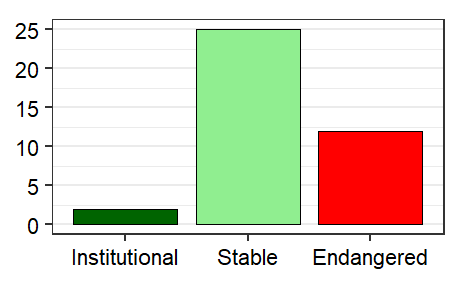
- The number of established languages listed for Senegal is 39. All are living languages. Of these, 31 are indigenous and 8 are non-indigenous. Furthermore, 2 are institutional, 18 are developing, 6 are vigorous, 11 are in trouble, and 2 are dying. Also listed are 6 unestablished languages and 1 macrolanguage.
Languages
- Arabic, North Levantine Spoken apc
- Users: 88,300 in Senegal (2017). Status: Unestablished. Classification: Afro-Asiatic, Semitic, Central, South, Arabic
- Badyara pbp
- Kolda region: 1 village west of Koulountou river; Tambacounda region: east of the river. Users: 2,540 in Senegal (2017). Status: 6b (Threatened). Alternate Names: Badian, Badjara, Badjaranké, Bajara, Bigola, Gola, Kanjad, Pajade, Pajadinca, Pajadinka Classification: Niger-Congo, Atlantic-Congo, Atlantic, Northern, Eastern Senegal-Guinea, Tenda
- Bainouk-Gunyaamolo bcz
- Sédhiou and Ziguinchor regions: Niamone area, Bangaga, Diamatou, Diengue, Dierena, Kanjumbay, Kassankil, and Tobor villages; Dakar; Kaolack, Kolda, and Tambacounda regions. Users: 30,000 (2013). Status: 6b* (Threatened). Alternate Names: Bagnoun, Bainuk, Banhum, Banyuk, Banyum, Banyun, Banyung, Elomay, Elunay, Guñuun Ñuñ Classification: Niger-Congo, Atlantic-Congo, Atlantic, Northern, Eastern Senegal-Guinea, Banyun
- Bainouk-Samik bcb
- Casamance river south side, mainly Samik area and villages north and east, 20 km east of Ziguinchor. Users: 1,850 (2006 J. Leclerc). Status: 6b (Threatened). Classification: Niger-Congo, Atlantic-Congo, Atlantic, Northern, Eastern Senegal-Guinea, Banyun
- Balanta-Ganja bjt
- Sédhiou region: north of the Casamance river between Sindina and Sédhiou, south of the river between Mangakounda Goudomp and Tanaff, and south to the Guinea-Bissau border. Users: 116,000 (2017). Status: 6b (Threatened). Recognized language (2005, Decree No. 979 of 21 October). Alternate Names: Alante, Balanda, Balant, Balante, Ballante, Belante, Brassa, Bulanda, Fjaa, Fraase Classification: Niger-Congo, Atlantic-Congo, Atlantic, Northern, Bak, Balant-Ganja
- Bambara bam
- Tambacounda region: near Mali border. Users: 84,700 in Senegal (2017). Status: 5* (Dispersed). Classification: Niger-Congo, Mande, Western, Central-Southwestern, Central, Manding-Jogo, Manding-Vai, Manding-Mokole, Manding, Manding-East, Northeastern Manding, Bamana
- Bandial bqj
- Ziguinchor region: Bignona department, Affiniam, Badiate-Grand, Bandial, Batinier, Brin, Elubalir, Enampor, Essil, Etama, Kamobeul, and Seleky villages on a peninsula bounded by the Casamance river north, the Komobeul Bôlon river west, Ziguinchor-Oussouye road south, and Brin-Nyassia road east. The only village north of the Casamance River is Affiniam. Users: 15,700 in Senegal (2017). Status: 6b (Threatened). Alternate Names: Banjaal, Banjal, Eegima, Eegimaa, Endungo, Jóola Banjal Autonym: Gubanjalay, Gújjolaay Eegimaa Classification: Niger-Congo, Atlantic-Congo, Atlantic, Northern, Bak, Jola, Jola Proper, Jola Central, Gusilay
- Bayot bda
- Ziguinchor region: villages in Nyassia commune; majority in urban areas and in the larger cities, including Dakar. Users: 24,200 in Senegal (2020). Total users in all countries: 33,200. Status: 6b (Threatened). Recognized language (2011, Codification). Alternate Names: Baiot, Baiote, Bayoot, Bayotte, Jola Bayote Classification: Niger-Congo, Atlantic-Congo, Atlantic, Northern, Bak, Jola, Bayot
- Casamance Creole pov
- Ziguinchor region: Ziguinchor city and surrounding villages. Users: 30,000 in Senegal, all users. L1 users: 10,000 in Senegal (Biagui and Quint 2013), decreasing. A significant population (2,500) speaks Casamancese Creole in Dakar (Biagui and Quint 2013). L2 users: 20,000 (Biagui and Quint 2013). Status: 6b* (Threatened). Alternate Names: Casamancese Creole, Casamançais, Créole, Créole afro-portugais de Casamance, Créole casamançais, Créole de Casamance, Kriyol, Portuguese Creole, Upper Guinea Crioulo Classification: Creole, Portuguese based
- Ejamat eja
- Ziguinchor region: a few villages south of Oussouye, including Kahem, Efok, Youtou. Users: 2,230 in Senegal (2006 SIL). Status: 6b (Threatened). Alternate Names: Ediamat, Feloup, Felup, Felupe, Floup, Flup, Fulup Classification: Niger-Congo, Atlantic-Congo, Atlantic, Northern, Bak, Jola, Jola Proper, Jola Central, Her-Ejamat
- French fra
- Widespread. Users: 4,210,000 in Senegal, all users. L1 users: 100,000 in Senegal (Diouf et al 2017). L2 users: 4,110,000 (2020). Status: 1 (National). Statutory national language (2001, Constitution, Article 1). Alternate Names: Français Classification: Indo-European, Italic, Romance, Italo-Western, Western, Gallo-Iberian, Gallo-Romance, Gallo-Rhaetian, Oïl, French
- Fulah ful
- Users: Population total all languages (L1 only): 35,843,640. Status:
- Gusilay gsl
- Ziguinchor region: Tionk Essil village, between Tendouck and Mlomp-North. Users: 21,800 (2017). Status: 6a (Vigorous). Alternate Names: Gusiilay, Gusilaay, Kusiilaay, Kusilay Autonym: Gusiilaay Classification: Niger-Congo, Atlantic-Congo, Atlantic, Northern, Bak, Jola, Jola Proper, Jola Central, Gusilay
- Hassaniyya mey
- Matam and Saint-Louis regions. Users: 196,000 in Senegal (2017). Status: 5 (Dispersed). Recognized language (2005, Decree No.980 of 21 October). Alternate Names: Hasaniya, Hasanya, Hassani, Hassaniya, Klem El Bithan Classification: Afro-Asiatic, Semitic, Central, South, Arabic
- Jalunga yal
- Kédougou region: intersection of Mali, Guinea, and Senegal borders. Users: 13,300 in Senegal (2017), increasing. Status: 6a (Vigorous). Alternate Names: Dialonké, Djallonke, Dyalonke, Jalonké, Jalunga xuwiina’, Jalungas, Yalunka, Yalunke Classification: Niger-Congo, Mande, Western, Central-Southwestern, Central, Susu-Yalunka
- Jola-Fonyi dyo
- Sédhiou region: Casamance river area north of Senegal-Gambia border; Ziguinchor region: Bignona area and east and southeast of Ziguinchor town. Users: 340,000 in Senegal. 243,000 Fonyi, 96,700 Buluf. 34,000 monolinguals. Total users in all countries: 457,000. Status: 5 (Developing). Recognized language (2001, Constitution, Article 1). Alternate Names: Diola, Diola-Fogny, Dyola, Jola, Jola-Fogny, Joola-Fogny, Jóola, Kujamataak, Kújoola, Kújoolaak kati Kúfooñaak, Kújoolaay, Yola Autonym: Jóola fóoñi Classification: Niger-Congo, Atlantic-Congo, Atlantic, Northern, Bak, Jola, Jola Proper, Jola Central, Jola-Fonyi
- Jola-Kasa csk
- Ziguinchor region: Bignona and Oussouye departments at Casamance river mouth; Hitou and Niamoun villages north of Casamance river. Users: 45,100 in Senegal (2007), increasing. Status: 5 (Developing). Alternate Names: Bácuki, Casa, Diola-Kasa, Jóola-Kasa, kújoolowaay-kaasa Autonym: Jóola Kaasa Classification: Niger-Congo, Atlantic-Congo, Atlantic, Northern, Bak, Jola, Jola Proper, Jola Central, Jola-Kasa
- Kabuverdianu kea
- Users: 39,000 in Senegal (2015 Instituto de Apoio ao Emigrante). Status: Unestablished. Classification: Creole, Portuguese based
- Karon krx
- Ziguinchor region: Bignona department, Kafountine area and north; Kalisseye inlet to Casamance river, to Gambian border, east to Dioloulou; Karon islands. Users: 11,600 in Senegal (2017), increasing. A few hundred elderly monolinguals. Total users in all countries: 22,400. Status: 6a (Vigorous). Alternate Names: Jola-Karone, Kaloon, Karone, Karoninka, Kouloonaay, Kulonay Autonym: Kuloonaay Classification: Niger-Congo, Atlantic-Congo, Atlantic, Northern, Bak, Jola, Jola Proper, Karon-Mlomp
- Kerak hhr
- Ziguinchor region: Kabrousse village area southwest near Guinea-Bissau border. Users: 18,200 (2017). Status: 6a (Vigorous). Alternate Names: Her, Keerak, Keeraku Classification: Niger-Congo, Atlantic-Congo, Atlantic, Northern, Bak, Jola, Jola Proper, Jola Central, Her-Ejamat
- Kobiana kcj
- Ziguinchor region: Gambian border area. Users: 500 in Senegal (2017). Status: 8b (Nearly extinct). Alternate Names: Buy, Cobiana, Guboy, Uboi Classification: Niger-Congo, Atlantic-Congo, Atlantic, Northern, Eastern Senegal-Guinea, Nun
- Krio kri
- Users: 7,380 in Senegal (2017). Status: Unestablished. Classification: Creole, English based, Atlantic, Krio
- Kuwaataay cwt
- Ziguinchor region: Boukot-Diola, Bouyouye, Diembering, and Nyikine coastal villages south of Casamance river mouth; Dakar. Users: 8,710 (2017). Status: 5 (Developing). Alternate Names: Kwatay Autonym: Kuwaataay Classification: Niger-Congo, Atlantic-Congo, Atlantic, Northern, Bak, Jola, Jola Proper, Kwatay
- Laalaa cae
- Tambacounda region: Tambacounda department, Missira district, Nguene and Saal villages; Thiès region: Tivaouane department, Pambal district. Users: 17,300 (2019 SIL). Status: 5 (Developing). Alternate Names: Lala, Lehar, Serer Autonym: Kelaalaa Classification: Niger-Congo, Atlantic-Congo, Atlantic, Northern, Cangin
- Mandinka mnk
- Kolda region: Oussadou area on southeast border with Guinea; Sédhiou region: Casamance river north to The Gambia; Ziguinchor region: south of Casamance river. Users: 888,000 in Senegal (2017). Total users in all countries: 1,993,000. Status: 5 (Developing). Recognized language (2005, Decree No. 982 of 21 October). Alternate Names: Mande, Manding, Mandingo, Mandingue, Mandinque, Socé Autonym: Mandi’nka kango Classification: Niger-Congo, Mande, Western, Central-Southwestern, Central, Manding-Jogo, Manding-Vai, Manding-Mokole, Manding, Manding-West
- Mandjak mfv
- Sédhiou region: Soukoutoto southeast to Guinea border, Casamance river, both sides; Ziguinchor region: from capitol southeast to Guinea border. Users: 146,000 in Senegal (2017). Status: 5 (Developing). Recognized language (2005, Decree No. 983 of 21 October). Alternate Names: Kanyop, Majak, Mandjaque, Mandyak, Manjaaku, Manjaca, Manjack, Manjaco, Manjak, Manjáku, Ndjak Classification: Niger-Congo, Atlantic-Congo, Atlantic, Northern, Bak, Manjaku-Papel
- Maninkakan, Western mlq
- Kédougou and Tambacounda regions: north of Gambia river; Kolda region: near easternmost point of The Gambia. Users: 1,630,000 in Senegal (2017). Total users in all countries: 2,067,260. Status: 5 (Developing). Recognized language (2001, Constitution, Article 1). Alternate Names: Malinka, Malinké, Maninga, Maninka, Maninka-Western, Maninkakan, Maninkaxan, Western Malinke Classification: Niger-Congo, Mande, Western, Central-Southwestern, Central, Manding-Jogo, Manding-Vai, Manding-Mokole, Manding, Manding-West
- Mankanya knf
- Sédhiou region: Sédhiou city, Casamance river area; between Casamance and Soungrougrou rivers; Ziguinchior region: south along Casamance river, east and west of Ziguinchor city. Users: 41,100 in Senegal (2017), increasing. 3,000 monolinguals. Status: 5 (Developing). Recognized language (2005, Decree No. 984 of 21 October). Alternate Names: Mancagne, Mancang, Mankaañ, Mankanha, Uhula Classification: Niger-Congo, Atlantic-Congo, Atlantic, Northern, Bak, Manjaku-Papel
- Ménik tnr
- Kédougou region: Gambia river headwaters and Guinea border. Users: 5,200 (2017). Status: 5 (Developing). Recognized language (2005, Decree No. 985 of 21 October). Alternate Names: Bande, Basari du Bandemba, Bedik, Budik, Manik, Münik, Onik, Tandanke, Tenda, Tendanke Autonym: Ménik Classification: Niger-Congo, Atlantic-Congo, Atlantic, Northern, Eastern Senegal-Guinea, Tenda
- Mlomp mlo
- Ziguinchor region: Bignona department, Mlomp village on Tendouck to Tiobon road, surrounding villages. Users: 7,500 (2017). Status: 6b (Threatened). Alternate Names: Gulompaay, Mlomp North Classification: Niger-Congo, Atlantic-Congo, Atlantic, Northern, Bak, Jola, Jola Proper, Karon-Mlomp
- Mòoré mos
- Users: 44,800 in Senegal (2017). Status: Unestablished. Classification: Niger-Congo, Atlantic-Congo, Volta-Congo, North, Gur, Central, Northern, Oti-Volta, Western, Northwest
- N’ko nqo
- Scattered. Users: No known L1 speakers in Senegal. Ethnic population: No ethnic community. Status: 9 (Second language only). Classification: Mixed language
- Ndut ndv
- Thiès region: between Thiès town and Atlantic coast. Users: 52,000 (2017). Status: 5 (Developing). Alternate Names: Ndoute Autonym: Ndút Classification: Niger-Congo, Atlantic-Congo, Atlantic, Northern, Cangin
- Noon snf
- Thiès region: Thiès town area. Users: 32,900 (2007). Status: 5 (Developing). Recognized language (2005, Decree No. 986 of 21 October). Alternate Names: Non, None, Serer, Serer-Noon Autonym: Kinoon Classification: Niger-Congo, Atlantic-Congo, Atlantic, Northern, Cangin
- Oniyan bsc
- Kédougou and Tambacounda regions: border areas. Users: 18,200 in Senegal (2017). Total users in all countries: 31,200. Status: 5 (Developing). Recognized language (2005, Decree No. 987 of 21 October). Alternate Names: Ayan, Basari, Bassari, Bassari-Tanda, Biyan, Onian, Onëyan, Tenda Basari, Wo Autonym: Oniyan Classification: Niger-Congo, Atlantic-Congo, Atlantic, Northern, Eastern Senegal-Guinea, Tenda
- Paloor fap
- Thiès region: 26 villages north of Blaise Diagne international airport and southwest of Thiès town. Users: 22,000 (Thornell et al 2017), increasing. Status: 6a (Vigorous). Recognized language (2012, Codification (first draft)). Alternate Names: Falor, Palar, Palor, Serer, Siili, Siili-Mantine, Siili-Siili, Waro Autonym: Paloor Classification: Niger-Congo, Atlantic-Congo, Atlantic, Northern, Cangin
- Papel pbo
- Users: 7,500 in Senegal (2017). Status: Unestablished. Classification: Niger-Congo, Atlantic-Congo, Atlantic, Northern, Bak, Manjaku-Papel
- Pulaar fuc
- Widespread. Users: 4,150,000 in Senegal (2017). Total users in all countries: 5,735,700. Status: 5 (Developing). Recognized language (2001, Constitution, Article 1). Alternate Names: Peul, Peulh, Pulaar Fulfulde, Pël Autonym: Pulaar Classification: Niger-Congo, Atlantic-Congo, Atlantic, Northern, Senegambian, Fula-Wolof, Fula, Western
- Pular fuf
- Dakar; Sédhiou region: Casamance area. Seasonal migrants from Guinea and elsewhere. Users: 150,000 in Senegal (2006 J. Leclerc). Status: 5 (Dispersed). Alternate Names: Fouta Dyalon, Fullo Fuuta, Futa Fula, Futa Jallon, Fuuta Jalon Classification: Niger-Congo, Atlantic-Congo, Atlantic, Northern, Senegambian, Fula-Wolof, Fula, West Central
- Saafi-Saafi sav
- Thiès region: between Nguekikh, Popenguine, and Thiès; Dakar region: airport area; 60 villages: 43 are over 80% Saafi, 8 are under 50%. Users: 200,000 (2012), increasing. Status: 5 (Developing). Recognized language (2005, Decree No. 2005-989 of 21 October). Alternate Names: Saafen, Saafi, Safen, Safi, Safi-Safi, Sereer Saafen, Serer-Safen, Serere-Saafen Autonym: Saafi-Saafi Classification: Niger-Congo, Atlantic-Congo, Atlantic, Northern, Cangin
- Serer-Sine srr
- Diourbel, Fatick, Kaffrine, Kaolack, and Thiès regions: Saloum and Sine river valleys; Saint-Louis region: some south of Senegal river, Thile-Boubacar area. Users: 1,660,000 in Senegal (2017). Total users in all countries: 1,712,300. Status: 5 (Developing). Recognized language (2001, Constitution, Article 1). Alternate Names: Seex, Sereer, Serer, Serer-Sin, Serrer, Sine-Saloum, Sine-Sine, Sérère-Sine Autonym: Seereer Classification: Niger-Congo, Atlantic-Congo, Atlantic, Northern, Senegambian, Serer
- Soninke snk
- Kolda region: north of Velingara; Matam region: Kanel district; Tambacounda region: Koudi area along Senegal river south bank (Kinxenna dialect). 42 villages, Bakel, Moudéri, Ouaoundé, and Yaféra are principal towns. Users: 340,000 in Senegal (2017), increasing. Status: 6a (Vigorous). Recognized language (2001, Constitution, Article 1). Alternate Names: Sarakole, Sarakolle, Sarakule, Sarakulle, Sarangkolle, Saraxuli, Serahule, Soninkanxanne Classification: Niger-Congo, Mande, Western, Northwestern, Soninke-Bobo, Soninke-Boso, Soninke
- Susu sus
- Users: 44,800 in Senegal (2017). Status: Unestablished. Classification: Niger-Congo, Mande, Western, Central-Southwestern, Central, Susu-Yalunka
- Wamey cou
- Kédougou region; a few in Tambacounda region; scattered along Guinea border. Users: 25,400 in Senegal (2017), decreasing. Total users in all countries: 50,200. Status: 6b* (Threatened). Alternate Names: Conhague, Coniagui, Koniagui, Konyagi, Wamay, Wamei Autonym: Wameỹ Classification: Niger-Congo, Atlantic-Congo, Atlantic, Northern, Eastern Senegal-Guinea, Tenda
- Wolof wol
- Widespread. Users: 12,208,000 in Senegal, all users. L1 users: 5,868,000 in Senegal (2013 census). L2 users: 6,340,000 (2017). Ethnic population: 6,900,000 (2017). Total users in all countries: 12,276,290 (as L1: 5,936,290; as L2: 6,340,000). Status: 3 (Wider communication). Recognized language (2001, Constitution, Article 1). Wolof has become an LWC through commerce and trade and is the lingua franca in much of the country. The phenomenon of ‘wolofization’ has meant that people from many ethnic groups have adopted Wolof as their L1; most of the Senegalese population can speak and understand Wolof (2015 J. Leclerc). Alternate Names: Ouolof, Volof, Walaf, Waro-Waro, Yallof Autonym: Wolof, ولوفل (Wolof) Classification: Niger-Congo, Atlantic-Congo, Atlantic, Northern, Senegambian, Fula-Wolof, Wolof
- Xasonga kao
- Tambacounda region. Users: 12,100 in Senegal (2017). Status: 6b* (Threatened). Alternate Names: Kasonke, Kasso, Kasson, Kassonke, Khasonke, Xaasonga, Xaasongaxango, Xasongo, Xasonke Classification: Niger-Congo, Mande, Western, Central-Southwestern, Central, Manding-Jogo, Manding-Vai, Manding-Mokole, Manding, Manding-West
Languages by Status
French
[fra] 1 (National). Statutory national language (2001, Constitution, Article 1). 4,210,000 in Senegal, all users. L1 users: 100,000 in Senegal (Diouf et al 2017). L2 users: 4,110,000 (2020).
Wolof
[wol] 3 (Wider communication). Recognized language (2001, Constitution, Article 1). Wolof has become an LWC through commerce and trade and is the lingua franca in much of the country. The phenomenon of ‘wolofization’ has meant that people from many ethnic groups have adopted Wolof as their L1; most of the Senegalese population can speak and understand Wolof (2015 J. Leclerc). 12,208,000 in Senegal, all users. L1 users: 5,868,000 in Senegal (2013 census). L2 users: 6,340,000 (2017). Ethnic population: 6,900,000 (2017). Total users in all countries: 12,276,290 (as L1: 5,936,290; as L2: 6,340,000).
Bambara
[bam] 5* (Dispersed). 84,700 in Senegal (2017).
Hassaniyya
[mey] 5 (Dispersed). Recognized language (2005, Decree No.980 of 21 October). 196,000 in Senegal (2017).
Pular
[fuf] 5 (Dispersed). 150,000 in Senegal (2006 J. Leclerc).
Jola-Fonyi
[dyo] 5 (Developing). Recognized language (2001, Constitution, Article 1). 340,000 in Senegal. 243,000 Fonyi, 96,700 Buluf. 34,000 monolinguals. Total users in all countries: 457,000.
Jola-Kasa
[csk] 5 (Developing). 45,100 in Senegal (2007), increasing.
Kuwaataay
[cwt] 5 (Developing). 8,710 (2017).
Laalaa
[cae] 5 (Developing). 17,300 (2019 SIL).
Mandinka
[mnk] 5 (Developing). Recognized language (2005, Decree No. 982 of 21 October). 888,000 in Senegal (2017). Total users in all countries: 1,993,000.
Mandjak
[mfv] 5 (Developing). Recognized language (2005, Decree No. 983 of 21 October). 146,000 in Senegal (2017).
Maninkakan, Western
[mlq] 5 (Developing). Recognized language (2001, Constitution, Article 1). 1,630,000 in Senegal (2017). Total users in all countries: 2,067,260.
Mankanya
[knf] 5 (Developing). Recognized language (2005, Decree No. 984 of 21 October). 41,100 in Senegal (2017), increasing. 3,000 monolinguals.
Ménik
[tnr] 5 (Developing). Recognized language (2005, Decree No. 985 of 21 October). 5,200 (2017).
Ndut
[ndv] 5 (Developing). 52,000 (2017).
Noon
[snf] 5 (Developing). Recognized language (2005, Decree No. 986 of 21 October). 32,900 (2007).
Oniyan
[bsc] 5 (Developing). Recognized language (2005, Decree No. 987 of 21 October). 18,200 in Senegal (2017). Total users in all countries: 31,200.
Pulaar
[fuc] 5 (Developing). Recognized language (2001, Constitution, Article 1). 4,150,000 in Senegal (2017). Total users in all countries: 5,735,700.
Saafi-Saafi
[sav] 5 (Developing). Recognized language (2005, Decree No. 2005-989 of 21 October). 200,000 (2012), increasing.
Serer-Sine
[srr] 5 (Developing). Recognized language (2001, Constitution, Article 1). 1,660,000 in Senegal (2017). Total users in all countries: 1,712,300.
Gusilay
[gsl] 6a (Vigorous). 21,800 (2017).
Jalunga
[yal] 6a (Vigorous). 13,300 in Senegal (2017), increasing.
Karon
[krx] 6a (Vigorous). 11,600 in Senegal (2017), increasing. A few hundred elderly monolinguals. Total users in all countries: 22,400.
Kerak
[hhr] 6a (Vigorous). 18,200 (2017).
Paloor
[fap] 6a (Vigorous). Recognized language (2012, Codification (first draft)). 22,000 (Thornell et al 2017), increasing.
Soninke
[snk] 6a (Vigorous). Recognized language (2001, Constitution, Article 1). 340,000 in Senegal (2017), increasing.
Badyara
[pbp] 6b (Threatened). 2,540 in Senegal (2017).
Bainouk-Gunyaamolo
[bcz] 6b* (Threatened). 30,000 (2013).
Bainouk-Samik
[bcb] 6b (Threatened). 1,850 (2006 J. Leclerc).
Balanta-Ganja
[bjt] 6b (Threatened). Recognized language (2005, Decree No. 979 of 21 October). 116,000 (2017).
Bandial
[bqj] 6b (Threatened). 15,700 in Senegal (2017).
Bayot
[bda] 6b (Threatened). Recognized language (2011, Codification). 24,200 in Senegal (2020). Total users in all countries: 33,200.
Casamance Creole
[pov] 6b* (Threatened). 30,000 in Senegal, all users. L1 users: 10,000 in Senegal (Biagui and Quint 2013), decreasing. A significant population (2,500) speaks Casamancese Creole in Dakar (Biagui and Quint 2013). L2 users: 20,000 (Biagui and Quint 2013).
Ejamat
[eja] 6b (Threatened). 2,230 in Senegal (2006 SIL).
Mlomp
[mlo] 6b (Threatened). 7,500 (2017).
Wamey
[cou] 6b* (Threatened). 25,400 in Senegal (2017), decreasing. Total users in all countries: 50,200.
Xasonga
[kao] 6b* (Threatened). 12,100 in Senegal (2017).
Kobiana
[kcj] 8b (Nearly extinct). 500 in Senegal (2017).
Arabic, North Levantine Spoken
[apc] Unestablished. 88,300 in Senegal (2017).
Kabuverdianu
[kea] Unestablished. 39,000 in Senegal (2015 Instituto de Apoio ao Emigrante).
Krio
[kri] Unestablished. 7,380 in Senegal (2017).
Mòoré
[mos] Unestablished. 44,800 in Senegal (2017).
Papel
[pbo] Unestablished. 7,500 in Senegal (2017).
Susu
[sus] Unestablished. 44,800 in Senegal (2017).
Maps
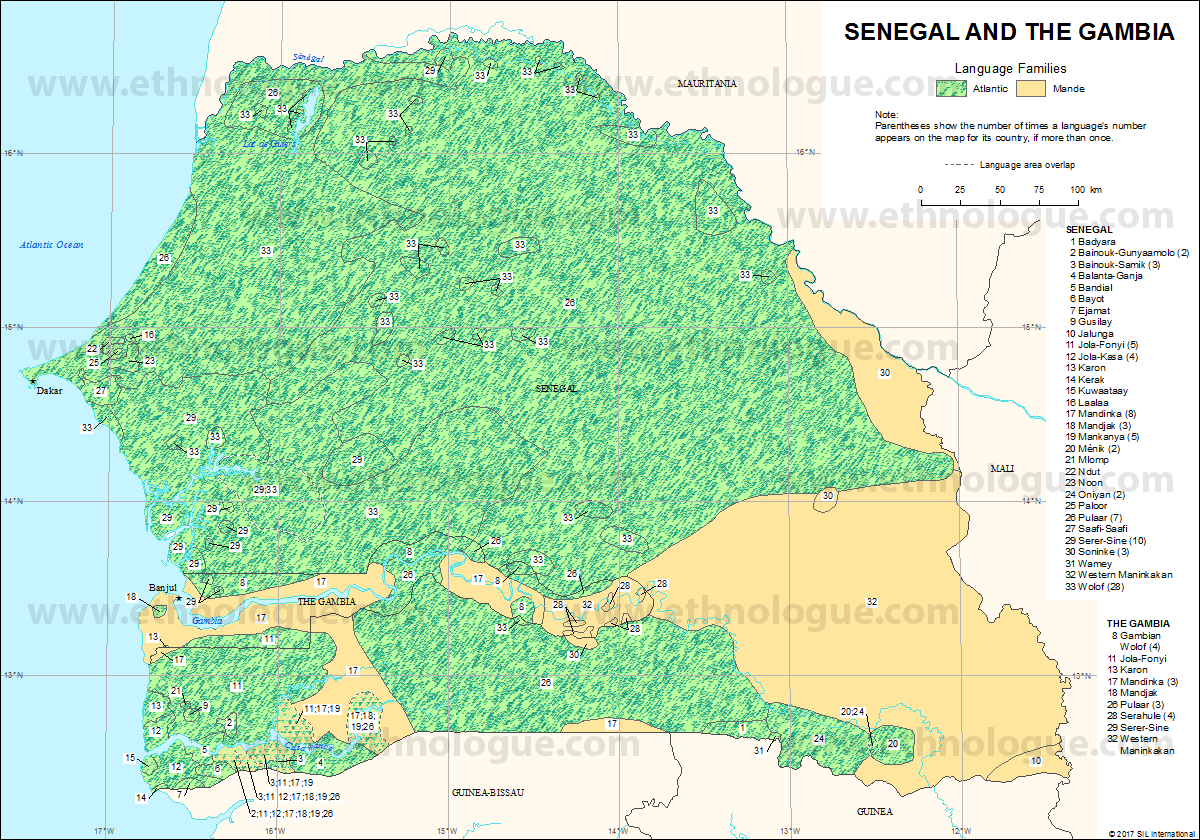
Senegal and The Gambia
Graphs
Language Vitality Profile
Full explanation
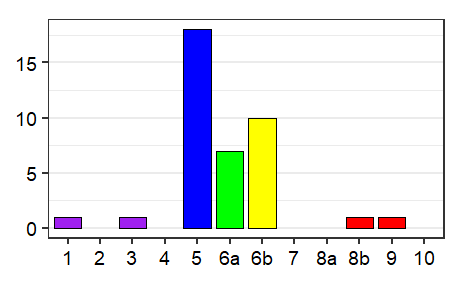
Language Status Profile
Full explanation
Resources
View Terms
Each Ethnologue country digest is a licensed product with restricted terms of use. Before downloading the product, you must agree to the following terms:
- This is a license for individual use. Just as with a conventionally published book, it is a violation of copyright to make a copy and give it to others.
- You may not redistribute this work in any form, including ingesting the contents into a database that is shared with others or posting it on a web site (whether public or private).
To inquire about permission for reuse or redistribution, please use the Contact Us form in the footer.
Digest of the languages of Senegal ($199.95, 42 page PDF)