
ST
Democratic Republic of São Tomé and Príncipe
São Tomé e Príncipe
Summary
- Official Name
- Democratic Republic of São Tomé and Príncipe
- Population
- 217,200
- Principal Languages
- Portuguese
- Literacy Rate
- 93% (2018 UNESCO)
- International Conventions
- ACHPR (1987), CSICH (2012), ICCPR (1966), UNCRPD (2006)
- General References
- Holm 1989, Lorenzino 1999, Maurer 1995
- Language Counts
- The number of established languages listed for São Tomé e Príncipe is 7. All are living languages. Of these, 3 are indigenous and 4 are non-indigenous. Furthermore, 2 are institutional, 3 are in trouble, and 2 are dying. Also listed is 1 unestablished language.
Languages
- Angolar aoa
- São Tomé province: most spoken in Caué district, in particular São João dos Angolares. Also spoken in Santa Catarina, Lembá district (2020 M. Bouchard). Users: 7,900 (2019 D. Eberhard), based on survey of Angolar communities in Caué and Lembá districts. Ethnic population: 12,000 (2019 D. Eberhard), based on extrapolations of 2012 census for 2019, plus estimates from community leaders for each district. Status: 6b (Threatened). Autonym: Ngola Classification: Creole, Portuguese based
- English eng
- Users: 10,000 in São Tomé e Príncipe (2018 World Factbook). Status: Unestablished. Alternate Names: Inglês Classification: Indo-European, Germanic, West, English
- French fra
- Scattered. Users: 42,200 in São Tomé e Príncipe (Beck et al 2018), L2 users. Status: 4 (Educational). Alternate Names: Inglês Classification: Indo-European, Italic, Romance, Italo-Western, Western, Gallo-Iberian, Gallo-Romance, Gallo-Rhaetian, Oïl, French
- Kabuverdianu kea
- Highest concentration in Príncipe province. Others scattered throughout São Tomé province. Users: 17,500 in São Tomé e Príncipe (2019 D. Eberhard). Based on 2012 census with extrapolations for 2019. Ethnic population: Estimates of ethnic population unreliable due to high rate of mixed marriages and increased awareness of national identity (2020 M. Bouchard). Status: 6b (Threatened). Classification: Creole, Portuguese based
- Kimbundu kmb
- São Tomé province: Água Grande (town of Bairro da Liberdade), Lobata (town of Agostinho Neto), and Mé Zóxi (town of Monte Café) districts. Users: 160 in São Tomé e Príncipe (2019 D. Eberhard). Ethnic population: 3,000 (2019 D. Eberhard). Status: 8a (Moribund). Alternate Names: Tonga Classification: Niger-Congo, Atlantic-Congo, Volta-Congo, Benue-Congo, Bantoid, Southern, Narrow Bantu, Central, H, Kimbundu (H.21)
- Portuguese por
- Users: 197,000 in São Tomé e Príncipe, all users. L1 users: 68,000 in São Tomé e Príncipe (2016 World Factbook). L2 users: 129,000 (2016 World Factbook). Status: 1 (National). De facto national language. Alternate Names: Português Classification: Indo-European, Italic, Romance, Italo-Western, Western, Gallo-Iberian, Ibero-Romance, West Iberian, Portuguese-Galician
- Principense pre
- Príncipe province. Users: 200 (Agostinho and Araujo 2021). No monolinguals (Agostinho and Araujo 2021). Ethnic population: Estimates of ethnic population unreliable due to high degree of mixed marriages and increased awareness of national identity (2020 M. Bouchard). Status: 8b (Nearly extinct). Alternate Names: Dialeto, Lun’gwiye Autonym: Lung’Ie Classification: Creole, Portuguese based
- Sãotomense cri
- North side of São Tomé island, spoken mostly in the districts of Agua Grande, Cantagalo, Lobata, and Me-Zóxi. Users: 45,000 in São Tomé e Príncipe (2019 D. Eberhard). Based on extrapolations of 2012 census for 2019, plus adjustments made by Ministry of Culture. Ethnic population: Current estimates of ethnic population unreliable due to high rate of mixed marriages and increased shift to a national identity. Traditonally, the language community (the Forro) considered the largest ethnicity in the country with a size at least 10 times that of the Angolar community (2020 M. Bouchard). Total users in all countries: 55,600. Status: 7 (Shifting). De facto language of provincial identity in São Tomé Island except south tip. Alternate Names: Dialeto, Forro, Fôlô, Lungwa santome, Santomense, Santomé, São Tomense Autonym: Sãotomense Classification: Creole, Portuguese based
Languages by Status
Portuguese
[por] 1 (National). De facto national language. 197,000 in São Tomé e Príncipe, all users. L1 users: 68,000 in São Tomé e Príncipe (2016 World Factbook). L2 users: 129,000 (2016 World Factbook).
French
[fra] 4 (Educational). 42,200 in São Tomé e Príncipe (Beck et al 2018), L2 users.
Angolar
[aoa] 6b (Threatened). 7,900 (2019 D. Eberhard), based on survey of Angolar communities in Caué and Lembá districts. Ethnic population: 12,000 (2019 D. Eberhard), based on extrapolations of 2012 census for 2019, plus estimates from community leaders for each district.
Kabuverdianu
[kea] 6b (Threatened). 17,500 in São Tomé e Príncipe (2019 D. Eberhard). Based on 2012 census with extrapolations for 2019. Ethnic population: Estimates of ethnic population unreliable due to high rate of mixed marriages and increased awareness of national identity (2020 M. Bouchard).
Sãotomense
[cri] 7 (Shifting). De facto language of provincial identity in São Tomé Island except south tip. 45,000 in São Tomé e Príncipe (2019 D. Eberhard). Based on extrapolations of 2012 census for 2019, plus adjustments made by Ministry of Culture. Ethnic population: Current estimates of ethnic population unreliable due to high rate of mixed marriages and increased shift to a national identity. Traditonally, the language community (the Forro) considered the largest ethnicity in the country with a size at least 10 times that of the Angolar community (2020 M. Bouchard). Total users in all countries: 55,600.
Kimbundu
[kmb] 8a (Moribund). 160 in São Tomé e Príncipe (2019 D. Eberhard). Ethnic population: 3,000 (2019 D. Eberhard).
Principense
[pre] 8b (Nearly extinct). 200 (Agostinho and Araujo 2021). No monolinguals (Agostinho and Araujo 2021). Ethnic population: Estimates of ethnic population unreliable due to high degree of mixed marriages and increased awareness of national identity (2020 M. Bouchard).
English
[eng] Unestablished. 10,000 in São Tomé e Príncipe (2018 World Factbook).
Maps
Equatorial Guinea, Gabon and São Tomé e Príncipe
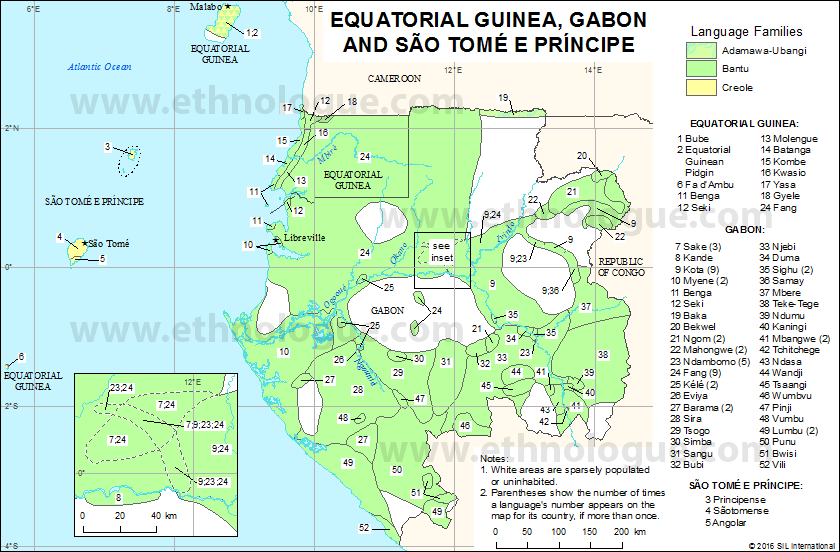
Sao Tome & Principe

Graphs
Language Vitality Profile
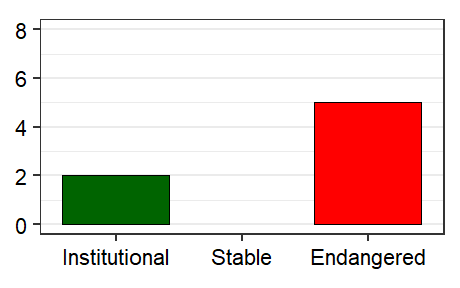
Full explanation
Language Status Profile
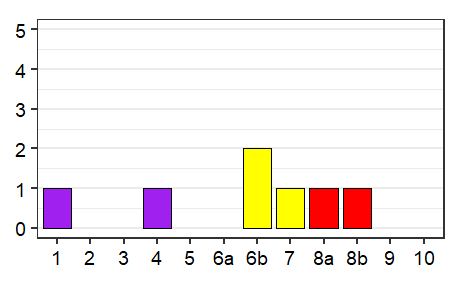
Full explanation
Resources
View Terms
Each Ethnologue country digest is a licensed product with restricted terms of use. Before downloading the product, you must agree to the following terms:
- This is a license for individual use. Just as with a conventionally published book, it is a violation of copyright to make a copy and give it to others.
- You may not redistribute this work in any form, including ingesting the contents into a database that is shared with others or posting it on a web site (whether public or private).
To inquire about permission for reuse or redistribution, please use the Contact Us form in the footer.
Digest of the languages of São Tomé e Príncipe ($149.95, 23 page PDF)