
SV
El Salvador
Summary
- Official Name
- Population
- 6,569,000
- Principal Languages
- Spanish
- Literacy Rate
- 89% (2018 UNESCO)
- International Conventions
- CPPDCE (2006), CSICH (2012), ICCPR (1966), UNCRPD (2006), UNDRIP (2007)
- General References
- Campbell 1997
- Deaf Population
- 88,400 (2015 CONAIPD)
- Language Counts
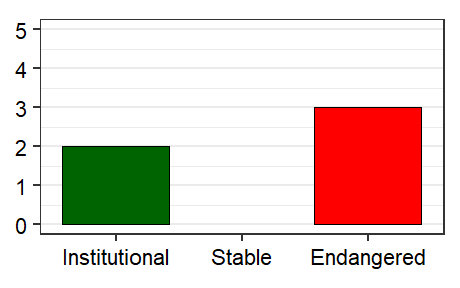
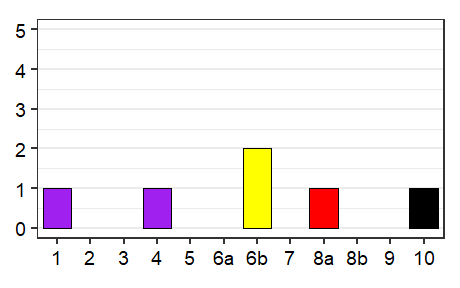
- The number of established languages listed for El Salvador is 7. Of these, 6 are living and 1 is extinct. Of the living languages, 2 are indigenous and 4 are non-indigenous. Furthermore, 3 are institutional, 1 is in trouble, and 2 are dying. Also listed are 3 unestablished languages.
Languages
- American Sign Language ase
- Scattered, mostly in and around San Salvador. Status: 6b* (Threatened). Alternate Names: ASL Classification: Sign language, Deaf community sign language
- Arabic, North Levantine Spoken apc
- Users: 1,300 in El Salvador (2021 Joshua Project), based on ethnicity. Status: Unestablished. Classification: Afro-Asiatic, Semitic, Central, South, Arabic
- Cacaopera ccr
- Morazan department. Users: No known L1 speakers. Last fluent speakers survived into the early 20th century. Status: 10 (Extinct). Classification: Misumalpan, Sumu-Cacaopera-Matagalpa, Cacaopera-Matagalpa
- Chinese, Yue yue
- Users: 1,500 in El Salvador (2021 Joshua Project), based on ethnicity. Status: Unestablished. Classification: Sino-Tibetan, Chinese
- Costa Rican Sign Language csr
- Eastern region, particularly San Miguel (Ciupek-Reed 2012). Users: No known L1 users in El Salvador (2022). Status: 9 (Dormant). Alternate Names: LESCO, Lengua de Señas Costaricenses Classification: Sign language, Deaf community sign language
- English eng
- Users: 9,400 in El Salvador (2021 Joshua Project), based on ethnicity. Status: 4 (Educational). Classification: Indo-European, Germanic, West, English
- German, Standard deu
- Users: 6,600 in El Salvador (2021 Joshua Project), based on ethnicity. Status: Unestablished. Classification: Indo-European, Germanic, West, High German, German, Middle German, East Middle German
- Nahuat ppl
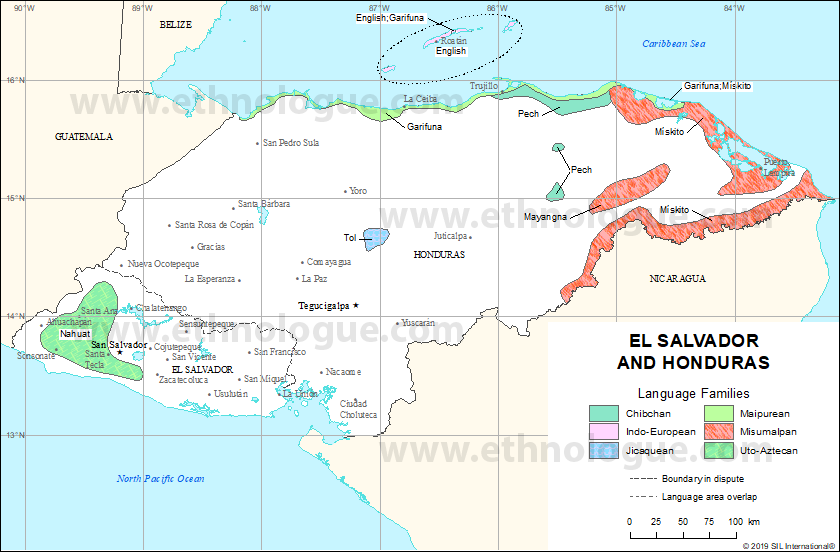
- Ahuachapan, Chalatenango, La Libertad, La Paz, San Salvador, Santa Ana, and Sonsonate departments. West, interior highlands. Users: 1,300, all users. L1 users: 500 (2015 J. Stuart), increasing. L2 users: 800 (2015 J. Stuart). Ethnic population: 11,100 (2005 census). Status: 8a (Moribund). Recognized language (1993, Law to protect the national patrimony, Decree 513). Alternate Names: Nawat, Nicarao, “Pipil” (pej.) Autonym: Nahuat Classification: Uto-Aztecan, Southern Uto-Aztecan, Corachol-Aztecan, Core Nahua
- Salvadoran Sign Language esn
- Scattered. Users: 26,000 (2020 H. Harm). Estimated 26,000, or approximately 0.4% of the overall population (2020 H. Harm). Other estimates: 50%–75% of the total deaf signers use LESSA (Ciupek-Reed 2012). Status: 4 (Educational). Recognized language (2005, Acuerdo Nº 16-0132, August 12, 2005; Ley General de Educación, Art. 15-A (as amended 2014)). Alternate Names: El Salvadoran Sign Language, LESA, LESSA, Lengua de señas salvadoreñas Classification: Sign language, Deaf community sign language
- Spanish spa
- Widespread. Users: 6,479,200 in El Salvador, all users. L1 users: 6,460,000 in El Salvador (2019). L2 users: 19,200 (Instituto Cervantes 2019). Status: 1 (National). Statutory national language (1983, Constitution, Article 62). Alternate Names: Castellano, Español Classification: Indo-European, Italic, Romance, Italo-Western, Western, Gallo-Iberian, Ibero-Romance, West Iberian, Castilian
Languages by Status
Spanish
[spa] 1 (National). Statutory national language (1983, Constitution, Article 62). 6,479,200 in El Salvador, all users. L1 users: 6,460,000 in El Salvador (2019). L2 users: 19,200 (Instituto Cervantes 2019).
English
[eng] 4 (Educational). 9,400 in El Salvador (2021 Joshua Project), based on ethnicity.
Salvadoran Sign Language
[esn] 4 (Educational). Recognized language (2005, Acuerdo Nº 16-0132, August 12, 2005; Ley General de Educación, Art. 15-A (as amended 2014)). 26,000 (2020 H. Harm). Estimated 26,000, or approximately 0.4% of the overall population (2020 H. Harm). Other estimates: 50%–75% of the total deaf signers use LESSA (Ciupek-Reed 2012).
American Sign Language
[ase] 6b* (Threatened).
Nahuat
[ppl] 8a (Moribund). Recognized language (1993, Law to protect the national patrimony, Decree 513). 1,300, all users. L1 users: 500 (2015 J. Stuart), increasing. L2 users: 800 (2015 J. Stuart). Ethnic population: 11,100 (2005 census).
Costa Rican Sign Language
[csr] 9 (Dormant). No known L1 users in El Salvador (2022).
Cacaopera
[ccr] 10 (Extinct). No known L1 speakers. Last fluent speakers survived into the early 20th century.
Arabic, North Levantine Spoken
[apc] Unestablished. 1,300 in El Salvador (2021 Joshua Project), based on ethnicity.
Chinese, Yue
[yue] Unestablished. 1,500 in El Salvador (2021 Joshua Project), based on ethnicity.
German, Standard
[deu] Unestablished. 6,600 in El Salvador (2021 Joshua Project), based on ethnicity.
Maps
El Salvador and Honduras
Graphs
Language Vitality Profile
Full explanation
Language Status Profile
Full explanation
Resources
View Terms
Each Ethnologue country digest is a licensed product with restricted terms of use. Before downloading the product, you must agree to the following terms:
- This is a license for individual use. Just as with a conventionally published book, it is a violation of copyright to make a copy and give it to others.
- You may not redistribute this work in any form, including ingesting the contents into a database that is shared with others or posting it on a web site (whether public or private).
To inquire about permission for reuse or redistribution, please use the Contact Us form in the footer.
Digest of the languages of El Salvador ($149.95, 20 page PDF)