
TT
Trinidad and Tobago
Summary
- Official Name
- Population
- 1,399,000
- Principal Languages
- English
- Literacy Rate
- 99% (2015 World Factbook)
- International Conventions
- CPPDCE (2006), CSICH (2012), ICCPR (1966), UNCRPD (2006), UNDRIP (2007)
- General References
- Hancock 1985, Mohan and Zador 1986, Winer 1993
- Language Counts
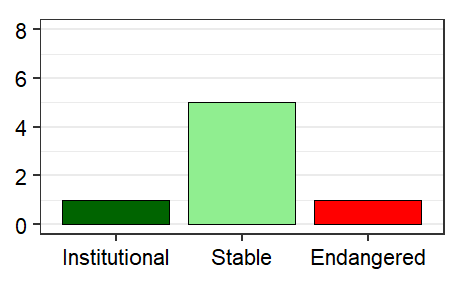
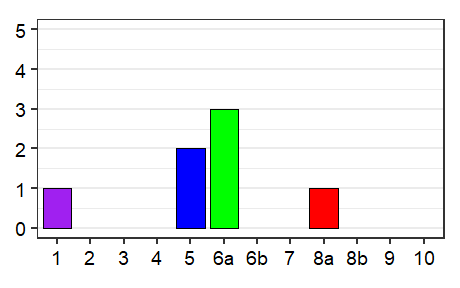
- The number of established languages listed for Trinidad and Tobago is 7. All are living languages. Of these, 3 are indigenous and 4 are non-indigenous. Furthermore, 1 is institutional, 2 are developing, 3 are vigorous, and 1 is dying. Also listed are 5 unestablished languages.
Languages
- Arabic, North Levantine Spoken apc
- Users: 2,600 in Trinidad and Tobago. Status: Unestablished. Classification: Afro-Asiatic, Semitic, Central, South, Arabic
- Chinese zho
- Users: 6,500 in Trinidad and Tobago (2003 J. Leclerc). Status: Unestablished.
- English eng
- Users: 1,300,000 in Trinidad and Tobago (2011 J. Ferreira). Status: 1 (National). De facto national language, standard English in writing, education; non-standard English in informal domains, among distinct ethnic groups. Classification: Indo-European, Germanic, West, English
- Hindustani, Sarnami hns
- Scattered. Users: 15,600 in Trinidad and Tobago (2006). Ethnic population: East Indians are 41% of the population. Status: 8a (Moribund). Alternate Names: Caribbean Hindustani, Sarnaanie Hiendoestaanie, Trinidad Bhojpuri, Trinidadian Bhojpuri, Trinidadian Hindustani Classification: Indo-European, Indo-Iranian, Indo-Aryan, Outer Languages, Eastern, Bihari
- Lesser Antillean French Creole acf
- Trinidad: Diego Martin municipality, peninsular coastal settlements north of the capital. Users: 4,100 in Trinidad and Tobago (2020 Joshua Project), based on ethnicity. Status: 5 (Developing). Alternate Names: Créole, French Creole, French-lexicon Creole, French-lexified Creole, Kwéyòl, Patois, Patwa Classification: Creole, French based
- Spanish spa
- Trinidad: Siparia municipality, southern peninsula, fishing villages. Users: 70,400 in Trinidad and Tobago, all users. L1 users: 4,000 in Trinidad and Tobago (Instituto Cervantes 2019). L2 users: 66,400 (Instituto Cervantes 2019). Status: 5* (Dispersed). Classification: Indo-European, Italic, Romance, Italo-Western, Western, Gallo-Iberian, Ibero-Romance, West Iberian, Castilian
- Tobagonian English Creole tgh
- Widespread. Users: 300,000 (2011 J. Ferreira). Status: 6a (Vigorous). De facto language of provincial identity in Tobago. Alternate Names: Tobagonian Dialect Classification: Creole, English based, Atlantic, Eastern, Southern
- Trinidad and Tobago Sign Language lst
- Scattered. Users: 1,360 (2019 B. Braithwaite). Estimate based on 0.1% of the general population. Status: 6a (Vigorous). Alternate Names: TSL, TTSL, Trinidad Sign Language, Trinidadian Sign Language Classification: Sign language, Deaf community sign language
- Trinidadian English Creole trf
- Trinidad. Users: 1,000,000 (2011 J. Ferreira). Status: 6a* (Vigorous). De facto language of national identity. Classification: Creole, English based, Atlantic, Eastern, Southern
Languages by Status
English
[eng] 1 (National). De facto national language, standard English in writing, education; non-standard English in informal domains, among distinct ethnic groups. 1,300,000 in Trinidad and Tobago (2011 J. Ferreira).
Spanish
[spa] 5* (Dispersed). 70,400 in Trinidad and Tobago, all users. L1 users: 4,000 in Trinidad and Tobago (Instituto Cervantes 2019). L2 users: 66,400 (Instituto Cervantes 2019).
Lesser Antillean French Creole
[acf] 5 (Developing). 4,100 in Trinidad and Tobago (2020 Joshua Project), based on ethnicity.
Tobagonian English Creole
[tgh] 6a (Vigorous). De facto language of provincial identity in Tobago. 300,000 (2011 J. Ferreira).
Trinidad and Tobago Sign Language
[lst] 6a (Vigorous). 1,360 (2019 B. Braithwaite). Estimate based on 0.1% of the general population.
Trinidadian English Creole
[trf] 6a* (Vigorous). De facto language of national identity. 1,000,000 (2011 J. Ferreira).
Hindustani, Sarnami
[hns] 8a (Moribund). 15,600 in Trinidad and Tobago (2006). Ethnic population: East Indians are 41% of the population.
Maps
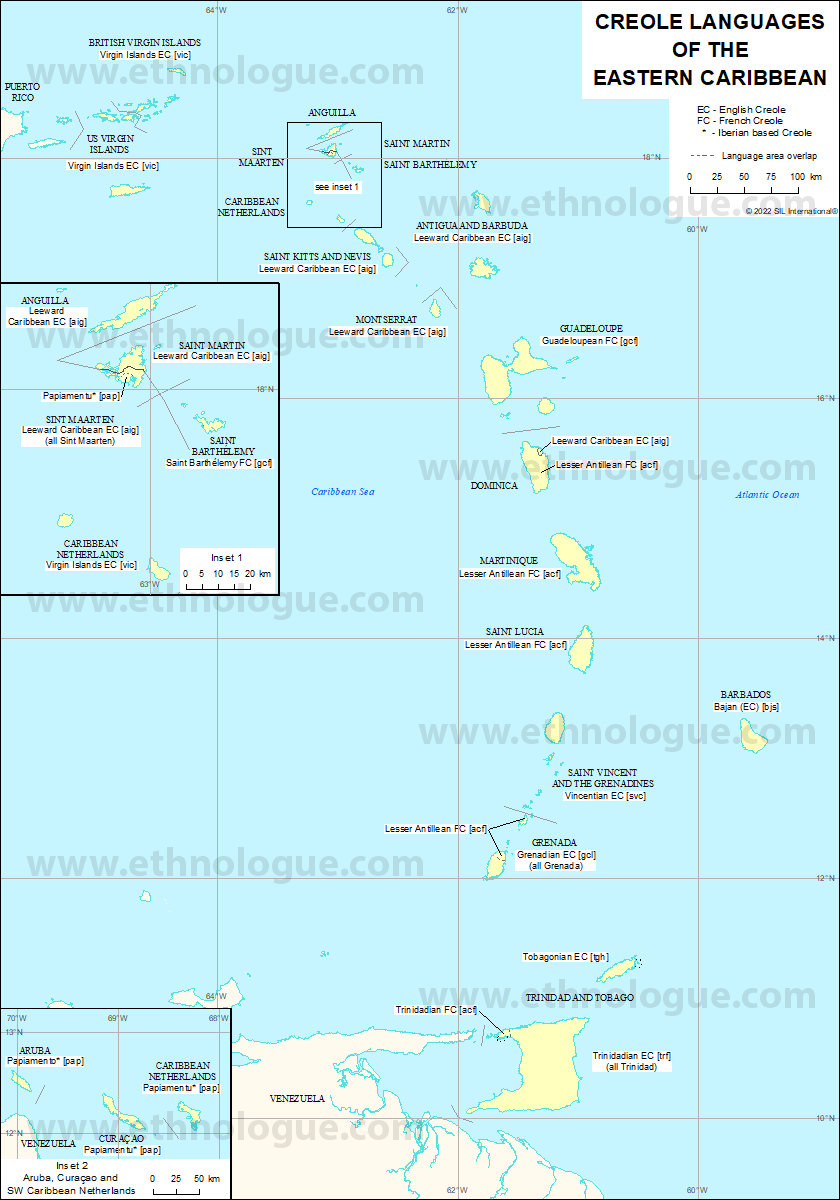
Creole Languages of the Eastern Caribbean
Graphs
Language Vitality Profile
Full explanation
Language Status Profile
Full explanation
Resources
View Terms
Each Ethnologue country digest is a licensed product with restricted terms of use. Before downloading the product, you must agree to the following terms:
- This is a license for individual use. Just as with a conventionally published book, it is a violation of copyright to make a copy and give it to others.
- You may not redistribute this work in any form, including ingesting the contents into a database that is shared with others or posting it on a web site (whether public or private).
To inquire about permission for reuse or redistribution, please use the Contact Us form in the footer.
Digest of the languages of Trinidad and Tobago ($149.95, 20 page PDF)