
TW
Taiwan, Province of China. Also referred to as Republic of China
China–Taiwan
Summary
- Official Name
- Taiwan, Province of China. Also referred to as Republic of China
- Population
- 23,581,000
- Principal Languages
- Mandarin Chinese
- Literacy Rate
- 99% (2014 World Factbook)
- General References
- Li 1990, Sebeok 1971, Tryon 1995, Tsuchida 1976, Wurm 2000, Wurm 2007, Wurm and Hattori 1981
- Deaf Population
- 104,000 (2004)
- Language Counts
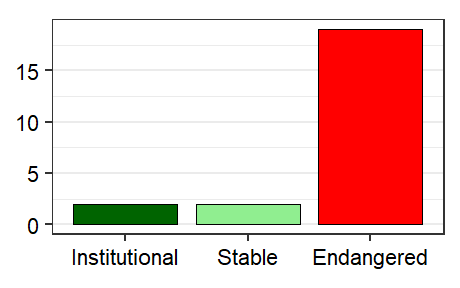
- The number of established languages listed for China–Taiwan is 29. Of these, 25 are living and 4 are extinct. Of the living languages, 21 are indigenous and 4 are non-indigenous. Furthermore, 4 are institutional, 1 is developing, 9 are in trouble, and 11 are dying. Also listed are 7 unestablished languages.
Languages
- Amis ami
- Hualien and Taitung counties: valley plains and east coast. Users: 108,000 (2015 CIP). Ethnic population: 214,000 (2020 CIP). Status: 6b* (Threatened). Alternate Names: Ami, Amia, Bakurut, Lam-Si-Hoan, Maran, Pagcah, Pangcah, Pangtsah, Sabari, Tanah Autonym: Amis Classification: Austronesian, East Formosan, Central
- Atayal tay
- Hualien and Taitung counties. Users: 10,000 (2008 UNESCO). Ethnic population: 92,100 (2020 CIP). Status: 7 (Shifting). Alternate Names: Ataiyal, Attayal, Bonotsek, Shabogala, Taijyal, Taiyal, Takonan, Tangao, Tyal, Yukan Autonym: Tayal Classification: Austronesian, Atayalic
- Babuza bzg
- Changhua county: west central coast and inland, Tatu and Choshui rivers and beyond. Users: No known L1 speakers. Survived into the 2000s. Ethnic population: 35. Status: 9 (Dormant). Alternate Names: Babusa, Favorlang, Favorlang-Babuza, Favorlangsch, Jaborlang, Poavosa, Sprache von Formosa Classification: Austronesian, Western Plains, Central Western Plains
- Basay byq
- New Taipei Municipality. Users: No known L1 speakers (Liu 2007). The last fluent speaker probably died by the 1910s. Status: 10 (Extinct). Alternate Names: Basai, Basay-Trobiawan, Kawanuwan, Ketangalan, Sprache von Formosa Classification: Austronesian, East Formosan, Northern
- Bunun bnn
- Hualien county, Zhuoxi and Wanrong townships; Nantou county, Renai and Xinyi townships; and Taitung county, Yanping and Haiduan townships. Users: 38,000 (CIP-EY 2002). Ethnic population: 59,500 (2020 CIP). Status: 5* (Developing). Alternate Names: Bubukun, Bunan, Bunti, Bunum, Vonun, Vunum, Vunun, Vunung Autonym: Bunun Classification: Austronesian, Bunun
- Chinese, Hakka hak
- Hsinchu, Kaohsiung, Miaoli, Pingtung, and Taoyuan counties; New Taipei Municipality. Users: 4,240,000 in China–Taiwan (2017 J. Leclerc). Status: 4 (Educational). Classification: Sino-Tibetan, Chinese
- Chinese, Mandarin cmn
- Major cities. Users: 19,580,000 in China–Taiwan, all users. L1 users: 4,580,000 in China–Taiwan (2017 J. Leclerc). L2 users: 15,000,000. Status: 1 (National). De facto national language. Alternate Names: Mandarin Classification: Sino-Tibetan, Chinese
- Chinese, Min Nan nan
- Widespread: east coast cities, western plain. Users: 13,500,000 in China–Taiwan (2017 J. Leclerc). Status: 3 (Wider communication). De facto language of provincial identity in Taiwan. Alternate Names: Bân-lâm-gú, Min Nan, Minnan, Taiwanese Classification: Sino-Tibetan, Chinese
- English eng
- Users: 15,300 in China–Taiwan (2018 census), based on nationality. Status: 4 (Educational). Classification: Indo-European, Germanic, West, English
- Indonesian ind
- Users: 239,000 in China–Taiwan (2018 census), based on nationality. Status: Unestablished. Classification: Austronesian, Malayo-Polynesian, Malayo-Chamic, Malayic, Malay
- Japanese jpn
- Users: 14,100 in China–Taiwan (2018 census), based on nationality. Status: 8b (Nearly extinct). Classification: Japonic
- Kanakanabu xnb
- Kaohsiung county: Sanmin township, Minchuan village area. Users: 4 (2012 P. Jen-Kuei). A few other semi-speakers who have passive knowledge of the language (2012 P. Jen-Kuei). Ethnic population: 360 (2020 CIP). Status: 8b (Nearly extinct). Alternate Names: Kanabu, Kanakana Fu, Kanakanavu Classification: Austronesian, Tsouic
- Kavalan ckv
- Yilan county: above Toucheng to Ilan and inland; migrants on east coast in Hualien county: Fengpin township, Hsishe village. Users: 70 (2015 CIP). Ethnic population: 1,490 (2020 CIP). Status: 8b (Nearly extinct). Alternate Names: Cabaran, Kabalan, Kabaran, Kamalan, Kavanan, Kavarauan, Kibalan, Kiwaraw, Kiwarawa, Kuvalan, Kuvarawan, Kuwarawan, Kvalan, Shekwan Autonym: Kbalan Classification: Austronesian, East Formosan, Northern
- Ketangalan kae
- New Taipei Municipality: Panchiao area. Users: No known L1 speakers. Probably extinct by mid 20th century. Status: 10 (Extinct). Alternate Names: Ketagalan, Ketangalano, Sprache von Formosa, Tangalan Classification: Austronesian, Unclassified
- Korean kor
- Users: 4,200 in China–Taiwan (2018 census), based on nationality. Status: Unestablished. Classification: Koreanic
- Kulon uon
- Taoyuan county. Users: No known L1 speakers. Last speaker likely died in the 1940s. Status: 10 (Extinct). Alternate Names: Kulun Classification: Austronesian, Northwest Formosan
- Malay zlm
- Users: 15,800 in China–Taiwan (2018 census), based on nationality. Status: Unestablished. Classification: Austronesian, Malayo-Polynesian, Malayo-Chamic, Malayic, Malay
- Paiwan pwn
- Pingtung and Taitung counties: mountains southeast. Users: 15,000 (2008 UNESCO). Ethnic population: 103,000 (2020 CIP). Status: 6b (Threatened). Alternate Names: Butanglu, Kadas, Kale-Whan, Kapiangan, Katausan, Li-Li-Sha, Paiuan, Payowan, Samobi, Samohai, Saprek, Stimul, Tamari, Vinuculjan Autonym: Pinayuanan Classification: Austronesian, Paiwan
- Papora-Hoanya ppu
- Taichung Municipality. Users: No known L1 speakers. The last speaker survived into the 1980s (Tsuchida 1982). Status: 10 (Extinct). Alternate Names: Bupuran, Hinapavosa, Hoanya, Papola, Papora, Sprache von Formosa, Vupuran Classification: Austronesian, Western Plains, Central Western Plains
- Pazeh pzh
- Miaoli and Nantou counties; Taichung Municipality. Users: 2 (Jen-kuei Li 2013). Pazeh dialect is extinct. Only known speakers use Kaxabu dialect (Jen-kuei Li 2013). Ethnic population: 6,000 (2021 S. Yu-Hsiang Pan). Status: 8b (Nearly extinct). Alternate Names: Bazehai, Kulon-Pazeh, Pazeh-Kahabu, Pazeh-Kaxabu, Pazehe, Pazih, Pazzehe, Sprache von Formosa Autonym: Pazeh Classification: Austronesian, Northwest Formosan
- Puyuma pyu
- Taitung county: southeast coast and inland. Users: 1,000 (Teng 2008). Ethnic population: 14,500 (2020 CIP). About 6,800 still reside in the Taitung area (Teng 2008). Status: 8a (Moribund). Alternate Names: Beinan, Kadas, Panapanayan, Pelam, Pilam, Piyuma, Pyuma, Tipun Autonym: Pinuyumayan Classification: Austronesian, Puyuma
- Rukai dru
- Kaohsiung, Pingtung, and Taitung counties: west of Taitung city, 13 or 14 villages in south central mountains. Users: 2,000 (2008 UNESCO). Some monolingual older adults. Ethnic population: 13,500 (2020 CIP). Status: 6b (Threatened). Alternate Names: Banga, Bantalang, Bantaurang, Drekay, Drukai, Drukay, Dukai, Dyokay, Kadas, Rutkai, Sarisen, Taloma, Tsalisen, Tsarisen Classification: Austronesian, Rukai
- Saaroa sxr
- Kaohsiung county: enclave south and southeast of Minchuan, along Laonung river in west central mountains. Users: 25 (2015 CIP). Ethnic population: 410 (2020 CIP). Status: 8b (Nearly extinct). Alternate Names: Hla’alua, La Aluwa, La’alua, La’arua, Lha’alua, Pachien, Paichien, Rarua, Saarua, Saroa, Shishaban, Sisyaban Classification: Austronesian, Tsouic
- Saisiyat xsy
- Miaoli county: Nanchuang and Shihtan townships; Hsinchu county: Wufeng township. Western mountains. Users: 2,000 (2015 CIP). Tungho: more active use. Taai: a few speakers; nearly assimilated into Atayal [tay]. Ethnic population: 6,730 (2020 CIP). Status: 7 (Shifting). Alternate Names: Amutoura, Bouiok, Saiset, Saisett, Saisiat, Saisiett, Saisirat, Saisyet, Saisyett, Saixia, Seisirat Autonym: SaySiyat Classification: Austronesian, Northwest Formosan
- Sakizaya szy
- Hualien county. Users: 590 (2020 L. Hung). Ethnic population: 990 (2020 CIP). Status: 7 (Shifting). Alternate Names: Kizaya, Qilai, Sakezhaye, Sakidaya, Sakiray, Sakiraya, Sukizaya Autonym: Sakizaya Classification: Austronesian, East Formosan, Central
- Sediq trv
- Hualien county: inland from coast; Nantou county; Yunlin county: small area in Nan’ao township. Central mountains. Users: 650 (2015 CIP). Ethnic population: 42,800 (2020 CIP). Status: 8a (Moribund). Alternate Names: Bu-Hwan, Che-Hwan, Daiya-Ataiyal, Hogo, Iboho, Saediq, Sazek, Sedek, Sedeq, Sediakk, Sedik, Seedakka, Seedek, Seedeq, Seedik, Sejiq, Shedekka, Taroko, Taruku, Toda, Toroko Autonym: Seediq Classification: Austronesian, Atayalic
- Siraya fos
- Tainan Municipality: Hengchun to Peimen to Tapu. Users: No known L1 speakers. No fluent native speakers since 1908. Some older semi-speakers (2008 C. Huang). Status: 9 (Dormant). Alternate Names: Baksa, Formosan, Sideia, Sideis, Sideisch, Sinccan, Sinckan, Siraia, Siraiya, Sirayaic, “Pepo-Hwan” (pej.), “Pepohoan” (pej.) Autonym: Siraya Classification: Austronesian, East Formosan, Southwest
- Tagalog tgl
- Users: 149,000 in China–Taiwan (2018 census), based on nationality. Status: Unestablished. Classification: Austronesian, Malayo-Polynesian, Greater Central Philippine, Central Philippine, Tagalog
- Taivoan tvx
- Kaohsiung city; Hualien county. Users: No known L1 speakers. The last known speaker died near the end of the 1800s. Status: 9 (Dormant). Alternate Names: Taivuan, Tevorang, Tevorangh Autonym: Taivoan Classification: Austronesian, East Formosan, Southwest
- Taiwan Sign Language tss
- Scattered. Users: 24,000 (2021), decreasing. Estimated 24,000 deaf signers, assuming 0.1% of total population. Status: 6b (Threatened). Alternate Names: Taiwan Shouyu, Taiwan Ziran Shouyu Classification: Sign language, Deaf community sign language
- Thai tha
- Users: 64,800 in China–Taiwan (2018 census), based on nationality. Status: Unestablished. Classification: Kra-Dai, Kam-Tai, Tai, Southwestern
- Thao ssf
- Nantou county: Sun Moon Lake southeast shore, Te-hua village, and Ta-p’ing-lin, 14 km away. Users: 4 (2021 Center for Aboriginal Studies). Also some semi-speakers (2021 E. Zeitoun). Ethnic population: 820 (2020 CIP). Status: 8b (Nearly extinct). Alternate Names: Caw a lalawa, Chui-Huan, Chuihwan, Sao, Sau, Shao, Suihwan, Vulung Autonym: Thaw a lalawa Classification: Austronesian, Western Plains, Thao
- Tibetan bod
- Users: 2,000 in China–Taiwan (2017 J. Leclerc). Status: Unestablished. Classification: Sino-Tibetan, Tibeto-Burman, Western Tibeto-Burman, Bodish, Central Bodish, Central
- Tsou tsu
- Chiayi county: Alishan (Mt. Ali) area; Kaohsiung county: northwest and central; Nantou county: south central. Users: 4,000 (Zeitoun 2005). Ethnic population: 6,700 (2020 CIP). Status: 6b (Threatened). Alternate Names: Cou, Namakaban, Niitaka, Tibola, Tibolah, Tibolak, Tibolal, Tso, Tsoo, Tsu-U, Tsu-Wo, Tsuou, Tzo Classification: Austronesian, Tsouic
- Vietnamese vie
- Users: 194,000 in China–Taiwan (2018 census), based on nationality. Status: Unestablished. Classification: Austro-Asiatic, Mon-Khmer, Viet-Muong, Vietnamese
- Yami tao
- Taitung county: Botel Tobago (Lanyu) island, Orchid island, southeast coast. Users: 4,000 (Vondiziano 2019). Ethnic population: 4,680 (2020 CIP). Status: 6b (Threatened). Alternate Names: Botel Tabago, Botel Tobago, Dawu, Lanyu, Tao, Tawu Autonym: Ciriciring no tao, Pongso no Tao Classification: Austronesian, Malayo-Polynesian, Bashiic, Yami
Languages by Status
Chinese, Mandarin
[cmn] 1 (National). De facto national language. 19,580,000 in China–Taiwan, all users. L1 users: 4,580,000 in China–Taiwan (2017 J. Leclerc). L2 users: 15,000,000.
Chinese, Min Nan
[nan] 3 (Wider communication). De facto language of provincial identity in Taiwan. 13,500,000 in China–Taiwan (2017 J. Leclerc).
Chinese, Hakka
[hak] 4 (Educational). 4,240,000 in China–Taiwan (2017 J. Leclerc).
English
[eng] 4 (Educational). 15,300 in China–Taiwan (2018 census), based on nationality.
Bunun
[bnn] 5* (Developing). 38,000 (CIP-EY 2002). Ethnic population: 59,500 (2020 CIP).
Amis
[ami] 6b* (Threatened). 108,000 (2015 CIP). Ethnic population: 214,000 (2020 CIP).
Paiwan
[pwn] 6b (Threatened). 15,000 (2008 UNESCO). Ethnic population: 103,000 (2020 CIP).
Rukai
[dru] 6b (Threatened). 2,000 (2008 UNESCO). Some monolingual older adults. Ethnic population: 13,500 (2020 CIP).
Taiwan Sign Language
[tss] 6b (Threatened). 24,000 (2021), decreasing. Estimated 24,000 deaf signers, assuming 0.1% of total population.
Tsou
[tsu] 6b (Threatened). 4,000 (Zeitoun 2005). Ethnic population: 6,700 (2020 CIP).
Yami
[tao] 6b (Threatened). 4,000 (Vondiziano 2019). Ethnic population: 4,680 (2020 CIP).
Atayal
[tay] 7 (Shifting). 10,000 (2008 UNESCO). Ethnic population: 92,100 (2020 CIP).
Saisiyat
[xsy] 7 (Shifting). 2,000 (2015 CIP). Tungho: more active use. Taai: a few speakers; nearly assimilated into Atayal [tay]. Ethnic population: 6,730 (2020 CIP).
Sakizaya
[szy] 7 (Shifting). 590 (2020 L. Hung). Ethnic population: 990 (2020 CIP).
Puyuma
[pyu] 8a (Moribund). 1,000 (Teng 2008). Ethnic population: 14,500 (2020 CIP). About 6,800 still reside in the Taitung area (Teng 2008).
Sediq
[trv] 8a (Moribund). 650 (2015 CIP). Ethnic population: 42,800 (2020 CIP).
Japanese
[jpn] 8b (Nearly extinct). 14,100 in China–Taiwan (2018 census), based on nationality.
Kanakanabu
[xnb] 8b (Nearly extinct). 4 (2012 P. Jen-Kuei). A few other semi-speakers who have passive knowledge of the language (2012 P. Jen-Kuei). Ethnic population: 360 (2020 CIP).
Kavalan
[ckv] 8b (Nearly extinct). 70 (2015 CIP). Ethnic population: 1,490 (2020 CIP).
Pazeh
[pzh] 8b (Nearly extinct). 2 (Jen-kuei Li 2013). Pazeh dialect is extinct. Only known speakers use Kaxabu dialect (Jen-kuei Li 2013). Ethnic population: 6,000 (2021 S. Yu-Hsiang Pan).
Saaroa
[sxr] 8b (Nearly extinct). 25 (2015 CIP). Ethnic population: 410 (2020 CIP).
Thao
[ssf] 8b (Nearly extinct). 4 (2021 Center for Aboriginal Studies). Also some semi-speakers (2021 E. Zeitoun). Ethnic population: 820 (2020 CIP).
Babuza
[bzg] 9 (Dormant). No known L1 speakers. Survived into the 2000s. Ethnic population: 35.
Siraya
[fos] 9 (Dormant). No known L1 speakers. No fluent native speakers since 1908. Some older semi-speakers (2008 C. Huang).
Taivoan
[tvx] 9 (Dormant). No known L1 speakers. The last known speaker died near the end of the 1800s.
Basay
[byq] 10 (Extinct). No known L1 speakers (Liu 2007). The last fluent speaker probably died by the 1910s.
Ketangalan
[kae] 10 (Extinct). No known L1 speakers. Probably extinct by mid 20th century.
Kulon
[uon] 10 (Extinct). No known L1 speakers. Last speaker likely died in the 1940s.
Papora-Hoanya
[ppu] 10 (Extinct). No known L1 speakers. The last speaker survived into the 1980s (Tsuchida 1982).
Indonesian
[ind] Unestablished. 239,000 in China–Taiwan (2018 census), based on nationality.
Korean
[kor] Unestablished. 4,200 in China–Taiwan (2018 census), based on nationality.
Malay
[zlm] Unestablished. 15,800 in China–Taiwan (2018 census), based on nationality.
Tagalog
[tgl] Unestablished. 149,000 in China–Taiwan (2018 census), based on nationality.
Thai
[tha] Unestablished. 64,800 in China–Taiwan (2018 census), based on nationality.
Tibetan
[bod] Unestablished. 2,000 in China–Taiwan (2017 J. Leclerc).
Vietnamese
[vie] Unestablished. 194,000 in China–Taiwan (2018 census), based on nationality.
Maps
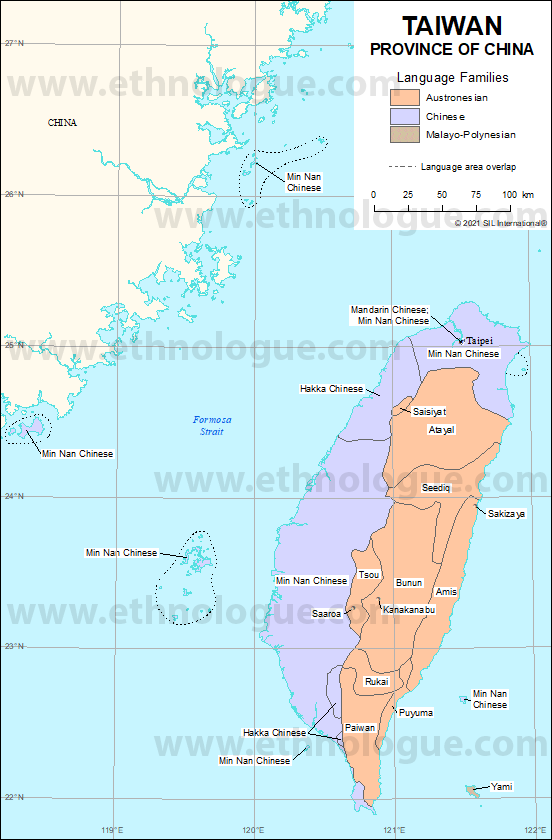
Taiwan
Graphs
Language Vitality Profile
Full explanation
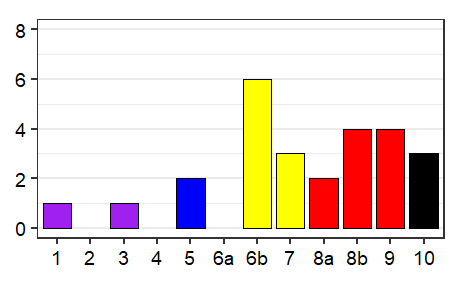
Language Status Profile
Full explanation
Resources
View Terms
Each Ethnologue country digest is a licensed product with restricted terms of use. Before downloading the product, you must agree to the following terms:
- This is a license for individual use. Just as with a conventionally published book, it is a violation of copyright to make a copy and give it to others.
- You may not redistribute this work in any form, including ingesting the contents into a database that is shared with others or posting it on a web site (whether public or private).
To inquire about permission for reuse or redistribution, please use the Contact Us form in the footer.
Digest of the languages of China–Taiwan ($149.95, 32 page PDF)