
TZ
United Republic of Tanzania
Tanzania
Summary
- Official Name
- United Republic of Tanzania
- Population
- 61,498,000
- Principal Languages
- English, Swahili
- Literacy Rate
- 80% (2015 World Factbook)
- International Conventions
- ACHPR (1987), CDE (1960), CPPDCE (2006), CSICH (2012), ICCPR (1966), UNCRPD (2006), UNDRIP (2007)
- General References
- Campbell and King 2011, Dimmendaal 1989, Maho and Sands 2002, Nurse and Philippson 1980, Polomé and Hill 1980, Schadeberg and Bender 1981, Taylor 1962, Whiteley 1969, Willis 1966
- Language Counts
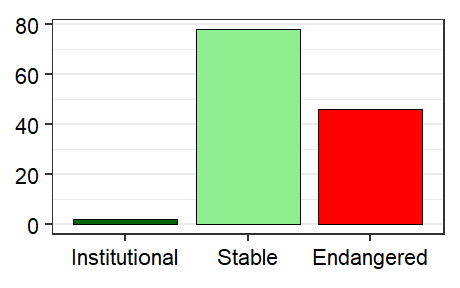
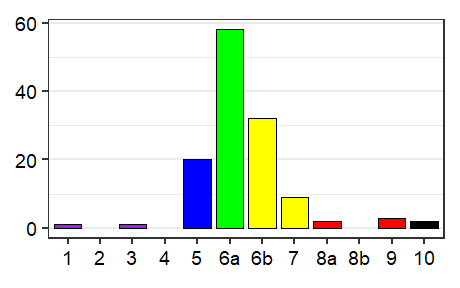
- The number of established languages listed for Tanzania is 130. Of these, 128 are living and 2 are extinct. Of the living languages, 120 are indigenous and 8 are non-indigenous. Furthermore, 2 are institutional, 24 are developing, 54 are vigorous, 43 are in trouble, and 5 are dying. Also listed are 2 unestablished languages and 1 macrolanguage.
Languages
- Aasáx aas
- Manyara region: Komolo, Lemelepo, Lendenai, Lolbeni, Naajuu, and Tilil settlements. Users: No known L1 speakers (Petrollino and Mous 2010). A few elderly rememberers (Petrollino and Mous 2010). The last fluent speaker most likely survived into the first decade of the 2000s. Status: 9 (Dormant). Alternate Names: Aasá, Aramanik, Asak, Asax, Assa, Asá, Laramanik, “Dorobo” (pej.), “Ndorobo” (pej.) Classification: Afro-Asiatic, Cushitic, South
- Akie oki
- Manyara, Simiyu, and Tanga regions. Users: 250 in Tanzania (2016 K. Legere). Another 250 semi-speakers. Status: 7 (Shifting). Alternate Names: Akiek, Okiek, “Il-Torobo” (pej.), “Kindorobo” (pej.) Classification: Nilo-Saharan, Satellite-Core, Core, Eastern Sudanic, Southern (n languages), Nilotic, Southern, Kalenjin, Okiek
- Alagwa wbj
- Dodoma region: Kondoa district. Users: 53,000 (Mradi wa Lugha za Tanzania 2009). Status: 6b (Threatened). Alternate Names: Alaagwa’isa, Alagwase, Alawa, Asi, Chasi, Hhagiree, Kialagwa, Kichase, Uassi, Waasi, Wasi Autonym: Alagwaisa Classification: Afro-Asiatic, Cushitic, South
- Arabic, Omani Spoken acx
- Unguja North, Unguja South regions, Unguja Urban-West regions. Users: No known L1 speakers in Tanzania. Ethnic population: 195,000 (Johnstone 1993). Status: 9 (Dormant). Classification: Afro-Asiatic, Semitic, Central, South, Arabic
- Arabic, Standard arb
- Scattered. Users: No known L1 speakers in Tanzania. Ethnic population: No ethnic community. Status: 9 (Second language only). Classification: Afro-Asiatic, Semitic, Central, South, Arabic
- Asu asa
- Kilimanjaro region: Pare mountains, Mwanga and Same districts; Manyara and Tanga regions. Users: 530,000 (Mradi wa Lugha za Tanzania 2009). 25,000 monolinguals. Status: 6a (Vigorous). Alternate Names: Ashu, Athu, Casu, Chasu, Chiasu, Kiathu, Kipare, Pare, Pare-Asu Classification: Niger-Congo, Atlantic-Congo, Volta-Congo, Benue-Congo, Bantoid, Southern, Narrow Bantu, Central, G, Shambala (G.22)
- Bembe bmb
- Kigoma region: Kigoma Vijinini district, Lake Tanganyika shore, Kigoma town north to Gombe National Park. Users: 22,000 in Tanzania (Mradi wa Lugha za Tanzania 2009). Status: 7 (Shifting). Alternate Names: Beembe, Ebembe, Ibembe, Kibembe Classification: Niger-Congo, Atlantic-Congo, Volta-Congo, Benue-Congo, Bantoid, Southern, Narrow Bantu, Central, D, Bembe-Buyi (D.54)
- Bena bez
- Njombe region: Njombe district; southwest Iringa, southwest Morogoro and north Ruvuma regions. Users: 592,000 (Mradi wa Lugha za Tanzania 2009). Status: 5 (Developing). Alternate Names: EkiBene, Ekibena, Ikibena, ekiBena Autonym: Kibena Classification: Niger-Congo, Atlantic-Congo, Volta-Congo, Benue-Congo, Bantoid, Southern, Narrow Bantu, Central, G, Bena-Kinga (G.63)
- Benamanga egm
- Morogoro region: Kilombero district, Mlimba; Ulanga district. Users: 60,000 (2021 R. Bigwa). Status: 6a* (Vigorous). Alternate Names: Bena Manga, Kibenamanga Classification: Niger-Congo, Atlantic-Congo, Volta-Congo, Benue-Congo, Bantoid, Southern, Narrow Bantu, Central, G, Bena-Kinga (G.63)
- Bende bdp
- Katavi region: Mpanda district, Kabungu, Karema, and Mwese divisions; Rukwa region. Users: 41,000 (Mradi wa Lugha za Tanzania 2009). Status: 6a (Vigorous). Alternate Names: Babende, Bhabhēnde, Kibende, Si’bende Autonym: Sibhēnde Classification: Niger-Congo, Atlantic-Congo, Volta-Congo, Benue-Congo, Bantoid, Southern, Narrow Bantu, Central, F, Tongwe-Bende (F.12)
- Bondei bou
- Tanga region: Usambara mountains, inland from Tanga. Users: 122,000 (Mradi wa Lugha za Tanzania 2009). Status: 6b* (Threatened). Alternate Names: Bonde, Boondei, Kibondei Classification: Niger-Congo, Atlantic-Congo, Volta-Congo, Benue-Congo, Bantoid, Southern, Narrow Bantu, Central, G, Shambala (G.24)
- Bungu wun
- Mbeya region: Chunya district: Mamba, Makongorosi, Matundasi, and Mkola wards; Songwe region: Songwe district. Users: 30,000 (Mradi wa Lugha za Tanzania 2009). Status: 6a (Vigorous). Alternate Names: Echiungu, Iciwungu, Kibungu, Ungu, Wungu Autonym: Chɨwʉngʉ Classification: Niger-Congo, Atlantic-Congo, Volta-Congo, Benue-Congo, Bantoid, Southern, Narrow Bantu, Central, F, Sukuma-Nyamwezi (F.25)
- Burunge bds
- Dodoma region: Kondoa district, Chambalo, Goima, and Mirambu villages; Manyara region. Users: 28,000 (Mradi wa Lugha za Tanzania 2009). Ethnic population: 30,000 (Dimmendaal and Voeltz 2007). Status: 6a (Vigorous). Alternate Names: Bulunge, Burunga Iso, Burungee, Burungi, Kiburunge, Mbulungi, Mbulungwe Autonym: Burungaisoo Classification: Afro-Asiatic, Cushitic, South
- Chingoni xnj
- Iringa and Morogoro regions; Ruvuma region: Songea area. Users: 258,000 (Mradi wa Lugha za Tanzania 2009). Status: 5 (Developing). Alternate Names: Angoni, Kingoni, Kisutu, Ngoni, Sutu, Tanzanian Ngoni Autonym: Chingoni Classification: Niger-Congo, Atlantic-Congo, Volta-Congo, Benue-Congo, Bantoid, Southern, Narrow Bantu, Central, N, Manda (N.12)
- Cutchi-Swahili ccl
- Arusha, Dodoma, Manyara, and Pwani regions, scattered. Users: 45,000 (Maho and Sands 2002). Status: 6a (Vigorous). Alternate Names: Asian Swahili Classification: Creole, Swahili based
- Datooga tcc
- Dodoma, Manyara, Singida, and Tabora regions; Mara region: Bunda and Serengeti districts. Mainly north volcanic highlands near Mount Hanang (Barabaig dialect). Users: 161,000 (Mradi wa Lugha za Tanzania 2009). Includes 23,000 Taturu. Status: 5 (Developing). Alternate Names: Datog, Datoga, Tatog, Tatoga, Taturu, “Mangati” (pej.) Classification: Nilo-Saharan, Satellite-Core, Core, Eastern Sudanic, Southern (n languages), Nilotic, Southern, Tatoga
- Dhaiso dhs
- Tanga region: Muheza district, Bwiti and Magati villages, east Usambara mountains. Users: 5,000 (1999). Status: 7 (Shifting). Alternate Names: Daiso, Daisu, Kidhaiso, Kisegeju, Segeju, Sengeju Classification: Niger-Congo, Atlantic-Congo, Volta-Congo, Benue-Congo, Bantoid, Southern, Narrow Bantu, Central, E, Kikuyu-Kamba (E.56)
- Digo dig
- Tanga area. Users: 166,000 in Tanzania (Mradi wa Lugha za Tanzania 2009). Status: 6a (Vigorous). Alternate Names: Chidigo, Kidigo Classification: Niger-Congo, Atlantic-Congo, Volta-Congo, Benue-Congo, Bantoid, Southern, Narrow Bantu, Central, E, Nyika-Taita (E.73)
- Doe doe
- Pwani region: Bagamoyo and Chalinze districts, Gongo, Mkoko, and Masugulu. Users: 10,000 (2017 K. Legère). Status: 6a (Vigorous). Alternate Names: Dohe, Dowe, Kidoe Classification: Niger-Congo, Atlantic-Congo, Volta-Congo, Benue-Congo, Bantoid, Southern, Narrow Bantu, Central, G, Zigula-Zaramo (G.301)
- English eng
- Widespread. Users: 2,609,600 in Tanzania, all users. L1 users: 9,600 in Tanzania (2021 Joshua Project). L2 users: 2,600,000 (2019). Status: 3 (Wider communication). De facto national working language. Alternate Names: Kiingereza Classification: Indo-European, Germanic, West, English
- Fipa fip
- Rukwa region: Nkansi and Sumbawanga urban districts, between Tanganyika and Rukwa lakes. Users: 713,000 (Mradi wa Lugha za Tanzania 2009). Status: 6a (Vigorous). Alternate Names: Cifipa, Fiba, Icifipa, Kifipa Autonym: Ichifipa Classification: Niger-Congo, Atlantic-Congo, Volta-Congo, Benue-Congo, Bantoid, Southern, Narrow Bantu, Central, M, Fipa-Mambwe (M.13)
- Gogo gog
- Dodoma, Iringa, and Manyara regions; Singida region: Manyoni district. Users: 1,080,000 (Mradi wa Lugha za Tanzania 2009), increasing. Includes 60,000 Nyambwa. Status: 5 (Developing). Alternate Names: Chigogo, Cigogo, Kigogo Autonym: Wagogo Classification: Niger-Congo, Atlantic-Congo, Volta-Congo, Benue-Congo, Bantoid, Southern, Narrow Bantu, Central, G, Gogo-Kagulu (G.11)
- Gorowa gow
- Dodoma region: Kondoa district, near Babati, Mount Ufiome area; Manyara region: Mbulu district. Users: 113,000 (Mradi wa Lugha za Tanzania 2009). Status: 6a (Vigorous). Alternate Names: Fiome, Goroa, Gorwaa, Ufiomi Classification: Afro-Asiatic, Cushitic, South
- Gujarati guj
- Dar es Salaam, Pemba North, Pemba South, and Unguja Urban-West regions; Dar es Salaam and other cities. Users: 250,000 in Tanzania (Johnstone 1993). Status: 5 (Dispersed). Classification: Indo-European, Indo-Iranian, Indo-Aryan, Intermediate Divisions, Western, Gujarati
- Gusii guz
- Mara region: Serengeti district, Kyambahi ward. Users: 1,470 in Tanzania (Mradi wa Lugha za Tanzania 2009). Status: 6b (Threatened). Alternate Names: Ekegusii, Guzii, Kisii, Kosova Classification: Niger-Congo, Atlantic-Congo, Volta-Congo, Benue-Congo, Bantoid, Southern, Narrow Bantu, Central, J, Logooli-Kuria (E.42)
- Gweno gwe
- Kilimanjaro region: north Pare hills. Users: Ethnic population: 2,500. Status: 8a (Moribund). Alternate Names: Ghonu, Kighonu, Kigweno Classification: Niger-Congo, Atlantic-Congo, Volta-Congo, Benue-Congo, Bantoid, Southern, Narrow Bantu, Central, E, Chaga (E.65)
- Ha haq
- Kigoma region: near Burundi border; Kagera and Shinyanga regions. Users: 1,230,000 (Mradi wa Lugha za Tanzania 2009). Many monolinguals. Status: 6a (Vigorous). Alternate Names: Giha, Igiha, Ikiha, Kiha, Ruha, Ruhaa Classification: Niger-Congo, Atlantic-Congo, Volta-Congo, Benue-Congo, Bantoid, Southern, Narrow Bantu, Central, J, Ruanda-Rundi (D.66)
- Hadza hts
- Manyara region: Iramba and Mbulu districts; Simiyu region: Maswa district; Singida region: southeast of Lake Eyasi, south and northwest. Users: 1,000 (2017 K. Miller), decreasing. Ethnic population: 1,200 (2017 K. Miller). Status: 6b (Threatened). Alternate Names: Hadzabi, Hadzane, Hadzape, Hadzapi, Hatsa, Kangeju, Kindega, Kindiga, Kitindiga, Tindiga, Watindiga Classification: Language isolate
- Hangaza han
- Kagera region: Ngara district north of Shubi [suj], southwest of Kimisi Game Reserve and Burigi Game Reserve. Users: 155,000 (Mradi wa Lugha za Tanzania 2009). Status: 6a (Vigorous). Alternate Names: Kihangaza Autonym: Igihangaza Classification: Niger-Congo, Atlantic-Congo, Volta-Congo, Benue-Congo, Bantoid, Southern, Narrow Bantu, Central, J, Ruanda-Rundi (D.65)
- Haya hay
- Kagera region: Bukoba urban and Bukoba rural districts. Users: 1,940,000 (2016). Status: 5 (Developing). Alternate Names: EkiHaya, Ekihaya, Ekihâya, Kihaya, OluHaya, Oluhaya, Oluhâya, Ruhaya, olu-Haya Autonym: Luhaya, Oruhaya Classification: Niger-Congo, Atlantic-Congo, Volta-Congo, Benue-Congo, Bantoid, Southern, Narrow Bantu, Central, J, Haya-Jita (E.22)
- Hehe heh
- Iringa region: south of Gogo area; Dodoma, Mbeya, and Morogoro regions. Users: 1,210,000 (2016), decreasing. Status: 6b (Threatened). Alternate Names: Ehe, Ekiehe, KiHehe, Wahehe Autonym: Kihehe Classification: Niger-Congo, Atlantic-Congo, Volta-Congo, Benue-Congo, Bantoid, Southern, Narrow Bantu, Central, G, Bena-Kinga (G.62)
- Ikizu ikz
- Mara region: Bunda district, Chamriho division; Musoma district, south of Zanaki; southeast of Lake Victoria. Users: 52,900 (Mradi wa Lugha za Tanzania 2009). Includes 4,000 Shashi. Status: 6a (Vigorous). Alternate Names: Ikiikiizu, Ikikizo, Ikikizu, Kiikizu, Kizu Autonym: Ikiikiizʉ Classification: Niger-Congo, Atlantic-Congo, Volta-Congo, Benue-Congo, Bantoid, Southern, Narrow Bantu, Central, J, Logooli-Kuria (E.402)
- Ikoma-Nata-Isenye ntk
- Mara region: Serengeti district, Gurumeti division. Users: 34,700 (Mradi wa Lugha za Tanzania 2009). 19,400 Ikoma, 7,100 Nata, 8,200 Isenye (Mradi wa Lugha za Tanzania 2009). Status: 6b (Threatened). Autonym: Eghiikoma Classification: Niger-Congo, Atlantic-Congo, Volta-Congo, Benue-Congo, Bantoid, Southern, Narrow Bantu, Central, J, Logooli-Kuria (E.45)
- Iraqw irk
- Manyara region: Mbulu district, highlands southwest of Arusha in the north; Singida region near Manyara border; small areas in Arusha and Dodoma regions. Users: 603,000 (Mradi wa Lugha za Tanzania 2009). Status: 5 (Developing). Alternate Names: Erokh, Iraku, Iraqu, Kiiraqw, Mbulu, Mbulunge Autonym: Kángw Iraqw Classification: Afro-Asiatic, Cushitic, South
- Isanzu isn
- Singida region: Iramba district. Users: 26,000 (Mradi wa Lugha za Tanzania 2009). Status: 6b* (Threatened). Alternate Names: Ihaanzu, Issansu, Kiisanzu, Kinyihanzu, Kinyisanzu Classification: Niger-Congo, Atlantic-Congo, Volta-Congo, Benue-Congo, Bantoid, Southern, Narrow Bantu, Central, F, Nilamba-Rangi (F.31)
- Jita jit
- Mara region: Bunda and Musoma rural districts; possibly Mwanza region. Users: 365,000 (Mradi wa Lugha za Tanzania 2009), increasing. Status: 6a (Vigorous). Alternate Names: Ecijiita, Ecijita, Kijita Autonym: Echijita Classification: Niger-Congo, Atlantic-Congo, Volta-Congo, Benue-Congo, Bantoid, Southern, Narrow Bantu, Central, J, Haya-Jita (E.25)
- Kabwa cwa
- Mara region: Musoma rural district, Makongoro division, Bukabwa ward. Users: 14,000 (2011 SIL). Status: 6a (Vigorous). Alternate Names: Ekikabwa, Kikabhwa, Kikabwa Autonym: Ekikabhwa Classification: Niger-Congo, Atlantic-Congo, Volta-Congo, Benue-Congo, Bantoid, Southern, Narrow Bantu, Central, J, Logooli-Kuria (E.405)
- Kacchi kfr
- Widespread. Status: 6a (Vigorous). Alternate Names: Cutchi, Kachchi, Kachi, Katchi Classification: Indo-European, Indo-Iranian, Indo-Aryan, Outer Languages, Northwestern, Sindhi
- Kagulu kki
- Dodoma region: Kilosa district; Manyara, Morogoro, and Tanga regions. Users: 337,000 (Mradi wa Lugha za Tanzania 2009). Status: 5 (Developing). Alternate Names: Cikagulu, Kaguru, Kigaguru, Kikagulu, Kiningo, Megi, Northern Sagara, Solwa Autonym: Chikagulu, Chimegi Classification: Niger-Congo, Atlantic-Congo, Volta-Congo, Benue-Congo, Bantoid, Southern, Narrow Bantu, Central, G, Gogo-Kagulu (G.12)
- Kahe hka
- Kilimanjaro region: southeast of Moshi. Users: 9,130 (Mradi wa Lugha za Tanzania 2009). Status: 6b (Threatened). Alternate Names: Kikahe Classification: Niger-Congo, Atlantic-Congo, Volta-Congo, Benue-Congo, Bantoid, Southern, Narrow Bantu, Central, E, Chaga (E.64)
- Kamba kam
- Kilimanjaro region: Moshi Rural and Rombo districts; Manyara region: Kiteto district; Morogoro region: Kilosa district; Tanga region: Korogwe, Lushoto, Mkinga, and Muheza districts. Users: Ethnic population: 11,800 (2017 K. Legere). Status: 5* (Dispersed). Alternate Names: Akamba, Kĩĩkamba, Kiikamba, Kikamba Classification: Niger-Congo, Atlantic-Congo, Volta-Congo, Benue-Congo, Bantoid, Southern, Narrow Bantu, Central, E, Kikuyu-Kamba (E.55)
- Kami kcu
- Morogoro region: Kilosa and Morogoro rural districts, north and northeast of Morogoro; Pwani region. Users: 5,520 (Mradi wa Lugha za Tanzania 2009), decreasing. Status: 7 (Shifting). Alternate Names: Kikami, Wakami Classification: Niger-Congo, Atlantic-Congo, Volta-Congo, Benue-Congo, Bantoid, Southern, Narrow Bantu, Central, G, Zigula-Zaramo (G.36)
- Kara reg
- Lake Victoria southeast shore, Ukara and Ukerewe islands; A few in Mwanza region. Users: 115,000 (Mradi wa Lugha za Tanzania 2009), decreasing. Status: 7 (Shifting). Alternate Names: Kikara, Kilegi, Kiregi, Regi Classification: Niger-Congo, Atlantic-Congo, Volta-Congo, Benue-Congo, Bantoid, Southern, Narrow Bantu, Central, J, Haya-Jita (E.252)
- Kerewe ked
- Mara and Mwanza regions; Lake Victoria area, Maisome island and southeast Ukerewe island. Users: 241,000 (Mradi wa Lugha za Tanzania 2009). Status: 6b (Threatened). Alternate Names: Ecikerebe, Ekikerebe, Ikikerebe, Kerebe, Kikerebe, Kikerewe, Kikwere, Urukerebe Classification: Niger-Congo, Atlantic-Congo, Volta-Congo, Benue-Congo, Bantoid, Southern, Narrow Bantu, Central, J, Haya-Jita (E.24)
- Kimbu kiv
- Mbeya region: Chunya district, Kipembawe ward; Singida region: Manyoni district; Tabora region: Sikonge district. Users: 62,700 (Mradi wa Lugha za Tanzania 2009), decreasing. Status: 6b* (Threatened). Alternate Names: Ikibungu, Kikimbu, Yanzi Classification: Niger-Congo, Atlantic-Congo, Volta-Congo, Benue-Congo, Bantoid, Southern, Narrow Bantu, Central, F, Sukuma-Nyamwezi (F.24)
- Kinga zga
- Mbeya region; Njombe region: Makete district, Kipengere mountain range. Users: 217,000 (Mradi wa Lugha za Tanzania 2009). Status: 6a (Vigorous). Alternate Names: Bakinga, Ekikinga, Kikinga Autonym: Kɨkɨnga Classification: Niger-Congo, Atlantic-Congo, Volta-Congo, Benue-Congo, Bantoid, Southern, Narrow Bantu, Central, G, Bena-Kinga (G.65)
- Kisankasa kqh
- Arusha region. Users: 4,670 (1987). Status: 7 (Shifting). Classification: Nilo-Saharan, Satellite-Core, Core, Eastern Sudanic, Southern (n languages), Nilotic, Southern, Kalenjin, Nandi-Markweta, Nandi
- Kisi kiz
- Njombe region: Ludewa district, Mwambao division, Lupingu and Makonde wards, Lifuma, Lupingu, Makonde, and Nindi are main villages; Lake Nyasa northwest shore. Users: 11,000 (2012 SIL). Ethnic population: 15,000 (2012 SIL). Status: 6b (Threatened). Alternate Names: Kese, Kikisi Autonym: Kikɨsɨ Classification: Niger-Congo, Atlantic-Congo, Volta-Congo, Benue-Congo, Bantoid, Southern, Narrow Bantu, Central, G, Bena-Kinga (G.67)
- Konongo kcz
- Katavi region: Mpanda district, southwest of Ugalla river; possibly Tabora region. Users: 51,000 (1987). Status: 6b (Threatened). Alternate Names: Kikonongo Classification: Niger-Congo, Atlantic-Congo, Volta-Congo, Benue-Congo, Bantoid, Southern, Narrow Bantu, Central, F, Sukuma-Nyamwezi (F.22)
- Kuria kuj
- Mara region: Musoma rural and Tarime districts, near Kenya border; some in north Serengeti. Users: 424,000 in Tanzania (Mradi wa Lugha za Tanzania 2009). Total users in all countries: 738,000. Status: 5 (Developing). Alternate Names: Egikuria, Ekikuria, Ikikuria, Kikuria, Kikuria cha Mashariki, Kikuria cha juu, Koria, Kulia, Kurya, Kurye Autonym: Igikuria Classification: Niger-Congo, Atlantic-Congo, Volta-Congo, Benue-Congo, Bantoid, Southern, Narrow Bantu, Central, J, Logooli-Kuria (E.43)
- Kutu kdc
- Morogoro region: Kilosa and Morogoro rural districts; Pwani region: west of Dar es Salaam. Users: 27,500 (Mradi wa Lugha za Tanzania 2009). Status: 6b* (Threatened). Alternate Names: Khutu, Kikutu, Kixutu Classification: Niger-Congo, Atlantic-Congo, Volta-Congo, Benue-Congo, Bantoid, Southern, Narrow Bantu, Central, G, Zigula-Zaramo (G.37)
- Kw’adza wka
- Manyara region: Mbulu district. Users: No known L1 speakers. The last speakers probably died in the 1980s (Sommer 1992). Status: 10 (Extinct). Alternate Names: Kwadza, Ng’omvia, Ngomvya, Qwadza Classification: Afro-Asiatic, Cushitic, South
- Kwaya kya
- Mara region: Musoma rural district, Nyanja division, and Musoma urban district. Users: 100,000 (Mradi wa Lugha za Tanzania 2009). Includes 26,000 Ruri. Ethnic population: 115,000. 70,000 Kwaya and 45,000 Ruri. Status: 6a (Vigorous). Alternate Names: Kikwaya Autonym: Ekikwaya Classification: Niger-Congo, Atlantic-Congo, Volta-Congo, Benue-Congo, Bantoid, Southern, Narrow Bantu, Central, J, Haya-Jita (E.251)
- Kwere cwe
- Morogoro region; Pwani region: Bagamoyo district. Users: 152,000 (Mradi wa Lugha za Tanzania 2009). Status: 6b* (Threatened). Alternate Names: Kakwere, Kikwere, Kinghwele, Kwele, Ng’were, Ngh’wele, Ngwele, Nhwele, Nwele, Tsinghwele Autonym: Nghwele Classification: Niger-Congo, Atlantic-Congo, Volta-Congo, Benue-Congo, Bantoid, Southern, Narrow Bantu, Central, G, Zigula-Zaramo (G.32)
- Lambya lai
- Songwe region: Ileje district, south Ulambya division, on Malawi border. Users: 30,400 in Tanzania (Mradi wa Lugha za Tanzania 2009). Status: 6b* (Threatened). Alternate Names: ChiLambya, Ichilambya, Icilambya, Icirambia, Iramba, Lambia, Lambwa, Rambia, iLyamba Classification: Niger-Congo, Atlantic-Congo, Volta-Congo, Benue-Congo, Bantoid, Southern, Narrow Bantu, Central, M, Nyiha-Safwa (M.201)
- Langi lag
- Dodoma region: Kondoa district; Manyara region: some south. Urban groups in Arusha, Babati, Dar es Salaam, Dodoma, Morogoro, Mwanza, Singida, and Tanga regions. Users: 371,000 (Mradi wa Lugha za Tanzania 2009), increasing. 38,000 monolinguals. Status: 5 (Developing). Alternate Names: Irangi, Kelangi, Kilaangi, Kilangi, Kirangi, Rangi, Valaangi Autonym: Kɨlaangi, Langi Classification: Niger-Congo, Atlantic-Congo, Volta-Congo, Benue-Congo, Bantoid, Southern, Narrow Bantu, Central, F, Nilamba-Rangi (F.33)
- Logooli rag
- Mara region: Serengeti district, Kyambahi ward. Users: 300 in Tanzania (2005 SIL). Status: 7 (Shifting). Alternate Names: Maragoli Classification: Niger-Congo, Atlantic-Congo, Volta-Congo, Benue-Congo, Bantoid, Southern, Narrow Bantu, Central, J, Logooli-Kuria (E.41)
- Luguru ruf
- Morogoro region: Kilosa and Morogoro districts; Pwani region: Bagamoyo district, Luguru mountains, and Dar es Salaam; central Zanzibar. Users: 404,000 (Mradi wa Lugha za Tanzania 2009). Status: 6b (Threatened). Alternate Names: Cilugulu, Guru, Ikiruguru, Kiluguru, Kiruguru, Lughuru, Lugulu, Ruguru Classification: Niger-Congo, Atlantic-Congo, Volta-Congo, Benue-Congo, Bantoid, Southern, Narrow Bantu, Central, G, Zigula-Zaramo (G.35)
- Luo luo
- Mara region: Tarime district, Girango, Luo Imbo, Nyancha, and Suba divisions. Users: 185,000 in Tanzania (Mradi wa Lugha za Tanzania 2009). Status: 6a (Vigorous). Alternate Names: Dholuo, Doluo, Kidjaluo, “Kavirondo” (pej.) Classification: Nilo-Saharan, Satellite-Core, Core, Eastern Sudanic, Southern (n languages), Nilotic, Western, Luo, Southern, Luo-Acholi, Luo
- Maasai mas
- Arusha, Kilimanjaro, Manyara, and Tanga regions: Kenya border, east of Serengeti National Park; Dodoma and Mara regions: Baraguyu from Indian Ocean nearly to Malawi. Users: 682,000 in Tanzania (2016). Status: 6a (Vigorous). Alternate Names: Kimaasai, Lumbwa, Maa, Masai, Massai, ɔl Maa Classification: Nilo-Saharan, Satellite-Core, Core, Eastern Sudanic, Southern (n languages), Nilotic, Eastern, Lotuxo-Teso, Lotuxo-Maa, Ongamo-Maa
- Machame jmc
- Arusha, Kilimanjaro, and Manyara regions: Chaga area. Users: 195,000 (Mradi wa Lugha za Tanzania 2009), increasing. Status: 5 (Developing). Alternate Names: Ki-Mashami, Kimachame, Macame, Machambe, Madjame, Mashami Autonym: Kimashami Classification: Niger-Congo, Atlantic-Congo, Volta-Congo, Benue-Congo, Bantoid, Southern, Narrow Bantu, Central, E, Chaga (E.621)
- Machinga mvw
- Lindi region: Kilwa and Lindi districts, along the coast. Users: 36,000 (1987). Status: 6a (Vigorous). Classification: Niger-Congo, Atlantic-Congo, Volta-Congo, Benue-Congo, Bantoid, Southern, Narrow Bantu, Central, P, Yao (P.23)
- Magoma gmx
- Mbeya region; Njombe region: Makete district, near Kitulo plateau. Users: 9,000 (2003 SIL). Status: 6a (Vigorous). Alternate Names: Kimagoma Classification: Niger-Congo, Atlantic-Congo, Volta-Congo, Benue-Congo, Bantoid, Southern, Narrow Bantu, Central, G, Bena-Kinga (G.651)
- Makhuwa-Meetto mgh
- Mtwara region: Masasi district; some in Ruvuma region. Users: 577,000 in Tanzania (2016). Status: 6a (Vigorous). Alternate Names: Chimakua, Emakhua, Emakhuwa, Imakua, Kimakua, Macua, Makhua, Makoa, Makua, Makuwa, Maquoua, Mato Classification: Niger-Congo, Atlantic-Congo, Volta-Congo, Benue-Congo, Bantoid, Southern, Narrow Bantu, Central, P, Makhuwa (P.31)
- Makonde kde
- Mtwara region: Mtwara rural, Mtwara urban, Newala, and Tandahomba districts; north into Lindi region. Users: 1,470,000 in Tanzania (2016). Total users in all countries: 1,995,000. Status: 5 (Developing). Alternate Names: Chinimakonde, Kimakonde, Konde, Mekwengo, Shimakonde, Simakonde, Símákòòndè Autonym: Chimakonde Classification: Niger-Congo, Atlantic-Congo, Volta-Congo, Benue-Congo, Bantoid, Southern, Narrow Bantu, Central, P, Yao (P.23)
- Malila mgq
- Mbeya region: Mbeya Rural district, 40 km southwest of Mbeya town. Users: 78,000 (Mradi wa Lugha za Tanzania 2009). Status: 5 (Developing). Alternate Names: Bamalila, Ishimalilia, Kimalila, Malilia, Shimalilia Autonym: Shɨmalɨla Classification: Niger-Congo, Atlantic-Congo, Volta-Congo, Benue-Congo, Bantoid, Southern, Narrow Bantu, Central, M, Nyiha-Safwa (M.24)
- Mambwe-Lungu mgr
- Rukwa region: Sumbawanga rural, Sumbawanga urban, and far south Nkansi districts, Matanga village south to Zambia border, Lake Tanganyika west to Tunko village east. Users: 6,680 in Tanzania (Mradi wa Lugha za Tanzania 2009). 5,050 Mambwe and 1,630 Lungu (Mradi wa Lugha za Tanzania 2009). Status: 6a (Vigorous). Alternate Names: Mambwe-Rungu Classification: Niger-Congo, Atlantic-Congo, Volta-Congo, Benue-Congo, Bantoid, Southern, Narrow Bantu, Central, M, Fipa-Mambwe (M.14)
- Manda mgs
- Njombe region: Ludewa district; Ruvuma region: Mbinga district; east shore of Lake Nyasa. Users: 43,100 (Mradi wa Lugha za Tanzania 2009). Status: 6a (Vigorous). Alternate Names: Kinyasa, Manda-Matumba, Nyasa Autonym: Kimanda Classification: Niger-Congo, Atlantic-Congo, Volta-Congo, Benue-Congo, Bantoid, Southern, Narrow Bantu, Central, N, Manda (N.11)
- Maraba ymk
- Lindi and Mtwara regions. Users: 97,700 in Tanzania (Mradi wa Lugha za Tanzania 2009). Status: 6b* (Threatened). Alternate Names: Chimaraba, Kimakwe, Makwe, Palma Classification: Niger-Congo, Atlantic-Congo, Volta-Congo, Benue-Congo, Bantoid, Southern, Narrow Bantu, Central, G, Swahili (G.402)
- Matengo mgv
- Ruvuma region: southwest and east of Lake Malawi. Users: 271,000 (Mradi wa Lugha za Tanzania 2009). Status: 6a (Vigorous). Alternate Names: Chimatengo, Kimatengo Classification: Niger-Congo, Atlantic-Congo, Volta-Congo, Benue-Congo, Bantoid, Southern, Narrow Bantu, Central, N, Manda (N.13)
- Matumbi mgw
- Lindi and Pwani regions. Users: 227,000 (Mradi wa Lugha za Tanzania 2009). Status: 6a (Vigorous). Alternate Names: Kimatumbi, Kimatuumbi, Matuumbi Classification: Niger-Congo, Atlantic-Congo, Volta-Congo, Benue-Congo, Bantoid, Southern, Narrow Bantu, Central, P, Matuumbi (P.13)
- Mbugu mhd
- Tanga region: Lushoto district, Usambara mountains. Users: 7,000 (1997). Ethnic population: 32,000. Status: 7 (Shifting). Alternate Names: Kibwayo, Kibwyo, Kimaa, Kimbugu, Ma’a, Mbougou, Wa Maathi, Wa-Ma’a, Wama’a Classification: Mixed language, Bantu-Cushitic
- Mbugwe mgz
- Manyara region: Babati district. Users: 37,200 (Mradi wa Lugha za Tanzania 2009). Status: 6b (Threatened). Alternate Names: Buwe, Kemboowɛ, Kimbugwe, Kiumbugwe, Mbuwe Classification: Niger-Congo, Atlantic-Congo, Volta-Congo, Benue-Congo, Bantoid, Southern, Narrow Bantu, Central, F, Nilamba-Rangi (F.34)
- Mbunga mgy
- Iringa and Morogoro regions. Users: 11,600 (Mradi wa Lugha za Tanzania 2009). Status: 6b (Threatened). Alternate Names: Bunga, Kimbunga Classification: Niger-Congo, Atlantic-Congo, Volta-Congo, Benue-Congo, Bantoid, Southern, Narrow Bantu, Central, P, Matuumbi (P.15)
- Mochi old
- Kilimanjaro and Manyara regions: Chaga area. Users: 362,000 (Mradi wa Lugha za Tanzania 2009). Includes 40,000 Uru dialect. Status: 6a (Vigorous). Alternate Names: Chaga, Chagga, Kimochi, Kimoshi, Moshi, Mosi, Old Moshi Classification: Niger-Congo, Atlantic-Congo, Volta-Congo, Benue-Congo, Bantoid, Southern, Narrow Bantu, Central, E, Chaga (E.622)
- Mpoto mpa
- Ruvuma region: Mbinga district, southwest, Lake Nyasa northeast shore. Users: 72,800 (Mradi wa Lugha za Tanzania 2009). Status: 6a (Vigorous). Alternate Names: ChiNyasa, Cimpoto, Kimpoto, Kinyasa, Nyasa Autonym: Chimpoto Classification: Niger-Congo, Atlantic-Congo, Volta-Congo, Benue-Congo, Bantoid, Southern, Narrow Bantu, Central, N, Manda (N.14)
- Mwera mjh
- Ruvuma region: Mbinga district, Mbamba bay, Lake Nyasa shore. Users: 6,000 (2004). Status: 6b (Threatened). Alternate Names: Kimwera, Kinyasa, Nyanza, Nyasa Classification: Niger-Congo, Atlantic-Congo, Volta-Congo, Benue-Congo, Bantoid, Southern, Narrow Bantu, Central, N, Tumbuka (N.201)
- Mwera mwe
- Lindi region: Nachingwea, Ruangwa, and Lindi urban and rural districts, north of Makonde; Mtwara region. Users: 385,000 (Mradi wa Lugha za Tanzania 2009). Status: 6a (Vigorous). Alternate Names: Chimwera, Cimwela, Cimwera, Kimwera, Mwela Classification: Niger-Congo, Atlantic-Congo, Volta-Congo, Benue-Congo, Bantoid, Southern, Narrow Bantu, Central, P, Yao (P.22)
- Ndali ndh
- Songwe region: Ileje district, between Lambya and Nyakyusa. Users: 193,000 in Tanzania (Mradi wa Lugha za Tanzania 2009), increasing. Total users in all countries: 263,000. Status: 5 (Developing). Alternate Names: Cindali, Ici-Ndali, Icindali, Kindali, Ndari Autonym: Chindali Classification: Niger-Congo, Atlantic-Congo, Volta-Congo, Benue-Congo, Bantoid, Southern, Narrow Bantu, Central, M, Nyakyusa-Ngonde (M.301)
- Ndamba ndj
- Iringa and Morogoro regions: northeast of Bena. Users: 196,000 (Mradi wa Lugha za Tanzania 2009). Status: 6b* (Threatened). Alternate Names: Kindamba Classification: Niger-Congo, Atlantic-Congo, Volta-Congo, Benue-Congo, Bantoid, Southern, Narrow Bantu, Central, G, Pogolo-Ndamba (G.52)
- Ndendeule dne
- Ruvuma region: inland south of 10th parallel, and beyond Selous Game Reserve. Users: 136,000 (Mradi wa Lugha za Tanzania 2009). Status: 6a (Vigorous). Alternate Names: Kindendeule, Kindendeuli, Ndendeuli, Ndwewe Classification: Niger-Congo, Atlantic-Congo, Volta-Congo, Benue-Congo, Bantoid, Southern, Narrow Bantu, Central, N, Manda (N.101)
- Ndengereko ndg
- Morogoro region; Pwani region: east Songea district, central coast. Users: 72,000 (Ström 2013). Status: 6b* (Threatened). Alternate Names: Kindengereko, Kingengereko, Ndengeleko Classification: Niger-Congo, Atlantic-Congo, Volta-Congo, Benue-Congo, Bantoid, Southern, Narrow Bantu, Central, P, Matuumbi (P.11)
- Ndonde Hamba njd
- Lindi region: Nachingwea district, Kilimarondo division. Users: 2,460 (Mradi wa Lugha za Tanzania 2009). Status: 6b (Threatened). Alternate Names: Chindonde, Chindonde Hamba, Ishiwanda, Kidonde, Kimawanda, Kindonde Hamba, Mawanda, Ndomde, Ndonde, Wanda Classification: Niger-Congo, Atlantic-Congo, Volta-Congo, Benue-Congo, Bantoid, Southern, Narrow Bantu, Central, P, Yao (P.24)
- Ndwewe nww
- Morogoro region: Malinyi and Ulanga districts. Users: 4,360 (Mradi wa Lugha za Tanzania 2009). Ethnic population: 30,000 (2021 R.S. Bigwa). Status: 6b (Threatened). Alternate Names: Kindwewe Classification: Niger-Congo, Atlantic-Congo, Volta-Congo, Benue-Congo, Bantoid, Southern, Narrow Bantu, Central, N, Manda (N.101)
- Ngasa nsg
- Kilimanjaro region: Rombo district, Useri division, Ubetu-Kahe sub-division, Ubetu. Users: No known L1 speakers. 15 semi-speakers in 2003 (Legère 2012). Status: 10 (Extinct). Alternate Names: Kingasa, Kingassa, Ongamo, Shaka Classification: Nilo-Saharan, Satellite-Core, Core, Eastern Sudanic, Southern (n languages), Nilotic, Eastern, Lotuxo-Teso, Lotuxo-Maa, Ongamo-Maa
- Ngindo nnq
- Lindi and Morogoro regions. Users: 171,000 (Mradi wa Lugha za Tanzania 2009). Status: 6a (Vigorous). Alternate Names: Cingindo, Gindo, Kingindo, Magingo, Njindo, Njinjo Classification: Niger-Congo, Atlantic-Congo, Volta-Congo, Benue-Congo, Bantoid, Southern, Narrow Bantu, Central, P, Matuumbi (P.14)
- Ngoreme ngq
- Mara region: Serengeti district, Ikorongo and Ngoreme divisions. Users: 52,400 (Mradi wa Lugha za Tanzania 2009). Status: 6a (Vigorous). Alternate Names: Dengurume, Ekengoreme, Ikingurimi, Kingereme, Kingoreme, Ngruimi, Ngurimi, Nguruimi Autonym: Kengoreme Classification: Niger-Congo, Atlantic-Congo, Volta-Congo, Benue-Congo, Bantoid, Southern, Narrow Bantu, Central, J, Logooli-Kuria (E.401)
- Ngulu ngp
- Dodoma region; Manyara region: 2 areas; Morogoro region: Morogoro rural district; Pwani region: northwest; Tanga region: Handeni district. Users: 215,000 (Mradi wa Lugha za Tanzania 2009). Status: 6a (Vigorous). Alternate Names: Geja, Kingulu, Kinguu, Nguru, Nguu, Wayomba Classification: Niger-Congo, Atlantic-Congo, Volta-Congo, Benue-Congo, Bantoid, Southern, Narrow Bantu, Central, G, Zigula-Zaramo (G.34)
- Nilamba nim
- Shinyanga, Singida, and Tabora regions. Users: 682,000 (2016). 50,000 Iambi. Status: 6a (Vigorous). Alternate Names: Ikinilamba, Ikiniramba, Ilamba, Ilinilamba, Iramba, Kinilamba, Kiniramba, Nilyamba, Niramba, Nyilamba, Nyiramba Autonym: Kĩnilyamba Classification: Niger-Congo, Atlantic-Congo, Volta-Congo, Benue-Congo, Bantoid, Southern, Narrow Bantu, Central, F, Nilamba-Rangi (F.31)
- Nindi nxi
- Ruvuma region: East Songea district, near Mozambique border. Users: 5,690 (Mradi wa Lugha za Tanzania 2009). Status: 7 (Shifting). Alternate Names: Kinindi, Manundi Classification: Niger-Congo, Atlantic-Congo, Volta-Congo, Benue-Congo, Bantoid, Southern, Narrow Bantu, Central, N, Manda (N.102)
- Nyakyusa-Ngonde nyy
- Mbeya region: Kyela and Rungwe districts, Lake Malawi north end; Njombe region: Makete district. Users: 1,210,000 in Tanzania (2016), increasing. Total users in all countries: 1,359,000. Status: 5 (Developing). Alternate Names: Ikingonde, Ikinyakyusa, Ikinyikiusa, Ikinyikyusa, Kinyakyusa, Kinyakyusa-Ngonde, Konde, Mombe, Ngonde, Nkonde, Nyakusa, Nyakyusa, Nyekyosa, Nyikyusa, kiNyakyʉsa Autonym: Kɨnyakyʉsa Classification: Niger-Congo, Atlantic-Congo, Volta-Congo, Benue-Congo, Bantoid, Southern, Narrow Bantu, Central, M, Nyakyusa-Ngonde (M.31)
- Nyambo now
- Kagera region: Karagwe district, northwest corner, Uganda border, west of Lake Victoria. Users: 381,000 (Mradi wa Lugha za Tanzania 2009). Status: 6a (Vigorous). Alternate Names: Ekinyambo, Karagwe, Kinyambo, Ragwe, Rukaragwe, Runyambo, Ururagwe Classification: Niger-Congo, Atlantic-Congo, Volta-Congo, Benue-Congo, Bantoid, Southern, Narrow Bantu, Central, J, Haya-Jita (E.21)
- Nyamwanga mwn
- Songwe region: Momba district southwest corner, Zambia border; Rukwa region: Sumbawanga district southeast corner; southwest of Lake Rukwa; Saisi valley northwest to forested plateau southeast. Users: 141,000 in Tanzania (Mradi wa Lugha za Tanzania 2009). Status: 6a (Vigorous). Alternate Names: Chinamwanga, Chinyamwanga, Cinamwanga, Ichinamwanga, Inamwanga, Kinamwanga, Kinyamwanga, Mwanga, Namwanga Classification: Niger-Congo, Atlantic-Congo, Volta-Congo, Benue-Congo, Bantoid, Southern, Narrow Bantu, Central, M, Nyiha-Safwa (M.22)
- Nyamwezi nym
- Kigoma and Rukwa regions; Tabora region: between Lake Victoria and Lake Rukwa. Users: 1,470,000 (2016). 73% are in the traditional area. Status: 6a (Vigorous). Alternate Names: KiNyamweezi, Kinyamuesi, Kinyamwesi, Manjamuesi, Mwezi, Namwezi, Nyamwesi, Nyawezi Autonym: Kinyamwezi Classification: Niger-Congo, Atlantic-Congo, Volta-Congo, Benue-Congo, Bantoid, Southern, Narrow Bantu, Central, F, Sukuma-Nyamwezi (F.22)
- Nyaturu rim
- Dodoma, Manyara, and Tabora regions; Singida region: Iramba and Singida rural districts, north central, south of Singida, west of Wembere river. Users: 892,000 (2016). Status: 6a (Vigorous). Alternate Names: Keremi, Kilimi, Kiremi, Kirimi, Limi, Remi, Rimi, Turu Autonym: Kinyaturu Classification: Niger-Congo, Atlantic-Congo, Volta-Congo, Benue-Congo, Bantoid, Southern, Narrow Bantu, Central, F, Nilamba-Rangi (F.32)
- Nyiha, Tanzania nih
- Songwe region: Mbozi district, Lake Rukwa south and west. Users: 276,000 in Tanzania (Mradi wa Lugha za Tanzania 2009), increasing. Total users in all countries: 632,000. Status: 5 (Developing). Alternate Names: Isinyixa, Kinyiha, Nyiha, Nyika, Nyixa Autonym: Ishinyiha, Shinyiha Classification: Niger-Congo, Atlantic-Congo, Volta-Congo, Benue-Congo, Bantoid, Southern, Narrow Bantu, Central, M, Nyiha-Safwa (M.23)
- Nyika, Tanzania nkt
- Rukwa region: Sumbawanga rural district, mainly Sandulula ward; Mollo ward. Users: 25,000 (2007). Status: 6a (Vigorous). Alternate Names: Kinyiha, Kinyika Classification: Niger-Congo, Atlantic-Congo, Volta-Congo, Benue-Congo, Bantoid, Southern, Narrow Bantu, Central, M, Nyiha-Safwa (M.23)
- Pangwa pbr
- Njombe region: Ludewa district; Livingstone mountains, Lake Nyasa east shore. Users: 95,100 (Mradi wa Lugha za Tanzania 2009). Status: 6a (Vigorous). Alternate Names: Ekipangwa, Kipangwa Autonym: Khipangwa Classification: Niger-Congo, Atlantic-Congo, Volta-Congo, Benue-Congo, Bantoid, Southern, Narrow Bantu, Central, G, Bena-Kinga (G.64)
- Pimbwe piw
- Katavi region: Mpanda district; Rift valley to northwest of Lake Rukwa. Users: 64,600 (Mradi wa Lugha za Tanzania 2009). Status: 6a (Vigorous). Alternate Names: Cipimbwe, Ichipimbwe, Icipimbwe, Kipimbwe Autonym: Chɨpɨmbwe, ƗChɨpɨmbwe Classification: Niger-Congo, Atlantic-Congo, Volta-Congo, Benue-Congo, Bantoid, Southern, Narrow Bantu, Central, M, Fipa-Mambwe (M.11)
- Pogolo poy
- Iringa and Morogoro regions. Users: 201,000 (Mradi wa Lugha za Tanzania 2009). Status: 6a (Vigorous). Alternate Names: Chipogolo, Chipogoro, Cipogolo, Pogolu, Pogora, Pogoro, Shipogolu Classification: Niger-Congo, Atlantic-Congo, Volta-Congo, Benue-Congo, Bantoid, Southern, Narrow Bantu, Central, G, Pogolo-Ndamba (G.51)
- Rombo rof
- Kilimanjaro region: Chaga area. Users: 202,000 (Mradi wa Lugha za Tanzania 2009). Status: 6a (Vigorous). Alternate Names: Kirombo Classification: Niger-Congo, Atlantic-Congo, Volta-Congo, Benue-Congo, Bantoid, Southern, Narrow Bantu, Central, E, Chaga (E.623)
- Rufiji rui
- Lindi region; central coast; Pwani region: Rufiji district. Users: 6,450 (Mradi wa Lugha za Tanzania 2009). Status: 6a (Vigorous). Alternate Names: Fiji, Kiruihi, Ruihi Classification: Niger-Congo, Atlantic-Congo, Volta-Congo, Benue-Congo, Bantoid, Southern, Narrow Bantu, Central, P, Matuumbi (P.12)
- Rundi run
- Kagera region: Ngara district, Burundi border. Users: 246,000 in Tanzania (Mradi wa Lugha za Tanzania 2009). Status: Unestablished. Classification: Niger-Congo, Atlantic-Congo, Volta-Congo, Benue-Congo, Bantoid, Southern, Narrow Bantu, Central, J, Ruanda-Rundi (D.62)
- Rungwa rnw
- Katavi region: Mpanda district, north Lake Rukwa plains. Users: 18,000 (1987). Status: 6b (Threatened). Alternate Names: Ichirungwa, Icilungwa, Kirungwa, Lungwa, Nyalungwa, Runga Classification: Niger-Congo, Atlantic-Congo, Volta-Congo, Benue-Congo, Bantoid, Southern, Narrow Bantu, Central, M, Fipa-Mambwe (M.12)
- Ruwila rwl
- Katavi region: Mlele district, Nsimbo and Urwila wards. Users: 5,600 (2012 SIL). Status: 6a (Vigorous). Alternate Names: Kiruwila, Luwila, Luwira, Lwila, Lwira, Rwila, Waruwila Classification: Niger-Congo, Atlantic-Congo, Volta-Congo, Benue-Congo, Bantoid, Southern, Narrow Bantu, Central, F
- Rwa rwk
- Arusha region: Mount Meru area. Users: 90,000 (1987). 50,000 Kihai. Status: 6a (Vigorous). Alternate Names: Kimeru, Kirwa, Kirwo, Mero, Meru, Rwo Classification: Niger-Congo, Atlantic-Congo, Volta-Congo, Benue-Congo, Bantoid, Southern, Narrow Bantu, Central, E, Chaga (E.621)
- Safwa sbk
- Mbeya region: Chunya, Mbeya rural, and Mbeya urban, and Mbozi districts, Mbeya and Poroto mountain ranges; Iringa region border area, north of Lake Malawi. Users: 322,000 (Mradi wa Lugha za Tanzania 2009), increasing. Includes 22,000 Songwe. Status: 5 (Developing). Alternate Names: Cisafwa, Ishisafwa, Kisafwa Autonym: Shisafwa Classification: Niger-Congo, Atlantic-Congo, Volta-Congo, Benue-Congo, Bantoid, Southern, Narrow Bantu, Central, M, Nyiha-Safwa (M.25)
- Sagala sbm
- Dodoma region: Mpwapwa district; Iringa region; Morogoro region: Kilosa and Ulanga districts. Users: 111,000 (Mradi wa Lugha za Tanzania 2009). Includes 4,000 Kwiva. Status: 6b* (Threatened). Alternate Names: Kisagala, Kisagara, Sagalla, Sagara, Saghala, Southern Kisagala Classification: Niger-Congo, Atlantic-Congo, Volta-Congo, Benue-Congo, Bantoid, Southern, Narrow Bantu, Central, G, Zigula-Zaramo (G.39)
- Sandawe sad
- Dodoma region: Kondoa district, between Bubu and Mponde rivers; Singida region. Users: 60,000 (Brenzinger 2013b). Status: 5 (Developing). Alternate Names: Kisandawe, Kissandaui, Sandaui, Sandaweeki, Sandawi, Sandawso, Sandwe Autonym: Sandawegki Classification: Language isolate
- Sangu sbp
- Iringa region: west central; Mbeya region: Mbarale district, Usangu plains. Users: 119,000 (Mradi wa Lugha za Tanzania 2009), decreasing. Status: 6b (Threatened). Alternate Names: Ishisango, Ishisangu, Kisangu, Lori, Rori, Sangi, Sango, Shisango Autonym: Shisangu Classification: Niger-Congo, Atlantic-Congo, Volta-Congo, Benue-Congo, Bantoid, Southern, Narrow Bantu, Central, G, Bena-Kinga (G.61)
- Segeju seg
- Tanga region: Muheza district, narrow strip of northeast coast between Tanga and Kenya border. Users: 23,200 (Mradi wa Lugha za Tanzania 2009), decreasing. Ethnic population: 15,000. Status: 8a (Moribund). Alternate Names: Kisegeju, Sageju, Sengeju Classification: Niger-Congo, Atlantic-Congo, Volta-Congo, Benue-Congo, Bantoid, Southern, Narrow Bantu, Central, E, Nyika-Taita (E.731)
- Shambala ksb
- Tanga region: Lushoto district, Usambara mountains; Kilimanjaro and Manyara regions. Users: 565,000 (Mradi wa Lugha za Tanzania 2009). Status: 6a (Vigorous). Alternate Names: Kisambaa, Kishambala, Sambaa, Sambala, Sambara, Schambala, Shambaa Autonym: Kishambaa Classification: Niger-Congo, Atlantic-Congo, Volta-Congo, Benue-Congo, Bantoid, Southern, Narrow Bantu, Central, G, Shambala (G.23)
- Shubi suj
- Kagera region: Ngara district, south of Hangaza [han] language area. Users: 92,400 (2016 SIL). Status: 6b* (Threatened). Alternate Names: Kishubi, Shuwi, Sinja, Sinya, Urushubi Classification: Niger-Congo, Atlantic-Congo, Volta-Congo, Benue-Congo, Bantoid, Southern, Narrow Bantu, Central, J, Ruanda-Rundi (D.64)
- Suba-Simbiti ssc
- Mara region: Tarime district, Kisumwa, Komuge, Kyang’ombe, Nyahongo, Nyamagaro, Nyamtinga, and Nyamunga wards; Musoma rural district, Nyankanga ward; Musoma urban district, Bweri ward. Users: 113,000 (2011). Spoken by 6 ethnic groups in Tarime District: Hacha (4,200), Kine (14,500), Surwa (4,200), Sweta (12,800) and Simbiti (33,000), and Kiroba (30,000). Status: 6a (Vigorous). Alternate Names: Kisimbiti, Kisuba, Simbiti Autonym: Ikisimbëtë Classification: Niger-Congo, Atlantic-Congo, Volta-Congo, Benue-Congo, Bantoid, Southern, Narrow Bantu, Central, J, Logooli-Kuria (E.431)
- Subi xsj
- Kagera region: Biharamulo district. Users: 105,000 (2016 SIL). Status: 6b (Threatened). Alternate Names: Kisubi Classification: Niger-Congo, Atlantic-Congo, Volta-Congo, Benue-Congo, Bantoid, Southern, Narrow Bantu, Central, J, Haya-Jita (E.20)
- Sukuma suk
- Geita, Kagera, Mwanza, Shinyanga, Simiyu, Singida, and Tabora regions; some in Kigoma and Mara regions; between Lake Victoria and Lake Rukwa, to Serengeti plain, Gwe and Kiya; few in cities, 88% in the traditional area. Users: 8,130,000 (2016), increasing. Status: 5 (Developing). Alternate Names: Kesukuma Autonym: Kisukuma Classification: Niger-Congo, Atlantic-Congo, Volta-Congo, Benue-Congo, Bantoid, Southern, Narrow Bantu, Central, F, Sukuma-Nyamwezi (F.21)
- Sumbwa suw
- Geita region: Bukombe district; Kagera and Mwanza regions; small area in Tabora region. Users: 361,000 (Mradi wa Lugha za Tanzania 2009). Status: 6a (Vigorous). Alternate Names: Kisumbwa, Shisumbwa, Shumbwa Classification: Niger-Congo, Atlantic-Congo, Volta-Congo, Benue-Congo, Bantoid, Southern, Narrow Bantu, Central, F, Sukuma-Nyamwezi (F.23)
- Swahili swa
- Users: Population total all languages (L1 only): 18,100,080. Status:
- Swahili swh
- Lindi, Mtwara, Pemba North, Pemba South, Pwani, Tanga, Unguja North, Unguja South, and Unguja Urban-West regions. Users: 47,000,000 in Tanzania, all users. L1 users: 15,000,000 in Tanzania (2012), increasing. L2 users: 32,000,000 (2015 D. Nurse). Total users in all countries: 71,417,080 (as L1: 16,057,080; as L2: 55,360,000). Status: 1 (National). De facto national language. Alternate Names: Kisuaheli Autonym: Kiswahili Classification: Niger-Congo, Atlantic-Congo, Volta-Congo, Benue-Congo, Bantoid, Southern, Narrow Bantu, Central, G, Swahili (G.42)
- Tanzanian Sign Language tza
- Scattered, mainly in urban areas. Users: 290,000 (2021 DBS/DOOR/SIL). Estimated 175,000–350,000 deaf signers, assuming 0.3%–0.6% of the total population. Another estimate: 278,000 deaf signers (2008 WFD). Status: 5 (Developing). Alternate Names: LAT, Lugha ya Alama ya Tanzania Classification: Sign language, Deaf community sign language
- Temi soz
- Arusha region: Ngorongoro district, north central near Kenya border, Maasai area. 7 villages: Digodigo, Kisangiro, Mdito, Mugholo, Oldonyo Sambu, Sale, and Samunga. Users: 24,600 (Mradi wa Lugha za Tanzania 2009). Ethnic population: 30,000. Status: 6a (Vigorous). Alternate Names: Batem, Kisonjo, Kitemi, Sonjo, Sonyo, Wasonjo, Watemi Autonym: GiTemi Classification: Niger-Congo, Atlantic-Congo, Volta-Congo, Benue-Congo, Bantoid, Southern, Narrow Bantu, Central, E, Temi (E.46)
- Tongwe tny
- Kigoma region: Kigoma district; Kigoma and Rukwa regions east, small groups (20%–30% of the population) in Nguruka and Uvinza villages; Lake Tanganyika west shore. Users: 37,700 (Mradi wa Lugha za Tanzania 2009). Status: 6b (Threatened). Alternate Names: Kitongwe, Sitongwe Classification: Niger-Congo, Atlantic-Congo, Volta-Congo, Benue-Congo, Bantoid, Southern, Narrow Bantu, Central, F, Tongwe-Bende (F.11)
- Vidunda vid
- Morogoro region: south of Mikumi town, Vidunda mountains west, north of Great Ruaha and Udzungwa mountains. Users: 12,000 (2016 P. Mkwan’hembo). Status: 5 (Developing). Alternate Names: Kividunda, Ndunda Autonym: Chividunda Classification: Niger-Congo, Atlantic-Congo, Volta-Congo, Benue-Congo, Bantoid, Southern, Narrow Bantu, Central, G, Zigula-Zaramo (G.38)
- Vinza vin
- Kigoma region: Kigoma rural district, Uvinza town area west; Rukwa and Tabora regions. Users: 10,000 (1987). Status: 6a (Vigorous). Alternate Names: Kivinza Classification: Niger-Congo, Atlantic-Congo, Volta-Congo, Benue-Congo, Bantoid, Southern, Narrow Bantu, Central, J, Ruanda-Rundi (D.67)
- Vunjo vun
- Kilimanjaro region: Chaga area. Users: 14,200 (Mradi wa Lugha za Tanzania 2009), increasing. Status: 6a (Vigorous). Alternate Names: Kivunjo-Chaga, Kiwunjo, Wunjo Autonym: Kivunjo Classification: Niger-Congo, Atlantic-Congo, Volta-Congo, Benue-Congo, Bantoid, Southern, Narrow Bantu, Central, E, Chaga (E.622)
- Vwanji wbi
- Njombe region: Makete district, Kipengere mountain range. Users: 41,800 (Mradi wa Lugha za Tanzania 2009). Status: 5 (Developing). Alternate Names: Bavwanji, Kivwanji, Kiwanji, Wanji Autonym: Kɨvwanji Classification: Niger-Congo, Atlantic-Congo, Volta-Congo, Benue-Congo, Bantoid, Southern, Narrow Bantu, Central, G, Bena-Kinga (G.66)
- Wanda wbh
- Songwe region: Mbozi district; Rukwa region: Sumbawanga rural district. Users: 180 (Mradi wa Lugha za Tanzania 2009). Status: 6b (Threatened). Alternate Names: Ichiwanda, Iciwanda, Kiwanda, Vanda, Wandia Classification: Niger-Congo, Atlantic-Congo, Volta-Congo, Benue-Congo, Bantoid, Southern, Narrow Bantu, Central, M, Nyiha-Safwa (M.21)
- Yao yao
- Lindi region; Ruvuma region: Tunduru district, east of Lake Malawi; possibly Mtwara region; Mozambique border area. Users: 630,000 in Tanzania (2016). Status: 5 (Developing). Alternate Names: Achawa, Adsawa, Ajawa, Ayawa, Ayo, Chiyao, Ciyao, Djao, Haiao, Hajao, Hiao, Hyao, Jao, Kihiau, Kihyao, Kiyao, Veiao, Wajao Classification: Niger-Congo, Atlantic-Congo, Volta-Congo, Benue-Congo, Bantoid, Southern, Narrow Bantu, Central, P, Yao (P.21)
- Zanaki zak
- Mara region: Musoma rural district, Makongoro division. Users: 97,400 (Mradi wa Lugha za Tanzania 2009). Status: 6a (Vigorous). Alternate Names: Ikizanaki, Ilizanaki, Kizanaki Autonym: Ekizanaki Classification: Niger-Congo, Atlantic-Congo, Volta-Congo, Benue-Congo, Bantoid, Southern, Narrow Bantu, Central, J, Logooli-Kuria (E.44)
- Zaramo zaj
- Morogoro region; Pwani region: Bagamoyo and Kisarawe districts, between Bagamoyo and Dar es Salaam. Users: 293,000 (Mradi wa Lugha za Tanzania 2009). Includes 33,000 Nyagatwa. Ethnic population: 657,000 (2000). Status: 6b (Threatened). Alternate Names: Dzalamo, Myagatwa, Saramo, Zalamo, Zaramu Autonym: Kizaramo Classification: Niger-Congo, Atlantic-Congo, Volta-Congo, Benue-Congo, Bantoid, Southern, Narrow Bantu, Central, G, Zigula-Zaramo (G.33)
- Zigula ziw
- Manyara region: west central; Pwani region: Bagamoyo district; Tanga region: northeast; Maasai steppe. Users: 442,000 (Mradi wa Lugha za Tanzania 2009). Status: 6b (Threatened). Alternate Names: Chizigula, Kizigua, Kizigula, Msegua, Seguha, Wayombo, Wazegua, Zeguha, Zegura, Zigoua, Zigua, Zigwa Classification: Niger-Congo, Atlantic-Congo, Volta-Congo, Benue-Congo, Bantoid, Southern, Narrow Bantu, Central, G, Zigula-Zaramo (G.31)
- Zinza zin
- Geita, Kagera, and Mwanza regions: Lake Victoria southwest shore; area islands. Users: 205,000 (Mradi wa Lugha za Tanzania 2009), decreasing. Includes 18,000 Longo. Status: 6b (Threatened). Alternate Names: Abazinza, Binza, Dzinda, Dzindza, Echidzindza, Echijinja, Echizinza, Ecijinja, Ecizinza, Ekizinza, Jinja, Kizinza, Omuchizinza, Zinja Autonym: Echiziinza, Zinza Classification: Niger-Congo, Atlantic-Congo, Volta-Congo, Benue-Congo, Bantoid, Southern, Narrow Bantu, Central, J, Haya-Jita (E.23)
Languages by Status
Swahili
[swh] 1 (National). De facto national language. 47,000,000 in Tanzania, all users. L1 users: 15,000,000 in Tanzania (2012), increasing. L2 users: 32,000,000 (2015 D. Nurse). Total users in all countries: 71,417,080 (as L1: 16,057,080; as L2: 55,360,000).
English
[eng] 3 (Wider communication). De facto national working language. 2,609,600 in Tanzania, all users. L1 users: 9,600 in Tanzania (2021 Joshua Project). L2 users: 2,600,000 (2019).
Gujarati
[guj] 5 (Dispersed). 250,000 in Tanzania (Johnstone 1993).
Kamba
[kam] 5* (Dispersed). Ethnic population: 11,800 (2017 K. Legere).
Bena
[bez] 5 (Developing). 592,000 (Mradi wa Lugha za Tanzania 2009).
Chingoni
[xnj] 5 (Developing). 258,000 (Mradi wa Lugha za Tanzania 2009).
Datooga
[tcc] 5 (Developing). 161,000 (Mradi wa Lugha za Tanzania 2009). Includes 23,000 Taturu.
Gogo
[gog] 5 (Developing). 1,080,000 (Mradi wa Lugha za Tanzania 2009), increasing. Includes 60,000 Nyambwa.
Haya
[hay] 5 (Developing). 1,940,000 (2016).
Iraqw
[irk] 5 (Developing). 603,000 (Mradi wa Lugha za Tanzania 2009).
Kagulu
[kki] 5 (Developing). 337,000 (Mradi wa Lugha za Tanzania 2009).
Kuria
[kuj] 5 (Developing). 424,000 in Tanzania (Mradi wa Lugha za Tanzania 2009). Total users in all countries: 738,000.
Langi
[lag] 5 (Developing). 371,000 (Mradi wa Lugha za Tanzania 2009), increasing. 38,000 monolinguals.
Machame
[jmc] 5 (Developing). 195,000 (Mradi wa Lugha za Tanzania 2009), increasing.
Makonde
[kde] 5 (Developing). 1,470,000 in Tanzania (2016). Total users in all countries: 1,995,000.
Malila
[mgq] 5 (Developing). 78,000 (Mradi wa Lugha za Tanzania 2009).
Ndali
[ndh] 5 (Developing). 193,000 in Tanzania (Mradi wa Lugha za Tanzania 2009), increasing. Total users in all countries: 263,000.
Nyakyusa-Ngonde
[nyy] 5 (Developing). 1,210,000 in Tanzania (2016), increasing. Total users in all countries: 1,359,000.
Nyiha, Tanzania
[nih] 5 (Developing). 276,000 in Tanzania (Mradi wa Lugha za Tanzania 2009), increasing. Total users in all countries: 632,000.
Safwa
[sbk] 5 (Developing). 322,000 (Mradi wa Lugha za Tanzania 2009), increasing. Includes 22,000 Songwe.
Sandawe
[sad] 5 (Developing). 60,000 (Brenzinger 2013b).
Sukuma
[suk] 5 (Developing). 8,130,000 (2016), increasing.
Tanzanian Sign Language
[tza] 5 (Developing). 290,000 (2021 DBS/DOOR/SIL). Estimated 175,000–350,000 deaf signers, assuming 0.3%–0.6% of the total population. Another estimate: 278,000 deaf signers (2008 WFD).
Vidunda
[vid] 5 (Developing). 12,000 (2016 P. Mkwan’hembo).
Vwanji
[wbi] 5 (Developing). 41,800 (Mradi wa Lugha za Tanzania 2009).
Yao
[yao] 5 (Developing). 630,000 in Tanzania (2016).
Asu
[asa] 6a (Vigorous). 530,000 (Mradi wa Lugha za Tanzania 2009). 25,000 monolinguals.
Benamanga
[egm] 6a* (Vigorous). 60,000 (2021 R. Bigwa).
Bende
[bdp] 6a (Vigorous). 41,000 (Mradi wa Lugha za Tanzania 2009).
Bungu
[wun] 6a (Vigorous). 30,000 (Mradi wa Lugha za Tanzania 2009).
Burunge
[bds] 6a (Vigorous). 28,000 (Mradi wa Lugha za Tanzania 2009). Ethnic population: 30,000 (Dimmendaal and Voeltz 2007).
Cutchi-Swahili
[ccl] 6a (Vigorous). 45,000 (Maho and Sands 2002).
Digo
[dig] 6a (Vigorous). 166,000 in Tanzania (Mradi wa Lugha za Tanzania 2009).
Doe
[doe] 6a (Vigorous). 10,000 (2017 K. Legère).
Fipa
[fip] 6a (Vigorous). 713,000 (Mradi wa Lugha za Tanzania 2009).
Gorowa
[gow] 6a (Vigorous). 113,000 (Mradi wa Lugha za Tanzania 2009).
Ha
[haq] 6a (Vigorous). 1,230,000 (Mradi wa Lugha za Tanzania 2009). Many monolinguals.
Hangaza
[han] 6a (Vigorous). 155,000 (Mradi wa Lugha za Tanzania 2009).
Ikizu
[ikz] 6a (Vigorous). 52,900 (Mradi wa Lugha za Tanzania 2009). Includes 4,000 Shashi.
Jita
[jit] 6a (Vigorous). 365,000 (Mradi wa Lugha za Tanzania 2009), increasing.
Kabwa
[cwa] 6a (Vigorous). 14,000 (2011 SIL).
Kacchi
[kfr] 6a (Vigorous).
Kinga
[zga] 6a (Vigorous). 217,000 (Mradi wa Lugha za Tanzania 2009).
Kwaya
[kya] 6a (Vigorous). 100,000 (Mradi wa Lugha za Tanzania 2009). Includes 26,000 Ruri. Ethnic population: 115,000. 70,000 Kwaya and 45,000 Ruri.
Luo
[luo] 6a (Vigorous). 185,000 in Tanzania (Mradi wa Lugha za Tanzania 2009).
Maasai
[mas] 6a (Vigorous). 682,000 in Tanzania (2016).
Machinga
[mvw] 6a (Vigorous). 36,000 (1987).
Magoma
[gmx] 6a (Vigorous). 9,000 (2003 SIL).
Makhuwa-Meetto
[mgh] 6a (Vigorous). 577,000 in Tanzania (2016).
Mambwe-Lungu
[mgr] 6a (Vigorous). 6,680 in Tanzania (Mradi wa Lugha za Tanzania 2009). 5,050 Mambwe and 1,630 Lungu (Mradi wa Lugha za Tanzania 2009).
Manda
[mgs] 6a (Vigorous). 43,100 (Mradi wa Lugha za Tanzania 2009).
Matengo
[mgv] 6a (Vigorous). 271,000 (Mradi wa Lugha za Tanzania 2009).
Matumbi
[mgw] 6a (Vigorous). 227,000 (Mradi wa Lugha za Tanzania 2009).
Mochi
[old] 6a (Vigorous). 362,000 (Mradi wa Lugha za Tanzania 2009). Includes 40,000 Uru dialect.
Mpoto
[mpa] 6a (Vigorous). 72,800 (Mradi wa Lugha za Tanzania 2009).
Mwera
[mwe] 6a (Vigorous). 385,000 (Mradi wa Lugha za Tanzania 2009).
Ndendeule
[dne] 6a (Vigorous). 136,000 (Mradi wa Lugha za Tanzania 2009).
Ngindo
[nnq] 6a (Vigorous). 171,000 (Mradi wa Lugha za Tanzania 2009).
Ngoreme
[ngq] 6a (Vigorous). 52,400 (Mradi wa Lugha za Tanzania 2009).
Ngulu
[ngp] 6a (Vigorous). 215,000 (Mradi wa Lugha za Tanzania 2009).
Nilamba
[nim] 6a (Vigorous). 682,000 (2016). 50,000 Iambi.
Nyambo
[now] 6a (Vigorous). 381,000 (Mradi wa Lugha za Tanzania 2009).
Nyamwanga
[mwn] 6a (Vigorous). 141,000 in Tanzania (Mradi wa Lugha za Tanzania 2009).
Nyamwezi
[nym] 6a (Vigorous). 1,470,000 (2016). 73% are in the traditional area.
Nyaturu
[rim] 6a (Vigorous). 892,000 (2016).
Nyika, Tanzania
[nkt] 6a (Vigorous). 25,000 (2007).
Pangwa
[pbr] 6a (Vigorous). 95,100 (Mradi wa Lugha za Tanzania 2009).
Pimbwe
[piw] 6a (Vigorous). 64,600 (Mradi wa Lugha za Tanzania 2009).
Pogolo
[poy] 6a (Vigorous). 201,000 (Mradi wa Lugha za Tanzania 2009).
Rombo
[rof] 6a (Vigorous). 202,000 (Mradi wa Lugha za Tanzania 2009).
Rufiji
[rui] 6a (Vigorous). 6,450 (Mradi wa Lugha za Tanzania 2009).
Ruwila
[rwl] 6a (Vigorous). 5,600 (2012 SIL).
Rwa
[rwk] 6a (Vigorous). 90,000 (1987). 50,000 Kihai.
Shambala
[ksb] 6a (Vigorous). 565,000 (Mradi wa Lugha za Tanzania 2009).
Suba-Simbiti
[ssc] 6a (Vigorous). 113,000 (2011). Spoken by 6 ethnic groups in Tarime District: Hacha (4,200), Kine (14,500), Surwa (4,200), Sweta (12,800) and Simbiti (33,000), and Kiroba (30,000).
Sumbwa
[suw] 6a (Vigorous). 361,000 (Mradi wa Lugha za Tanzania 2009).
Temi
[soz] 6a (Vigorous). 24,600 (Mradi wa Lugha za Tanzania 2009). Ethnic population: 30,000.
Vinza
[vin] 6a (Vigorous). 10,000 (1987).
Vunjo
[vun] 6a (Vigorous). 14,200 (Mradi wa Lugha za Tanzania 2009), increasing.
Zanaki
[zak] 6a (Vigorous). 97,400 (Mradi wa Lugha za Tanzania 2009).
Alagwa
[wbj] 6b (Threatened). 53,000 (Mradi wa Lugha za Tanzania 2009).
Bondei
[bou] 6b* (Threatened). 122,000 (Mradi wa Lugha za Tanzania 2009).
Gusii
[guz] 6b (Threatened). 1,470 in Tanzania (Mradi wa Lugha za Tanzania 2009).
Hadza
[hts] 6b (Threatened). 1,000 (2017 K. Miller), decreasing. Ethnic population: 1,200 (2017 K. Miller).
Hehe
[heh] 6b (Threatened). 1,210,000 (2016), decreasing.
Ikoma-Nata-Isenye
[ntk] 6b (Threatened). 34,700 (Mradi wa Lugha za Tanzania 2009). 19,400 Ikoma, 7,100 Nata, 8,200 Isenye (Mradi wa Lugha za Tanzania 2009).
Isanzu
[isn] 6b* (Threatened). 26,000 (Mradi wa Lugha za Tanzania 2009).
Kahe
[hka] 6b (Threatened). 9,130 (Mradi wa Lugha za Tanzania 2009).
Kerewe
[ked] 6b (Threatened). 241,000 (Mradi wa Lugha za Tanzania 2009).
Kimbu
[kiv] 6b* (Threatened). 62,700 (Mradi wa Lugha za Tanzania 2009), decreasing.
Kisi
[kiz] 6b (Threatened). 11,000 (2012 SIL). Ethnic population: 15,000 (2012 SIL).
Konongo
[kcz] 6b (Threatened). 51,000 (1987).
Kutu
[kdc] 6b* (Threatened). 27,500 (Mradi wa Lugha za Tanzania 2009).
Kwere
[cwe] 6b* (Threatened). 152,000 (Mradi wa Lugha za Tanzania 2009).
Lambya
[lai] 6b* (Threatened). 30,400 in Tanzania (Mradi wa Lugha za Tanzania 2009).
Luguru
[ruf] 6b (Threatened). 404,000 (Mradi wa Lugha za Tanzania 2009).
Maraba
[ymk] 6b* (Threatened). 97,700 in Tanzania (Mradi wa Lugha za Tanzania 2009).
Mbugwe
[mgz] 6b (Threatened). 37,200 (Mradi wa Lugha za Tanzania 2009).
Mbunga
[mgy] 6b (Threatened). 11,600 (Mradi wa Lugha za Tanzania 2009).
Mwera
[mjh] 6b (Threatened). 6,000 (2004).
Ndamba
[ndj] 6b* (Threatened). 196,000 (Mradi wa Lugha za Tanzania 2009).
Ndengereko
[ndg] 6b* (Threatened). 72,000 (Ström 2013).
Ndonde Hamba
[njd] 6b (Threatened). 2,460 (Mradi wa Lugha za Tanzania 2009).
Ndwewe
[nww] 6b (Threatened). 4,360 (Mradi wa Lugha za Tanzania 2009). Ethnic population: 30,000 (2021 R.S. Bigwa).
Rungwa
[rnw] 6b (Threatened). 18,000 (1987).
Sagala
[sbm] 6b* (Threatened). 111,000 (Mradi wa Lugha za Tanzania 2009). Includes 4,000 Kwiva.
Sangu
[sbp] 6b (Threatened). 119,000 (Mradi wa Lugha za Tanzania 2009), decreasing.
Shubi
[suj] 6b* (Threatened). 92,400 (2016 SIL).
Subi
[xsj] 6b (Threatened). 105,000 (2016 SIL).
Tongwe
[tny] 6b (Threatened). 37,700 (Mradi wa Lugha za Tanzania 2009).
Wanda
[wbh] 6b (Threatened). 180 (Mradi wa Lugha za Tanzania 2009).
Zaramo
[zaj] 6b (Threatened). 293,000 (Mradi wa Lugha za Tanzania 2009). Includes 33,000 Nyagatwa. Ethnic population: 657,000 (2000).
Zigula
[ziw] 6b (Threatened). 442,000 (Mradi wa Lugha za Tanzania 2009).
Zinza
[zin] 6b (Threatened). 205,000 (Mradi wa Lugha za Tanzania 2009), decreasing. Includes 18,000 Longo.
Akie
[oki] 7 (Shifting). 250 in Tanzania (2016 K. Legere). Another 250 semi-speakers.
Bembe
[bmb] 7 (Shifting). 22,000 in Tanzania (Mradi wa Lugha za Tanzania 2009).
Dhaiso
[dhs] 7 (Shifting). 5,000 (1999).
Kami
[kcu] 7 (Shifting). 5,520 (Mradi wa Lugha za Tanzania 2009), decreasing.
Kara
[reg] 7 (Shifting). 115,000 (Mradi wa Lugha za Tanzania 2009), decreasing.
Kisankasa
[kqh] 7 (Shifting). 4,670 (1987).
Logooli
[rag] 7 (Shifting). 300 in Tanzania (2005 SIL).
Mbugu
[mhd] 7 (Shifting). 7,000 (1997). Ethnic population: 32,000.
Nindi
[nxi] 7 (Shifting). 5,690 (Mradi wa Lugha za Tanzania 2009).
Gweno
[gwe] 8a (Moribund). Ethnic population: 2,500.
Segeju
[seg] 8a (Moribund). 23,200 (Mradi wa Lugha za Tanzania 2009), decreasing. Ethnic population: 15,000.
Aasáx
[aas] 9 (Dormant). No known L1 speakers (Petrollino and Mous 2010). A few elderly rememberers (Petrollino and Mous 2010). The last fluent speaker most likely survived into the first decade of the 2000s.
Arabic, Omani Spoken
[acx] 9 (Dormant). No known L1 speakers in Tanzania. Ethnic population: 195,000 (Johnstone 1993).
Kw’adza
[wka] 10 (Extinct). No known L1 speakers. The last speakers probably died in the 1980s (Sommer 1992).
Ngasa
[nsg] 10 (Extinct). No known L1 speakers. 15 semi-speakers in 2003 (Legère 2012).
Rundi
[run] Unestablished. 246,000 in Tanzania (Mradi wa Lugha za Tanzania 2009).
Maps
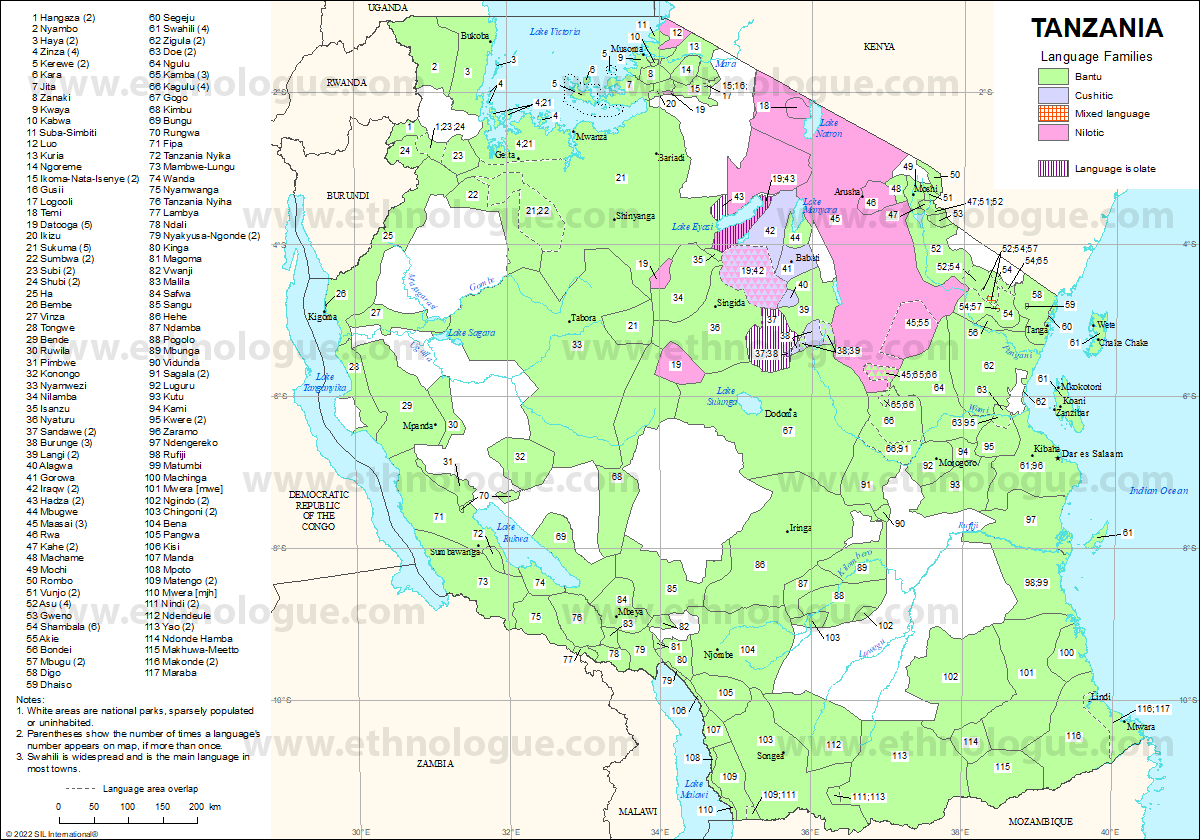
Tanzania
Graphs
Language Vitality Profile
Full explanation
Language Status Profile
Full explanation
Resources
View Terms
Each Ethnologue country digest is a licensed product with restricted terms of use. Before downloading the product, you must agree to the following terms:
- This is a license for individual use. Just as with a conventionally published book, it is a violation of copyright to make a copy and give it to others.
- You may not redistribute this work in any form, including ingesting the contents into a database that is shared with others or posting it on a web site (whether public or private).
To inquire about permission for reuse or redistribution, please use the Contact Us form in the footer.
Digest of the languages of Tanzania ($299.95, 90 page PDF)