
UG
Republic of Uganda
Uganda
Summary
- Official Name
- Republic of Uganda
- Population
- 45,741,000
- Principal Languages
- English
- Literacy Rate
- 77% (2018 UNESCO)
- International Conventions
- ACHPR (1987), CDE (1960), CPPDCE (2006), CSICH (2012), ICCPR (1966), UNCRPD (2006)
- General References
- Bender 1989b, Dimmendaal 1989, Ladefoged et al 1972, Taylor 1962, Vossen 1981, Vossen 1983
- Deaf Population
- 160,000 (2008 WFD)
- Language Counts
- The number of established languages listed for Uganda is 44. All are living languages. Of these, 41 are indigenous and 3 are non-indigenous. Furthermore, 17 are institutional, 16 are developing, 5 are vigorous, 4 are in trouble, and 2 are dying. Also listed are 2 unestablished languages.
Languages
- Acholi ach
- Amuru, Gulu, Kitgum, Lamwo, Nwoya, Oyam, and Pader districts. Users: 1,500,000 in Uganda (2014 census), increasing. Census based on tribal affiliation. Includes 34,200 Dhopaluo (2014 census). Total users in all countries: 1,588,000. Status: 4 (Educational). Alternate Names: Acoli, Acooli, Akoli, Atscholi, Dok Acoli, Gang, Log Acoli, Lwo, Lwoo, Lëbacoli, Shuli Autonym: Acholi Classification: Nilo-Saharan, Satellite-Core, Core, Eastern Sudanic, Southern (n languages), Nilotic, Western, Luo, Southern, Luo-Acholi, Alur-Acholi, Lango-Acholi
- Alur alz
- Arua, Nebbi, Nyadri, Yumbe, and Zombo districts: north of Lake Albert. Users: 985,000 in Uganda (2014 census), increasing. Census based on tribal affiliation. 106,000 ethnically identified as Jonam (2014 census). Status: 4 (Educational). Alternate Names: Aloro, Alua, Alulu, Dho Alur, DhuAlur, Dhʉ Alur, Jo Alur, Lur, Luri Classification: Nilo-Saharan, Satellite-Core, Core, Eastern Sudanic, Southern (n languages), Nilotic, Western, Luo, Southern, Luo-Acholi, Alur-Acholi, Alur
- Amba rwm
- Bundibugyo and Ntoroko districts: Ruwenzori mountains, Democratic Republic of the Congo border area south of Lake Albert. Users: 42,600 in Uganda (2014 census), decreasing. Census based on tribal affiliation. Total users in all countries: 47,100. Status: 6b (Threatened). Alternate Names: Baamba, Bulebule, Hamba, Humu, Kihumu, Ku-Amba, Kuamba, Lubulebule, Lwamba, Ruwenzori Kibira, Rwamba Autonym: Kwamba Classification: Niger-Congo, Atlantic-Congo, Volta-Congo, Benue-Congo, Bantoid, Southern, Narrow Bantu, Central, D, Lega-Holoholo (D.22)
- Aringa luc
- Moyo (Obongi) and Yumbe districts: north of Lugbara, west of Ma’di. Users: 495,000 (2014 census), increasing. Census based on tribal affiliation. Status: 5 (Developing). Alternate Names: Aringa Ti, Low Lugbara Autonym: Ãrị̃ngã tị Classification: Nilo-Saharan, Satellite-Core, Satellites, Central Sudanic, East, Moru-Madi, Central
- Ateso teo
- Amuria, Bukedea, Butebo, Kaberamaido, Katakwi, Kumi, Ngora, Pallisa, Serere, Soroti, and Tororo districts; Lake Bisina area. Users: 2,360,000 in Uganda (2014 census), increasing. Census based on tribal affiliation. Total users in all countries: 2,778,000. Status: 4 (Educational). De facto language of provincial identity in Tororo, 10 other districts. Alternate Names: Bakedi, Bakidi, Elgumi, Etossio, Ikumama, Iteso, Teso, Wamia Autonym: Atεsᴐ Classification: Nilo-Saharan, Satellite-Core, Core, Eastern Sudanic, Southern (n languages), Nilotic, Eastern, Lotuxo-Teso, Teso-Turkana, Teso
- Bukusu bxk
- Manafwa and Namisindwa districts. Majority of speakers live across the Kenyan border. Users: 37,100 in Uganda (2014 census). Census based on tribal affiliation. Status: 6a* (Vigorous). Alternate Names: Babukusu, Lubukusu Classification: Niger-Congo, Atlantic-Congo, Volta-Congo, Benue-Congo, Bantoid, Southern, Narrow Bantu, Central, J, Masaba-Luhya (E.31)
- Chiga cgg
- Kabale, Kanungu, Kibaale, north Kisoro, Ntungamo, and Rukungiri districts. Users: 2,390,000 (2014 census), increasing. Census based on tribal affiliation. Status: 4 (Educational). Alternate Names: Bachiga, Bahororo, Bakiga, Ciga, Kiga, Nkore, Nkore-Kiga, Oluchiga, Orukiga, Runyankore-Rukiga Autonym: Rukiga Classification: Niger-Congo, Atlantic-Congo, Volta-Congo, Benue-Congo, Bantoid, Southern, Narrow Bantu, Central, J, Nyoro-Ganda (E.14)
- English eng
- Widespread. Users: 29,004,100 in Uganda, all users. L1 users: 4,100 in Uganda (2016 J. Leclerc), increasing. L2 users: 29,000,000 (2014). Status: 1 (National). Statutory national language (2005, Constitution, Amendment Act, Article 6(1)). Classification: Indo-European, Germanic, West, English
- Fumbira kin
- Kisoro district; Kabale and Ntungamo districts. Users: 1,240,000 in Uganda (2014 census), increasing. Census based on tribal affiliation; 713,000 Bafumbira, 524,000 Banyarwanda (2014 census). Status: 5 (Dispersed). Alternate Names: Bafumbira, Banyarwanda, Kinyarwanda, Ruanda, Rufumbira, Runyarwanda, Rwanda Classification: Niger-Congo, Atlantic-Congo, Volta-Congo, Benue-Congo, Bantoid, Southern, Narrow Bantu, Central, J, Ruanda-Rundi (D.61)
- Ganda lug
- Buganda province: Lake Victoria northwest shore to Lake Kyoga and Tanzania border. Users: 10,950,000 in Uganda, all users. L1 users: 5,560,000 in Uganda (2014 census), increasing. Census based on tribal affiliation. L2 users: 5,390,000 (2014 R. Nzogi). Total users in all countries: 11,004,750 (as L1: 5,614,750; as L2: 5,390,000). Status: 3 (Wider communication). De facto language of national identity. Became a language of wider communication in the 18th century when trade with Zanzibar flourished. Also used in religion with the arrival of Protestant, Catholic, and Muslim missionaries. Also used in literature. Alternate Names: Baganda, LùGáànda, luGanda Autonym: Luganda Classification: Niger-Congo, Atlantic-Congo, Volta-Congo, Benue-Congo, Bantoid, Southern, Narrow Bantu, Central, J, Nyoro-Ganda (E.15)
- Gungu rub
- Buliisa district: Lake Albert northeast shore; down the Rift valley and hills above; Hoima district: Kigoroobya, both Town Council and Kigorobya (Rural) sub-county. Users: 84,000 (2014 census), increasing. Census based on tribal affiliation. Status: 5 (Developing). Alternate Names: Rugungu Autonym: Lugungu Classification: Niger-Congo, Atlantic-Congo, Volta-Congo, Benue-Congo, Bantoid, Southern, Narrow Bantu, Central, J, Nyoro-Ganda (E.101)
- Gwere gwr
- Budaka, Butaleja, Butebo, Kibuku, Mbale, Pallisa, and Sironko districts. Kaliro district (Lamoogi dialect). Users: 621,000 (2014 census), increasing. Census based on tribal affiliation. Status: 4 (Educational). Alternate Names: Bagwere, oLugwere Autonym: Lugwere Classification: Niger-Congo, Atlantic-Congo, Volta-Congo, Benue-Congo, Bantoid, Southern, Narrow Bantu, Central, J, Nyoro-Ganda (E.17)
- Hindi hin
- Users: 5,300 in Uganda (2016 J. Leclerc). Status: Unestablished. Classification: Indo-European, Indo-Iranian, Indo-Aryan, Western Hindi, Hindustani
- Ik ikx
- Kaabong district: Dodoth county, Kamion subcounty. Users: 14,000 (2014 census), increasing. Status: 6a (Vigorous). Alternate Names: Icietot, Ng’ateus, Ng’ateuso, Ngulak, Teus, Teuso, Teuth Autonym: Icetod Classification: Nilo-Saharan, Kuliak, Ik
- Jopadhola adh
- Tororo District: near Lake Victoria; Bugiri, Busia, Butaleja, and Namayingo districts. Users: 482,000 (2014 census), increasing. Census based on tribal affiliation. Status: 5 (Developing). Alternate Names: Adhola, Badama, Ludama Autonym: Dhopadhola Classification: Nilo-Saharan, Satellite-Core, Core, Eastern Sudanic, Southern (n languages), Nilotic, Western, Luo, Southern, Adhola
- Kakwa keo
- Koboko, Moyo (Obongi), and Yumbe districts. Users: 182,000 in Uganda (2014 census), increasing. Census based on tribal affiliation. Total users in all countries: 351,000. Status: 5* (Developing). Alternate Names: Bari Kakwa, Kakua, Kwakwak Autonym: Kakuwâ Classification: Nilo-Saharan, Satellite-Core, Core, Eastern Sudanic, Southern (n languages), Nilotic, Eastern, Bari
- Kaliko kbo
- Koboko district. Users: 5,000 in Uganda (1998 SIL), increasing. Status: 5 (Developing). Classification: Nilo-Saharan, Satellite-Core, Satellites, Central Sudanic, East, Moru-Madi, Central
- Kebu ndp
- Zombo district: Warr and Kango areas; Arua district: Okoro county. Users: 54,100 in Uganda (2014 census). Census based on tribal affiliation. Total users in all countries: 154,100. Status: 5* (Developing). Alternate Names: Ke’bu, Kebu’tu, Ndo, Ndu, Okebu Classification: Nilo-Saharan, Satellite-Core, Satellites, Central Sudanic, East, Mangbutu-Efe
- Kenye lke
- Buyende, Kaliro, Kibuku, Mayuge, Pallisa, and Serere districts: Lake Victoria and Lake Kyoga basin; some in Bugiri, Busia, Kaberamaido, Kamuli, Kayunga, and Namayingo districts. Users: 99,900 (2014 census), increasing. Census based on tribal affiliation. Status: 6a (Vigorous). Alternate Names: Bakenyi, Kenyi, Lukenhe, Lukenye, Lukenyi Classification: Niger-Congo, Atlantic-Congo, Volta-Congo, Benue-Congo, Bantoid, Southern, Narrow Bantu, Central, J, Nyoro-Ganda (E.16)
- Konzo koo
- Bundibugyo, Kabarole, Kasese, and Ntoroko districts in Ruwenzori mountains; Bundibugyo district (Olhughendera dialect). Users: 893,000 in Uganda (2014 census), increasing. Census based on tribal affiliation. Includes 16,000 Banyabindi, 10,000 Banyabutumbi and 16,000 Basongora (2014 census). Status: 4 (Educational). Alternate Names: Bakonzo, Bayira, Konjo, Olukonjo, Olukonzo, Rukonjo, oluKonzo Autonym: Lhukonzo Classification: Niger-Congo, Atlantic-Congo, Volta-Congo, Benue-Congo, Bantoid, Southern, Narrow Bantu, Central, J, Konzo-Ndandi (D.41)
- Kuku ukv
- Adjumani, Kayunga, Koboko, Moyo, and Yumbe districts; smaller populations in other districts. Users: 46,500 in Uganda (2014 census), decreasing. Total users in all countries: 242,500. Status: 6b (Threatened). Alternate Names: Kukuu Classification: Nilo-Saharan, Satellite-Core, Core, Eastern Sudanic, Southern (n languages), Nilotic, Eastern, Bari
- Kumam kdi
- Amuria, Kaberamaido, Serere, and Soroti districts: Lake Kwania area; some in Amolatar, Buyende, Dokolo, Kamuli, Lira, and Otuke districts. Users: 266,000 (2014 census), increasing. Census based on tribal affiliation. Status: 5 (Developing). Alternate Names: Akokolemu, Akum, Ikokolemu, Ikumama, Kuman, Kumum Autonym: Kumam Classification: Nilo-Saharan, Satellite-Core, Core, Eastern Sudanic, Southern (n languages), Nilotic, Western, Luo, Southern, Kuman
- Kupsapiiny kpz
- Bukwa, Kapchorwa, and Kween districts; some in Amudat and Nakapiripirit districts; Kenya border area. Users: 274,000 (2014 census), increasing. Census based on tribal affiliation. Status: 5 (Developing). Alternate Names: Kuksabin, Kupsabiny, Sabiny, Sapei, Sebei Autonym: Kupsapiiny Classification: Nilo-Saharan, Satellite-Core, Core, Eastern Sudanic, Southern (n languages), Nilotic, Southern, Kalenjin, Elgon
- Lango laj
- Abim, Alebtong, Amolatar, Apac, Dokolo, Kole, Lira, Otuke, and Oyam districts: north of Lake Kyoga. Users: 2,130,000 (2014 census), increasing. Census based on tribal affiliation. Status: 4 (Educational). De facto language of provincial identity in Apac, 6 other districts north of Lake Kyogo. Alternate Names: Langi, Leb Laŋo, Leb Lango, Leb-Lango, Lwo, Lwoo, Lëblaŋo, leb Lano Autonym: Lëblango Classification: Nilo-Saharan, Satellite-Core, Core, Eastern Sudanic, Southern (n languages), Nilotic, Western, Luo, Southern, Luo-Acholi, Alur-Acholi, Lango-Acholi
- Lugbara lgg
- Arua, Koboko, Nyadri and Yumbe districts. Users: 1,100,000 in Uganda (2014 census), increasing. Census based on tribal affiliation. Total users in all countries: 1,940,000. Status: 4 (Educational). Alternate Names: High Lugbara, Logbara, Lubarati, Lugbarati, Western Lugbara Autonym: Lʉgbara tɨ Classification: Nilo-Saharan, Satellite-Core, Satellites, Central Sudanic, East, Moru-Madi, Central
- Ma’di mhi
- Adjumani, Moyo, and Yumbe districts; some in Amuru and Nwoya districts; west and east Nile regions, near Nimule, north Sudan border. Users: 293,000 in Uganda (2014 census), increasing. Census based on tribal affiliation. Numbers probably include Southern Madi speakers. Total users in all countries: 326,000. Status: 5 (Developing). Alternate Names: Ma’adi, Ma’aditi, Ma’di ti, Ma’diti, Madi Autonym: Mãꞌdí Classification: Nilo-Saharan, Satellite-Core, Satellites, Central Sudanic, East, Moru-Madi, Southern
- Ma’di, Southern snm
- Arua district: Madi-Okollo county; Nebbi, Nyadri, Yumbe, and Zombo districts. Users: 60,000 (2010 SIL), increasing. Status: 6a (Vigorous). Autonym: Ma’di Urule Classification: Nilo-Saharan, Satellite-Core, Satellites, Central Sudanic, East, Moru-Madi, Southern
- Masaaba myx
- Bududa, Bulambuli, Manafwa, Mbale, and Sironko districts; Mount Elgon area. Users: 1,650,000 (2014 census), increasing. Census based on tribal affiliation. Status: 4 (Educational). Alternate Names: Bagisu, Gisu, Kisu, Lugisu, Masaba Autonym: Lumasaaba, Masaaba Classification: Niger-Congo, Atlantic-Congo, Volta-Congo, Benue-Congo, Bantoid, Southern, Narrow Bantu, Central, J, Masaba-Luhya (E.31)
- Mvuba mxh
- Users: 2,880 in Uganda (2014 census). Census based on tribal affiliation. Status: Unestablished. Classification: Nilo-Saharan, Satellite-Core, Satellites, Central Sudanic, East, Mangbutu-Efe
- Ndrulo dno
- Hoima and Masindi districts; Zombo district: Nyapea, Paidha, and Zeu subcounties. Users: 18,900 in Uganda (2014 census), increasing. Status: 6b (Threatened). Alternate Names: Ndrŭló, Ndukpa, “Lendu North” (pej.), “Lendu-Ndrŭló” (pej.) Classification: Nilo-Saharan, Satellite-Core, Satellites, Central Sudanic, East, Lendu
- Ng’akarimojong kdj
- Amudat, Kaabong, Kotido, Moroto, Nakapiripirit, and Napak districts. Users: 691,000 (2014 census), increasing. Census based on tribal affiliation. Includes 165,000 Jie, 129,000 Dodoth and 25,000 Napore (2014 census). Status: 4 (Educational). Alternate Names: Akarimojong, Karamojong, Karimojong, Karimonjong, N’Karamojong, Ng’akaramojong, Ngakarimojong, Ngakarimojongo, a-karamojoŋ, a-karimojoŋ, ŋaKaramojoŋ Autonym: ŋaKarimojoŋ Classification: Nilo-Saharan, Satellite-Core, Core, Eastern Sudanic, Southern (n languages), Nilotic, Eastern, Lotuxo-Teso, Teso-Turkana, Turkana
- Nubi kcn
- Scattered. Arua, Bombo, Koboko, Kumi, Luwero, Ngora, and Yumbe districts: generally in larger population areas. Users: 28,800 in Uganda (2014 census), decreasing. Census based on tribal affiliation. Total users in all countries: 50,100. Status: 6b (Threatened). Alternate Names: Ki-Nubi, Kinubi Autonym: Rutan Nubi Classification: Creole, Arabic based
- Nyang’i nyp
- Kaabong district: Dodoth county, Karenga subcounty along Nyang’ia mountains west side. Users: 20 (2011 SIL), decreasing. Ethnic population: 10,000 (2014 census). Status: 8b (Nearly extinct). Alternate Names: Gyangiya, Ngangea, Ngapore, Ngiangeya, Niporen, Nipori, Nuangeya, Nyang’ia, Nyangeya, Nyangiya, Nyuangia, Upale Classification: Nilo-Saharan, Kuliak, Ngangea-So
- Nyankore nyn
- Bushenyi district: Ishaka municipality; Ibanda, Isingiro, Kabale, Kamwenge, Kasese, Kiruhura, Mbarara, Ntungamo, and Rubirizi districts. Users: 3,420,000 in Uganda (2014 census), increasing. Census based on tribal affiliation. Includes 152,000 Hororo and 49,000 Runyaruguru (2014 census). Total users in all countries: 3,433,000. Status: 4 (Educational). De facto language of provincial identity in Bushenyi, Mbarara, Ntungamo districts. Alternate Names: Nkole, Nyankole, Olunyankole, Runyankole, Ulunyankole, Ulunyankore Autonym: Runyankore Classification: Niger-Congo, Atlantic-Congo, Volta-Congo, Benue-Congo, Bantoid, Southern, Narrow Bantu, Central, J, Nyoro-Ganda (E.13)
- Nyole nuj
- Butaleja, Mbale, and Tororo districts. Users: 530,000 (2014 census), increasing. Census based on tribal affiliation. Status: 5 (Developing). Alternate Names: LoNyole, Nyule, Nyuli Autonym: Lunyole Classification: Niger-Congo, Atlantic-Congo, Volta-Congo, Benue-Congo, Bantoid, Southern, Narrow Bantu, Central, J, Masaba-Luhya (E.35)
- Nyoro nyo
- Buliisa, Hoima, Kibaale, Kiryandongo, and Masindi districts; also Kiboga, Kyankwanzi, Kyegegwa, and Kyenjojo districts east of Lake Albert. Users: 967,000 (2014 census), increasing. Census based on tribal affiliation. Status: 4 (Educational). Alternate Names: Kyopi, Lunyoro Autonym: Runyoro Classification: Niger-Congo, Atlantic-Congo, Volta-Congo, Benue-Congo, Bantoid, Southern, Narrow Bantu, Central, J, Nyoro-Ganda (E.11)
- Pökoot pko
- Amudat and Nakapiripirit districts. Users: 105,000 in Uganda (2014 census), increasing. Census based on tribal affiliation. Status: 5 (Developing). Alternate Names: Pakot, Pokot, Suk Classification: Nilo-Saharan, Satellite-Core, Core, Eastern Sudanic, Southern (n languages), Nilotic, Southern, Kalenjin, Pokot
- Ruruuli-Runyala ruc
- Kayunga, Kiryandongo, Masindi, and Nakasongola districts: west of Lake Kyoga area; some in Amolatar and Luwero districts. Users: 238,000 (2014 census), increasing. Census based on tribal affiliation. 190,000 Ruuli, 48,000 Nyala (2014 census). Status: 6a (Vigorous). Alternate Names: Baruli, Luduuli, Ruli, Ruluuli, Ruluuli-Runyala, Rurulim, Ruuli, Ruuli-Nyala Autonym: Ruruuli-Runyala Classification: Niger-Congo, Atlantic-Congo, Volta-Congo, Benue-Congo, Bantoid, Southern, Narrow Bantu, Central, J, Nyoro-Ganda (E.103)
- Saamya-Gwe lsm
- Bugiri, Busia, and Namayingo districts: near Kenya border, Lake Victoria is southern boundary. Users: 525,000 in Uganda (2014 census), increasing. Census based on tribal affiliation. 421,000 Saamya, 100,000 Gwe and 4,000 Heehe (2014 census). Total users in all countries: 609,800. Status: 5 (Developing). Alternate Names: Bagwe, Basamia, Saamia Autonym: Lusaamya-Lugwe, Ólusaamya Classification: Niger-Congo, Atlantic-Congo, Volta-Congo, Benue-Congo, Bantoid, Southern, Narrow Bantu, Central, J, Masaba-Luhya (E.34)
- Soga xog
- Bugiri, Buyende, Iganga, Jinja, Kamuli, Luuka, Mayuge, and Namayingo districts; between Lake Victoria and Lake Kyoga. Namutumba district (Lukono and Lusiginyi dialects). Users: 2,960,000 (2014 census), increasing. Census based on tribal affiliation. Status: 4 (Educational). De facto language of provincial identity in Iganga, 4 other districts. Alternate Names: Olusoga Autonym: Lusoga Classification: Niger-Congo, Atlantic-Congo, Volta-Congo, Benue-Congo, Bantoid, Southern, Narrow Bantu, Central, J, Nyoro-Ganda (E.16)
- Soo teu
- Amudat, Moroto, Nakapiripirit, and Napak districts; Mount Kadam border area. Users: 50 (2012 SIL), decreasing. Ethnic population: 23,400 (2014 census). Status: 8b (Nearly extinct). Alternate Names: Kadama, So, Toongi, “Tepes” (pej.), “Tepeth” (pej.) Classification: Nilo-Saharan, Kuliak, Ngangea-So
- Swahili swh
- Widespread. Users: 4,364,700 in Uganda, all users. L1 users: 4,700 in Uganda (2016 J. Leclerc). L2 users: 4,360,000 (2014). Status: 1 (National). Statutory national working language (2005, Constitution Amendment Act, Article 6(2)). Alternate Names: Kiswahili Classification: Niger-Congo, Atlantic-Congo, Volta-Congo, Benue-Congo, Bantoid, Southern, Narrow Bantu, Central, G, Swahili (G.42)
- Talinga-Bwisi tlj
- Bundibugyo district: Bwamba county, southwest of Fort Portal, between Albert and Edward lakes; Democratic Republic of the Congo border. Users: 101,000 in Uganda (2014 census), increasing. Census based on tribal affiliation. Total users in all countries: 131,900. Status: 5 (Developing). Alternate Names: Bwisi, Bwissi, Kitalinga, Lubwissi, Mawissi, Olubwisi, Talinge Autonym: Lubwisi Classification: Niger-Congo, Atlantic-Congo, Volta-Congo, Benue-Congo, Bantoid, Southern, Narrow Bantu, Central, J, Nyoro-Ganda (E.102)
- Thur lth
- Abim district: Labwor county. Users: 98,000 (2014 census). Census based on tribal affiliation. Status: 5 (Developing). Alternate Names: Acholi-Labwor, Ethur, Labwor Autonym: Lëb Thur Classification: Nilo-Saharan, Satellite-Core, Core, Eastern Sudanic, Southern (n languages), Nilotic, Western, Luo, Southern, Luo-Acholi, Alur-Acholi
- Tooro ttj
- Bundibugyo, Kabarole, Kamwenge, Kasese, Kibaale, Kyegegwa, Kyenjojo, and Ntoroko districts; West, south and southeast of Lake Albert. Users: 846,000 (2014 census), increasing. Census based on tribal affiliation. 811,000 Tooro, 35,000 Tuku (2014 census). Status: 4 (Educational). De facto language of provincial identity in Kabarole and Kabale districts. Alternate Names: Orutoro, Rutoro, Toro Autonym: Rutooro Classification: Niger-Congo, Atlantic-Congo, Volta-Congo, Benue-Congo, Bantoid, Southern, Narrow Bantu, Central, J, Nyoro-Ganda (E.12)
- Ugandan Sign Language ugn
- Scattered, mainly in urban areas. Users: 25,000 (Lutalo-Kiingi and De Clerck 2015). Approximately 0.05% of total population. Estimates vary widely, in part because they differ in what they count: 25,000 deaf signers (Lutalo-Kiingi and De Clerck 2015); 160,000–840,000 deaf (2008 WFD); 528,000–800,000 deaf (Lule and Wallin 2010); over 700,000 deaf adults (2010 B. Oluoch). Status: 5 (Developing). Recognized language (1995, Constitution, Article XXIV(d)). Alternate Names: Lugha ya Alama ya Uganda, Olulimi Iwobubonelo e Uganda, UGANDA SIGN, USL, UgSL Classification: Sign language, Deaf community sign language
Languages by Status
English
[eng] 1 (National). Statutory national language (2005, Constitution, Amendment Act, Article 6(1)). 29,004,100 in Uganda, all users. L1 users: 4,100 in Uganda (2016 J. Leclerc), increasing. L2 users: 29,000,000 (2014).
Swahili
[swh] 1 (National). Statutory national working language (2005, Constitution Amendment Act, Article 6(2)). 4,364,700 in Uganda, all users. L1 users: 4,700 in Uganda (2016 J. Leclerc). L2 users: 4,360,000 (2014).
Ganda
[lug] 3 (Wider communication). De facto language of national identity. Became a language of wider communication in the 18th century when trade with Zanzibar flourished. Also used in religion with the arrival of Protestant, Catholic, and Muslim missionaries. Also used in literature. 10,950,000 in Uganda, all users. L1 users: 5,560,000 in Uganda (2014 census), increasing. Census based on tribal affiliation. L2 users: 5,390,000 (2014 R. Nzogi). Total users in all countries: 11,004,750 (as L1: 5,614,750; as L2: 5,390,000).
Acholi
[ach] 4 (Educational). 1,500,000 in Uganda (2014 census), increasing. Census based on tribal affiliation. Includes 34,200 Dhopaluo (2014 census). Total users in all countries: 1,588,000.
Alur
[alz] 4 (Educational). 985,000 in Uganda (2014 census), increasing. Census based on tribal affiliation. 106,000 ethnically identified as Jonam (2014 census).
Ateso
[teo] 4 (Educational). De facto language of provincial identity in Tororo, 10 other districts. 2,360,000 in Uganda (2014 census), increasing. Census based on tribal affiliation. Total users in all countries: 2,778,000.
Chiga
[cgg] 4 (Educational). 2,390,000 (2014 census), increasing. Census based on tribal affiliation.
Gwere
[gwr] 4 (Educational). 621,000 (2014 census), increasing. Census based on tribal affiliation.
Konzo
[koo] 4 (Educational). 893,000 in Uganda (2014 census), increasing. Census based on tribal affiliation. Includes 16,000 Banyabindi, 10,000 Banyabutumbi and 16,000 Basongora (2014 census).
Lango
[laj] 4 (Educational). De facto language of provincial identity in Apac, 6 other districts north of Lake Kyogo. 2,130,000 (2014 census), increasing. Census based on tribal affiliation.
Lugbara
[lgg] 4 (Educational). 1,100,000 in Uganda (2014 census), increasing. Census based on tribal affiliation. Total users in all countries: 1,940,000.
Masaaba
[myx] 4 (Educational). 1,650,000 (2014 census), increasing. Census based on tribal affiliation.
Ng’akarimojong
[kdj] 4 (Educational). 691,000 (2014 census), increasing. Census based on tribal affiliation. Includes 165,000 Jie, 129,000 Dodoth and 25,000 Napore (2014 census).
Nyankore
[nyn] 4 (Educational). De facto language of provincial identity in Bushenyi, Mbarara, Ntungamo districts. 3,420,000 in Uganda (2014 census), increasing. Census based on tribal affiliation. Includes 152,000 Hororo and 49,000 Runyaruguru (2014 census). Total users in all countries: 3,433,000.
Nyoro
[nyo] 4 (Educational). 967,000 (2014 census), increasing. Census based on tribal affiliation.
Soga
[xog] 4 (Educational). De facto language of provincial identity in Iganga, 4 other districts. 2,960,000 (2014 census), increasing. Census based on tribal affiliation.
Tooro
[ttj] 4 (Educational). De facto language of provincial identity in Kabarole and Kabale districts. 846,000 (2014 census), increasing. Census based on tribal affiliation. 811,000 Tooro, 35,000 Tuku (2014 census).
Fumbira
[kin] 5 (Dispersed). 1,240,000 in Uganda (2014 census), increasing. Census based on tribal affiliation; 713,000 Bafumbira, 524,000 Banyarwanda (2014 census).
Aringa
[luc] 5 (Developing). 495,000 (2014 census), increasing. Census based on tribal affiliation.
Gungu
[rub] 5 (Developing). 84,000 (2014 census), increasing. Census based on tribal affiliation.
Jopadhola
[adh] 5 (Developing). 482,000 (2014 census), increasing. Census based on tribal affiliation.
Kakwa
[keo] 5* (Developing). 182,000 in Uganda (2014 census), increasing. Census based on tribal affiliation. Total users in all countries: 351,000.
Kaliko
[kbo] 5 (Developing). 5,000 in Uganda (1998 SIL), increasing.
Kebu
[ndp] 5* (Developing). 54,100 in Uganda (2014 census). Census based on tribal affiliation. Total users in all countries: 154,100.
Kumam
[kdi] 5 (Developing). 266,000 (2014 census), increasing. Census based on tribal affiliation.
Kupsapiiny
[kpz] 5 (Developing). 274,000 (2014 census), increasing. Census based on tribal affiliation.
Ma’di
[mhi] 5 (Developing). 293,000 in Uganda (2014 census), increasing. Census based on tribal affiliation. Numbers probably include Southern Madi speakers. Total users in all countries: 326,000.
Nyole
[nuj] 5 (Developing). 530,000 (2014 census), increasing. Census based on tribal affiliation.
Pökoot
[pko] 5 (Developing). 105,000 in Uganda (2014 census), increasing. Census based on tribal affiliation.
Saamya-Gwe
[lsm] 5 (Developing). 525,000 in Uganda (2014 census), increasing. Census based on tribal affiliation. 421,000 Saamya, 100,000 Gwe and 4,000 Heehe (2014 census). Total users in all countries: 609,800.
Talinga-Bwisi
[tlj] 5 (Developing). 101,000 in Uganda (2014 census), increasing. Census based on tribal affiliation. Total users in all countries: 131,900.
Thur
[lth] 5 (Developing). 98,000 (2014 census). Census based on tribal affiliation.
Ugandan Sign Language
[ugn] 5 (Developing). Recognized language (1995, Constitution, Article XXIV(d)). 25,000 (Lutalo-Kiingi and De Clerck 2015). Approximately 0.05% of total population. Estimates vary widely, in part because they differ in what they count: 25,000 deaf signers (Lutalo-Kiingi and De Clerck 2015); 160,000–840,000 deaf (2008 WFD); 528,000–800,000 deaf (Lule and Wallin 2010); over 700,000 deaf adults (2010 B. Oluoch).
Bukusu
[bxk] 6a* (Vigorous). 37,100 in Uganda (2014 census). Census based on tribal affiliation.
Ik
[ikx] 6a (Vigorous). 14,000 (2014 census), increasing.
Kenye
[lke] 6a (Vigorous). 99,900 (2014 census), increasing. Census based on tribal affiliation.
Ma’di, Southern
[snm] 6a (Vigorous). 60,000 (2010 SIL), increasing.
Ruruuli-Runyala
[ruc] 6a (Vigorous). 238,000 (2014 census), increasing. Census based on tribal affiliation. 190,000 Ruuli, 48,000 Nyala (2014 census).
Amba
[rwm] 6b (Threatened). 42,600 in Uganda (2014 census), decreasing. Census based on tribal affiliation. Total users in all countries: 47,100.
Kuku
[ukv] 6b (Threatened). 46,500 in Uganda (2014 census), decreasing. Total users in all countries: 242,500.
Ndrulo
[dno] 6b (Threatened). 18,900 in Uganda (2014 census), increasing.
Nubi
[kcn] 6b (Threatened). 28,800 in Uganda (2014 census), decreasing. Census based on tribal affiliation. Total users in all countries: 50,100.
Maps
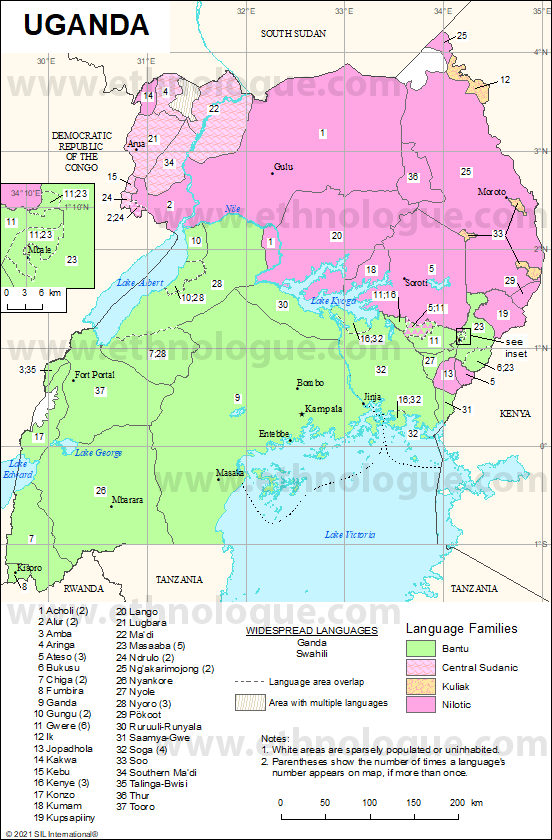
Uganda
Graphs
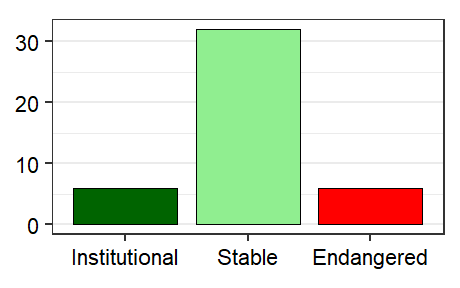
Language Vitality Profile
Full explanation
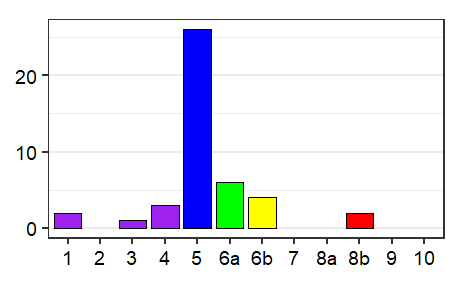
Language Status Profile
Full explanation
Resources
View Terms
Each Ethnologue country digest is a licensed product with restricted terms of use. Before downloading the product, you must agree to the following terms:
- This is a license for individual use. Just as with a conventionally published book, it is a violation of copyright to make a copy and give it to others.
- You may not redistribute this work in any form, including ingesting the contents into a database that is shared with others or posting it on a web site (whether public or private).
To inquire about permission for reuse or redistribution, please use the Contact Us form in the footer.
Digest of the languages of Uganda ($299.95, 51 page PDF)