
US
United States of America
United States
Summary
- Official Name
- United States of America
- Population
- 332,915,000
- Principal Languages
- English
- Literacy Rate
- 99% (Roser and Ortiz-Ospina 2018)
- International Conventions
- ICCPR (1966), UNDRIP (2007)
- General References
- Bright 1992, Campbell 1997, Campbell and King 2011, Chafe 1962, Chafe 1965, Golla 2007Montgomery-Anderson 2015
- Deaf Population
- Nearly 2,000,000 (1988)
- Recognized Nationalities
- The Department of the Interior of the United States government maintains a listing of nearly 600 federally recognized tribes. By virtue of being recognized, they are eligible for funding and services from the Bureau of Indian Affairs (BIA).
- Language Counts
- The number of established languages listed for United States is 281. Of these, 231 are living and 50 are extinct. Of the living languages, 197 are indigenous and 34 are non-indigenous. Furthermore, 3 are institutional, 19 are developing, 1 is vigorous, 42 are in trouble, and 166 are dying. Also listed are 123 unestablished languages and 2 macrolanguages.
Languages
- Abenaki, Eastern aaq
- Maine: Androscoggin-Kennebec and Penobscot valleys. Users: No known L1 speakers. The last speaker, Madeline Tower Shay, died in 1993 (Golla 2007). Ethnic population: 90 (2000 census). Total Abenaki in the United States. Status: 9 (Dormant). Language of registered tribe: Penobscot Nation. Alternate Names: Abenaki, Alnombak, Alnôbak, Eastern Abnaki, Wawenock Classification: Algic, Algonquian, Eastern Algonquian, Abenaki
- Abenaki, Western abe
- Vermont: north end of Lake Champlain. Users: 4 in United States (2012 D. Stevens). Status: 8b (Nearly extinct). Alternate Names: Alnombak, Alnôbak Classification: Algic, Algonquian, Eastern Algonquian, Abenaki
- Achumawi acv
- California: northeast. Users: 10 (Golla 2007). Most are semi-speakers or passive speakers (Golla 2007). Ethnic population: 1,000. Status: 8b (Nearly extinct). Language of registered tribe: Alturas Indian Rancheria, Pit River Tribe, Redding Rancheria, Round Valley Indian Tribes-Round Valley Reservation, Susanville Indian Rancheria. Alternate Names: Achomawi, Pitt River Classification: Palaihnihan
- Adai xad
- Louisiana: northwestern region. Users: No known L1 speakers. Last speaker probably died in the mid 1800s. Status: 10 (Extinct). Alternate Names: Adaes, Adahi, Adaise, Adaizan, Adaizi, Adees, Atayos Classification: Unclassified
- Afrikaans afr
- Alaska; Alabama; Arizona; California; Colorado; Connecticut; Delaware; District of Columbia; Florida; Georgia; Indiana; and Idaho. Users: 23,000 in United States (2015 census). Status: Unestablished. Classification: Indo-European, Germanic, West, Low Saxon-Low Franconian, Low Franconian
- Afro-Seminole Creole afs
- Texas: Bracketville; Oklahoma: east of Norman. Status: 8a (Moribund). Alternate Names: Afro-Seminole, Black Seminole, Seminole Classification: Creole, English based, Atlantic, Eastern, Northern
- Ahtena aht
- Alaska: Cantwell, Chickaloon, and Copper river above Eyak river mouth, upper Susitna and Nenana drainages, 8 total communities; Washington state. Users: 30 (Berez 2011). Ethnic population: 500 (1995 M. Krauss). Status: 8a (Moribund). Recognized language (2014, Official Languages of Alaska Law as amended, Alaska Statute 44.12.310). Language of registered tribe: Cheesh-Na Tribe, Chickaloon Native Village, Gulkana Village, Knik Tribe, Mentasta Traditional Council, Native Village of Cantwell, Native Village of Chitina, Native Village of Gakona, Native Village of Kluti Kaah (aka Copper Center), Native Village of Tazlina. Alternate Names: Ahtna, Atna, Atnakenaege’, Copper River, Mednovskiy Classification: Eyak-Athabaskan, Athabaskan, Northern Athabaskan
- Aklanon akl
- Users: 23,600 in United States (2010 census). Status: Unestablished. Classification: Austronesian, Malayo-Polynesian, Greater Central Philippine, Central Philippine, Bisayan, West, Aklan
- Alabama akz
- Texas: Alabama-Coushatta Reservation near Livingston. Users: 370 (2015 census). Ethnic population: 460 (2000 census). Status: 6b (Threatened). Language of registered tribe: Alabama-Coushatta Tribe of Texas, Alabama-Quassarte Tribal Town. Alternate Names: Albaamo, Albaamo innaaɬiilka, Alibamu Classification: Muskogean, Eastern Muskogean, Central Muskogean, Apalachee-Alabama-Koasati, Alabama-Koasati
- Albanian, Gheg aln
- Scattered. Users: 66,900 in United States (2010 census). Census figure of 133,870 does not distinguish between Gheg [aln] and Tosk [als]. Status: Unestablished. Classification: Indo-European, Albanian, Gheg
- Albanian, Tosk als
- Massachussetts: Boston; Illinois: Chicago; Michigan: Detroit, New York: New York city; Pennsylvania: Philadelphia. Users: 66,900 in United States (2015 census). Census figure of 133,870 does not distinguish between Gheg [aln] and Tosk [als]. Status: Unestablished. Classification: Indo-European, Albanian, Tosk
- Aleut ale
- Alaskan peninsula, east Aleutian Islands, and Pribilofs (Eastern Aleut dialect); Aleutian chain, Atka island (Western Aleut dialect). Users: 150 in United States (Krauss 2007). Ethnic population: 2,300 (Dorais 2010). Status: 8a (Moribund). Recognized language (2014, Official Languages of Alaska Law as amended, Alaska Statute 44.12.310). Language of registered tribe: Agdaagux Tribe of King Cove, King Salmon Tribe, Native Village of Akutan, Native Village of Atka, Native Village of Belkofski, Native Village of False Pass, Native Village of Nelson Lagoon, Native Village of Nikolski, Native Village of Unga, Ninilchik Village, Pauloff Harbor Village, Pribilof Islands Aleut Communities of St. Paul & St. George Islands, Qagan Tayagungin Tribe of Sand Point Village, Qawalangin Tribe of Unalaska. Alternate Names: Anangax, Unangax Autonym: Unangam tunnu Classification: Eskimo-Aleut, Aleut
- Alsea aes
- Oregon: central coast. Users: No known L1 speakers. John Albert, last speaker, died in 1942. Status: 10 (Extinct). Alternate Names: Alsea-Yaquina, Alsean, Alséya Classification: Unclassified
- American Sign Language ase
- Scattered, especially in urban centers and near (present or former) residential deaf schools. Users: 408,000 in United States, all users. L1 users: 277,000 in United States (Mitchell et al 2006). Mitchell et al 2006 estimate no more than 277,000 in 1972 who were prevocationally deaf; more recent figures unavailable but an estimate based on 0.1% of total population for 2019 would be 325,000. L2 users: 131,000 (Mitchell et al 2006). Total users in all countries: 860,605 (as L1: 729,605; as L2: 131,000). Status: 5 (Developing). Provincially recognized language in various states, state laws cover a variety of issues: approving ASL for college credit, regulating interpreter services, deaf children’s education, etc. Recognized language (1990, Americans with Disabilities Act, ADA), requires governments, nonprofit organizations and private businesses to make their services accessible to deaf people, and mandates equal access to telecommunications services. Alternate Names: #A-S-L, ASL, Ameslan, SIGN AMERICA Classification: Sign language, Deaf community sign language
- Amharic amh
- Scattered. Users: 195,000 in United States (2015 census). Status: Unestablished. Classification: Afro-Asiatic, Semitic, South, Ethiopian, South, Transversal, Amharic-Argobba
- Angloromani rme
- Scattered. Status: 8a (Moribund). Alternate Names: English Romani, Romani, Romani English, Romanichal, Romanis Classification: Mixed language, English-Romani
- Apache, Jicarilla apj
- New Mexico: Dulce area. Users: 510 (2015 census), decreasing. Ethnic population: 3,100 (Golla 2007). All Apache varieties: 13,270 (2000 census). Status: 7 (Shifting). Language of registered tribe: Jicarilla Apache Nation. Alternate Names: Hikariya, Hoyero, Jicarilla Abáachi, Ollero Autonym: Abáachi mizaa Classification: Eyak-Athabaskan, Athabaskan, Apachean, Apache
- Apache, Kiowa apk
- Oklahoma: Caddo county. Users: No known L1 speakers. Last fluent speaker died in 2008 (Morgan 2012). L2 users: 0. Ethnic population: 1,000 (1977 SIL). Status: 9 (Dormant). Language of registered tribe: Apache Tribe of Oklahoma. Alternate Names: Na’isha, Plains Apache Classification: Eyak-Athabaskan, Athabaskan, Apachean, Apache
- Apache, Lipan apl
- New Mexico: Mescalero Reservation. Users: No known L1 speakers. Last known speaker survived into the 1980s (1981 R. W. Young). Status: 9 (Dormant). Alternate Names: Lipan Classification: Eyak-Athabaskan, Athabaskan, Apachean, Apache
- Apache, Mescalero-Chiricahua apm
- New Mexico: Mescalero Reservation; Oklahoma: some Chiricahua at Fort Sill. Users: 150 (2019 L. Darrow). 150 Mescalero in New Mexico, 3 Chiricahua in Oklahoma (Golla 2007). Ethnic population: More than 3,000 Mescalero (Golla 2007). 175 Chiricahua, including 149 in New Mexico (2000 census). Status: 8a (Moribund). Language of registered tribe: Fort Sill Apache Tribe of Oklahoma, Mescalero Apache Tribe of the Mescalero Reservation, San Carlos Apache Tribe of the San Carlos Reservation. Autonym: Ndé bizaa Classification: Eyak-Athabaskan, Athabaskan, Apachean, Apache
- Apache, Western apw
- Arizona: several reservations east central. Users: 14,000 (Golla 2007). 6,000 on San Carlos, 7,000 on Fort Apache Reservation (White Mountain Apache Tribe); smaller numbers at Tonto, Camp Verde, and Fort McDowell reservations (Golla 2007). Ethnic population: 20,200 (Ichihashi-Nakayama et al 2007). Status: 6b (Threatened). Language of registered tribe: San Carlos Apache Tribe of the San Carlos Reservation, Tonto Apache Tribe of Arizona, White Mountain Apache Tribe of the Fort Apache Reservation, Yavapai-Apache Nation of the Camp Verde Indian Reservation. Alternate Names: Coyotero, Nnee biyáti’ Autonym: Ndee biyáti’ Classification: Eyak-Athabaskan, Athabaskan, Apachean, Apache
- Apalachee xap
- Florida: Jefferson and Leon counties, between the Ochlockonee and Aucilla rivers. Users: No known L1 speakers. Last speaker likely died in the late 1700s. Status: 10 (Extinct). Alternate Names: Apalachi Classification: Muskogean, Eastern Muskogean, Central Muskogean, Apalachee-Alabama-Koasati
- Arabic, Algerian Spoken arq
- Users: 30,500 in United States (2015). Total Arabic speakers in the United States: 924,000 (2015 census). Status: Unestablished. Classification: Afro-Asiatic, Semitic, Central, South, Arabic
- Arabic, Egyptian Spoken arz
- Users: 122,000 in United States (2015). Total Arabic speakers in the United States: 924,000 (2015 census). Status: Unestablished. Classification: Afro-Asiatic, Semitic, Central, South, Arabic
- Arabic, Gulf Spoken afb
- Users: 10,200 in United States (2015). Total Arabic speakers in the United States: 924,000 (2015 census). Status: Unestablished. Classification: Afro-Asiatic, Semitic, Central, South, Arabic
- Arabic, Hijazi Spoken acw
- Users: 39,200 in United States (2015). Total Arabic speakers in the United States: 924,000 (2015 census). Status: Unestablished. Classification: Afro-Asiatic, Semitic, Central, South, Arabic
- Arabic, Libyan Spoken ayl
- Users: 8,140 in United States (2015). Total Arabic speakers in the United States: 924,000 (2015 census). Status: Unestablished. Classification: Afro-Asiatic, Semitic, Central, South, Arabic
- Arabic, Mesopotamian Spoken acm
- Users: 64,600 in United States (2015). Total Arabic speakers in the United States: 924,000 (2015 census). Status: Unestablished. Classification: Afro-Asiatic, Semitic, Central, South, Arabic
- Arabic, Moroccan Spoken ary
- Users: 108,000 in United States (2015). Total Arabic speakers in the United States: 924,000 (2015 census). Status: Unestablished. Classification: Afro-Asiatic, Semitic, Central, South, Arabic
- Arabic, Najdi Spoken ars
- Users: 3,000 in United States (2015). Total Arabic speakers in the United States: 924,000 (2015 census). Status: Unestablished. Classification: Afro-Asiatic, Semitic, Central, South, Arabic
- Arabic, North Levantine Spoken apc
- Users: 173,000 in United States (2019 census). Total Arabic speakers in the United States: 924,000 (2015 census). Status: Unestablished. Classification: Afro-Asiatic, Semitic, Central, South, Arabic
- Arabic, South Levantine Spoken ajp
- Users: 164,000 in United States (2019 census). Total Arabic speakers in the United States: 924,000 (2015 census). Status: Unestablished. Classification: Afro-Asiatic, Semitic, Central, South, Arabic
- Arabic, Ta’izzi-Adeni Spoken acq
- Users: 51,400 in United States (2015). Total Arabic speakers in the United States: 924,000 (2015 census). Status: Unestablished. Classification: Afro-Asiatic, Semitic, Central, South, Arabic
- Arabic, Tunisian Spoken aeb
- Users: 10,200 in United States (2015). Total Arabic speakers in the United States: 924,000 (2015 census). Status: Unestablished. Classification: Afro-Asiatic, Semitic, Central, South, Arabic
- Aranama-Tamique xrt
- Texas: Espíritu Santo de Zúñiga Franciscan mission. Users: No known L1 speakers. Last speaker died in the mid 1800s. Status: 10 (Extinct). Alternate Names: Aranama Classification: Unclassified
- Arapaho arp
- Wyoming: Wind River Reservation; also associated with Cheyenne [chy] in central Oklahoma. Users: 1,070 (2015 census), decreasing. Ethnic population: 5,940 (Golla 2007). Status: 8a (Moribund). Language of registered tribe: Arapaho Tribe of the Wind River Reservation (Northern Arapaho), Cheyenne and Arapaho Tribes (Southern Arapaho), Shoshone Tribe of the Wind River Reservation. Alternate Names: Arrapahoe Autonym: Hinónoʼeitíít Classification: Algic, Algonquian, Arapaho
- Arikara ari
- North Dakota: Fort Berthold Reservation, mostly Parshall and White Shield. Users: 10 (Golla 2007), decreasing. Ethnic population: 94 (2000 census). Status: 8b (Nearly extinct). Language of registered tribe: Three Affiliated Tribes of the Fort Berthold Reservation. Alternate Names: Arikaree, Arikari, Arikaris, Ree, Ris, Sáhniš Classification: Caddoan, Northern Caddoan, Kitsai-Proto-Pawnee, Proto-Pawnee
- Armenian, Western hyw
- California, Massachusetts, Michigan, New Jersey, and New York; 38 other states. Users: 238,000 in United States (2015 census). Status: 7 (Shifting). Classification: Indo-European, Armenian
- Assiniboine asb
- Montana: Fort Belknap and Fort Peck reservations. Users: 150 L1 speakers in both countries. Ethnic population: 3,500 in the United States and Canada (Golla 2007). Status: 8a (Moribund). Language of registered tribe: Assiniboine and Sioux Tribes of the Fort Peck Indian Reservation, Fort Belknap Indian Community of the Fort Belknap Reservation of Montana. Alternate Names: Assiniboin, Hohe, Nakhoda, Nakhona, Nakhota, Nakhóda, Nakhóna, Nakhóta, Nakoda, Nakon, Nakona, Nakota Classification: Siouan-Catawban, Siouan, Mississippi Valley-Ohio Valley Siouan, Mississippi Valley Siouan, Dakota
- Assyrian Neo-Aramaic aii
- California; Illinois: Chicago. Users: 80,000 in United States. Ethnic population: 550,000. Status: Unestablished. Classification: Afro-Asiatic, Semitic, Central, Aramaic, Eastern, Central, Northeastern
- Atakapa aqp
- Louisiana, southwest; Texas, east coastal area. Users: No known L1 speakers. Last spoken in the early 20th century. Status: 10 (Extinct). Alternate Names: Atakapa-Ishak, Ishak, Yukhiti Classification: Language isolate
- Atsugewi atw
- California: northeast. Users: No known L1 speakers. The last fluent speaker, Medie Webster, died in 1988 (Golla 2011). Ethnic population: 200 (1977 SIL). Status: 9 (Dormant). Language of registered tribe: Pit River Tribe, Susanville Indian Rancheria. Classification: Palaihnihan
- Azerbaijani, South azb
- California, New York, Tennessee, and Virginia. Users: 2,090 in United States (2015 census). Census does not distinguish between South Azerbaijani [azb] and North Azerbaijani [azj]. Status: Unestablished. Classification: Turkic, Southern, Azerbaijani
- Barbareño boi
- California: near Santa Barbara. Users: No known L1 speakers (Golla 2007), but emerging L2 speakers. Last speaker, Mary Yee, died in 1965 (2004 W. Poser). Status: 9 (Reawakening). Classification: Chumashan, Central Chumash
- Basque eus
- Scattered. Users: 1,860 in United States (2015 census). Status: 5* (Dispersed). Alternate Names: Euskara Classification: Language isolate
- Bay Miwok mkq
- California: central and eastern Contra Costa county. Users: No known L1 speakers. Last speaker died in the early 1800s. Status: 10 (Extinct). Alternate Names: Saclan, Saklan Classification: Miwok-Costanoan, Miwokan, Eastern Miwokan
- Belize English Creole bzj
- Users: 40,000 in United States. Status: Unestablished. Classification: Creole, English based, Atlantic, Western
- Bengali ben
- Scattered. Users: 258,000 in United States (2015 census). Status: Unestablished. Classification: Indo-European, Indo-Iranian, Indo-Aryan, Outer Languages, Eastern, Bengali-Assamese
- Biloxi bll
- Louisiana; Mississippi; Texas, southeastern region. Users: No known L1 speakers. Last spoken during the first half of the 20th century. Status: 10 (Extinct). Alternate Names: Tanêksąyaa ade Classification: Siouan-Catawban, Siouan, Mississippi Valley-Ohio Valley Siouan, Mississippi Valley Siouan
- Blackfoot bla
- Montana: Blackfeet Reservation. Users: 100 in United States (2001 I. Goddard), decreasing. Ethnic population: 1,970 (2010 census). Status: 8a (Moribund). Language of registered tribe: Blackfeet Tribe of the Blackfeet Indian Reservation of Montana. Alternate Names: Blackfeet, Niitsipowahsin, Siksiká Classification: Algic, Algonquian
- Bukharic bhh
- Michigan; New York City. Users: 50,000 in United States. Status: Unestablished. Classification: Indo-European, Indo-Iranian, Iranian, Western, Southwestern, Persian
- Bulgarian bul
- Scattered. Users: 57,800 in United States (2015 census). Status: Unestablished. Classification: Indo-European, Balto-Slavic, Slavic, South, Eastern
- Burmese mya
- Users: 62,600 in United States (2015 census). Status: Unestablished. Classification: Sino-Tibetan, Tibeto-Burman, Ngwi-Burmese, Burmish, Southern
- Caddo cad
- Oklahoma: Caddo county. Users: 25 (1997 W. Chafe). No monolinguals (2000 B. Levy). Ethnic population: 45 (2000 census). Status: 8a (Moribund). Language of registered tribe: Caddo Nation of Oklahoma. Alternate Names: Caddoe, Hasí:nay, Hatsinai, Kado, Kadohadacho Classification: Caddoan
- Cahuilla chl
- California: San Gorgonio Pass and Mohave Desert areas. Users: 6 (Golla 2011). Ethnic population: 800 (Hinton 2007). Status: 8b (Nearly extinct). Language of registered tribe: Agua Caliente Band of Cahuilla Indians of the Agua Caliente Indian Reservation, Augustine Band of Cahuilla Indians, Cabazon Band of Mission Indians, Cahuilla Band of Mission Indians of the Cahuilla Reservation, Los Coyotes Band of Cahuilla & Cupeno Indians, Morongo Band of Cahuilla Mission Indians, Ramona Band of Cahuilla, Santa Rosa Band of Cahuilla Indians, Soboba Band of Luiseño Indians, Torres-Martinez Desert Cahuilla Indians. Classification: Uto-Aztecan, Northern Uto-Aztecan, Takic, Cahuilla
- Carolina Algonquian crr
- North Carolina. Users: No known L1 speakers. Last speaker likely died in the 1790s. Status: 10 (Extinct). Alternate Names: Croatoan, Pamlico Classification: Algic, Algonquian, Eastern Algonquian
- Catalan cat
- Users: 2,330 in United States (2015 census). Language identified in census as Catalonian. Status: Unestablished. Classification: Indo-European, Italic, Romance, Italo-Western, Western, Gallo-Iberian, Ibero-Romance, East Iberian
- Catawba chc
- South Carolina: Rock Hill area. Users: No known L1 speakers, but emerging L2 speakers. The last speaker, Samuel Taylor Blue, died in 1959. Ethnic population: 500 (1977 SIL). Status: 9 (Reawakening). Language of registered tribe: Catawba Indian Nation (Catawba Tribe of South Carolina). Classification: Siouan-Catawban, Catawban
- Cayuga cay
- New York: Cattaraugus Reservation. Users: 6 in United States (2010 census), decreasing. Ethnic population: 45 (2000 census). Status: 8b (Nearly extinct). Language of registered tribe: Cayuga Nation, Seneca-Cayuga Nation. Alternate Names: Gayogo̱hó:nǫ’ Classification: Iroquoian, Northern Iroquoian, Five Nations-Huronian-Susquehannock, Five Nations-Susquehannock
- Cayuse xcy
- Oregon, northeast; Washington, southeast. Users: No known L1 speakers. Last fluent speaker died in the 1930s. Status: 10 (Extinct). Alternate Names: Liksiyu Classification: Language isolate
- Cebuano ceb
- Hawaii; scattered elsewhere. Users: 15,700 in United States (2015 census). Status: Unestablished. Classification: Austronesian, Malayo-Polynesian, Greater Central Philippine, Central Philippine, Bisayan, Cebuan
- Chaldean Neo-Aramaic cld
- California; Michigan: Detroit. Users: 80,000 in United States (1998). Status: Unestablished. Classification: Afro-Asiatic, Semitic, Central, Aramaic, Eastern, Central, Northeastern
- Chamorro cha
- Scattered. Users: 19,800 in United States (2015 census). Status: 6b* (Threatened). Alternate Names: Chamorru Classification: Austronesian, Malayo-Polynesian, Chamorro
- Chehalis, Lower cea
- Washington: southwest coast. Users: No known L1 speakers. Last known speakers may have survived into the 1990s (1990 M. Kinkade). Status: 9 (Dormant). Language of registered tribe: Confederated Tribes of the Chehalis Reservation, Quinault Indian Nation, Shoalwater Bay Indian Tribe of the Shoalwater Bay Indian Reservation. Alternate Names: Łəw’ál’məš Classification: Salish, Tsamosan, Maritime
- Chehalis, Upper cjh
- Washington: south of Puget Sound. Users: No known L1 speakers (Golla 2007). The last speaker, Lillian Young, died in 2001 (2002 B. Mittge). Ethnic population: 200 (1977 SIL). Status: 9 (Dormant). Language of registered tribe: Confederated Tribes of the Chehalis Reservation, Cowlitz Indian Tribe. Alternate Names: Chehalis, Kwaiailk, Q̉ʷay̓áyiłq̉ Classification: Salish, Tsamosan, Inland
- Chemakum xch
- Washington: Olympic peninsula. Users: No known L1 speakers. As early as 1890 there were only 3 (nonfluent) speakers left. Last fluent speakers may have survived into the 1880s. Status: 10 (Extinct). Alternate Names: Chimacum, Chimakum Classification: Chimakuan
- Cherokee chr
- Oklahoma: Cherokee Reservation; North Carolina: Great Smokey Mountains area. Users: 1,520 (2018 Cherokee Nation Tribal Survey). Spoken by 1,200 of the 124,000 member Cherokee Nation in Oklahoma, by 217 of the 8,600 members of the Eastern Band of Cherokees in North Carolina, by 101 of the 8,000 members of the United Keetoowah Band of Oklahoma and Arkansas. 130 monolinguals. Ethnic population: 376,000 (2018 Cherokee Nation Tribal Survey). Status: 8a (Moribund). Language of registered tribe: Cherokee Nation, Eastern Band of Cherokee Indians, United Keetoowah Band of Cherokee Indians in Oklahoma. Alternate Names: Aniyunwiya, Tslagi Autonym: Tsalagi, ᏣᎳᎩ ᎦᏬᏂᎯᏍᏗ (Tsalagi Gawonihisdi) Classification: Iroquoian
- Chetco ctc
- Oregon: south coast. Users: No known L1 speakers. There were 4 known speakers in 1964 (Mithun 1999). The last first-language speaker died before 1990 (Golla 2011). Ethnic population: 100 (1977 SIL). Status: 9 (Dormant). Language of registered tribe: Cher-Ae Heights Indian Community of the Trinidad Rancheria, Confederated Tribes of the Siletz Reservation. Classification: Eyak-Athabaskan, Athabaskan, Pacific Coast Athabaskan, Oregon Athabaskan, Tolowa-Chetco
- Cheyenne chy
- Montana: Northern Cheyenne Indian Reservation; central Oklahoma. Users: 380 (2018 W. Leman), decreasing. Spoken by 350 in Montana, 30 in Oklahoma (2018 W. Leman). Ethnic population: 4,000 (Golla 2007). In Montana. Status: 8a (Moribund). Language of registered tribe: Cheyenne and Arapaho Tribes, Northern Cheyenne Tribe of the Northern Cheyenne Indian Reservation. Alternate Names: Tsisinstsistots, Tsitsistas Autonym: Tsėhesenėstsestȯtse Classification: Algic, Algonquian
- Chickasaw cic
- Oklahoma: Byng and Happyland (near Ada) north, Davis and Ardmore west, to Fillmore and Wapanucka east. California: Los Angeles. Users: 75 (2017 Chickasaw Nation), decreasing. Ethnic population: 35,000 (1999 Chickasaw Nation). Status: 8a (Moribund). Language of registered tribe: The Chickasaw Nation. Alternate Names: Chikashshanompa’ Classification: Muskogean, Western Muskogean
- Chimariko cid
- California: northwest. Users: No known L1 speakers. Last speaker, Martha Zigler, died around 1950 (Golla 2007). Ethnic population: No ethnic group members left (1997 K. Turner). Status: 10 (Extinct). Classification: Language isolate
- Chinese, Hakka hak
- Users: 3,800 in United States (2015 census). United States Census figure for all Chinese varieties: 2,900,000 (2015). Status: Unestablished. Classification: Sino-Tibetan, Chinese
- Chinese, Mandarin cmn
- California: Los Angeles, San Francisco, and San Jose areas; Illinois: Chicago area; Massachusetts: Boston area; New York: New York City area; Texas: Dallas and Houston areas; Washington: Seattle area. Users: 1,370,000 in United States (2015 census). United States Census figure for all Chinese varieties: 2,900,000 (2015). Status: 5* (Dispersed). Classification: Sino-Tibetan, Chinese
- Chinese, Min Dong cdo
- New York; Pennsylvania. Users: 4,080 in United States (2015 census). Identified as Fuchow in census. United States Census figure for all Chinese varieties: 2,900,000 (2015). Status: Unestablished. Classification: Sino-Tibetan, Chinese
- Chinese, Min Nan nan
- Users: 219,000 in United States (2015 census). Identified in census as Formosan. United States Census figure for all Chinese varieties: 2,900,000 (2015). Status: Unestablished. Classification: Sino-Tibetan, Chinese
- Chinese, Wu wuu
- California; New York. Users: 7,510 in United States (2015 census). United States Census figure for all Chinese varieties: 2,900,000 (2015). Status: Unestablished. Classification: Sino-Tibetan, Chinese
- Chinese, Yue yue
- California: Los Angeles, San Francisco, and San Jose areas; Illinois: Chicago area; Massachusetts: Boston area; New York: New York City area; Texas: Dallas and Houston areas; Washington: Seattle area. Users: 1,290,000 in United States (2015 census). United States Census figure for all Chinese varieties: 2,900,000 (2015). Status: 5* (Dispersed). Classification: Sino-Tibetan, Chinese
- Chinook chh
- Oregon: Warm Springs Reservation; Washington: Yakima Reservation. Users: No known L1 speakers. The last known speakers died in 1930. Ethnic population: 140 (2000 census). Status: 9 (Dormant). Language of registered tribe: Confederated Tribes of the Siletz Reservation, Quinault Indian Nation, Shoalwater Bay Indian Tribe of the Shoalwater Bay Indian Reservation. Alternate Names: Lower Chinook, Shoalwater Classification: Chinookan
- Chinook Wawa chn
- Oregon: Polk and Yamhill counties, Grand Ronde reservation. Users: No known L1 speakers in United States (Wurm et al 1996). A total of 1,000 L2 speakers in both Canada and the United States (Grant 2013). The last L1 speaker died in the mid-1970s. Total users in all countries: none known. Status: 9 (Dormant). Language of registered tribe: Confederated Tribes of the Grand Ronde Community of Oregon. Alternate Names: Chinook Jargon, Chinook Pidgin, Jargon, Tsinuk Wawa Autonym: Chinuk Wawa Classification: Pidgin, Amerindian
- Chippewa ciw
- Michigan; Minnesota; North Dakota; Wisconsin. Users: 5,000. Ethnic population: 104,000 (1990 census). Status: 7 (Shifting). Language of registered tribe: Bad River Band of the Lake Superior Tribe of Chippewa Indians of the Bad River Reservation, Bay Mills Indian Community, Chippewa-Cree Indians of the Rocky Boy’s Reservation, Keweenaw Bay Indian Community, Lac Courte Oreilles Band of Lake Superior Chippewa Indians of Wisconsin, Lac du Flambeau Band of Lake Superior Chippewa Indians of the Lac du Flambeau Reservation of Wisconsin, Lac Vieux Desert Band of Lake Superior Chippewa Indians of Michigan, Match-e-be-nash-she-wish Band of Pottawatomi Indians of Michigan, Minnesota Chippewa Tribe, Red Cliff Band of Lake Superior Chippewa Indians of Wisconsin, Red Lake Band of Chippewa Indians, Saginaw Chippewa Indian Tribe of Michigan, Sault Ste. Marie Tribe of Chippewa Indians of Michigan, Sokaogon Chippewa Community, St. Croix Chippewa Indians of Wisconsin, Turtle Mountain Band of Chippewa Indians of North Dakota. Alternate Names: Minnesota Ojibwe, Ojibway, Ojibwe, Southwestern Ojibwa Autonym: Anishinaabemowin Classification: Algic, Algonquian, Ojibwa-Potawatomi
- Chitimacha ctm
- Louisiana: south. Users: No known L1 speakers. Last speaker, Delphine Decloux, died in 1940 (Mithun 1999). Ethnic population: 300 (1977 SIL). Status: 9 (Dormant). Language of registered tribe: Chitimacha Tribe of Louisiana. Alternate Names: Chetemacha Classification: Language isolate
- Choctaw cho
- Louisiana; Mississippi: east central; Oklahoma: McCurtain county; Tennessee. Users: 9,640 (2015 census), decreasing. Ethnic population: 20,000 (Golla 2007). In Oklahoma. Status: 6b (Threatened). Language of registered tribe: Jena Band of Choctaw Indians, Mississippi Band of Choctaw Indians, The Choctaw Nation of Oklahoma, Tunica-Biloxi Indian Tribe of Louisiana. Autonym: Chahta, Chahta Anumpa Classification: Muskogean, Western Muskogean
- Chuukese chk
- California; Colorado; Hawaii; Kansas; Michigan; Nebraska; Oklahoma; Oregon; Pennsylvania; Texas; Washington; Wisconsin. Users: 8,790 in United States (2015 census). Status: Unestablished. Classification: Austronesian, Malayo-Polynesian, Central-Eastern Malayo-Polynesian, Eastern Malayo-Polynesian, Oceanic, Central-Eastern Oceanic, Remote Oceanic, Micronesian, Micronesian Proper, Pohnpeic-Chuukic, Chuukic
- Clallam clm
- Washington: Port Angeles and northeast Olympic Peninsula. Users: 6 in United States, all users. L1 users: No known L1 speakers in United States, but emerging L2 speakers. The last fluent speaker, Hazel Sampson, died in 2014 (2014 J. Kaminsky). L2 users: 6. Ethnic population: 3,000 (2014 J. Kaminsky). Total users in all countries: 6 (as L1: ; as L2: 6). Status: 9 (Reawakening). Language of registered tribe: Jamestown S’Klallam Tribe, Lower Elwha Tribal Community, Port Gamble S’Klallam Tribe, Skokomish Indian Tribe. Alternate Names: Klallam, Na’klallam, S’klallam Classification: Salish, Central Salish
- Coahuilteco xcw
- Texas: southern region. Users: No known L1 speakers in United States. Last speaker likely died in the late 1700s. Status: 10 (Extinct). Classification: Comecrudan
- Cocopa coc
- Arizona: lower Colorado river south of Yuma. Users: 370 in United States (2015 census). 6 monolinguals. Ethnic population: 700 (Golla 2007). Status: 8a (Moribund). Language of registered tribe: Cocopah Tribe of Arizona. Alternate Names: Cocopah, Cucapá, Delta River Yuman, Kikima, Kuapá, Kwikapa Classification: Cochimí-Yuman, Yuman, Delta-California
- Coeur d’Alene crd
- Idaho: Coeur d’Alene Reservation. Users: 1 (Kramer 2016). Ethnic population: 80 (2000 census). Status: 8b (Nearly extinct). Language of registered tribe: Coeur D’Alene Tribe. Alternate Names: Schitsu’umsh, Skitswish, Snchitsu’umshtsn Classification: Salish, Interior, Southern
- Columbia-Wenatchi col
- Washington: Colville Reservation in north-central Washington. Users: 17 (2010 census). 25 Columbia speakers (Golla 2007). L2 users: 0. Ethnic population: 230 (2000 census). Status: 8b (Nearly extinct). Language of registered tribe: Confederated Tribes of the Colville Reservation. Alternate Names: Chelan, Columbian, Moses-Columbia, Moses-Columbia Salish, Nxa’amxcin, Wenatchee, Wenatchi, Wenatchi-Columbia Classification: Salish, Interior, Southern
- Comanche com
- Oklahoma: west. Users: 100 (Golla 2007), decreasing. Ethnic population: 8,500 (Golla 2007). Status: 8a (Moribund). Language of registered tribe: Comanche Nation. Alternate Names: Numinu Autonym: Nʉmʉ Tekwapʉ Classification: Uto-Aztecan, Northern Uto-Aztecan, Numic, Central
- Coos csz
- Oregon: south coast. Users: No known L1 speakers. The last speaker, Martha Harney Johnson, died in 1972 (Mithun 1999). Ethnic population: 150 (Golla 2007). Status: 9 (Dormant). Language of registered tribe: Confederated Tribes of the Coos; Lower Umpqua; and Siuslaw Indians of Oregon, Confederated Tribes of the Siletz Reservation. Alternate Names: Hanis Classification: Coosan
- Coquille coq
- Oregon: southwest. Users: No known L1 speakers. Last speaker died in mid-1970s. Status: 10 (Extinct). Language of registered tribe: Confederated Tribes of the Siletz Reservation, Coquille Indian Tribe. Alternate Names: Chasta Costa, Ko’kwel, Miluk, Mishikhwutmetunee, Tutuni-Chasta Costa-Coquille, Upper Coquille Classification: Eyak-Athabaskan, Athabaskan, Pacific Coast Athabaskan, Oregon Athabaskan, Tututni-Chasta Costa-Coquille
- Cotoname xcn
- Texas: Lower Rio Grande valley. Users: No known L1 speakers in United States. Last speakers probably died in the late 1800s. Status: 10 (Extinct). Classification: Comecrudan
- Cowlitz cow
- Washington: southwest. Users: No known L1 speakers (2002 M. Kinkade). The last speakers survived into the 1960s. Ethnic population: 200 (1990 M. Kinkade). Status: 9 (Dormant). Language of registered tribe: Confederated Tribes of the Chehalis Reservation, Cowlitz Indian Tribe, Quinault Indian Nation. Alternate Names: Lower Cowlitz Classification: Salish, Tsamosan, Inland
- Cree, Plains crk
- Montana: Rocky Boy Reservation north central. Users: 100 in United States (2001 I. Goddard), decreasing. Ethnic population: 1,560 (2000 census). Ethnic population may include Chippewa [ciw]. Status: 8a (Moribund). Alternate Names: Nēhiyawēwin, Nehiyaw, Western Cree Classification: Algic, Algonquian, Cree-Montagnais
- Croatian hrv
- Scattered. Users: 53,000 in United States (2015 census). Status: Unestablished. Classification: Indo-European, Balto-Slavic, Slavic, South, Western
- Crow cro
- Montana: south. Users: 4,160 (2015 census), decreasing. Ethnic population: 8,500 (Golla 2007). Status: 6b (Threatened). Language of registered tribe: Crow Tribe of Montana. Alternate Names: Absaroke, Absarokee, Apsaroke Autonym: Apsáalooke Classification: Siouan-Catawban, Siouan, Missouri River Siouan
- Cruzeño crz
- California: Channel Islands off the coast from Santa Barbara. Users: No known L1 speakers. All speakers relocated to mainland in early 19th century and probably extinct by early 20th century. Status: 9 (Dormant). Alternate Names: Chumash, Chumasha Proper, Island Chumash, Island Chumashan, Isleño, Santa Rosa, Ysleño Classification: Chumashan, Island Chumash
- Cupeño cup
- California: Pala reservation area, north of Valley Center. Users: No known L1 speakers. The last speaker, Roscinda Nolasquez, died in 1987. Ethnic population: 700 (2000 A. Yamamoto). Status: 9 (Dormant). Language of registered tribe: Morongo Band of Cahuilla Mission Indians, Pala Band of Luiseño Mission Indians of the Pala Reservation. Classification: Uto-Aztecan, Northern Uto-Aztecan, Takic, Cahuilla
- Czech ces
- Scattered. Users: 47,400 in United States (2015 census). Status: 5* (Dispersed). Alternate Names: Čeština, Český jazyk Classification: Indo-European, Balto-Slavic, Slavic, West, Czech-Slovak
- Dakota dak
- Minnesota: Upper Sioux, Lower Sioux, Prior Lake, Prairie Island, Minneapolis; Montana: Fort Peck reservation; Nebraska: Santee; North Dakota: Devils Lake, northern Standing Rock reservation, Sisseton-Lakota Traverse reservation; South Dakota: Crow Creek, Sisseton-Lakota Traverse and Yankton reservations, Flandreau. Users: 100 in United States (2016 W. Meya), decreasing. Ethnic population: 170,000 (2016 Lakota Language Consortium). Includes all ethnic Sioux. Total users in all countries: 290. Status: 7 (Shifting). Language of registered tribe: Assiniboine and Sioux Tribes of the Fort Peck Indian Reservation, Crow Creek Sioux Tribe of the Crow Creek Reservation, Flandreau Santee Sioux Tribe of South Dakota, Lower Sioux Indian Community in the State of Minnesota, Mdewakanton Sioux Indians, Prairie Island Indian Community in the State of Minnesota, Santee Sioux Nation, Shakopee Mdewakanton Sioux Community of Minnesota, Sisseton-Wahpeton Oyate of the Lake Traverse Reservation, Spirit Lake Tribe, Standing Rock Sioux Tribe (North Dakota and South Dakota), Upper Sioux Community, Yankton Sioux Tribe of South Dakota. Alternate Names: Dakhótiyapi, Sioux Autonym: Dakhóta Classification: Siouan-Catawban, Siouan, Mississippi Valley-Ohio Valley Siouan, Mississippi Valley Siouan, Dakota
- Danish dan
- Scattered. Users: 28,300 in United States (2015 census). Status: Unestablished. Classification: Indo-European, Germanic, North, East Scandinavian, Danish-Swedish, Danish-Riksmal, Danish
- Deg Xinag ing
- Alaska: Anvik, Shageluk, Holy Cross, and Grayling. Kuskokwim dialect spoken in Grayling; Yukon dialect spoken only in Shageluk. Some elderly speakers in Anchorage. Users: 15 (2015 census). Ethnic population: 280 (Golla 2007). Status: 8b (Nearly extinct). Recognized language (2014, Official Languages of Alaska Law as amended, Alaska Statute 44.12.310). Language of registered tribe: Anvik Village, Shageluk Native Village, Village of Stony River. Alternate Names: Deg Xit’an, Degexit’an, “Ingalik” (pej.), “Ingalit” (pej.), “Ingqiliq” (pej.) Autonym: Deg Xinag Classification: Eyak-Athabaskan, Athabaskan, Northern Athabaskan
- Delaware del
- Users: Population total all languages (L1 only): 4. Status:
- Delaware, Pidgin dep
- Connecticut; Delaware; New Jersey; New York: Manhattan. Users: No known L1 speakers. Last known use was in 1785 (Goddard 1997). Status: 10 (Extinct). Classification: Pidgin, Amerindian
- Dutch nld
- Scattered. Users: 142,000 in United States (2015 census). Status: Unestablished. Classification: Indo-European, Germanic, West, Low Saxon-Low Franconian, Low Franconian
- Efik efi
- Scattered. Users: 5,620 in United States (2015 census). Status: Unestablished. Classification: Niger-Congo, Atlantic-Congo, Volta-Congo, Benue-Congo, Cross River, Delta Cross, Lower Cross, Obolo, Efik
- English eng
- Widespread. Users: 306,000,000 in United States, all users. L1 users: 257,000,000 in United States (2019 Word Factbook). L2 users: 49,000,000 (2019). Status: 1 (National). De facto national language. Classification: Indo-European, Germanic, West, English
- Esselen esq
- California: central coast near Carmel. Users: No known L1 speakers. No native speakers survived into the twentieth century (Mithun 1999). Ethnic population: 80 (2000 A. Yamamoto). Status: 9 (Dormant). Alternate Names: Huelel Classification: Language isolate
- Estonian, Standard ekk
- Users: 6,040 in United States (2015 census). Status: Unestablished. Classification: Uralic, Finnic
- Etchemin etc
- Maine: coastal. Users: No known L1 speakers. Last speaker likely died in the early 1600s. Status: 10 (Extinct). Classification: Algic, Algonquian, Eastern Algonquian
- Eyak eya
- Alaska: Copper river mouth. Users: No known L1 speakers. The last speaker, Marie Smith Jones, died in January 2008 (2008 BBC News). Ethnic population: 50 (1995 M. Krauss). Status: 9 (Dormant). Recognized language (2014, Official Languages of Alaska Law as amended, Alaska Statute 44.12.310). Classification: Eyak-Athabaskan
- Fijian fij
- Arizona; California; Hawaii; Maryland; Oregon; Utah; Washington. Users: 5,760 in United States (2015 census). 2,430 in California. Status: Unestablished. Classification: Austronesian, Malayo-Polynesian, Central-Eastern Malayo-Polynesian, Eastern Malayo-Polynesian, Oceanic, Central-Eastern Oceanic, Remote Oceanic, Central Pacific, East Fijian-Polynesian, East Fijian
- Finnish fin
- Users: 25,800 in United States (2015 census). Status: Unestablished. Classification: Uralic, Finnic
- French fra
- Maine; New Hampshire; Vermont. Users: 2,123,000 in United States, all users. L1 users: 1,250,000 in United States (2015 census). L2 users: 873,000 (2018). Status: 5* (Dispersed). Alternate Names: Français Classification: Indo-European, Italic, Romance, Italo-Western, Western, Gallo-Iberian, Gallo-Romance, Gallo-Rhaetian, Oïl, French
- French, Cajun frc
- Louisiana: west of the Mississippi to Allen, Avoyelles, Calcasieu, and Evangeline parishes; Texas: small border area west of Sabine river, east of Beaumont. Users: 21,300 (2015 census), decreasing. Status: 7 (Shifting). Alternate Names: Acadian, Cajan, Cajun, Louisiana French, cadien, français de la Louisiane, françé la lwizyàn Autonym: français cadien, français louisianais Classification: Indo-European, Italic, Romance, Italo-Western, Western, Gallo-Iberian, Gallo-Romance, Gallo-Rhaetian, Oïl, French
- Fulfulde, Adamawa fub
- Scattered. Users: 30,500 in United States (2015 census). Predominant Fulfulde language in the United States. Status: Unestablished. Classification: Niger-Congo, Atlantic-Congo, Atlantic, Northern, Senegambian, Fula-Wolof, Fula, Eastern
- Gabrielino-Fernandeño xgf
- California: near modern-day Los Angeles. Users: No known L1 speakers, but emerging L2 speakers. Last fluent speaker likely died in the early 20th century. Ethnic population: 3,000 (2019 T. Curwen). Status: 9 (Reawakening). Alternate Names: Gabrieleño, Gabrielino , Tongva Classification: Uto-Aztecan, Northern Uto-Aztecan, Takic
- Galice gce
- Oregon: southwest. Users: No known L1 speakers. The last speaker, Hoxie Simmons, died in 1963 (Mithun 1999). Status: 10 (Extinct). Language of registered tribe: Confederated Tribes of the Siletz Reservation. Classification: Eyak-Athabaskan, Athabaskan, Pacific Coast Athabaskan, Oregon Athabaskan
- Garifuna cab
- California: Los Angeles; Florida: Miami; Louisiana: New Orleans; New York: New York City. Users: 65,000 in United States (2001 E. Velásquez). Status: Unestablished. Classification: Maipurean, Northern, Maritime, Ta-Maipurean, Iñeri
- Garza xgr
- Texas: Lower Rio Grande. Users: No known L1 speakers in United States. Last fluent speaker likely died in the early 1800s. Status: 10 (Extinct). Classification: Comecrudan
- German, Hutterite geh
- Minnesota; Montana; North Dakota; South Dakota; Washington; Oregon. Users: 10,800 in United States (2007 SIL). There are 128 colonies in the United States, with about 95 people per colony. Status: 6a (Vigorous). Alternate Names: Carinthian German, Hutterian German, Hutterisch, Tirolean, Tyrolese Classification: Indo-European, Germanic, West, High German, German, Upper German, Bavarian-Austrian
- German, Pennsylvania pdc
- Scattered; Florida; Indiana; Iowa; Kansas; Missouri; Ohio; Oklahoma; Pennsylvania; Virginia; West Virginia; Wisconsin; new communities in other states. Users: 133,000 in United States (2015 census), increasing. Ethnic population: 200,000 (Kloss and McConnell 1981). Total users in all countries: 148,000. Status: 6b (Threatened). Alternate Names: Die Mudderschprooch, Pennsilfaani-Deitsch, Pennsylfaanisch Deitsch, Pennsylvaanisch Deitsch, Pennsylvania Deitsh, Pennsylvania Dutch, Pennsylvanisch-Deitsch, Pennsylvanish Autonym: Deitsch, Pennsilfaanisch Deitsch Classification: Indo-European, Germanic, West, High German, German, Middle German, West Middle German
- German, Standard deu
- Texas: central. Users: 1,060,000 in United States (2015 census). Status: 5* (Dispersed). Classification: Indo-European, Germanic, West, High German, German, Middle German, East Middle German
- Greek ell
- Users: 305,000 in United States (2015 census). Status: Unestablished. Classification: Indo-European, Greek, Attic
- Gros Ventre ats
- Montana: Fort Belknap reservation, Milk river. Users: No known L1 speakers. Last fluent speaker, Jim White Crow, died in 1981 (Mithun 1999). Less than 10 fully fluent speakers (Golla 2007). Ethnic population: 1,000 (Golla 2007). Status: 9 (Dormant). Language of registered tribe: Fort Belknap Indian Community of the Fort Belknap Reservation of Montana. Alternate Names: A’ananin, Aane, Ahahnelin, Ahe, Ananin, Atsina, Fall Indians, Gros Ventres, White Clay People Classification: Algic, Algonquian, Arapaho
- Gujarati guj
- Users: 373,000 in United States (2015 census). Status: Unestablished. Classification: Indo-European, Indo-Iranian, Indo-Aryan, Intermediate Divisions, Western, Gujarati
- Gwich’in gwi
- Alaska: Arctic village, Birch Creek, Chalkyitsik, Circle, Fort Yukon, and Venetie; on Yukon river and tributaries. Users: 300 in United States (Golla 2007). Ethnic population: 1,000 (Krauss 2007). Status: 7 (Shifting). Recognized language (2014, Official Languages of Alaska Law as amended, Alaska Statute 44.12.310). Language of registered tribe: Beaver Village, Birch Creek Tribe, Chalkyitsik Village, Circle Native Community, Native Village of Fort Yukon, Native Village of Venetie Tribal Government (Arctic Village and Village of Venetie). Alternate Names: Dinju Zhuh K’yuu, Kutchin Classification: Eyak-Athabaskan, Athabaskan, Northern Athabaskan
- Haida, Northern hdn
- Alaska: Craig, Hydaburg, Kasaan, Ketchikan, and Prince of Wales island south tip; panhandle south tip. Users: 4 in United States (2017). Ethnic population: 130 (Golla 2007). 600 (1995 M. Krauss). Status: 8b (Nearly extinct). Recognized language (2014, Official Languages of Alaska Law as amended, Alaska Statute 44.12.310). Alternate Names: X̱aad Kíl, X̱aat Kíl, Xaad Kil, Xaat Kíl Classification: Haida
- Haitian Creole hat
- Scattered. Users: 453,000 in United States (2000 census). Status: Unestablished. Classification: Creole, French based
- Halkomelem hur
- Washington state. Users: 25 in United States (1997 B. Galloway), decreasing. Ethnic population: 5,270 (1997 B. Galloway). Status: 8a (Moribund). Alternate Names: Halq’eméylem, Holkomelem, Hul’q’umi’num’ Classification: Salish, Central Salish
- Han haa
- Alaska: Eagle; Yukon river near Alaska-Canada border. Users: 12 in United States (Golla 2007). Ethnic population: 50 (Golla 2007). Total users in all countries: 19. Status: 8b (Nearly extinct). Recognized language (2014, Official Languages of Alaska Law as amended, Alaska Statute 44.12.310). Language of registered tribe: Native Village of Eagle. Alternate Names: Dawson, Han-Kutchin, Hän, Moosehide Autonym: Tr’ondëk Hwëch’in Classification: Eyak-Athabaskan, Athabaskan, Northern Athabaskan
- Havasupai-Walapai-Yavapai yuf
- Arizona: central and northwest. Walapai dialect: Grand Canyon south rim; Havasupai dialect: Grand Canyon bottom. Users: 690 (2015 census). 145 Havasupai, 300 Walapai, 245 Yavapai (2015 census). Ethnic population: 3,860 (Ichihashi-Nakayama et al 2007), including 570 Havasupai, 1,870 Walapai, 1,420 Yavapai ({Ichihashi-Nakayama 2004}). Status: 6b (Threatened). Language of registered tribe: Fort McDowell Yavapai Nation, Havasupai Tribe of the Havasupai Reservation, Hualapai Indian Tribe of the Hualapai Indian Reservation, Yavapai-Apache Nation of the Camp Verde Indian Reservation, Yavapai-Prescott Indian Tribe. Alternate Names: Pai, Upland Yuman, Upper Colorado River Yuman Classification: Cochimí-Yuman, Yuman, Pai
- Hawaii Pidgin hwc
- Hawaii; Florida: Orlando; Nevada: Las Vegas; west coast. Users: 1,000,000, all users. L1 users: 600,000 (2012 J. Grimes). Another 100,000 on the United States mainland. L2 users: 400,000. Status: 5 (Developing). Alternate Names: HCE, Hawai’i Creole, Hawai’i Creole English, Hawaiian Creole, Hawaiian Creole English, Hawaiian Pidgin, ōlelo paʻi ʻai Autonym: Hawaii Pidgin, Pidgin Classification: Creole, English based, Pacific
- Hawaii Sign Language hps
- Hawaii, scattered. Users: 40 (2019 J. Woodward), all users. Most or all of these use the mixed variety Creolized Hawaii Sign Language (CHSL). L1 users: 1 (2020 J. Woodward). There is some disagreement as to whether anyone who is still alive knows the original, pre-ASL version. Status: 8b (Nearly extinct). Alternate Names: HPS, HSL, Hawai’i Pidgin Sign Language, Hawaiian Sign Language Classification: Sign language, Deaf community sign language
- Hawaiian haw
- Hawaii: mainly Ni’ihau island, Island of Hawai’i, some on all other islands; some in every state. Users: 2,000 (Wurm 2007). 500 with Ni’ihau Island connections, another 500 in their 70s or 80s (1995 L. Wong). 8,000 can speak and understand it (1993 K. Haugen). In 1900 there were 37,000 L1 speakers (1995 Honolulu Advertiser). 2000 census lists 27,200. Ethnic population: 336,000. 237,000 in Hawaii (1996 Hawaii State Department of Health), 19% of the population (1990 Hawaii State Department of Health), and 99,000 ethnic Hawaiians on the United States mainland (1990 census), including 24,300 in California. Ethnic Hawaiians include 8,300 pure Hawaiian, 72,800 between 50% and 99% Hawaiian, 127,500 fewer than 50% Hawaiian in Hawaii (1984 Office of Hawaiian Affairs). In 1778 there were believed to have been more than 500,000 pure Hawaiians (1995 W. Harada). Status: 2 (Provincial). Statutory provincial language in State of Hawaii (1978, Hawaii Constitution, Article 15(4)), co-official with English. Alternate Names: ’Olelo Hawai’i Makuahine Autonym: ’Olelo Hawai’i Classification: Austronesian, Malayo-Polynesian, Central-Eastern Malayo-Polynesian, Eastern Malayo-Polynesian, Oceanic, Central-Eastern Oceanic, Remote Oceanic, Central Pacific, East Fijian-Polynesian, Polynesian, Nuclear, East, Central, Marquesic
- Hebrew heb
- New York: New York City; California: Los Angeles; concentrated in other urban areas; scattered elsewhere. Users: 213,000 in United States (2015 census). Status: Unestablished. Classification: Afro-Asiatic, Semitic, Central, South, Canaanite
- Hidatsa hid
- North Dakota: Fort Berthold Reservation. Users: 200 (Golla 2007). 25–50 semifluent speakers. 6 monolinguals. Ethnic population: 600 (2000 census). Status: 7 (Shifting). Language of registered tribe: Three Affiliated Tribes of the Fort Berthold Reservation. Alternate Names: Hinatsa, Hiraca, Minitari Classification: Siouan-Catawban, Siouan, Missouri River Siouan
- Hindi hin
- Users: 643,000 in United States (2015 census). Status: Unestablished. Classification: Indo-European, Indo-Iranian, Indo-Aryan, Western Hindi, Hindustani
- Hmong Daw mww
- California; Minnesota; Wisconsin. Users: 185,000 in United States (2010 census). Total Hmong speakers: 223,000 (2019 ACS). Status: 5* (Developing). Classification: Hmong-Mien, Hmongic, Chuanqiandian
- Hmong Njua hnj
- Users: 38,000 in United States (2019). Total Hmong speakers: 223,000 (2019 ACS). Status: Unestablished. Classification: Hmong-Mien, Hmongic, Chuanqiandian
- Ho-Chunk win
- Iowa: south of Sioux City, east bank, Missouri river; Nebraska: Winnebago Reservation; Wisconsin: central, scattered. Users: 250 (Golla 2007). 230 reported in 1997 (1997 V. Zeps). Ethnic population: 1,650 (2000 census). Status: 8a (Moribund). Language of registered tribe: Ho-Chunk Nation of Wisconsin, Winnebago Tribe of Nebraska. Alternate Names: Hocąk, Hocak Wazijaci, Hocank, Hochank, Hochunk, Hocák, Winnebago Autonym: Hoocąk Classification: Siouan-Catawban, Siouan, Mississippi Valley-Ohio Valley Siouan, Mississippi Valley Siouan, Chiwere-Winnebago
- Holikachuk hoi
- Alaska: Grayling village on lower Yukon river. Users: No known L1 speakers. The last fluent speaker, Wilson Deacon, died in 2012. Ethnic population: 200 (Golla 2007). Status: 9 (Dormant). Recognized language (2014, Official Languages of Alaska Law as amended, Alaska Statute 44.12.310). Language of registered tribe: Organized Village of Grayling (aka Holikachuk). Alternate Names: Innoko Classification: Eyak-Athabaskan, Athabaskan, Northern Athabaskan
- Hopi hop
- Arizona: several villages northeast; New Mexico; Utah. Users: 6,080 (2015 census), decreasing. 40 monolinguals. Ethnic population: 7,350 (Golla 2007). Status: 6b (Threatened). Language of registered tribe: Colorado River Indian Tribes of the Colorado River Indian Reservation (Arizona and California), Hopi Tribe of Arizona. Autonym: Hopílavayi Classification: Uto-Aztecan, Northern Uto-Aztecan
- Hungarian hun
- Scattered. Users: 86,400 in United States (2015 census). Status: Unestablished. Classification: Uralic
- Hupa hup
- California: Hoopa Valley Reservation, northwest. Users: 31, all users. L1 users: 1 (2015 Oregon Public Broadcasting), decreasing. L2 users: 30 (Golla 2007). Ethnic population: 2,000 (Hinton 2007). Status: 8b (Nearly extinct). Language of registered tribe: Blue Lake Rancheria, Hoopa Valley Tribe. Alternate Names: Hoopa, Hoopa-Chilula, Hupa-Chilula-Whilkut, Na:tinixwe Mixine:whe’ Classification: Eyak-Athabaskan, Athabaskan, Pacific Coast Athabaskan, California Athabaskan
- Icelandic isl
- Users: 4,870 in United States (2015 census). Status: Unestablished. Classification: Indo-European, Germanic, North, West Scandinavian
- Ilocano ilo
- Hawaii; scattered on mainland. Users: 85,800 in United States (2015 census). 45,800 in Hawai’i. Status: Unestablished. Classification: Austronesian, Malayo-Polynesian, Northern Luzon, Ilocano
- Indonesian ind
- Users: 67,400 in United States (2015 census). Status: Unestablished. Classification: Austronesian, Malayo-Polynesian, Malayo-Chamic, Malayic, Malay
- Ineseño inz
- California: Santa Barbara area. Users: No known L1 speakers. Last speaker died in 1965. Status: 9 (Dormant). Language of registered tribe: Santa Ynez Band of Chumash Mission Indians of the Santa Ynez Reservation. Alternate Names: Chumash, Chumasha Proper, Inezeño, Samala, Santa Inez, Santa Rosa, Ynezeño Classification: Chumashan, Central Chumash
- Inupiaq ipk
- Users: Population total all languages (L1 only): 5,580. Status:
- Inupiatun, North Alaskan esi
- Alaska: Norton Sound and Point Hope. Users: All Inupiatun: 3,000, including [esk] (Golla 2007). Ethnic population: 6,420 (2000 census). May include Northwest Alaska Inupiatun [esk]. All Inupiatun: 13,500 including [esk] (Golla 2007). Status: 8a (Moribund). Recognized language (2014, Official Languages of Alaska Law as amended, Alaska Statute 44.12.310). Language of registered tribe: Alatna Village, Atqasuk Village, Inupiat Community of the Arctic Slope, Kaktovik Village, Native Village of Ambler, Native Village of Barrow Inupiat Traditional Government, Native Village of Buckland, Native Village of Deering, Native Village of Kiana, Native Village of Kivalina, Native Village of Kobuk, Native Village of Kotzebue, Native Village of Noatak, Native Village of Nuiqsut, Native Village of Point Hope, Native Village of Point Lay, Native Village of Selawik, Native Village of Shungnak, Noorvik Native Community, Village of Anaktuvuk Pass, Village of Wainwright. Alternate Names: Eskimo, Ieupiaq, Inupiak, Inupiat, Iñupiaq, North Alaskan Inuktitut, North Alaskan Inupiaq, North Alaskan Inupiat, North Alaskan Iñupiaq, Uqabniqput Ieupiatun Autonym: Iñupiatun Classification: Eskimo-Aleut, Eskimo, Inuit-Inupiaq
- Inupiatun, Northwest Alaska esk
- Alaska: Bering Strait, Kobuk and Noatak rivers, and Seward Peninsula. Users: 5,580 (2010 census), decreasing. All Inuit languages: 75,000 out of 91,000 in the ethnic group (1995 M. Krauss). Census lists this as Eskimo. Ethnic population: All Inupiatun: 13,500 (includes [esi]) (Golla 2007). Status: 8a (Moribund). Language of registered tribe: Chinik Eskimo Community (Golovin), King Island Native Community, Native Village of Brevig Mission, Native Village of Council, Native Village of Diomede, Native Village of Koyuk, Native Village of Mary’s Igloo, Native Village of Shaktoolik, Native Village of Shishmaref, Native Village of Teller, Native Village of Unalakleet, Native Village of Wales, Native Village of White Mountain, Nome Eskimo Community, Village of Solomon. Alternate Names: Eskimo, Ieupiaq, Iñupiaq, Northwest Alaska Inupiat, Seward Peninsula Inupiaq Autonym: Iñupiatun Classification: Eskimo-Aleut, Eskimo, Inuit-Inupiaq
- Iowa-Oto iow
- Oklahoma: central. Users: No known L1 speakers. Last fluent speaker, Otoe Truman Dailey, of Iowa and Chiwere died in 1996 (Mithun 1999). Ethnic population: 1,150 (Golla 2007). Status: 9 (Dormant). Language of registered tribe: Iowa Tribe of Kansas and Nebraska, Iowa Tribe of Oklahoma, Otoe-Missouria Tribe of Indians. Alternate Names: Iowa-Oto-Missouria Classification: Siouan-Catawban, Siouan, Mississippi Valley-Ohio Valley Siouan, Mississippi Valley Siouan, Chiwere-Winnebago
- Irish gle
- Massachusetts: Boston; scattered elsewhere. Users: 20,600 in United States (2015 census). Status: Unestablished. Classification: Indo-European, Celtic, Insular, Goidelic
- Italian ita
- Users: 709,000 in United States (2015 census). Status: Unestablished. Classification: Indo-European, Italic, Romance, Italo-Western, Italo-Dalmatian
- Iu Mien ium
- Users: 19,000 in United States (2015 census). Status: Unestablished. Classification: Hmong-Mien, Mienic, Mian-Jin
- Japanese jpn
- California: Los Angeles, San Francisco, and San Jose areas; Hawaii. Users: 449,000 in United States (2015 census). Ethnic population: 842,000 (2010 census). Status: 5* (Dispersed). Classification: Japonic
- Jemez tow
- New Mexico: north central. Users: 1,790 (Ichihashi-Nakayama et al 2007), decreasing. 6 monolinguals (1990). Ethnic population: 1,940 (Ichihashi-Nakayama et al 2007). Status: 6b (Threatened). Language of registered tribe: Pueblo of Jemez. Alternate Names: Jemez Towa, Towa Classification: Kiowa-Tanoan
- Kabardian kbd
- California: Orange county; New Jersey: Paterson. Users: 3,500 in United States (2005 Circassian Association), including Adyghe [ady] speakers. Status: Unestablished. Classification: Abkhaz-Adyghe, Circassian
- Kabuverdianu kea
- Massachusetts, Rhode Island. Users: 425,000 in United States (2010 Instituto de Apoio ao Emigrante). Status: 5 (Dispersed). Classification: Creole, Portuguese based
- Kalapuya kyl
- Oregon: northwest. Users: No known L1 speakers. The last speaker, Laura Blacketer Albertson, died in 1971. Status: 10 (Extinct). Language of registered tribe: Confederated Tribes of the Siletz Reservation. Alternate Names: Kalapuyan, Luckiamute, Lukamiute, Santiam, Wapatu, Yoncalla Classification: Takelman
- Kalispel-Pend d’Oreille fla
- Montana: Flathead Reservation; Washington: Kalispel Reservation. Users: 64 (2005 T. Pete), decreasing. 58 in Salish and Pend d’Oreille; 4 in Kalispel (2000 census). Ethnic population: 6,800 (1997). Status: 8b (Nearly extinct). Language of registered tribe: Confederated Salish and Kootenai Tribes of the Flathead Reservation, Kalispel Indian Community of the Kalispel Reservation. Alternate Names: Nqlispélišcn, Salish, “Flathead-Kalispel” (pej.), “Kalispel-Flathead” (pej.) Classification: Salish, Interior, Southern, Kalispel
- Kannada kan
- Scattered. Users: 48,600 in United States (2015 census). Status: Unestablished. Classification: Dravidian, Southern, Tamil-Kannada, Kannada
- Kansa ksk
- Oklahoma: north central. Users: No known L1 speakers. The last fluent speaker, Walter Kekahbah, died in 1983 (2005 D. Ranney). Ethnic population: 1,700 (Golla 2007). Status: 9 (Dormant). Language of registered tribe: Kaw Nation. Alternate Names: Kanze, Kaw, Konze Classification: Siouan-Catawban, Siouan, Mississippi Valley-Ohio Valley Siouan, Mississippi Valley Siouan, Dhegihan
- Karankawa zkk
- Texas: Galveston island to Corpus Christi, islands and mainland. Users: No known L1 speakers. Last speaker died in 1858 (Mithun 1999, 434). Status: 10 (Extinct). Alternate Names: Clamcoches, Clamcoet, Clamcoëhs, Clamcoëts, Keles Classification: Language isolate
- Karkin krb
- California: near San Francisco. Users: No known L1 speakers. The last speaker died the 1950s. Status: 10 (Extinct). Alternate Names: Carquin, Los Carquines Classification: Miwok-Costanoan, Costanoan
- Karok kyh
- California: northwest along Klamath river. Users: 12 (Golla 2007). 30 have some L2 fluency (Golla 2007). Ethnic population: 340 (2000 census). 1,900 (2000 A. Yamamoto). Status: 8b (Nearly extinct). Language of registered tribe: Cher-Ae Heights Indian Community of the Trinidad Rancheria, Karuk Tribe, Quartz Valley Indian Community of the Quartz Valley Reservation of California. Alternate Names: Charoc, Karuk, Quoratean, Quoratem Classification: Language isolate
- Kashaya kju
- California: Sonoma county. Users: 45 (1994 L. Hinton), decreasing. Status: 8a (Moribund). Language of registered tribe: Kashia Band of Pomo Indians of the Stewart’s Point Rancheria. Alternate Names: Southwestern Pomo Classification: Pomoan, Western, Southern
- Kato ktw
- California: Laytonville Reservation northwest. Users: No known L1 speakers. The last speaker died in the 1960s. A few have fragmentary memories of the language (Golla 2007). Ethnic population: 92 (1982 SIL). Status: 9 (Dormant). Language of registered tribe: Cahto Indian Tribe of the Laytonville Rancheria, Round Valley Indian Tribes-Round Valley Reservation. Alternate Names: Batem-Da-Kai-Ee, Cahto, Kai Po-Mo, Tlokeang Classification: Eyak-Athabaskan, Athabaskan, Pacific Coast Athabaskan, California Athabaskan
- Kawaiisu xaw
- California: Tehachapi-Mojave area, Mojave desert. Users: 5 (2005 J. Turner). Ethnic population: 150 (2005 J. Turner). Status: 8b (Nearly extinct). Classification: Uto-Aztecan, Northern Uto-Aztecan, Numic, Southern
- Keres, Eastern kee
- New Mexico: Cochiti, San Felipe, Santa Ana, Santo Domingo, and Zia pueblos. Users: 6,680 (Golla 2007). Includes 500 Zia speakers, 390 Santa Ana, 2,340 San Felipe, 2,850 Santo Domingo, 600 Cochiti (Golla 2007). 2010 census lists 13,100 as Keres. Ethnic population: 8,100 (Golla 2007). Includes 1,200 Cochiti, 2,600 San Felipe, 650 Santa Ana, 2,850 Santo Domingo, 800 Zia. Status: 6b (Threatened). Language of registered tribe: Kewa Pueblo, Pueblo of Cochiti, Pueblo of San Felipe, Pueblo of Santa Ana, Pueblo of Zia. Alternate Names: Eastern Keres Pueblo, Rio Grande Keresan Classification: Keresan
- Keres, Western kjq
- New Mexico: north central. Users: 3,990 (Ichihashi-Nakayama et al 2007). Includes 1,930 Acoma, 2,060 Laguna (Ichihashi-Nakayama et al 2007); 2015 census lists 13,200 as Keres. Ethnic population: 10,700 (Ichihashi-Nakayama et al 2007). Includes 3,860 Acoma, 6,870 Laguna. Status: 7 (Shifting). Language of registered tribe: Pueblo of Acoma, Pueblo of Laguna. Alternate Names: Acoma-Laguna, Queresano occidental, Western Keres Pueblo Classification: Keresan
- Khmer khm
- California: Orange county, Long Beach; North Dakota; New York; Oregon; Rhode Island; Texas; Washington: Seattle; Wisconsin. Users: 212,000 in United States (2015 census). Identified as Cambodian Mon-Khmer in the census report. Status: Unestablished. Classification: Austro-Asiatic, Mon-Khmer, Eastern Mon-Khmer, Khmer
- Khmu kjg
- California: Stockton; Virginia: Richmond; Washington: Seattle; Arizona, Oklahoma, and Texas. Users: 8,000 in United States (2010), based on ethnicity. Status: Unestablished. Classification: Austro-Asiatic, Mon-Khmer, Northern Mon-Khmer, Khmuic, Mal-Khmu’, Khmu’
- Kickapoo kic
- Kansas: Horton northeast; Oklahoma: Jones and McCloud; Texas: Nuevo Nacimiento. Users: 400 in United States (Golla 2007), decreasing. 6 monolinguals. Ethnic population: 820 (2000 census). Total users in all countries: 463. Status: 6b (Threatened). Language of registered tribe: Kickapoo Traditional Tribe of Texas, Kickapoo Tribe of Indians of the Kickapoo Reservation in Kansas, Kickapoo Tribe of Oklahoma. Alternate Names: Kikapoo Autonym: Kikapú Classification: Algic, Algonquian, Fox
- Kiowa kio
- Oklahoma: west central. Users: 400 (Golla 2007). Ethnic population: 6,000 (Golla 2007). Status: 8a (Moribund). Language of registered tribe: Kiowa Indian Tribe of Oklahoma. Alternate Names: Cáuigù, Cáuijò:gyà, Gaigwu Autonym: Cáuijògà Classification: Kiowa-Tanoan
- Kitsai kii
- Oklahoma: Caddo county, among Caddo [cad] language speakers. Users: No known L1 speakers. The last speaker died in 1940 (Golla 2007). Ethnic population: 2,000 (1997 S. DeLancey). Status: 9 (Dormant). Language of registered tribe: Wichita and Affiliated Tribes (Wichita; Keechi; Waco; Tawakonie). Alternate Names: Kichai Classification: Caddoan, Northern Caddoan, Kitsai-Proto-Pawnee
- Klamath-Modoc kla
- Oregon: east and north of Klamath and Agency lakes. Users: 6, all users. L1 users: No known L1 speakers. The last speaker, Mabie Eggsman, died in 2003 (2003 L. Juillerat). L2 users: 6 (Golla 2007). Ethnic population: 170 (2000 census). Status: 9 (Dormant). Language of registered tribe: Klamath Tribes, Modoc Tribe of Oklahoma, Quartz Valley Indian Community of the Quartz Valley Reservation of California. Alternate Names: E-ukshikni, Klamath, Lutuami, Lutuamí-modoco, Modoc Classification: Language isolate
- Koasati cku
- Louisiana: Koasati Reservation near Elton; Texas: Alabama-Koasati Reservation near Livingston. Users: 370 (2015 census), decreasing. Status: 7 (Shifting). Language of registered tribe: Alabama-Coushatta Tribe of Texas, Alabama-Quassarte Tribal Town, Coushatta Tribe of Louisiana. Alternate Names: Coushatta Autonym: Koasati Classification: Muskogean, Eastern Muskogean, Central Muskogean, Apalachee-Alabama-Koasati, Alabama-Koasati
- Korean kor
- California: Los Angeles area; Hawaii; New York: New York City. Users: 1,120,000 in United States (2015 census). Ethnic population: 2,550,000 (2019 Korean Ministry of Foreign Affairs). Status: 5* (Dispersed). Classification: Koreanic
- Koyukon koy
- Alaska: Koyukuk and middle Yukon rivers. Users: 65 (2015 census). Ethnic population: 2,300 (Golla 2007). Status: 8a (Moribund). Recognized language (2014, Official Languages of Alaska Law as amended, Alaska Statute 44.12.310). Language of registered tribe: Allakaket Village, Beaver Village, Evansville Village (aka Bettles Field), Galena Village (aka Louden Village), Hughes Village, Huslia Village, Koyukuk Native Village, Manley Hot Springs Village, Native Village of Ruby, Native Village of Stevens, Native Village of Tanana, Nulato Village, Rampart Village, Village of Kaltag. Alternate Names: Ten’a Autonym: Denaakk’e Classification: Eyak-Athabaskan, Athabaskan, Northern Athabaskan
- Krio kri
- Users: 10,600 in United States (2015 census). Status: Unestablished. Classification: Creole, English based, Atlantic, Krio
- Kumiai dih
- California: east of San Diego and some in Imperial Valley. Users: 150 in United States (Golla 2007). 40–50 fluent speakers of Kumeyaay, 100 speakers of Tipai, a few elderly people speak Ipai (Golla 2007). Status: 8a (Moribund). Language of registered tribe: Campo Band of Diegueño Mission Indians of the Campo Indian Reservation, Capitan Grande Band of Diegueño Mission Indians of California, Ewiiaapaayp Band of Kumeyaay Indians, Iipay Nation of Santa Ysabel, Inaja Band of Diegueño Mission Indians of the Inaja and Cosmit Reservation, Jamul Indian Village of California, La Posta Band of Diegueño Mission Indians of the La Posta Indian Reservation, Manzanita Band of Diegueño Mission Indians of the Manzanita Reservation, Mesa Grande Band of Diegueño Mission Indians of the Mesa Grande Reservation, San Pasqual Band of Diegueño Mission Indians of California, Sycuan Band of the Kumeyaay Nation. Alternate Names: Campo, Diegueño, Digueño, Kamia, Kumeyaay, Mesa Grande Diegueño, Tipai’ Classification: Cochimí-Yuman, Yuman, Delta-California
- Kurdish, Northern kmr
- Users: 17,000 in United States (2015 census). Census does not distinguish between Northern Kurdish [kmr], Central Kurdish [ckb], and Southern Kurdish [sdh]. Status: Unestablished. Classification: Indo-European, Indo-Iranian, Iranian, Western, Northwestern, Kurdish
- Kuskokwim, Upper kuu
- Alaska: Upper Kuskokwim, McGrath, Nikolai, and Telida rivers. Users: 40 (Golla 2007). 3 households (1997). Ethnic population: 160 (Golla 2007). Status: 8a (Moribund). Recognized language (2014, Official Languages of Alaska Law as amended, Alaska Statute 44.12.310). Language of registered tribe: McGrath Native Village, Nikolai Village, Takotna Village, Telida Village, Village of Stony River. Alternate Names: Dena’ina, Goltsan, Kolchan, McGrath Ingalik Autonym: Dinakʼi Classification: Eyak-Athabaskan, Athabaskan, Northern Athabaskan
- Kutenai kut
- Idaho: Flathead Reservation; Montana. Users: 220 in United States (2015 census), decreasing. Ethnic population: 360 (2000 census). Status: 8a (Moribund). Language of registered tribe: Confederated Salish and Kootenai Tribes of the Flathead Reservation, Kootenai Tribe of Idaho. Alternate Names: Kootenai, Ktunaxa Classification: Language isolate
- Kwalhioqua-Tlatskanai qwt
- Washington: along lower Columbia River. Users: No known L1 speakers. Last speaker likely died around 1930 (Mithun 1999). Status: 10 (Extinct). Classification: Eyak-Athabaskan, Athabaskan, Pacific Coast Athabaskan
- Lakota lkt
- Montana; Nebraska: northwest corner; North Dakota: Bismark, Standing Rock reservation; South Dakota: Cheyenne River, Lower Brule reservation, Pine Ridge, Rapid City, Rosebud. Urban centers including Denver, Minneapolis, Chicago, Los Angeles, and Seattle. Users: 2,100 in United States, all users. L1 users: 2,000 in United States (1997 W. Meya), decreasing. 2,300 L1 speakers of all Sioux dialects in a total population of 175,000. L2 users: 100 (2016 W. Meya). Ethnic population: 170,000 (2016 W. Meya). Includes all ethnic Sioux. Total users in all countries: 2,200 (as L1: 2,100; as L2: 100). Status: 8a (Moribund). Language of registered tribe: Assiniboine and Sioux Tribes of the Fort Peck Indian Reservation, Cheyenne River Sioux Tribe of the Cheyenne River Reservation, Lower Brule Sioux Tribe of the Lower Brule Reservation, Oglala Sioux Tribe, Rosebud Sioux Tribe of the Rosebud Indian Reservation, Standing Rock Sioux Tribe (North Dakota and South Dakota). Alternate Names: Lakhota, Lakotiyapi, Teton, Teton Sioux Autonym: Lakhótiya, Lakȟótiyapi Classification: Siouan-Catawban, Siouan, Mississippi Valley-Ohio Valley Siouan, Mississippi Valley Siouan, Dakota
- Lao lao
- Users: 153,000 in United States (2015 census). Status: Unestablished. Classification: Kra-Dai, Kam-Tai, Tai, Southwestern
- Latvian, Standard lvs
- Scattered. Users: 16,000 in United States (2015 census). Status: Unestablished. Classification: Indo-European, Balto-Slavic, Baltic, Eastern
- Lithuanian lit
- Scattered. Users: 39,800 in United States (2015 census). Status: Unestablished. Classification: Indo-European, Balto-Slavic, Baltic, Eastern
- Louisiana Creole lou
- California: Sacramento; Louisiana: Iberia, Lafayette, Lafourche, Natchitoches, Pointe-Coupée, St. Charles, St. James, St. John the Baptist, St. Landry, St. Martin, St. Mary, and St. Tammany parishes; Texas: east. Users: 4,800 (Mayeux 2019). Ethnic population: 4,000,000 (1997 M. Melançon). Status: 8a (Moribund). Alternate Names: Creole, Kréyol, Louisiana Creole French, Louisiana French Creole, créole louisianais, kréyol la lwizyàn Autonym: Kouri-Vini Classification: Creole, French based
- Loup A xlo
- Connecticut, Massachusetts. Users: No known L1 speakers. Last speaker likely died in the 18th century. Status: 10 (Extinct). Classification: Algic, Algonquian, Eastern Algonquian
- Loup B xlb
- Connecticut, Massachusetts. Users: No known L1 speakers. Last speaker likely died in the 18th century. Status: 10 (Extinct). Classification: Algic, Algonquian, Eastern Algonquian
- Luiseño lui
- California: south. Users: No known L1 speakers. Last known speaker survived into the early 2010s (Golla 2011). Ethnic population: 2,500 (Golla 2007). Status: 9 (Dormant). Language of registered tribe: La Jolla Band of Luiseño Indians, Morongo Band of Cahuilla Mission Indians, Pala Band of Luiseño Mission Indians of the Pala Reservation, Pauma Band of Luiseño Mission Indians of the Pauma & Yuima Reservation, Pechanga Band of Luiseño Mission Indians of the Pechanga Reservation, Rincon Band of Luiseño Mission Indians of the Rincon Reservation, Soboba Band of Luiseño Indians. Alternate Names: Payómkawichum Autonym: Cham’teela Classification: Uto-Aztecan, Northern Uto-Aztecan, Takic
- Lushootseed lut
- Washington: Puget Sound area. Users: No known L1 speakers, but emerging L2 speakers. The last native speaker, Vi Hilbert, died in 2008 (2008 C. Willmsen). Ethnic population: 18,000 (Golla 2007). Status: 9 (Reawakening). Language of registered tribe: Confederated Tribes of the Chehalis Reservation, Muckleshoot Indian Tribe, Puyallup Tribe of the Puyallup Reservation, Sauk-Suiattle Indian Tribe of Washington, Stillaguamish Tribe of Indians of Washington, Swinomish Indian Tribal Community, Tulalip Tribes of Washington, Upper Skagit Indian Tribe of Washington. Alternate Names: Dəxʷləšucid, Northern Lushootseed, Northern Puget Sound Salish, xʷəlšucid Autonym: dxʷləšucid Classification: Salish, Central Salish, Lushootseed
- Macedonian mkd
- Users: 22,900 in United States (2015 census). Status: Unestablished. Classification: Indo-European, Balto-Slavic, Slavic, South, Eastern
- Mahican mjy
- New York, eastern; Vermont. Users: No known L1 speakers, but emerging L2 speakers. Last speakers survived into the 1930s. Ethnic population: 1,500 (2001). F. Vaisvilas. Status: 9 (Reawakening). Alternate Names: Mohican Autonym: Mã’eekaneeweexthowãakan Classification: Algic, Algonquian, Eastern Algonquian, Delaware
- Maidu, Northeast nmu
- California: Plumas and Lassen counties, northern Sierras. Users: No known L1 speakers. The last fluent speaker, Farrell Cunningham, died in 2013 (2013 J. Little). Only a few semispeakers (Golla 2007). Ethnic population: 110 (2000 census). Status: 9 (Dormant). Language of registered tribe: Berry Creek Rancheria of Maidu Indians of California, Greenville Rancheria, Mooretown Rancheria of Maidu Indians of California, Susanville Indian Rancheria. Alternate Names: Maidu, Maidu Proper, Mountain Maidu, Májdy Classification: Maiduan, Maidu
- Maidu, Northwest mjd
- California: Butte, and Yuba counties, Feather river, Oroville area. Ethnic group scattered. Users: No known L1 speakers. Survived into the 2000s. Ethnic population: 200 (1977 SIL). Status: 9 (Dormant). Language of registered tribe: Enterprise Rancheria of Maidu Indians of California, Mechoopda Indian Tribe of Chico Rancheria, Mooretown Rancheria of Maidu Indians of California, Round Valley Indian Tribes-Round Valley Reservation. Alternate Names: Concow, Holólupai, Konkau, Konkow, Koyoomk’awi, Koyoongk’awi, Maiduan, Mechoopda, Meidoo, Michopdo, Nákum, Secumne, Sekumne, Tsamak, Yuba, “Digger” (pej.) Classification: Maiduan
- Maidu, Valley vmv
- California: Chico. Users: No known L1 speakers (2000). Extinct by the twenty-first century. Status: 10 (Extinct). Alternate Names: Chico, Chico Maidu Classification: Maiduan, Maidu
- Makah myh
- Washington: Neah Bay on northern tip of Olympic Peninsula, opposite Vancouver Island. Users: No known L1 speakers. The last fluent speaker, Ruth Claplanhoo, died in 2002 (2002 M. Barber). Ethnic population: 2,220 (2000 census). Status: 9 (Dormant). Language of registered tribe: Makah Indian Tribe of the Makah Indian Reservation. Alternate Names: Kwe-Nee-Chee-Aht, Kweedishchaaht, qʷi·qʷi·diččaq Classification: Wakashan, Southern Wakashan
- Malay zlm
- Users: 14,600 in United States (2015 census). Status: Unestablished. Classification: Austronesian, Malayo-Polynesian, Malayo-Chamic, Malayic, Malay
- Malayalam mal
- Scattered. Users: 146,000 in United States (2015 census). Status: Unestablished. Classification: Dravidian, Southern, Tamil-Kannada, Tamil-Kodagu, Tamil-Malayalam, Malayalam
- Malecite-Passamaquoddy pqm
- Maine: Indian Township and Pleasant Point. Users: 100 in United States (Golla 2007), decreasing. 850 Passamaquoddy (2015 census). Ethnic population: 2,500 (1997 K. Teeter). Status: 8a (Moribund). Language of registered tribe: Houlton Band of Maliseet Indians, Passamaquoddy Tribe. Alternate Names: Maliseet-Passamaquoddy, Peskotomuhkati Wolastoqewi Latuwewakon Classification: Algic, Algonquian, Eastern Algonquian
- Mandan mhq
- North Dakota: Fort Berthold Reservation. Users: No known L1 speakers. The last speaker, Edwin Benson, died in 2016 (2016 Language Magazine). L2 users: 0. Ethnic population: 130 (2000 census). Status: 9 (Dormant). Language of registered tribe: Three Affiliated Tribes of the Fort Berthold Reservation. Classification: Siouan-Catawban, Siouan
- Marathi mar
- Scattered. Users: 73,600 in United States (2015 census). Status: Unestablished. Classification: Indo-European, Indo-Iranian, Indo-Aryan, Outer Languages, Southern
- Maricopa mrc
- Arizona: Phoenix area; associated with Pima [ood] language speakers on Gila River and Salt River reservations. Users: 35 (2015 census), decreasing. Ethnic population: 800 (Golla 2007). 160 in Arizona (2000 census). Status: 8a (Moribund). Language of registered tribe: Gila River Indian Community of the Gila River Indian Reservation, Salt River Pima-Maricopa Indian Community of the Salt River Reservation. Alternate Names: Cocomaricopa, Piipaash Classification: Cochimí-Yuman, Yuman, River, Mojave
- Marshallese mah
- Users: 18,500 in United States (2015 census). Status: Unestablished. Classification: Austronesian, Malayo-Polynesian, Central-Eastern Malayo-Polynesian, Eastern Malayo-Polynesian, Oceanic, Central-Eastern Oceanic, Remote Oceanic, Micronesian, Micronesian Proper, Marshallese
- Martha’s Vineyard Sign Language mre
- Massachusetts: Martha’s Vineyard island. Users: No known L1 users. The language technically died in 1952 along with Katie West, the last deaf person born into the language tradition. Some residents still remembered the language into the 1980s. Status: 10 (Extinct). Classification: Sign language, Shared sign language
- Mattole mvb
- California: north. Users: No known L1 speakers. The last speaker died in the 1950s. Status: 9 (Dormant). Language of registered tribe: Bear River Band of the Rohnerville Rancheria. Classification: Eyak-Athabaskan, Athabaskan, Pacific Coast Athabaskan, California Athabaskan
- Maya, Yucatec yua
- California: San Francisco. Users: 25,000 in United States (2006 INALI). Status: Unestablished. Classification: Mayan, Yucatecan-Core Mayan, Yucatecan, Yucatec-Lacandon
- Menominee mez
- Wisconsin: former Menomini Reservation, northeast. Users: 60, all users. L1 users: 35 (Golla 2007), decreasing. 65 semispeakers (Golla 2007). L2 users: 25. Ethnic population: 800 (2000 census). Status: 8a (Moribund). Language of registered tribe: Menominee Indian Tribe of Wisconsin. Alternate Names: Menomini Autonym: Mamaceqtaw Classification: Algic, Algonquian
- Meskwaki sac
- Iowa: Tama. Kansas and Nebraska: eastern border area (Mesquakie dialect): Oklahoma: central (Mesquakie dialect); Fox and Sac Reservation (Fox and Sac dialects). Users: 250 (Golla 2007). 200 Mesquakie in Iowa, more than 50 Sac and Fox in central Oklahoma, a few Nemaha Sauks on the Kansas-Nebraska border (Golla 2007). Ethnic population: 760 Fox. Status: 8a (Moribund). Language of registered tribe: Sac & Fox Nation, Sac & Fox Nation of Missouri (Kansas and Nebraska), Sac & Fox Tribe of the Mississippi in Iowa. Alternate Names: Meshkwahkihaki, Mesquakie, Sac and Fox, Sauk-Fox Autonym: Meskwaki Classification: Algic, Algonquian, Fox
- Mi’kmaq mic
- Maine : north near Fort Fairfield; Massachusetts: Boston; scattered elsewhere. Users: 210 in United States (2015 census). 8,150 L1 speakers in Canada and the United States(Golla 2007). Ethnic population: 6,800 (Golla 2007). Status: 6b* (Threatened). Language of registered tribe: Aroostook Band of Micmac Indians. Alternate Names: Mi’gmaw, Mi’kmaw, Micmac, Miigmao, Mikmak, Mikmaw, Mìgmaq, Mìkmaq Classification: Algic, Algonquian, Eastern Algonquian
- Miami mia
- Indiana: north central (Miami dialect); Oklahoma: northeast (Miami and Peoria dialects). Users: No known L1 speakers, but emerging L2 speakers. The last fluent speaker died in 1989 (Mithun 1999). Ethnic population: 2,000 (1977 SIL). Status: 9 (Reawakening). Language of registered tribe: Miami Tribe of Oklahoma, Peoria Tribe of Indians of Oklahoma. Alternate Names: Illinois, Maumee, Miami-Illinois, Myaamia, Twatwa, Twightwee, Wea Classification: Algic, Algonquian
- Michif crg
- North Dakota: Turtle Mountain Reservation. Users: 75 in United States (2010 census), decreasing. L2 users: 0. Total users in all countries: 545. Status: 8b (Nearly extinct). Language of registered tribe: Turtle Mountain Band of Chippewa Indians of North Dakota. Alternate Names: French Cree, Mitchif Classification: Mixed language, French-Cree
- Michigamea cmm
- Illinois: migratory through the American Bottom/Mississippi flood plain. Users: No known L1 speakers. By 1826, all but about 500 members of the Illinois Confederation, of which the Michigamea were a part, was destroyed due to war with another confederation. Status: 10 (Extinct). Alternate Names: Mitchigamea Classification: Siouan-Catawban, Siouan, Mississippi Valley-Ohio Valley Siouan
- Mikasuki mik
- Florida: Big Cypress, Immokalee, Hollywood, and Tampa Seminole reservations. Users: 290 (2015 census). Spoken by most of the 400 members of the Miccosukee Tribe as well as by many of the 2,700 members of the Seminole Tribe (Golla 2007). 35 monolinguals. Status: 6b* (Threatened). Language of registered tribe: Miccosukee Tribe of Indians of Florida, Seminole Nation of Oklahoma, Seminole Tribe of Florida. Alternate Names: Miccosukee, Mikasuki Seminole, Mikisúkî Classification: Muskogean, Eastern Muskogean, Central Muskogean, Hitchiti-Mikasuki
- Miluk iml
- Oregon: lower Coquille river and South Slough of Coos bay. Users: No known L1 speakers. Laura Hodgkiss Metcalf, the last speaker, died in 1961. The last fully-fluent speaker, Annie Miner Peterson, died in 1939. Status: 10 (Extinct). Alternate Names: Lower Coquille Classification: Coosan
- Miwok, Central Sierra csm
- California: upper valleys of the Stanislause and Tuolumne rivers. Users: 12 (1994 L. Hinton). Eastern Central Sierra: 6, Western Central Sierra: 6. 50 Sierra Miwok (from 2000 census) may include Northern Sierra [nsq] and Southern Sierra [skd]. Ethnic population: 5,000 (2000 A. Yamamoto). Includes all Miwok. Status: 8b (Nearly extinct). Language of registered tribe: Buena Vista Rancheria of Me-Wuk Indians of California, California Valley Miwok Tribe, Chicken Ranch Rancheria of Me-Wuk Indians of California, Shingle Springs Band of Miwok Indians-Shingle Springs Rancheria (Verona Tract), Tuolumne Band of Me-Wuk Indians of the Tuolumne Rancheria of California, Wilton Rancheria. Classification: Miwok-Costanoan, Miwokan, Eastern Miwokan, Sierra Miwok
- Miwok, Coast csi
- California: coast from San Francisco Bay to Bodega Bay. Users: No known L1 speakers. The last fluent speaker, Sarah Ballard, died in 1978 (2006 N. Mullane). Status: 9 (Dormant). Language of registered tribe: Federated Indians of Graton Rancheria. Classification: Miwok-Costanoan, Miwokan, Western Miwokan
- Miwok, Lake lmw
- California: Clear Lake basin. Users: No known L1 speakers. 2–3 semispeakers only, not actively using language (Golla 2007); last known speaker survived into the late 1990s. Status: 9 (Dormant). Language of registered tribe: Middletown Rancheria of Pomo Indians of California. Classification: Miwok-Costanoan, Miwokan, Western Miwokan
- Miwok, Northern Sierra nsq
- California: Jackson Rancheria near Westpoint. Users: No known L1 speakers. Last known speaker survived into the late 1990s. Status: 9 (Dormant). Language of registered tribe: Buena Vista Rancheria of Me-Wuk Indians of California, California Valley Miwok Tribe, Ione Band of Miwok Indians of California, Jackson Band of Miwuk Indians, Shingle Springs Band of Miwok Indians-Shingle Springs Rancheria (Verona Tract), United Auburn Indian Community of the Auburn Rancheria of California. Classification: Miwok-Costanoan, Miwokan, Eastern Miwokan, Sierra Miwok
- Miwok, Plains pmw
- California: San Joaquin and Cosumnes rivers’ deltas. Users: No known L1 speakers. The last speaker died in the late 1990s (Golla 2007). Status: 9 (Dormant). Language of registered tribe: Wilton Rancheria. Alternate Names: Valley Miwok Classification: Miwok-Costanoan, Miwokan, Eastern Miwokan
- Miwok, Southern Sierra skd
- California: Merced and Chowchilla rivers’ headwaters and Mariposa Creek. Users: 3 (2019 I. Vasquez). Status: 8b (Nearly extinct). Language of registered tribe: Buena Vista Rancheria of Me-Wuk Indians of California, California Valley Miwok Tribe, Shingle Springs Band of Miwok Indians-Shingle Springs Rancheria (Verona Tract). Alternate Names: Me-Wuk, Meewoc, Mewoc, Miwoc, Miwokan, Mokélumne, Moquelumnan, San Raphael, Talatui, Talutui, Yosemite Classification: Miwok-Costanoan, Miwokan, Eastern Miwokan, Sierra Miwok
- Mobilian mod
- Alabama, Louisiana, Mississippi, Texas: Gulf of Mexico and Mississippi river valley. Users: No known L1 speakers. Ceased to be used between the 1940s and 1950s. Status: 10 (Extinct). Alternate Names: Chickasaw-Choctaw Trade Language, Mobilian Jargon, Mobilian Trade Jargon, Mobilian Trade Language, Yamá Classification: Pidgin
- Mohave mov
- Arizona-California border: Fort Mohave and Colorado River reservations. Users: 200 (2015 census). Ethnic population: 2,000 (Golla 2007). Status: 8a (Moribund). Language of registered tribe: Colorado River Indian Tribes of the Colorado River Indian Reservation (Arizona and California), Fort Mojave Indian Tribe (Arizona; California; Nevada). Alternate Names: ’Am’akhav, Hamakhav, Hamakhav Chakwar, Mojave, River Yuman, Upriver Yuman, Yuman Autonym: Macav Chukwar Classification: Cochimí-Yuman, Yuman, River, Mojave
- Mohawk moh
- New York: Saint Regis Reservation, north. Users: 2,050 in United States, all users. L1 users: 1,950 in United States (2015 census). L2 users: 100 (2011 M. Mithun). Ethnic population: 6,000 (1999 SIL). Status: 6b (Threatened). Language of registered tribe: Saint Regis Mohawk Tribe. Alternate Names: Kanien’kéha, Kanienkehaka Classification: Iroquoian, Northern Iroquoian, Five Nations-Huronian-Susquehannock, Five Nations-Susquehannock, Mohawk-Oneida
- Mohegan-Pequot xpq
- Connecticut; New York. Eastern Connecticut (Mohegan and Pequot dialects); eastern Long Island, New York (Montauk dialect). Users: No known L1 speakers. The last speaker, Fidelia Fielding, died in 1908 (Mithun 1999). Ethnic population: 1,400 ethnic population of Mohegan-Pequot and Narragansett [xnt] (1977 SIL). Status: 9 (Dormant). Language of registered tribe: Mashantucket Pequot Tribe, Mohegan Tribe of Indians of Connecticut, Shinnecock Indian Nation. Classification: Algic, Algonquian, Eastern Algonquian
- Molale mbe
- Oregon; Washington. Users: No known L1 speakers. The last speaker, Fred Yelkes, died in 1958 (Wurm et al 1996). Status: 10 (Extinct). Language of registered tribe: Confederated Tribes of the Grand Ronde Community of Oregon, Confederated Tribes of the Siletz Reservation, Cow Creek Band of Umpqua Tribe of Indians. Alternate Names: Molala, Molalla, Molele Classification: Language isolate
- Mongolian, Halh khk
- Users: 10,200 in United States (2015 census). United States census does not distinguish between Halh Mongolian [khk] and Peripheral Mongolian [mvf]. Status: Unestablished. Classification: Mongolic, Eastern, Oirat-Khalkha, Khalkha-Buriat, Mongolian Proper
- Mono mnr
- California: Sierra Nevada west side, between Yosemite National Park and King Canyon National Park; Sierra Nevada east side, Owens Valley, Lone Pine north to Big Pine. Users: 37 (1994 L. Hinton), decreasing. More than 20 speakers and 100 semispeakers of Western Mono. Under 30 speakers of Eastern Mono (Golla 2007). Ethnic population: 1,000 Eastern Mono (Golla 2007). Status: 8a (Moribund). Language of registered tribe: Big Pine Band Paiute Tribe of the Owens Valley, Big Sandy Rancheria of Western Mono Indians of California, Bishop Paiute Tribe, Cold Springs Rancheria of Mono Indians of California, Fort Independence Indian Community of Paiute Indians of the Fort Independence Reservation, Lone Pine Paiute-Shoshone Tribe, Northfork Rancheria of Mono Indians of California, Table Mountain Rancheria of California, Tule River Indian Tribe of the Tule River Reservation, Utu Utu Gwaitu Paiute Tribe of the Benton Paiute Reservation. Alternate Names: Monache, Monachi Classification: Uto-Aztecan, Northern Uto-Aztecan, Numic, Western
- Munsee umu
- Scattered. Users: No known L1 speakers in United States. Status: 9 (Dormant). Language of registered tribe: Delaware Nation, Stockbridge Munsee Community. Alternate Names: Delaware, Huluníixsuwaakan, Munsee Delaware, Stockbridge-Munsee Classification: Algic, Algonquian, Eastern Algonquian, Delaware
- Muskogee mus
- Oklahoma: south Alabama Creek, Creek and Seminole; Florida: Seminole of Brighton Reservation. Users: 4,470 (2015 census). Spoken by 4,000–6,000 residents of the former territory of the Muscogee Nation and Seminole Nation in Oklahoma and by fewer than 200 of the Seminole Tribe of Florida (Golla 2007). 45 monolinguals. Ethnic population: 52,000 (1997 C. Pye). Status: 7 (Shifting). Language of registered tribe: Alabama-Quassarte Tribal Town, Kialegee Tribal Town, Muscogee (Creek) Nation, Poarch Band of Creeks, Seminole Tribe of Florida, Seminole Nation of Oklahoma, Thlopthlocco Tribal Town. Alternate Names: Creek, Maskoke, Muscogee Autonym: Mvskoke Classification: Muskogean, Eastern Muskogean, Creek-Seminole
- Nanticoke nnt
- Delaware: south; Maryland: east. Users: No known L1 speakers. The last speaker, Lydia Clark, died in the 1840s. Ethnic population: 400 (1977 SIL). Status: 9 (Dormant). Classification: Algic, Algonquian, Eastern Algonquian, Nanticoke-Conoy
- Narragansett xnt
- Connecticut; Rhode Island. Users: No known L1 speakers. The last L1 speakers probably died by the 1850s; some rememberers survived into the 1880s (Wojciechowski 1999). Ethnic population: 1,400 ethnic population of Narragansett and Mohegan-Pequot [xpq] (1977 SIL). Status: 9 (Dormant). Language of registered tribe: Narragansett Indian Tribe. Classification: Algic, Algonquian, Eastern Algonquian
- Natchez ncz
- Louisiana (Taensa dialect); Mississippi (Taensa dialect); Oklahoma among Creeks and Cherokees. Users: 6, all users. L1 users: No known L1 speakers, but emerging L2 speakers. The last speaker, Nancy Raven, died in 1957. L2 users: 6 (2011 H. Fields). Status: 9 (Reawakening). Classification: Language isolate
- Arizona: northeast; Colorado; New Mexico: northwest; Utah: southeast. Users: 167,000 (2015 census). 7,600 monolinguals. Ethnic population: 300,000 (2011 B. Donovan). Status: 6b* (Threatened). Language of registered tribe: Colorado River Indian Tribes of the Colorado River Indian Reservation (Arizona and California), Navajo Nation (Arizona; New Mexico; Utah). Alternate Names: Diné, Navaho Autonym: Diné Bizaad, Naabeehó bizaad Classification: Eyak-Athabaskan, Athabaskan, Apachean
- Nawathinehena nwa
- Wyoming. Users: No known L1 speakers. Speakers switched to Arapaho in the 1800s, though enough was remembered for a wordlist to be made in 1899. Status: 10 (Extinct). Classification: Algic, Algonquian
- Nepali npi
- Users: 94,200 in United States (2015 census). Status: Unestablished. Classification: Indo-European, Indo-Iranian, Indo-Aryan, Intermediate Divisions, Eastern, Eastern Pahari
- Nez Perce nez
- Idaho: Kamiah and Lapwai on Nez Perce Reservation; Washington: east on Colville Reservation (Upriver dialect). Oregon: Umatilla Reservation (Downriver dialect). Users: 100 (1997 H. Aoki), decreasing. Spoken fluently only by a handful of elders on Nez Perce and Colville Reservations. 30–40 semispeakers, mostly in Idaho (Golla 2007). Ethnic population: 610 (2000 census). Status: 8a (Moribund). Language of registered tribe: Confederated Tribes and Bands of the Yakama Nation, Confederated Tribes of the Colville Reservation, Confederated Tribes of the Umatilla Indian Reservation, Nez Perce Tribe. Alternate Names: Niimíipu, Nuumiipuutimt Autonym: Niimi’ipuutímt Classification: Sahaptian
- Nisenan nsz
- California: central foothills of the Sierras. Users: No known L1 speakers. The last speaker died in the 1980s (Golla 2011). Status: 9 (Dormant). Language of registered tribe: Shingle Springs Band of Miwok Indians-Shingle Springs Rancheria (Verona Tract), United Auburn Indian Community of the Auburn Rancheria of California. Alternate Names: Neeshenam, Nishinam, Pujuni, Southern Maidu, Wapumni Classification: Maiduan
- Nomlaki nol
- California: Grindstone Rancheria, Paskenta, and Round Valley reservation. Users: 1 (Golla 2011). Status: 8b (Nearly extinct). Language of registered tribe: Grindstone Indian Rancheria of Wintun-Wailaki Indians of California, Paskenta Band of Nomlaki Indians of California, Round Valley Indian Tribes-Round Valley Reservation. Alternate Names: Central Wintun, Wintu, Wintun Classification: Wintuan
- Nooksack nok
- Washington: northwest. Users: No known L1 speakers. The last speaker, Sindick Jimmy, died in 1977 (Mithun 1999). Ethnic population: 1,600 (1997 B. Galloway). Status: 9 (Dormant). Language of registered tribe: Nooksack Indian Tribe of Washington. Alternate Names: Lhéchelesem, Nootsack Classification: Salish, Central Salish
- Northern Kalapuya nrt
- Oregon: northern Willamette valley. Users: No known L1 speakers. Louis Kenoyer, the last speaker of the Tualatin dialect, died in 1937. Louisa Selky, last speaker of the Yamhill dialect, died in 1915. Status: 10 (Extinct). Classification: Takelman
- Northern Straits Salish str
- Washington: San Juan Islands (Samish dialect), Lummi island, Boundary bar area (Lummi dialect). Users: No known L1 speakers in United States (2021). Last fluent speaker died in 2020 (2021 T. Montler). Status: 9 (Dormant). Language of registered tribe: Lummi Tribe of the Lummi Reservation, Samish Indian Nation, Swinomish Indian Tribal Community, Tulalip Tribes of Washington. Alternate Names: North Straits Salish, Straits, Straits Salish Classification: Salish, Central Salish
- Norwegian nor
- Scattered. Users: 39,400 in United States (2015 census). Status: Unestablished. Classification: Indo-European, Germanic, North, East Scandinavian, Danish-Swedish, Danish-Bokmal
- Nottoway ntw
- Virginia: Southampton county. Users: No known L1 speakers. The last known speaker, Edith Turner, died in 1838. Status: 9 (Dormant). Classification: Iroquoian, Northern Iroquoian, Tuscarora-Nottoway
- Nottoway-Meherrin nwy
- Virginia. Users: No known L1 speakers. Edith Turner, the last known speaker, died in 1838. Status: 10 (Extinct). Alternate Names: Cheroenhaka Classification: Iroquoian, Northern Iroquoian, Tuscarora-Nottoway
- Obispeño obi
- California: near Santa Barbara. Users: No known L1 speakers. The last speaker, Rosario Cooper, died in 1917 (Golla 2011). Status: 9 (Dormant). Classification: Chumashan
- Odia ory
- Arizona; California; Colorado; Florida; Illinois; Maryland; Massachusetts; Michigan; Minnesota; New Jersey; New York; North Carolina; Ohio; Pennsylvania; Tennessee; Texas; Virginia. Users: 5,390 in United States (2015 census). Status: Unestablished. Classification: Indo-European, Indo-Iranian, Indo-Aryan, Outer Languages, Eastern, Oriya
- Ofo ofo
- Louisiana and Mississippi. Users: No known L1 speakers. Rosa Pierrette, the last speaker, likely died in the 1910s. Status: 10 (Extinct). Classification: Siouan-Catawban, Siouan, Mississippi Valley-Ohio Valley Siouan
- Ohlone, Northern cst
- California: Monterrey and San Benito counties. Users: No known L1 speakers, but emerging L2 speakers. Last fluent speakers in the 18th or early 19th centuries. Status: 9 (Reawakening). Classification: Miwok-Costanoan, Costanoan
- Ohlone, Southern css
- California: Monterrey and San Benito counties. Users: No known L1 speakers. The last speaker, Isabel Meadows, died in 1939. Status: 9 (Dormant). Classification: Miwok-Costanoan, Costanoan
- Okanagan oka
- Washington: Colville Reservation. Users: 230 in United States (2015 census). Status: 7 (Shifting). Language of registered tribe: Confederated Tribes of the Colville Reservation. Alternate Names: Nselxcin, Nsyilxcen, Okanagan-Colville, Okanagon, Okanogan, Syilx Classification: Salish, Interior, Southern
- Omaha-Ponca oma
- Nebraska: Macy and Walthill (Omaha dialect); Iowa: south of Sioux City, east bank, Missouri river; Oklahoma: Red Rock area (Ponca dialect). Users: 85 (Golla 2007). Ethnic population: 525 (2000 census). 365 Omaha and 160 Ponca (2000 census). Status: 8a (Moribund). Language of registered tribe: Omaha Tribe of Nebraska, Ponca Tribe of Nebraska, Ponca Tribe of Indians of Oklahoma. Alternate Names: Cegiha, Dhegiha, Mahairi, Ponka, Ppankka, Umanhan Classification: Siouan-Catawban, Siouan, Mississippi Valley-Ohio Valley Siouan, Mississippi Valley Siouan, Dhegihan
- Oneida one
- New York: central; Wisconsin: east. Users: 12 in United States (Golla 2007). No reliable estimates for number of speakers in New York state (Golla 2007). Ethnic population: 11,000 (Golla 2007). At Green Bay, Wisconsin. Status: 8a (Moribund). Language of registered tribe: Oneida Nation of New York, Oneida Tribe of Indians of Wisconsin. Alternate Names: Onʌyota’a:ka Classification: Iroquoian, Northern Iroquoian, Five Nations-Huronian-Susquehannock, Five Nations-Susquehannock, Mohawk-Oneida
- Onondaga ono
- New York: south of Syracuse. Users: 12 in United States (Golla 2007). Ethnic population: 1,600 (Golla 2007). Status: 8b (Nearly extinct). Language of registered tribe: Onondaga Nation. Alternate Names: Onandaga, Ongwehonhwe, Onoñda’géga’ Classification: Iroquoian, Northern Iroquoian, Five Nations-Huronian-Susquehannock, Five Nations-Susquehannock
- Osage osa
- Oklahoma: north central. Users: No known L1 speakers, but emerging L2 speakers. The last L1 speaker, Lucille Roubedeaux, died in 2005. Ethnic population: 11,000 (Golla 2007). Status: 9 (Reawakening). Language of registered tribe: The Osage Nation. Alternate Names: Wazhazhe Autonym: Wazhazhe ie Classification: Siouan-Catawban, Siouan, Mississippi Valley-Ohio Valley Siouan, Mississippi Valley Siouan, Dhegihan
- Ottawa otw
- Michigan: near Sault Sainte Marie and elsewhere. Users: 7,210 in United States (2010 census). 310 Ottawa, 6,900 Ojibwa. 10 monolinguals. Ethnic population: 8,910 (2000 census). 560 Ottawa, 8,350 Ojibwa. Status: 7 (Shifting). Language of registered tribe: Grand Traverse Band of Ottawa and Chippewa Indians, Little River Band of Ottawa Indians, Little Traverse Bay Bands of Odawa Indians, Ottawa Tribe of Oklahoma, Match-e-be-nash-she-wish Band of Pottawatomi Indians of Michigan, Saginaw Chippewa Indian Tribe of Michigan. Alternate Names: Chippewa, Daawaamwin, Eastern Ojibwa, Nishnaabemwin, Odawa, Ojibwe Classification: Algic, Algonquian, Ojibwa-Potawatomi
- Paiute, Northern pao
- Nevada: north; adjacent areas of California, Idaho, Oregon. About 20 reservations spread over 1,610 square km. Users: 700 (Golla 2007), decreasing. Plus 400 semispeakers (Golla 2007). Ethnic population: 6,000 (1999 SIL). Status: 8a (Moribund). Language of registered tribe: Bridgeport Indian Colony, Burns Paiute Tribe, Cedarville Rancheria, Confederated Tribes of the Warm Springs Reservation of Oregon, Fort Bidwell Indian Community of the Fort Bidwell Reservation of California, Fort McDermitt Paiute and Shoshone Tribes of the Fort McDermitt Indian Reservation (Nevada and Oregon), Klamath Tribes (Yahooskin Band of Paiute), Lovelock Paiute Tribe of the Lovelock Indian Colony, Paiute-Shoshone Tribe of the Fallon Reservation and Colony, Pyramid Lake Paiute Tribe of the Pyramid Lake Reservation, Reno-Sparks Indian Colony, Shoshone-Bannock Tribes of the Fort Hall Reservation of Idaho, Shoshone-Paiute Tribes of the Duck Valley Reservation, Summit Lake Paiute Tribe of Nevada, Susanville Indian Rancheria, Walker River Paiute Tribe of the Walker River Reservation, Winnemucca Indian Colony of Nevada, Yerington Paiute Tribe of the Yerington Colony & Campbell Ranch. Alternate Names: Paviotso Autonym: Numu Classification: Uto-Aztecan, Northern Uto-Aztecan, Numic, Western
- Palauan pau
- Alaska; Arizona; California; Colorado; Florida; Hawaii; Illinois; Maryland; Michigan; Nevada; Oklahoma; Oregon; Texas; Washington. Users: 4,140 in United States (2015 census). Status: Unestablished. Classification: Austronesian, Malayo-Polynesian, Palauan
- Pamlico pmk
- North Carolina. Users: No known L1 speakers. Last speaker likely died in the 1790s. Status: 10 (Extinct). Alternate Names: Carolina Algonquian, Croatoan Classification: Algic, Algonquian, Eastern Algonquian
- Pampangan pam
- Alaska; California; Florida; Hawaii; Illinois; Missouri; New Jersey; New York; Oregon; Texas; Utah; Virginia; Washington. Users: 5,620 in United States (2015 census). Status: Unestablished. Classification: Austronesian, Malayo-Polynesian, Central Luzon, Pampangan
- Pangasinan pag
- California; Hawaii; Ohio; Washington. Users: 2,270 in United States (2015 census). Status: 5* (Dispersed). Classification: Austronesian, Malayo-Polynesian, Northern Luzon, Meso-Cordilleran, South-Central Cordilleran, Southern Cordilleran, West Southern Cordilleran
- Parsi prp
- Users: 75,000 in United States (1999). Status: Unestablished. Classification: Indo-European, Indo-Iranian, Iranian, Western, Northwestern, Central Iran
- Pashto, Northern pbu
- Arizona; California; Colorado; Georgia; Illinois; Maryland; Massachusetts; Michigan; New Jersey; New York; North Carolina; Oklahoma; Oregon; Pennsylvania; Texas; Utah; Virginia; Washington. Users: 22,800 in United States (2015 census). Census does not distinguish between Central Pashto [pst], Northern Pashto [pbu] and Southern Pashto [pbt]. Status: Unestablished. Classification: Indo-European, Indo-Iranian, Iranian, Eastern, Southeastern, Pashto
- Patwin pwi
- California: Cortina, Grindstone, and Rumsey. Users: 1 (Golla 2011). Status: 8b (Nearly extinct). Language of registered tribe: Cachil DeHe Band of Wintun Indians of the Colusa Indian Community of the Colusa Rancheria, Cortina Indian Rancheria of Wintun Indians of California, Paskenta Band of Nomlaki Indians of California, Yocha Dehe Wintun Nation. Alternate Names: Southern Wintun, Wintu Classification: Wintuan
- Pawnee paw
- Oklahoma: north central. Users: 10 (Golla 2007). Ethnic population: 2,500 (Golla 2007). Status: 8b (Nearly extinct). Language of registered tribe: Pawnee Nation of Oklahoma. Classification: Caddoan, Northern Caddoan, Kitsai-Proto-Pawnee, Proto-Pawnee
- Persian, Iranian pes
- Users: 391,000 in United States (2015 census). Identified as Persian in census. No distinction between Iranian Persian [pes] and Dari (Afghan Persian) [prs]. Status: Unestablished. Classification: Indo-European, Indo-Iranian, Iranian, Western, Southwestern, Persian
- Piro pie
- New Mexico: Socorro. Users: No known L1 speakers. Last speaker likely survived into the late 1800s. Status: 10 (Extinct). Alternate Names: Atziqui, Tihue Classification: Kiowa-Tanoan
- Piscataway psy
- Maryland. Users: No known L1 speakers. The last speakers probably died or shifted to other languages by the late 18th century (Mackie 2006). Status: 10 (Extinct). Alternate Names: Conoy Classification: Algic, Algonquian, Eastern Algonquian, Nanticoke-Conoy
- Plains Indian Sign Language psd
- Scattered. Great Plains and neighboring regions, particularly on reservations of Apache, Assiniboine, Blackfeet, Cheyenne, Chippewa, Crow, Hidatsa/Mandan, Kalispel, Kiowa, Kutenai, Lakota, Mandan, Navajo, Pawnee and Southern Tiwa tribes. Users: 75 in United States (2015 M. McKay-Cody), all users. Total users in all countries: 75. Status: 8b (Nearly extinct). Formerly used as a lingua franca for inter-tribal contact among at least 40 different language groups by hearing and deaf people. In 1890, a private census reported 100,000 users (McKay-Cody 1996). Wide range of genres including story-telling, prayers, inter-tribal negotiation, and bartering (Davis 2010). Alternate Names: AISL, American Indian Sign Language, Hand Talk, Indian Language of Signs, Indian Sign Language, NAISL, North American Indian Sign Language, PISL, PST, Plains Sign Language, Plains Sign Talk, Sign Talk Classification: Sign language, Shared sign language
- Plautdietsch pdt
- California: Reedley; Kansas: Hillsboro; Oklahoma: Corn. Users: 12,000 in United States (2000). Status: 6b* (Threatened). Alternate Names: Low German, Mennonite German, Mennonite Low German Classification: Indo-European, Germanic, West, Low Saxon-Low Franconian, Low Saxon
- Pohnpeian pon
- Users: 3,530 in United States (2015 census). Status: Unestablished. Classification: Austronesian, Malayo-Polynesian, Central-Eastern Malayo-Polynesian, Eastern Malayo-Polynesian, Oceanic, Central-Eastern Oceanic, Remote Oceanic, Micronesian, Micronesian Proper, Pohnpeic-Chuukic, Pohnpeic
- Polish pol
- Scattered. Users: 580,000 in United States (2015 census). Status: Unestablished. Classification: Indo-European, Balto-Slavic, Slavic, West, Lechitic
- Pomo, Central poo
- California: north, Hopland and Clear Lake areas; also Point Arena and Manchester on the coast. Users: No known L1 speakers. Last known speaker survived into the late 1990s (1997 M. Mithun). Ethnic population: 4,770 (1997 M. Mithun). Status: 9 (Dormant). Language of registered tribe: Hopland Band of Pomo Indians, Manchester Band of Pomo Indians of the Manchester Rancheria. Alternate Names: Ballo-Kai-Pomo, Cabanapo, H’hana, Habenapo, Khabenapo, Khana, Kulanapan, Kulanapo, Kábinapek, Venaambakaia, Venambakaiia, Yokaia Classification: Pomoan, Western, Southern
- Pomo, Eastern peb
- California: north, Clear Lake area. Users: No known L1 speakers (Golla 2011). There were a handful of semifluent speakers at Robinson and Big Valley Rancheria in 2008 (Golla 2011). Status: 9 (Dormant). Language of registered tribe: Big Valley Band of Pomo Indians of the Big Valley Rancheria, Habematolel Pomo of Upper Lake, Middletown Rancheria of Pomo Indians of California, Robinson Rancheria, Scotts Valley Band of Pomo Indians of California. Alternate Names: Clear Lake Pomo Classification: Pomoan
- Pomo, Northeastern pef
- California: Story Creek, coast range valley; Sacramento river tributary. Users: No known L1 speakers. Last fluent speaker died in 1961 (Golla 2007). Ethnic population: 1 (Golla 2007). Status: 9 (Dormant). Alternate Names: Salt Pomo Classification: Pomoan
- Pomo, Northern pej
- California: north, Sherwood Rancheria, near Willits. Users: No known L1 speakers. The last speaker, Elenor Stevenson Gonzales, died in 2005. Status: 9 (Dormant). Language of registered tribe: Coyote Valley Band of Pomo Indians of California, Guidiville Rancheria of California, Habematolel Pomo of Upper Lake, Pinoleville Pomo Nation, Potter Valley Tribe, Redwood Valley or Little River Band of Pomo Indians of the Redwood Valley Rancheria California, Round Valley Indian Tribes-Round Valley Reservation, Scotts Valley Band of Pomo Indians of California, Sherwood Valley Rancheria of Pomo Indians of California. Classification: Pomoan, Western
- Pomo, Southeastern pom
- California. Users: 1 (2014 G. Reece). Status: 8b (Nearly extinct). Language of registered tribe: Elem Indian Colony of Pomo Indians of the Sulphur Bank Rancheria, Koi Nation of Northern California, Middletown Rancheria of Pomo Indians of California. Alternate Names: Lower Lake Pomo Classification: Pomoan
- Pomo, Southern peq
- California: Cloverdale and Geyserville. Users: 1 (Walker 2012). Status: 8b (Nearly extinct). Language of registered tribe: Cloverdale Rancheria of Pomo Indians of California, Dry Creek Rancheria of Pomo Indians, Federated Indians of Graton Rancheria, Lytton Rancheria of California. Alternate Names: Gallinoméro Classification: Pomoan, Western, Southern
- Portuguese por
- Massachusetts: Cambridge, Sommerville; Rhode Island: Fall River, New Bedford, Provincetown. Scattered elsewhere. Users: 693,000 in United States (2015 census). Status: Unestablished. Classification: Indo-European, Italic, Romance, Italo-Western, Western, Gallo-Iberian, Ibero-Romance, West Iberian, Portuguese-Galician
- Potawatomi pot
- Kansas; Michigan: southwest and north; Wisconsin: north; Oklahoma: central. Users: 21 in United States, all users. L1 users: 10 in United States (2018 J. Neeley), increasing. 8 speakers in Wisconsin and 2 speakers in Kansas (2018 J. Neeley). L2 users: 11 (2018 J. Neeley). Ethnic population: 25,000 (1997 L. Buszard-Welcher). Total users in all countries: 21 (as L1: 10; as L2: 11). Status: 8b (Nearly extinct). Language of registered tribe: Citizen Potawatomi Nation, Forest County Potawatomi Community, Hannahville Indian Community, Match-e-be-nash-she-wish Band of Pottawatomi Indians of Michigan, Nottawaseppi Huron Band of the Potawatomi, Pokagon Band of Potawatomi Indians (Michigan and Indiana), Prairie Band Potawatomi Nation. Alternate Names: Nishnabek, Pottawotomi Autonym: Bode’wadmi Classification: Algic, Algonquian, Ojibwa-Potawatomi
- Powhatan pim
- Virginia: Tidewater. Users: No known L1 speakers. The last speaker had either died or shifted to English by 1800 (Pereltsvaig 2017). Ethnic population: 3,000 (1977 SIL). Status: 9 (Dormant). Language of registered tribe: Pamunkey Indian Tribe. Alternate Names: Virginia Algonkian, Virginia Algonquian Classification: Algic, Algonquian, Eastern Algonquian
- Punjabi, Eastern pan
- Scattered. Users: 254,000 in United States (2015 census). United States census doesn’t distinguish between Eastern Punjabi [pan], and Western Punjabi [pnb]. Status: Unestablished. Classification: Indo-European, Indo-Iranian, Indo-Aryan, Intermediate Divisions, Western, Panjabi
- Purepecha tsz
- Alabama; California; Illinois; Missouri; North Carolina. Users: 15,000 in United States (2005 census). Status: 6b* (Threatened). Alternate Names: P’orhepecha, P’urhepecha Classification: Tarascan
- Purepecha, Western Highland pua
- Alabama; California; Illinois; Missouri; North Carolina; Washington; Wisconsin. Users: 45,000 in United States (2005 census). Status: Unestablished. Classification: Tarascan
- Purisimeño puy
- California: south, near Santa Barbara. Users: No known L1 speakers. The last fluent speakers probably died by 1900. Status: 9 (Dormant). Alternate Names: Chumash, Chumasha Proper, La Purisima, Purismeño, Purísima, Santa Rosa Classification: Chumashan, Central Chumash
- Quapaw qua
- Oklahoma: northeast corner. Users: 1 (2015 Joplin Globe). Ethnic population: 160 (2000 census). Status: 8b (Nearly extinct). Language of registered tribe: Quapaw Tribe of Indians. Alternate Names: Alkansea, Arkansas, Capa, Ogaxpa Classification: Siouan-Catawban, Siouan, Mississippi Valley-Ohio Valley Siouan, Mississippi Valley Siouan, Dhegihan
- Quechan yum
- California: Fort Yuma Reservation in southeast corner. Users: 290 (2015 census). Ethnic population: 3,000 (2000 A. Yamamoto). Status: 8a (Moribund). Language of registered tribe: Quechan Tribe of the Fort Yuma Indian Reservation (Arizona and California). Alternate Names: Kechan, Kwtsan, Quecl, Yuma Classification: Cochimí-Yuman, Yuman, River, Mojave
- Quileute qui
- Washington: Lower Hoh River and Quileute reservations on Pacific side of Olympic Peninsula. Users: No known L1 speakers. The last speaker died in 1999 (Golla 2007). Ethnic population: 500 (Golla 2007). Status: 9 (Dormant). Language of registered tribe: Hoh Indian Tribe, Quileute Tribe of the Quileute Reservation, Quinault Indian Nation. Alternate Names: Quillayute Classification: Chimakuan
- Quinault qun
- Washington: Quinault Reservation, centered in Taholah Community on Olympic Peninsula west coast. Users: 6, all users. L1 users: No known L1 speakers, but emerging L2 speakers. The last speaker, Oliver Mason, died in 1996 (1996 C. Beers). L2 users: 6 (2016 C. Terry-otewaste). Ethnic population: 1,500 (2016 C. Terry-itewaste). Status: 9 (Reawakening). Language of registered tribe: Hoh Indian Tribe, Quinault Indian Nation. Autonym: kwinaył Classification: Salish, Tsamosan, Maritime
- Quiripi qyp
- Connecticut: southwest region; New York: central Long Island. Users: No known L1 speakers. Last speaker likely died near the end of the 19th century. Status: 10 (Extinct). Alternate Names: Mattabesic, Quiripi-Naugatuck, Quiripi-Unquachog, Wampano Classification: Algic, Algonquian, Eastern Algonquian
- Romanian ron
- Scattered. Users: 155,000 in United States (2015 census). Status: Unestablished. Classification: Indo-European, Italic, Romance, Eastern
- Russian rus
- Scattered. Users: 879,000 in United States (2015 census). Status: Unestablished. Classification: Indo-European, Balto-Slavic, Slavic, East
- Salinan sln
- California: central coast. Users: No known L1 speakers. Last speaker died around 1960 (Mithun 1999). Ethnic population: 200 (1997 K. Turner). Status: 9 (Dormant). Classification: Language isolate
- Samoan smo
- California; Hawaii; Washington. Users: 64,100 in United States (2015 census). Status: Unestablished. Classification: Austronesian, Malayo-Polynesian, Central-Eastern Malayo-Polynesian, Eastern Malayo-Polynesian, Oceanic, Central-Eastern Oceanic, Remote Oceanic, Central Pacific, East Fijian-Polynesian, Polynesian, Nuclear, Samoic-Outlier, Samoan
- Sea Island English Creole gul
- Georgia: Sea Islands off coast; Michigan: Detroit; New York: New York City; North Carolina: Jacksonville coastal region; South Carolina: coastal lowlands to Jacksonville, Florida. Users: 390 (2015 census). Ethnic population: 250,000. Status: 6b* (Threatened). Autonym: Geechee, Gullah Classification: Creole, English based, Atlantic, Eastern, Northern
- Seneca see
- New York: Allegheny, Cattaraugus, and Tonawanda reservations. Users: 100 in United States (Golla 2007). Ethnic population: 900 (2000 census). 6,240 (1997 W. Chafe). Status: 8a (Moribund). Language of registered tribe: Seneca Nation of Indians, Seneca-Cayuga Nation, Tonawanda Band of Seneca, Niharondasa Seneca. Autonym: Onödowá’ga: Classification: Iroquoian, Northern Iroquoian, Five Nations-Huronian-Susquehannock, Five Nations-Susquehannock
- Serbian srp
- Scattered. Users: 70,300 in United States (2015 census). 70,260. 144,675 Serbo-Croatian speakers (2015 census). Status: Unestablished. Classification: Indo-European, Balto-Slavic, Slavic, South, Western
- Serrano ser
- California: south, San Bernardino and San Gorgonio Pass area. Users: No known L1 speakers. Last speaker, Dorothy Ramon, died in 2002. Status: 9 (Dormant). Language of registered tribe: Morongo Band of Cahuilla Mission Indians, San Manual Band of Serrano Mission Indians of the San Maual Reservation, Soboba Band of Luiseño Indians. Classification: Uto-Aztecan, Northern Uto-Aztecan, Takic
- Shasta sht
- California: north. Users: No known L1 speakers (Golla 2011). The last fluent speaker, Clara Wicks, died in 1978 (Golla 2011). Status: 10 (Extinct). Language of registered tribe: Confederated Tribes of the Grand Ronde Community of Oregon, Confederated Tribes of the Siletz Reservation, Quartz Valley Indian Community of the Quartz Valley Reservation of California. Alternate Names: Sastean, Shastan Classification: Language isolate
- Shawnee sjw
- Oklahoma: central and northeast. Users: 260 (2015 census), decreasing. Ethnic population: 11,500 (Golla 2007). 2,000 members of the Absentee Shawnee Tribe around Shawnee town (more than 100 speakers); 1,500 members of Eastern Shawnee Tribe in Ottawa County (a few elderly speakers). 8,000 members of the Loyal Shawnee in Cherokee region of Oklahoma around Whiteoak (fewer than 12 speakers) (Golla 2007). Status: 8a (Moribund). Language of registered tribe: Absentee Shawnee Tribe of Indians, Eastern Shawnee Tribe of Oklahoma, Shawnee Tribe. Alternate Names: Savannah, Sewanee, Shawano Classification: Algic, Algonquian
- Shelta sth
- Users: 7,000 in United States (2008 A. Redmond). Status: Unestablished. Classification: Mixed language, Irish-undocumented
- Shoshoni shh
- Idaho: Fort Hall Reservation; Nevada: central to northeast. Wyoming: Wind River Reservation (Northern Shoshoni dialect); Utah: west (Gosiute dialect). Users: 1,000 (Golla 2007). There are an additional 1,000 speakers who are not fluent (Golla 2007). Ethnic population: 7,000 (1977 SIL). Status: 6b (Threatened). Language of registered tribe: Confederated Tribes of the Goshute Reservation (Nevada and Utah), Duckwater Shoshone Tribe of the Duckwater Reservation, Ely Shoshone Tribe of Nevada, Fort McDermitt Paiute and Shoshone Tribes of the Fort McDermitt Indian Reservation (Nevada and Oregon), Lone Pine Paiute-Shoshone Tribe, Northwestern Band of Shoshoni Nation, Paiute-Shoshone Tribe of the Fallon Reservation and Colony, Reno-Sparks Indian Colony, Shoshone-Bannock Tribes of the Fort Hall Reservation of Idaho, Shoshone-Paiute Tribes of the Duck Valley Reservation, Shoshone Tribe of the Wind River Reservation, Skull Valley Band of Goshute Indians of Utah, Te-Moak Tribe of Western Shoshone Indians of Nevada, Winnemucca Indian Colony of Nevada, Yomba Shoshone Tribe of the Yomba Reservation. Alternate Names: Shoshone Autonym: Neme ta̲i̲kwappe, Sosoni’ ta̲i̲kwappe Classification: Uto-Aztecan, Northern Uto-Aztecan, Numic, Central
- Sindhi snd
- Users: 8,970 in United States (2015 census). Status: Unestablished. Classification: Indo-European, Indo-Iranian, Indo-Aryan, Outer Languages, Northwestern, Sindhi
- Sinhala sin
- Users: 26,700 in United States (2015 census). Status: Unestablished. Classification: Indo-European, Indo-Iranian, Indo-Aryan, Outer Languages, Southern, Sinhalese-Maldivian
- Siuslaw sis
- Oregon: south coast. Users: No known L1 speakers. Last known speakers survived into the 1970s (Golla 2007). Ethnic population: 100 (Golla 2007). Status: 9 (Dormant). Language of registered tribe: Confederated Tribes of the Coos; Lower Umpqua; and Siuslaw Indians of Oregon, Confederated Tribes of the Siletz Reservation. Alternate Names: Lower Umpqua, Siuslawan Classification: Language isolate
- Skagit ska
- Washington: Puget Sound east side. Users: No known L1 speakers (2017 D. Miller). Survived into the 2000s. Ethnic population: 350 (1977 SIL). Status: 9 (Dormant). Alternate Names: Swinomish, Tulalip Classification: Salish, Central Salish, Lushootseed
- Slovak slk
- Users: 27,900 in United States (2015 census). Status: Unestablished. Classification: Indo-European, Balto-Slavic, Slavic, West, Czech-Slovak
- Slovene slv
- Illinois; Ohio; Pennsylvania. Users: 6,370 in United States (2015 census). Status: Unestablished. Alternate Names: Slovenian, Vintak Classification: Indo-European, Balto-Slavic, Slavic, South, Western
- Snohomish sno
- Washington: northwest, Tulalip Reservation. Users: No known L1 speakers (2017 D. Miller). Survived into the 2000s. Ethnic population: 800 (1977 SIL). Status: 9 (Dormant). Classification: Salish, Central Salish, Lushootseed
- Somali som
- Users: 76,200 in United States (2012 census). Based on foreign-born population from Somalia. Status: Unestablished. Classification: Afro-Asiatic, Cushitic, East, Somali
- Soninke snk
- Ohio: Cincinnati, Columbus; New York: New York City; Pennsylvania: Philadelphia. Users: 5,000 in United States (2011 C. Clayman). Status: Unestablished. Alternate Names: Soninkanxanne Classification: Niger-Congo, Mande, Western, Northwestern, Soninke-Bobo, Soninke-Boso, Soninke
- Southern Kalapuya sxk
- Oregon: Umpqua Valley. Users: No known L1 speakers. The last speaker likely died in the 1910s. Status: 10 (Extinct). Alternate Names: Yoncalla , Yonkalla Classification: Takelman
- Southern Lushootseed slh
- Washington: Auburn, Muckleshoot Reservation. Users: No known L1 speakers. Last known speaker, Ellen Williams, died in 2016. Ethnic population: 210 (2010 census). Status: 9 (Dormant). Language of registered tribe: Nisqually Indian Tribe, Snoqualmie Indian Tribe, Squaxin Island Tribe of the Squaxin Island Reservation, Suquamish Indian Tribe of the Port Madison Reservation, Tulalip Tribes of Washington. Alternate Names: Southern Puget Sound Salish, Twulshootseed, Whulshootseed, xʷəlšuʔcid Classification: Salish, Central Salish, Lushootseed
- Southwestern Caribbean English Creole jam
- Florida: Miami area; Maryland: Baltimore; New York: New York City; Pennsylvania: Philadelphia. Users: 22,000 in United States (2015 census). 4,390 in New York state. Status: Unestablished. Alternate Names: Jamaican English Creole Classification: Creole, English based, Atlantic, Western
- Spanish spa
- Widespread. Users: 59,600,000 in United States, all users. L1 users: 43,800,000 in United States (2019). L2 users: 15,800,000 (Instituto Cervantes 2019). Status: 2 (Provincial). De facto provincial language in New Mexico. Alternate Names: Castellano, Español Classification: Indo-European, Italic, Romance, Italo-Western, Western, Gallo-Iberian, Ibero-Romance, West Iberian, Castilian
- Spokane spo
- Washington: northeast. Users: No known L1 speakers. Last known speakers survived into the late 2000s. Ethnic population: 1,000 (1977 SIL). Status: 9 (Dormant). Language of registered tribe: Spokane Tribe of the Spokane Reservation. Alternate Names: Spokan Classification: Salish, Interior, Southern, Kalispel
- Susquehannock sqn
- Maryland, New York, Pennsylvania, and West Virginia. Users: No known L1 speakers. The last speaker died in 1763 (Mithun 1999). Status: 10 (Extinct). Alternate Names: Conestoga Classification: Iroquoian, Northern Iroquoian, Five Nations-Huronian-Susquehannock
- Swahili swh
- Scattered. Users: 88,700 in United States (2015 census). Status: Unestablished. Classification: Niger-Congo, Atlantic-Congo, Volta-Congo, Benue-Congo, Bantoid, Southern, Narrow Bantu, Central, G, Swahili (G.42)
- Swedish swe
- Scattered. Users: 55,700 in United States (2015 census). Ethnic population: 5,330,000 (2000 census). Status: Unestablished. Classification: Indo-European, Germanic, North, East Scandinavian, Danish-Swedish, Swedish
- Tagalog tgl
- California: all major cities; Hawaii; Illinois: Chicago area; New York: New York City area; Nevada: Las Vegas area. Users: 1,610,000 in United States (2015 census). Ethnic population: 2,650,000 (2010 census). Status: 5* (Dispersed). Classification: Austronesian, Malayo-Polynesian, Greater Central Philippine, Central Philippine, Tagalog
- Tai Dam blt
- Iowa: Des Moines. Users: 3,000 in United States. Status: Unestablished. Classification: Kra-Dai, Kam-Tai, Tai, Southwestern
- Takelma tkm
- Oregon state: northeastern region, near the coast. Users: No known L1 speakers. Frances Johnson (Gwísgwashãn), the last fluent speaker, died in 1934. Status: 10 (Extinct). Alternate Names: Taakelmàʔn Classification: Unclassified
- Tamil tam
- Scattered. Users: 191,000 in United States (2015 census). Status: Unestablished. Classification: Dravidian, Southern, Tamil-Kannada, Tamil-Kodagu, Tamil-Malayalam, Tamil
- Tanacross tcb
- Alaska: Dot Lake, Tanacross, Upper Tanana area, Healy Lake, and Tok. Users: 60 (Golla 2007). Ethnic population: 220 (Golla 2007). Status: 8a (Moribund). Recognized language (2014, Official Languages of Alaska Law as amended, Alaska Statute 44.12.310). Language of registered tribe: Healy Lake Village, Native Village of Tanacross, Village of Dot Lake. Autonym: Nee’anděg’ Classification: Eyak-Athabaskan, Athabaskan, Northern Athabaskan
- Tanaina tfn
- Alaska: Cook Inlet and adjacent area. Users: 90 (2015 census). Ethnic population: 900 (Golla 2007). Status: 7 (Shifting). Recognized language (2014, Official Languages of Alaska Law as amended, Alaska Statute 44.12.310). Language of registered tribe: Eklutna Native Village, Kenaitze Indian Tribe, Knik Tribe, Lime Village, Native Village of Tyonek, Ninilchik Village, Nondalton Village, Pedro Bay Village, Village of Red Devil, Village of Salamatoff, Village of Stony River. Alternate Names: Dena’ina, Kinayskiy Classification: Eyak-Athabaskan, Athabaskan, Northern Athabaskan
- Tanana, Lower taa
- Alaska: Tanana river below Fairbanks, Minto, and Nenana. Users: 15 (Krauss 2007). Ethnic population: 400 (Krauss 2007). Status: 8a (Moribund). Recognized language (2014, Official Languages of Alaska Law as amended, Alaska Statute 44.12.310). Language of registered tribe: Native Village of Minto, Nenana Native Association. Alternate Names: Minto, Tanana, Tanana Athabaskan Autonym: Menhti Kenaga Classification: Eyak-Athabaskan, Athabaskan, Northern Athabaskan
- Tanana, Upper tau
- Alaska: upper Tanana river area, Northway, Tetlin, and Tok villages. Users: 100 in United States (Golla 2007). Ethnic population: 300 (Golla 2007). Total users in all countries: 110. Status: 7 (Shifting). Recognized language (2014, Official Languages of Alaska Law as amended, Alaska Statute 44.12.310). Language of registered tribe: Native Village of Tetlin, Northway Village. Alternate Names: Nabesna, Tabesna Autonym: Nee’aaneegn’ Classification: Eyak-Athabaskan, Athabaskan, Northern Athabaskan
- Tatar tat
- Users: 7,000 in United States. Status: Unestablished. Classification: Turkic, Western, Uralian
- Telugu tel
- Scattered. Users: 248,000 in United States (2015 census). Status: Unestablished. Classification: Dravidian, South-Central, Telugu
- Tenino tqn
- Oregon: Warm Springs Reservation. Users: 50 (Golla 2007). Ethnic population: 1,000 (1977 SIL). Status: 8a (Moribund). Language of registered tribe: Confederated Tribes of the Warm Springs Reservation of Oregon. Alternate Names: Celilo, Columbia River Sahaptin, Umatilla-Tenino, Warm Springs Classification: Sahaptian, Sahaptin
- Tewa tew
- Arizona: Hano and Hopi Reservation; New Mexico: Nambe, Pojoaque, San Ildefonso, San Juan, Santa Clara, North of Santa Fe, and Tesuque pueblos. Users: 1,500 (Golla 2007), decreasing. 1,200 speakers in New Mexico, 300 in Arizona (Golla 2007). 18 monolinguals (1990 census). Ethnic population: 4,860 (Ichihashi-Nakayama et al 2007). Status: 6b (Threatened). Language of registered tribe: Hopi Tribe of Arizona, Ohkay Owingeh, Pueblo of Nambe, Pueblo of Pojoaque, Pueblo of San Ildefonso, Pueblo of Santa Clara, Pueblo of Tesuque. Alternate Names: Tano Autonym: Tewa Classification: Kiowa-Tanoan
- Thai tha
- Scattered. Users: 153,000 in United States (2015 census). Ethnic population: 183,000 (2010 census). Status: Unestablished. Classification: Kra-Dai, Kam-Tai, Tai, Southwestern
- Tibetan bod
- California; Colorado; Illinois; Massachusetts; Minnesota; New Jersey; New Mexico; New York; Oregon; Texas; Utah; Vermont; Virginia; Washington; Wisconsin. Users: 16,700 in United States (2015 census). Census does not distinguish between different Tibetan languages. Status: Unestablished. Classification: Sino-Tibetan, Tibeto-Burman, Western Tibeto-Burman, Bodish, Central Bodish, Central
- Tillamook til
- Oregon: northwest. Users: No known L1 speakers. The last speaker, Minnie Scovell, died in 1972 (2009 Tillamook Headlight Herald). Status: 10 (Extinct). Language of registered tribe: Confederated Tribes of the Grand Ronde Community of Oregon, Confederated Tribes of the Siletz Reservation. Classification: Salish
- Timbisha par
- California: Little Lake area in south Eureka Valley; Owens Lake, Coso Range, south Owens Valley area; Nevada: Amargosa Desert, Argus range, Beatty area, north and central Death Valley; Funeral Range on California-Nevada border; Grapevine mountains; Inyo mountains east slopes, northern Panamint valley and mountains; Saline valley. Users: 20 (Golla 2007). No monolinguals. Ethnic population: 100 (1998 J. McLaughlin). Status: 8a (Moribund). Language of registered tribe: Big Pine Band Paiute Tribe of the Owens Valley, Bishop Paiute Tribe, Death Valley Timbi-Sha Shoshone Tribe, Fort Independence Indian Community of Paiute Indians of the Fort Independence Reservation, Lone Pine Paiute-Shoshone Tribe. Alternate Names: Coso, Koso, Koso Shoshone, Panamint, Panamint Shoshone, Tumpisa Shoshone, Tümpisa Panamint Shoshone, Tümpisa Shoshone, Tümpisa Shoshoni Classification: Uto-Aztecan, Northern Uto-Aztecan, Numic, Central
- Timucua tjm
- Florida: central region; Georgia: south region. Users: No known L1 speakers. Juan Alonso Cabale, believed to be the last Timucuan, died in 1767. Status: 10 (Extinct). Classification: Language isolate
- Tiwa, Northern twf
- New Mexico: north central. Users: 1,070 (Ichihashi-Nakayama et al 2007), decreasing. 998 Taos, 66 Picuris speakers (Ichihashi-Nakayama et al 2007). Picuris spoken by nearly all 230 members of the Picuris Pueblo. 800 Taos speakers out of 1,600 in the pueblo (Golla 2007). Ethnic population: 1,830 (Golla 2007). Status: 7 (Shifting). Language of registered tribe: Pueblo of Picuris, Pueblo of Taos. Alternate Names: Tigua, Tiwa Classification: Kiowa-Tanoan, Tanoan
- Tiwa, Southern tix
- New Mexico: Isleta and Sandia pueblos, north and south of Albuquerque. Users: 1,600 (Golla 2007), decreasing. 1,500 Isleta, 100 Sandia speakers (Golla 2007). Ethnic population: 4,500 (Golla 2007), including 4,000 Isleta and 500 Sandia ({Golla 2007}). Status: 6b (Threatened). Language of registered tribe: Pueblo of Isleta, Pueblo of Sandia, Ysleta Del Sur Pueblo. Alternate Names: Tigua, Tiwa Classification: Kiowa-Tanoan, Tanoan
- Tlingit tli
- Alaska: Carcross-Tagish inland, Ketchikan south to Yakutat north. Users: 1,240 in United States (2015 census), decreasing. 500 fluent speakers (Golla 2007). Ethnic population: 10,000 (1995 M. Krauss). Total users in all countries: 1,242. Status: 8a (Moribund). Recognized language (2014, Official Languages of Alaska Law as amended, Alaska Statute 44.12.310). Language of registered tribe: Angoon Community Association, Central Council of the Tlingit & Haida Indian Tribes, Chilkat Indian Village (Klukwan), Chilkoot Indian Association (Haines), Craig Community Association, Douglas Indian Association, Hoonah Indian Association, Ketchikan Indian Corporation, Klawock Cooperative Association, Organized Village of Kake, Organized Village of Saxman, Petersburg Indian Association, Sitka Tribe of Alaska, Skagway Village, Wrangell Cooperative Association, Yakutat Tlingit Tribe. Alternate Names: Kolosch, Kolosh, Thlinget, Tlinkit Autonym: Lingít, Łingít Classification: Eyak-Athabaskan, Tlingit
- Tohono O’odham ood
- Arizona: south central. 60 villages on 7 reservations. Users: 14,000 in United States (Golla 2007). 180 monolinguals (1990 census). Ethnic population: 33,000 (Ichihashi-Nakayama 2004), including 20,000 Papago, 13,000 Pima ({Ichihashi-Nakayama 2004}). Total users in all countries: 14,200. Status: 6b (Threatened). Language of registered tribe: Ak Chin Indian Community of the Maricopa (Ak Chin) Indian Reservation, Gila River Indian Community of the Gila River Indian Reservation, Salt River Pima-Maricopa Indian Community of the Salt River Reservation, Tohono O’odham Nation of Arizona. Alternate Names: Nebome, Nevome, O’odham, O’othham, Papago-Pima, Tohono O’otham, Upper Piman Autonym: Oʼodham ha-ñeʼokĭ, Oʼodham ñiok Classification: Uto-Aztecan, Southern Uto-Aztecan, Pimic
- Tolowa tol
- California: Smith River Rancheria, near Crescent City. Users: No known L1 speakers (Golla 2011), but emerging L2 speakers. The last fluent speaker may have died before 1990 (Golla 2011). Ethnic population: 1,000 (2000 A. Yamamoto). Status: 9 (Reawakening). Language of registered tribe: Big Lagoon Rancheria, Cher-Ae Heights Indian Community of the Trinidad Rancheria, Elk Valley Rancheria, Tolowa Dee-ni’ Nation. Alternate Names: Smith River Classification: Eyak-Athabaskan, Athabaskan, Pacific Coast Athabaskan, Oregon Athabaskan, Tolowa-Chetco
- Tongan ton
- Hawaii; California: Los Angeles, San Francisco; Oklahoma: Oklahoma City. Users: 31,400 in United States (2015 census). Status: Unestablished. Alternate Names: Faka Tonga Classification: Austronesian, Malayo-Polynesian, Central-Eastern Malayo-Polynesian, Eastern Malayo-Polynesian, Oceanic, Central-Eastern Oceanic, Remote Oceanic, Central Pacific, East Fijian-Polynesian, Polynesian, Tongic
- Tonkawa tqw
- Oklahoma: central. Users: No known L1 speakers. The last speaker died in the late 1960s (Pego 2001). Ethnic population: 200 (Golla 2007). Status: 9 (Dormant). Language of registered tribe: Tonkawa Tribe of Indians of Oklahoma. Classification: Language isolate
- Triqui, Copala trc
- California: Greenfield, Hollister, King City, coast. Users: 5,000 in United States (2007 SIL). Status: Unestablished. Classification: Otomanguean, Eastern Otomanguean, Amuzgo-Mixtecan, Mixtecan, Trique
- Tsetsaut txc
- Alaska: southeast region, bordering British Columbia (Canada). Users: No known L1 speakers in United States. Last fluent speaker died around 1927. Status: 10 (Extinct). Alternate Names: Jits’aawit, Wetaŀ Classification: Eyak-Athabaskan, Athabaskan, Northern Athabaskan
- Tsimshian tsi
- Alaska: Annette island, New Metlakatla, on panhandle tip; Ketchikan. Users: 40 in United States (2015 census). Ethnic population: 1,300 (Golla 2007). Status: 8a (Moribund). Recognized language (2014, Official Languages of Alaska Law as amended, Alaska Statute 44.12.310). Language of registered tribe: Metlakatla Indian Community; Annette Island Reserve. Alternate Names: Chimmezyan, Sm’algyax, Tsimshean, Zimshian Classification: Tsimshian
- Tübatulabal tub
- California: south central near Bakersfield. Users: No known L1 speakers, but emerging L2 speakers. The last speaker, Jim Andreas, died in 2008 (Golla 2011). Ethnic population: 900 (Golla 2007). Status: 9 (Reawakening). Language of registered tribe: Tule River Indian Tribe of the Tule River Reservation. Alternate Names: Pahka’anil, Pahkaanil, Pakaanil, Pakanapul Classification: Uto-Aztecan, Northern Uto-Aztecan
- Tunica tun
- Louisiana: north central. Users: 32, all users. L1 users: No known L1 speakers, but emerging L2 speakers. The last known native speaker, Sesostrie Youchigant (aka Sam Young), died in 1948 (1964 M. Haas). L2 users: 32 (2017 J. Maxwell). Status: 9 (Reawakening). Language of registered tribe: Tunica-Biloxi Indian Tribe of Louisiana. Alternate Names: Tonica, Yuron Autonym: Luhchi Yoroni Classification: Language isolate
- Turkish tur
- Scattered. Users: 126,000 in United States (2019 census). Status: Unestablished. Classification: Turkic, Southern, Turkish
- Turoyo tru
- New York; New Jersey; Massachusetts. Users: 5,000 in United States (1994). Status: Unestablished. Classification: Afro-Asiatic, Semitic, Central, Aramaic, Eastern, Central, Northwestern
- Tuscarora tus
- New York: Tuscarora Reservation near Niagara Falls; North Carolina: east. Users: 2 in United States (Golla 2007). Ethnic population: 1,200 (1997 M. Mithun). Status: 8b (Nearly extinct). Language of registered tribe: Tuscarora Nation of New York. Alternate Names: Skarohreh Autonym: Ska:rù:rę’ Classification: Iroquoian, Northern Iroquoian, Tuscarora-Nottoway
- Tututni tuu
- Oregon: southwest. Users: 3 (2017). Status: 8b (Nearly extinct). Language of registered tribe: Confederated Tribes of the Siletz Reservation. Alternate Names: Lower Rogue River Classification: Eyak-Athabaskan, Athabaskan, Pacific Coast Athabaskan, Oregon Athabaskan, Tututni-Chasta Costa-Coquille
- Twana twa
- Washington: Puget Sound area. Users: No known L1 speakers. The last fluent speaker died in 1980 (Golla 2007). Ethnic population: 350 (1977 SIL). Status: 9 (Dormant). Language of registered tribe: Skokomish Indian Tribe. Alternate Names: Skokomish, Ti’tuwaduqut’sid, Tuwa’duqx Classification: Salish, Central Salish
- Ukrainian ukr
- Scattered. Users: 152,000 in United States (2015 census). Status: Unestablished. Classification: Indo-European, Balto-Slavic, Slavic, East
- Umatilla uma
- Oregon: Umatilla Reservation, northeast. Users: 25 (Golla 2007). 25–50 Umatilla and Walla Walla [waa] speakers together. Ethnic population: 120 (1977 SIL). Status: 8a (Moribund). Language of registered tribe: Confederated Tribes and Bands of the Yakama Nation, Confederated Tribes of the Umatilla Indian Reservation, Confederated Tribes of the Warm Springs Reservation of Oregon. Alternate Names: Columbia River Sahaptin, Ichishkíin Classification: Sahaptian, Sahaptin
- Unami unm
- Oklahoma: Andarko, Bartlesville. Users: No known L1 speakers, but emerging L2 speakers. The last known speaker, Edward Thompson, died in 2002. Ethnic population: 11,000 (2015). Status: 9 (Reawakening). Language of registered tribe: Delaware Nation, Delaware Tribe of Indians. Alternate Names: Delaware, Lenape, Lenni-Lenape Classification: Algic, Algonquian, Eastern Algonquian, Delaware
- Upper Umpqua xup
- Oregon: Umpqua valley, Roseburg area. Users: No known L1 speakers. Last speaker likely died around 1950. Status: 10 (Extinct). Alternate Names: Etnemitane, Umpqua Classification: Eyak-Athabaskan, Athabaskan, Pacific Coast Athabaskan, Oregon Athabaskan
- Urdu urd
- Users: 398,000 in United States (2015 census). Status: Unestablished. Classification: Indo-European, Indo-Iranian, Indo-Aryan, Western Hindi, Hindustani
- Ute-Southern Paiute ute
- Colorado: southwest and Utah: southeast and northeast (Ute dialect); Utah: southwest; Arizona:north; Nevada: south; New Mexico: northwest (Southern Paiute dialect); California: lower Colorado river (Chemehuevi dialect). Users: 1,900 (2015 census). 3 Chemehuevi on Chemehuevi Reservation, 10 on Colorado River Reservation (Hinton 1994). 20 monolinguals (1990 census). Ethnic population: 6,230 (Golla 2007). Ute: 4,800; Southern Paiute: 1,430 (Golla 2007). Status: 6b (Threatened). Language of registered tribe: Agua Caliente Band of Cahuilla Indians of the Agua Caliente Indian Reservation, Cabazon Band of Mission Indians, Chemehuevi Indian Tribe of the Chemehuevi Reservation, Colorado River Indian Tribes of the Colorado River Indian Reservation (Arizona and California), Kaibab Band of Paiute Indians of the Kaibab Indian Reservation, Las Vegas Tribe of Paiute Indians of the Las Vegas Indian Colony, Moapa Band of Paiute Indians of the Moapa River Indian Reservation, Morongo Band of Cahuilla Mission Indians, Paiute Indian Tribe of Utah, San Juan Southern Paiute Tribe of Arizona, Soboba Band of Luiseño Indians, Southern Ute Indian Tribe of the Southern Ute Reservation, Torres-Martinez Desert Cahuilla Indians, Twenty-Nine Palms Band of Mission Indians of California, Ute Indian Tribe of the Uintah and Ouray Reservation, Ute Mountain Ute Tribe (Colorado; New Mexico; Utah). Alternate Names: Colorado River Numic, Southern Paiute, Ute-Chemehuevi Classification: Uto-Aztecan, Northern Uto-Aztecan, Numic, Southern
- Uyghur uig
- California; District of Columbia; Florida; Idaho; Maryland; New Jersey; New York; Pennsylvania; Texas; Virginia; Washington. Users: 8,900 in United States (2015 census). Status: Unestablished. Classification: Turkic, Eastern
- Ventureño veo
- California: south near Santa Barbara. Users: No known L1 speakers. The last speaker died before 1950 (Golla 2011). Status: 9 (Dormant). Classification: Chumashan, Central Chumash
- Vietnamese vie
- California: Los Angeles area and San Jose; Massachusetts: Boston; Oklahoma: Oklahoma City; Oregon: Portland; Pennsylvania: Philadelphia; Texas: Dallas area and Houston; Washington: Seattle. Users: 1,400,000 in United States (2015 census). Ethnic population: 1,630,000 (2010 census). Status: 5* (Dispersed). Classification: Austro-Asiatic, Mon-Khmer, Viet-Muong, Vietnamese
- Wailaki wlk
- California: north. Users: No known L1 speakers. The last speaker died in the 1960s (2015 L. Stansberry). Status: 10 (Extinct). Language of registered tribe: Grindstone Indian Rancheria of Wintun-Wailaki Indians of California, Round Valley Indian Tribes-Round Valley Reservation, Scotts Valley Band of Pomo Indians of California. Alternate Names: Upper Eel River Classification: Eyak-Athabaskan, Athabaskan, Pacific Coast Athabaskan, California Athabaskan
- Walla Walla waa
- Oregon: Umatilla Reservation. Users: 25 (Golla 2007). 25–50 Walla Walla and Umatilla [uma] speakers together (Golla 2007). Ethnic population: 700 (1977 SIL). Status: 8a (Moribund). Language of registered tribe: Confederated Tribes and Bands of the Yakama Nation, Confederated Tribes of the Umatilla Indian Reservation. Alternate Names: Ichishkíin, Northeast Sahaptin Classification: Sahaptian, Sahaptin
- Wampanoag wam
- Massachusetts: southeast. Users: No known L1 speakers, but emerging L2 speakers. Last known speaker died at the end of the 19th century (Mithun 1999). Ethnic population: 4,000 (2006). Status: 9 (Reawakening). Language of registered tribe: Mashpee Wampanoag Tribe, Wampanoag Tribe of Gay Head (Aquinnah) of Massachusetts. Alternate Names: Massachusett, Massachusetts, Natick Autonym: Wôpanâak Classification: Algic, Algonquian, Eastern Algonquian
- Wappo wao
- California: north of San Francisco Bay. Users: No known L1 speakers. The last speaker, Laura Fish Somersal, died in 1990. Status: 9 (Dormant). Language of registered tribe: Middletown Rancheria of Pomo Indians of California. Classification: Yukian
- Wasco-Wishram wac
- Oregon: north central; Washington: south central. Users: No known L1 speakers. The last fluent speaker, Gladys Thompson, died in 2012 (2012 K. Foden-Vencil). Ethnic population: 750 (1977 SIL). Status: 9 (Dormant). Language of registered tribe: Confederated Tribes of the Siletz Reservation, Confederated Tribes of the Warm Springs Reservation of Oregon. Alternate Names: Columbia Chinook, Upper Chinook, Wasco, Wishram Classification: Chinookan, Upper Chinookan
- Washo was
- California; Nevada; southeast of Lake Tahoe. Users: 10 (1998 J. Brook). Several dozen fully fluent speakers (Golla 2007). Ethnic population: 1,500 (Golla 2007). Status: 8b (Nearly extinct). Language of registered tribe: Reno-Sparks Indian Colony, Susanville Indian Rancheria, Washoe Tribe (Nevada and California). Alternate Names: Washoe Autonym: wá:šiw ʔítlu Classification: Language isolate
- Welsh cym
- All states. Users: 2,240 in United States (2015 census). Status: Unestablished. Classification: Indo-European, Celtic, Insular, Brythonic
- Wichita wic
- Oklahoma: Caddo county, Anadarko. Users: No known L1 speakers. The last speaker, Doris Jean Lamar-McLemore, died in 2016 (2016 R. Poolaw). Ethnic population: 2,100 (Golla 2007). Status: 9 (Dormant). Language of registered tribe: Wichita and Affiliated Tribes (Wichita; Keechi; Waco; Tawakonie). Classification: Caddoan, Northern Caddoan
- Wintu wnw
- California: Hayfork, Redding, Trinity Center, Weaverville in north Sacramento valley, north of Cottonwood creek, into mountains to Trinity river headwaters. Users: No known L1 speakers. The last known speaker, Flora Jones, died in 2003 (Golla 2011). Status: 10 (Extinct). Language of registered tribe: Redding Rancheria. Alternate Names: Northern Wintun, Wintun Classification: Wintuan
- Wiyot wiy
- California: northwest. Users: No known L1 speakers. The last speaker, Della Prince, died in 1962 (Mithun 1999). Ethnic population: 450 (2000 A. Yamamoto). Status: 9 (Dormant). Language of registered tribe: Bear River Band of the Rohnerville Rancheria, Blue Lake Rancheria, Cher-Ae Heights Indian Community of the Trinidad Rancheria, Wiyot Tribe. Alternate Names: Kowilth, Sulátĕlŭk, Weott, Weyot, Wishosk, Wiyoshk Autonym: Soulátluk Classification: Algic, Ritwan
- Woccon xwc
- North Carolina. Users: No known L1 speakers. Last speaker likely died in the 18th century. Status: 10 (Extinct). Alternate Names: Waccamaw, Waccon, Wacon Classification: Siouan-Catawban, Catawban
- Wyandot wyn
- Kansas: Kansas City; Michigan: Trenton; Oklahoma: Wyandotte. Users: No known L1 speakers, but emerging L2 speakers. Last speaker died about 1960 (Golla 2007). Ethnic population: 11,300 (2021 M. Lukaniec). Wyandotte Nation of Oklahoma (6,800), Wyandot Nation of Kansas (650), and the Wyandot Nation of Anderdon in Michigan (3,800). Status: 9 (Reawakening). Language of registered tribe: Wyandotte Nation. Alternate Names: Wandat, Wyandott, Wyandotte Classification: Iroquoian, Northern Iroquoian, Five Nations-Huronian-Susquehannock, Huronian, Huron-Petun
- Yakama yak
- Washington: Toppenish, on Yakima Reservation, south central. Users: 25 (Golla 2007), decreasing. Ethnic population: 8,000 (1977 SIL). Status: 8b (Nearly extinct). Language of registered tribe: Confederated Tribes of the Siletz Reservation, Confederated Tribes and Bands of the Yakama Nation. Alternate Names: Ichishkíin, Waptailmim, Yakima Classification: Sahaptian, Sahaptin
- Yana ynn
- California: Shasta and Tehama counties. Users: No known L1 speakers. Ishi, the last speaker of the Yahi dialect, died in 1916. Status: 10 (Extinct). Alternate Names: Yanan Classification: Language isolate
- Yaqui yaq
- Arizona: Pascua. Users: 640 in United States (2015 census). Ethnic population: 8,000 (Golla 2007). Status: 7 (Shifting). Language of registered tribe: Pascua Yaqui Tribe of Arizona. Alternate Names: Hiak-nooki, Yoeme Classification: Uto-Aztecan, Southern Uto-Aztecan, Taracahitic, Cahitan
- Yiddish, Eastern ydd
- Scattered with concentrations in major urban centers. Users: 156,000 in United States (2015 census). Status: 5* (Dispersed). Classification: Indo-European, Germanic, West, High German, Yiddish
- Yokuts yok
- California: San Joaquin river and valley; Sierra Nevada slopes. Users: 50 (Golla 2007). Wukchumne dialect: fewer than 10; Choinumne dialect: 6; Yowlumne dialect: 20–25 fluent and semispeakers; Chukchansi: a few semispeakers; Tachi dialect: a few speakers (Golla 2007). Ethnic population: 2,500 (2000 A. Yamamoto). Status: 8a (Moribund). Language of registered tribe: Picayune Rancheria of Chukchansi Indians of California, Santa Rosa Indian Community of the Santa Rosa Rancheria, Table Mountain Rancheria of California, Tejon Indian Tribe, Tule River Indian Tribe of the Tule River Reservation, Tuolumne Band of Me-Wuk Indians of the Tuolumne Rancheria of California. Alternate Names: Yaudanchi, Yaudanchi Yokuts, Yokutsan Classification: Yokutsan
- Yuchi yuc
- Oklahoma: Bristow and Hectorsville, east central among Creek people, near Sapulpa. Users: 16, all users. L1 users: 4 (2016 R. Grounds). L2 users: 12 (2016 R. Grounds). Ethnic population: 1,500 (Golla 2007). Status: 8b (Nearly extinct). Alternate Names: Euchee, Tsoyaha, Uchean, Uchi, Yuchee, Zoyaha Classification: Language isolate
- Yuki yuk
- California: Round Valley Reservation north. Users: No known L1 speakers. The last speaker, Arthur Anderson, died around 1990 (Golla 2011). Ethnic population: 1,200 (2000 A. Yamamoto). Status: 9 (Dormant). Language of registered tribe: Round Valley Indian Tribes-Round Valley Reservation. Alternate Names: Northern Yukian Classification: Yukian, Core Yukian
- Yupik, Central esu
- Alaska: Delta area, Nunivak Island, Unalakleet to Bristol Bay coast to Unalakleet on Norton Sound; inland along Kuskokwim, Nushagak, and Yukon rivers; Chevak (Cup’ik dialect). Users: 10,000 (Dorais 2010). Ethnic population: 25,000 (Dorais 2010). Status: 6b (Threatened). Recognized language (2014, Official Languages of Alaska Law as amended, Alaska Statute 44.12.310). Language of registered tribe: Akiachak Native Community, Akiak Native Community, Algaaciq Native Village (St. Mary’s), Asa’carsarmiut Tribe, Chevak Native Village, Chinik Eskimo Community (Golovin), Chuloonawick Native Village, Curyung Tribal Council, Egegik Village, Ekwok Village, Emmonak Village, Holy Cross Village, Igiugig Village, Iqurmuit Traditional Council, Kasigluk Traditional Elders Council, Kokhanok Village, Levelock Village, Manokotak Village, Naknek Native Village, Native Village of Aleknagik, Native Village of Chuathbaluk (Russian Mission; Kuskokwim), Native Village of Eek, Native Village of Ekuk, Native Village of Elim, Native Village of Georgetown, Native Village of Goodnews Bay, Native Village of Hamilton, Native Village of Hooper Bay, Native Village of Kipnuk, Native Village of Kongiganak, Native Village of Kwigillingok, Native Village of Kwinhagak (Quinhagak), Native Village of Marshall (Fortuna Ledge), Native Village of Mekoryuk, Native Village of Napaimute, Native Village of Napakiak, Native Village of Napaskiak, Native Village of Nightmute, Native Village of Nunam Iqua, Native Village of Nunapitchuk, Native Village of Paimiut, Native Village of Pitka’s Point, Native Village of Saint Michael, Native Village of Scammon Bay, Native Village of Tuntutuliak, Native Village of Tununak, New Koliganek Village Council, New Stuyahok Village, Newhalen Village, Newtok Village, Nunakauyarmiut Tribe, Organized Village of Kwethluk, Orutsararmuit Native Village (Bethel), Oscarville Traditional Village, Pilot Station Traditional Village, Platinum Traditional Village, Portage Creek Village (Ohgsenakale), South Naknek Village, Stebbins Community Association, Traditional Village of Togiak, Tuluksak Native Community, Twin Hills Village, Umkumiute Native Village, Village of Alakanuk, Village of Aniak, Village of Atmautluak, Village of Bill Moore’s Slough, Village of Chefornak, Village of Clarks Point, Village of Crooked Creek, Village of Iliamna, Village of Kalskag, Village of Kotlik, Village of Lower Kalskag, Village of Ohogamiut, Village of Red Devil, Village of Sleetmute, Village of Stony River, Yupiit of Andreafski. Alternate Names: Central Alaskan Yupik, Kuskokwim Eskimo, Yupik, Yupʼik Autonym: Yugtun Classification: Eskimo-Aleut, Eskimo, Yupik, Alaskan Yupik
- Yupik, Pacific Gulf ems
- Alaska: Prince William Sound area, Tatitlek, Chenega Bay, Cordova, a few in Valdez; Kenai peninsula southwest coast, Cook Inlet entrance, Nanwalek, Port Graham, and Seldovia. Users: 200 (Dorais 2010). Ethnic population: 3,500 (Dorais 2010). Status: 8a (Moribund). Recognized language (2014, Official Languages of Alaska Law as amended, Alaska Statute 44.12.310). Language of registered tribe: Chignik Bay Tribal Council, Chignik Lake Village, Ivanoff Bay Village, Kaguyak Village, Native Village of Afognak, Native Village of Akhiok, Native Village of Chenega (Chanega), Native Village of Chignik Lagoon, Native Village of Eyak (Cordova), Native Village of Kanatak, Native Village of Karluk, Native Village of Larsen Bay, Native Village of Nanwalek (English Bay), Native Village of Ouzinkie, Native Village of Perryville, Native Village of Pilot Point, Native Village of Port Graham, Native Village of Port Heiden, Native Village of Port Lions, Native Village of Tatitlek, Ninilchik Village, Seldovia Village Tribe, Sun’aq Tribe of Kodiak, Tangirnaq Native Village, Ugashik Village, Village of Old Harbor. Alternate Names: Aleut, Alutiiq, Chugach Eskimo, Koniag-Chugach, Pacific Yupik, South Alaska Eskimo, Sugcestun, Sugpiak Eskimo, Sugpiaq Eskimo, Suk Autonym: Sugpiaq Classification: Eskimo-Aleut, Eskimo, Yupik, Alaskan Yupik
- Yupik, Saint Lawrence Island ess
- Alaska: Gambell, Savoonga on Saint Lawrence Island. Users: 1,000 in United States (Dorais 2010). Ethnic population: 1,400 (Dorais 2010). Total users in all countries: 1,200. Status: 7 (Shifting). Recognized language (2014, Official Languages of Alaska Law as amended, Alaska Statute 44.12.310). Language of registered tribe: Native Village of Gambell, Native Village of Savoonga. Alternate Names: Bering Strait Yupik, Central Siberian Yupik, Saint Lawrence Island Eskimo, Siberian Yupik, Sivuqaghmiistun, Yoit, Yuit, Yupik Autonym: Yupigestun Classification: Eskimo-Aleut, Eskimo, Yupik
- Yurok yur
- California: northwest. Users: No known L1 speakers. The last speaker, Archie Thompson, died in 2013 (2013 L. Romney). A few dozen semispeakers and passive speakers, middle-aged or older (Golla 2007). Ethnic population: 4,000 (Golla 2007). Status: 9 (Dormant). Language of registered tribe: Big Lagoon Rancheria, Blue Lake Rancheria, Cher-Ae Heights Indian Community of the Trinidad Rancheria, Elk Valley Rancheria, Resighini Rancheria, Tolowa Dee-ni’ Nation, Yurok Tribe of the Yurok Reservation. Alternate Names: Chillula, Mita, Pekwan, Rikwa, Sugon, Weitspek, Weitspekan Classification: Algic, Ritwan
- Zuni zun
- New Mexico: south McKinley County Reservation, south of Gallup. Users: 9,620 (2015 census), increasing. Few, if any, monolinguals (2000). Status: 6b (Threatened). Language of registered tribe: Zuni Tribe of the Zuni Reservation. Alternate Names: Ashiwi, Shiwi, Zuñi Autonym: Shiwi’ma Classification: Language isolate
Languages by Status
English
[eng] 1 (National). De facto national language. 306,000,000 in United States, all users. L1 users: 257,000,000 in United States (2019 Word Factbook). L2 users: 49,000,000 (2019).
Hawaiian
[haw] 2 (Provincial). Statutory provincial language in State of Hawaii (1978, Hawaii Constitution, Article 15(4)), co-official with English. 2,000 (Wurm 2007). 500 with Ni’ihau Island connections, another 500 in their 70s or 80s (1995 L. Wong). 8,000 can speak and understand it (1993 K. Haugen). In 1900 there were 37,000 L1 speakers (1995 Honolulu Advertiser). 2000 census lists 27,200. Ethnic population: 336,000. 237,000 in Hawaii (1996 Hawaii State Department of Health), 19% of the population (1990 Hawaii State Department of Health), and 99,000 ethnic Hawaiians on the United States mainland (1990 census), including 24,300 in California. Ethnic Hawaiians include 8,300 pure Hawaiian, 72,800 between 50% and 99% Hawaiian, 127,500 fewer than 50% Hawaiian in Hawaii (1984 Office of Hawaiian Affairs). In 1778 there were believed to have been more than 500,000 pure Hawaiians (1995 W. Harada).
Spanish
[spa] 2 (Provincial). De facto provincial language in New Mexico. 59,600,000 in United States, all users. L1 users: 43,800,000 in United States (2019). L2 users: 15,800,000 (Instituto Cervantes 2019).
Basque
[eus] 5* (Dispersed). 1,860 in United States (2015 census).
Chinese, Mandarin
[cmn] 5* (Dispersed). 1,370,000 in United States (2015 census). United States Census figure for all Chinese varieties: 2,900,000 (2015).
Chinese, Yue
[yue] 5* (Dispersed). 1,290,000 in United States (2015 census). United States Census figure for all Chinese varieties: 2,900,000 (2015).
Czech
[ces] 5* (Dispersed). 47,400 in United States (2015 census).
French
[fra] 5* (Dispersed). 2,123,000 in United States, all users. L1 users: 1,250,000 in United States (2015 census). L2 users: 873,000 (2018).
German, Standard
[deu] 5* (Dispersed). 1,060,000 in United States (2015 census).
Japanese
[jpn] 5* (Dispersed). 449,000 in United States (2015 census). Ethnic population: 842,000 (2010 census).
Kabuverdianu
[kea] 5 (Dispersed). 425,000 in United States (2010 Instituto de Apoio ao Emigrante).
Korean
[kor] 5* (Dispersed). 1,120,000 in United States (2015 census). Ethnic population: 2,550,000 (2019 Korean Ministry of Foreign Affairs).
Pangasinan
[pag] 5* (Dispersed). 2,270 in United States (2015 census).
Tagalog
[tgl] 5* (Dispersed). 1,610,000 in United States (2015 census). Ethnic population: 2,650,000 (2010 census).
Vietnamese
[vie] 5* (Dispersed). 1,400,000 in United States (2015 census). Ethnic population: 1,630,000 (2010 census).
Yiddish, Eastern
[ydd] 5* (Dispersed). 156,000 in United States (2015 census).
American Sign Language
[ase] 5 (Developing). Provincially recognized language in various states, state laws cover a variety of issues: approving ASL for college credit, regulating interpreter services, deaf children’s education, etc. Recognized language (1990, Americans with Disabilities Act, ADA), requires governments, nonprofit organizations and private businesses to make their services accessible to deaf people, and mandates equal access to telecommunications services. 408,000 in United States, all users. L1 users: 277,000 in United States (Mitchell et al 2006). Mitchell et al 2006 estimate no more than 277,000 in 1972 who were prevocationally deaf; more recent figures unavailable but an estimate based on 0.1% of total population for 2019 would be 325,000. L2 users: 131,000 (Mitchell et al 2006). Total users in all countries: 860,605 (as L1: 729,605; as L2: 131,000).
Hawaii Pidgin
[hwc] 5 (Developing). 1,000,000, all users. L1 users: 600,000 (2012 J. Grimes). Another 100,000 on the United States mainland. L2 users: 400,000.
Hmong Daw
[mww] 5* (Developing). 185,000 in United States (2010 census). Total Hmong speakers: 223,000 (2019 ACS).
German, Hutterite
[geh] 6a (Vigorous). 10,800 in United States (2007 SIL). There are 128 colonies in the United States, with about 95 people per colony.
Alabama
[akz] 6b (Threatened). Language of registered tribe: Alabama-Coushatta Tribe of Texas, Alabama-Quassarte Tribal Town. 370 (2015 census). Ethnic population: 460 (2000 census).
Apache, Western
[apw] 6b (Threatened). Language of registered tribe: San Carlos Apache Tribe of the San Carlos Reservation, Tonto Apache Tribe of Arizona, White Mountain Apache Tribe of the Fort Apache Reservation, Yavapai-Apache Nation of the Camp Verde Indian Reservation. 14,000 (Golla 2007). 6,000 on San Carlos, 7,000 on Fort Apache Reservation (White Mountain Apache Tribe); smaller numbers at Tonto, Camp Verde, and Fort McDowell reservations (Golla 2007). Ethnic population: 20,200 (Ichihashi-Nakayama et al 2007).
Chamorro
[cha] 6b* (Threatened). 19,800 in United States (2015 census).
Choctaw
[cho] 6b (Threatened). Language of registered tribe: Jena Band of Choctaw Indians, Mississippi Band of Choctaw Indians, The Choctaw Nation of Oklahoma, Tunica-Biloxi Indian Tribe of Louisiana. 9,640 (2015 census), decreasing. Ethnic population: 20,000 (Golla 2007). In Oklahoma.
Crow
[cro] 6b (Threatened). Language of registered tribe: Crow Tribe of Montana. 4,160 (2015 census), decreasing. Ethnic population: 8,500 (Golla 2007).
German, Pennsylvania
[pdc] 6b (Threatened). 133,000 in United States (2015 census), increasing. Ethnic population: 200,000 (Kloss and McConnell 1981). Total users in all countries: 148,000.
Havasupai-Walapai-Yavapai
[yuf] 6b (Threatened). Language of registered tribe: Fort McDowell Yavapai Nation, Havasupai Tribe of the Havasupai Reservation, Hualapai Indian Tribe of the Hualapai Indian Reservation, Yavapai-Apache Nation of the Camp Verde Indian Reservation, Yavapai-Prescott Indian Tribe. 690 (2015 census). 145 Havasupai, 300 Walapai, 245 Yavapai (2015 census). Ethnic population: 3,860 (Ichihashi-Nakayama et al 2007), including 570 Havasupai, 1,870 Walapai, 1,420 Yavapai ({Ichihashi-Nakayama 2004}).
Hopi
[hop] 6b (Threatened). Language of registered tribe: Colorado River Indian Tribes of the Colorado River Indian Reservation (Arizona and California), Hopi Tribe of Arizona. 6,080 (2015 census), decreasing. 40 monolinguals. Ethnic population: 7,350 (Golla 2007).
Jemez
[tow] 6b (Threatened). Language of registered tribe: Pueblo of Jemez. 1,790 (Ichihashi-Nakayama et al 2007), decreasing. 6 monolinguals (1990). Ethnic population: 1,940 (Ichihashi-Nakayama et al 2007).
Keres, Eastern
[kee] 6b (Threatened). Language of registered tribe: Kewa Pueblo, Pueblo of Cochiti, Pueblo of San Felipe, Pueblo of Santa Ana, Pueblo of Zia. 6,680 (Golla 2007). Includes 500 Zia speakers, 390 Santa Ana, 2,340 San Felipe, 2,850 Santo Domingo, 600 Cochiti (Golla 2007). 2010 census lists 13,100 as Keres. Ethnic population: 8,100 (Golla 2007). Includes 1,200 Cochiti, 2,600 San Felipe, 650 Santa Ana, 2,850 Santo Domingo, 800 Zia.
Kickapoo
[kic] 6b (Threatened). Language of registered tribe: Kickapoo Traditional Tribe of Texas, Kickapoo Tribe of Indians of the Kickapoo Reservation in Kansas, Kickapoo Tribe of Oklahoma. 400 in United States (Golla 2007), decreasing. 6 monolinguals. Ethnic population: 820 (2000 census). Total users in all countries: 463.
Mi’kmaq
[mic] 6b* (Threatened). Language of registered tribe: Aroostook Band of Micmac Indians. 210 in United States (2015 census). 8,150 L1 speakers in Canada and the United States(Golla 2007). Ethnic population: 6,800 (Golla 2007).
Mikasuki
[mik] 6b* (Threatened). Language of registered tribe: Miccosukee Tribe of Indians of Florida, Seminole Nation of Oklahoma, Seminole Tribe of Florida. 290 (2015 census). Spoken by most of the 400 members of the Miccosukee Tribe as well as by many of the 2,700 members of the Seminole Tribe (Golla 2007). 35 monolinguals.
Mohawk
[moh] 6b (Threatened). Language of registered tribe: Saint Regis Mohawk Tribe. 2,050 in United States, all users. L1 users: 1,950 in United States (2015 census). L2 users: 100 (2011 M. Mithun). Ethnic population: 6,000 (1999 SIL).
Navajo
[nav] 6b* (Threatened). Language of registered tribe: Colorado River Indian Tribes of the Colorado River Indian Reservation (Arizona and California), Navajo Nation (Arizona; New Mexico; Utah). 167,000 (2015 census). 7,600 monolinguals. Ethnic population: 300,000 (2011 B. Donovan).
Plautdietsch
[pdt] 6b* (Threatened). 12,000 in United States (2000).
Purepecha
[tsz] 6b* (Threatened). 15,000 in United States (2005 census).
Sea Island English Creole
[gul] 6b* (Threatened). 390 (2015 census). Ethnic population: 250,000.
Shoshoni
[shh] 6b (Threatened). Language of registered tribe: Confederated Tribes of the Goshute Reservation (Nevada and Utah), Duckwater Shoshone Tribe of the Duckwater Reservation, Ely Shoshone Tribe of Nevada, Fort McDermitt Paiute and Shoshone Tribes of the Fort McDermitt Indian Reservation (Nevada and Oregon), Lone Pine Paiute-Shoshone Tribe, Northwestern Band of Shoshoni Nation, Paiute-Shoshone Tribe of the Fallon Reservation and Colony, Reno-Sparks Indian Colony, Shoshone-Bannock Tribes of the Fort Hall Reservation of Idaho, Shoshone-Paiute Tribes of the Duck Valley Reservation, Shoshone Tribe of the Wind River Reservation, Skull Valley Band of Goshute Indians of Utah, Te-Moak Tribe of Western Shoshone Indians of Nevada, Winnemucca Indian Colony of Nevada, Yomba Shoshone Tribe of the Yomba Reservation. 1,000 (Golla 2007). There are an additional 1,000 speakers who are not fluent (Golla 2007). Ethnic population: 7,000 (1977 SIL).
Tewa
[tew] 6b (Threatened). Language of registered tribe: Hopi Tribe of Arizona, Ohkay Owingeh, Pueblo of Nambe, Pueblo of Pojoaque, Pueblo of San Ildefonso, Pueblo of Santa Clara, Pueblo of Tesuque. 1,500 (Golla 2007), decreasing. 1,200 speakers in New Mexico, 300 in Arizona (Golla 2007). 18 monolinguals (1990 census). Ethnic population: 4,860 (Ichihashi-Nakayama et al 2007).
Tiwa, Southern
[tix] 6b (Threatened). Language of registered tribe: Pueblo of Isleta, Pueblo of Sandia, Ysleta Del Sur Pueblo. 1,600 (Golla 2007), decreasing. 1,500 Isleta, 100 Sandia speakers (Golla 2007). Ethnic population: 4,500 (Golla 2007), including 4,000 Isleta and 500 Sandia ({Golla 2007}).
Tohono O’odham
[ood] 6b (Threatened). Language of registered tribe: Ak Chin Indian Community of the Maricopa (Ak Chin) Indian Reservation, Gila River Indian Community of the Gila River Indian Reservation, Salt River Pima-Maricopa Indian Community of the Salt River Reservation, Tohono O’odham Nation of Arizona. 14,000 in United States (Golla 2007). 180 monolinguals (1990 census). Ethnic population: 33,000 (Ichihashi-Nakayama 2004), including 20,000 Papago, 13,000 Pima ({Ichihashi-Nakayama 2004}). Total users in all countries: 14,200.
Ute-Southern Paiute
[ute] 6b (Threatened). Language of registered tribe: Agua Caliente Band of Cahuilla Indians of the Agua Caliente Indian Reservation, Cabazon Band of Mission Indians, Chemehuevi Indian Tribe of the Chemehuevi Reservation, Colorado River Indian Tribes of the Colorado River Indian Reservation (Arizona and California), Kaibab Band of Paiute Indians of the Kaibab Indian Reservation, Las Vegas Tribe of Paiute Indians of the Las Vegas Indian Colony, Moapa Band of Paiute Indians of the Moapa River Indian Reservation, Morongo Band of Cahuilla Mission Indians, Paiute Indian Tribe of Utah, San Juan Southern Paiute Tribe of Arizona, Soboba Band of Luiseño Indians, Southern Ute Indian Tribe of the Southern Ute Reservation, Torres-Martinez Desert Cahuilla Indians, Twenty-Nine Palms Band of Mission Indians of California, Ute Indian Tribe of the Uintah and Ouray Reservation, Ute Mountain Ute Tribe (Colorado; New Mexico; Utah). 1,900 (2015 census). 3 Chemehuevi on Chemehuevi Reservation, 10 on Colorado River Reservation (Hinton 1994). 20 monolinguals (1990 census). Ethnic population: 6,230 (Golla 2007). Ute: 4,800; Southern Paiute: 1,430 (Golla 2007).
Yupik, Central
[esu] 6b (Threatened). Recognized language (2014, Official Languages of Alaska Law as amended, Alaska Statute 44.12.310). Language of registered tribe: Akiachak Native Community, Akiak Native Community, Algaaciq Native Village (St. Mary’s), Asa’carsarmiut Tribe, Chevak Native Village, Chinik Eskimo Community (Golovin), Chuloonawick Native Village, Curyung Tribal Council, Egegik Village, Ekwok Village, Emmonak Village, Holy Cross Village, Igiugig Village, Iqurmuit Traditional Council, Kasigluk Traditional Elders Council, Kokhanok Village, Levelock Village, Manokotak Village, Naknek Native Village, Native Village of Aleknagik, Native Village of Chuathbaluk (Russian Mission; Kuskokwim), Native Village of Eek, Native Village of Ekuk, Native Village of Elim, Native Village of Georgetown, Native Village of Goodnews Bay, Native Village of Hamilton, Native Village of Hooper Bay, Native Village of Kipnuk, Native Village of Kongiganak, Native Village of Kwigillingok, Native Village of Kwinhagak (Quinhagak), Native Village of Marshall (Fortuna Ledge), Native Village of Mekoryuk, Native Village of Napaimute, Native Village of Napakiak, Native Village of Napaskiak, Native Village of Nightmute, Native Village of Nunam Iqua, Native Village of Nunapitchuk, Native Village of Paimiut, Native Village of Pitka’s Point, Native Village of Saint Michael, Native Village of Scammon Bay, Native Village of Tuntutuliak, Native Village of Tununak, New Koliganek Village Council, New Stuyahok Village, Newhalen Village, Newtok Village, Nunakauyarmiut Tribe, Organized Village of Kwethluk, Orutsararmuit Native Village (Bethel), Oscarville Traditional Village, Pilot Station Traditional Village, Platinum Traditional Village, Portage Creek Village (Ohgsenakale), South Naknek Village, Stebbins Community Association, Traditional Village of Togiak, Tuluksak Native Community, Twin Hills Village, Umkumiute Native Village, Village of Alakanuk, Village of Aniak, Village of Atmautluak, Village of Bill Moore’s Slough, Village of Chefornak, Village of Clarks Point, Village of Crooked Creek, Village of Iliamna, Village of Kalskag, Village of Kotlik, Village of Lower Kalskag, Village of Ohogamiut, Village of Red Devil, Village of Sleetmute, Village of Stony River, Yupiit of Andreafski. 10,000 (Dorais 2010). Ethnic population: 25,000 (Dorais 2010).
Zuni
[zun] 6b (Threatened). Language of registered tribe: Zuni Tribe of the Zuni Reservation. 9,620 (2015 census), increasing. Few, if any, monolinguals (2000).
Apache, Jicarilla
[apj] 7 (Shifting). Language of registered tribe: Jicarilla Apache Nation. 510 (2015 census), decreasing. Ethnic population: 3,100 (Golla 2007). All Apache varieties: 13,270 (2000 census).
Armenian, Western
[hyw] 7 (Shifting). 238,000 in United States (2015 census).
Chippewa
[ciw] 7 (Shifting). Language of registered tribe: Bad River Band of the Lake Superior Tribe of Chippewa Indians of the Bad River Reservation, Bay Mills Indian Community, Chippewa-Cree Indians of the Rocky Boy’s Reservation, Keweenaw Bay Indian Community, Lac Courte Oreilles Band of Lake Superior Chippewa Indians of Wisconsin, Lac du Flambeau Band of Lake Superior Chippewa Indians of the Lac du Flambeau Reservation of Wisconsin, Lac Vieux Desert Band of Lake Superior Chippewa Indians of Michigan, Match-e-be-nash-she-wish Band of Pottawatomi Indians of Michigan, Minnesota Chippewa Tribe, Red Cliff Band of Lake Superior Chippewa Indians of Wisconsin, Red Lake Band of Chippewa Indians, Saginaw Chippewa Indian Tribe of Michigan, Sault Ste. Marie Tribe of Chippewa Indians of Michigan, Sokaogon Chippewa Community, St. Croix Chippewa Indians of Wisconsin, Turtle Mountain Band of Chippewa Indians of North Dakota. 5,000. Ethnic population: 104,000 (1990 census).
Dakota
[dak] 7 (Shifting). Language of registered tribe: Assiniboine and Sioux Tribes of the Fort Peck Indian Reservation, Crow Creek Sioux Tribe of the Crow Creek Reservation, Flandreau Santee Sioux Tribe of South Dakota, Lower Sioux Indian Community in the State of Minnesota, Mdewakanton Sioux Indians, Prairie Island Indian Community in the State of Minnesota, Santee Sioux Nation, Shakopee Mdewakanton Sioux Community of Minnesota, Sisseton-Wahpeton Oyate of the Lake Traverse Reservation, Spirit Lake Tribe, Standing Rock Sioux Tribe (North Dakota and South Dakota), Upper Sioux Community, Yankton Sioux Tribe of South Dakota. 100 in United States (2016 W. Meya), decreasing. Ethnic population: 170,000 (2016 Lakota Language Consortium). Includes all ethnic Sioux. Total users in all countries: 290.
French, Cajun
[frc] 7 (Shifting). 21,300 (2015 census), decreasing.
Gwich’in
[gwi] 7 (Shifting). Recognized language (2014, Official Languages of Alaska Law as amended, Alaska Statute 44.12.310). Language of registered tribe: Beaver Village, Birch Creek Tribe, Chalkyitsik Village, Circle Native Community, Native Village of Fort Yukon, Native Village of Venetie Tribal Government (Arctic Village and Village of Venetie). 300 in United States (Golla 2007). Ethnic population: 1,000 (Krauss 2007).
Hidatsa
[hid] 7 (Shifting). Language of registered tribe: Three Affiliated Tribes of the Fort Berthold Reservation. 200 (Golla 2007). 25–50 semifluent speakers. 6 monolinguals. Ethnic population: 600 (2000 census).
Keres, Western
[kjq] 7 (Shifting). Language of registered tribe: Pueblo of Acoma, Pueblo of Laguna. 3,990 (Ichihashi-Nakayama et al 2007). Includes 1,930 Acoma, 2,060 Laguna (Ichihashi-Nakayama et al 2007); 2015 census lists 13,200 as Keres. Ethnic population: 10,700 (Ichihashi-Nakayama et al 2007). Includes 3,860 Acoma, 6,870 Laguna.
Koasati
[cku] 7 (Shifting). Language of registered tribe: Alabama-Coushatta Tribe of Texas, Alabama-Quassarte Tribal Town, Coushatta Tribe of Louisiana. 370 (2015 census), decreasing.
Muskogee
[mus] 7 (Shifting). Language of registered tribe: Alabama-Quassarte Tribal Town, Kialegee Tribal Town, Muscogee (Creek) Nation, Poarch Band of Creeks, Seminole Tribe of Florida, Seminole Nation of Oklahoma, Thlopthlocco Tribal Town. 4,470 (2015 census). Spoken by 4,000–6,000 residents of the former territory of the Muscogee Nation and Seminole Nation in Oklahoma and by fewer than 200 of the Seminole Tribe of Florida (Golla 2007). 45 monolinguals. Ethnic population: 52,000 (1997 C. Pye).
Okanagan
[oka] 7 (Shifting). Language of registered tribe: Confederated Tribes of the Colville Reservation. 230 in United States (2015 census).
Ottawa
[otw] 7 (Shifting). Language of registered tribe: Grand Traverse Band of Ottawa and Chippewa Indians, Little River Band of Ottawa Indians, Little Traverse Bay Bands of Odawa Indians, Ottawa Tribe of Oklahoma, Match-e-be-nash-she-wish Band of Pottawatomi Indians of Michigan, Saginaw Chippewa Indian Tribe of Michigan. 7,210 in United States (2010 census). 310 Ottawa, 6,900 Ojibwa. 10 monolinguals. Ethnic population: 8,910 (2000 census). 560 Ottawa, 8,350 Ojibwa.
Tanaina
[tfn] 7 (Shifting). Recognized language (2014, Official Languages of Alaska Law as amended, Alaska Statute 44.12.310). Language of registered tribe: Eklutna Native Village, Kenaitze Indian Tribe, Knik Tribe, Lime Village, Native Village of Tyonek, Ninilchik Village, Nondalton Village, Pedro Bay Village, Village of Red Devil, Village of Salamatoff, Village of Stony River. 90 (2015 census). Ethnic population: 900 (Golla 2007).
Tanana, Upper
[tau] 7 (Shifting). Recognized language (2014, Official Languages of Alaska Law as amended, Alaska Statute 44.12.310). Language of registered tribe: Native Village of Tetlin, Northway Village. 100 in United States (Golla 2007). Ethnic population: 300 (Golla 2007). Total users in all countries: 110.
Tiwa, Northern
[twf] 7 (Shifting). Language of registered tribe: Pueblo of Picuris, Pueblo of Taos. 1,070 (Ichihashi-Nakayama et al 2007), decreasing. 998 Taos, 66 Picuris speakers (Ichihashi-Nakayama et al 2007). Picuris spoken by nearly all 230 members of the Picuris Pueblo. 800 Taos speakers out of 1,600 in the pueblo (Golla 2007). Ethnic population: 1,830 (Golla 2007).
Yaqui
[yaq] 7 (Shifting). Language of registered tribe: Pascua Yaqui Tribe of Arizona. 640 in United States (2015 census). Ethnic population: 8,000 (Golla 2007).
Yupik, Saint Lawrence Island
[ess] 7 (Shifting). Recognized language (2014, Official Languages of Alaska Law as amended, Alaska Statute 44.12.310). Language of registered tribe: Native Village of Gambell, Native Village of Savoonga. 1,000 in United States (Dorais 2010). Ethnic population: 1,400 (Dorais 2010). Total users in all countries: 1,200.
Afro-Seminole Creole
[afs] 8a (Moribund).
Ahtena
[aht] 8a (Moribund). Recognized language (2014, Official Languages of Alaska Law as amended, Alaska Statute 44.12.310). Language of registered tribe: Cheesh-Na Tribe, Chickaloon Native Village, Gulkana Village, Knik Tribe, Mentasta Traditional Council, Native Village of Cantwell, Native Village of Chitina, Native Village of Gakona, Native Village of Kluti Kaah (aka Copper Center), Native Village of Tazlina. 30 (Berez 2011). Ethnic population: 500 (1995 M. Krauss).
Aleut
[ale] 8a (Moribund). Recognized language (2014, Official Languages of Alaska Law as amended, Alaska Statute 44.12.310). Language of registered tribe: Agdaagux Tribe of King Cove, King Salmon Tribe, Native Village of Akutan, Native Village of Atka, Native Village of Belkofski, Native Village of False Pass, Native Village of Nelson Lagoon, Native Village of Nikolski, Native Village of Unga, Ninilchik Village, Pauloff Harbor Village, Pribilof Islands Aleut Communities of St. Paul & St. George Islands, Qagan Tayagungin Tribe of Sand Point Village, Qawalangin Tribe of Unalaska. 150 in United States (Krauss 2007). Ethnic population: 2,300 (Dorais 2010).
Angloromani
[rme] 8a (Moribund).
Apache, Mescalero-Chiricahua
[apm] 8a (Moribund). Language of registered tribe: Fort Sill Apache Tribe of Oklahoma, Mescalero Apache Tribe of the Mescalero Reservation, San Carlos Apache Tribe of the San Carlos Reservation. 150 (2019 L. Darrow). 150 Mescalero in New Mexico, 3 Chiricahua in Oklahoma (Golla 2007). Ethnic population: More than 3,000 Mescalero (Golla 2007). 175 Chiricahua, including 149 in New Mexico (2000 census).
Arapaho
[arp] 8a (Moribund). Language of registered tribe: Arapaho Tribe of the Wind River Reservation (Northern Arapaho), Cheyenne and Arapaho Tribes (Southern Arapaho), Shoshone Tribe of the Wind River Reservation. 1,070 (2015 census), decreasing. Ethnic population: 5,940 (Golla 2007).
Assiniboine
[asb] 8a (Moribund). Language of registered tribe: Assiniboine and Sioux Tribes of the Fort Peck Indian Reservation, Fort Belknap Indian Community of the Fort Belknap Reservation of Montana. 150 L1 speakers in both countries. Ethnic population: 3,500 in the United States and Canada (Golla 2007).
Blackfoot
[bla] 8a (Moribund). Language of registered tribe: Blackfeet Tribe of the Blackfeet Indian Reservation of Montana. 100 in United States (2001 I. Goddard), decreasing. Ethnic population: 1,970 (2010 census).
Caddo
[cad] 8a (Moribund). Language of registered tribe: Caddo Nation of Oklahoma. 25 (1997 W. Chafe). No monolinguals (2000 B. Levy). Ethnic population: 45 (2000 census).
Cherokee
[chr] 8a (Moribund). Language of registered tribe: Cherokee Nation, Eastern Band of Cherokee Indians, United Keetoowah Band of Cherokee Indians in Oklahoma. 1,520 (2018 Cherokee Nation Tribal Survey). Spoken by 1,200 of the 124,000 member Cherokee Nation in Oklahoma, by 217 of the 8,600 members of the Eastern Band of Cherokees in North Carolina, by 101 of the 8,000 members of the United Keetoowah Band of Oklahoma and Arkansas. 130 monolinguals. Ethnic population: 376,000 (2018 Cherokee Nation Tribal Survey).
Cheyenne
[chy] 8a (Moribund). Language of registered tribe: Cheyenne and Arapaho Tribes, Northern Cheyenne Tribe of the Northern Cheyenne Indian Reservation. 380 (2018 W. Leman), decreasing. Spoken by 350 in Montana, 30 in Oklahoma (2018 W. Leman). Ethnic population: 4,000 (Golla 2007). In Montana.
Chickasaw
[cic] 8a (Moribund). Language of registered tribe: The Chickasaw Nation. 75 (2017 Chickasaw Nation), decreasing. Ethnic population: 35,000 (1999 Chickasaw Nation).
Cocopa
[coc] 8a (Moribund). Language of registered tribe: Cocopah Tribe of Arizona. 370 in United States (2015 census). 6 monolinguals. Ethnic population: 700 (Golla 2007).
Comanche
[com] 8a (Moribund). Language of registered tribe: Comanche Nation. 100 (Golla 2007), decreasing. Ethnic population: 8,500 (Golla 2007).
Cree, Plains
[crk] 8a (Moribund). 100 in United States (2001 I. Goddard), decreasing. Ethnic population: 1,560 (2000 census). Ethnic population may include Chippewa [ciw].
Halkomelem
[hur] 8a (Moribund). 25 in United States (1997 B. Galloway), decreasing. Ethnic population: 5,270 (1997 B. Galloway).
Ho-Chunk
[win] 8a (Moribund). Language of registered tribe: Ho-Chunk Nation of Wisconsin, Winnebago Tribe of Nebraska. 250 (Golla 2007). 230 reported in 1997 (1997 V. Zeps). Ethnic population: 1,650 (2000 census).
Inupiatun, North Alaskan
[esi] 8a (Moribund). Recognized language (2014, Official Languages of Alaska Law as amended, Alaska Statute 44.12.310). Language of registered tribe: Alatna Village, Atqasuk Village, Inupiat Community of the Arctic Slope, Kaktovik Village, Native Village of Ambler, Native Village of Barrow Inupiat Traditional Government, Native Village of Buckland, Native Village of Deering, Native Village of Kiana, Native Village of Kivalina, Native Village of Kobuk, Native Village of Kotzebue, Native Village of Noatak, Native Village of Nuiqsut, Native Village of Point Hope, Native Village of Point Lay, Native Village of Selawik, Native Village of Shungnak, Noorvik Native Community, Village of Anaktuvuk Pass, Village of Wainwright. All Inupiatun: 3,000, including [esk] (Golla 2007). Ethnic population: 6,420 (2000 census). May include Northwest Alaska Inupiatun [esk]. All Inupiatun: 13,500 including [esk] (Golla 2007).
Inupiatun, Northwest Alaska
[esk] 8a (Moribund). Language of registered tribe: Chinik Eskimo Community (Golovin), King Island Native Community, Native Village of Brevig Mission, Native Village of Council, Native Village of Diomede, Native Village of Koyuk, Native Village of Mary’s Igloo, Native Village of Shaktoolik, Native Village of Shishmaref, Native Village of Teller, Native Village of Unalakleet, Native Village of Wales, Native Village of White Mountain, Nome Eskimo Community, Village of Solomon. 5,580 (2010 census), decreasing. All Inuit languages: 75,000 out of 91,000 in the ethnic group (1995 M. Krauss). Census lists this as Eskimo. Ethnic population: All Inupiatun: 13,500 (includes [esi]) (Golla 2007).
Kashaya
[kju] 8a (Moribund). Language of registered tribe: Kashia Band of Pomo Indians of the Stewart’s Point Rancheria. 45 (1994 L. Hinton), decreasing.
Kiowa
[kio] 8a (Moribund). Language of registered tribe: Kiowa Indian Tribe of Oklahoma. 400 (Golla 2007). Ethnic population: 6,000 (Golla 2007).
Koyukon
[koy] 8a (Moribund). Recognized language (2014, Official Languages of Alaska Law as amended, Alaska Statute 44.12.310). Language of registered tribe: Allakaket Village, Beaver Village, Evansville Village (aka Bettles Field), Galena Village (aka Louden Village), Hughes Village, Huslia Village, Koyukuk Native Village, Manley Hot Springs Village, Native Village of Ruby, Native Village of Stevens, Native Village of Tanana, Nulato Village, Rampart Village, Village of Kaltag. 65 (2015 census). Ethnic population: 2,300 (Golla 2007).
Kumiai
[dih] 8a (Moribund). Language of registered tribe: Campo Band of Diegueño Mission Indians of the Campo Indian Reservation, Capitan Grande Band of Diegueño Mission Indians of California, Ewiiaapaayp Band of Kumeyaay Indians, Iipay Nation of Santa Ysabel, Inaja Band of Diegueño Mission Indians of the Inaja and Cosmit Reservation, Jamul Indian Village of California, La Posta Band of Diegueño Mission Indians of the La Posta Indian Reservation, Manzanita Band of Diegueño Mission Indians of the Manzanita Reservation, Mesa Grande Band of Diegueño Mission Indians of the Mesa Grande Reservation, San Pasqual Band of Diegueño Mission Indians of California, Sycuan Band of the Kumeyaay Nation. 150 in United States (Golla 2007). 40–50 fluent speakers of Kumeyaay, 100 speakers of Tipai, a few elderly people speak Ipai (Golla 2007).
Kuskokwim, Upper
[kuu] 8a (Moribund). Recognized language (2014, Official Languages of Alaska Law as amended, Alaska Statute 44.12.310). Language of registered tribe: McGrath Native Village, Nikolai Village, Takotna Village, Telida Village, Village of Stony River. 40 (Golla 2007). 3 households (1997). Ethnic population: 160 (Golla 2007).
Kutenai
[kut] 8a (Moribund). Language of registered tribe: Confederated Salish and Kootenai Tribes of the Flathead Reservation, Kootenai Tribe of Idaho. 220 in United States (2015 census), decreasing. Ethnic population: 360 (2000 census).
Lakota
[lkt] 8a (Moribund). Language of registered tribe: Assiniboine and Sioux Tribes of the Fort Peck Indian Reservation, Cheyenne River Sioux Tribe of the Cheyenne River Reservation, Lower Brule Sioux Tribe of the Lower Brule Reservation, Oglala Sioux Tribe, Rosebud Sioux Tribe of the Rosebud Indian Reservation, Standing Rock Sioux Tribe (North Dakota and South Dakota). 2,100 in United States, all users. L1 users: 2,000 in United States (1997 W. Meya), decreasing. 2,300 L1 speakers of all Sioux dialects in a total population of 175,000. L2 users: 100 (2016 W. Meya). Ethnic population: 170,000 (2016 W. Meya). Includes all ethnic Sioux. Total users in all countries: 2,200 (as L1: 2,100; as L2: 100).
Louisiana Creole
[lou] 8a (Moribund). 4,800 (Mayeux 2019). Ethnic population: 4,000,000 (1997 M. Melançon).
Malecite-Passamaquoddy
[pqm] 8a (Moribund). Language of registered tribe: Houlton Band of Maliseet Indians, Passamaquoddy Tribe. 100 in United States (Golla 2007), decreasing. 850 Passamaquoddy (2015 census). Ethnic population: 2,500 (1997 K. Teeter).
Maricopa
[mrc] 8a (Moribund). Language of registered tribe: Gila River Indian Community of the Gila River Indian Reservation, Salt River Pima-Maricopa Indian Community of the Salt River Reservation. 35 (2015 census), decreasing. Ethnic population: 800 (Golla 2007). 160 in Arizona (2000 census).
Menominee
[mez] 8a (Moribund). Language of registered tribe: Menominee Indian Tribe of Wisconsin. 60, all users. L1 users: 35 (Golla 2007), decreasing. 65 semispeakers (Golla 2007). L2 users: 25. Ethnic population: 800 (2000 census).
Meskwaki
[sac] 8a (Moribund). Language of registered tribe: Sac & Fox Nation, Sac & Fox Nation of Missouri (Kansas and Nebraska), Sac & Fox Tribe of the Mississippi in Iowa. 250 (Golla 2007). 200 Mesquakie in Iowa, more than 50 Sac and Fox in central Oklahoma, a few Nemaha Sauks on the Kansas-Nebraska border (Golla 2007). Ethnic population: 760 Fox.
Mohave
[mov] 8a (Moribund). Language of registered tribe: Colorado River Indian Tribes of the Colorado River Indian Reservation (Arizona and California), Fort Mojave Indian Tribe (Arizona; California; Nevada). 200 (2015 census). Ethnic population: 2,000 (Golla 2007).
Mono
[mnr] 8a (Moribund). Language of registered tribe: Big Pine Band Paiute Tribe of the Owens Valley, Big Sandy Rancheria of Western Mono Indians of California, Bishop Paiute Tribe, Cold Springs Rancheria of Mono Indians of California, Fort Independence Indian Community of Paiute Indians of the Fort Independence Reservation, Lone Pine Paiute-Shoshone Tribe, Northfork Rancheria of Mono Indians of California, Table Mountain Rancheria of California, Tule River Indian Tribe of the Tule River Reservation, Utu Utu Gwaitu Paiute Tribe of the Benton Paiute Reservation. 37 (1994 L. Hinton), decreasing. More than 20 speakers and 100 semispeakers of Western Mono. Under 30 speakers of Eastern Mono (Golla 2007). Ethnic population: 1,000 Eastern Mono (Golla 2007).
Nez Perce
[nez] 8a (Moribund). Language of registered tribe: Confederated Tribes and Bands of the Yakama Nation, Confederated Tribes of the Colville Reservation, Confederated Tribes of the Umatilla Indian Reservation, Nez Perce Tribe. 100 (1997 H. Aoki), decreasing. Spoken fluently only by a handful of elders on Nez Perce and Colville Reservations. 30–40 semispeakers, mostly in Idaho (Golla 2007). Ethnic population: 610 (2000 census).
Omaha-Ponca
[oma] 8a (Moribund). Language of registered tribe: Omaha Tribe of Nebraska, Ponca Tribe of Nebraska, Ponca Tribe of Indians of Oklahoma. 85 (Golla 2007). Ethnic population: 525 (2000 census). 365 Omaha and 160 Ponca (2000 census).
Oneida
[one] 8a (Moribund). Language of registered tribe: Oneida Nation of New York, Oneida Tribe of Indians of Wisconsin. 12 in United States (Golla 2007). No reliable estimates for number of speakers in New York state (Golla 2007). Ethnic population: 11,000 (Golla 2007). At Green Bay, Wisconsin.
Paiute, Northern
[pao] 8a (Moribund). Language of registered tribe: Bridgeport Indian Colony, Burns Paiute Tribe, Cedarville Rancheria, Confederated Tribes of the Warm Springs Reservation of Oregon, Fort Bidwell Indian Community of the Fort Bidwell Reservation of California, Fort McDermitt Paiute and Shoshone Tribes of the Fort McDermitt Indian Reservation (Nevada and Oregon), Klamath Tribes (Yahooskin Band of Paiute), Lovelock Paiute Tribe of the Lovelock Indian Colony, Paiute-Shoshone Tribe of the Fallon Reservation and Colony, Pyramid Lake Paiute Tribe of the Pyramid Lake Reservation, Reno-Sparks Indian Colony, Shoshone-Bannock Tribes of the Fort Hall Reservation of Idaho, Shoshone-Paiute Tribes of the Duck Valley Reservation, Summit Lake Paiute Tribe of Nevada, Susanville Indian Rancheria, Walker River Paiute Tribe of the Walker River Reservation, Winnemucca Indian Colony of Nevada, Yerington Paiute Tribe of the Yerington Colony & Campbell Ranch. 700 (Golla 2007), decreasing. Plus 400 semispeakers (Golla 2007). Ethnic population: 6,000 (1999 SIL).
Quechan
[yum] 8a (Moribund). Language of registered tribe: Quechan Tribe of the Fort Yuma Indian Reservation (Arizona and California). 290 (2015 census). Ethnic population: 3,000 (2000 A. Yamamoto).
Seneca
[see] 8a (Moribund). Language of registered tribe: Seneca Nation of Indians, Seneca-Cayuga Nation, Tonawanda Band of Seneca, Niharondasa Seneca. 100 in United States (Golla 2007). Ethnic population: 900 (2000 census). 6,240 (1997 W. Chafe).
Shawnee
[sjw] 8a (Moribund). Language of registered tribe: Absentee Shawnee Tribe of Indians, Eastern Shawnee Tribe of Oklahoma, Shawnee Tribe. 260 (2015 census), decreasing. Ethnic population: 11,500 (Golla 2007). 2,000 members of the Absentee Shawnee Tribe around Shawnee town (more than 100 speakers); 1,500 members of Eastern Shawnee Tribe in Ottawa County (a few elderly speakers). 8,000 members of the Loyal Shawnee in Cherokee region of Oklahoma around Whiteoak (fewer than 12 speakers) (Golla 2007).
Tanacross
[tcb] 8a (Moribund). Recognized language (2014, Official Languages of Alaska Law as amended, Alaska Statute 44.12.310). Language of registered tribe: Healy Lake Village, Native Village of Tanacross, Village of Dot Lake. 60 (Golla 2007). Ethnic population: 220 (Golla 2007).
Tanana, Lower
[taa] 8a (Moribund). Recognized language (2014, Official Languages of Alaska Law as amended, Alaska Statute 44.12.310). Language of registered tribe: Native Village of Minto, Nenana Native Association. 15 (Krauss 2007). Ethnic population: 400 (Krauss 2007).
Tenino
[tqn] 8a (Moribund). Language of registered tribe: Confederated Tribes of the Warm Springs Reservation of Oregon. 50 (Golla 2007). Ethnic population: 1,000 (1977 SIL).
Timbisha
[par] 8a (Moribund). Language of registered tribe: Big Pine Band Paiute Tribe of the Owens Valley, Bishop Paiute Tribe, Death Valley Timbi-Sha Shoshone Tribe, Fort Independence Indian Community of Paiute Indians of the Fort Independence Reservation, Lone Pine Paiute-Shoshone Tribe. 20 (Golla 2007). No monolinguals. Ethnic population: 100 (1998 J. McLaughlin).
Tlingit
[tli] 8a (Moribund). Recognized language (2014, Official Languages of Alaska Law as amended, Alaska Statute 44.12.310). Language of registered tribe: Angoon Community Association, Central Council of the Tlingit & Haida Indian Tribes, Chilkat Indian Village (Klukwan), Chilkoot Indian Association (Haines), Craig Community Association, Douglas Indian Association, Hoonah Indian Association, Ketchikan Indian Corporation, Klawock Cooperative Association, Organized Village of Kake, Organized Village of Saxman, Petersburg Indian Association, Sitka Tribe of Alaska, Skagway Village, Wrangell Cooperative Association, Yakutat Tlingit Tribe. 1,240 in United States (2015 census), decreasing. 500 fluent speakers (Golla 2007). Ethnic population: 10,000 (1995 M. Krauss). Total users in all countries: 1,242.
Tsimshian
[tsi] 8a (Moribund). Recognized language (2014, Official Languages of Alaska Law as amended, Alaska Statute 44.12.310). Language of registered tribe: Metlakatla Indian Community; Annette Island Reserve. 40 in United States (2015 census). Ethnic population: 1,300 (Golla 2007).
Umatilla
[uma] 8a (Moribund). Language of registered tribe: Confederated Tribes and Bands of the Yakama Nation, Confederated Tribes of the Umatilla Indian Reservation, Confederated Tribes of the Warm Springs Reservation of Oregon. 25 (Golla 2007). 25–50 Umatilla and Walla Walla [waa] speakers together. Ethnic population: 120 (1977 SIL).
Walla Walla
[waa] 8a (Moribund). Language of registered tribe: Confederated Tribes and Bands of the Yakama Nation, Confederated Tribes of the Umatilla Indian Reservation. 25 (Golla 2007). 25–50 Walla Walla and Umatilla [uma] speakers together (Golla 2007). Ethnic population: 700 (1977 SIL).
Yokuts
[yok] 8a (Moribund). Language of registered tribe: Picayune Rancheria of Chukchansi Indians of California, Santa Rosa Indian Community of the Santa Rosa Rancheria, Table Mountain Rancheria of California, Tejon Indian Tribe, Tule River Indian Tribe of the Tule River Reservation, Tuolumne Band of Me-Wuk Indians of the Tuolumne Rancheria of California. 50 (Golla 2007). Wukchumne dialect: fewer than 10; Choinumne dialect: 6; Yowlumne dialect: 20–25 fluent and semispeakers; Chukchansi: a few semispeakers; Tachi dialect: a few speakers (Golla 2007). Ethnic population: 2,500 (2000 A. Yamamoto).
Yupik, Pacific Gulf
[ems] 8a (Moribund). Recognized language (2014, Official Languages of Alaska Law as amended, Alaska Statute 44.12.310). Language of registered tribe: Chignik Bay Tribal Council, Chignik Lake Village, Ivanoff Bay Village, Kaguyak Village, Native Village of Afognak, Native Village of Akhiok, Native Village of Chenega (Chanega), Native Village of Chignik Lagoon, Native Village of Eyak (Cordova), Native Village of Kanatak, Native Village of Karluk, Native Village of Larsen Bay, Native Village of Nanwalek (English Bay), Native Village of Ouzinkie, Native Village of Perryville, Native Village of Pilot Point, Native Village of Port Graham, Native Village of Port Heiden, Native Village of Port Lions, Native Village of Tatitlek, Ninilchik Village, Seldovia Village Tribe, Sun’aq Tribe of Kodiak, Tangirnaq Native Village, Ugashik Village, Village of Old Harbor. 200 (Dorais 2010). Ethnic population: 3,500 (Dorais 2010).
Abenaki, Western
[abe] 8b (Nearly extinct). 4 in United States (2012 D. Stevens).
Achumawi
[acv] 8b (Nearly extinct). Language of registered tribe: Alturas Indian Rancheria, Pit River Tribe, Redding Rancheria, Round Valley Indian Tribes-Round Valley Reservation, Susanville Indian Rancheria. 10 (Golla 2007). Most are semi-speakers or passive speakers (Golla 2007). Ethnic population: 1,000.
Arikara
[ari] 8b (Nearly extinct). Language of registered tribe: Three Affiliated Tribes of the Fort Berthold Reservation. 10 (Golla 2007), decreasing. Ethnic population: 94 (2000 census).
Cahuilla
[chl] 8b (Nearly extinct). Language of registered tribe: Agua Caliente Band of Cahuilla Indians of the Agua Caliente Indian Reservation, Augustine Band of Cahuilla Indians, Cabazon Band of Mission Indians, Cahuilla Band of Mission Indians of the Cahuilla Reservation, Los Coyotes Band of Cahuilla & Cupeno Indians, Morongo Band of Cahuilla Mission Indians, Ramona Band of Cahuilla, Santa Rosa Band of Cahuilla Indians, Soboba Band of Luiseño Indians, Torres-Martinez Desert Cahuilla Indians. 6 (Golla 2011). Ethnic population: 800 (Hinton 2007).
Cayuga
[cay] 8b (Nearly extinct). Language of registered tribe: Cayuga Nation, Seneca-Cayuga Nation. 6 in United States (2010 census), decreasing. Ethnic population: 45 (2000 census).
Coeur d’Alene
[crd] 8b (Nearly extinct). Language of registered tribe: Coeur D’Alene Tribe. 1 (Kramer 2016). Ethnic population: 80 (2000 census).
Columbia-Wenatchi
[col] 8b (Nearly extinct). Language of registered tribe: Confederated Tribes of the Colville Reservation. 17 (2010 census). 25 Columbia speakers (Golla 2007). L2 users: 0. Ethnic population: 230 (2000 census).
Deg Xinag
[ing] 8b (Nearly extinct). Recognized language (2014, Official Languages of Alaska Law as amended, Alaska Statute 44.12.310). Language of registered tribe: Anvik Village, Shageluk Native Village, Village of Stony River. 15 (2015 census). Ethnic population: 280 (Golla 2007).
Haida, Northern
[hdn] 8b (Nearly extinct). Recognized language (2014, Official Languages of Alaska Law as amended, Alaska Statute 44.12.310). 4 in United States (2017). Ethnic population: 130 (Golla 2007). 600 (1995 M. Krauss).
Han
[haa] 8b (Nearly extinct). Recognized language (2014, Official Languages of Alaska Law as amended, Alaska Statute 44.12.310). Language of registered tribe: Native Village of Eagle. 12 in United States (Golla 2007). Ethnic population: 50 (Golla 2007). Total users in all countries: 19.
Hawaii Sign Language
[hps] 8b (Nearly extinct). 40 (2019 J. Woodward), all users. Most or all of these use the mixed variety Creolized Hawaii Sign Language (CHSL). L1 users: 1 (2020 J. Woodward). There is some disagreement as to whether anyone who is still alive knows the original, pre-ASL version.
Hupa
[hup] 8b (Nearly extinct). Language of registered tribe: Blue Lake Rancheria, Hoopa Valley Tribe. 31, all users. L1 users: 1 (2015 Oregon Public Broadcasting), decreasing. L2 users: 30 (Golla 2007). Ethnic population: 2,000 (Hinton 2007).
Kalispel-Pend d’Oreille
[fla] 8b (Nearly extinct). Language of registered tribe: Confederated Salish and Kootenai Tribes of the Flathead Reservation, Kalispel Indian Community of the Kalispel Reservation. 64 (2005 T. Pete), decreasing. 58 in Salish and Pend d’Oreille; 4 in Kalispel (2000 census). Ethnic population: 6,800 (1997).
Karok
[kyh] 8b (Nearly extinct). Language of registered tribe: Cher-Ae Heights Indian Community of the Trinidad Rancheria, Karuk Tribe, Quartz Valley Indian Community of the Quartz Valley Reservation of California. 12 (Golla 2007). 30 have some L2 fluency (Golla 2007). Ethnic population: 340 (2000 census). 1,900 (2000 A. Yamamoto).
Kawaiisu
[xaw] 8b (Nearly extinct). 5 (2005 J. Turner). Ethnic population: 150 (2005 J. Turner).
Michif
[crg] 8b (Nearly extinct). Language of registered tribe: Turtle Mountain Band of Chippewa Indians of North Dakota. 75 in United States (2010 census), decreasing. L2 users: 0. Total users in all countries: 545.
Miwok, Central Sierra
[csm] 8b (Nearly extinct). Language of registered tribe: Buena Vista Rancheria of Me-Wuk Indians of California, California Valley Miwok Tribe, Chicken Ranch Rancheria of Me-Wuk Indians of California, Shingle Springs Band of Miwok Indians-Shingle Springs Rancheria (Verona Tract), Tuolumne Band of Me-Wuk Indians of the Tuolumne Rancheria of California, Wilton Rancheria. 12 (1994 L. Hinton). Eastern Central Sierra: 6, Western Central Sierra: 6. 50 Sierra Miwok (from 2000 census) may include Northern Sierra [nsq] and Southern Sierra [skd]. Ethnic population: 5,000 (2000 A. Yamamoto). Includes all Miwok.
Miwok, Southern Sierra
[skd] 8b (Nearly extinct). Language of registered tribe: Buena Vista Rancheria of Me-Wuk Indians of California, California Valley Miwok Tribe, Shingle Springs Band of Miwok Indians-Shingle Springs Rancheria (Verona Tract). 3 (2019 I. Vasquez).
Nomlaki
[nol] 8b (Nearly extinct). Language of registered tribe: Grindstone Indian Rancheria of Wintun-Wailaki Indians of California, Paskenta Band of Nomlaki Indians of California, Round Valley Indian Tribes-Round Valley Reservation. 1 (Golla 2011).
Onondaga
[ono] 8b (Nearly extinct). Language of registered tribe: Onondaga Nation. 12 in United States (Golla 2007). Ethnic population: 1,600 (Golla 2007).
Patwin
[pwi] 8b (Nearly extinct). Language of registered tribe: Cachil DeHe Band of Wintun Indians of the Colusa Indian Community of the Colusa Rancheria, Cortina Indian Rancheria of Wintun Indians of California, Paskenta Band of Nomlaki Indians of California, Yocha Dehe Wintun Nation. 1 (Golla 2011).
Pawnee
[paw] 8b (Nearly extinct). Language of registered tribe: Pawnee Nation of Oklahoma. 10 (Golla 2007). Ethnic population: 2,500 (Golla 2007).
Plains Indian Sign Language
[psd] 8b (Nearly extinct). Formerly used as a lingua franca for inter-tribal contact among at least 40 different language groups by hearing and deaf people. In 1890, a private census reported 100,000 users (McKay-Cody 1996). Wide range of genres including story-telling, prayers, inter-tribal negotiation, and bartering (Davis 2010). 75 in United States (2015 M. McKay-Cody), all users. Total users in all countries: 75.
Pomo, Southeastern
[pom] 8b (Nearly extinct). Language of registered tribe: Elem Indian Colony of Pomo Indians of the Sulphur Bank Rancheria, Koi Nation of Northern California, Middletown Rancheria of Pomo Indians of California. 1 (2014 G. Reece).
Pomo, Southern
[peq] 8b (Nearly extinct). Language of registered tribe: Cloverdale Rancheria of Pomo Indians of California, Dry Creek Rancheria of Pomo Indians, Federated Indians of Graton Rancheria, Lytton Rancheria of California. 1 (Walker 2012).
Potawatomi
[pot] 8b (Nearly extinct). Language of registered tribe: Citizen Potawatomi Nation, Forest County Potawatomi Community, Hannahville Indian Community, Match-e-be-nash-she-wish Band of Pottawatomi Indians of Michigan, Nottawaseppi Huron Band of the Potawatomi, Pokagon Band of Potawatomi Indians (Michigan and Indiana), Prairie Band Potawatomi Nation. 21 in United States, all users. L1 users: 10 in United States (2018 J. Neeley), increasing. 8 speakers in Wisconsin and 2 speakers in Kansas (2018 J. Neeley). L2 users: 11 (2018 J. Neeley). Ethnic population: 25,000 (1997 L. Buszard-Welcher). Total users in all countries: 21 (as L1: 10; as L2: 11).
Quapaw
[qua] 8b (Nearly extinct). Language of registered tribe: Quapaw Tribe of Indians. 1 (2015 Joplin Globe). Ethnic population: 160 (2000 census).
Tuscarora
[tus] 8b (Nearly extinct). Language of registered tribe: Tuscarora Nation of New York. 2 in United States (Golla 2007). Ethnic population: 1,200 (1997 M. Mithun).
Tututni
[tuu] 8b (Nearly extinct). Language of registered tribe: Confederated Tribes of the Siletz Reservation. 3 (2017).
Washo
[was] 8b (Nearly extinct). Language of registered tribe: Reno-Sparks Indian Colony, Susanville Indian Rancheria, Washoe Tribe (Nevada and California). 10 (1998 J. Brook). Several dozen fully fluent speakers (Golla 2007). Ethnic population: 1,500 (Golla 2007).
Yakama
[yak] 8b (Nearly extinct). Language of registered tribe: Confederated Tribes of the Siletz Reservation, Confederated Tribes and Bands of the Yakama Nation. 25 (Golla 2007), decreasing. Ethnic population: 8,000 (1977 SIL).
Yuchi
[yuc] 8b (Nearly extinct). 16, all users. L1 users: 4 (2016 R. Grounds). L2 users: 12 (2016 R. Grounds). Ethnic population: 1,500 (Golla 2007).
Abenaki, Eastern
[aaq] 9 (Dormant). Language of registered tribe: Penobscot Nation. No known L1 speakers. The last speaker, Madeline Tower Shay, died in 1993 (Golla 2007). Ethnic population: 90 (2000 census). Total Abenaki in the United States.
Apache, Kiowa
[apk] 9 (Dormant). Language of registered tribe: Apache Tribe of Oklahoma. No known L1 speakers. Last fluent speaker died in 2008 (Morgan 2012). L2 users: 0. Ethnic population: 1,000 (1977 SIL).
Apache, Lipan
[apl] 9 (Dormant). No known L1 speakers. Last known speaker survived into the 1980s (1981 R. W. Young).
Atsugewi
[atw] 9 (Dormant). Language of registered tribe: Pit River Tribe, Susanville Indian Rancheria. No known L1 speakers. The last fluent speaker, Medie Webster, died in 1988 (Golla 2011). Ethnic population: 200 (1977 SIL).
Chehalis, Lower
[cea] 9 (Dormant). Language of registered tribe: Confederated Tribes of the Chehalis Reservation, Quinault Indian Nation, Shoalwater Bay Indian Tribe of the Shoalwater Bay Indian Reservation. No known L1 speakers. Last known speakers may have survived into the 1990s (1990 M. Kinkade).
Chehalis, Upper
[cjh] 9 (Dormant). Language of registered tribe: Confederated Tribes of the Chehalis Reservation, Cowlitz Indian Tribe. No known L1 speakers (Golla 2007). The last speaker, Lillian Young, died in 2001 (2002 B. Mittge). Ethnic population: 200 (1977 SIL).
Chetco
[ctc] 9 (Dormant). Language of registered tribe: Cher-Ae Heights Indian Community of the Trinidad Rancheria, Confederated Tribes of the Siletz Reservation. No known L1 speakers. There were 4 known speakers in 1964 (Mithun 1999). The last first-language speaker died before 1990 (Golla 2011). Ethnic population: 100 (1977 SIL).
Chinook
[chh] 9 (Dormant). Language of registered tribe: Confederated Tribes of the Siletz Reservation, Quinault Indian Nation, Shoalwater Bay Indian Tribe of the Shoalwater Bay Indian Reservation. No known L1 speakers. The last known speakers died in 1930. Ethnic population: 140 (2000 census).
Chinook Wawa
[chn] 9 (Dormant). Language of registered tribe: Confederated Tribes of the Grand Ronde Community of Oregon. No known L1 speakers in United States (Wurm et al 1996). A total of 1,000 L2 speakers in both Canada and the United States (Grant 2013). The last L1 speaker died in the mid-1970s. Total users in all countries: none known.
Chitimacha
[ctm] 9 (Dormant). Language of registered tribe: Chitimacha Tribe of Louisiana. No known L1 speakers. Last speaker, Delphine Decloux, died in 1940 (Mithun 1999). Ethnic population: 300 (1977 SIL).
Coos
[csz] 9 (Dormant). Language of registered tribe: Confederated Tribes of the Coos; Lower Umpqua; and Siuslaw Indians of Oregon, Confederated Tribes of the Siletz Reservation. No known L1 speakers. The last speaker, Martha Harney Johnson, died in 1972 (Mithun 1999). Ethnic population: 150 (Golla 2007).
Cowlitz
[cow] 9 (Dormant). Language of registered tribe: Confederated Tribes of the Chehalis Reservation, Cowlitz Indian Tribe, Quinault Indian Nation. No known L1 speakers (2002 M. Kinkade). The last speakers survived into the 1960s. Ethnic population: 200 (1990 M. Kinkade).
Cruzeño
[crz] 9 (Dormant). No known L1 speakers. All speakers relocated to mainland in early 19th century and probably extinct by early 20th century.
Cupeño
[cup] 9 (Dormant). Language of registered tribe: Morongo Band of Cahuilla Mission Indians, Pala Band of Luiseño Mission Indians of the Pala Reservation. No known L1 speakers. The last speaker, Roscinda Nolasquez, died in 1987. Ethnic population: 700 (2000 A. Yamamoto).
Esselen
[esq] 9 (Dormant). No known L1 speakers. No native speakers survived into the twentieth century (Mithun 1999). Ethnic population: 80 (2000 A. Yamamoto).
Eyak
[eya] 9 (Dormant). Recognized language (2014, Official Languages of Alaska Law as amended, Alaska Statute 44.12.310). No known L1 speakers. The last speaker, Marie Smith Jones, died in January 2008 (2008 BBC News). Ethnic population: 50 (1995 M. Krauss).
Gros Ventre
[ats] 9 (Dormant). Language of registered tribe: Fort Belknap Indian Community of the Fort Belknap Reservation of Montana. No known L1 speakers. Last fluent speaker, Jim White Crow, died in 1981 (Mithun 1999). Less than 10 fully fluent speakers (Golla 2007). Ethnic population: 1,000 (Golla 2007).
Holikachuk
[hoi] 9 (Dormant). Recognized language (2014, Official Languages of Alaska Law as amended, Alaska Statute 44.12.310). Language of registered tribe: Organized Village of Grayling (aka Holikachuk). No known L1 speakers. The last fluent speaker, Wilson Deacon, died in 2012. Ethnic population: 200 (Golla 2007).
Ineseño
[inz] 9 (Dormant). Language of registered tribe: Santa Ynez Band of Chumash Mission Indians of the Santa Ynez Reservation. No known L1 speakers. Last speaker died in 1965.
Iowa-Oto
[iow] 9 (Dormant). Language of registered tribe: Iowa Tribe of Kansas and Nebraska, Iowa Tribe of Oklahoma, Otoe-Missouria Tribe of Indians. No known L1 speakers. Last fluent speaker, Otoe Truman Dailey, of Iowa and Chiwere died in 1996 (Mithun 1999). Ethnic population: 1,150 (Golla 2007).
Kansa
[ksk] 9 (Dormant). Language of registered tribe: Kaw Nation. No known L1 speakers. The last fluent speaker, Walter Kekahbah, died in 1983 (2005 D. Ranney). Ethnic population: 1,700 (Golla 2007).
Kato
[ktw] 9 (Dormant). Language of registered tribe: Cahto Indian Tribe of the Laytonville Rancheria, Round Valley Indian Tribes-Round Valley Reservation. No known L1 speakers. The last speaker died in the 1960s. A few have fragmentary memories of the language (Golla 2007). Ethnic population: 92 (1982 SIL).
Kitsai
[kii] 9 (Dormant). Language of registered tribe: Wichita and Affiliated Tribes (Wichita; Keechi; Waco; Tawakonie). No known L1 speakers. The last speaker died in 1940 (Golla 2007). Ethnic population: 2,000 (1997 S. DeLancey).
Klamath-Modoc
[kla] 9 (Dormant). Language of registered tribe: Klamath Tribes, Modoc Tribe of Oklahoma, Quartz Valley Indian Community of the Quartz Valley Reservation of California. 6, all users. L1 users: No known L1 speakers. The last speaker, Mabie Eggsman, died in 2003 (2003 L. Juillerat). L2 users: 6 (Golla 2007). Ethnic population: 170 (2000 census).
Luiseño
[lui] 9 (Dormant). Language of registered tribe: La Jolla Band of Luiseño Indians, Morongo Band of Cahuilla Mission Indians, Pala Band of Luiseño Mission Indians of the Pala Reservation, Pauma Band of Luiseño Mission Indians of the Pauma & Yuima Reservation, Pechanga Band of Luiseño Mission Indians of the Pechanga Reservation, Rincon Band of Luiseño Mission Indians of the Rincon Reservation, Soboba Band of Luiseño Indians. No known L1 speakers. Last known speaker survived into the early 2010s (Golla 2011). Ethnic population: 2,500 (Golla 2007).
Maidu, Northeast
[nmu] 9 (Dormant). Language of registered tribe: Berry Creek Rancheria of Maidu Indians of California, Greenville Rancheria, Mooretown Rancheria of Maidu Indians of California, Susanville Indian Rancheria. No known L1 speakers. The last fluent speaker, Farrell Cunningham, died in 2013 (2013 J. Little). Only a few semispeakers (Golla 2007). Ethnic population: 110 (2000 census).
Maidu, Northwest
[mjd] 9 (Dormant). Language of registered tribe: Enterprise Rancheria of Maidu Indians of California, Mechoopda Indian Tribe of Chico Rancheria, Mooretown Rancheria of Maidu Indians of California, Round Valley Indian Tribes-Round Valley Reservation. No known L1 speakers. Survived into the 2000s. Ethnic population: 200 (1977 SIL).
Makah
[myh] 9 (Dormant). Language of registered tribe: Makah Indian Tribe of the Makah Indian Reservation. No known L1 speakers. The last fluent speaker, Ruth Claplanhoo, died in 2002 (2002 M. Barber). Ethnic population: 2,220 (2000 census).
Mandan
[mhq] 9 (Dormant). Language of registered tribe: Three Affiliated Tribes of the Fort Berthold Reservation. No known L1 speakers. The last speaker, Edwin Benson, died in 2016 (2016 Language Magazine). L2 users: 0. Ethnic population: 130 (2000 census).
Mattole
[mvb] 9 (Dormant). Language of registered tribe: Bear River Band of the Rohnerville Rancheria. No known L1 speakers. The last speaker died in the 1950s.
Miwok, Coast
[csi] 9 (Dormant). Language of registered tribe: Federated Indians of Graton Rancheria. No known L1 speakers. The last fluent speaker, Sarah Ballard, died in 1978 (2006 N. Mullane).
Miwok, Lake
[lmw] 9 (Dormant). Language of registered tribe: Middletown Rancheria of Pomo Indians of California. No known L1 speakers. 2–3 semispeakers only, not actively using language (Golla 2007); last known speaker survived into the late 1990s.
Miwok, Northern Sierra
[nsq] 9 (Dormant). Language of registered tribe: Buena Vista Rancheria of Me-Wuk Indians of California, California Valley Miwok Tribe, Ione Band of Miwok Indians of California, Jackson Band of Miwuk Indians, Shingle Springs Band of Miwok Indians-Shingle Springs Rancheria (Verona Tract), United Auburn Indian Community of the Auburn Rancheria of California. No known L1 speakers. Last known speaker survived into the late 1990s.
Miwok, Plains
[pmw] 9 (Dormant). Language of registered tribe: Wilton Rancheria. No known L1 speakers. The last speaker died in the late 1990s (Golla 2007).
Mohegan-Pequot
[xpq] 9 (Dormant). Language of registered tribe: Mashantucket Pequot Tribe, Mohegan Tribe of Indians of Connecticut, Shinnecock Indian Nation. No known L1 speakers. The last speaker, Fidelia Fielding, died in 1908 (Mithun 1999). Ethnic population: 1,400 ethnic population of Mohegan-Pequot and Narragansett [xnt] (1977 SIL).
Munsee
[umu] 9 (Dormant). Language of registered tribe: Delaware Nation, Stockbridge Munsee Community. No known L1 speakers in United States.
Nanticoke
[nnt] 9 (Dormant). No known L1 speakers. The last speaker, Lydia Clark, died in the 1840s. Ethnic population: 400 (1977 SIL).
Narragansett
[xnt] 9 (Dormant). Language of registered tribe: Narragansett Indian Tribe. No known L1 speakers. The last L1 speakers probably died by the 1850s; some rememberers survived into the 1880s (Wojciechowski 1999). Ethnic population: 1,400 ethnic population of Narragansett and Mohegan-Pequot [xpq] (1977 SIL).
Nisenan
[nsz] 9 (Dormant). Language of registered tribe: Shingle Springs Band of Miwok Indians-Shingle Springs Rancheria (Verona Tract), United Auburn Indian Community of the Auburn Rancheria of California. No known L1 speakers. The last speaker died in the 1980s (Golla 2011).
Nooksack
[nok] 9 (Dormant). Language of registered tribe: Nooksack Indian Tribe of Washington. No known L1 speakers. The last speaker, Sindick Jimmy, died in 1977 (Mithun 1999). Ethnic population: 1,600 (1997 B. Galloway).
Northern Straits Salish
[str] 9 (Dormant). Language of registered tribe: Lummi Tribe of the Lummi Reservation, Samish Indian Nation, Swinomish Indian Tribal Community, Tulalip Tribes of Washington. No known L1 speakers in United States (2021). Last fluent speaker died in 2020 (2021 T. Montler).
Nottoway
[ntw] 9 (Dormant). No known L1 speakers. The last known speaker, Edith Turner, died in 1838.
Obispeño
[obi] 9 (Dormant). No known L1 speakers. The last speaker, Rosario Cooper, died in 1917 (Golla 2011).
Ohlone, Southern
[css] 9 (Dormant). No known L1 speakers. The last speaker, Isabel Meadows, died in 1939.
Pomo, Central
[poo] 9 (Dormant). Language of registered tribe: Hopland Band of Pomo Indians, Manchester Band of Pomo Indians of the Manchester Rancheria. No known L1 speakers. Last known speaker survived into the late 1990s (1997 M. Mithun). Ethnic population: 4,770 (1997 M. Mithun).
Pomo, Eastern
[peb] 9 (Dormant). Language of registered tribe: Big Valley Band of Pomo Indians of the Big Valley Rancheria, Habematolel Pomo of Upper Lake, Middletown Rancheria of Pomo Indians of California, Robinson Rancheria, Scotts Valley Band of Pomo Indians of California. No known L1 speakers (Golla 2011). There were a handful of semifluent speakers at Robinson and Big Valley Rancheria in 2008 (Golla 2011).
Pomo, Northeastern
[pef] 9 (Dormant). No known L1 speakers. Last fluent speaker died in 1961 (Golla 2007). Ethnic population: 1 (Golla 2007).
Pomo, Northern
[pej] 9 (Dormant). Language of registered tribe: Coyote Valley Band of Pomo Indians of California, Guidiville Rancheria of California, Habematolel Pomo of Upper Lake, Pinoleville Pomo Nation, Potter Valley Tribe, Redwood Valley or Little River Band of Pomo Indians of the Redwood Valley Rancheria California, Round Valley Indian Tribes-Round Valley Reservation, Scotts Valley Band of Pomo Indians of California, Sherwood Valley Rancheria of Pomo Indians of California. No known L1 speakers. The last speaker, Elenor Stevenson Gonzales, died in 2005.
Powhatan
[pim] 9 (Dormant). Language of registered tribe: Pamunkey Indian Tribe. No known L1 speakers. The last speaker had either died or shifted to English by 1800 (Pereltsvaig 2017). Ethnic population: 3,000 (1977 SIL).
Purisimeño
[puy] 9 (Dormant). No known L1 speakers. The last fluent speakers probably died by 1900.
Quileute
[qui] 9 (Dormant). Language of registered tribe: Hoh Indian Tribe, Quileute Tribe of the Quileute Reservation, Quinault Indian Nation. No known L1 speakers. The last speaker died in 1999 (Golla 2007). Ethnic population: 500 (Golla 2007).
Salinan
[sln] 9 (Dormant). No known L1 speakers. Last speaker died around 1960 (Mithun 1999). Ethnic population: 200 (1997 K. Turner).
Serrano
[ser] 9 (Dormant). Language of registered tribe: Morongo Band of Cahuilla Mission Indians, San Manual Band of Serrano Mission Indians of the San Maual Reservation, Soboba Band of Luiseño Indians. No known L1 speakers. Last speaker, Dorothy Ramon, died in 2002.
Siuslaw
[sis] 9 (Dormant). Language of registered tribe: Confederated Tribes of the Coos; Lower Umpqua; and Siuslaw Indians of Oregon, Confederated Tribes of the Siletz Reservation. No known L1 speakers. Last known speakers survived into the 1970s (Golla 2007). Ethnic population: 100 (Golla 2007).
Skagit
[ska] 9 (Dormant). No known L1 speakers (2017 D. Miller). Survived into the 2000s. Ethnic population: 350 (1977 SIL).
Snohomish
[sno] 9 (Dormant). No known L1 speakers (2017 D. Miller). Survived into the 2000s. Ethnic population: 800 (1977 SIL).
Southern Lushootseed
[slh] 9 (Dormant). Language of registered tribe: Nisqually Indian Tribe, Snoqualmie Indian Tribe, Squaxin Island Tribe of the Squaxin Island Reservation, Suquamish Indian Tribe of the Port Madison Reservation, Tulalip Tribes of Washington. No known L1 speakers. Last known speaker, Ellen Williams, died in 2016. Ethnic population: 210 (2010 census).
Spokane
[spo] 9 (Dormant). Language of registered tribe: Spokane Tribe of the Spokane Reservation. No known L1 speakers. Last known speakers survived into the late 2000s. Ethnic population: 1,000 (1977 SIL).
Tonkawa
[tqw] 9 (Dormant). Language of registered tribe: Tonkawa Tribe of Indians of Oklahoma. No known L1 speakers. The last speaker died in the late 1960s (Pego 2001). Ethnic population: 200 (Golla 2007).
Twana
[twa] 9 (Dormant). Language of registered tribe: Skokomish Indian Tribe. No known L1 speakers. The last fluent speaker died in 1980 (Golla 2007). Ethnic population: 350 (1977 SIL).
Ventureño
[veo] 9 (Dormant). No known L1 speakers. The last speaker died before 1950 (Golla 2011).
Wappo
[wao] 9 (Dormant). Language of registered tribe: Middletown Rancheria of Pomo Indians of California. No known L1 speakers. The last speaker, Laura Fish Somersal, died in 1990.
Wasco-Wishram
[wac] 9 (Dormant). Language of registered tribe: Confederated Tribes of the Siletz Reservation, Confederated Tribes of the Warm Springs Reservation of Oregon. No known L1 speakers. The last fluent speaker, Gladys Thompson, died in 2012 (2012 K. Foden-Vencil). Ethnic population: 750 (1977 SIL).
Wichita
[wic] 9 (Dormant). Language of registered tribe: Wichita and Affiliated Tribes (Wichita; Keechi; Waco; Tawakonie). No known L1 speakers. The last speaker, Doris Jean Lamar-McLemore, died in 2016 (2016 R. Poolaw). Ethnic population: 2,100 (Golla 2007).
Wiyot
[wiy] 9 (Dormant). Language of registered tribe: Bear River Band of the Rohnerville Rancheria, Blue Lake Rancheria, Cher-Ae Heights Indian Community of the Trinidad Rancheria, Wiyot Tribe. No known L1 speakers. The last speaker, Della Prince, died in 1962 (Mithun 1999). Ethnic population: 450 (2000 A. Yamamoto).
Yuki
[yuk] 9 (Dormant). Language of registered tribe: Round Valley Indian Tribes-Round Valley Reservation. No known L1 speakers. The last speaker, Arthur Anderson, died around 1990 (Golla 2011). Ethnic population: 1,200 (2000 A. Yamamoto).
Yurok
[yur] 9 (Dormant). Language of registered tribe: Big Lagoon Rancheria, Blue Lake Rancheria, Cher-Ae Heights Indian Community of the Trinidad Rancheria, Elk Valley Rancheria, Resighini Rancheria, Tolowa Dee-ni’ Nation, Yurok Tribe of the Yurok Reservation. No known L1 speakers. The last speaker, Archie Thompson, died in 2013 (2013 L. Romney). A few dozen semispeakers and passive speakers, middle-aged or older (Golla 2007). Ethnic population: 4,000 (Golla 2007).
Adai
[xad] 10 (Extinct). No known L1 speakers. Last speaker probably died in the mid 1800s.
Alsea
[aes] 10 (Extinct). No known L1 speakers. John Albert, last speaker, died in 1942.
Apalachee
[xap] 10 (Extinct). No known L1 speakers. Last speaker likely died in the late 1700s.
Aranama-Tamique
[xrt] 10 (Extinct). No known L1 speakers. Last speaker died in the mid 1800s.
Atakapa
[aqp] 10 (Extinct). No known L1 speakers. Last spoken in the early 20th century.
Bay Miwok
[mkq] 10 (Extinct). No known L1 speakers. Last speaker died in the early 1800s.
Biloxi
[bll] 10 (Extinct). No known L1 speakers. Last spoken during the first half of the 20th century.
Carolina Algonquian
[crr] 10 (Extinct). No known L1 speakers. Last speaker likely died in the 1790s.
Cayuse
[xcy] 10 (Extinct). No known L1 speakers. Last fluent speaker died in the 1930s.
Chemakum
[xch] 10 (Extinct). No known L1 speakers. As early as 1890 there were only 3 (nonfluent) speakers left. Last fluent speakers may have survived into the 1880s.
Chimariko
[cid] 10 (Extinct). No known L1 speakers. Last speaker, Martha Zigler, died around 1950 (Golla 2007). Ethnic population: No ethnic group members left (1997 K. Turner).
Coahuilteco
[xcw] 10 (Extinct). No known L1 speakers in United States. Last speaker likely died in the late 1700s.
Coquille
[coq] 10 (Extinct). Language of registered tribe: Confederated Tribes of the Siletz Reservation, Coquille Indian Tribe. No known L1 speakers. Last speaker died in mid-1970s.
Cotoname
[xcn] 10 (Extinct). No known L1 speakers in United States. Last speakers probably died in the late 1800s.
Delaware, Pidgin
[dep] 10 (Extinct). No known L1 speakers. Last known use was in 1785 (Goddard 1997).
Etchemin
[etc] 10 (Extinct). No known L1 speakers. Last speaker likely died in the early 1600s.
Galice
[gce] 10 (Extinct). Language of registered tribe: Confederated Tribes of the Siletz Reservation. No known L1 speakers. The last speaker, Hoxie Simmons, died in 1963 (Mithun 1999).
Garza
[xgr] 10 (Extinct). No known L1 speakers in United States. Last fluent speaker likely died in the early 1800s.
Kalapuya
[kyl] 10 (Extinct). Language of registered tribe: Confederated Tribes of the Siletz Reservation. No known L1 speakers. The last speaker, Laura Blacketer Albertson, died in 1971.
Karankawa
[zkk] 10 (Extinct). No known L1 speakers. Last speaker died in 1858 (Mithun 1999, 434).
Karkin
[krb] 10 (Extinct). No known L1 speakers. The last speaker died the 1950s.
Kwalhioqua-Tlatskanai
[qwt] 10 (Extinct). No known L1 speakers. Last speaker likely died around 1930 (Mithun 1999).
Loup A
[xlo] 10 (Extinct). No known L1 speakers. Last speaker likely died in the 18th century.
Loup B
[xlb] 10 (Extinct). No known L1 speakers. Last speaker likely died in the 18th century.
Maidu, Valley
[vmv] 10 (Extinct). No known L1 speakers (2000). Extinct by the twenty-first century.
Martha’s Vineyard Sign Language
[mre] 10 (Extinct). No known L1 users. The language technically died in 1952 along with Katie West, the last deaf person born into the language tradition. Some residents still remembered the language into the 1980s.
Michigamea
[cmm] 10 (Extinct). No known L1 speakers. By 1826, all but about 500 members of the Illinois Confederation, of which the Michigamea were a part, was destroyed due to war with another confederation.
Miluk
[iml] 10 (Extinct). No known L1 speakers. Laura Hodgkiss Metcalf, the last speaker, died in 1961. The last fully-fluent speaker, Annie Miner Peterson, died in 1939.
Mobilian
[mod] 10 (Extinct). No known L1 speakers. Ceased to be used between the 1940s and 1950s.
Molale
[mbe] 10 (Extinct). Language of registered tribe: Confederated Tribes of the Grand Ronde Community of Oregon, Confederated Tribes of the Siletz Reservation, Cow Creek Band of Umpqua Tribe of Indians. No known L1 speakers. The last speaker, Fred Yelkes, died in 1958 (Wurm et al 1996).
Nawathinehena
[nwa] 10 (Extinct). No known L1 speakers. Speakers switched to Arapaho in the 1800s, though enough was remembered for a wordlist to be made in 1899.
Northern Kalapuya
[nrt] 10 (Extinct). No known L1 speakers. Louis Kenoyer, the last speaker of the Tualatin dialect, died in 1937. Louisa Selky, last speaker of the Yamhill dialect, died in 1915.
Nottoway-Meherrin
[nwy] 10 (Extinct). No known L1 speakers. Edith Turner, the last known speaker, died in 1838.
Ofo
[ofo] 10 (Extinct). No known L1 speakers. Rosa Pierrette, the last speaker, likely died in the 1910s.
Pamlico
[pmk] 10 (Extinct). No known L1 speakers. Last speaker likely died in the 1790s.
Piro
[pie] 10 (Extinct). No known L1 speakers. Last speaker likely survived into the late 1800s.
Piscataway
[psy] 10 (Extinct). No known L1 speakers. The last speakers probably died or shifted to other languages by the late 18th century (Mackie 2006).
Quiripi
[qyp] 10 (Extinct). No known L1 speakers. Last speaker likely died near the end of the 19th century.
Shasta
[sht] 10 (Extinct). Language of registered tribe: Confederated Tribes of the Grand Ronde Community of Oregon, Confederated Tribes of the Siletz Reservation, Quartz Valley Indian Community of the Quartz Valley Reservation of California. No known L1 speakers (Golla 2011). The last fluent speaker, Clara Wicks, died in 1978 (Golla 2011).
Southern Kalapuya
[sxk] 10 (Extinct). No known L1 speakers. The last speaker likely died in the 1910s.
Susquehannock
[sqn] 10 (Extinct). No known L1 speakers. The last speaker died in 1763 (Mithun 1999).
Takelma
[tkm] 10 (Extinct). No known L1 speakers. Frances Johnson (Gwísgwashãn), the last fluent speaker, died in 1934.
Tillamook
[til] 10 (Extinct). Language of registered tribe: Confederated Tribes of the Grand Ronde Community of Oregon, Confederated Tribes of the Siletz Reservation. No known L1 speakers. The last speaker, Minnie Scovell, died in 1972 (2009 Tillamook Headlight Herald).
Timucua
[tjm] 10 (Extinct). No known L1 speakers. Juan Alonso Cabale, believed to be the last Timucuan, died in 1767.
Tsetsaut
[txc] 10 (Extinct). No known L1 speakers in United States. Last fluent speaker died around 1927.
Upper Umpqua
[xup] 10 (Extinct). No known L1 speakers. Last speaker likely died around 1950.
Wailaki
[wlk] 10 (Extinct). Language of registered tribe: Grindstone Indian Rancheria of Wintun-Wailaki Indians of California, Round Valley Indian Tribes-Round Valley Reservation, Scotts Valley Band of Pomo Indians of California. No known L1 speakers. The last speaker died in the 1960s (2015 L. Stansberry).
Wintu
[wnw] 10 (Extinct). Language of registered tribe: Redding Rancheria. No known L1 speakers. The last known speaker, Flora Jones, died in 2003 (Golla 2011).
Woccon
[xwc] 10 (Extinct). No known L1 speakers. Last speaker likely died in the 18th century.
Yana
[ynn] 10 (Extinct). No known L1 speakers. Ishi, the last speaker of the Yahi dialect, died in 1916.
Afrikaans
[afr] Unestablished. 23,000 in United States (2015 census).
Aklanon
[akl] Unestablished. 23,600 in United States (2010 census).
Albanian, Gheg
[aln] Unestablished. 66,900 in United States (2010 census). Census figure of 133,870 does not distinguish between Gheg [aln] and Tosk [als].
Albanian, Tosk
[als] Unestablished. 66,900 in United States (2015 census). Census figure of 133,870 does not distinguish between Gheg [aln] and Tosk [als].
Amharic
[amh] Unestablished. 195,000 in United States (2015 census).
Arabic, Algerian Spoken
[arq] Unestablished. 30,500 in United States (2015). Total Arabic speakers in the United States: 924,000 (2015 census).
Arabic, Egyptian Spoken
[arz] Unestablished. 122,000 in United States (2015). Total Arabic speakers in the United States: 924,000 (2015 census).
Arabic, Gulf Spoken
[afb] Unestablished. 10,200 in United States (2015). Total Arabic speakers in the United States: 924,000 (2015 census).
Arabic, Hijazi Spoken
[acw] Unestablished. 39,200 in United States (2015). Total Arabic speakers in the United States: 924,000 (2015 census).
Arabic, Libyan Spoken
[ayl] Unestablished. 8,140 in United States (2015). Total Arabic speakers in the United States: 924,000 (2015 census).
Arabic, Mesopotamian Spoken
[acm] Unestablished. 64,600 in United States (2015). Total Arabic speakers in the United States: 924,000 (2015 census).
Arabic, Moroccan Spoken
[ary] Unestablished. 108,000 in United States (2015). Total Arabic speakers in the United States: 924,000 (2015 census).
Arabic, Najdi Spoken
[ars] Unestablished. 3,000 in United States (2015). Total Arabic speakers in the United States: 924,000 (2015 census).
Arabic, North Levantine Spoken
[apc] Unestablished. 173,000 in United States (2019 census). Total Arabic speakers in the United States: 924,000 (2015 census).
Arabic, South Levantine Spoken
[ajp] Unestablished. 164,000 in United States (2019 census). Total Arabic speakers in the United States: 924,000 (2015 census).
Arabic, Ta’izzi-Adeni Spoken
[acq] Unestablished. 51,400 in United States (2015). Total Arabic speakers in the United States: 924,000 (2015 census).
Arabic, Tunisian Spoken
[aeb] Unestablished. 10,200 in United States (2015). Total Arabic speakers in the United States: 924,000 (2015 census).
Assyrian Neo-Aramaic
[aii] Unestablished. 80,000 in United States. Ethnic population: 550,000.
Azerbaijani, South
[azb] Unestablished. 2,090 in United States (2015 census). Census does not distinguish between South Azerbaijani [azb] and North Azerbaijani [azj].
Belize English Creole
[bzj] Unestablished. 40,000 in United States.
Bengali
[ben] Unestablished. 258,000 in United States (2015 census).
Bukharic
[bhh] Unestablished. 50,000 in United States.
Bulgarian
[bul] Unestablished. 57,800 in United States (2015 census).
Burmese
[mya] Unestablished. 62,600 in United States (2015 census).
Catalan
[cat] Unestablished. 2,330 in United States (2015 census). Language identified in census as Catalonian.
Cebuano
[ceb] Unestablished. 15,700 in United States (2015 census).
Chaldean Neo-Aramaic
[cld] Unestablished. 80,000 in United States (1998).
Chinese, Hakka
[hak] Unestablished. 3,800 in United States (2015 census). United States Census figure for all Chinese varieties: 2,900,000 (2015).
Chinese, Min Dong
[cdo] Unestablished. 4,080 in United States (2015 census). Identified as Fuchow in census. United States Census figure for all Chinese varieties: 2,900,000 (2015).
Chinese, Min Nan
[nan] Unestablished. 219,000 in United States (2015 census). Identified in census as Formosan. United States Census figure for all Chinese varieties: 2,900,000 (2015).
Chinese, Wu
[wuu] Unestablished. 7,510 in United States (2015 census). United States Census figure for all Chinese varieties: 2,900,000 (2015).
Chuukese
[chk] Unestablished. 8,790 in United States (2015 census).
Croatian
[hrv] Unestablished. 53,000 in United States (2015 census).
Danish
[dan] Unestablished. 28,300 in United States (2015 census).
Dutch
[nld] Unestablished. 142,000 in United States (2015 census).
Efik
[efi] Unestablished. 5,620 in United States (2015 census).
Estonian, Standard
[ekk] Unestablished. 6,040 in United States (2015 census).
Fijian
[fij] Unestablished. 5,760 in United States (2015 census). 2,430 in California.
Finnish
[fin] Unestablished. 25,800 in United States (2015 census).
Fulfulde, Adamawa
[fub] Unestablished. 30,500 in United States (2015 census). Predominant Fulfulde language in the United States.
Garifuna
[cab] Unestablished. 65,000 in United States (2001 E. Velásquez).
Greek
[ell] Unestablished. 305,000 in United States (2015 census).
Gujarati
[guj] Unestablished. 373,000 in United States (2015 census).
Haitian Creole
[hat] Unestablished. 453,000 in United States (2000 census).
Hebrew
[heb] Unestablished. 213,000 in United States (2015 census).
Hindi
[hin] Unestablished. 643,000 in United States (2015 census).
Hmong Njua
[hnj] Unestablished. 38,000 in United States (2019). Total Hmong speakers: 223,000 (2019 ACS).
Hungarian
[hun] Unestablished. 86,400 in United States (2015 census).
Icelandic
[isl] Unestablished. 4,870 in United States (2015 census).
Ilocano
[ilo] Unestablished. 85,800 in United States (2015 census). 45,800 in Hawai’i.
Indonesian
[ind] Unestablished. 67,400 in United States (2015 census).
Irish
[gle] Unestablished. 20,600 in United States (2015 census).
Italian
[ita] Unestablished. 709,000 in United States (2015 census).
Iu Mien
[ium] Unestablished. 19,000 in United States (2015 census).
Kabardian
[kbd] Unestablished. 3,500 in United States (2005 Circassian Association), including Adyghe [ady] speakers.
Kannada
[kan] Unestablished. 48,600 in United States (2015 census).
Khmer
[khm] Unestablished. 212,000 in United States (2015 census). Identified as Cambodian Mon-Khmer in the census report.
Khmu
[kjg] Unestablished. 8,000 in United States (2010), based on ethnicity.
Krio
[kri] Unestablished. 10,600 in United States (2015 census).
Kurdish, Northern
[kmr] Unestablished. 17,000 in United States (2015 census). Census does not distinguish between Northern Kurdish [kmr], Central Kurdish [ckb], and Southern Kurdish [sdh].
Lao
[lao] Unestablished. 153,000 in United States (2015 census).
Latvian, Standard
[lvs] Unestablished. 16,000 in United States (2015 census).
Lithuanian
[lit] Unestablished. 39,800 in United States (2015 census).
Macedonian
[mkd] Unestablished. 22,900 in United States (2015 census).
Malay
[zlm] Unestablished. 14,600 in United States (2015 census).
Malayalam
[mal] Unestablished. 146,000 in United States (2015 census).
Marathi
[mar] Unestablished. 73,600 in United States (2015 census).
Marshallese
[mah] Unestablished. 18,500 in United States (2015 census).
Maya, Yucatec
[yua] Unestablished. 25,000 in United States (2006 INALI).
Mongolian, Halh
[khk] Unestablished. 10,200 in United States (2015 census). United States census does not distinguish between Halh Mongolian [khk] and Peripheral Mongolian [mvf].
Nepali
[npi] Unestablished. 94,200 in United States (2015 census).
Norwegian
[nor] Unestablished. 39,400 in United States (2015 census).
Odia
[ory] Unestablished. 5,390 in United States (2015 census).
Palauan
[pau] Unestablished. 4,140 in United States (2015 census).
Pampangan
[pam] Unestablished. 5,620 in United States (2015 census).
Parsi
[prp] Unestablished. 75,000 in United States (1999).
Pashto, Northern
[pbu] Unestablished. 22,800 in United States (2015 census). Census does not distinguish between Central Pashto [pst], Northern Pashto [pbu] and Southern Pashto [pbt].
Persian, Iranian
[pes] Unestablished. 391,000 in United States (2015 census). Identified as Persian in census. No distinction between Iranian Persian [pes] and Dari (Afghan Persian) [prs].
Pohnpeian
[pon] Unestablished. 3,530 in United States (2015 census).
Polish
[pol] Unestablished. 580,000 in United States (2015 census).
Portuguese
[por] Unestablished. 693,000 in United States (2015 census).
Punjabi, Eastern
[pan] Unestablished. 254,000 in United States (2015 census). United States census doesn’t distinguish between Eastern Punjabi [pan], and Western Punjabi [pnb].
Purepecha, Western Highland
[pua] Unestablished. 45,000 in United States (2005 census).
Romanian
[ron] Unestablished. 155,000 in United States (2015 census).
Russian
[rus] Unestablished. 879,000 in United States (2015 census).
Samoan
[smo] Unestablished. 64,100 in United States (2015 census).
Serbian
[srp] Unestablished. 70,300 in United States (2015 census). 70,260. 144,675 Serbo-Croatian speakers (2015 census).
Shelta
[sth] Unestablished. 7,000 in United States (2008 A. Redmond).
Sindhi
[snd] Unestablished. 8,970 in United States (2015 census).
Sinhala
[sin] Unestablished. 26,700 in United States (2015 census).
Slovak
[slk] Unestablished. 27,900 in United States (2015 census).
Slovene
[slv] Unestablished. 6,370 in United States (2015 census).
Somali
[som] Unestablished. 76,200 in United States (2012 census). Based on foreign-born population from Somalia.
Soninke
[snk] Unestablished. 5,000 in United States (2011 C. Clayman).
Southwestern Caribbean English Creole
[jam] Unestablished. 22,000 in United States (2015 census). 4,390 in New York state.
Swahili
[swh] Unestablished. 88,700 in United States (2015 census).
Swedish
[swe] Unestablished. 55,700 in United States (2015 census). Ethnic population: 5,330,000 (2000 census).
Tai Dam
[blt] Unestablished. 3,000 in United States.
Tamil
[tam] Unestablished. 191,000 in United States (2015 census).
Tatar
[tat] Unestablished. 7,000 in United States.
Telugu
[tel] Unestablished. 248,000 in United States (2015 census).
Thai
[tha] Unestablished. 153,000 in United States (2015 census). Ethnic population: 183,000 (2010 census).
Tibetan
[bod] Unestablished. 16,700 in United States (2015 census). Census does not distinguish between different Tibetan languages.
Tongan
[ton] Unestablished. 31,400 in United States (2015 census).
Triqui, Copala
[trc] Unestablished. 5,000 in United States (2007 SIL).
Turkish
[tur] Unestablished. 126,000 in United States (2019 census).
Turoyo
[tru] Unestablished. 5,000 in United States (1994).
Ukrainian
[ukr] Unestablished. 152,000 in United States (2015 census).
Urdu
[urd] Unestablished. 398,000 in United States (2015 census).
Uyghur
[uig] Unestablished. 8,900 in United States (2015 census).
Welsh
[cym] Unestablished. 2,240 in United States (2015 census).
Maps
Northeastern United States of America
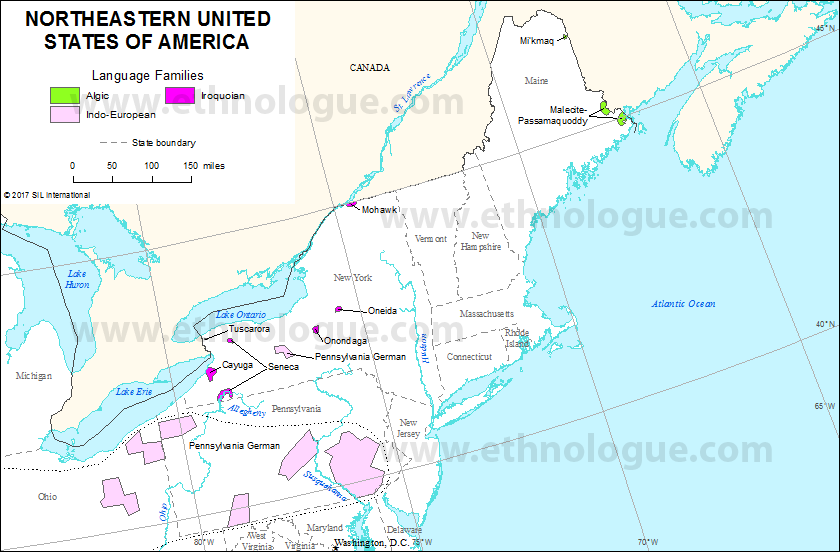
Northern Central United States of America
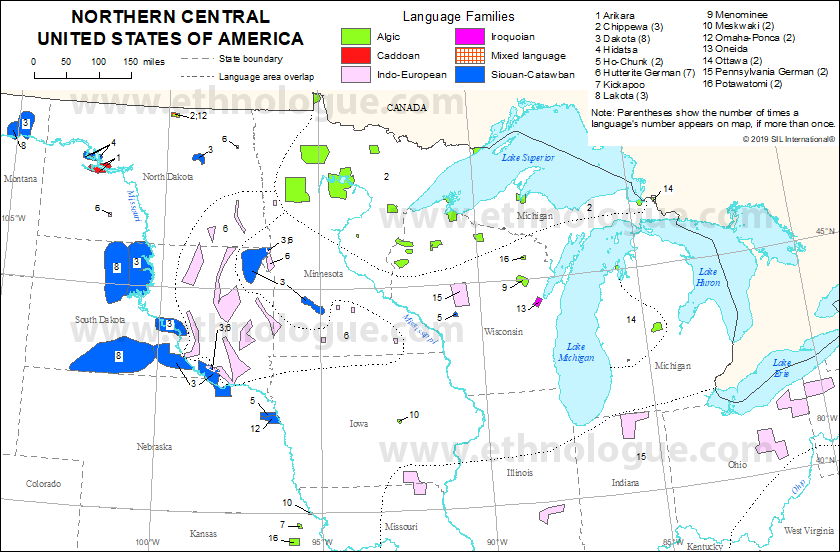
Southeastern United States of America
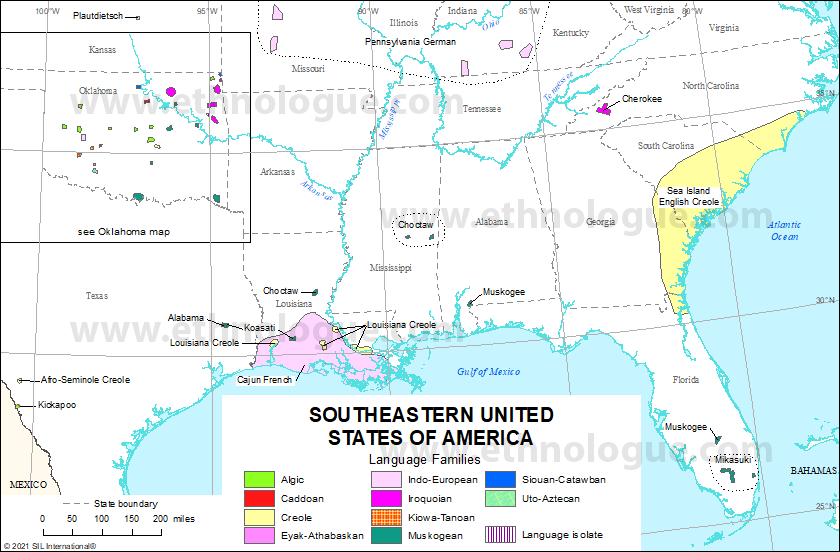
United States of America, Alaska and Hawaii
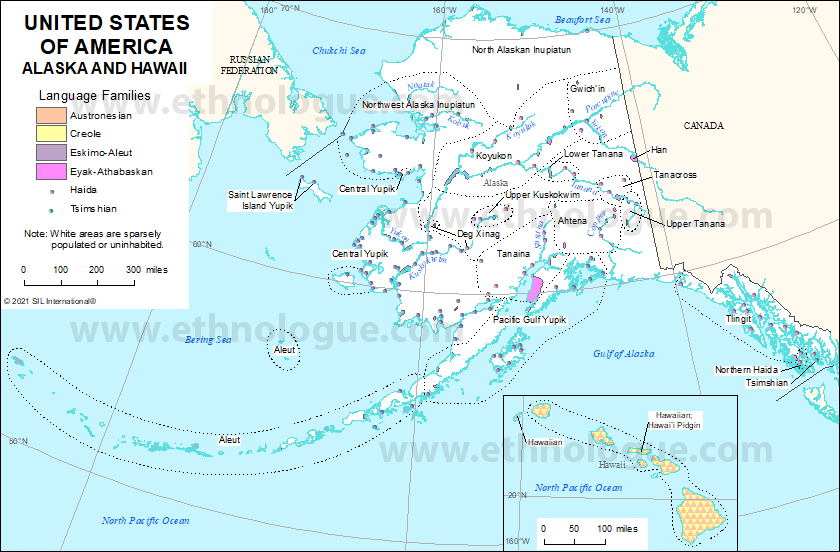
United States of America, Oklahoma
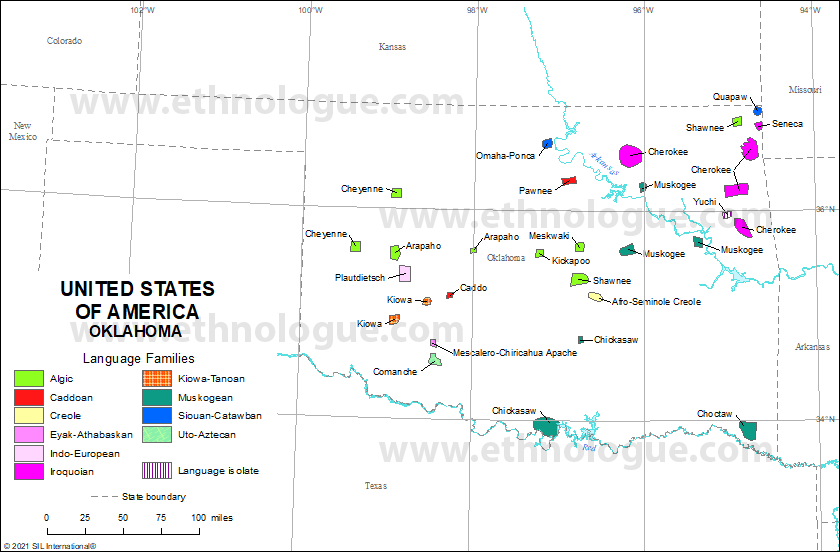
United States of America: Index map
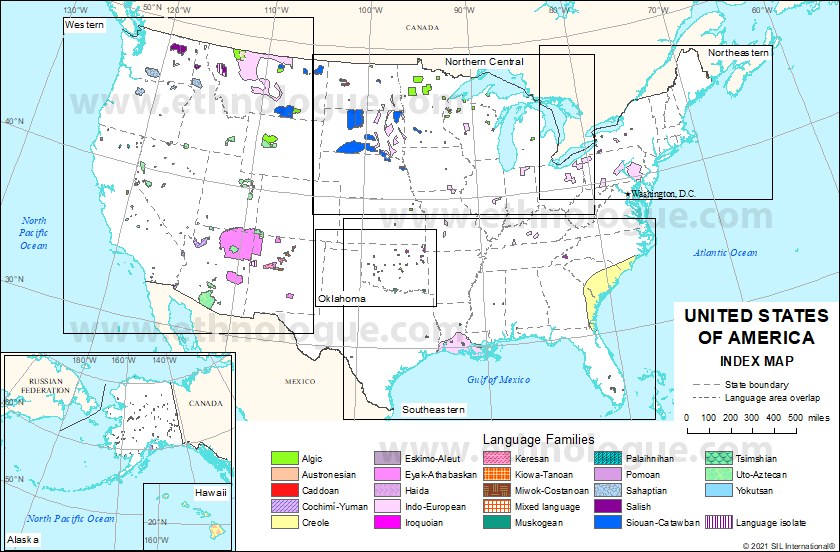
Western United States of America
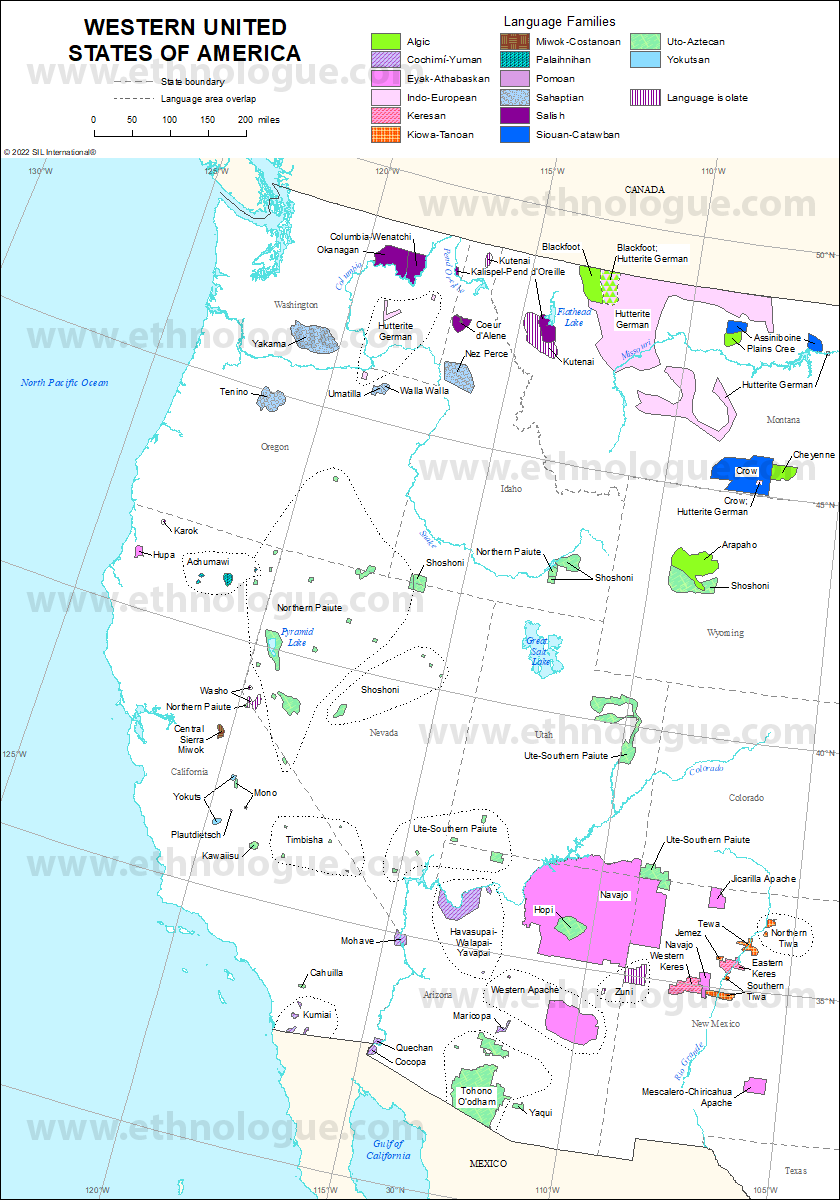
Graphs
Language Vitality Profile
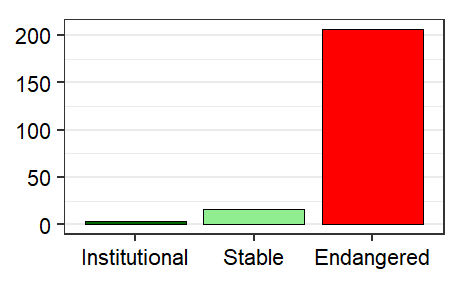
Full explanation
Language Status Profile
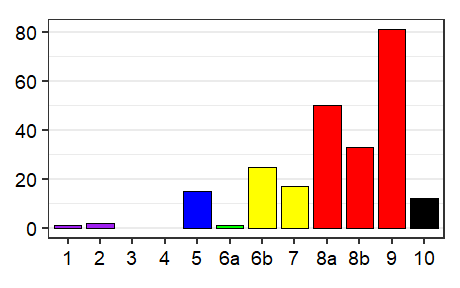
Full explanation
Resources
View Terms
Each Ethnologue country digest is a licensed product with restricted terms of use. Before downloading the product, you must agree to the following terms:
- This is a license for individual use. Just as with a conventionally published book, it is a violation of copyright to make a copy and give it to others.
- You may not redistribute this work in any form, including ingesting the contents into a database that is shared with others or posting it on a web site (whether public or private).
To inquire about permission for reuse or redistribution, please use the Contact Us form in the footer.
Digest of the languages of United States ($399.95, 188 page PDF)