
bap ISO 639
बान्तावा (bantawa) Autonyms
Bantawa
Visualizations
Language Cloud
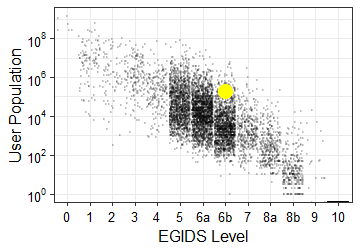
Full explanation
A language of Nepal
- ISO 639
- bap
- Alternate Names
- An Yüng, Bantaba, Bantawa Dum, Bantawa Rai, Bantawa Yong, Bantawa Yüng, Bontawa, Kirawa Yüng
- Autonym
- बान्तावा (bantawa)
- Population
- 161,500 in Nepal, all users. L1 users: 133,000 in Nepal (2011 census). L2 users: 28,500 (2011 census). 6,000 monolinguals. Total users in all countries: 195,100 (as L1: 166,600; as L2: 28,500).
- Location
- Kosi province: Bhojpur, Dhankuta, Ilam, Jhapa, Khotang, Morang, Panchthar, Sunsari, and Udayapur districts.
- Language Maps
- Eastern Nepal, India, Map 4
- Language Status
- 6b (Threatened). Language of recognized indigenous nationality: Rai. Some varieties are used as traditional lingua franca among Rai minorities in eastern Nepal, Sikkim, India, and Bhutan, and as L1 among Rai of other origin. (Bradley 1996).
- Classification
- Sino-Tibetan, Tibeto-Burman, Western Tibeto-Burman, Himalayan, Kiranti, Eastern
- Dialects
- Dhankuta (Eastern Bantawa), Dilpali (Northern Bantawa), Hatuwali (Southern Bantawa), Amchoke (Western Bantawa). Dialects are reportedly mutually inherently intelligible. Rungchenbung and Yangma are subvarieties of Dilpali. Eastern dialect is most divergent. Lexical similarity: Bantawa dialects and closely related languages form a continuum. Differences are primarily in meaning shifts and usage.
- Typology
- SOV; postpositions; noun heads initial; no noun classes or genders; content q-word in situ; genitives, adjectives, numerals before noun heads; polar questions marked only with rising intonation; content questions same word order as assertive sentences or question word directly before the verb; up to 2 prefixes, 10 suffixes; clause constituents indicated by word order; affixes indicate case of noun phrases; verbal affixation mark person, number, object—obligatory; tense and aspect; no passives or voice; split ergative; comparatives use Nepali word, bhanda; 25 consonant and 6 vowel phonemes; numbers above 3 are borrowed from Nepali [npi]; CV, CVC, CVCC; nontonal.
- Language Use
- Some shift to Nepali [npi] evident, especially among northern dialect speakers (2003 SIL). Home, religion; mixed use: Friends, work. Some of all ages. Positive attitudes. Most also use Nepali [npi]. Also use Bahing [bhj]. Also use Hindi [hin], especially among ex-soldiers. Used as L2 by Chhiling [cur], Chhintang [ctn], Dungmali [raa], Puma [pum].
- Language Development
- Nepali literacy rapidly increasing. Taught in some primary schools. Literature. Newspapers. Periodicals. Radio. Videos. Dictionary. Grammar. Texts. NT: 2020.
- Writing
- Devanagari script [Deva].
- Other Comments
- Homeland is Eastern hills but many migrated to the Tarai. Traditional religion, Christian.
- Language Resources
- OLAC resources in and about Bantawa
Also Spoken in
- Location
- Scattered in western border areas.
- Language Status
- Unestablished
- Other Comments
- Non-indigenous. Traditional religion, Christian, Hindu. View other languages of Bhutan
Language Name
Bantawa
User Population
19,200 in Bhutan (2002).
- Location
- Sikkim state: Lingdum, Rolep, and many other parts of the state; West Bengal state: Darjeeling.
- Language Status
- 6b (Threatened)
- Language Use
- Some shift to Nepali [npi] evident, especially among young generation. Home, friends, religion. Some young people, all adults. Positive attitudes. Most also use Nepali [npi]. Also use English [eng]. Also use Hindi [hin], especially among ex-soldiers.
- Other Comments
- Traditional religion, Christian, Hindu. View other languages of India
Language Name
Bantawa
User Population
14,400 in India (2001 census). Few monolinguals.