
bzi ISO 639
Bisu
Visualizations
Language Cloud
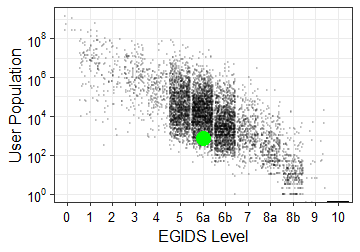
Full explanation
A language of Thailand
- ISO 639
- bzi
- Alternate Names
- Lawa, Lua, Mbisu, Mibisu
- Population
- 700 (2016 K. Person). No monolinguals (2015 K. Person). Ethnic population: 700 (2018 K. Person).
- Location
- Chiang Rai province: Doi Chomphu and Pui Kham villages.
- Language Maps
- Northern Thailand
- Language Status
- 5 (Developing).
- Classification
- Sino-Tibetan, Tibeto-Burman, Ngwi-Burmese, Ngwi, Southern, Bisoid
- Dialects
- Huai-Pa (Huaipa), Dakao. Closely related to Pyen [pyy] and Laomian [lwm]; all 3 languages are largely mutually intelligible. Lexical similarity: 76% between Huai-Pa and Dakao, 36% with Hani [hni], 32% with Lahu [lhu], 31% with Lisu [lis].
- Typology
- SOV; simple syllable structure; certain obstruent onsets may be prenasalized, aspirated, or palatalized, but otherwise no consonant clusters; syllables may be closed by stop or nasal; 3 tones, tone sandhi; words have 1 or 2 syllables; modifiers follow heads; loanwords from Dai and Chinese.
- Language Use
- Used by all. All children learn the language along with Northern Thai [nod] from birth, but since some pre-school age children attend daycare in Northern Thai [nod] speaking facilities, there is some concern that the children at that age will develop a preference for Northern Thai [nod] over Bisu (Person 2005). Also use Northern Thai [nod], especially younger generations.
- Language Development
- Literacy rate in L2: 90%. Literacy classes held at weekend in Doi Chompu. Oral and written materials developed. Literature. Grammar. Texts. NT: 2015.
- Writing
- Thai script [Thai], used since 1998.
- Other Comments
- The terms ‘Lawa’ and ‘Lua’ generally refer to Waic language varieties in Thailand: sometimes outsiders have classified unrelated languages such as Bisu in this category. Traditional religion, Christian.
- Language Resources
- OLAC resources in and about Bisu