
cdm ISO 639
चेपाङ (chepang), च्योःबाङ् भासा (cepaang bhaasaahaang) Autonyms
Chepang
Visualizations
Language Cloud
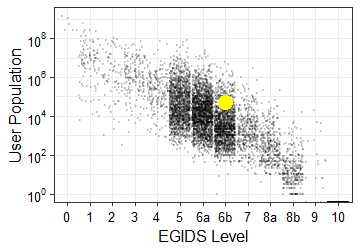
Full explanation
A language of Nepal
- ISO 639
- cdm
- Alternate Names
- Chyo’bang, Cyo’bang, Praja Bhasa, Tsepang
- Autonym
- चेपाङ (chepang), च्योःबाङ् भासा (cepaang bhaasaahaang)
- Population
- 49,640, all users. L1 users: 48,500 (2011 census), decreasing. L2 users: 1,140 (2011 census). No monolinguals.
- Location
- Bagmati province: Chitwan district, widespread; Dhading district, Benighat Rorang municipality; Gorkha district: Gandaki and Sahid Lakhan municipalities; Makawanpur district: Bhimphedi, Hetauda, Kailash, Makawanpurgadhi, Manahari, and Raksirang municipalities.
- Language Maps
- Central Nepal
- Language Status
- 6b (Threatened). Language of recognized indigenous nationality: Chepang.
- Classification
- Sino-Tibetan, Tibeto-Burman, Western Tibeto-Burman, Himalayan, Central Himalayan, Chepang-Bhujel
- Dialects
- Eastern Chepang, Western Chepang, Bankariya. Bhujel [byh] has difficult intelligibility with Chepang due to different pronominal suffix morphology. Dialects of Chepang differ in verb forms. Reportedly similar in morphology to Kirati languages. Lexical similarity: 98% with Bhujel [byh] (2004 R. Caughley, based on 100-item word list).
- Typology
- SOV; postpositions; noun head final; no noun classes or genders; relatives before or without noun heads; content q-word in situ; no prefixes, up to 8 suffixes; clause constituents indicated by case-marking; affixes indicate case of noun phrase; verbal affixation marks person and number; ergative; tense and aspect; voice; causatives; comparatives; CV to CCCVCCC with certain restrictions; 18 consonant and 6 vowel phonemes; nontonal (not phonemic, but phonetic pitch). Whistle speech.
- Language Use
- Home; mixed use: Friends, religion, work. Some young people, all adults. Positive attitudes. Also use Nepali [npi], especially men for common topics and political affairs, women for greetings and trade, and young people among themselves; often learned in school.
- Language Development
- Literacy rate in L1: 1%–5%. Literacy rate in L2: 40% men, 15% women in Nepali [npi]; 14% ethnic group (1991 census). Difficulties in reading Chepang: long words, consonant clusters. Written Chepang has lower prestige than Nepali. Motivation high for Nepali. Literature. Newspapers. Radio. Videos. Dictionary. Grammar. Texts. NT: 1993.
- Writing
- Devanagari script [Deva].
- Other Comments
- Traditional religion, Christian.
- Language Resources
- OLAC resources in and about Chepang