
che ISO 639
Нохчийн мотт (Noxchiin mott) Autonyms
Chechen
Visualizations
Language Cloud
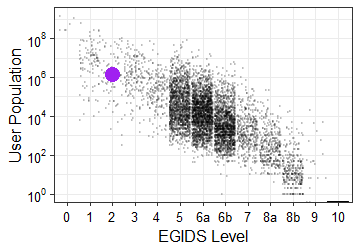
Full explanation
A language of Russian Federation
- ISO 639
- che
- Alternate Names
- Galancho, Nokchiin Muott, Nokhchi, Nokhchiin
- Autonym
- Нохчийн мотт (Noxchiin mott)
- Population
- 1,350,000 in Russian Federation (2010 census). 233,000 monolinguals. Ethnic population: 1,430,000 (2010 census). Total users in all countries: 1,529,100.
- Location
- Chechnya republic, Dagestan republic, and Ingushetia republic; Stavropol krai; north Caucasus, most in rural areas.
- Language Maps
- Southwestern Russian Federation, Western Russian Federation: Enlarged area
- Language Status
- 2 (Provincial). Statutory provincial language in Chechen Republic (2003, Constitution of Chechen Republic, Article 10(1)). Provincially recognized language in Dagestan Autonomous Republic (1994, Constitution of Dagestan Autonomous Republic, Article 10).
- Classification
- Nakh-Daghestanian, Nakh, Chechen-Ingush
- Dialects
- Ploskost, Itumkala (Shatoi), Melkhin, Kistin, Cheberloi, Akkin (Aux). The Akkin people in western Dagestan have a strong self-identity and consider themselves distinct from Chechen. Chechen partially intelligible with Ingush [inh]. Melkhi transitional dialect to Ingush.
- Typology
- Ergative case system; many consonants and vowels; extensive inflectional morphology, many nominal cases, several gender classes; complex sentences by chaining participial clauses; verbs have gender agreement with the direct object or intransitive subject, but no person agreement (Nichols 1995).
- Language Use
- Largest Nakh-Daghestanian language. Used in publishing. Many also use Kumyk [kum]. Also use Russian [rus].
- Language Development
- Taught as subject in primary schools. Newspapers. Radio. Dictionary. Grammar. Bible: 2012.
- Writing
- Arabic script, Naskh variant [Arab], no longer in use. Cyrillic script [Cyrl]. Latin script [Latn], used between 1925–1938.
- Other Comments
- Many Russians, Ingush, Ossetins, and other peoples live among them. From 1944–1957, they were deported to Kazakhstan and Siberia losing 25%–50% of the population, much land, economic resources, and civil rights. They have been largely removed from productive lowlands. Muslim.
- Language Resources
- OLAC resources in and about Chechen
Also Spoken in
- Language Status
- Unestablished
- Other Comments
- Non-indigenous. View other languages of Azerbaijan
Language Name
Chechen
User Population
5,200 in Azerbaijan (Leclerc 2017b).
- Location
- Kakheti region: Ahmeta municipality, Duisi village and several nearby villages.
- Dialects
- Kisti.
- Language Status
- 6a (Vigorous)
- Language Use
- All also use Georgian [kat]. Many also use Russian [rus].
- Other Comments
- Non-indigenous. View other languages of Georgia
Language Name
Chechen
User Population
10,000 in Georgia (Leclerc 2015).
- Language Status
- Unestablished
- Other Comments
- Non-indigenous. View other languages of Iraq
Language Name
Chechen
User Population
12,000 in Iraq (2020).
- Location
- Al Mafraq and Az-Zarqa’ governorates; scattered communities north of Amman.
- Language Status
- 5 (Dispersed)
- Other Comments
- Non-indigenous. Muslim. View other languages of Jordan
Language Name
Chechen
User Population
5,200 in Jordan (Leclerc 2021), based on ethnicity.
- Language Status
- Unestablished
- Other Comments
- Non-indigenous. View other languages of Kyrgyzstan
Language Name
Chechen
User Population
1,500 in Kyrgyzstan (2009 census). Ethnic population: 1,900 (2009 census).
- Language Status
- Unestablished
- Other Comments
- Non-indigenous. View other languages of Kazakhstan
Language Name
Chechen
User Population
24,500 in Kazakhstan (2009 census). Ethnic population: 31,400 (2009 census).
- Language Status
- Unestablished
- Other Comments
- Non-indigenous. View other languages of Syria
Language Name
Chechen
User Population
4,420 in Syria (2019).
- Language Status
- Unestablished
- Other Comments
- Non-indigenous. View other languages of Turkmenistan
Language Name
Chechen
User Population
1,000 in Turkmenistan (Leclerc 2019b), based on ethnicity.
- Location
- Scattered: displaced-persons camps throughout the country.
- Language Status
- Unestablished
- Other Comments
- Non-indigenous. View other languages of Turkey
Language Name
Chechen
User Population
112,000 in Turkey (2019).
- Language Status
- Unestablished
- Other Comments
- Non-indigenous. View other languages of Ukraine
Language Name
Chechen
User Population
1,580 in Ukraine (2001 census). Ethnic population: 2,880 (2001 census).
- Language Status
- Unestablished
- Other Comments
- Non-indigenous. View other languages of Uzbekistan
Language Name
Chechen
User Population
1,700 in Uzbekistan (2019).