
cld ISO 639
Chaldean Neo-Aramaic
Visualizations
Language Cloud
Full explanation
A language of Iraq
- ISO 639
- cld
- Alternate Names
- Chaldean, Fallani, Fellihi, Kaldaya, Kildani, Lishana Kaldaya, Modern Chaldean, Neo-Chaldean, Soorath, Soorith, Suras, Sureth
- Population
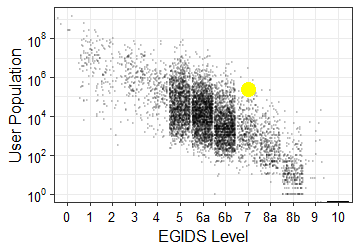
- 85,800 in Iraq (2020). Total users in all countries: 232,480.
- Location
- Dahuk and Ninawa governorates.
- Language Maps
- Iraq
- Language Status
- 7 (Shifting). Recognized language (2005, Constitution, Article 4(1)), constitutional term: Syriac. Unevenly recognized except in Kurdistan Region.
- Classification
- Afro-Asiatic, Semitic, Central, Aramaic, Eastern, Central, Northeastern
- Dialects
- Mangesh, Alqosh, Tel Kepe, Tisqopa, Bartille, Shirnak-Chizre (Bohtan), Dihok. High intelligibility of Lishana Deni [lsd] and Ashirat [aii] (western dialect group of Assyrian Neo-Aramaic); little or no intelligibility with other Northeastern Aramaic varieties. A member of macrolanguage Syriac [syr].
- Language Use
- Shifting to Northern Kurdish [kmr].
- Language Development
- Grammar. Texts. NT: 2006.
- Writing
- Syriac script [Syrc].
- Other Comments
- Ethnic group distinct religiously from other Northeastern Aramaic varieties; separated from the Assyrian in 16th century. The names Chaldean and Assyrian sometimes used in a popular sense to include both groups. Originally located in central western and northern Iraqi Kurdistan and some in bordering Turkey. Christian.
- Language Resources
- OLAC resources in and about Chaldean Neo-Aramaic
Also Spoken in
- Language Status
- Unestablished
- Other Comments
- Non-indigenous. View other languages of Australia
Language Name
Chaldean Neo-Aramaic
User Population
17,200 in Australia (2016 census).
- Language Status
- Unestablished
- Other Comments
- Non-indigenous. View other languages of Canada
Language Name
Chaldean Neo-Aramaic
User Population
5,550 in Canada (2016 census).
- Language Status
- Unestablished
- Other Comments
- Non-indigenous. View other languages of Germany
Language Name
Chaldean Neo-Aramaic
User Population
3,000 in Germany (1994).
- Location
- Beyrouth.
- Language Status
- Unestablished
- Other Comments
- Non-indigenous. View other languages of Lebanon
Language Name
Chaldean Neo-Aramaic
User Population
35,500 in Lebanon (2020).
- Language Status
- Unestablished
- Other Comments
- Non-indigenous. View other languages of Syria
Language Name
Chaldean Neo-Aramaic
User Population
5,430 in Syria (2019).
- Location
- California; Michigan: Detroit.
- Language Status
- Unestablished
- Other Comments
- Non-indigenous. View other languages of United States
Language Name
Chaldean Neo-Aramaic
User Population
80,000 in United States (1998).