
cmn ISO 639
普通话 (Putonghua) Autonyms
Chinese, Mandarin
Visualizations
Language Cloud
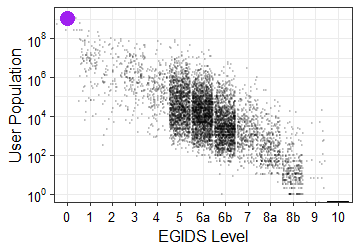
Full explanation
A language of China
- ISO 639
- cmn
- Alternate Names
- Beifang Fangyan, Beijinghua, Mandarin, Northern Chinese, Standard Chinese, Zhongguohua
- Autonym
- 普通话 (Putonghua)
- Population
- 1,103,000,000 in China, all users. L1 users: 925,000,000 in China (2021), increasing. 70% of Chinese language users speak a Mandarin dialect as L1. L2 users: 178,000,000. Total users in all countries: 1,136,680,950 (as L1: 937,952,950; as L2: 198,728,000).
- Location
- Beijing province, Guangxi Zhuang Autonomous Region: northwest; Guizhou province; Hubei province: except southeast corner; Hunan province: northwest; Henan, Jiangsu, Jiangxi, Liaoning, Shaanxi, Shandong, Sichuan, Tianjin, and Yunnan provinces. North of Changjiang river, from Jiujiang (Jiangxi) to Zhenjiang (Jiangsu).
- Language Maps
- China, Eastern Central Myanmar, Mongolia, Northern Myanmar, Taiwan
- Language Status
- 1 (National). De facto national language.
- Classification
- Sino-Tibetan, Chinese
- Dialects
- Dongbei Guanhua (Northeastern Mandarin), Xinan Guanhua (Southwestern Mandarin), Jiang-Huai Guanhua (Eastern Mandarin, Jiangxia Guanhua, Lower Yangtze Mandarin), Beijing Guanhua (Beijing Mandarin), Ji-Lu Guanhua (Hebei-Shandong Mandarin), Jiao-Liao Guanhua (Jiaoliao Mandarin), Zhongyuan Guanhua (Central Plains Mandarin), Lan-Yin Guanhua (Lanyin Mandarin). Speakers of Kokang variety in Myanmar are reportedly most similar to the dialect spoken in Yunnan Province, China. A member of macrolanguage Chinese [zho].
- Typology
- SVO; prepositions; noun head final; 6 full (concrete meaning) word classes; no articles; passives; 24 consonants, 8 vowels, 6 diphthongs; tonal (4 phonemic tones).
- Language Use
- Vigorous. All domains. Used by all. Also use English [eng]. Also use Korean [kor], in predominantly Korean-speaking provinces. Also use Russian [rus]. Also use Vietnamese [vie].
- Language Development
- Literacy rate in L2: 91% (2000 census, Han nationality). Taught in all primary and secondary schools. Taught in tertiary schools. Fully developed. Bible: 1874–1983.
- Writing
- Bopomofo script [Bopo], used since 1913, revised in 1920 and 1932, mainly used in Taiwan. Braille script [Brai]. Han script, Simplified variant [Hans], used since 1956, official in Mainland China (1956) and Singapore (1969), also used elsewhere. Han script, Traditional variant [Hant], used since mid-19th century, official in Taiwan, also used elsewhere. Latin script [Latn].
- Other Comments
- There are Mandarin speakers in all 56 official nationalities of China, but the majority in China are classified under Han, Manchu and Hui nationalities. Traditional religion, Buddhist, Christian, Confucianist, Daoist, Muslim.
- Language Resources
- OLAC resources in and about Chinese, Mandarin
Also Spoken in
- Location
- Widespread.
- Language Status
- 5 (Dispersed)
- Language Use
- Also use English [eng].
- Language Development
- Taught as subject in some primary and secondary schools.
- Other Comments
- Non-indigenous. Many Chinese people migrated to Australia during the 1850s gold rushes. View other languages of Australia
Language Name
Chinese, Mandarin
User Population
597,000 in Australia (2016 census).
- Language Status
- Unestablished
- Other Comments
- Non-indigenous. View other languages of Belgium
Language Name
Chinese, Mandarin
User Population
22,300 in Belgium (2020 census), based on nationality.
- Language Status
- Unestablished
- Other Comments
- Non-indigenous. View other languages of Bulgaria
Language Name
Chinese, Mandarin
User Population
1,900 in Bulgaria (2016 J. Leclerc).
- Location
- Major cities.
- Language Status
- 5 (Dispersed)
- Other Comments
- Non-indigenous. View other languages of Brunei
Language Name
Chinese, Mandarin
User Population
12,100 in Brunei (2019).
- Language Status
- Unestablished
- Other Comments
- Non-indigenous. View other languages of Brazil
Language Name
Chinese, Mandarin
User Population
62,900 in Brazil (2020 Registro Nacional Migratório no Brasil), based on nationality.
- Location
- British Columbia: Vancouver area; Ontario: Toronto area.
- Language Status
- 5 (Dispersed)
- Other Comments
- Non-indigenous. View other languages of Canada
Language Name
Chinese, Mandarin
User Population
592,000 in Canada (2016 census).
- Location
- Scattered.
- Language Status
- 5 (Dispersed)
- Other Comments
- Non-indigenous. View other languages of Christmas Island
Language Name
Chinese, Mandarin
User Population
340 in Christmas Island (2020 World Factbook).
- Language Status
- Unestablished
- Other Comments
- Non-indigenous. View other languages of Germany
Language Name
Chinese, Mandarin
User Population
144,600 in Germany (2021), based on nationality.
- Language Status
- Unestablished
- Other Comments
- Non-indigenous. View other languages of Dominican Republic
Language Name
Chinese, Mandarin
User Population
50,000 in Dominican Republic (2021 Joshua Project), based on ethnicity.
- Language Status
- 4 (Educational)
- Language Development
- Taught as subject in primary and secondary schools.
- Other Comments
- Non-indigenous. View other languages of Spain
Language Name
Chinese, Mandarin
User Population
229,000 in Spain (2020 census), based on nationality.
- Language Status
- Unestablished
- Other Comments
- Non-indigenous. View other languages of United Kingdom
Language Name
Chinese, Mandarin
User Population
22,000 in United Kingdom (2011 census).
- Language Status
- Unestablished
- Other Comments
- Non-indigenous. View other languages of Greece
Language Name
Chinese, Mandarin
User Population
19,000 in Greece (Leclerc 2020a), based on ethnicity.
- Language Status
- 1 (National)
- Language Development
- Taught as subject in primary and secondary schools, increasingly used. Taught in some tertiary schools.
- Other Comments
- Non-indigenous. View other languages of China–Hong Kong
Language Name
Chinese, Mandarin
User Population
3,421,000 in China–Hong Kong, all users. L1 users: 131,000 in China–Hong Kong (2016 census), increasing. L2 users: 3,290,000 (2016 census).
- Location
- Scattered.
- Language Status
- 3 (Wider communication)
- Language Use
- Also use Indonesian [ind].
- Language Development
- Taught as subject in some primary schools.
- Other Comments
- Non-indigenous. Mandarin is sometimes taught in ‘National Plus’ schools with English and Indonesian. View other languages of Indonesia
Language Name
Chinese, Mandarin
User Population
466,000 in Indonesia (2005 J. Leclerc), increasing.
- Language Status
- Unestablished
- Other Comments
- Non-indigenous. View other languages of Japan
Language Name
Chinese, Mandarin
User Population
549,000 in Japan (Leclerc 2020b).
- Language Status
- Unestablished
- Other Comments
- Non-indigenous. View other languages of Kenya
Language Name
Chinese, Mandarin
User Population
34,000 in Kenya (2019 Joshua Project), based on ethnicity.
- Location
- Scattered, especially in major cities.
- Language Status
- Unestablished
- Language Use
- Spoken by immigrants, businessmen, and tourists from China, and as a second language by those in industries servicing them.
- Other Comments
- Non-indigenous. Confucianist, Daoist. View other languages of Cambodia
Language Name
Chinese, Mandarin
User Population
2,100 in Cambodia (2019 J. Leclerc).
- Language Status
- Unestablished
- Other Comments
- Non-indigenous. View other languages of South Korea
Language Name
Chinese, Mandarin
User Population
198,000 in South Korea (2020 census).
- Language Status
- Unestablished
- Other Comments
- Non-indigenous. View other languages of Kuwait
Language Name
Chinese, Mandarin
User Population
4,900 in Kuwait (2020 Joshua Project).
- Language Status
- Unestablished
- Other Comments
- Non-indigenous. View other languages of Kazakhstan
Language Name
Chinese, Mandarin
User Population
4,200 in Kazakhstan (Leclerc 2017e).
- Language Status
- Unestablished
- Other Comments
- Non-indigenous. View other languages of Laos
Language Name
Chinese, Mandarin
User Population
66,000 in Laos (2018 J. Leclerc), based on ethnicity.
- Language Status
- Unestablished
- Language Development
- Taught as subject in secondary schools.
- Other Comments
- Non-indigenous. View other languages of Luxembourg
Language Name
Chinese, Mandarin
User Population
2,290 in Luxembourg (2021). Mandarin Chinese and Yue Chinese (Cantonese) [yue].
- Language Status
- Unestablished
- Other Comments
- Non-indigenous. View other languages of Libya
Language Name
Chinese, Mandarin
User Population
2,320 in Libya (2020).
- Language Status
- Unestablished
- Other Comments
- Non-indigenous. View other languages of Madagascar
Language Name
Chinese, Mandarin
User Population
70,000 in Madagascar (2020 Joshua Project), based on ethnicity.
- Location
- Shan state: large China border area, Kokang Self-Administered Zone in Laukkai and Konkyan townships, and Muse township.
- Dialects
- Kokang (Kokant).
- Language Status
- 5 (Dispersed)
- Language Use
- Vigorous. All domains. Used by all. Positive attitudes. Also use Burmese [mya]. Used as L2 by Burmese [mya], Drung [duu], Muak Sa-aak [ukk], Parauk Wa [prk], Rumai Palaung [rbb], Tai Loi [tlq], Tai Nüa [tdd].
- Other Comments
- Non-indigenous. The Kokang have been given a Self-Administered Zone. The Kokang dialect in Myanmar is most similar to the dialect spoken in Yunnan Province, China. Buddhist, Daoist. View other languages of Myanmar
Language Name
Chinese, Mandarin
User Population
994,000 in Myanmar (Leclerc 2017d).
- Location
- Omnogovi province; Uvs province: Tarialan and Ulaangom districts.
- Language Status
- 5 (Dispersed)
- Language Use
- Also use Halh Mongolian [khk].
- Language Development
- Literacy rate in L2: High literacy rate in Halh, or Mandarin.
- Other Comments
- Non-indigenous. Traditional religion. View other languages of Mongolia
Language Name
Chinese, Mandarin
User Population
43,700 in Mongolia (2016). 11,300 ethnic Khoton speak a form of Mandarin Chinese [cmn].
- Language Status
- 1 (National)
- Language Development
- Taught in tertiary schools.
- Other Comments
- Non-indigenous. View other languages of China–Macao
Language Name
Chinese, Mandarin
User Population
362,800 in China–Macao, all users. L1 users: 34,800 in China–Macao (2016 census). L2 users: 328,000 (2016 census).
- Location
- Widespread.
- Language Status
- Unestablished
- Other Comments
- Non-indigenous. The second largest ethnic group in the Northern Mariana Islands workforce (1998 Pacific Islands Report). View other languages of Northern Mariana Islands
Language Name
Chinese, Mandarin
User Population
11,100 in Northern Mariana Islands (2017).
- Language Status
- 5 (Dispersed)
- Other Comments
- Non-indigenous. View other languages of Mauritius
Language Name
Chinese, Mandarin
User Population
20,200 in Mauritius (Leclerc 2018c).
- Location
- Scattered, especially urban areas.
- Language Status
- 4 (Educational)
- Language Use
- Positive attitudes. All also use Hakka Chinese [hak]. Used as L2 by Hakka Chinese [hak], Kadazan Dusun [dtp], Standard Malay [zsm].
- Language Development
- Taught in primary and secondary schools through Grade 6 and as subject thereafter.
- Other Comments
- Non-indigenous. Primarily urban, in commerce. View other languages of Malaysia
Language Name
Chinese, Mandarin
User Population
1,230,000 in Malaysia, all users. L1 users: Recent census figures do not detail the number of Mandarin speakers. L2 users: 1,230,000 (2015).
- Language Status
- Unestablished
- Other Comments
- Non-indigenous. View other languages of Mozambique
Language Name
Chinese, Mandarin
User Population
25,000 in Mozambique (2017).
- Language Status
- Unestablished
- Other Comments
- Non-indigenous. View other languages of Nigeria
Language Name
Chinese, Mandarin
User Population
3,800 in Nigeria (2021 Joshua Project), based on ethnicity.
- Language Status
- Unestablished
- Other Comments
- Non-indigenous. View other languages of Nicaragua
Language Name
Chinese, Mandarin
User Population
14,000 in Nicaragua (2021 Joshua Project), based on ethnicity.
- Language Status
- Unestablished
- Other Comments
- Non-indigenous. View other languages of Netherlands
Language Name
Chinese, Mandarin
User Population
78,900 in Netherlands (2019).
- Language Status
- Unestablished
- Other Comments
- Non-indigenous. View other languages of Norway
Language Name
Chinese, Mandarin
User Population
13,300 in Norway (2021 census), based on nationality.
- Language Status
- Unestablished
- Other Comments
- Non-indigenous. View other languages of New Zealand
Language Name
Chinese, Mandarin
User Population
95,300 in New Zealand (2018 census).
- Location
- Major cities.
- Language Status
- 5 (Dispersed)
- Other Comments
- Non-indigenous. View other languages of Philippines
Language Name
Chinese, Mandarin
User Population
500 in Philippines. Ethnic population: All ethnic Chinese are 53,300 (1990 census).
- Language Status
- Unestablished
- Other Comments
- Non-indigenous. View other languages of Pakistan
Language Name
Chinese, Mandarin
User Population
10,000 in Pakistan (2018).
- Language Status
- Unestablished
- Other Comments
- Non-indigenous. View other languages of Serbia
Language Name
Chinese, Mandarin
User Population
14,000 in Serbia (Leclerc 2020c).
- Language Status
- Unestablished
- Language Use
- Used as L2 by Nanai [gld].
- Other Comments
- Non-indigenous. View other languages of Russian Federation
Language Name
Chinese, Mandarin
User Population
70,700 in Russian Federation (2010 census).
- Language Status
- Unestablished
- Other Comments
- Non-indigenous. View other languages of Saudi Arabia
Language Name
Chinese, Mandarin
User Population
132,000 in Saudi Arabia (2018), based on ethnicity.
- Language Status
- Unestablished
- Other Comments
- Non-indigenous. View other languages of Sweden
Language Name
Chinese, Mandarin
User Population
19,000 in Sweden (2020 Joshua Project), based on ethnicity.
- Language Status
- 1 (National)
- Language Use
- Use is increasing. Some also use Chinese [zho], various varieties and other local minority languages. Some also use English [eng].
- Language Development
- Literacy rate in L1: 65% (2001 census). Taught in all primary schools in early grades only. Taught as subject in secondary schools.
- Other Comments
- Non-indigenous. 2,505,209 ethnic Chinese (2000 census). View other languages of Singapore
Language Name
Chinese, Mandarin
User Population
2,840,000 in Singapore, all users. L1 users: 1,960,000 in Singapore (2016 census). L2 users: 880,000.
- Location
- Krung Thep province: dispersed through provincial towns and south in Kra peninsula.
- Dialects
- Ho (Cin Haw, Haw, Hui, Hui-Tze, Hwei, Panghse, Pantha, Panthe, Pathee, Western Mandarin, Yunnanese).
- Language Status
- 5 (Dispersed)
- Other Comments
- Non-indigenous. Traditional religion, Muslim. View other languages of Thailand
Language Name
Chinese, Mandarin
User Population
76,000 in Thailand (Leclerc 2019a), based on ethnicity.
- Language Status
- Unestablished
- Other Comments
- Non-indigenous. View other languages of Turkmenistan
Language Name
Chinese, Mandarin
User Population
2,900 in Turkmenistan (Leclerc 2019b), based on ethnicity.
- Language Status
- Unestablished
- Language Development
- Taught as subject in some secondary schools.
- Other Comments
- Non-indigenous. View other languages of Turkey
Language Name
Chinese, Mandarin
User Population
42,000 in Turkey (2019).
- Location
- Major cities.
- Dialects
- Taibei Mandarin.
- Language Status
- 1 (National)
- Language Use
- Many also use Min Nan Chinese [nan], especially 30–50-year-olds.
- Language Development
- Taught in all primary and secondary schools. Taught in tertiary schools.
- Other Comments
- Non-indigenous. Traditional religion, Buddhist, Christian. View other languages of China–Taiwan
Language Name
Chinese, Mandarin
User Population
19,580,000 in China–Taiwan, all users. L1 users: 4,580,000 in China–Taiwan (2017 J. Leclerc). L2 users: 15,000,000.
- Location
- California: Los Angeles, San Francisco, and San Jose areas; Illinois: Chicago area; Massachusetts: Boston area; New York: New York City area; Texas: Dallas and Houston areas; Washington: Seattle area.
- Language Status
- 5 (Dispersed)
- Language Use
- Many also use English [eng].
- Other Comments
- Non-indigenous. View other languages of United States
Language Name
Chinese, Mandarin
User Population
1,370,000 in United States (2015 census). United States Census figure for all Chinese varieties: 2,900,000 (2015).
- Location
- KwaZulu-Natal coast.
- Language Status
- Unestablished
- Other Comments
- Non-indigenous. View other languages of South Africa
Language Name
Chinese, Mandarin
User Population
10,000 in South Africa (2012 J. Leclerc).
- Language Status
- Unestablished
- Other Comments
- Non-indigenous. View other languages of Zambia
Language Name
Chinese, Mandarin
User Population
48,000 in Zambia (2017 J. Leclerc).