
dak ISO 639
Dakhóta Autonyms
Dakota
Visualizations
Language Cloud
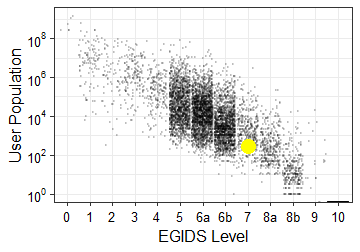
Full explanation
A language of United States
- ISO 639
- dak
- Alternate Names
- Dakhótiyapi, Sioux
- Autonym
- Dakhóta
- Population
- 100 in United States (2016 W. Meya), decreasing. Ethnic population: 170,000 (2016 Lakota Language Consortium). Includes all ethnic Sioux. Total users in all countries: 290.
- Location
- Minnesota: Upper Sioux, Lower Sioux, Prior Lake, Prairie Island, Minneapolis; Montana: Fort Peck reservation; Nebraska: Santee; North Dakota: Devils Lake, northern Standing Rock reservation, Sisseton-Lakota Traverse reservation; South Dakota: Crow Creek, Sisseton-Lakota Traverse and Yankton reservations, Flandreau.
- Language Maps
- Northern Central United States of America, Southern Central Canada
- Language Status
- 7 (Shifting). Language of registered tribe: Assiniboine and Sioux Tribes of the Fort Peck Indian Reservation, Crow Creek Sioux Tribe of the Crow Creek Reservation, Flandreau Santee Sioux Tribe of South Dakota, Lower Sioux Indian Community in the State of Minnesota, Mdewakanton Sioux Indians, Prairie Island Indian Community in the State of Minnesota, Santee Sioux Nation, Shakopee Mdewakanton Sioux Community of Minnesota, Sisseton-Wahpeton Oyate of the Lake Traverse Reservation, Spirit Lake Tribe, Standing Rock Sioux Tribe (North Dakota and South Dakota), Upper Sioux Community, Yankton Sioux Tribe of South Dakota.
- Classification
- Siouan-Catawban, Siouan, Mississippi Valley-Ohio Valley Siouan, Mississippi Valley Siouan, Dakota
- Dialects
- Dakota (Dakhota, Santee, Santee-Sisseton), Nakota (Nakoda, Yankton, Yankton-Yanktonais). Lexical similarity: 83%–86% with Stoney [sto], 89%–94% with Assiniboine [asb], 90%–95% with dialects.
- Language Use
- Adults only. Most youth prefer English [eng] or do not speak the language (Golla 2007). Most shifting to English [eng].
- Language Development
- Dictionary. Grammar. Texts. Bible: 1879. Teaching programs at every level, preschool through university (Golla 2007).
- Writing
- Latin script [Latn].
- Language Resources
- OLAC resources in and about Dakota
Also Spoken in
- Location
- Manitoba: south; Saskatchewan: Oak River and Oak Lake, Long Plain west of Winnipeg, Standing Buffalo, Birdtail, Stony Wahpeton, and Moose Woods. May be at Wood Mountain Reserve.
- Dialects
- Dakota (Santee), Nakota (Yankton).
- Language Status
- 8b (Nearly extinct)
- Language Use
- Elderly only. Most shifted to English [eng].
- Language Development
- Literacy rate in L2: 50%–75%.
- Other Comments
- Non-indigenous. View other languages of Canada
Language Name
Dakota
User Population
190 in Canada (2016 W. Meya), decreasing. 2,300 L1 speakers of all Sioux dialects in a total population of 175,000, of which 5,000 reside in Canada (2016 Lakota Language Consortium). Ethnic population: 5,000 (2016 Lakota Language Consortium). Includes all ethnic Sioux.