
deu ISO 639
Deutsch Autonyms
German, Standard
Visualizations
Language Cloud
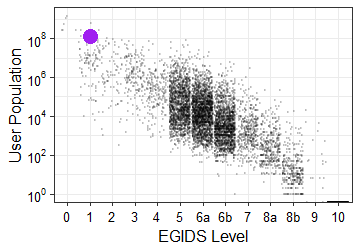
Full explanation
A language of Germany
- ISO 639
- deu
- Autonym
- Deutsch
- Population
- 80,600,000 in Germany, all users. L1 users: 72,300,000 in Germany (2019). L2 users: 8,300,000 (2019). Total users in all countries: 134,644,950 (as L1: 75,578,650; as L2: 59,066,300).
- Location
- Widespread.
- Language Maps
- Austria, Belgium, Luxembourg and Netherlands, Czechia, Denmark, Finland, Norway and Sweden, Hungary, Northwestern Romania, Southwestern Romania
- Language Status
- 1 (National). De facto national language.
- Classification
- Indo-European, Germanic, West, High German, German, Middle German, East Middle German
- Dialects
- Major related varieties are Bavarian [bar], Swabian [swg], Alemannisch [gsw], Eastern Franconian [vmf], Hessisch, Palatinian, Rheinfränkisch, Westphalien [wep], Saxonian, Thuringian, Brandenburgisch, and Low Saxon [nds]. Many varieties are not mutually intelligible. Our present treatment is incomplete. Standard German is one High German variety, developed from the chancery of Saxony, gaining acceptance as the written standard in the 16th and 17th centuries. High German refers to dialects and languages in the upper Rhine region. Lexical similarity: 60% with English [eng], 29% with French [fra].
- Typology
- SVO; prepositions; noun head final; gender (masculine/feminine/neuter); definite and indefinite articles; case-marking (4 cases); verb affixes mark person, number; passives; tense; comparatives; 22 consonants, 22 vowels, 3 diphthongs; non-tonal; stress on first syllable of the root.
- Language Use
- Many also use English [eng]. A few also use French [fra].
- Language Development
- Taught in all primary and secondary schools. Taught in all secondary schools. Fully developed. Bible: 1466–2016.
- Writing
- Braille script [Brai]. Latin script [Latn], primary usage. Latin script, Fraktur variant [Latf], used until 1940. Runic script [Runr], no longer in use.
- Other Comments
- Based equally on East Upper German and East Middle German. Christian.
- Language Resources
- OLAC resources in and about German, Standard
Also Spoken in
- Location
- Widespread.
- Language Status
- 5 (Dispersed)
- Other Comments
- Non-indigenous. View other languages of Argentina
Language Name
German, Standard
User Population
42,000 in Argentina (2018), based on nationality. Ethnic population: 3,500,000.
- Location
- Widespread.
- Dialects
- Kärntnerisch.
- Language Status
- 1 (National)
- Language Development
- Taught in all primary and secondary schools. View other languages of Austria
Language Name
German, Standard
User Population
182,000 in Austria (2017 Eurostat), based on nationality.
- Location
- Scattered.
- Language Status
- 5 (Dispersed)
- Language Development
- Taught as subject in many primary and secondary schools.
- Other Comments
- Non-indigenous. German immigrants formed the second largest group of early settlers in Australia. View other languages of Australia
Language Name
German, Standard
User Population
79,400 in Australia (2016 census).
- Location
- Liège province: Verviers municipality, Amel, Bnlingen, Bntchenbach, Burg-Reuland, Eupen, Kelmis, Lontzen, Raeren, and Sankt-Vith.
- Language Status
- 2 (Provincial)
- Language Use
- Used as L2 by Dutch [nld], Limburgish [lim].
- Language Development
- Taught in all primary and secondary schools in German-speaking area. View other languages of Belgium
Language Name
German, Standard
User Population
2,590,800 in Belgium, all users. L1 users: 50,800 in Belgium (2020 census), based on nationality. L2 users: 2,540,000 (2020).
- Language Status
- 5 (Dispersed)
- Language Use
- Used as L2 by Bulgarian [bul].
- Language Development
- Taught as subject in secondary schools.
- Other Comments
- Non-indigenous. View other languages of Bulgaria
Language Name
German, Standard
User Population
557,000 in Bulgaria (2020), L2 users.
- Language Status
- Unestablished
- Language Use
- Used as L2 by Plautdietsch [pdt].
- Other Comments
- Non-indigenous. View other languages of Brazil
Language Name
German, Standard
User Population
40,000 in Brazil (2020 Registro Nacional Migratório no Brasil), based on nationality.
- Language Status
- 5 (Dispersed)
- Language Development
- Taught as subject in secondary schools.
- Other Comments
- Non-indigenous. View other languages of Belarus
Language Name
German, Standard
User Population
300,000 in Belarus (2020), L2 users.
- Location
- Scattered.
- Language Status
- 5 (Dispersed)
- Language Use
- Used as L2 by Hutterisch [geh], Plautdietsch [pdt].
- Other Comments
- Non-indigenous. View other languages of Canada
Language Name
German, Standard
User Population
384,000 in Canada (2016 census).
- Language Status
- 1 (National)
- Language Development
- Taught in primary and secondary schools in Swiss German [gsw] and Romansch [roh] speaking areas; taught as subject from grade 4 elsewhere.
- Other Comments
- Non-indigenous. View other languages of Switzerland
Language Name
German, Standard
User Population
292,000 in Switzerland (2013 census).
- Location
- Major cities.
- Language Status
- 5 (Dispersed)
- Language Use
- Also use Spanish [spa].
- Other Comments
- Non-indigenous. View other languages of Chile
Language Name
German, Standard
User Population
45,000 in Chile (2020 Joshua Project), based on ethnicity.
- Language Status
- 4 (Educational)
- Language Development
- Taught as subject in some secondary schools.
- Other Comments
- Non-indigenous. View other languages of Cameroon
Language Name
German, Standard
User Population
300,000 in Cameroon (2010 D. Bathe), L2 users.
- Language Status
- Unestablished
- Other Comments
- Non-indigenous. View other languages of Colombia
Language Name
German, Standard
User Population
4,500 in Colombia (2020 Joshua Project), based on ethnicity.
- Language Status
- 5 (Dispersed)
- Language Use
- Used as L2 by Greek [ell].
- Language Development
- Taught as subject in secondary schools.
- Other Comments
- Non-indigenous. View other languages of Cyprus
Language Name
German, Standard
User Population
23,090 in Cyprus, all users. L1 users: 1,290 in Cyprus (2013 UNSD). L2 users: 21,800 (2018 Eurostat).
- Location
- Karlovy Vary and Ústí nad Labem regions; Erzgebirge mountain range.
- Language Status
- 5 (Dispersed)
- Language Use
- Also use Czech [ces]. Used as L2 by Czech [ces].
- Language Development
- Taught as subject in many primary and secondary schools beginning in grade 6. View other languages of Czechia
Language Name
German, Standard
User Population
1,624,100 in Czechia, all users. L1 users: 14,100 in Czechia (2011 census). L2 users: 1,610,000 (2020).
- Location
- South Denmark region: north Slesvig.
- Language Status
- 2 (Provincial)
- Language Use
- Used as L2 by Danish [dan].
- Language Development
- Taught as subject in secondary schools in grade2 7–9.
- Other Comments
- There are German schools. View other languages of Denmark
Language Name
German, Standard
User Population
2,777,800 in Denmark, all users. L1 users: 37,800 in Denmark (2020 Eurostat). L2 users: 2,740,000 (2020).
- Location
- Pichincha province: Quito.
- Language Status
- 5 (Dispersed)
- Other Comments
- Non-indigenous. View other languages of Ecuador
Language Name
German, Standard
User Population
43,000 in Ecuador (2020 Joshua Project), based on ethnicity.
- Language Status
- 5 (Dispersed)
- Language Use
- Used as L2 by Standard Estonian [ekk].
- Language Development
- Taught as subject in some secondary schools.
- Other Comments
- Non-indigenous. View other languages of Estonia
Language Name
German, Standard
User Population
129,400 in Estonia, all users. L1 users: 1,400 in Estonia (2018). L2 users: 128,000 (2018 Eurostat).
- Language Status
- 5 (Dispersed)
- Other Comments
- Non-indigenous. View other languages of Spain
Language Name
German, Standard
User Population
639,000 in Spain, all users. L1 users: 116,000 in Spain (2020 census), based on nationality. L2 users: 523,000 (2019 Eurostat).
- Language Status
- 5 (Dispersed)
- Language Use
- Used as L2 by Finnish [fin].
- Language Development
- Taught as subject in some primary and secondary schools.
- Other Comments
- Non-indigenous. View other languages of Finland
Language Name
German, Standard
User Population
1,002,260 in Finland, all users. L1 users: 7,260 in Finland (2021 census). L2 users: 995,000 (2020).
- Language Status
- 5 (Dispersed)
- Language Use
- Used as L2 by Alsatian [gsw], French [fra].
- Other Comments
- Non-indigenous. View other languages of France
Language Name
German, Standard
User Population
4,000,000 in France (2020), L2 users.
- Language Status
- 5 (Dispersed)
- Language Use
- Used as L2 by English [eng].
- Other Comments
- Non-indigenous. View other languages of United Kingdom
Language Name
German, Standard
User Population
4,067,200 in United Kingdom, all users. L1 users: 77,200 in United Kingdom (2011 census). L2 users: 3,990,000 (2018).
- Location
- Scattered.
- Language Status
- 5 (Dispersed)
- Language Use
- Used as L2 by Greek [ell].
- Language Development
- Taught as subject in all primary and secondary schools.
- Other Comments
- Non-indigenous. View other languages of Greece
Language Name
German, Standard
User Population
545,400 in Greece, all users. L1 users: 9,400 in Greece (Leclerc 2020a), based on ethnicity. L2 users: 536,000 (2018).
- Location
- Widespread.
- Language Status
- 5 (Dispersed)
- Language Use
- Used as L2 by Croatian [hrv].
- Language Development
- Taught as subject in primary and secondary schools from grade 5.
- Other Comments
- Non-indigenous. View other languages of Croatia
Language Name
German, Standard
User Population
1,462,990 in Croatia, all users. L1 users: 2,990 in Croatia (2011 census). L2 users: 1,460,000 (European Commission 2006). Ethnic population: 2,970 (2011 census).
- Location
- Bács-Kiskun, Baranya, Komárom-Esztergom, Pest, Tolna, Vas, and Veszprém counties.
- Language Status
- 4 (Educational)
- Language Use
- All also use Hungarian [hun].
- Language Development
- Taught as subject in some primary and secondary schools, from grade 8, but as early as grade 3 in some schools.
- Other Comments
- Non-indigenous. Germans in Hungary speak varieties other than standard German at home. View other languages of Hungary
Language Name
German, Standard
User Population
1,795,200 in Hungary, all users. L1 users: 35,200 in Hungary (2020 Eurostat). L2 users: 1,760,000 (2018). Ethnic population: 132,000 (2011 census).
- Language Status
- 5 (Dispersed)
- Language Use
- Used as L2 by English [eng].
- Other Comments
- Non-indigenous. View other languages of Ireland
Language Name
German, Standard
User Population
155,460 in Ireland, all users. L1 users: 1,460 in Ireland (2016 census). L2 users: 154,000 (2018 Eurostat).
- Language Status
- Unestablished
- Other Comments
- Non-indigenous. View other languages of Israel
Language Name
German, Standard
User Population
14,000 in Israel (Leclerc 2018a).
- Language Status
- Unestablished
- Other Comments
- Non-indigenous. View other languages of Iceland
Language Name
German, Standard
User Population
1,110 in Iceland (2022).
- Location
- Trentino-Alto Adige region: Bolzano and South Tyrol provinces; Veneto region: Belluno province.
- Language Status
- 2 (Provincial)
- Language Use
- Also use Friulian [fur]. Used as L2 by Cimbrian [cim], Ladin [lld]. View other languages of Italy
Language Name
German, Standard
User Population
1,276,000 in Italy, all users. L1 users: 36,000 in Italy (2020 Joshua Project), based on ethnicity. L2 users: 1,240,000 (2019 Eurostat).
- Location
- Scattered.
- Language Status
- 5 (Dispersed)
- Other Comments
- Non-indigenous. View other languages of Kyrgyzstan
Language Name
German, Standard
User Population
2,700 in Kyrgyzstan (2009 census). Ethnic population: 9,500 (2009 census).
- Location
- Akmola, East Kazakhstan, Karaganda, Kostanay, North Kazakhstan, and Pavlodar regions.
- Language Status
- 5 (Dispersed)
- Language Development
- Found in minority schools.
- Other Comments
- Non-indigenous. View other languages of Kazakhstan
Language Name
German, Standard
User Population
30,400 in Kazakhstan (2009 census). Ethnic population: 178,000 (2009 census).
- Language Status
- 1 (National)
- Other Comments
- Non-indigenous. View other languages of Liechtenstein
Language Name
German, Standard
User Population
1,300 in Liechtenstein (2020 Joshua Project), based on ethnicity.
- Language Status
- 5 (Dispersed)
- Other Comments
- Non-indigenous. View other languages of Lithuania
Language Name
German, Standard
User Population
386,530 in Lithuania, all users. L1 users: 530 in Lithuania (2014 UNSD). L2 users: 386,000 (2019). Ethnic population: 2,830 (2015 census).
- Language Status
- 1 (National)
- Language Development
- Taught in all primary and secondary schools. Taught in some tertiary schools.
- Other Comments
- Non-indigenous. View other languages of Luxembourg
Language Name
German, Standard
User Population
457,700 in Luxembourg, all users. L1 users: 19,700 in Luxembourg (2021). L2 users: 438,000 (2021).
- Language Status
- 5 (Dispersed)
- Other Comments
- Non-indigenous. View other languages of Latvia
Language Name
German, Standard
User Population
214,790 in Latvia, all users. L1 users: 2,790 in Latvia (2020). L2 users: 212,000 (2018 Eurostat).
- Language Status
- 5 (Dispersed)
- Other Comments
- Non-indigenous. View other languages of Monaco
Language Name
German, Standard
User Population
980 in Monaco (2019), based on nationality.
- Language Status
- Unestablished
- Other Comments
- Non-indigenous. View other languages of Moldova
Language Name
German, Standard
User Population
6,700 in Moldova (2020 Joshua Project), based on ethnicity.
- Language Status
- Unestablished
- Other Comments
- Non-indigenous. View other languages of Montenegro
Language Name
German, Standard
User Population
14,000 in Montenegro (2011 census), L2 users.
- Language Status
- 5 (Dispersed)
- Language Development
- Taught as subject in secondary schools.
- Other Comments
- Non-indigenous. View other languages of Malta
Language Name
German, Standard
User Population
9,500 in Malta (2018 Eurostat), L2 users.
- Language Status
- Unestablished
- Language Use
- Used as L2 by Plautdietsch [pdt].
- Other Comments
- Non-indigenous. View other languages of Mexico
Language Name
German, Standard
User Population
13,000 in Mexico (2021 Joshua Project), based on ethnicity.
- Language Status
- Unestablished
- Other Comments
- Non-indigenous. View other languages of Mozambique
Language Name
German, Standard
User Population
4,000 in Mozambique (2017).
- Location
- Khomas region: large Windhoek community; Omaruru, Otjiwarongo, and larger cities.
- Language Status
- 4 (Educational)
- Language Use
- Radio broadcasts.
- Language Development
- Taught in primary schools through grade 3.
- Other Comments
- Non-indigenous. View other languages of Namibia
Language Name
German, Standard
User Population
39,300 in Namibia (2018).
- Language Status
- Unestablished
- Other Comments
- Non-indigenous. View other languages of Nigeria
Language Name
German, Standard
User Population
4,100 in Nigeria (2021 Joshua Project), based on ethnicity.
- Language Status
- 5 (Dispersed)
- Language Use
- Used as L2 by Dutch [nld], Limburgish [lim].
- Language Development
- Taught as subject in secondary schools.
- Other Comments
- Non-indigenous. View other languages of Netherlands
Language Name
German, Standard
User Population
12,373,300 in Netherlands, all users. L1 users: 73,300 in Netherlands (2017 Eurostat), based on nationality. L2 users: 12,300,000 (2019).
- Language Status
- Unestablished
- Language Development
- Taught as subject in secondary schools.
- Other Comments
- Non-indigenous. View other languages of Norway
Language Name
German, Standard
User Population
30,200 in Norway (2021 census), based on nationality.
- Language Status
- Unestablished
- Other Comments
- Non-indigenous. View other languages of New Zealand
Language Name
German, Standard
User Population
41,400 in New Zealand (2018 census).
- Location
- Lower Silesia, Opole, and Silesia voivodships.
- Language Status
- 2 (Provincial)
- Language Development
- Taught as subject in secondary schools.
- Other Comments
- Non-indigenous. View other languages of Poland
Language Name
German, Standard
User Population
7,263,600 in Poland, all users. L1 users: 63,600 in Poland (2013 UNSD). L2 users: 7,200,000 (2019).
- Language Status
- Unestablished
- Other Comments
- Non-indigenous. View other languages of Puerto Rico
Language Name
German, Standard
User Population
1,300 in Puerto Rico (2020).
- Language Status
- 4 (Educational)
- Language Development
- Taught as subject in secondary schools.
- Other Comments
- Non-indigenous. View other languages of Portugal
Language Name
German, Standard
User Population
124,000 in Portugal, all users. L1 users: 20,000 in Portugal (2019 Eurostat). L2 users: 104,000 (2019 Eurostat).
- Location
- Alto Paraná, Boquerón, and Guairá departments; some settlements in the Chaco area.
- Language Status
- 5 (Dispersed)
- Language Use
- Used as L2 by Plautdietsch [pdt].
- Other Comments
- Non-indigenous. View other languages of Paraguay
Language Name
German, Standard
User Population
62,700 in Paraguay (2020).
- Location
- Caras-Severin and Satu Mare counties: Transylvania area.
- Language Status
- 5 (Dispersed)
- Other Comments
- Non-indigenous. Over 70% of the 500,000 1988 population emigrated to Germany (Johnstone 1993). People known as Saxons. View other languages of Romania
Language Name
German, Standard
User Population
618,600 in Romania, all users. L1 users: 26,600 in Romania (2011 census). L2 users: 592,000 (2018 Eurostat). Ethnic population: 36,000 (2011 census).
- Language Status
- 4 (Educational)
- Language Development
- Taught as subject in secondary schools.
- Other Comments
- Non-indigenous. View other languages of Serbia
Language Name
German, Standard
User Population
2,190 in Serbia (2013 UNSD).
- Location
- Kurgan province, Novosibirsk province, Omsk province, Saratov province, Tomsk province, Tyumen province, and Volgograd province.
- Language Status
- 5 (Dispersed)
- Language Use
- All also use Russian [rus].
- Language Development
- Taught as subject in some secondary schools.
- Other Comments
- Non-indigenous. View other languages of Russian Federation
Language Name
German, Standard
User Population
2,070,000 in Russian Federation (2010 census), all users. L1 users: 118,000 (2010). Ethnic population: 394,000 (2010 census).
- Language Status
- 5 (Dispersed)
- Language Use
- Used as L2 by Swedish [swe].
- Other Comments
- Non-indigenous. View other languages of Sweden
Language Name
German, Standard
User Population
2,662,400 in Sweden, all users. L1 users: 32,400 in Sweden (2020 census), based on nationality. L2 users: 2,630,000 (2020).
- Language Status
- 5 (Dispersed)
- Language Use
- Used as L2 by Slovene [slv].
- Other Comments
- Non-indigenous. View other languages of Slovenia
Language Name
German, Standard
User Population
879,200 in Slovenia, all users. L1 users: 5,200 in Slovenia (2019 Eurostat). L2 users: 874,000 (2019).
- Location
- Scattered.
- Language Status
- 5 (Dispersed)
- Language Use
- Also use Hungarian [hun]. Also use Slovak [slk].
- Other Comments
- Non-indigenous. Christian. View other languages of Slovakia
Language Name
German, Standard
User Population
1,205,190 in Slovakia, all users. L1 users: 5,190 in Slovakia (2013 UNSD). L2 users: 1,200,000 (2019).
- Language Status
- Unestablished
- Other Comments
- Non-indigenous. View other languages of El Salvador
Language Name
German, Standard
User Population
6,600 in El Salvador (2021 Joshua Project), based on ethnicity.
- Language Status
- Unestablished
- Other Comments
- Non-indigenous. View other languages of Thailand
Language Name
German, Standard
User Population
11,100 in Thailand (2010 census).
- Language Status
- Unestablished
- Other Comments
- Non-indigenous. View other languages of Turkmenistan
Language Name
German, Standard
User Population
1,900 in Turkmenistan (Leclerc 2019b), based on ethnicity.
- Language Status
- Unestablished
- Language Use
- Used as L2 by Turkish [tur].
- Language Development
- Taught as subject in some secondary schools.
- Other Comments
- Non-indigenous. View other languages of Turkey
Language Name
German, Standard
User Population
6,700 in Turkey (2019).
- Language Status
- Unestablished
- Language Use
- Most have shifted to Russian [rus] or Ukrainian [ukr] (2001 census).
- Language Development
- Taught as subject in some primary and secondary schools from grade 5.
- Other Comments
- Non-indigenous. View other languages of Ukraine
Language Name
German, Standard
User Population
4,060 in Ukraine (2001 census). Ethnic population: 33,300 (2001 census).
- Location
- Texas: central.
- Dialects
- Texas German (Texasdeutsch).
- Language Status
- 5 (Dispersed)
- Language Use
- Most also use English [eng]. Used as L2 by Hutterite German [geh], Plautdietsch [pdt].
- Language Development
- Taught as subject in a few secondary schools.
- Other Comments
- Non-indigenous. Texas German is spoken by descendants of German immigrants who arrived in the mid-19th century, settling in the Hill Country of central Texas. Only a few elderly speakers remain today. View other languages of United States
Language Name
German, Standard
User Population
1,060,000 in United States (2015 census).
- Location
- Montevideo and Paysandú departments.
- Language Status
- 5 (Dispersed)
- Other Comments
- Non-indigenous. View other languages of Uruguay
Language Name
German, Standard
User Population
30,600 in Uruguay (2016). Ethnic population: 40,000 (2017).
- Language Status
- Unestablished
- Other Comments
- Non-indigenous. View other languages of Uzbekistan
Language Name
German, Standard
User Population
17,200 in Uzbekistan (2019).
- Language Status
- Unestablished
- Other Comments
- Non-indigenous. View other languages of South Africa
Language Name
German, Standard
User Population
15,000 in South Africa (2020 Joshua Project), based on ethnicity.