
dre ISO 639
Dolpo
Visualizations
Language Cloud
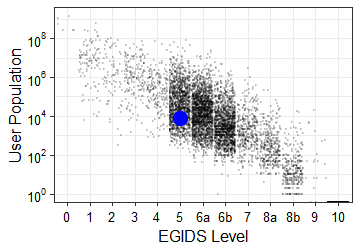
Full explanation
A language of Nepal
- ISO 639
- dre
- Alternate Names
- Dolkha, Dolpa Tibetan, Dolpali, Dolpike, Phoke Dolpa
- Population
- 8,000 (2010 K. Kopp). Ethnic population: 8,000 (2010 K. Kopp).
- Location
- Karnali province: Dolpa district, Chharka Tangsong municipality: west of Kag village along the Barbung river valley; Dolpo Buddha municipality, north of Lang village along the Tarap river valley, and along the Panzang river valley; Shey Phoksundo municipality, along the Suli Gag river valley, in the Phoksundo lake area, and along the Nangong river valley.
- Language Maps
- Central Nepal, Western Nepal
- Language Status
- 5 (Developing). Language of recognized indigenous nationality: Dolpo.
- Classification
- Sino-Tibetan, Tibeto-Burman, Western Tibeto-Burman, Bodish, Central Bodish, Central, gTsang
- Dialects
- None known. Phoksumdo Lake, Barbung River, and Charka areas are slightly different, but intelligibility is good. The central valleys of Nankong and Dho Tarap are well understood by other varieties. Lexical similarity: 78% with Lhowa [loy], 69% with Lhomi [lhm], 68% with Lhasa Tibetan [bod], Walungge [ola], and Kyerung (Kyirong) [kgy], 67% with Nubri [kte], 66% with Helambu Sherpa [scp], 62% with Jirel [jul] and Sherpa [xsr] (2010 K. Kopp).
- Typology
- SOV; postpositions; noun head initial; no noun classes or genders; content q-word in situ; 1 prefix, up to 3 suffixes; clause constitutents indicated by case-marking; conjunct or disjunct verbal agree with subject with evidential marking in the verbal auxiliary; gender is marked explicitly in the noun phrase; ergativity; tense and aspect (aspect marked overtly as a verbal suffix); no passives or voice; 36 consonant and 7 vowel phonemes; tonal.
- Language Use
- Vigorous. Home, friends, religion, work. Used by all. Positive attitudes. Also use Central Tibetan [bod]. Also use Lhowa [loy]. Also use Nepali [npi]. Used as L2 by Kaike [kzq].
- Language Development
- Literacy rate in L1: Below 10%. Literacy materials have been produced and are being tested. Non-formal classes are being planned (2010). Literature. Dictionary.
- Writing
- Tibetan script [Tibt].
- Other Comments
- Buddhist.
- Language Resources
- OLAC resources in and about Dolpo